
12 Outdoor Patio Furniture Tips From Top Interior Designers
- Start With a Layout That Encourages Conversation
- Choose Furniture Scaled to Your Space
- Invest in a Durable Frame Material
- Layer in Weather-Resistant Textiles
- Add a Rug to Ground the Space
- Incorporate Layered Lighting
- Choose a Table Shape That Matches How You Actually Use the Space
- Bring in Greenery at Different Heights
- Add Shade With Intention, Not Just Function
- Mix Textures Instead of Matching Everything
- Keep Storage in Mind From the Start
- Don’t Skip a Focal Point
12 Outdoor Patio Furniture Tips From Top Interior Designers
Your patio deserves the same thought you’d put into your living room. After all, it’s basically an extra room once the weather cooperates. I’ve talked to enough designers over the years to notice a pattern: the best outdoor spaces aren’t the most expensive ones, they’re the most intentional ones. Here’s what the pros actually do when they’re setting up a patio that people never want to leave.
Start With a Layout That Encourages Conversation
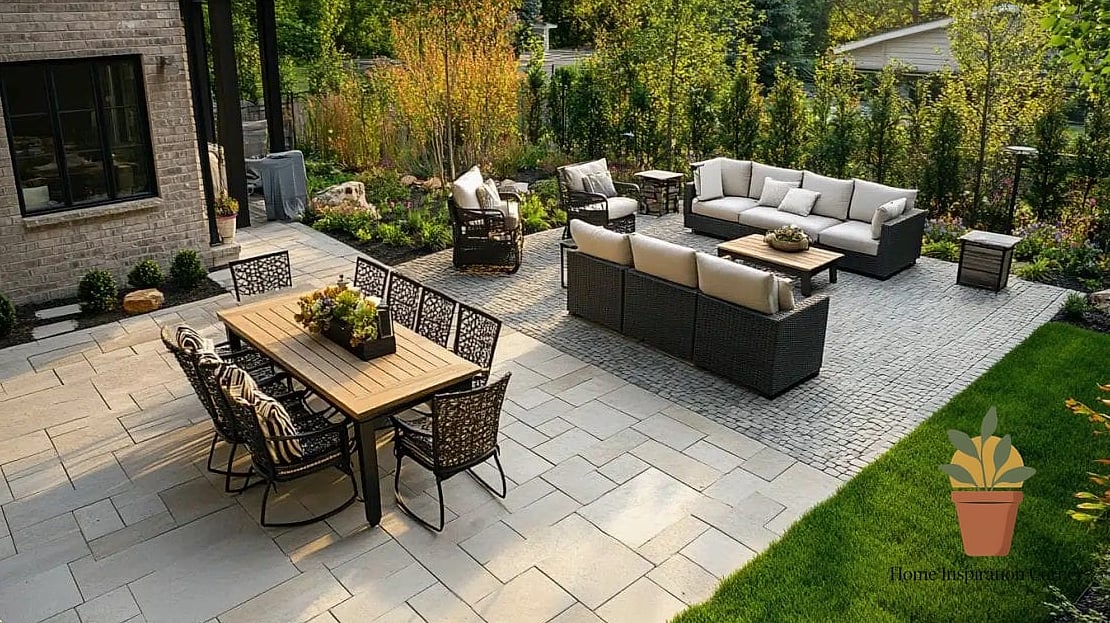
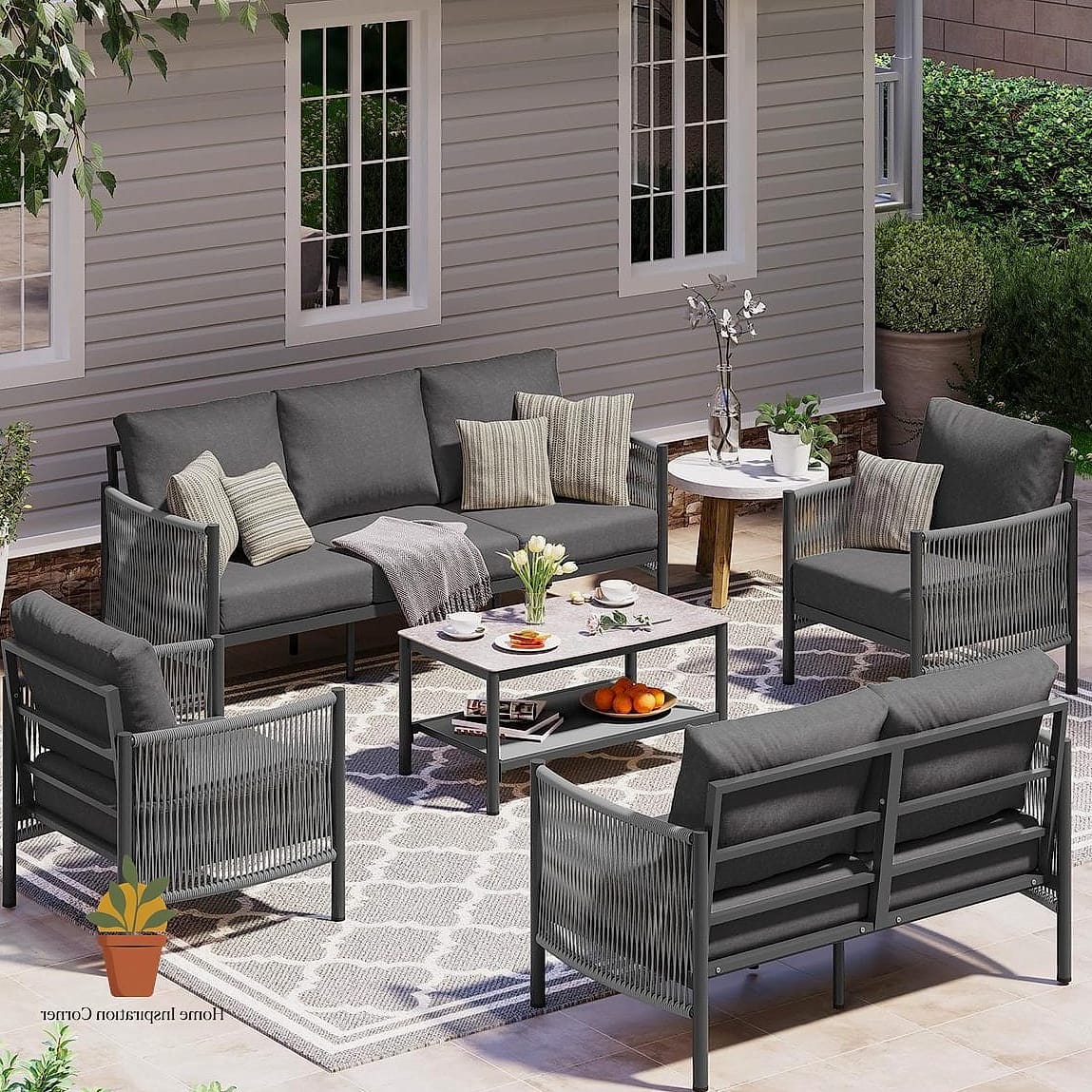
Designers almost always arrange seating in a way that faces inward, not outward toward the yard. Think of it like a cozy living room that happens to be under the sky.
A circular or U-shaped arrangement works best for encouraging actual conversation instead of everyone staring in the same direction. This matters more on smaller patios where every inch counts.
If you’ve got a bigger space, consider two separate zones: one for lounging and one for dining. It instantly makes the area feel more like an extension of your home rather than an afterthought.
Choose Furniture Scaled to Your Space
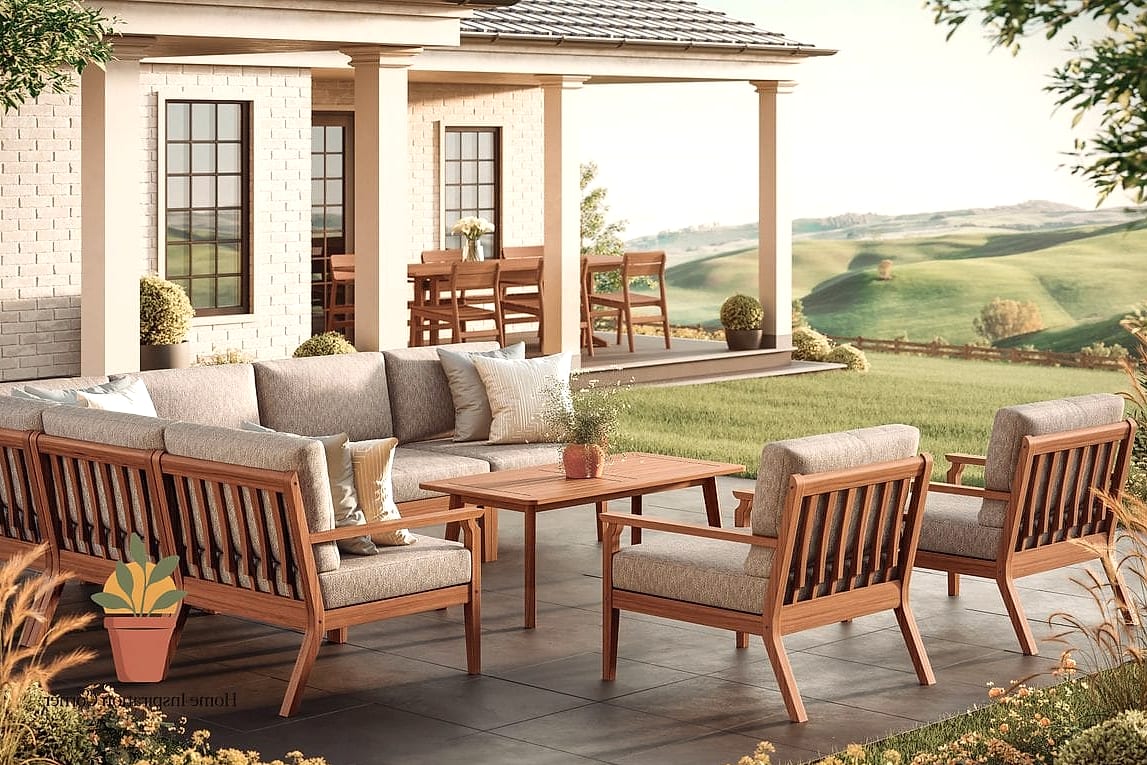
This is one of those upgrades that instantly makes a patio feel more custom without requiring a full renovation. Oversized sectionals look amazing in photos, but they can swallow a modest-sized patio whole.
Designers measure the space first, then shop. A general rule: leave at least three feet of walking room around furniture so people aren’t squeezing past each other.
For smaller balconies or courtyards, bistro sets or slim-profile loveseats do the trick without making the space feel cramped.
Invest in a Durable Frame Material
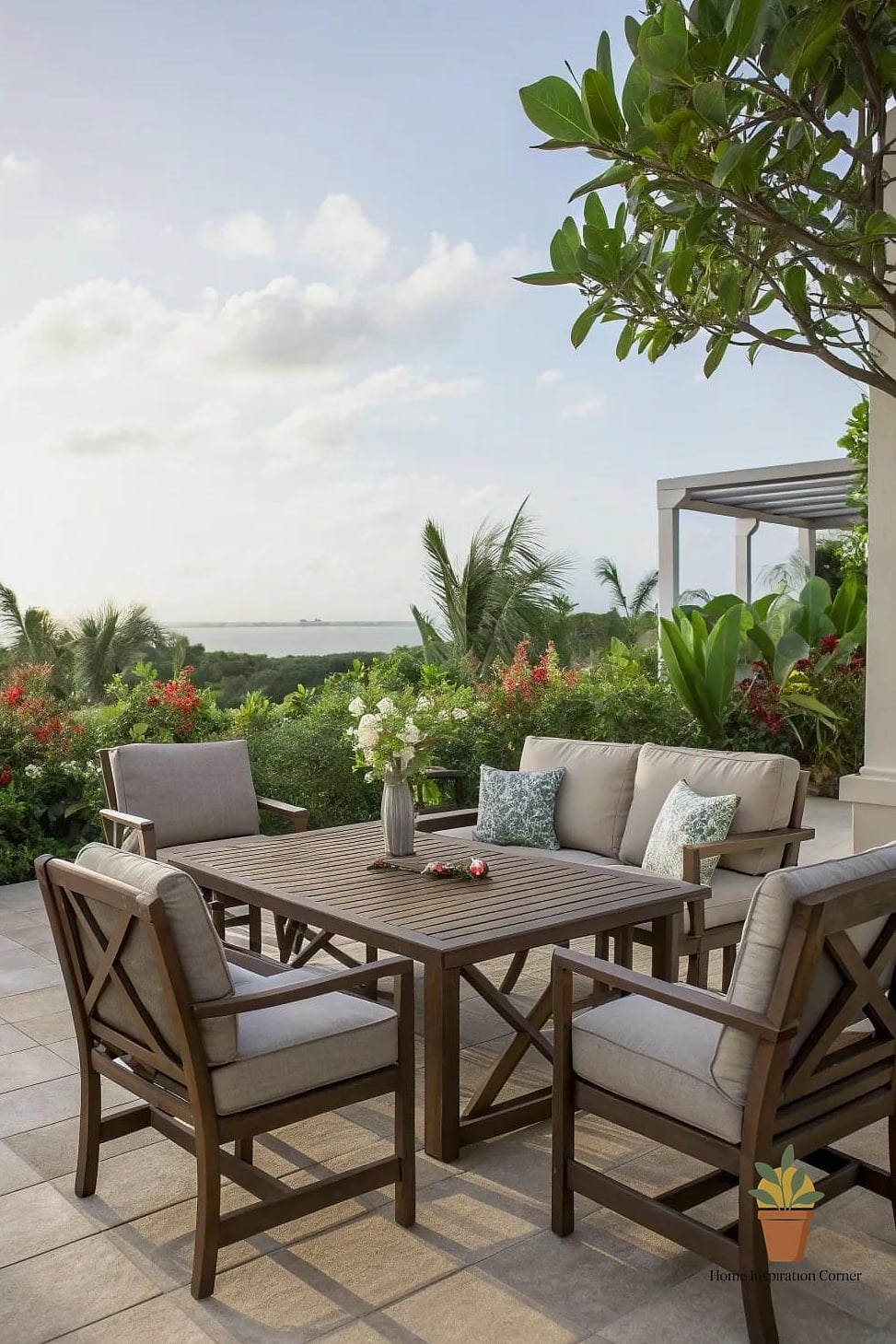
Wicker, teak, aluminum, and steel all show up constantly in designer-approved patios, but they each serve a different purpose. Teak ages into a beautiful silvery patina and holds up in almost any climate, which is why it shows up in higher-end outdoor collections.
Aluminum is lightweight, resists rust, and works well if you move furniture around seasonally. Wicker (especially synthetic resin wicker) gives that relaxed, textured look without the maintenance headaches of natural rattan.
If budget is tight, powder-coated steel frames are a solid middle ground between durability and price.
Layer in Weather-Resistant Textiles
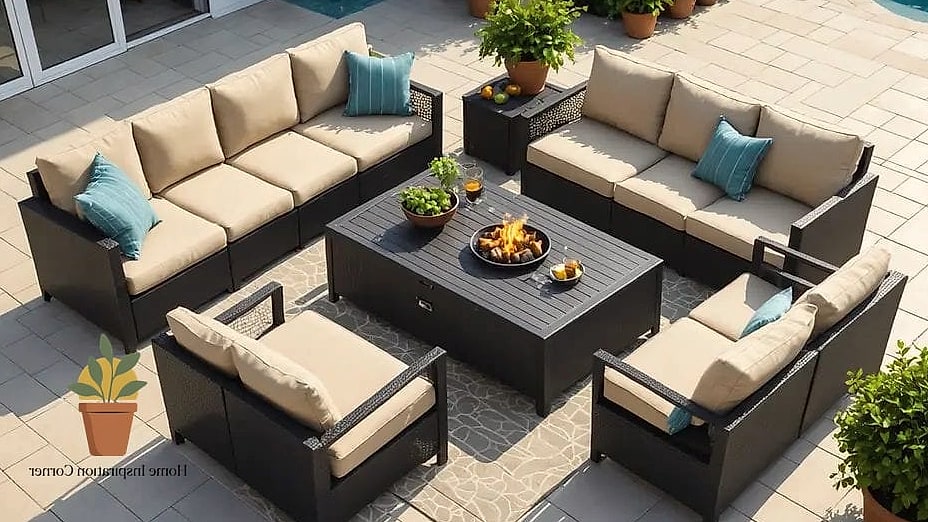
A designer’s trick that homeowners often skip: treating outdoor cushions and pillows like an actual design layer, not just a comfort add-on. Solution-dyed acrylic fabrics resist fading and mildew far better than standard cotton blends.
Mixing a couple of patterns with a solid neutral base gives the space depth without looking chaotic. Stick to two or three colors max so it doesn’t compete with your landscaping.
For families with pets or kids, look for fabrics labeled fade-resistant and mildew-resistant, since those hold up to spills and muddy paws.
Add a Rug to Ground the Space
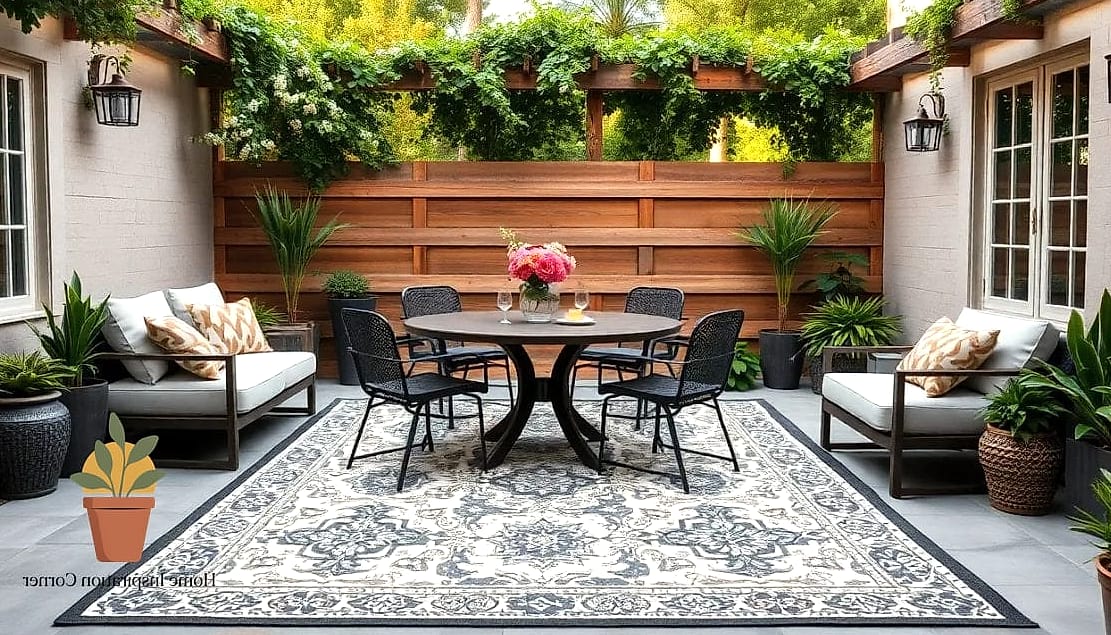
An outdoor rug does for a patio what an area rug does for a living room. It defines the seating zone and makes the whole area feel finished instead of pieced together.
Flat-weave polypropylene rugs are the go-to choice among designers because they’re easy to hose off and dry quickly. A neutral color palette with subtle texture tends to age better than bold prints, which can feel dated after a season or two.
Just make sure the rug is large enough that at least the front legs of your furniture sit on it. A too-small rug is one of the most common patio styling mistakes.
Incorporate Layered Lighting
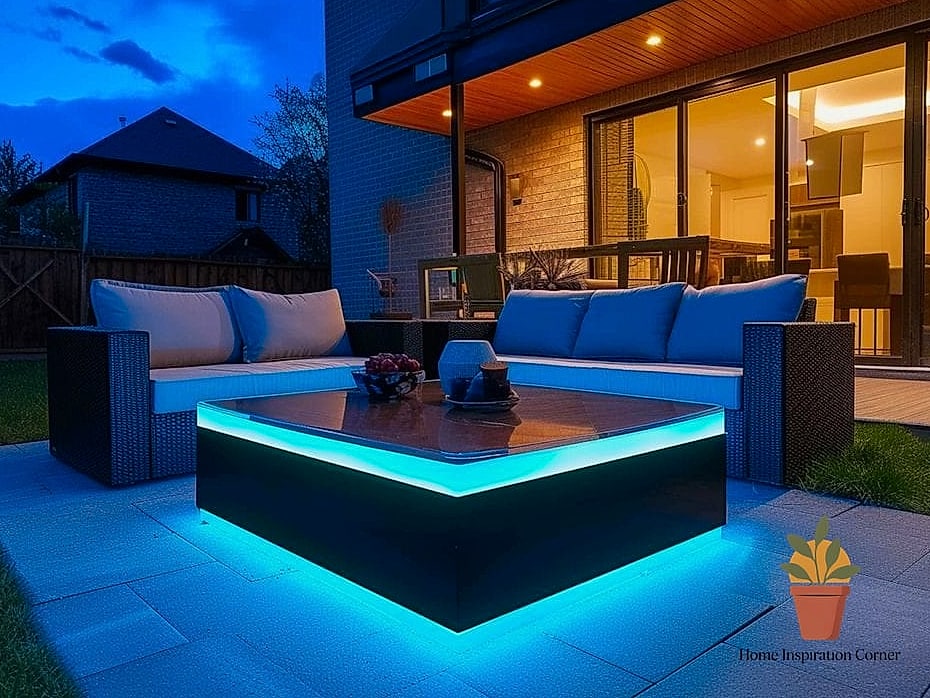
String lights get all the attention, but designers layer in multiple light sources: string lights up top, lanterns at table height, and small solar path lights along walkways. This creates depth instead of one flat wash of light.
Warm white bulbs (rather than cool white) make the space feel more inviting once the sun goes down. Battery-operated or solar options are great for renters who can’t run new wiring.
If you want something a little more polished, a few flameless candles in lanterns give that soft flicker without the fire risk.
Choose a Table Shape That Matches How You Actually Use the Space
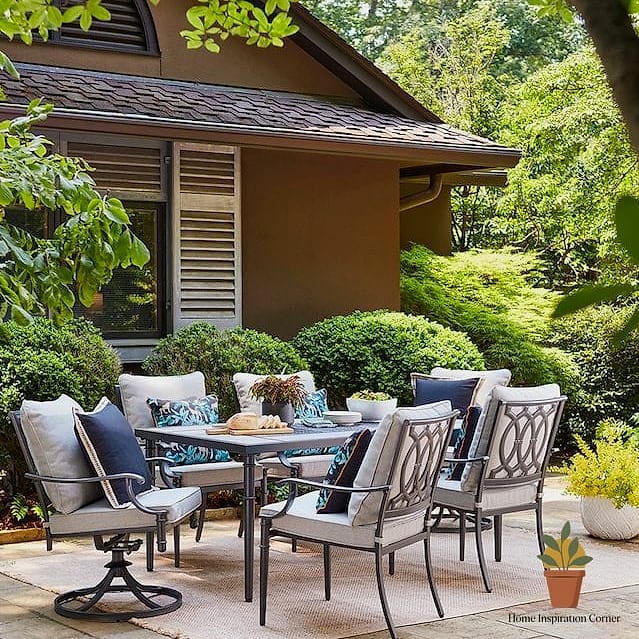
Round tables encourage conversation and work well in tighter spaces since there are no sharp corners to navigate around. Rectangular tables make more sense if you host bigger groups or want a defined dining zone separate from lounging furniture.
Some designers recommend a fire pit table as a dual-purpose piece, since it doubles as ambiance and warmth once temperatures drop in the evening.
Extendable tables are worth considering if you entertain occasionally but don’t want a huge table taking up space the rest of the time.
Bring in Greenery at Different Heights
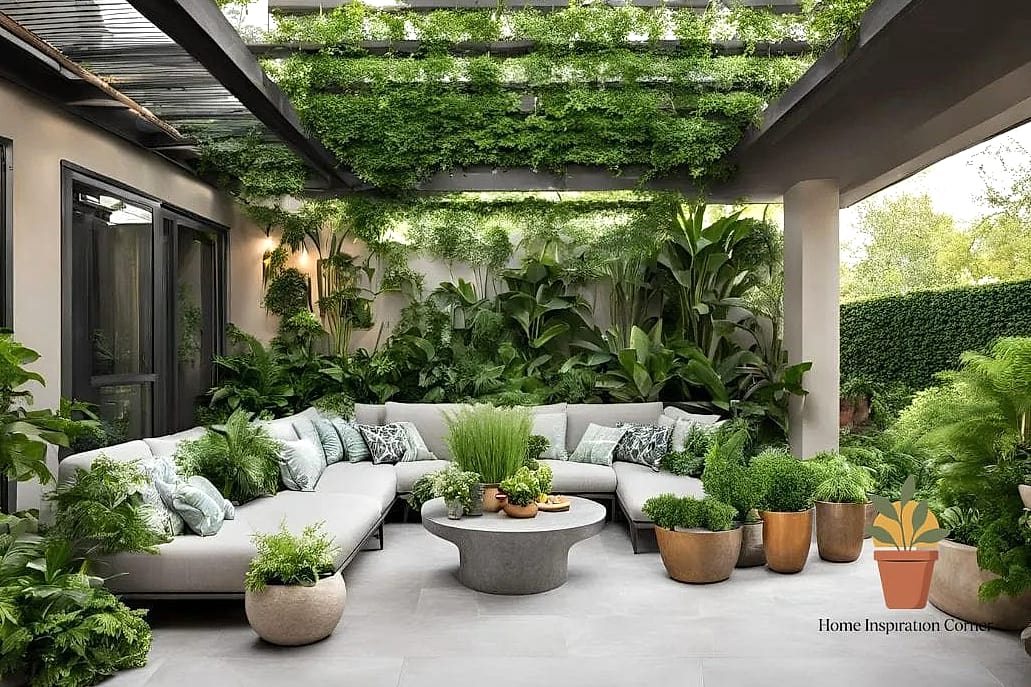
Flat, single-level plant placement tends to look a little sparse. Designers mix hanging plants, tall potted trees, and low planters to create visual layers, similar to how you’d style bookshelves indoors.
Olive trees, ornamental grasses, and boxwood shrubs are popular choices because they hold their shape and don’t require constant babying. For low-maintenance color, succulents and geraniums are pretty forgiving even if you forget to water them for a week.
Terracotta and concrete planters give a warmer, more natural look than plastic, though lightweight resin planters mimic that look for less money and are easier to move around.
Add Shade With Intention, Not Just Function
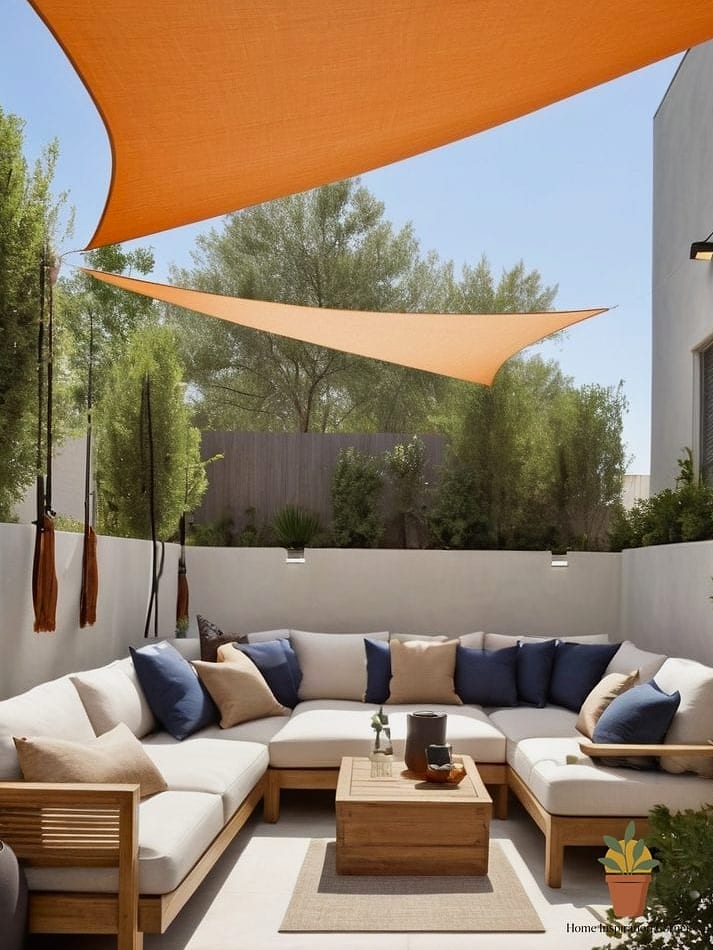
A cantilever umbrella is one of the most designer-favored shade solutions because it doesn’t require a pole sticking up through the middle of your table. Pergolas with retractable canopies are a bigger investment but give you more control over sun exposure throughout the day.
Whatever you choose, match the shade structure’s frame material to your furniture. A black aluminum umbrella next to teak furniture with brass accents can look mismatched if it’s not planned out.
Renters can lean on freestanding umbrellas or shade sails that don’t require permanent installation.
Mix Textures Instead of Matching Everything
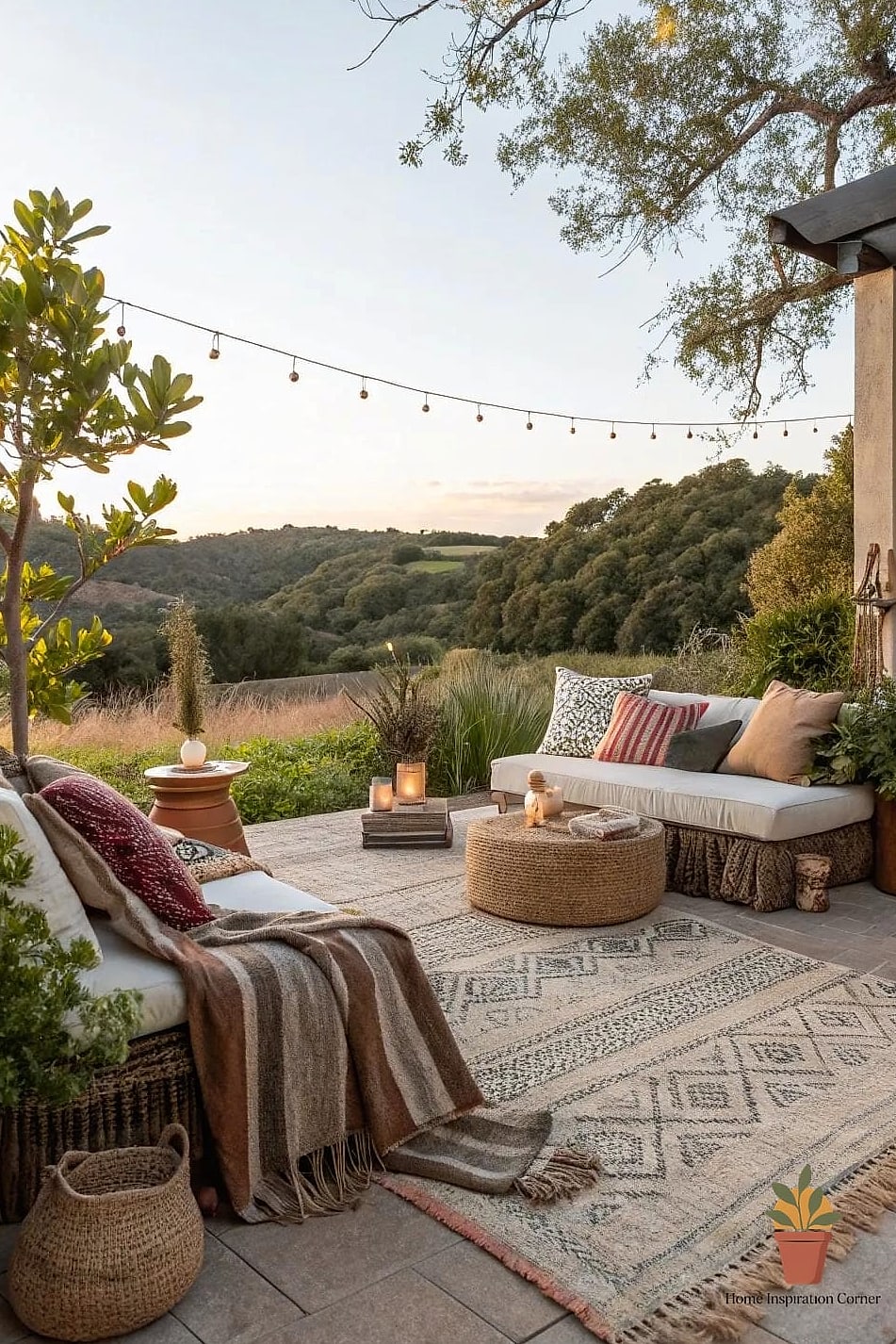
One thing designers consistently avoid: buying a matchy-matchy patio set straight out of a box. Instead, they pair a woven wicker chair with a smooth teak table, then throw in a stone or concrete side table for contrast.
This mix of textures gives the space a collected-over-time feel rather than looking like it was all bought in one trip. Natural fiber textures like jute or rattan pair especially well with metal accents for a bit of contrast.
Don’t be afraid to bring in one unexpected material, like a ceramic garden stool used as extra seating or a plant stand.
Keep Storage in Mind From the Start
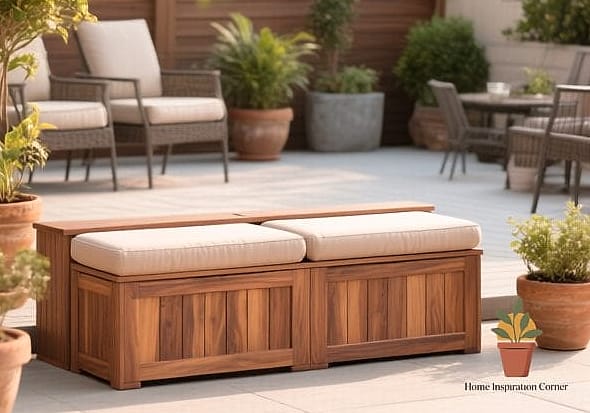
Cushions, throw blankets, and citronella candles need somewhere to live when they’re not in use, especially if you deal with rain or humidity. A weatherproof deck box tucked at the end of a seating area solves this without looking like storage at all.
Some outdoor sectionals now come with built-in storage under the seats, which is a smart pick if your patio doubles as a small space with limited square footage. Baskets with waterproof liners work in a pinch for smaller items like citronella candles or extra throw pillows.
This kind of planning ahead saves you from dragging cushions in and out every time it rains, which gets old fast.
Don’t Skip a Focal Point
Every well-designed patio has something that draws your eye first, whether that’s a fire pit, a striking piece of outdoor art, or a statement piece of furniture like a hanging egg chair. Without a focal point, the space can feel like a random collection of furniture rather than a designed room.
A fire pit works double duty as both a visual anchor and a functional heat source for cooler evenings. If a fire feature isn’t practical for your space, a bold outdoor mirror or a piece of weather-resistant sculpture can do the same job.
Even something as simple as a brightly painted front door visible from the patio, or a striking piece of outdoor fabric art, can pull the whole look together.
These 12 outdoor patio furniture tips from top interior designers really come down to treating your patio like a genuine living space rather than an afterthought tacked onto your backyard. You don’t need to tackle all twelve at once. Start with layout and seating, then build out lighting, textiles, and greenery as your budget allows. A patio that feels finished doesn’t happen overnight, but a few intentional choices go a long way toward making it a space you actually want to spend time in.