
13 Rooftop Bbq Area Inspiration Boards You’ll Want to Copy
- The Minimalist Grill Corner
- The Built-In Outdoor Kitchen
- The Pergola-Covered BBQ Nook
- The Compact Charcoal Station
- The Bar-Height Entertaining Setup
- The Fire Pit and Grill Combo
- The Vertical Garden Grill Wall
- The All-Weather Enclosed Kitchen
- The Small-Space Foldaway Setup
- The Tiled Prep and Serve Station
- The Multi-Zone Entertaining Deck
- The Industrial Loft-Style Grill Area
- The Cozy String-Light Retreat
13 Rooftop Bbq Area Inspiration Boards You’ll Want to Copy
If you’ve got rooftop access and you’re not using it for grilling, you’re leaving a lot of potential on the table. A rooftop BBQ area turns unused square footage into the best seat in the house, especially on a warm evening with a skyline view. I’ve pulled together thirteen setups that range from tiny-budget upgrades to full-blown outdoor kitchens, so there’s something here whether you’re working with a condo balcony or a sprawling penthouse deck.
The Minimalist Grill Corner
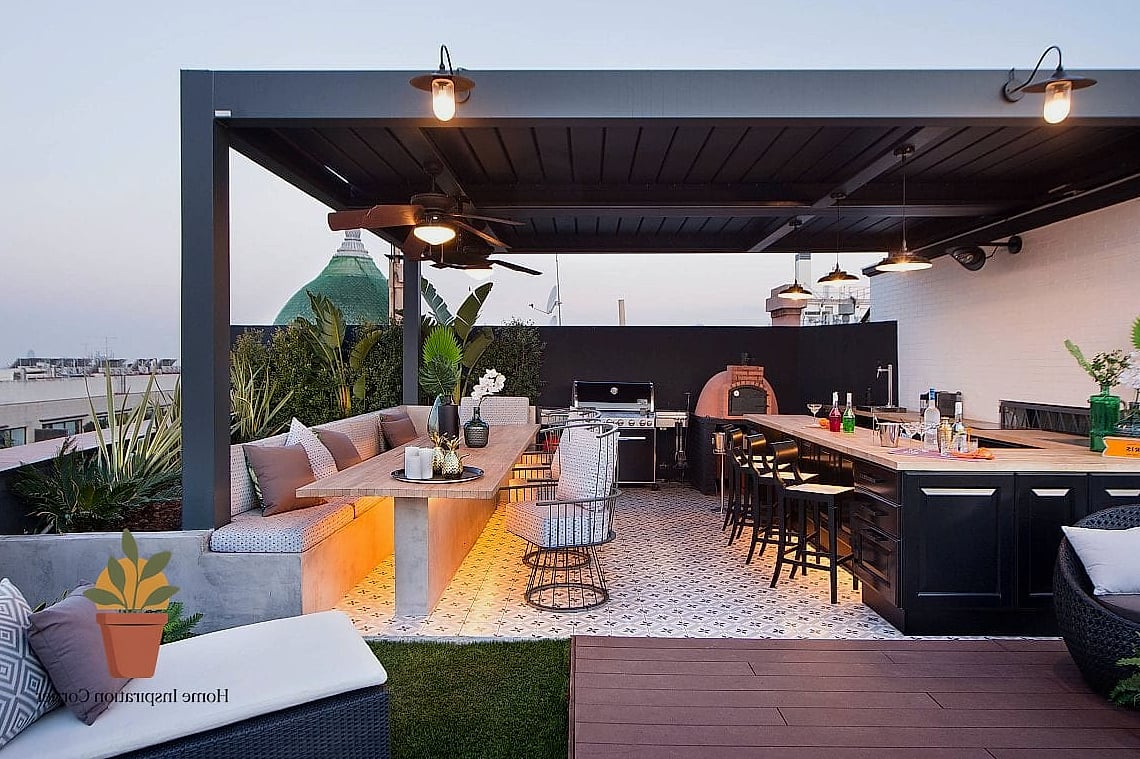
Sometimes less really is more, especially when you’re dealing with limited rooftop square footage. This setup is just a compact gas grill, a small prep cart, and a couple of stools tucked against a railing.
It works best on narrow rooftops or shared building decks where space is at a premium. Homeowners love it because there’s nothing to maintain beyond wiping down the grill and prep surface after each use.
Stick to a neutral color palette with black or dark gray hardware so it doesn’t visually crowd the space. This is about as budget-friendly as rooftop grilling gets, and it’s easy to pack up if your building has storage rules.
The Built-In Outdoor Kitchen
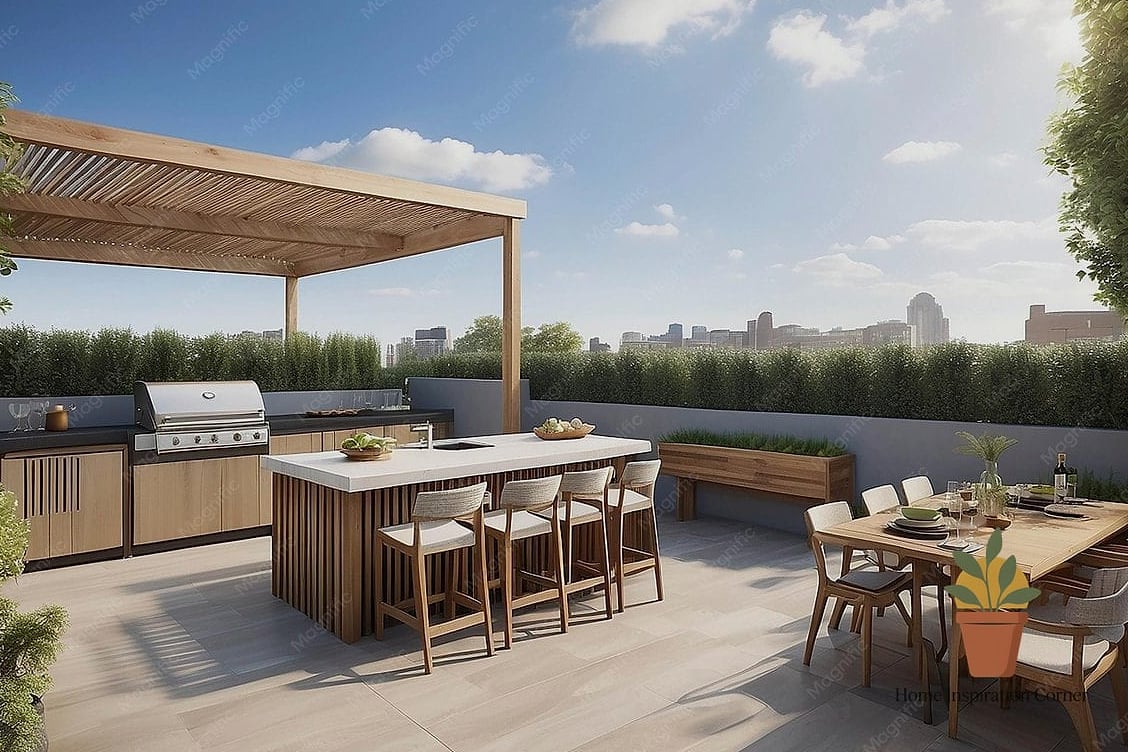
This is the dream setup for anyone who actually cooks outside more than they cook inside during summer. Think a full run of weatherproof cabinetry, a built-in grill, a side burner, and maybe a small fridge tucked underneath.
It shines on larger rooftops where you have the square footage to dedicate an entire zone to cooking. People love this option because it feels like a real kitchen, not just a grill someone rolled outside.
Stainless steel and marine-grade polymer are the materials to look for here since they hold up against sun and moisture. It’s a bigger investment upfront, but the durability makes it worth it if you’re planning to stay in the space long-term.
The Pergola-Covered BBQ Nook
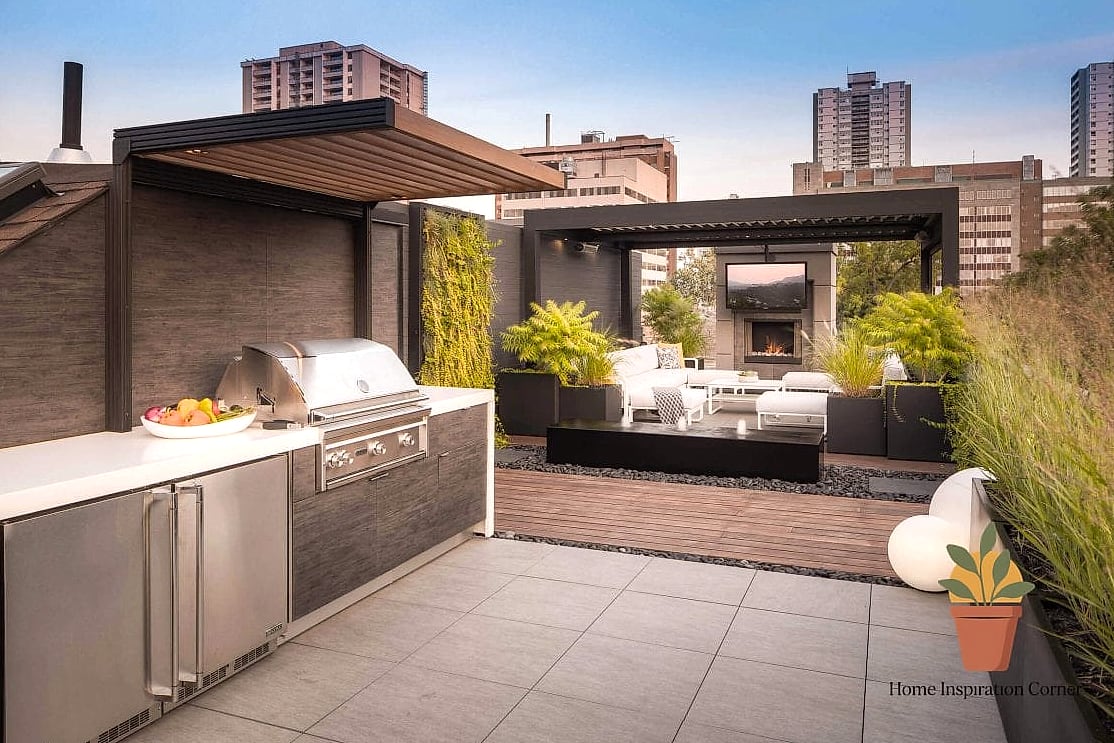
Shade changes everything about how often you’ll actually use your rooftop grill. A pergola over the cooking area keeps you from sweating through a July cookout while still letting in natural light.
This works particularly well on south-facing rooftops that get brutal afternoon sun. Wood accents on the pergola frame soften the look against all that hard concrete and metal you typically find up top.
String lights or lanterns woven through the beams extend usability into the evening. It’s a bit more of a DIY-friendly project than people expect, especially with pre-made pergola kits.
The Compact Charcoal Station
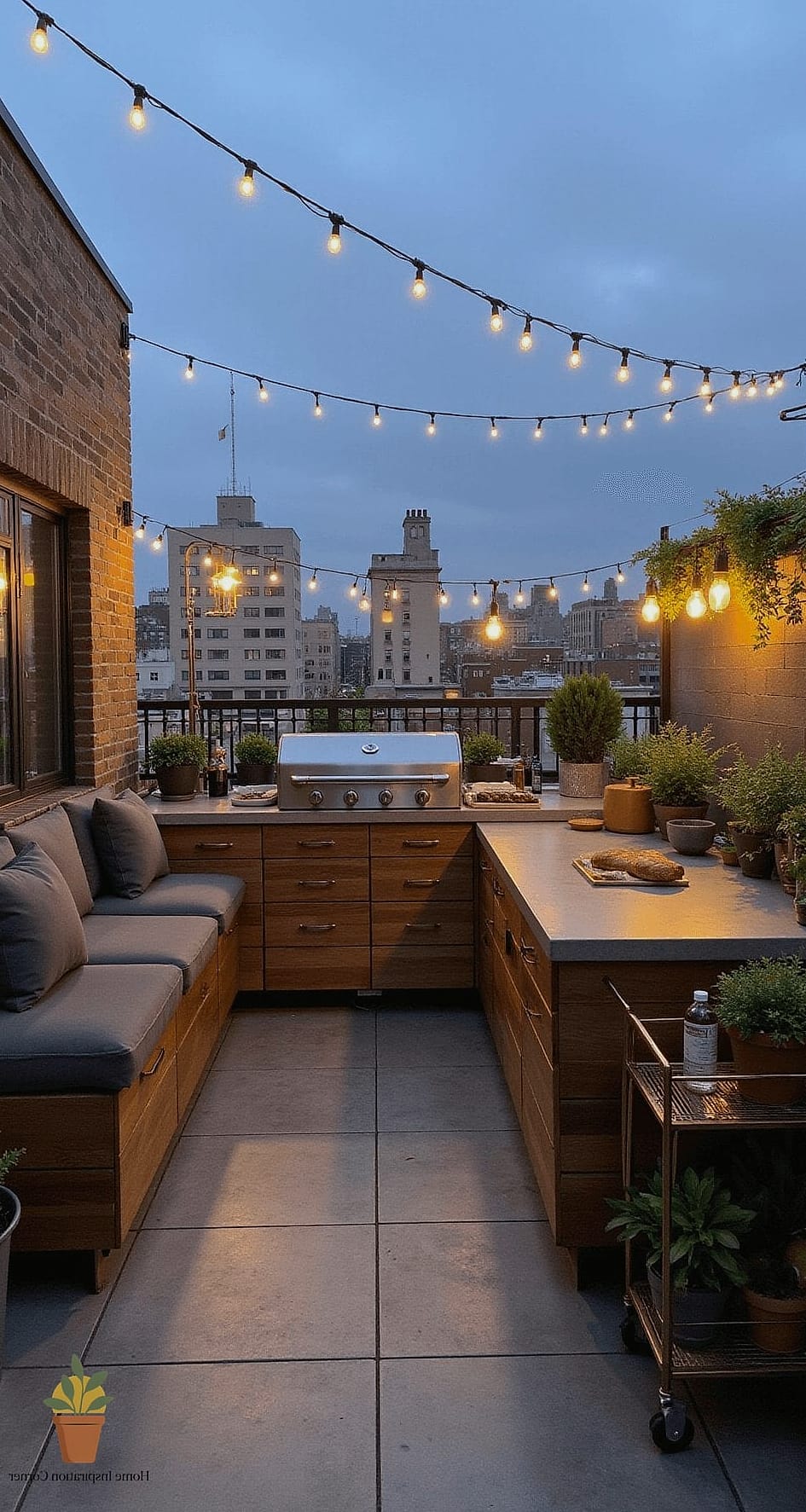
There’s something about charcoal flavor that gas just can’t replicate, and plenty of rooftop owners are willing to deal with the extra effort for it. This board usually features a small kettle grill, a metal side table, and a designated ash-safe zone.
It’s ideal for smaller rooftops or renters who don’t want to commit to built-in features. The practicality here comes down to proper ventilation and keeping a fire extinguisher nearby, since charcoal requires a bit more caution than gas.
Look for a grill with a lid vent system so you can control temperature without constantly hovering. This is one of the more affordable ways to get real barbecue flavor up top.
The Bar-Height Entertaining Setup
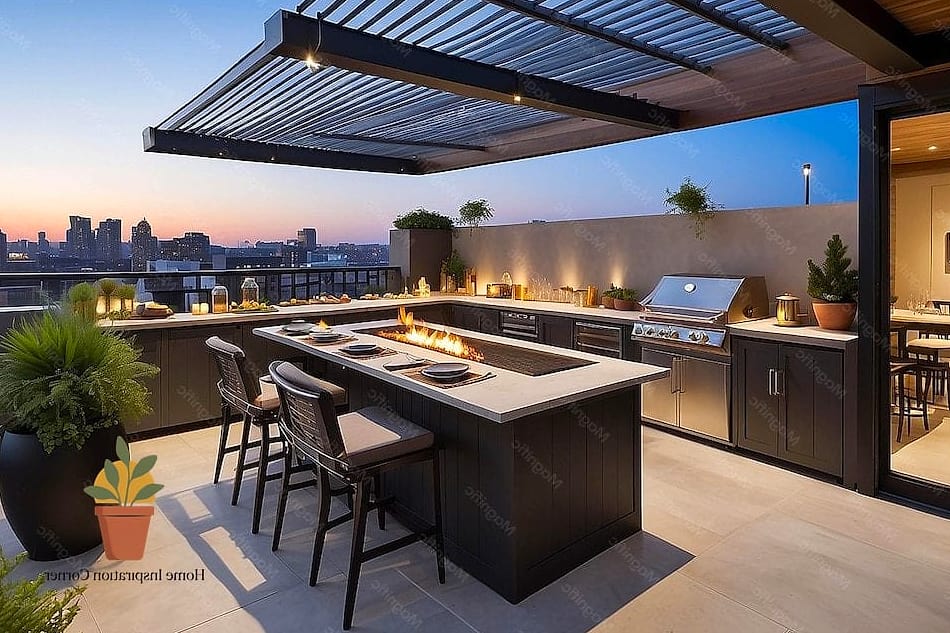
If your rooftop BBQ area doubles as your main entertaining space, bar-height seating changes the whole vibe. Picture a grill station paired with a tall counter, a couple of bar stools, and maybe a small wine fridge.
This layout works best when the rooftop serves double duty as a hangout spot and not just a cooking zone. Guests love being able to chat with whoever’s manning the grill instead of being stuck at a separate table.
Quartz or butcher block counters both hold up well outdoors when properly sealed. It’s a nice middle ground between a full outdoor kitchen and a bare-bones grill setup.
The Fire Pit and Grill Combo
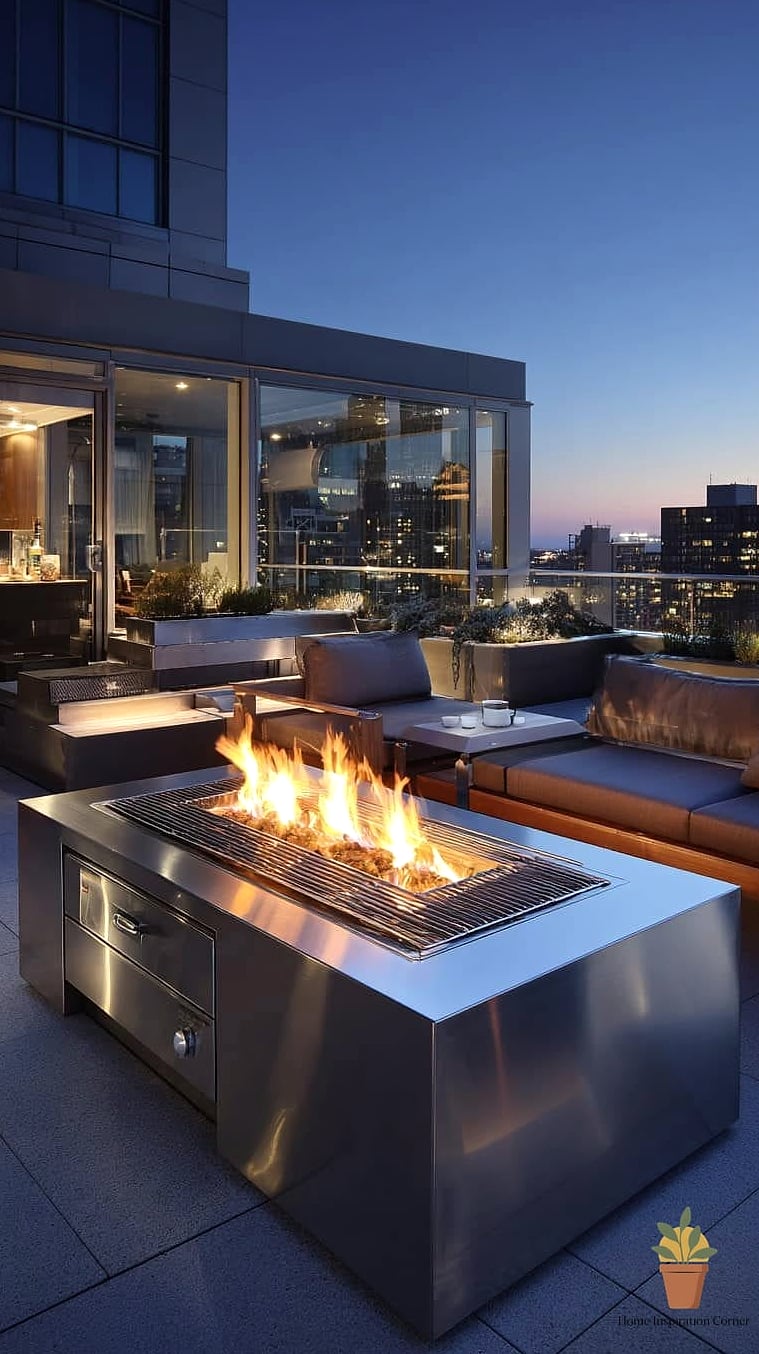
Combining a fire pit with your grilling area gives you a spot to gather even after the food’s done cooking. This board typically shows a grill on one side and a low seating area around a fire feature on the other.
It works especially well on larger rooftops with enough clearance for proper fire safety. Homeowners love that it extends the usable hours of the space well past dinner.
Natural stone around the fire pit base adds a grounded, textured look against typical rooftop materials like composite decking. Just double check your building’s fire codes before committing to this one, since rooftop fire features often have specific restrictions.
The Vertical Garden Grill Wall
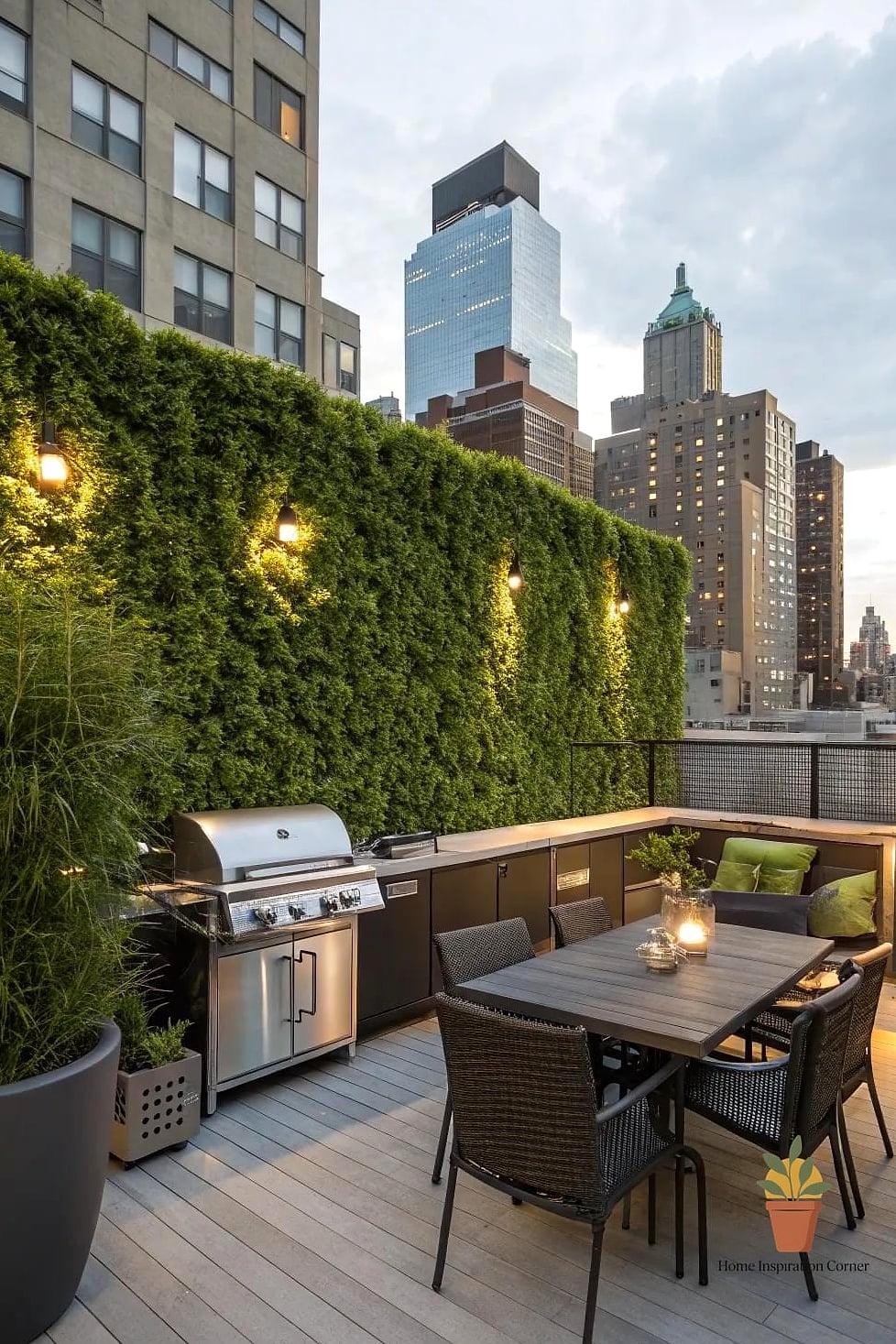
Turning a plain rooftop wall into a green backdrop makes the whole cooking area feel less industrial. This setup pairs a grill station with a vertical planter wall filled with herbs, trailing vines, or small shrubs.
It’s a great fit for rooftops that feel exposed or boxed in by surrounding buildings. Practically speaking, having fresh herbs within arm’s reach of the grill is genuinely useful, not just decorative.
A drip irrigation system keeps maintenance low since you’re not hauling a watering can up multiple flights. This is one of those upgrades that instantly makes a rooftop feel more custom without requiring a full renovation.
The All-Weather Enclosed Kitchen
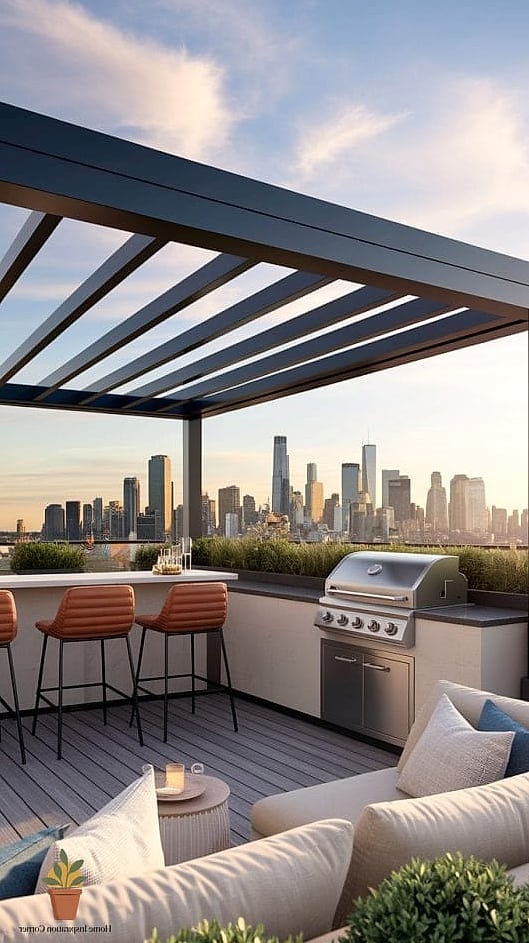
For rooftops that deal with serious wind, rain, or temperature swings, a partially enclosed structure keeps the grilling season going longer. Think retractable glass panels or a screened structure around the cooking zone.
This works best in climates with unpredictable weather or on high-rise rooftops where wind gets intense. The main appeal is being able to grill in October instead of packing everything away in September.
Glossy finishes on interior surfaces help reflect light and make the enclosed space feel less cave-like. It’s a bigger project, so factor in professional installation for anything involving retractable glass.
The Small-Space Foldaway Setup
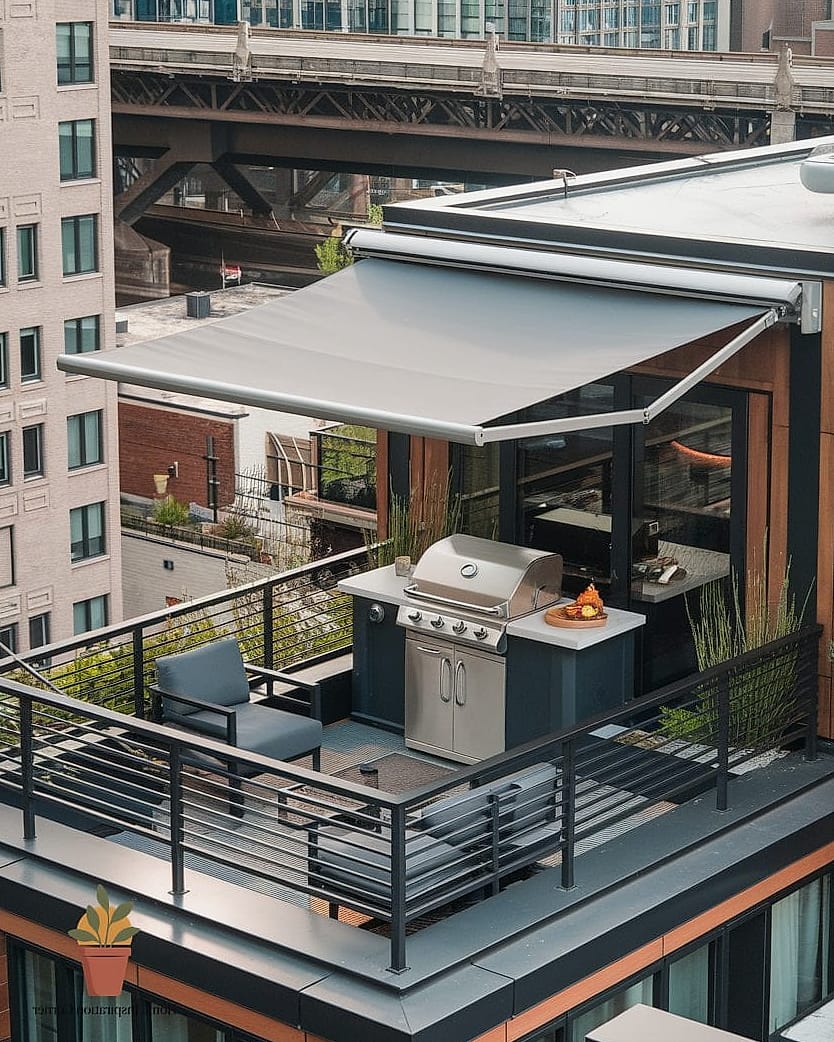
Not every rooftop can dedicate permanent square footage to grilling, and that’s where foldaway furniture earns its keep. This board features a wall-mounted or foldable grill cart paired with stackable chairs.
It’s perfect for shared rooftops or apartment buildings where the space needs to serve multiple purposes throughout the week. Renter-friendly is the name of the game here since nothing is permanently installed.
Look for weatherproof storage bins to keep tools and accessories protected between uses. This setup proves you don’t need a huge budget or a dedicated space to enjoy rooftop grilling.
The Tiled Prep and Serve Station
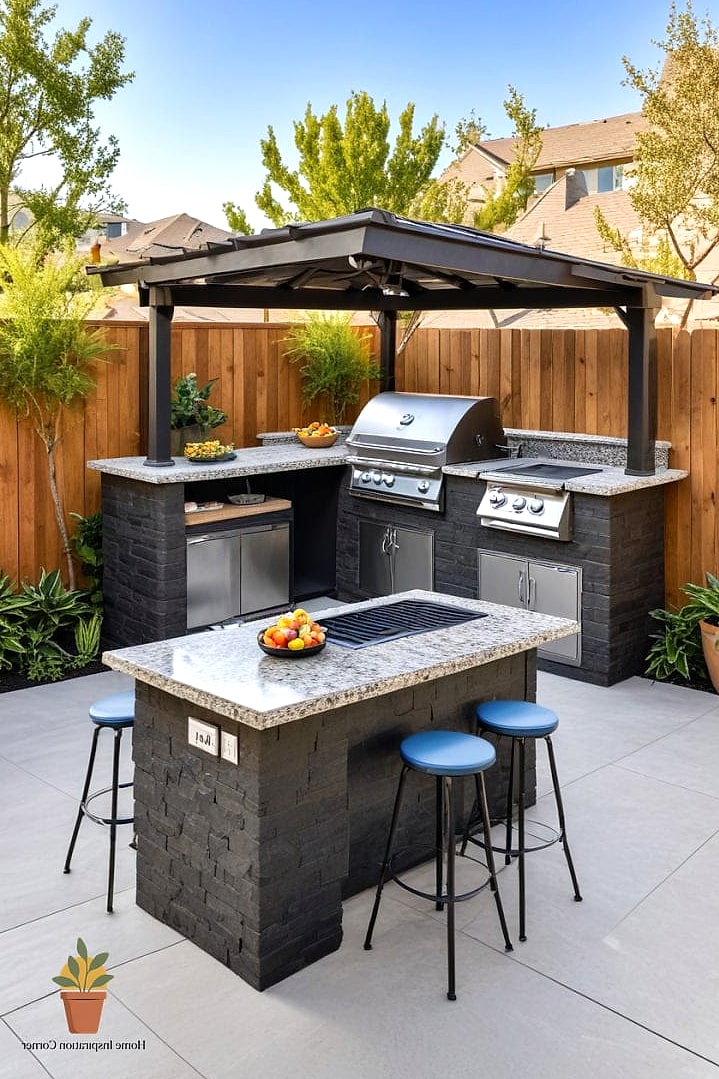
A tiled counter surface brings a polished, finished look to what’s often a fairly utilitarian space. Picture mosaic tile or textured porcelain tile covering a prep counter right next to the grill.
This works well on rooftops designed with more of a lounge aesthetic in mind rather than a purely functional cooking zone. Homeowners appreciate that tile is easy to wipe down after marinades and sauces inevitably spill.
Stick with matte finishes if you’re worried about glare from direct rooftop sun. It’s a nice way to add color and pattern without needing to touch the grill itself.
The Multi-Zone Entertaining Deck
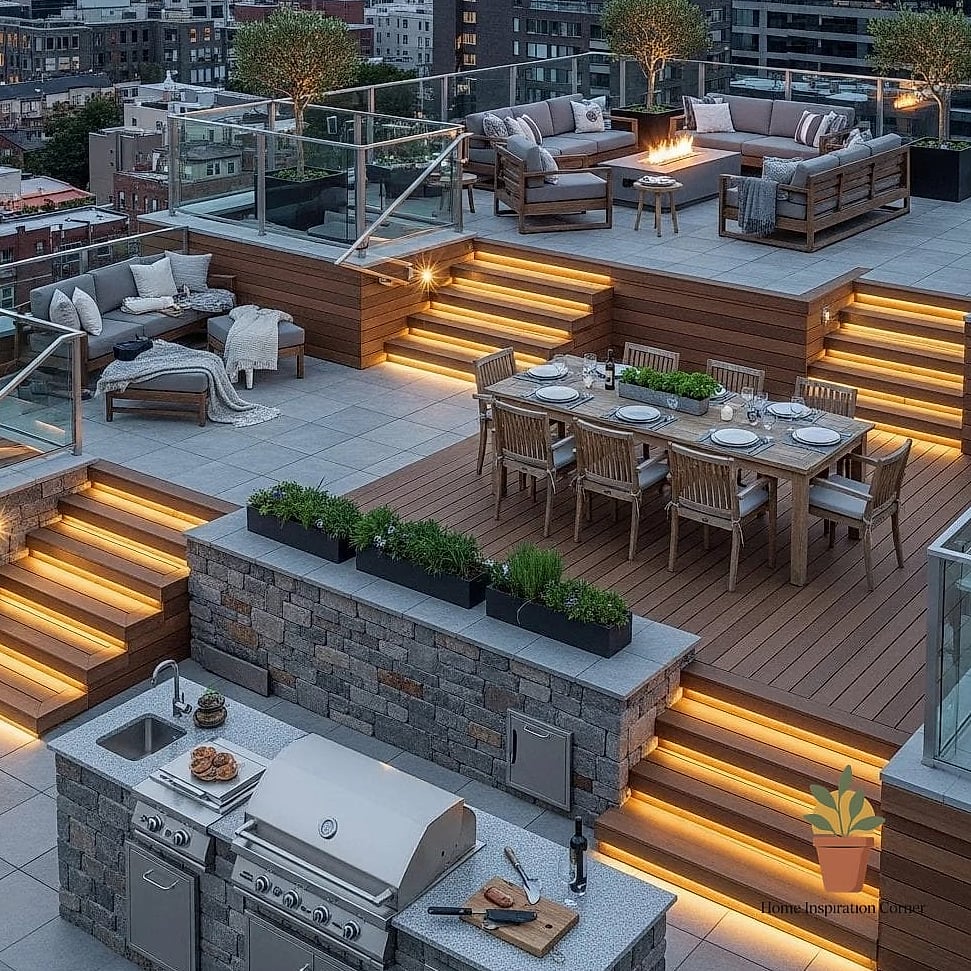
This is for the rooftop that hosts everything from casual weeknight dinners to bigger gatherings. The layout separates the space into distinct zones: a grilling station, a dining table, and a lounge area with soft seating.
It works best on larger rooftops with enough square footage to avoid feeling cramped when zones butt up against each other. People love this setup because it doesn’t force everyone to hover around the grill the entire time.
Layered lighting across each zone, string lights over dining, sconces near the lounge, task lighting at the grill, makes the space feel intentional rather than accidental. It’s a bigger undertaking but pays off if you entertain often.
The Industrial Loft-Style Grill Area
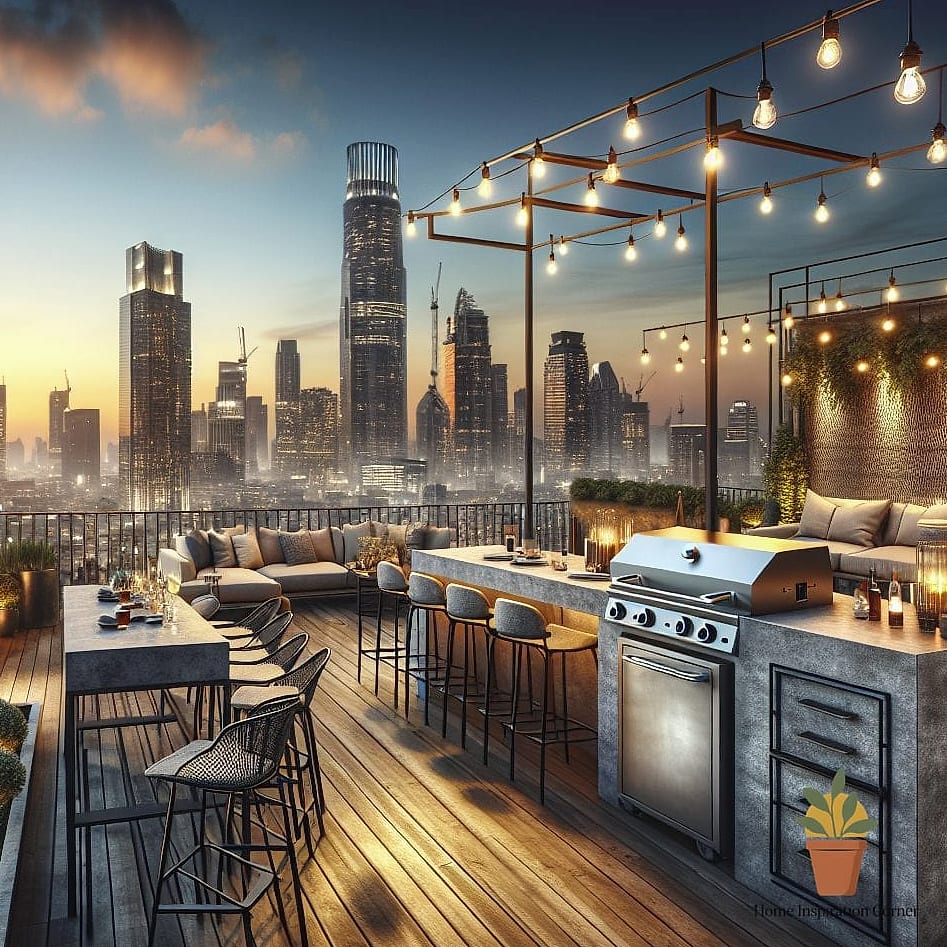
If your building already has that raw, industrial aesthetic, leaning into it rather than fighting it usually looks better. This setup pairs a stainless steel grill with black metal shelving and exposed brick or concrete backdrops.
It’s a natural fit for converted warehouse buildings or modern high-rises with an already edgy design language. Brushed brass or black fixtures on any hardware tie the cooking area back into that industrial look.
Open shelving nearby keeps grilling tools accessible without needing bulky cabinetry. This style tends to be fairly low-maintenance since the materials are already built to handle wear.
The Cozy String-Light Retreat
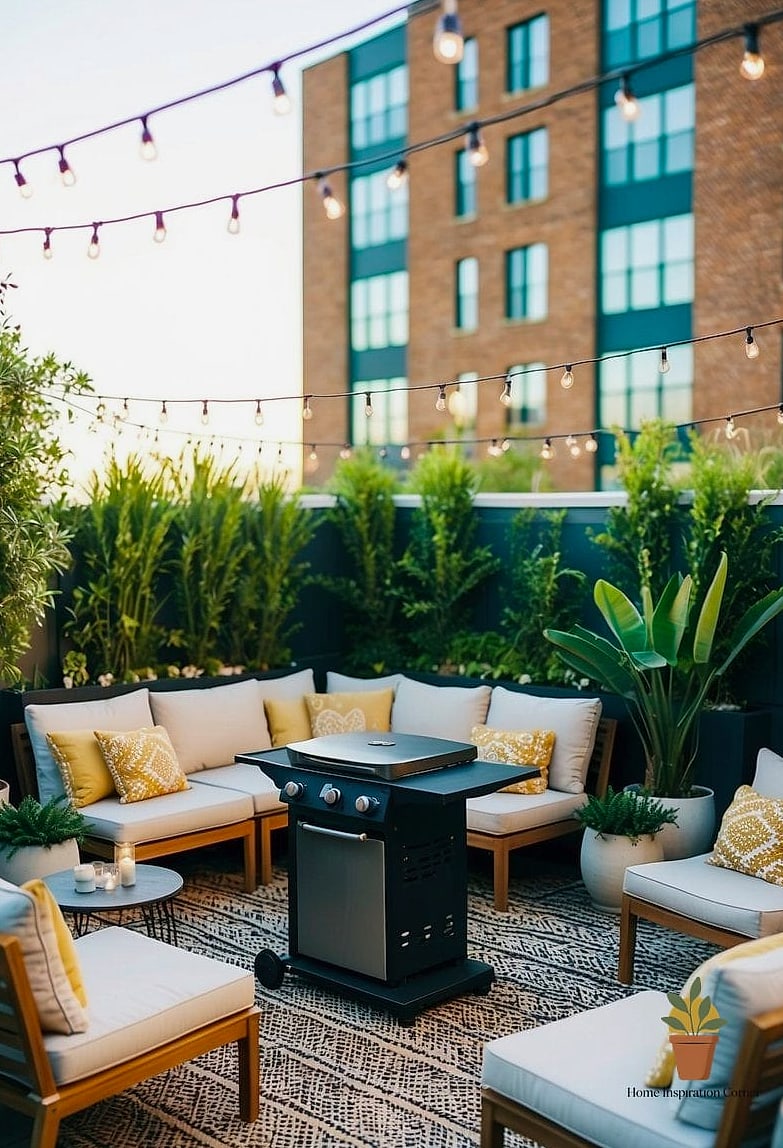
Not every rooftop BBQ area needs to be about big statement features. Sometimes it’s just a small grill, a couple of comfy chairs, and string lights crisscrossing overhead.
This works anywhere, honestly, from tiny city rooftops to sprawling suburban decks. The appeal is purely atmospheric: it turns a basic grilling spot into somewhere you actually want to linger after the food’s gone.
Warm wood tones on furniture pair nicely with the soft glow of string lights in the evening. This is probably the easiest board on this list to recreate on a weekend without any major purchases.
Rooftop grilling spaces don’t have to follow one formula, and honestly, that’s the fun part of planning one. Whether you’ve got room for a full outdoor kitchen or just enough space for a grill cart and two folding chairs, there’s a version of these thirteen rooftop BBQ area inspiration boards that’ll work for your setup. Start with what matters most to you, whether that’s shade, seating, storage, or just a good view, and build outward from there.