
19 Terrace Decor Before and After Transformations to Inspire
- From Storage Dump to Cozy Reading Nook
- Bare Concrete to Warm Wood-Look Flooring
- Empty Corner to Vertical Garden Wall
- Mismatched Furniture to a Curated Lounge Set
- Blank Wall to Statement Lighting Feature
- Dead Space Under Stairs to Hidden Storage
- Faded Railings to Fresh Painted Accent Color
- Cluttered Corner to Outdoor Bar Cart Station
- Plain Table Setup to Layered Textiles and Tablescape
- Sun-Scorched Plants to a Shade-Loving Plant Palette
- Exposed Utility Boxes to a Decorative Screen
- Plastic Furniture to Elevated Metal and Wood Pieces
- No Privacy to Bamboo Privacy Fencing
- Empty Floor to a Layered Outdoor Rug
- Dark Corner to Reflective Mirror Accent
- Overgrown Planters to Structured Raised Beds
- Flat, Shadeless Terrace to a Pergola-Covered Retreat
- Cluttered Surfaces to Minimalist Styling
- Faded Cushions to Bold Pattern Mixing
19 Terrace Decor Before and After Transformations to Inspire
There’s something so satisfying about a good before-and-after. You know the feeling — you scroll past a photo of a sad, cluttered concrete slab and then boom, the next shot shows a cozy little outdoor retreat with string lights and plush cushions. That’s the magic of terrace makeovers, and honestly, they’re some of the most achievable home projects out there.
Terraces get overlooked a lot. They’re not quite a backyard, not quite a balcony, and somehow they end up as the dumping ground for old bikes and dead plants. But with a little vision (and not necessarily a huge budget), these spaces can become the best part of your home. Below are 19 real-feeling transformations to get your wheels turning.
From Storage Dump to Cozy Reading Nook
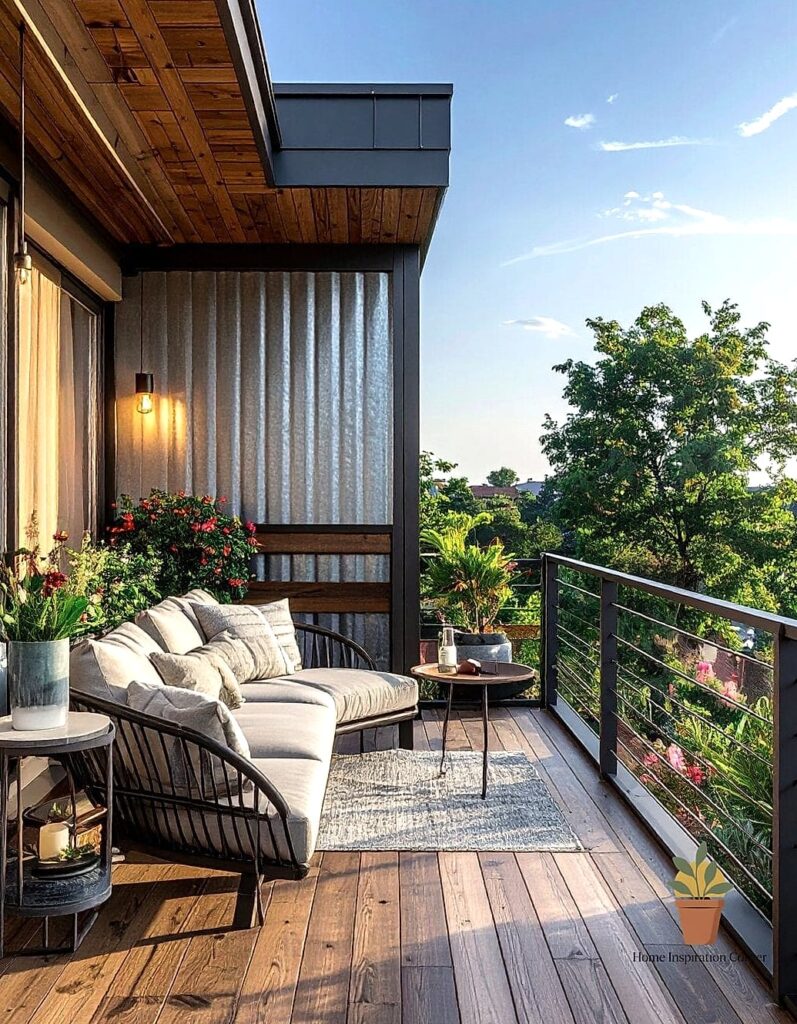
This one starts with a terrace that’s basically an extension of the garage — bikes, tools, a broken umbrella stand, you name it. The after shot swaps all that clutter for a single oversized chair, a small side table, and a weatherproof rug.
The trick here is ruthless editing. Before you decorate anything, figure out what actually needs to live out there versus what’s just been forgotten. A couple of woven storage bins tucked against the wall handle the leftover essentials without looking messy.
This layout works great for smaller terraces where one good seat beats three mediocre ones. Budget-wise, this is one of the cheapest transformations on the list since it’s mostly about subtraction, not addition.
Bare Concrete to Warm Wood-Look Flooring
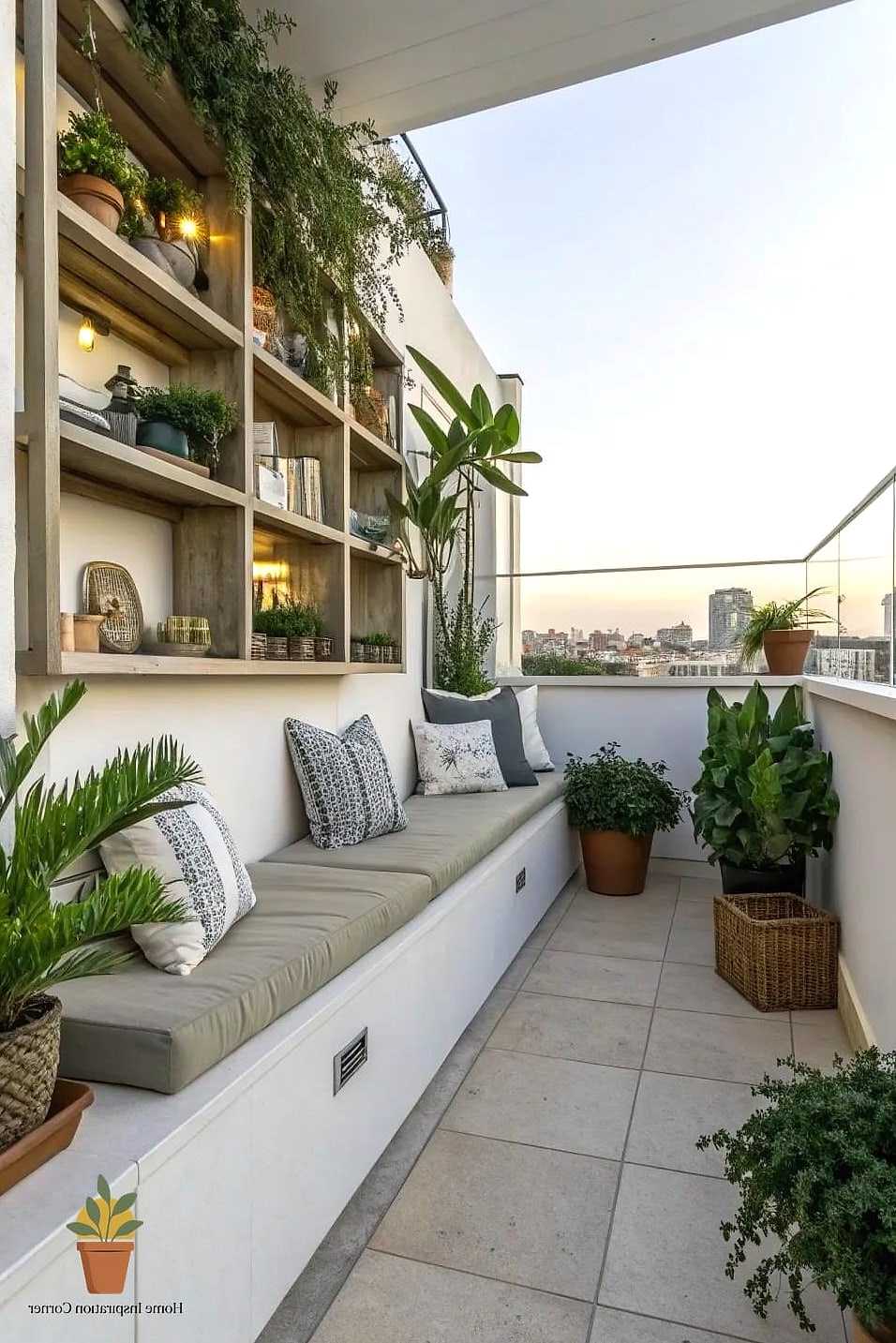
Plain gray concrete can feel cold and unfinished, even when the space itself has potential. Swapping it out for interlocking wood-look composite tiles changes the entire mood instantly.
These tiles are popular because they’re weather-resistant, low-maintenance, and don’t require any real installation skill — most snap together right over existing concrete. No glue, no grout, no waiting around for anything to cure.
Homeowners tend to love this update because it makes the terrace feel like an actual room rather than an afterthought. If you’re renting, this is also a nice reversible option since the tiles lift right back up when you move.
Empty Corner to Vertical Garden Wall
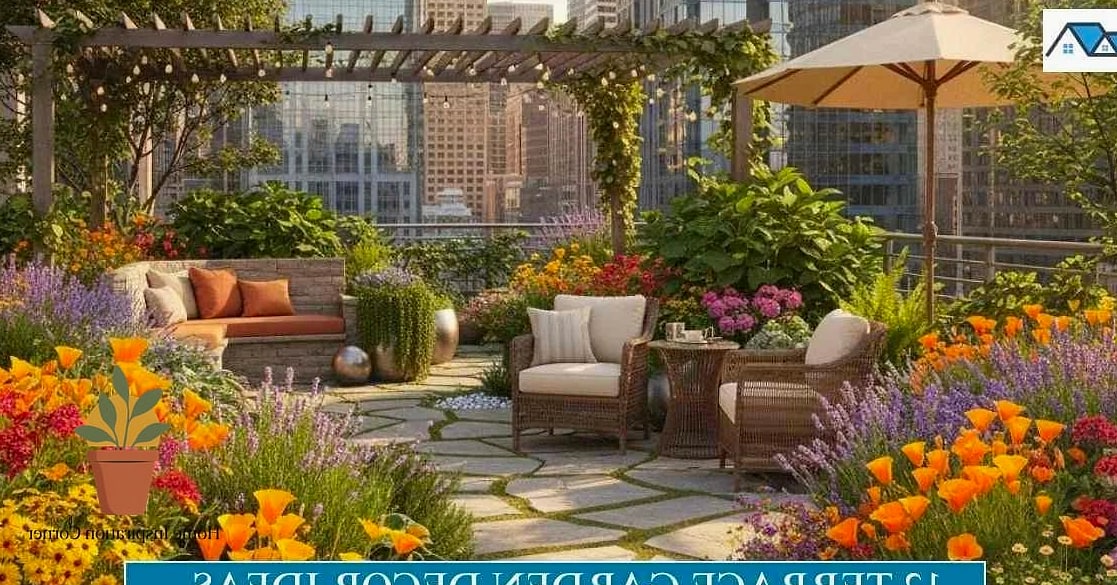
An awkward empty corner is one of the most common terrace problems, and a vertical garden solves it without eating up floor space. Think modular planter panels mounted to the wall, filled with a mix of trailing greenery and a few flowering plants for color.
This works especially well on narrow terraces where ground space is limited but wall space is going to waste. Herbs are a popular pick here too — basil, mint, and rosemary all do well in vertical setups and give you something useful, not just pretty.
Maintenance is moderate; you’ll want a self-watering system or at least a consistent watering schedule since vertical planters dry out faster than ground pots.
Mismatched Furniture to a Curated Lounge Set
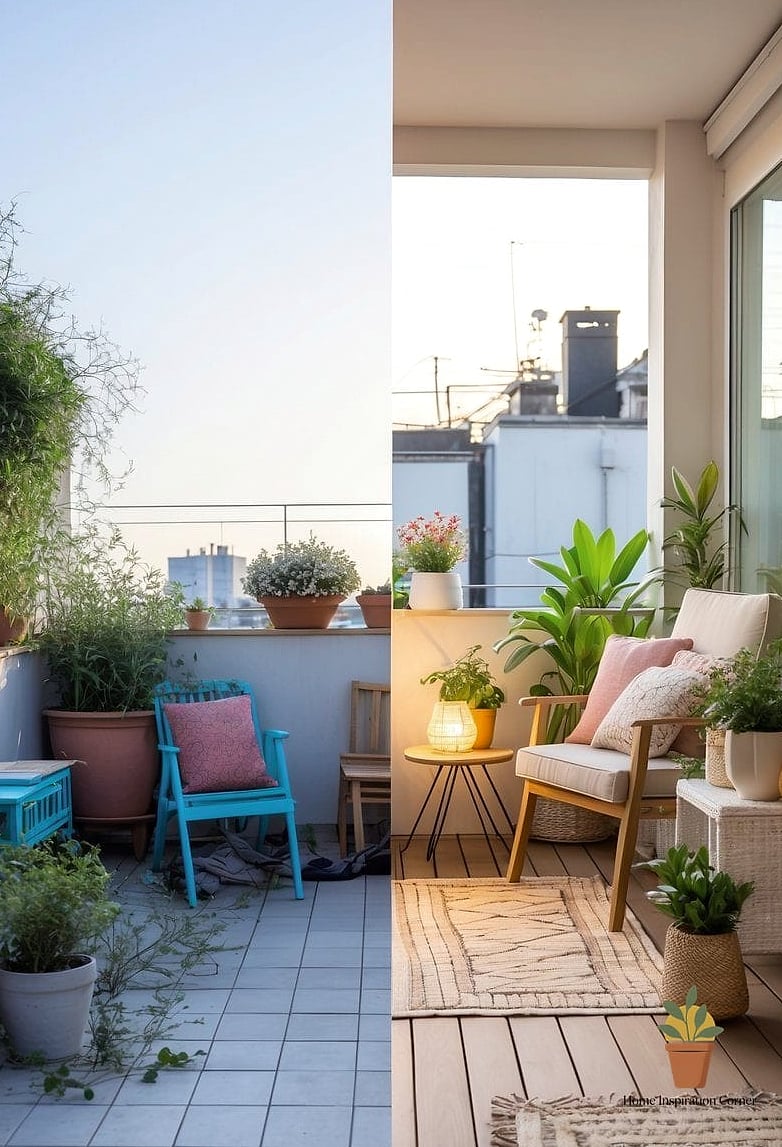
The before photo usually shows a random assortment of furniture — maybe a plastic chair from the garage, an old bench, a table that’s seen better days. The after brings in a matched lounge set in a neutral color palette, often rattan or teak with weatherproof cushions.
Buying a matched set instantly makes a terrace look intentional instead of thrown together. If a full new set isn’t in the budget, even reupholstering existing cushions in a coordinating fabric goes a long way.
Natural materials like teak age beautifully outdoors and only need occasional oiling to keep their color from graying out.
Blank Wall to Statement Lighting Feature
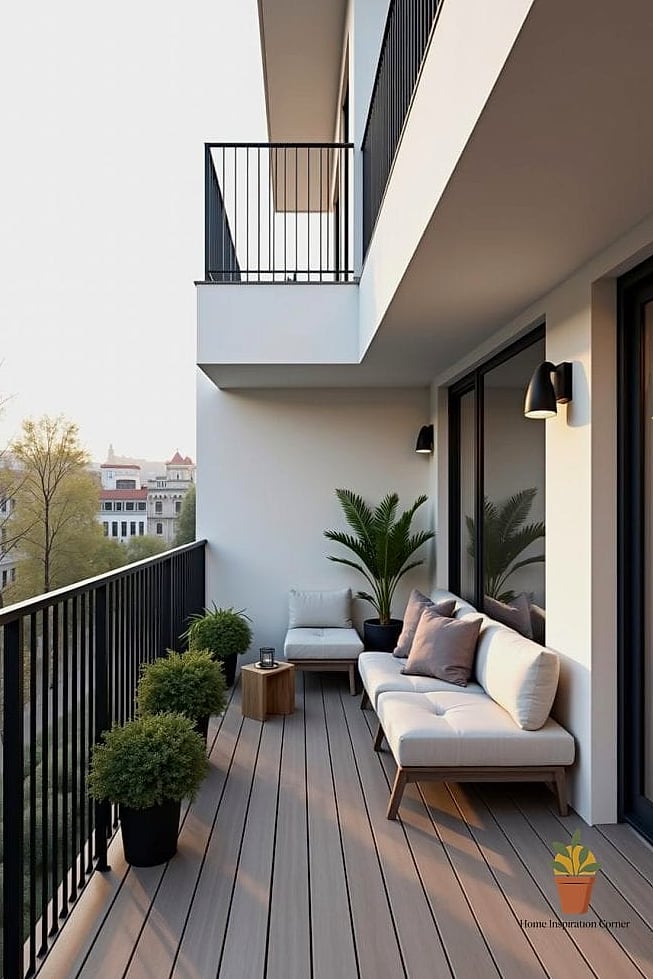
A plain terrace wall becomes something special with layered lighting — string lights up top, a couple of wall sconces at eye level, and maybe a lantern or two on the ground. Layered lighting is one of those details that photographs well but also just makes evenings outside so much more pleasant.
This is a great low-cost, high-impact update. Solar-powered options are widely available now, which means no electrician and no extra wiring headaches.
For renters, battery-operated string lights with removable adhesive hooks are the way to go since they won’t damage walls or railings.
Dead Space Under Stairs to Hidden Storage
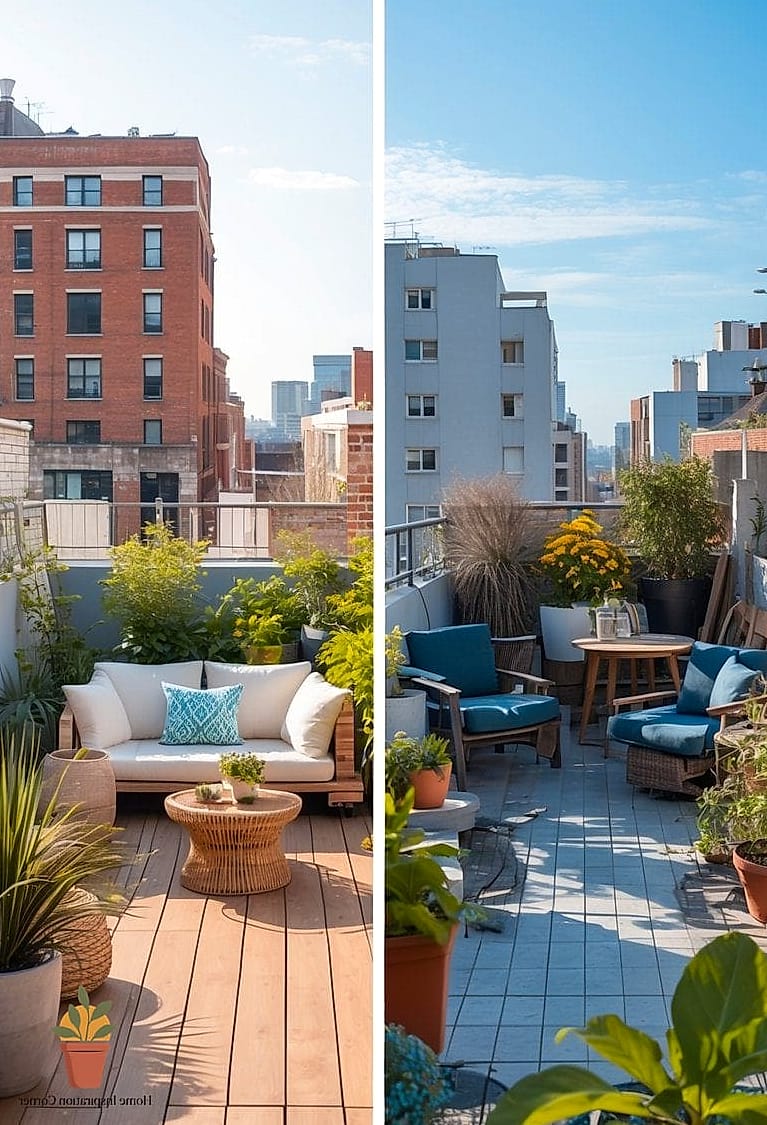
If your terrace has stairs leading up to it, that little pocket underneath is almost always wasted space. Building or buying a weatherproof storage bench that fits the nook gives you a place for cushions, gardening tools, or extra planters without cluttering the main area.
This is a fantastic family-friendly solution since kids’ outdoor toys can disappear into it just as easily as gardening supplies. Look for polypropylene or teak options since both hold up well against rain without warping.
It’s a bit more of a project than some others on this list, but the payoff in reclaimed space is worth it.
Faded Railings to Fresh Painted Accent Color
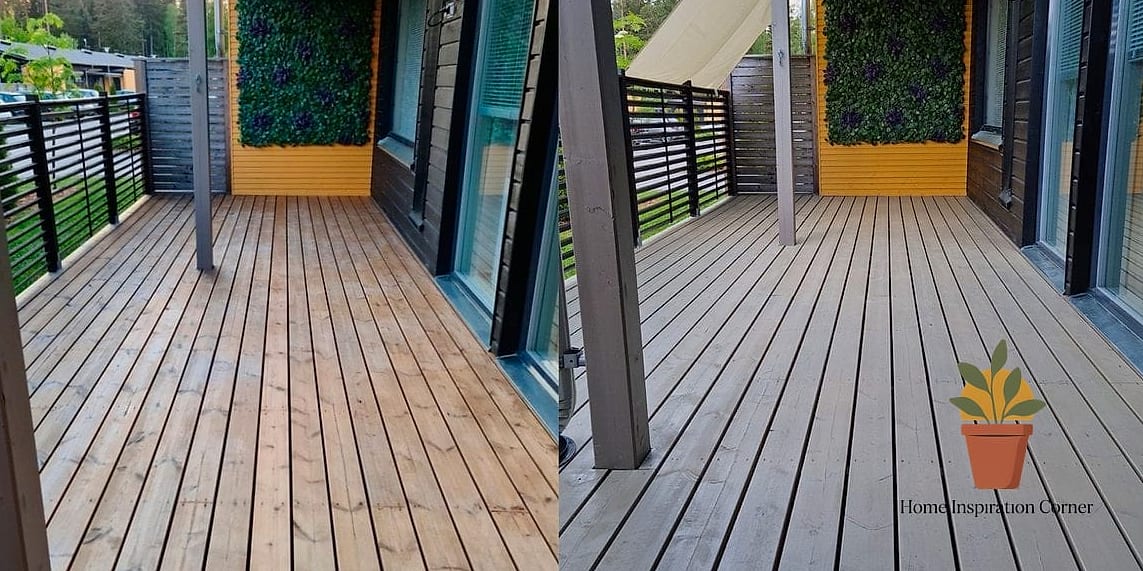
Sometimes the smallest change makes the biggest difference. Old, chipped, or faded railings get a fresh coat of paint in a bold accent color — black, navy, or even a warm terracotta depending on the vibe you’re going for.
This is genuinely one of the most budget-friendly upgrades you can do to a terrace. A quart of exterior-grade paint and a weekend afternoon is really all it takes.
Matte black railings have been especially popular lately, pairing well with both modern and traditional terrace styles.
Cluttered Corner to Outdoor Bar Cart Station
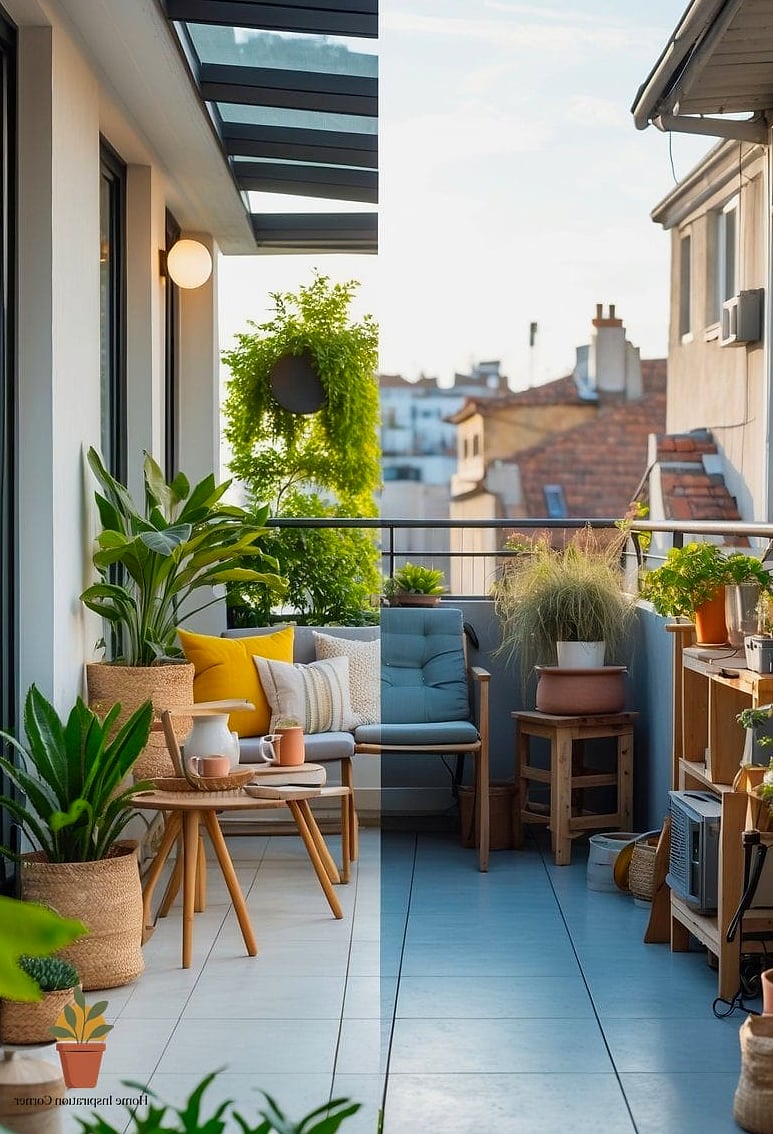
That awkward space nobody knows what to do with becomes a compact bar cart setup — a small rolling cart with glassware, a few bottles, and maybe a mini ice bucket. It’s a fun way to signal “this terrace is for entertaining.”
Choose a cart with weather-resistant materials like powder-coated metal so it can stay outside without rusting through the season. If you’d rather not leave glassware out permanently, a covered cart or one you roll in and out works just as well.
This idea works particularly well on terraces that get regular guest use, like ones connected to a dining area.
Plain Table Setup to Layered Textiles and Tablescape
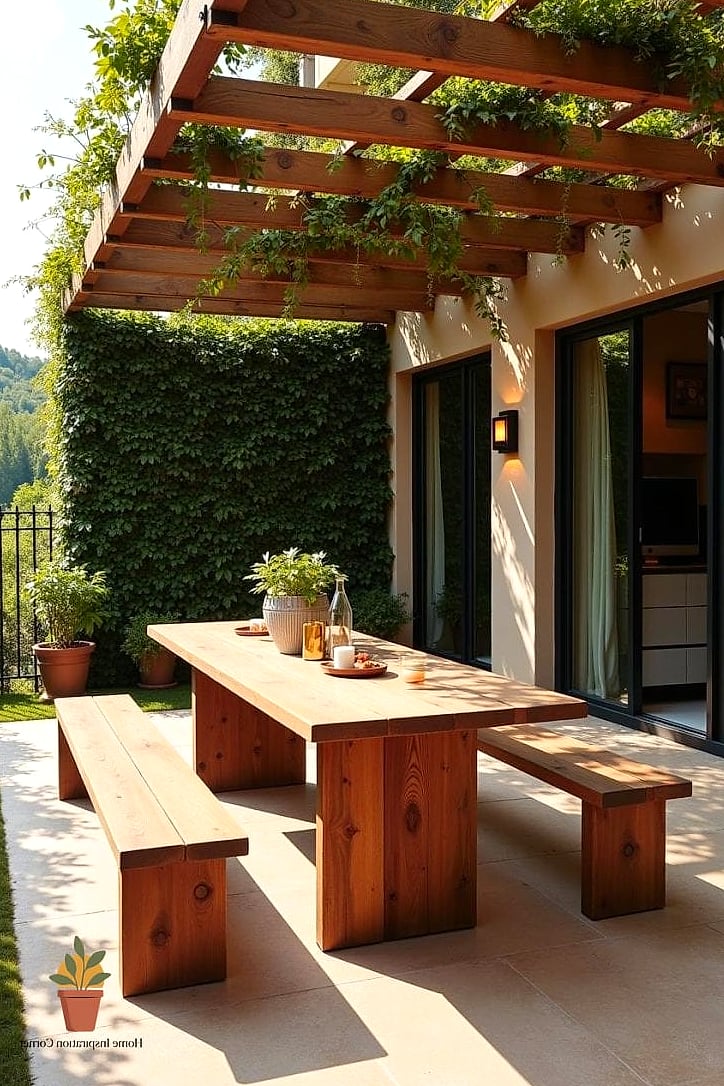
A bare outdoor table with mismatched chairs transforms into an inviting dining spot with a woven placemat set, a simple centerpiece, and coordinating outdoor cushions on the chairs. Layering textiles is an easy way to make outdoor dining feel as considered as an indoor setup.
Look for outdoor fabrics rated for UV and moisture resistance so your cushions don’t fade or mildew after a few months. Removable, machine-washable covers save a lot of hassle come cleaning day.
This transformation is especially popular with people who host regularly since it makes every meal outside feel a little more special.
Sun-Scorched Plants to a Shade-Loving Plant Palette
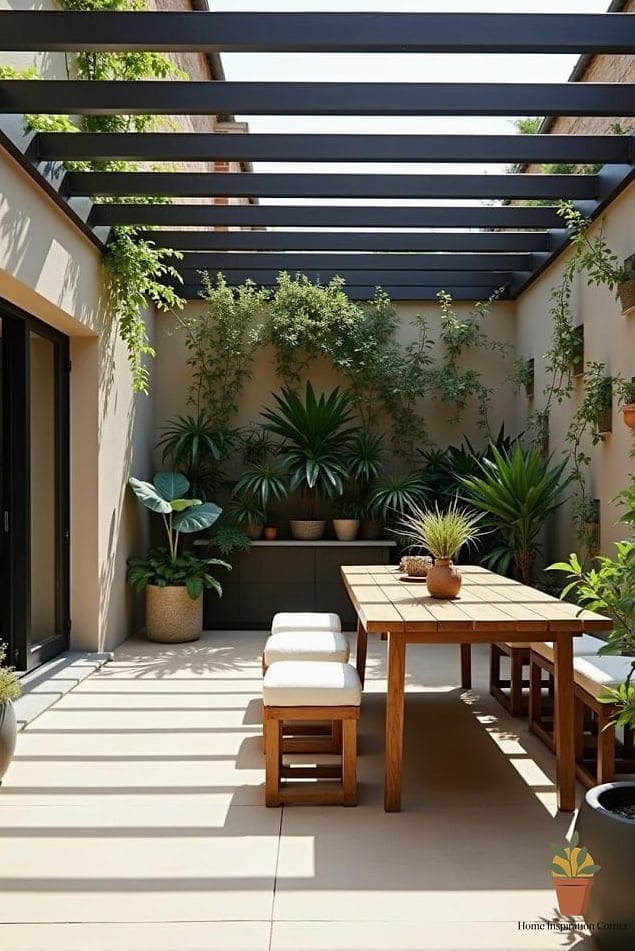
Sometimes the “before” isn’t clutter, it’s just plants that were never suited to the space. A terrace that gets a lot of direct sun but was planted with shade-lovers ends up looking sad no matter how much you water it.
Swapping in sun-tolerant options like succulents, lavender, and ornamental grasses solves the problem at the root, literally. This is one of those fixes that feels obvious once you see it, but it’s easy to overlook when you’re just buying whatever looks nice at the garden center.
Drought-tolerant plants are also a smart move if you’re not around to water daily — lower maintenance without sacrificing the look.
Exposed Utility Boxes to a Decorative Screen
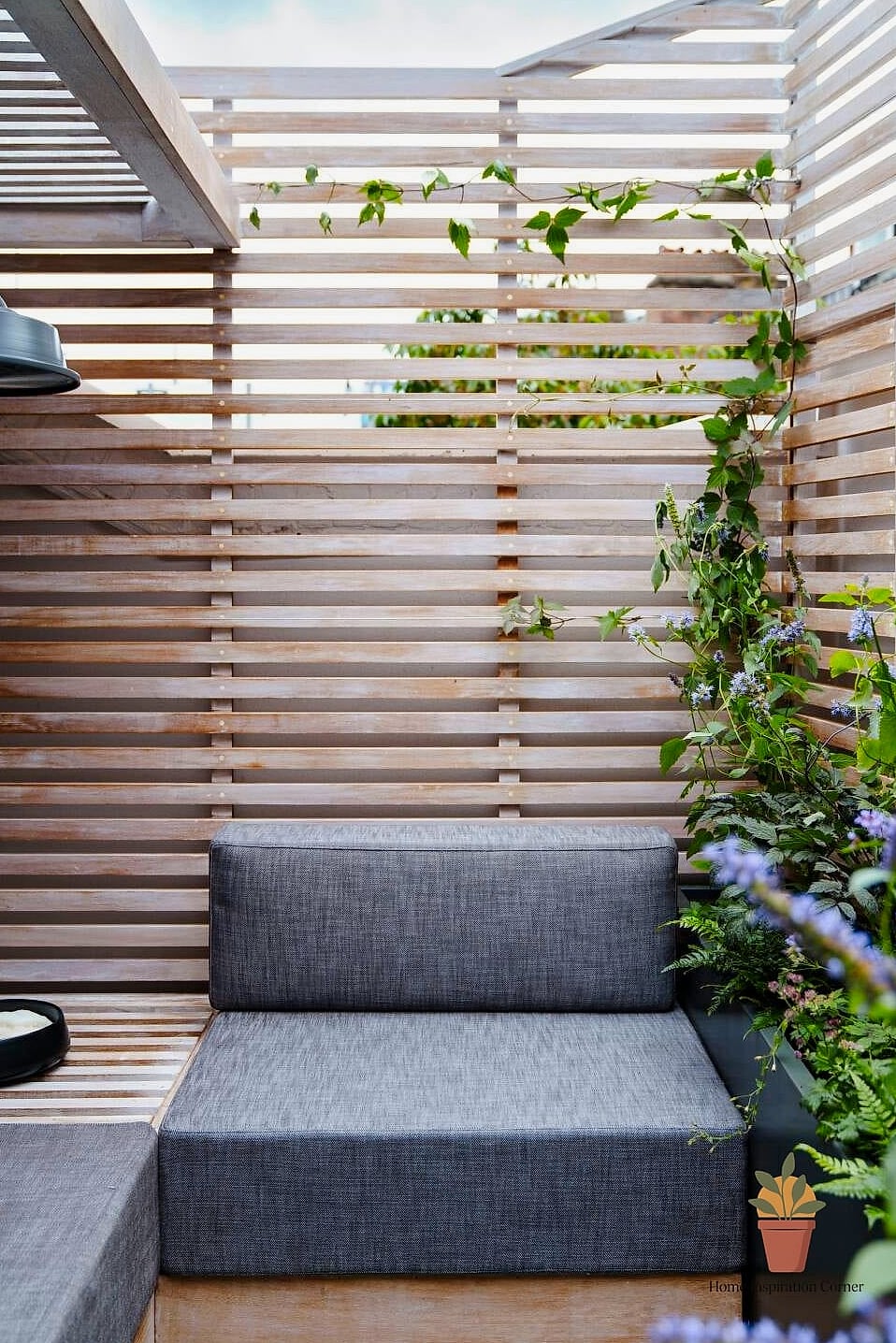
Every terrace seems to have that one spot with an exposed utility box, meter, or ugly pipe. A simple slatted wood screen or trellis with climbing vines hides it completely while adding visual texture.
This is a favorite trick among DIY bloggers because it’s inexpensive and doesn’t require any special skills — just some lattice panels and basic hardware. Bonus points if you plant a fast-growing vine like jasmine or clematis to soften the screen further within a season or two.
Plastic Furniture to Elevated Metal and Wood Pieces
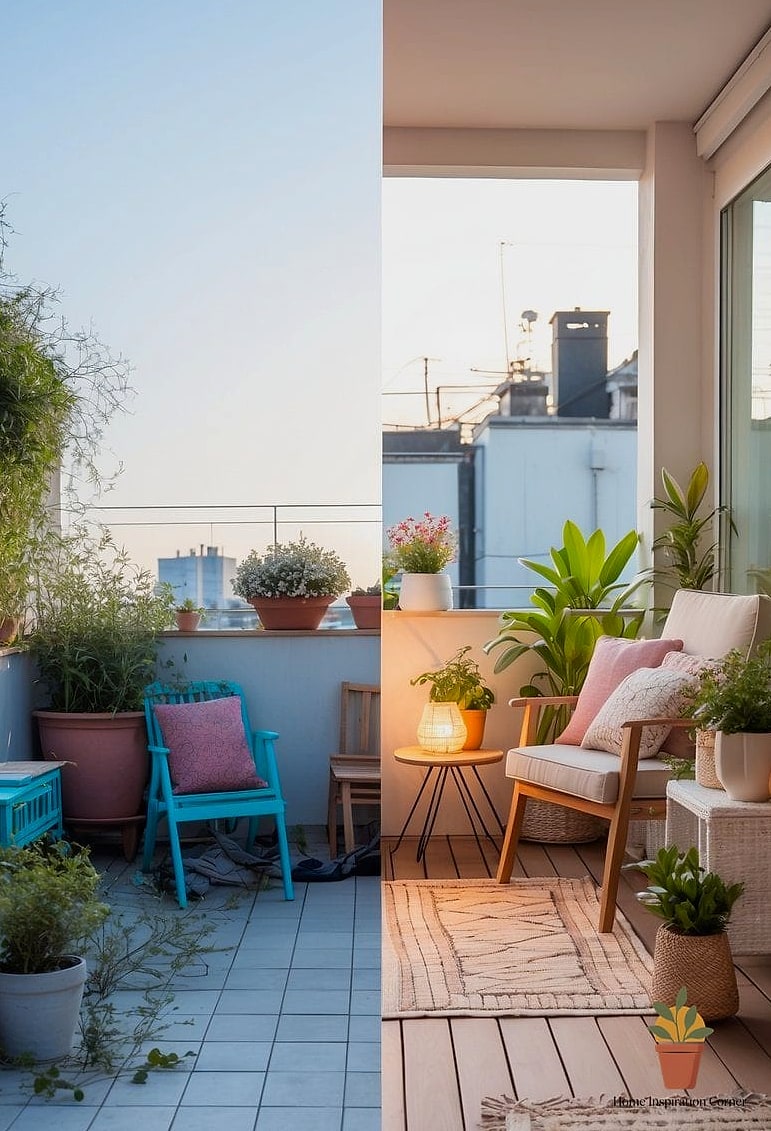
Cheap plastic chairs get replaced with a mixed-material seating arrangement — powder-coated metal frames paired with warm wood accents. The material contrast adds depth that plain plastic just can’t match.
Metal furniture holds up incredibly well outdoors as long as it’s powder-coated or otherwise treated against rust. Pairing it with wood tones keeps the look from feeling too industrial or cold.
This is a slightly bigger investment than some other updates here, but the furniture itself often lasts a decade or more with basic care.
No Privacy to Bamboo Privacy Fencing
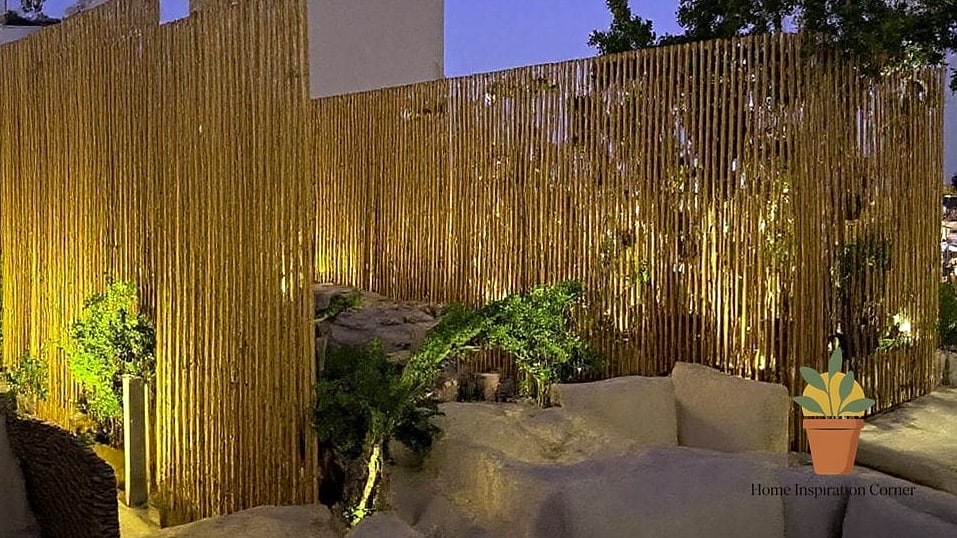
Terraces facing a busy street or close neighbors often feel too exposed to actually relax in. Installing a rolled bamboo privacy screen along the railing solves that instantly and adds a natural, textured look at the same time.
This is one of the easiest DIY installs on the list — most rolls just zip-tie directly onto existing railings in under an hour. It’s also fully renter-friendly since it removes without any damage.
Bamboo does need occasional resealing to prevent it from graying, but that’s a once-a-year task at most.
Empty Floor to a Layered Outdoor Rug
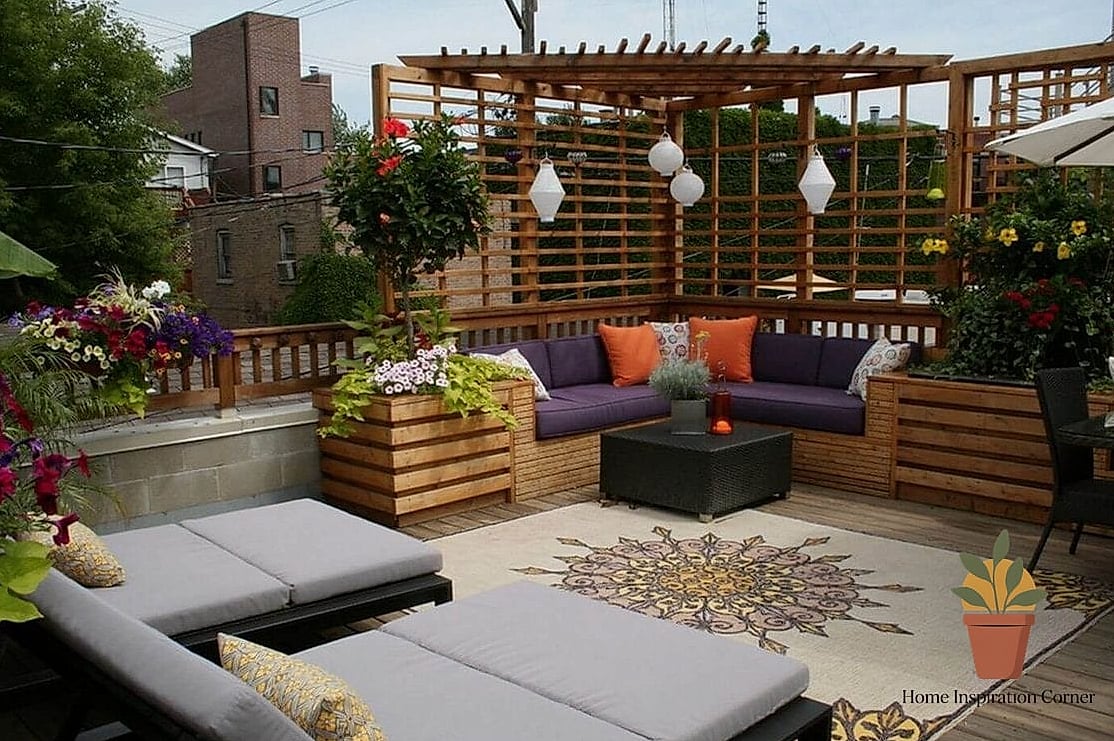
An outdoor rug is such an underrated terrace upgrade. The before photo shows bare tile or concrete; the after shows a patterned polypropylene rug that instantly defines the seating area and adds warmth underfoot.
Polypropylene rugs are ideal here because they resist mold and mildew, which matters a lot for anything left outside through rain. A quick hose-down handles most spills and dirt.
Layering a smaller rug on top of a larger neutral one adds even more visual interest if you want to get a little fancier with it.
Dark Corner to Reflective Mirror Accent
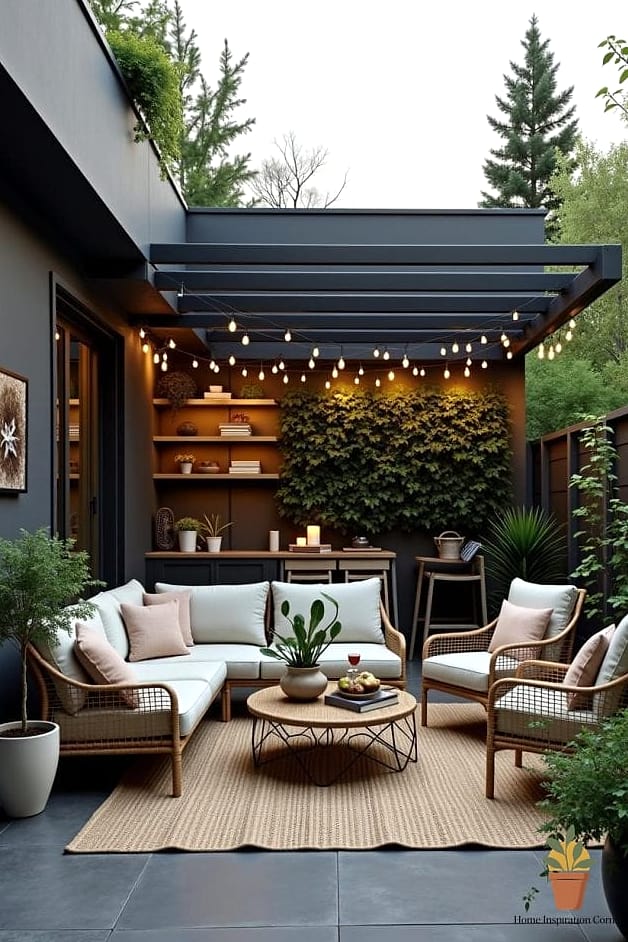
An unexpected trick: hanging a weatherproof mirror on a terrace wall to bounce light around a shadier corner. It sounds like an interior design move, but it works outside too, especially on terraces boxed in by walls on multiple sides.
Look specifically for mirrors rated for outdoor use since regular glass and backing will degrade quickly with moisture exposure. This idea works best paired with a plant or lantern positioned to reflect in it.
Overgrown Planters to Structured Raised Beds
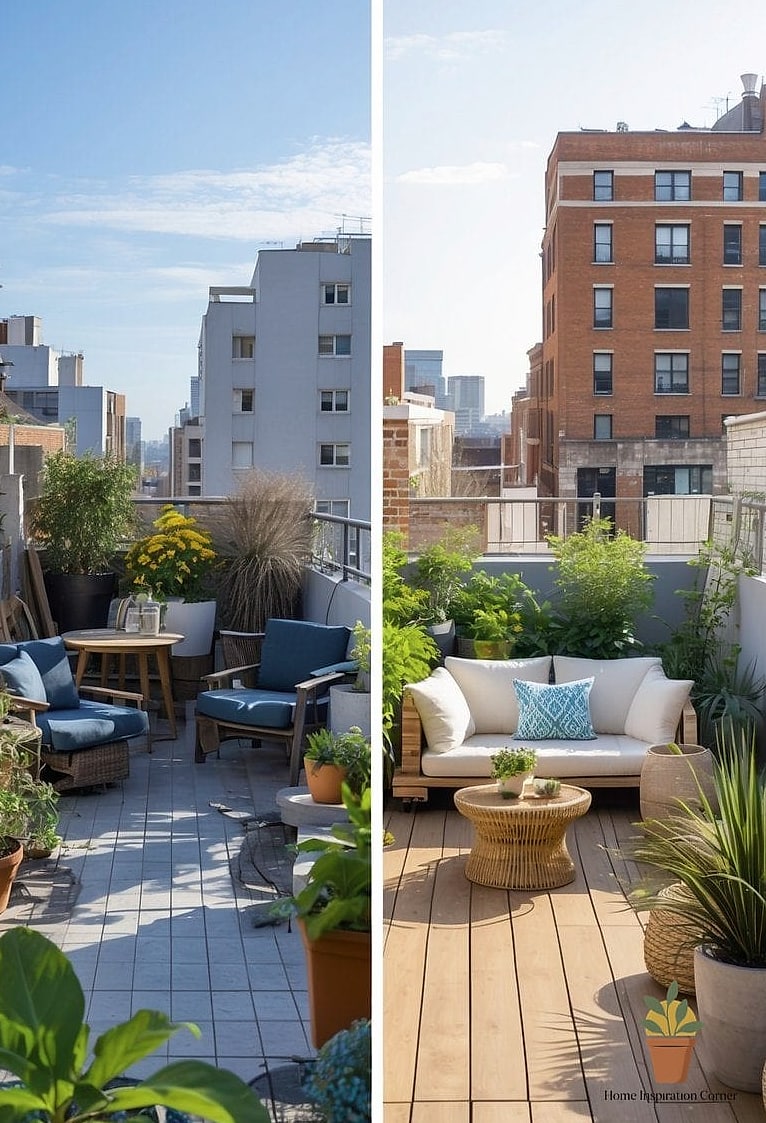
Overflowing, mismatched pots get replaced with clean-lined raised planter boxes, often in a matching wood or metal finish. This creates instant order and makes even a jungle of plants look intentional.
Cedar and composite materials are popular here since both resist rot far longer than basic pine. Raised beds also make gardening easier on the knees and back if that’s part of the appeal for you.
This transformation tends to be a favorite among people who actually garden versus those who just want greenery for looks.
Flat, Shadeless Terrace to a Pergola-Covered Retreat
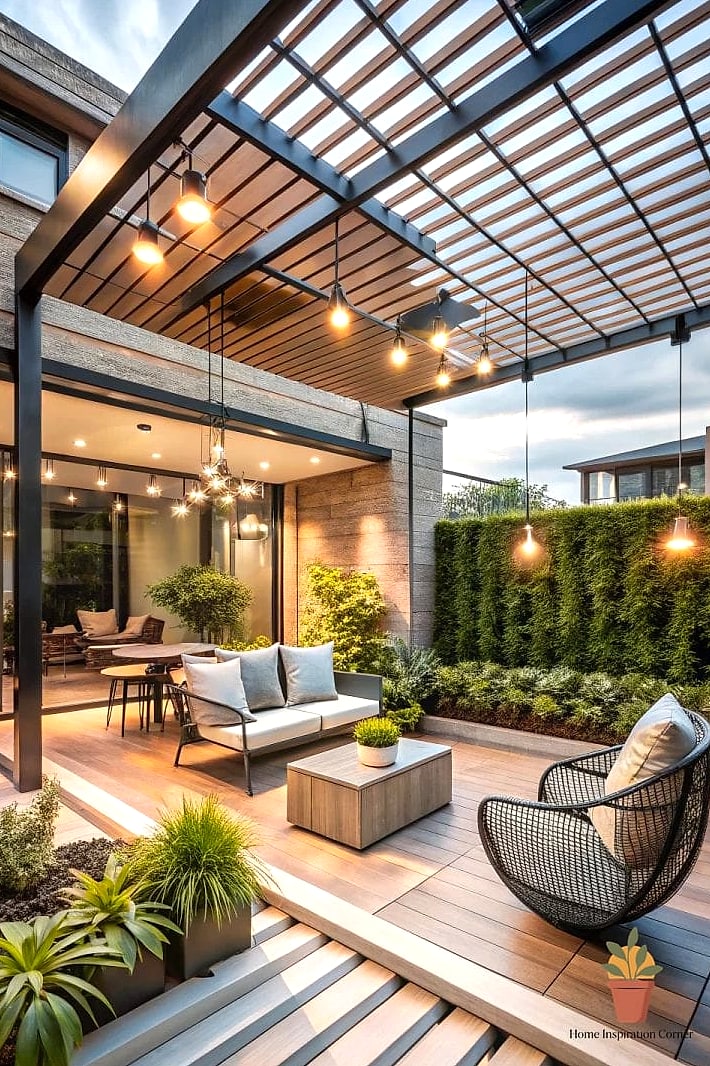
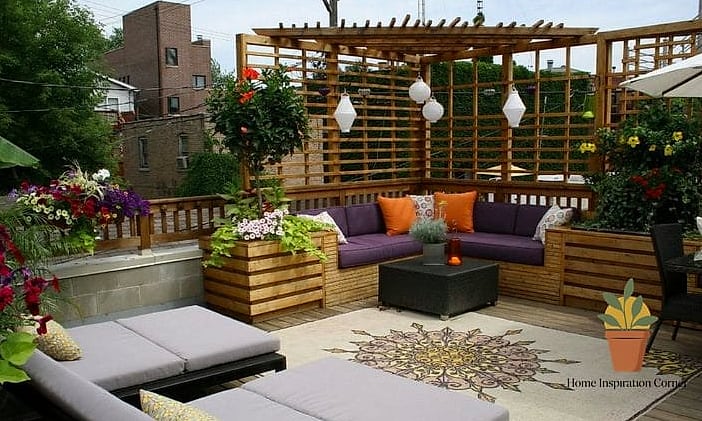
A terrace with zero shade often goes unused during the hottest parts of the day. Adding a simple pergola structure, even a smaller freestanding one, changes that completely and gives the space a defined “room” feeling.
Retractable canopy pergolas are especially popular since you can adjust coverage based on weather. This is a bigger project cost-wise, but it’s often the single change that makes a terrace usable year-round instead of just a few months.
Cluttered Surfaces to Minimalist Styling
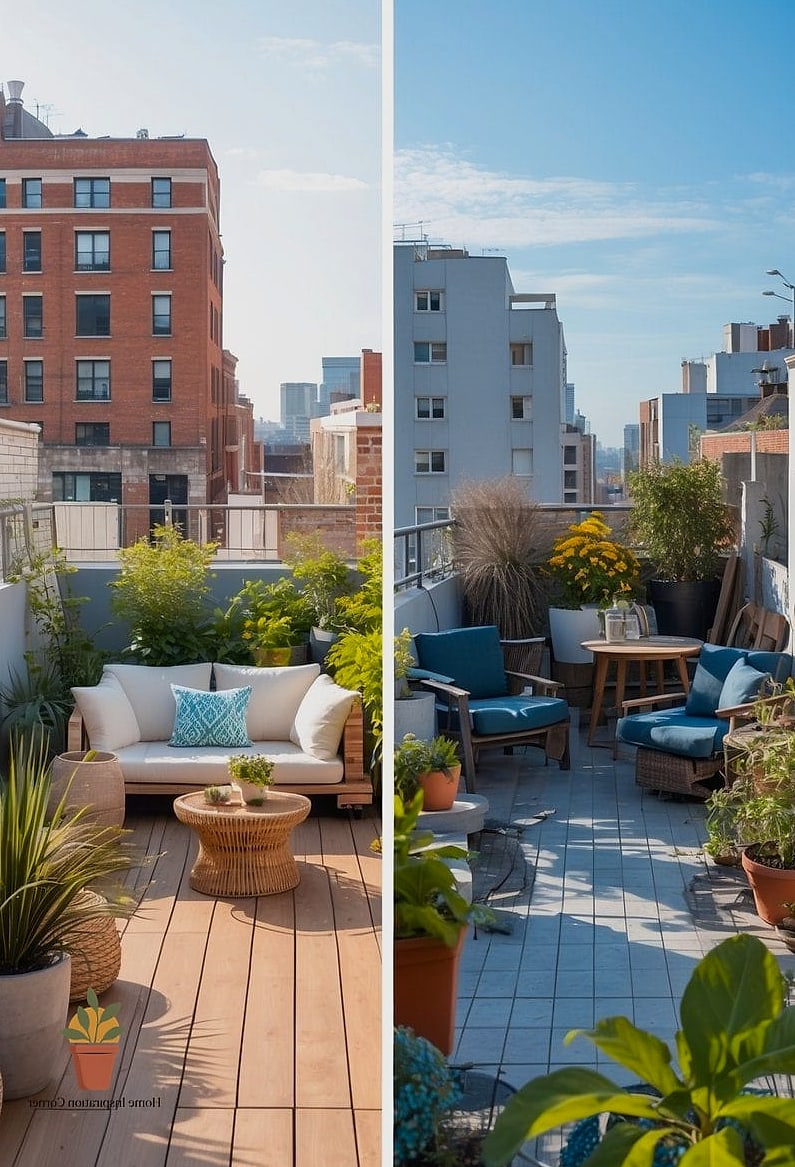
Sometimes the transformation isn’t adding things, it’s removing them. A terrace covered in decorative knickknacks, mismatched candles, and random odds and ends gets edited down to just a few intentional pieces — one large lantern, one plant, one textured throw.
This minimalist approach photographs beautifully and also just makes maintenance easier since there’s less to clean or move around. It’s a good option if you tend to accumulate outdoor decor faster than you use it.
Faded Cushions to Bold Pattern Mixing
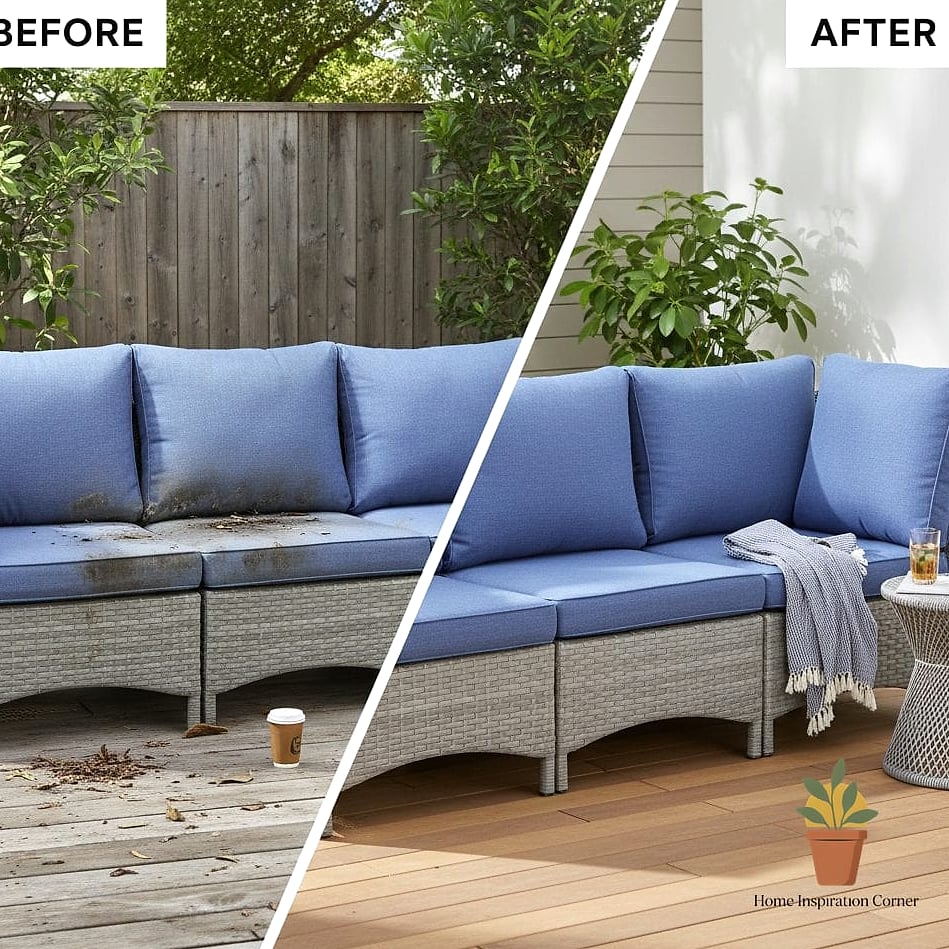
Sun-bleached, mismatched cushions get swapped for a confidently mixed pattern scheme — maybe a stripe paired with a geometric print, tied together by a shared color palette. It sounds risky, but sticking to two or three coordinating colors keeps it from feeling chaotic.
Outdoor-rated fabric is non-negotiable here since regular upholstery fades and mildews fast outside. This is an easy seasonal refresh too, since cushion covers are one of the cheaper things to swap out when you want a new look without redoing the whole terrace.
Looking through all of these, the common thread isn’t really about spending a lot of money. It’s about paying attention to what’s not working and making one or two intentional changes instead of trying to fix everything at once. Pick whichever transformation matches your terrace’s biggest pain point right now, and go from there.