
20 Concrete Patio Ideas That Are Both Stylish and Practical
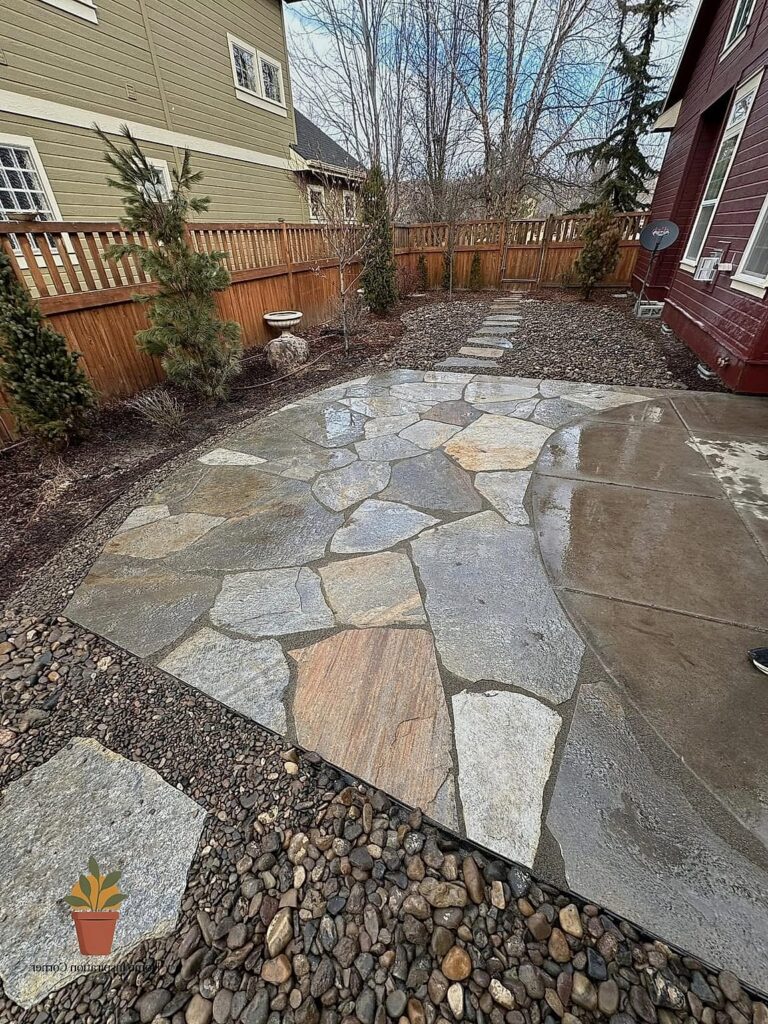
- Stamped Concrete That Mimics Natural Stone
- Exposed Aggregate for a Textured Look
- Stained Concrete in Rich Earth Tones
- Geometric Scored Patterns
- Two-Tone Concrete Borders
- Concrete Pavers Instead of a Solid Slab
- Herringbone Paver Layout
- Polished Concrete for a Sleek Modern Vibe
- Concrete with Inlaid Wood or Metal Strips
- Cool-Toned Gray Concrete for a Contemporary Look
- Concrete Patio with a Fire Pit Cutout
- Curved Concrete Edges Instead of Straight Lines
- Concrete Patio with Built-In Planters
- Textured Concrete with a Broom Finish
- Concrete Steps and Patio in One Continuous Pour
- Concrete Patio Paired with a Pergola
- Concrete with Colored Aggregate for Pop
- Large-Format Concrete Slabs for a Minimalist Look
- Concrete Patio with Radiant Heating Underneath
- Stenciled Concrete Overlay for an Affordable Refresh
20 Concrete Patio Ideas That Are Both Stylish and Practical
Concrete gets a bad reputation as the boring default patio material, and honestly, that’s a shame. It’s one of the most versatile, budget-friendly, and durable options out there once you know how to work with it. From stamped patterns that mimic natural stone to sleek stained finishes that look straight out of a modern magazine, concrete patios have come a long way from plain gray slabs.
If you’re planning a backyard refresh or starting from scratch, these 20 concrete patio ideas will show you just how much personality this material can actually have.
Stamped Concrete That Mimics Natural Stone
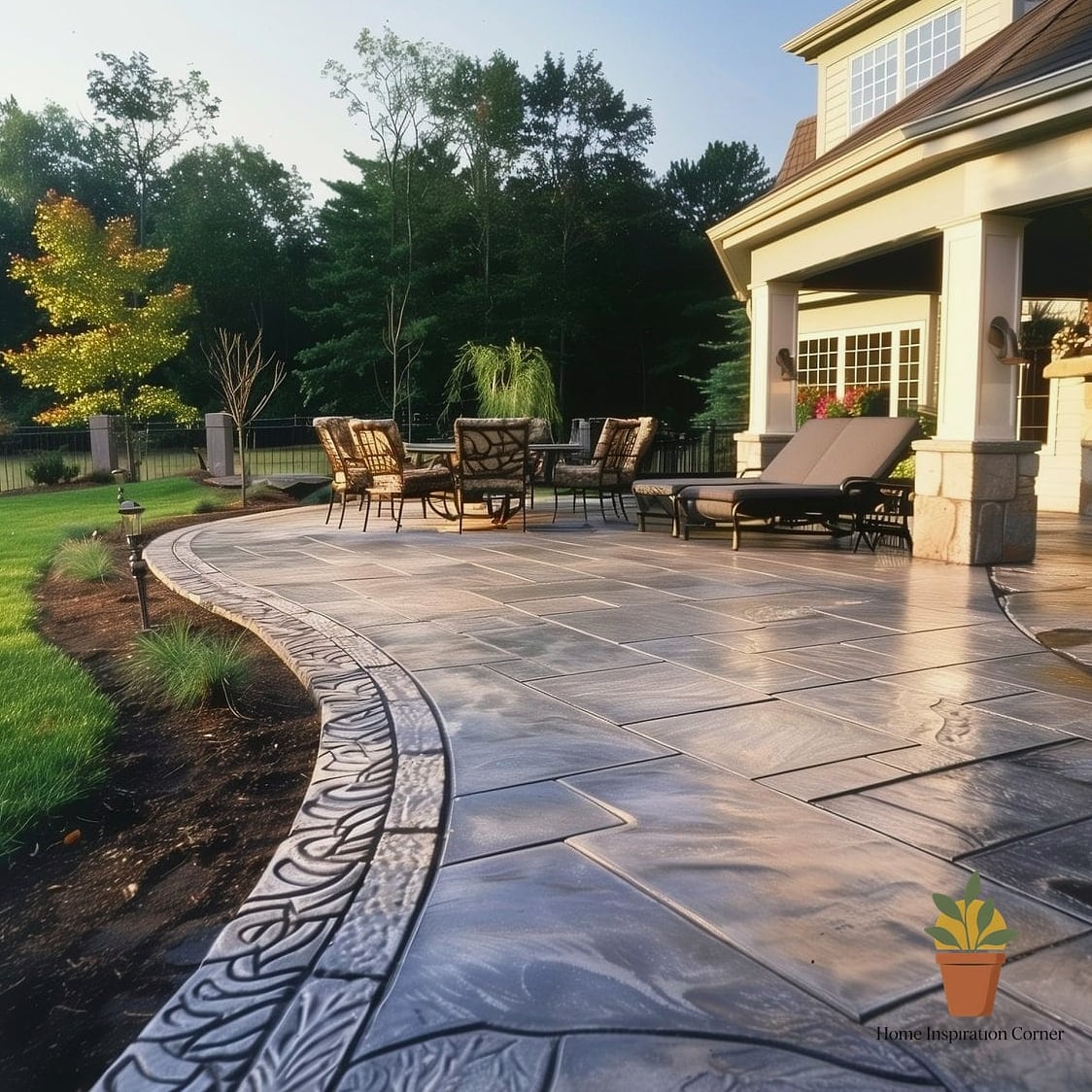
If you love the look of flagstone or slate but not the price tag, stamped concrete is your best friend. Contractors press patterns and textures into wet concrete before it cures, creating a surface that looks remarkably close to the real thing.
This works especially well for larger patios where natural stone would get expensive fast. You’ll want to pick a color that complements your home’s exterior—warm grays and tans tend to blend into most landscapes nicely. Maintenance is pretty simple too, just an occasional resealing every few years to keep the color from fading.
Exposed Aggregate for a Textured Look
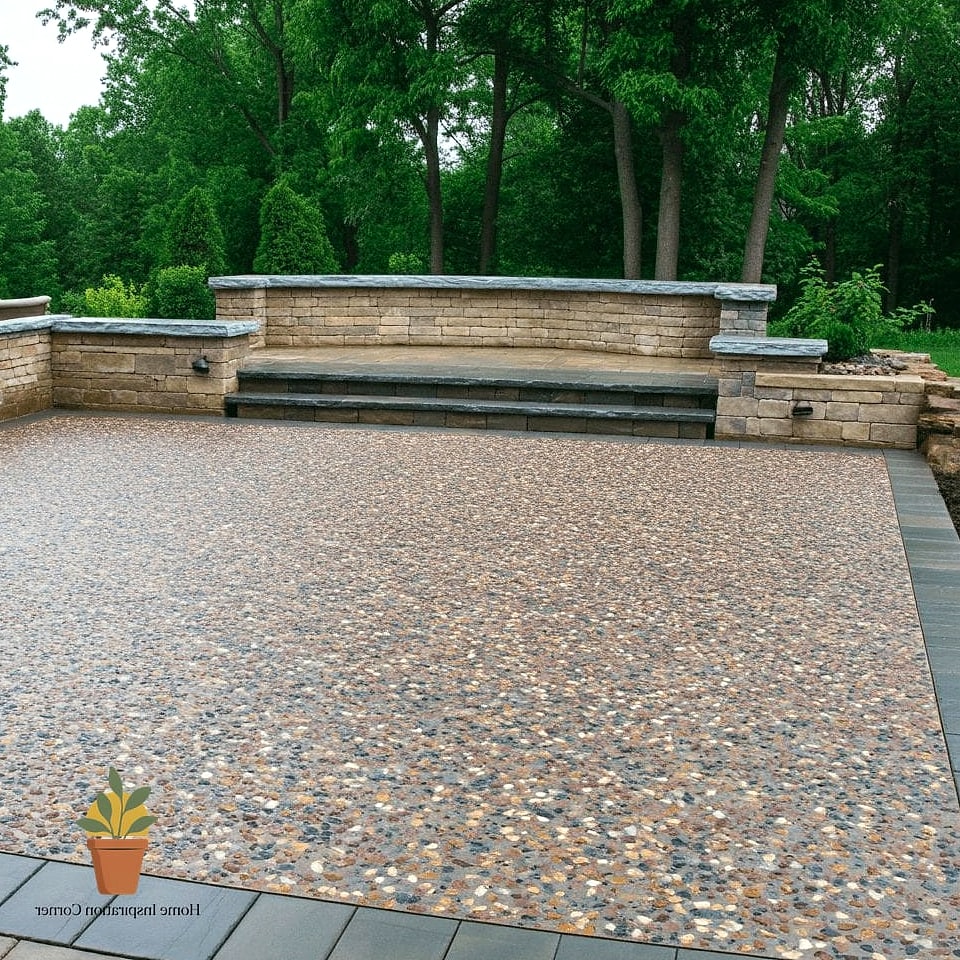
Exposed aggregate concrete reveals the small stones and pebbles mixed into the concrete itself, giving you a naturally textured, slip-resistant surface. It’s a favorite for pool decks and walkways because of that grip factor.
Beyond function, it also adds visual interest without looking busy. You can choose the aggregate color to match your outdoor palette, whether that’s warm earth tones or cooler grays. It’s not the easiest DIY project since timing the exposure process takes some skill, so this one’s usually best left to a pro.
Stained Concrete in Rich Earth Tones
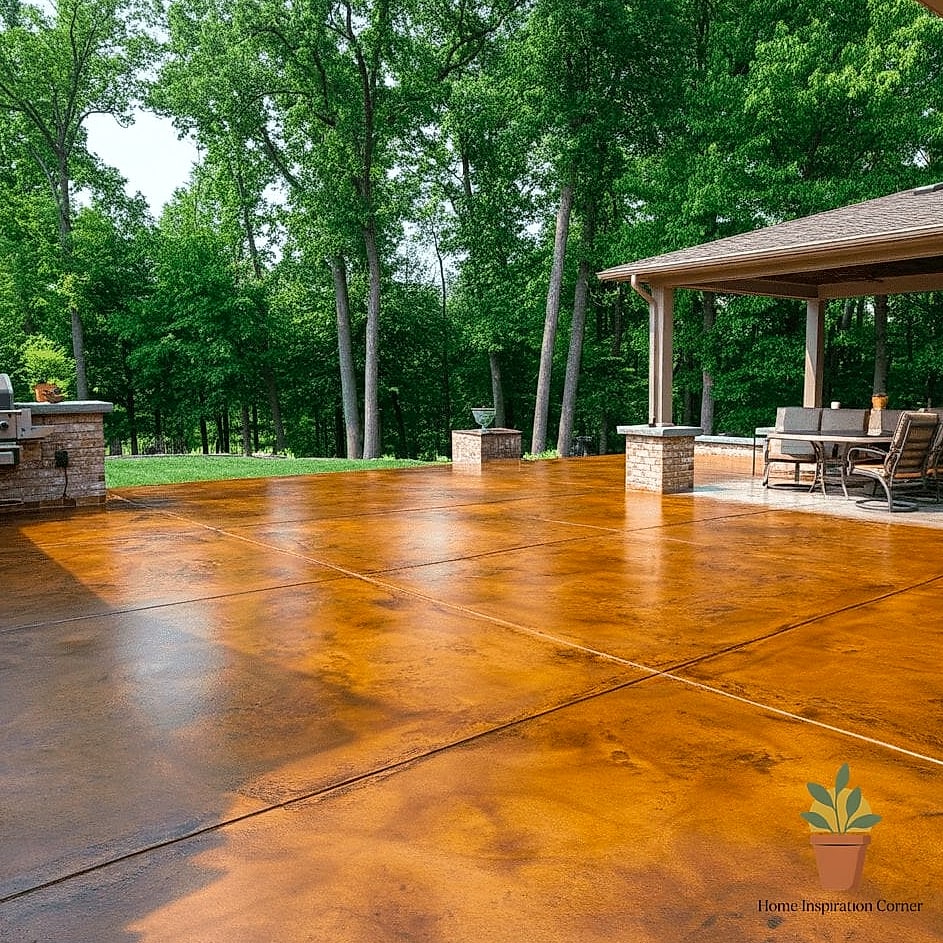
Acid staining transforms plain concrete into something that looks almost like polished leather or marbled stone. The colors vary slightly across the surface, which actually works in its favor since no two staining jobs look identical.
Deep browns, terracottas, and warm ambers tend to hold up beautifully outdoors and pair well with wood furniture and greenery. This is a great option if you already have a concrete slab and just want to upgrade its appearance without a full tear-out.
Geometric Scored Patterns
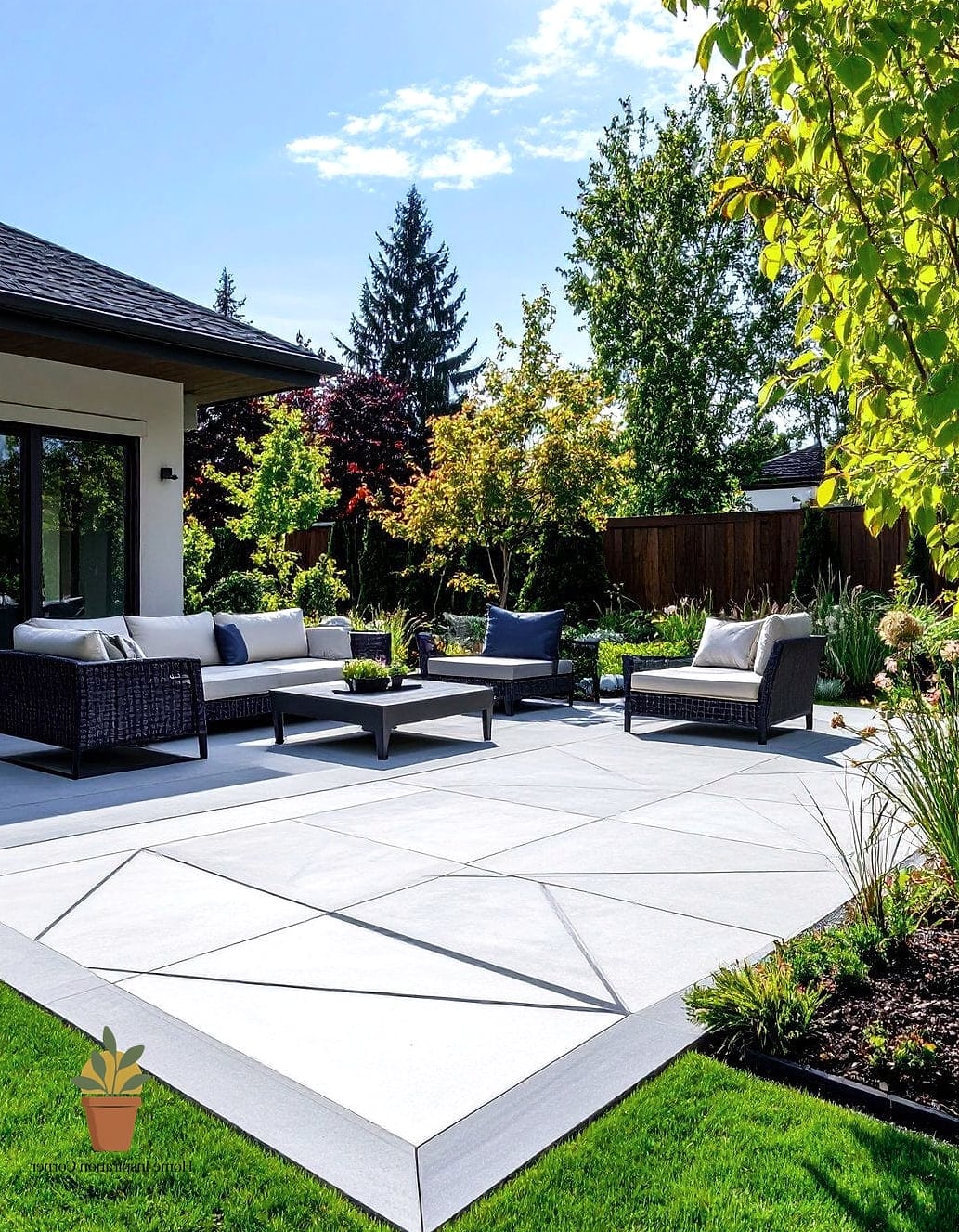
Scoring involves cutting shallow lines into concrete to create geometric patterns, like large squares, diamonds, or herringbone-style grids. It’s a subtle way to break up a big slab of concrete so it doesn’t feel like one giant gray rectangle.
This idea works particularly well for modern or minimalist outdoor spaces. You can even combine scoring with staining to highlight certain sections in a different tone, which adds depth without needing extra materials.
Two-Tone Concrete Borders
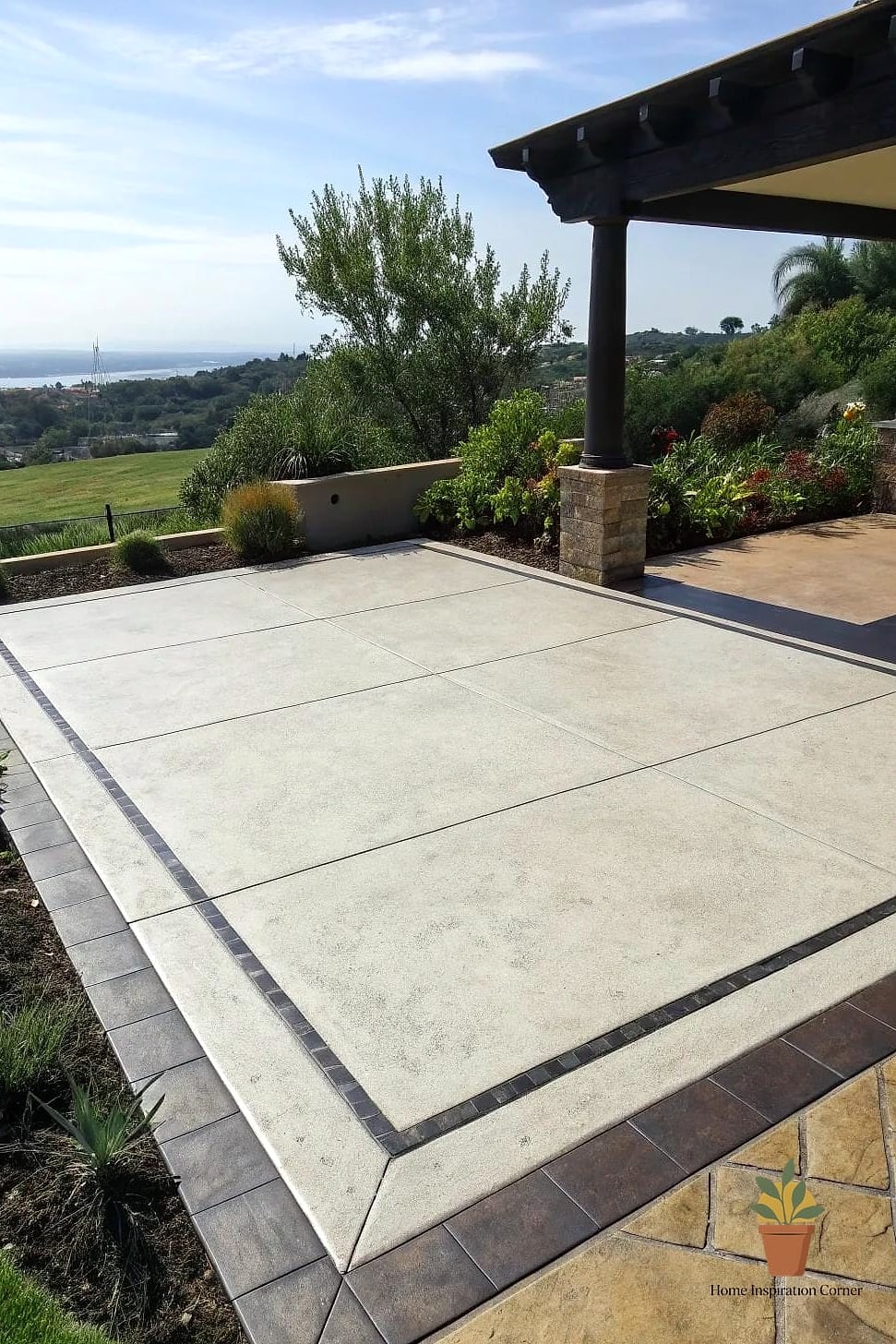
Adding a contrasting border around the perimeter of your patio instantly makes it look more intentional and finished. Think a darker charcoal edge around a lighter main surface, or vice versa.
This technique also helps define the patio space from the surrounding lawn or garden beds. It’s a relatively affordable upgrade if you’re already pouring new concrete, since it just requires an extra step during the pour rather than additional materials.
Concrete Pavers Instead of a Solid Slab
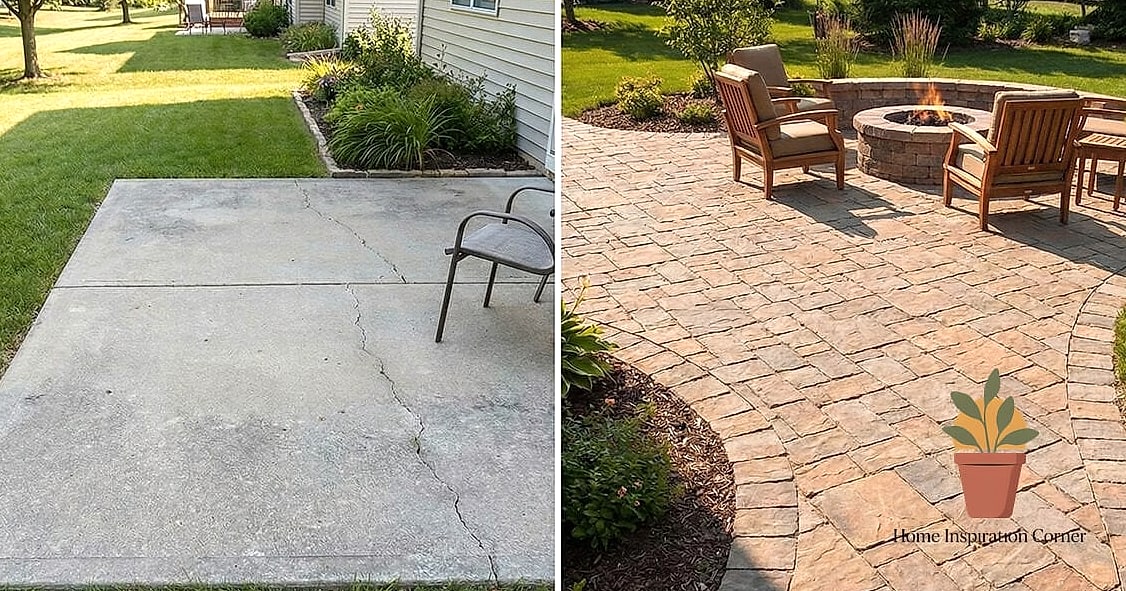
Concrete pavers give you that structured, clean look of a slab patio but with more flexibility in layout and repair. If one paver cracks or stains badly down the road, you can replace just that piece instead of the whole patio.
They come in tons of shapes, sizes, and finishes now, from smooth modern squares to textured stone-look options. Pavers also drain better than solid slabs since water can seep through the joints, which is a real plus in areas with heavy rain.
Herringbone Paver Layout
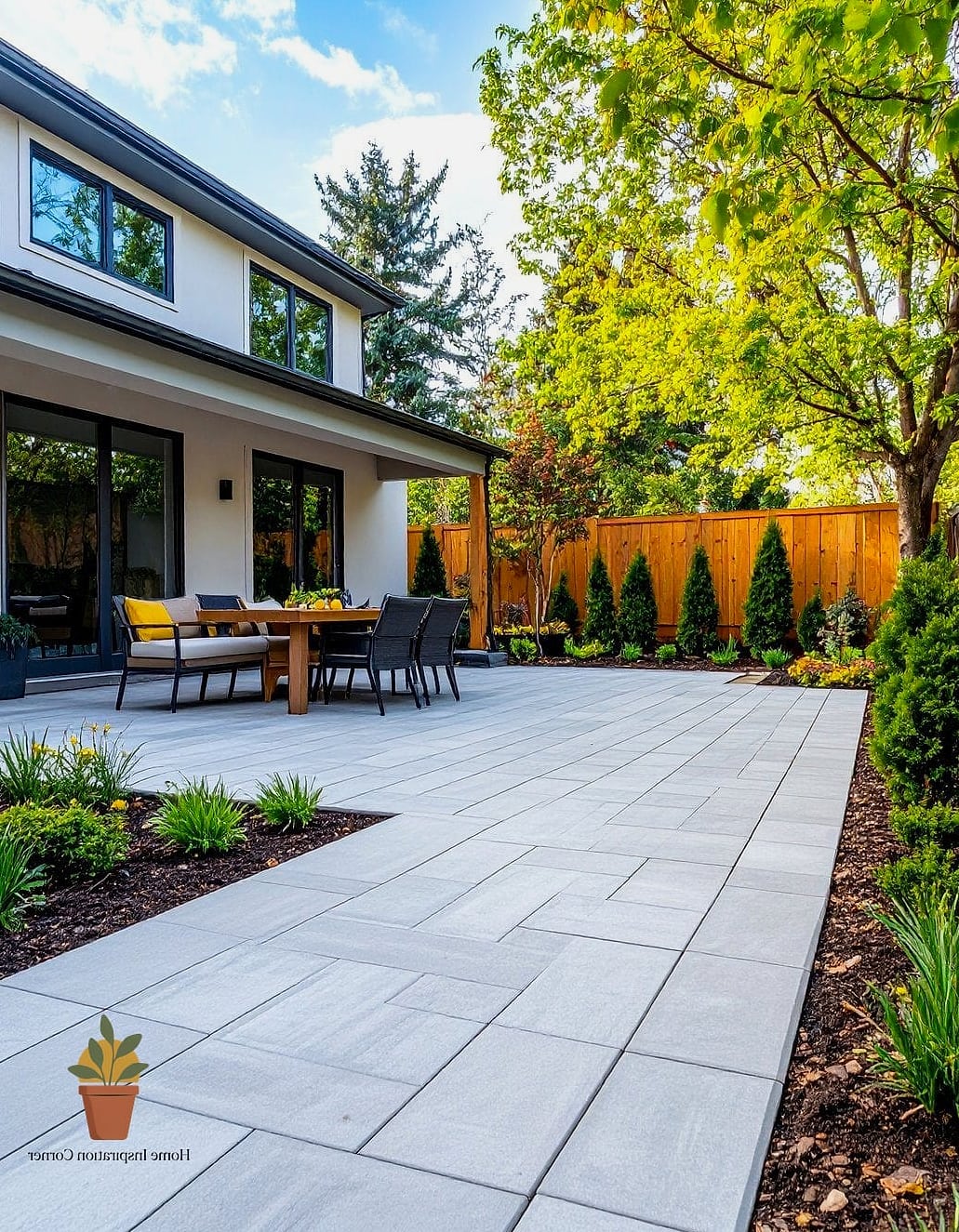
Speaking of pavers, laying them in a herringbone pattern adds serious visual interest to an otherwise simple patio. This layout has been trending hard in outdoor spaces, and for good reason.
It works especially well with rectangular pavers and creates a sense of movement that draws the eye across the space. It’s a bit more labor-intensive to install than a basic grid pattern, but the payoff in curb appeal is worth it for a lot of homeowners.
Polished Concrete for a Sleek Modern Vibe
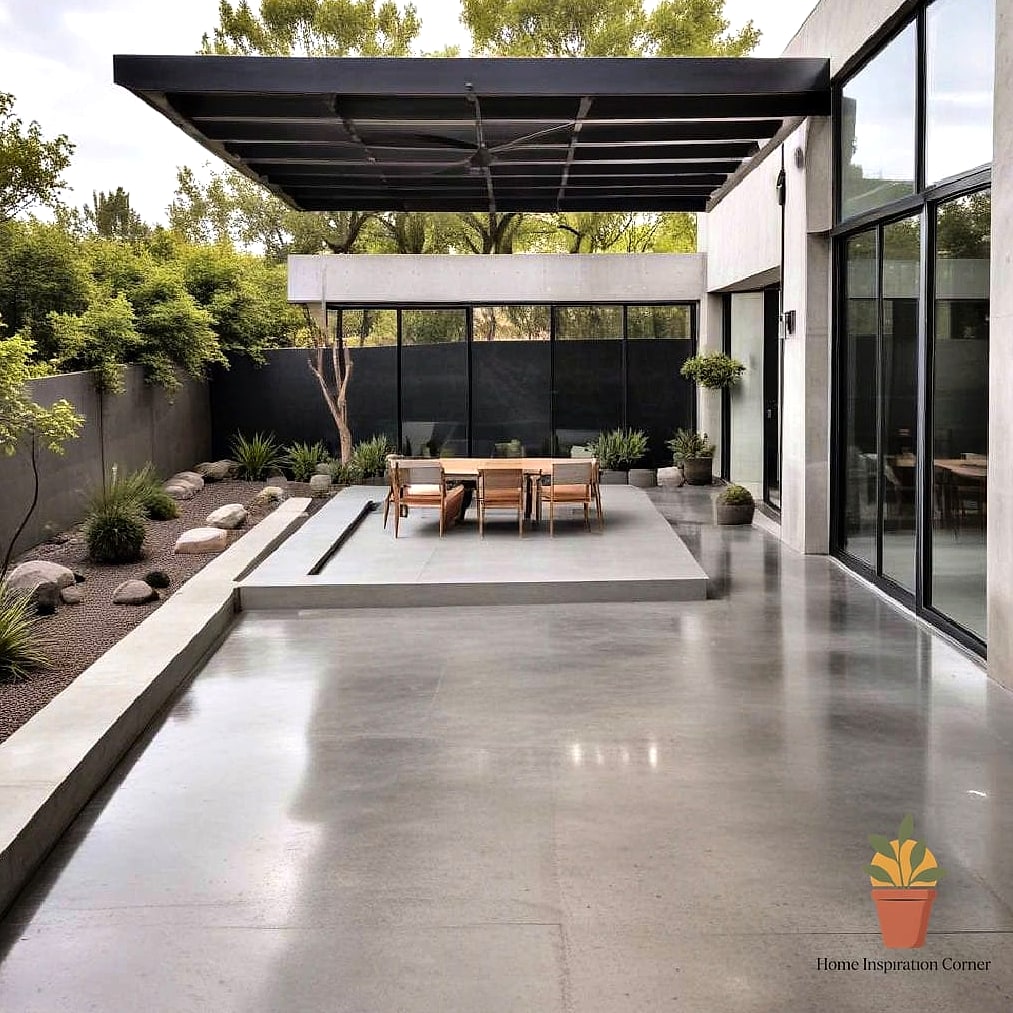
Polished concrete brings an industrial-chic edge to outdoor living spaces, especially covered patios or those attached to modern homes. The surface gets ground down and buffed until it has a smooth, almost glossy sheen.
It reflects light beautifully, which can make smaller patios feel more open and bright. Just keep in mind polished concrete can get slippery when wet, so it’s better suited for covered areas than fully exposed ones.
Concrete with Inlaid Wood or Metal Strips
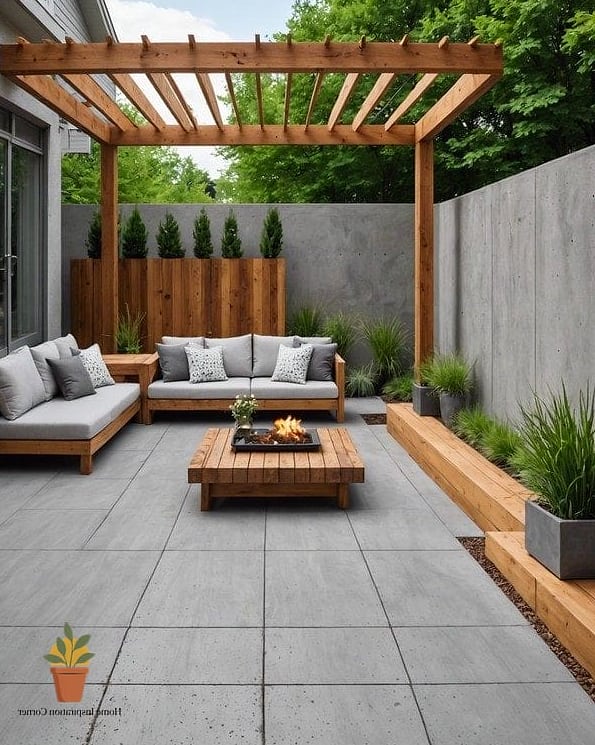
This one’s a favorite among people who want their patio to feel custom-designed rather than mass-produced. Thin strips of wood, metal, or even a contrasting concrete color get set into the slab in a grid or linear pattern.
It adds warmth and breaks up the monotony of a plain surface. Redwood or metal strips tend to hold up best outdoors since they resist rot and rust better than softer woods.
Cool-Toned Gray Concrete for a Contemporary Look
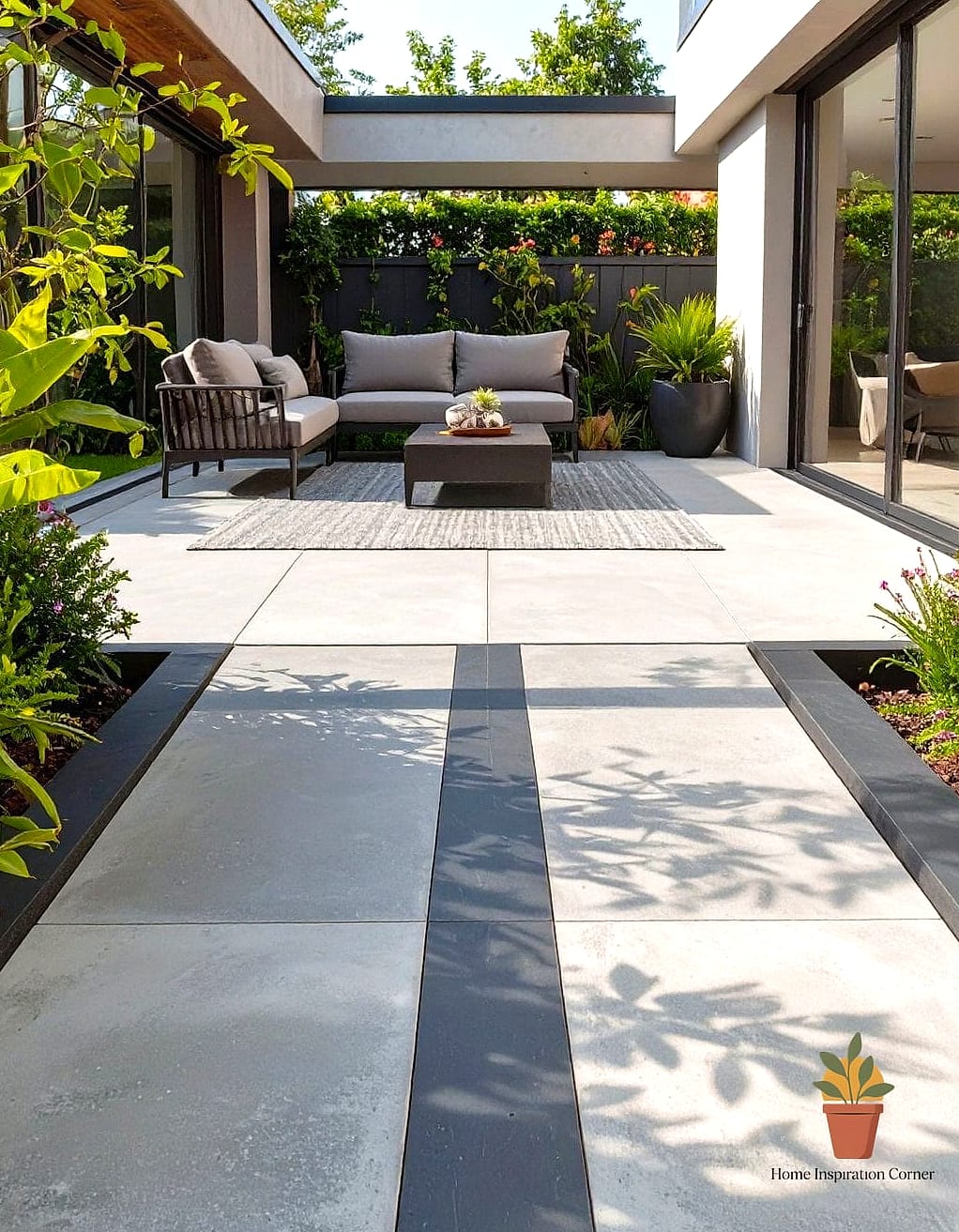
Sometimes simple really is better. A clean, cool-gray concrete slab with a smooth finish pairs beautifully with modern outdoor furniture, black metal fixtures, and minimalist landscaping.
This approach keeps costs down since you’re not paying for stamping, staining, or intricate patterns. It’s also incredibly low-maintenance, making it a solid choice for anyone who wants a patio that just works without much fuss.
Concrete Patio with a Fire Pit Cutout
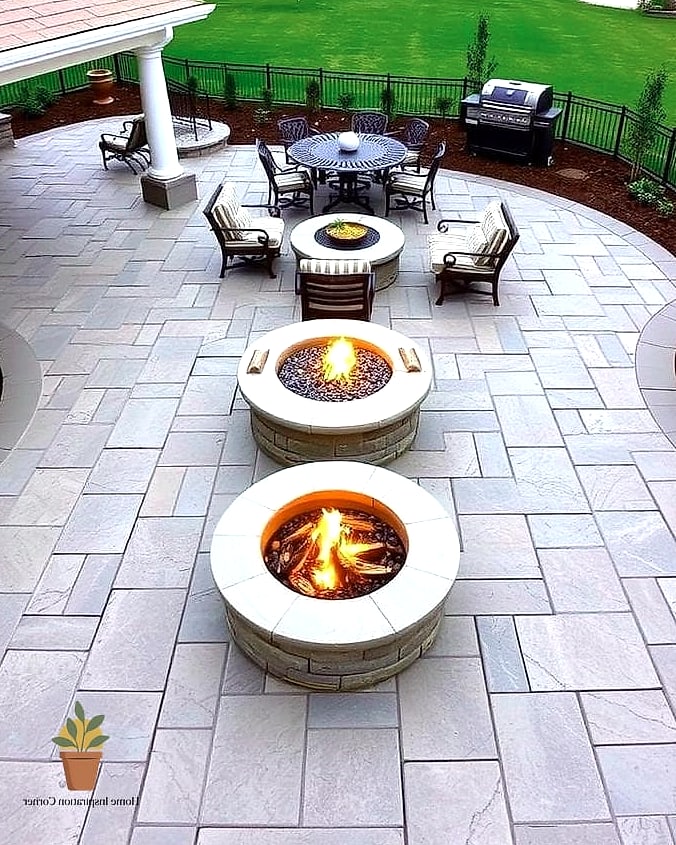
Building your fire pit right into the concrete design creates a cohesive, built-in feel rather than plopping a standalone fire pit on top of the slab. You can go with a circular cutout filled with gravel or pavers, or a raised concrete ring poured to match the patio.
This works great for family gatherings and cooler evenings when you want a natural gathering point. Just make sure to leave enough clearance around it per local fire codes, and consider heat-resistant materials near the pit itself.
Curved Concrete Edges Instead of Straight Lines
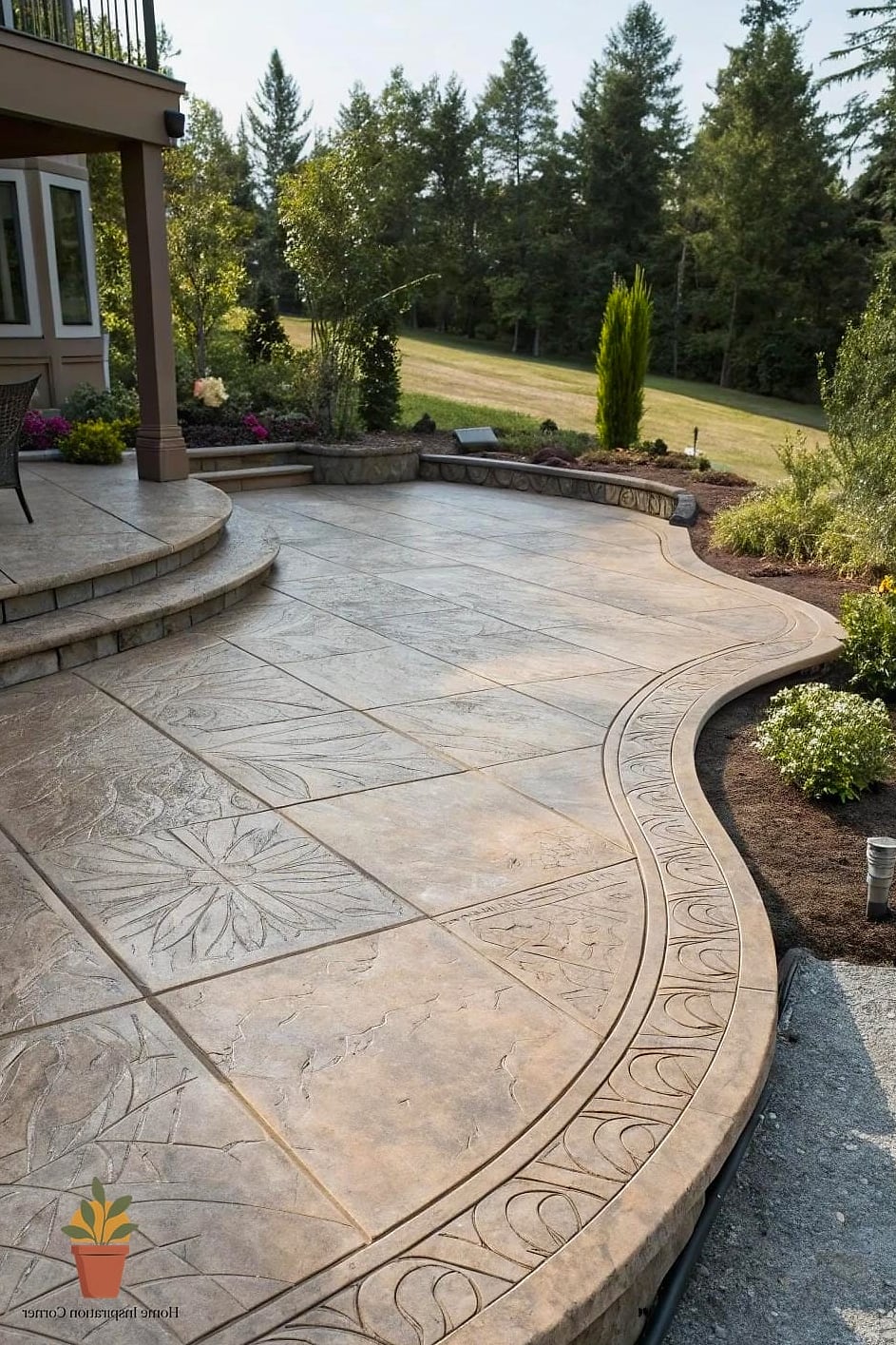
Ditching the standard rectangle for soft, curved edges instantly makes a patio feel more organic and less like a slab of driveway. Curves work particularly well when your patio flows into garden beds or a pool area.
This is a great option for homeowners who want their outdoor space to feel more natural and less rigid. It does require more precise formwork during installation, so budget a little extra for labor if you go this route.
Concrete Patio with Built-In Planters
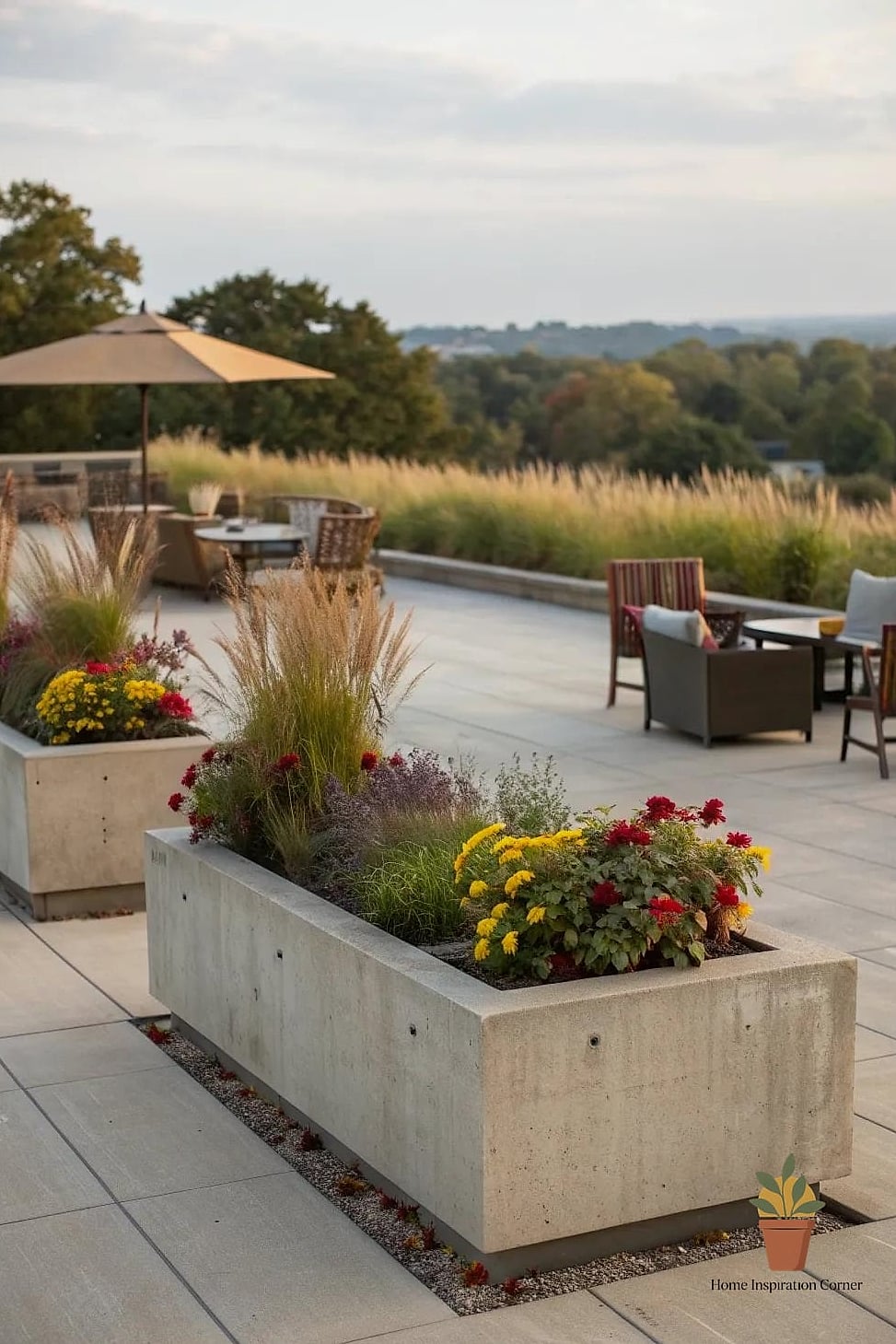
Incorporating planter boxes directly into the concrete design adds greenery without sacrificing usable space or needing separate pots everywhere. You can pour these as raised sections along the edges or scattered throughout the layout.
It’s a nice way to soften all that hard concrete surface with plants, herbs, or small shrubs. Just make sure the planters have proper drainage built in so water doesn’t pool and damage the surrounding concrete over time.
Textured Concrete with a Broom Finish
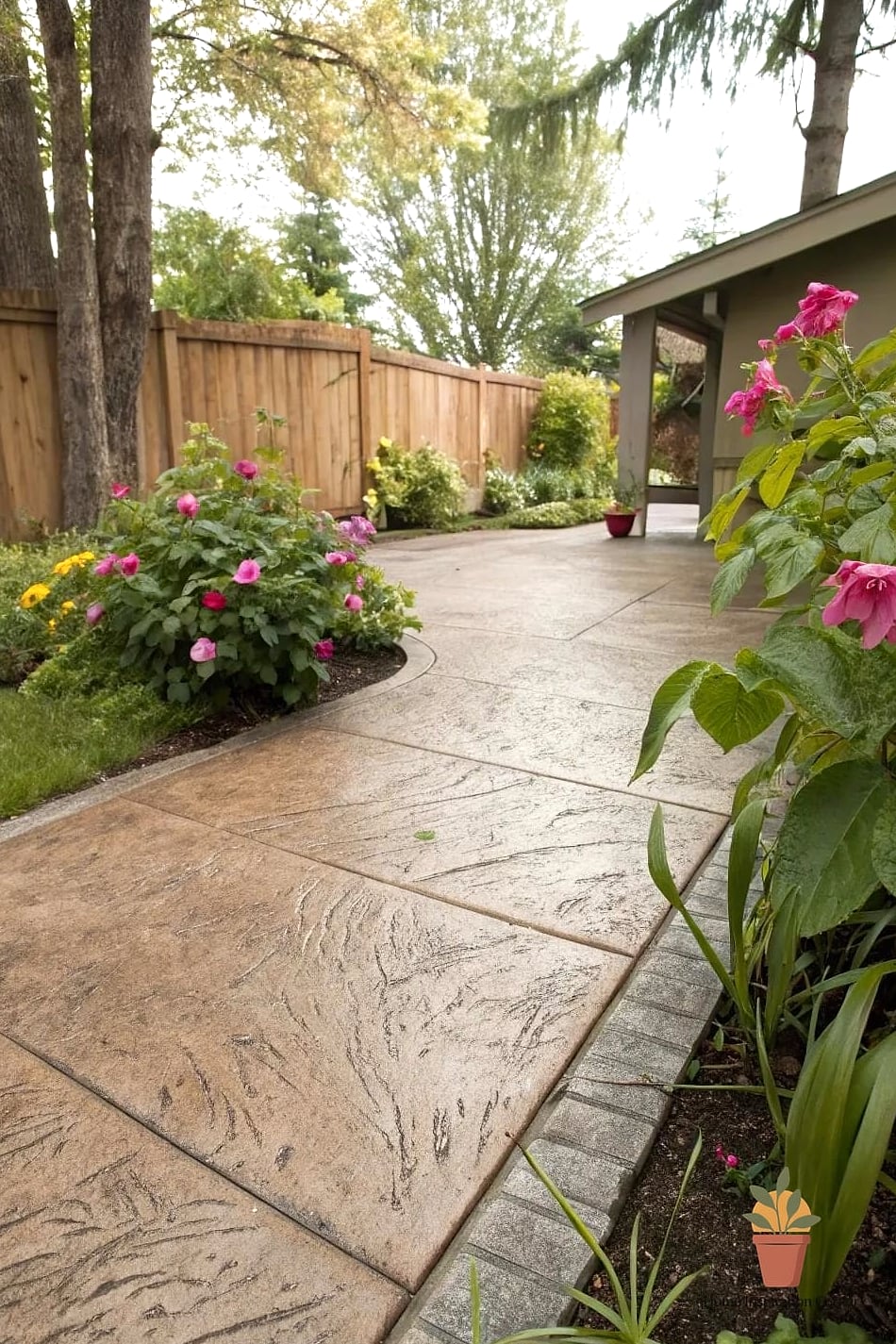
The broom finish is about as classic and practical as it gets. After the concrete is poured, a broom gets dragged across the surface to create fine texture lines, which improves traction significantly.
This is a smart pick for patios near pools, hot tubs, or anywhere that gets wet often. It’s also one of the more budget-friendly finishes since it doesn’t require extra materials or specialized tools beyond the broom itself.
Concrete Steps and Patio in One Continuous Pour
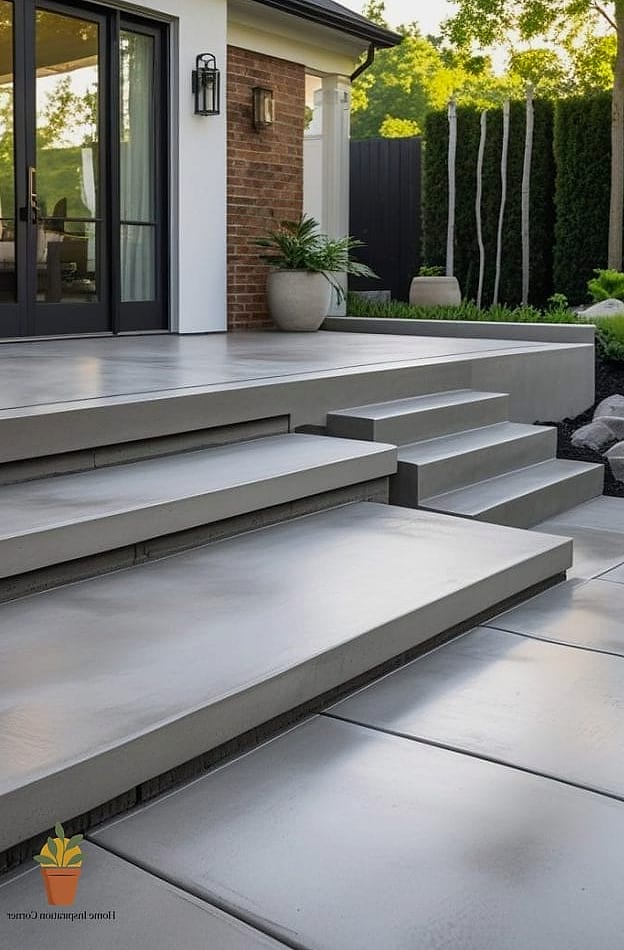
If your yard has any elevation change, pouring the patio and connecting steps as one continuous concrete structure creates a seamless, high-end look. It eliminates the choppy transition you get when steps and patio are built separately with different materials.
This approach works particularly well for sloped backyards or homes with raised decks leading down to the yard. Matching the finish and color throughout keeps everything feeling like one cohesive design rather than a patchwork of add-ons.
Concrete Patio Paired with a Pergola
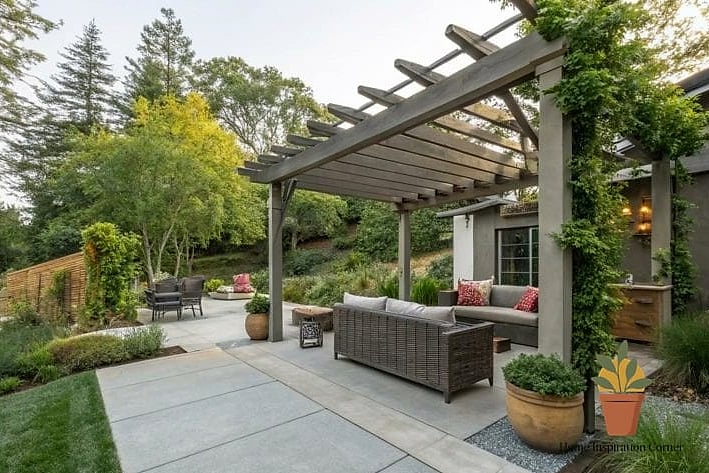
While the pergola itself isn’t concrete, anchoring one into a concrete patio creates a defined outdoor room that feels more finished than an open slab. The concrete gives you a stable, level base, and the pergola adds shade and structure overhead.
This combo works beautifully for dining areas or lounge spaces where you want some relief from direct sun. String lights or climbing vines on the pergola add even more character to the space over time.
Concrete with Colored Aggregate for Pop
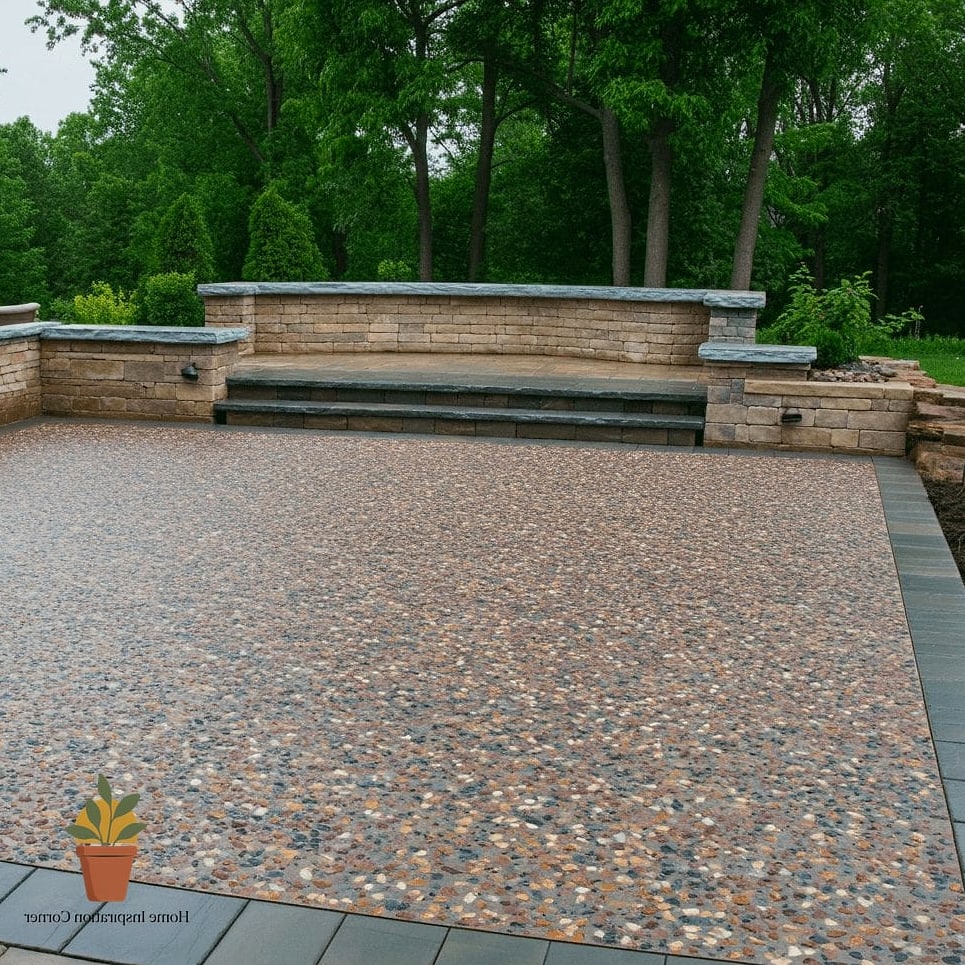
Instead of sticking with natural stone tones, you can request colored aggregate mixed into the concrete for a more playful, personalized look. Blues, greens, and warm reds are popular choices depending on the vibe you’re going for.
This is a fun option if your home has a coastal, Mediterranean, or eclectic style and you want the patio to reflect that personality. It’s a bit pricier than standard aggregate, but the visual payoff can be worth it for the right space.
Large-Format Concrete Slabs for a Minimalist Look
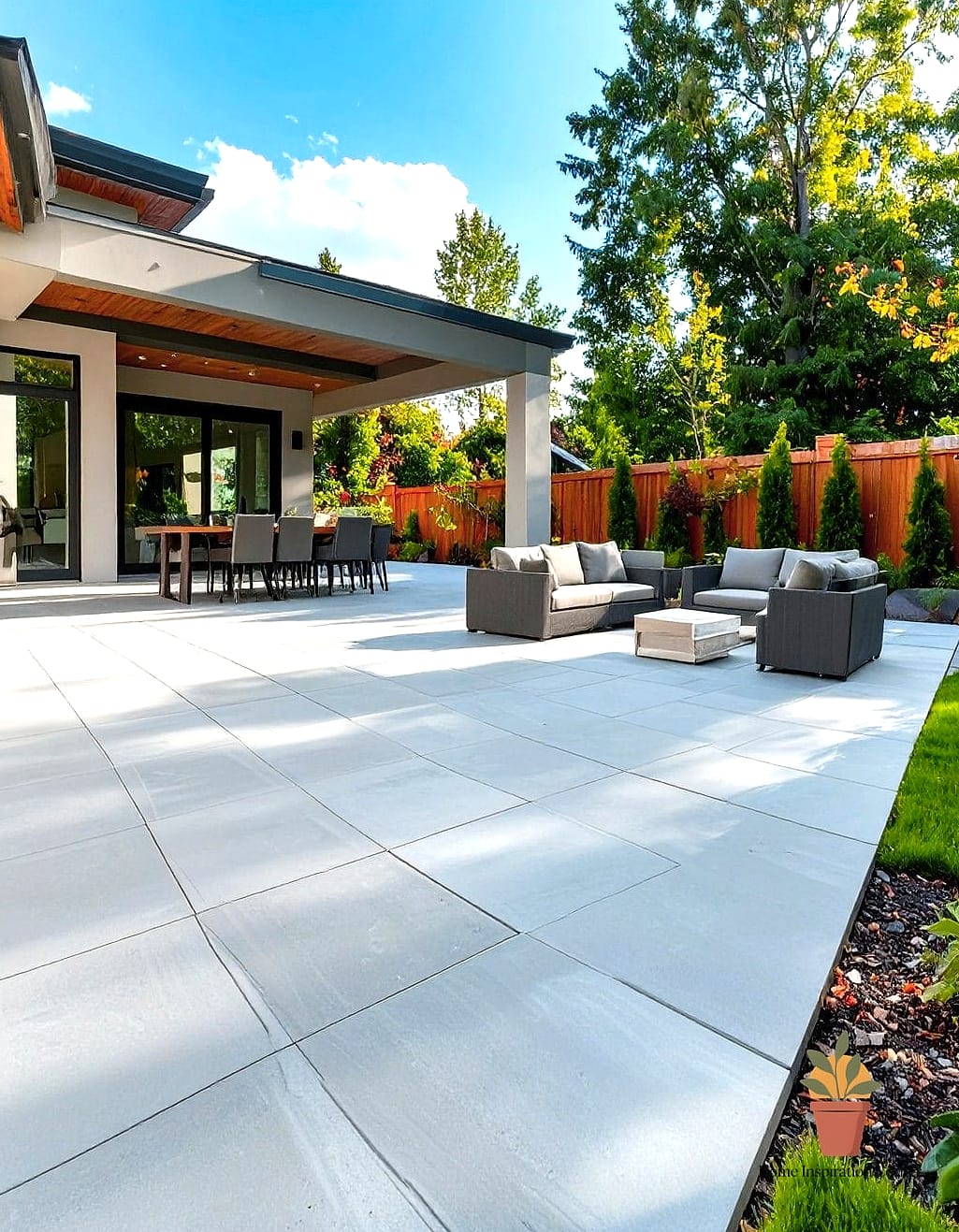
Rather than smaller pavers or scored sections, some homeowners are going big with oversized concrete slabs that minimize visible joint lines. This creates a clean, uninterrupted surface that feels sleek and modern.
Fewer joints also mean fewer spots for weeds or moss to creep in over time, which is a nice practical bonus. This style pairs especially well with contemporary architecture and simple, low-profile furniture.
Concrete Patio with Radiant Heating Underneath
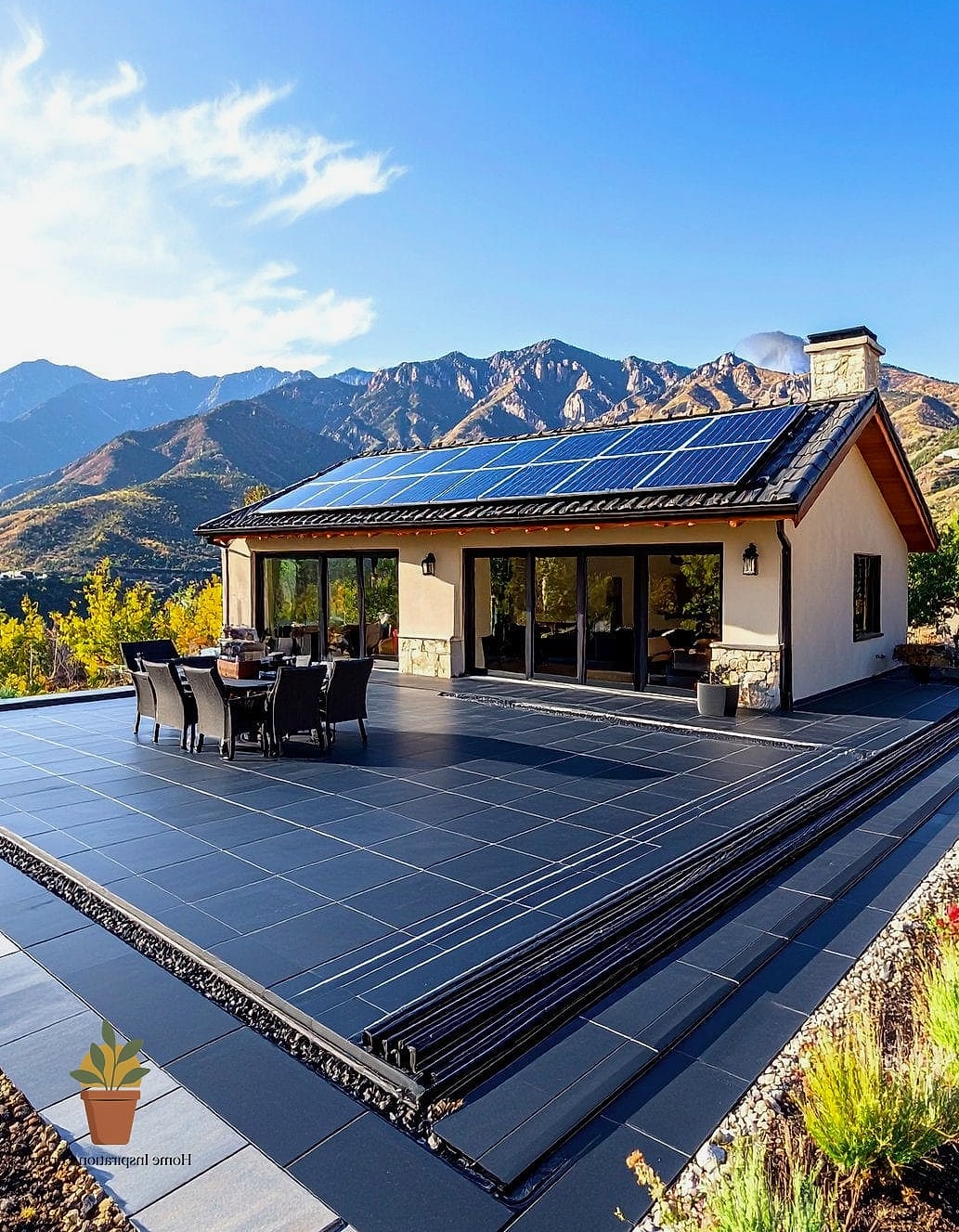
For those in colder climates, embedding radiant heating elements beneath the concrete slab extends how long you can actually use your patio each year. It melts snow and ice automatically and keeps the surface comfortable underfoot on chilly mornings.
This is more of an investment upfront, both in materials and installation labor, but it pays off if you love spending time outdoors regardless of season. It’s worth chatting with a contractor who has specific experience with radiant systems before committing.
Stenciled Concrete Overlay for an Affordable Refresh
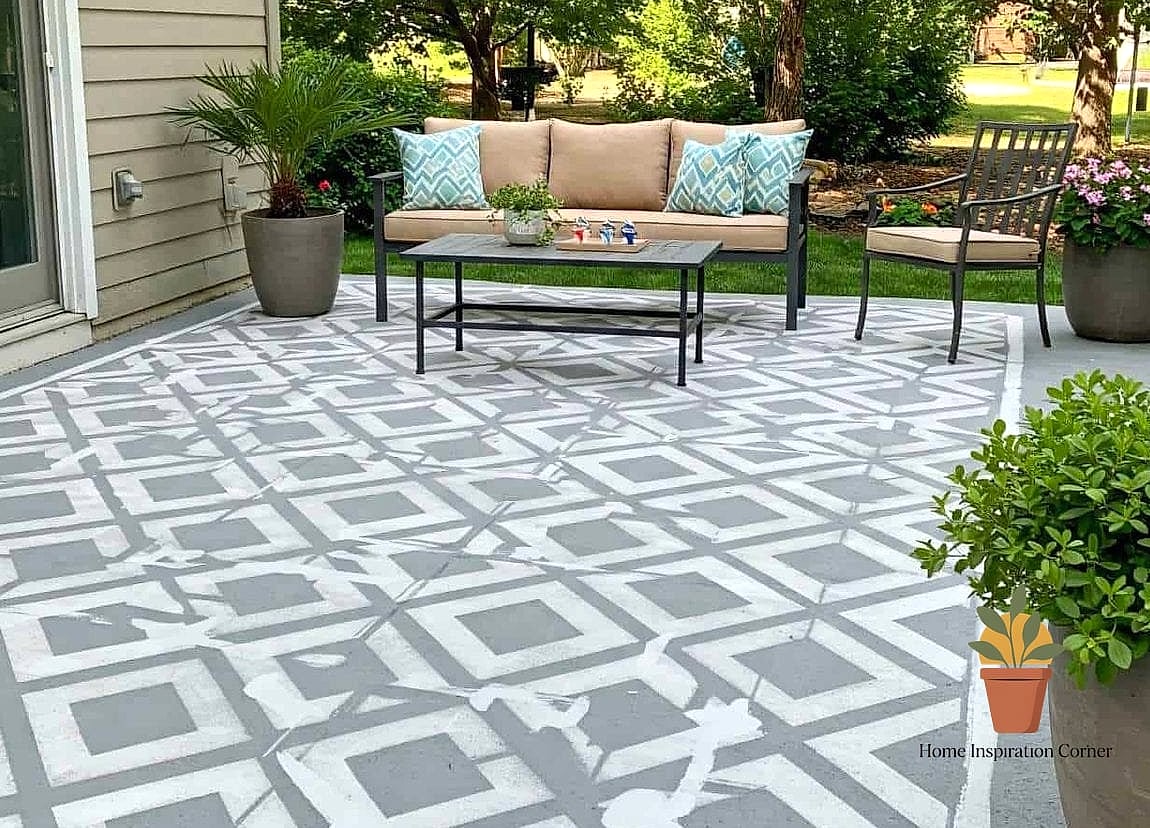
If you already have a concrete patio that’s structurally fine but visually tired, a stenciled overlay might be your answer. Contractors apply a thin layer of new concrete or a specialized overlay product on top, then stencil in a pattern before it sets.
This is significantly cheaper than tearing out and repouring an entire patio. It’s a smart middle-ground option for anyone who wants a stamped-concrete look without the full cost of a brand-new slab.
Concrete patios really do offer more design flexibility than most people give them credit for. Whether you’re drawn to a polished modern surface or a stamped pattern that mimics natural stone, there’s a version of concrete that fits your style, your budget, and how you actually use your outdoor space. The best approach is picking the option that matches your climate, your maintenance tolerance, and the overall vibe you’re going for in your backyard.