
20 Roof Terrace Ideas Designs That Maximize Style and Function
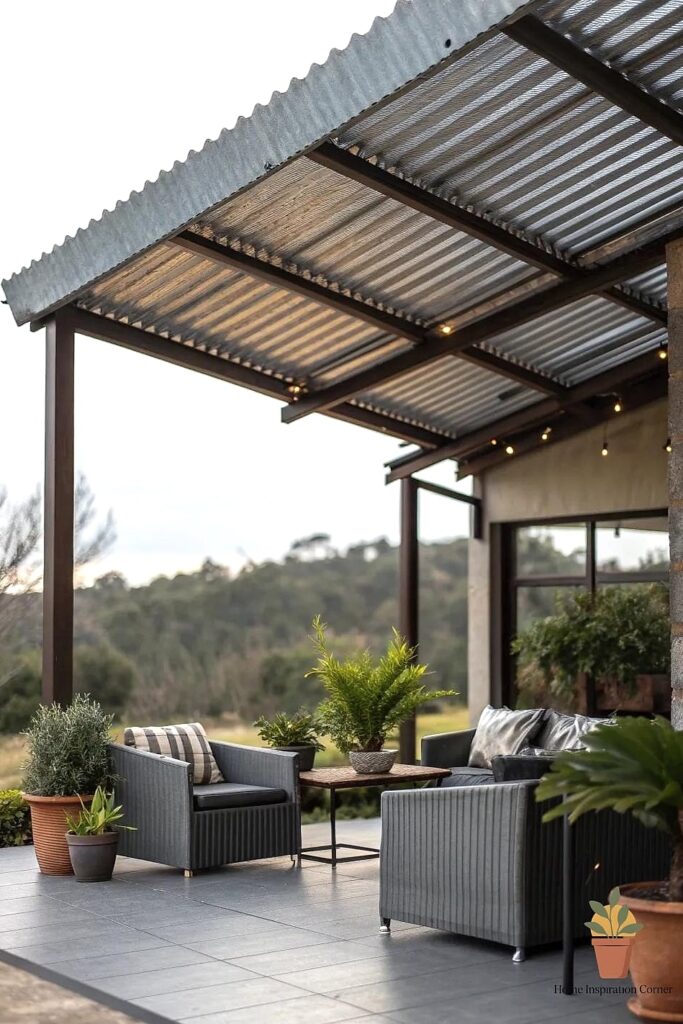
- Built-In Bench Seating Along the Edges
- A Pergola for Instant Shade
- Layered Lighting for Evening Ambiance
- Container Gardening in Raised Planters
- A Compact Outdoor Kitchen Setup
- Weatherproof Rugs to Define Zones
- Privacy Screens for a Secluded Feel
- A Cozy Fire Feature
- Vertical Gardens for Small Spaces
- A Dedicated Dining Area
- Hammocks or Hanging Chairs
- Mixed Flooring Materials
- A Yoga or Meditation Corner
- Statement Outdoor Furniture
- Herb and Vegetable Garden Beds
- A Small Water Feature
- Modular Furniture for Flexibility
- A Vertical Herb Wall Near the Kitchen Access Point
- Weather-Resistant Storage Solutions
- A Cohesive Color Palette Throughout
20 Roof Terrace Ideas Designs That Maximize Style and Function
A roof terrace is one of those spaces that feels like a bonus room once you actually put some thought into it. You’ve got the square footage sitting up there, but it’s easy to let it become a dumping ground for old patio furniture and forgotten plants. With the right layout and a few smart choices, that same space can turn into your favorite spot in the whole house.
I’ve pulled together twenty roof terrace ideas that balance good looks with everyday usability. Some are quick weekend projects, others are bigger investments, but all of them are meant to help you get more out of the space you already have.
Built-In Bench Seating Along the Edges
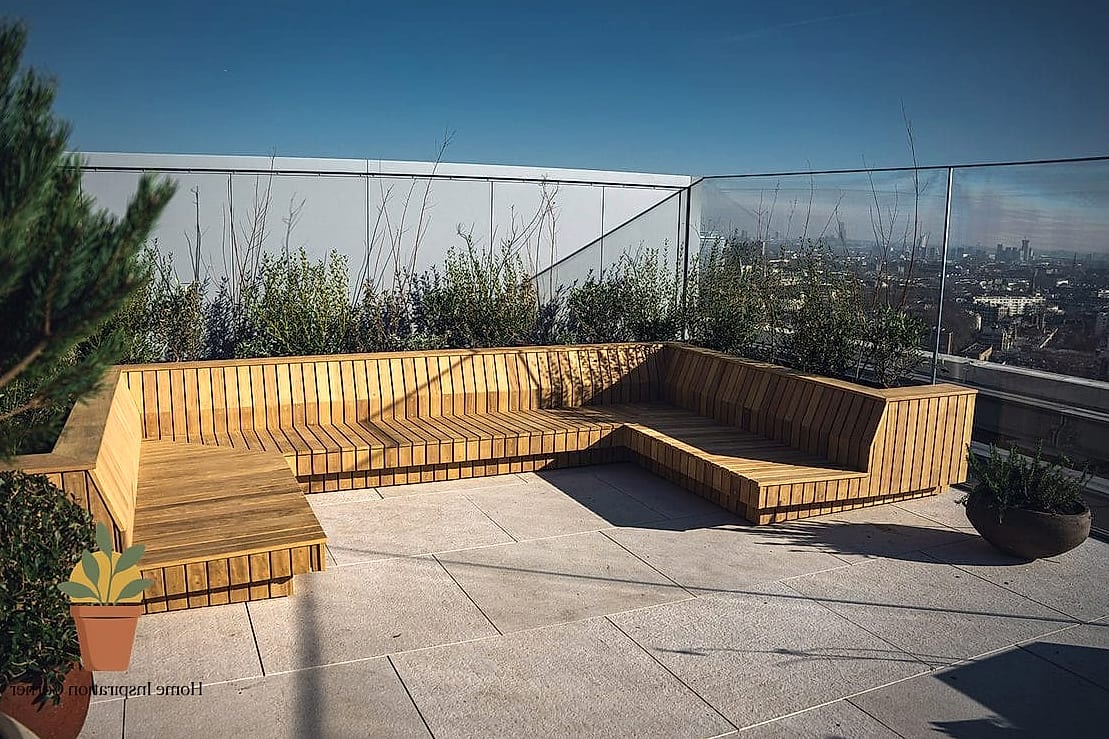
Built-in benches are a smart move on any roof terrace because they free up the middle of the space for movement or a small table. You get seating without cluttering the floor with extra chairs.
This works especially well on smaller terraces where every square foot counts. Cushions in weather-resistant fabric add comfort, and you can build in storage underneath for cushions, gardening tools, or string lights.
Cedar or composite wood holds up well against sun and rain. It’s a moderately involved DIY project, but plenty of homeowners tackle it over a long weekend with basic tools.
A Pergola for Instant Shade
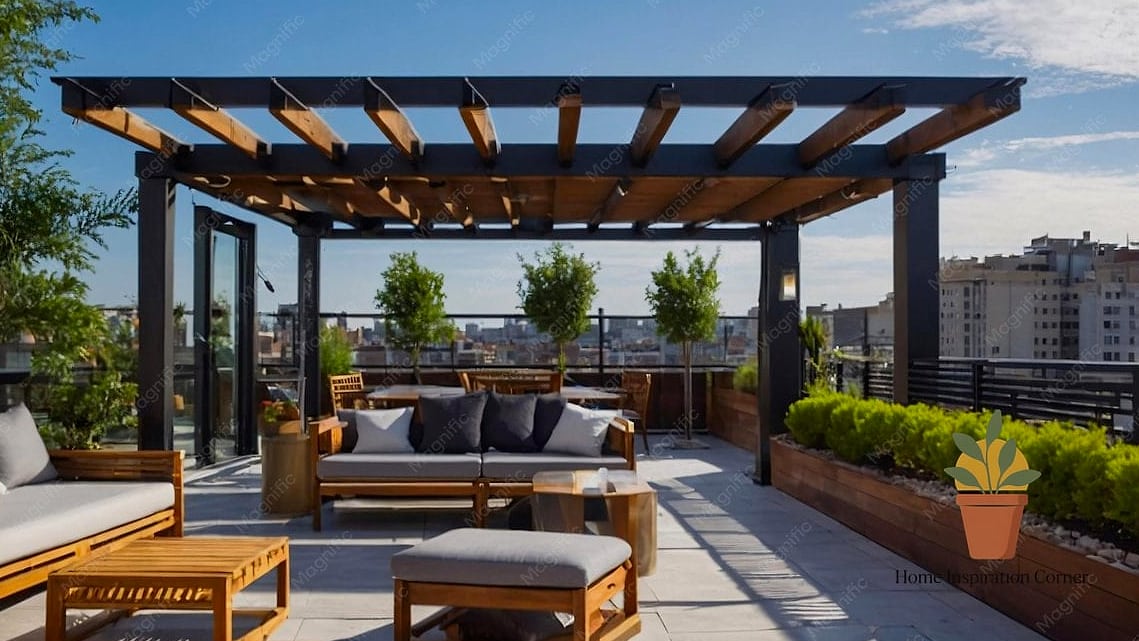
Nothing ruins a roof terrace faster than blazing midday sun with nowhere to hide. A pergola solves that problem while adding real architectural interest.
Wood pergolas bring warmth and a natural feel, while aluminum versions are lower maintenance and won’t warp over time. Adding a retractable canopy or climbing vines like wisteria gives you flexible shade that changes with your mood.
This is a bigger project and often benefits from professional installation, especially if you’re securing it to a rooftop structure. But the payoff is a terrace that’s usable even on the sunniest afternoons.
Layered Lighting for Evening Ambiance
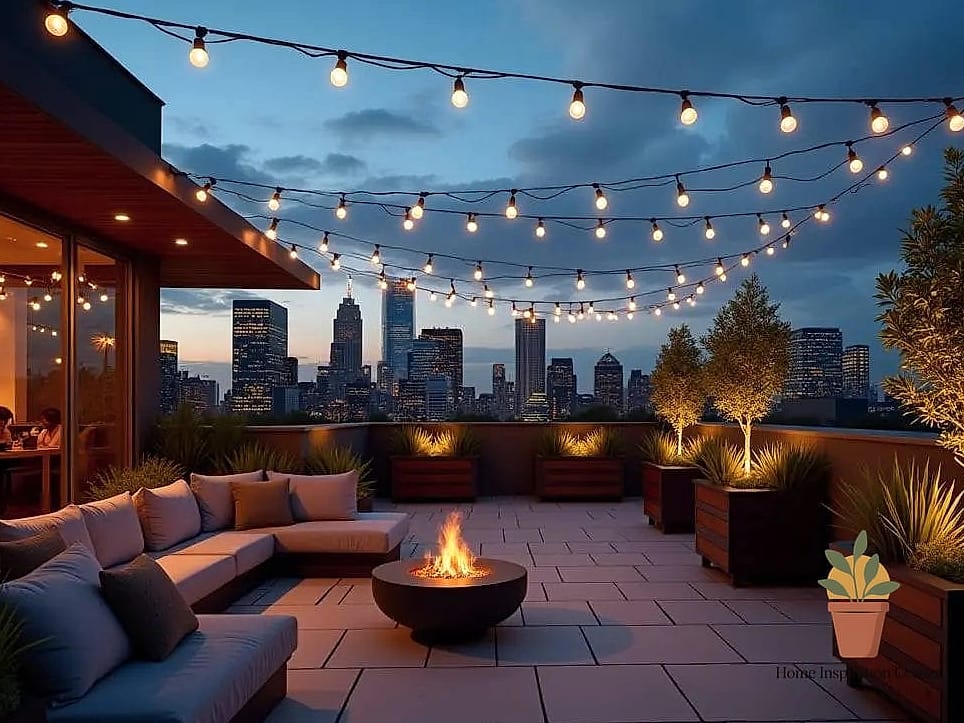
A roof terrace that only works during the day is only half a terrace. Layered lighting changes that completely.
String lights overhead create a warm, casual glow, while low path lighting along walkways adds safety and definition. Lanterns on side tables round things out for a cozy, restaurant-patio feel.
Solar-powered options are renter-friendly and require zero wiring, which makes this one of the easiest upgrades on this list. Battery-operated lanterns are another no-commitment option if you’re not ready to install anything permanent.
Container Gardening in Raised Planters
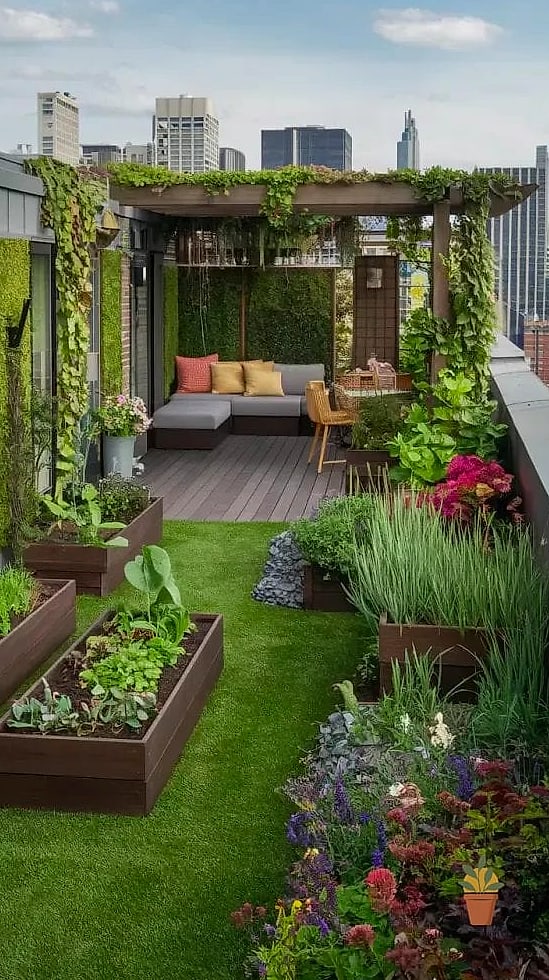
Not every roof can support a full garden’s worth of soil, but raised planters let you grow herbs, flowers, or small shrubs without overloading the structure.
Group planters in odd numbers for a more natural look, and mix heights so the greenery feels layered rather than flat. Terra cotta gives a classic look, while matte black or concrete planters lean more modern.
Drought-tolerant plants like succulents or lavender cut down on watering needs, which matters if you’re not up there every single day. Self-watering planters are worth considering if your schedule is unpredictable.
A Compact Outdoor Kitchen Setup
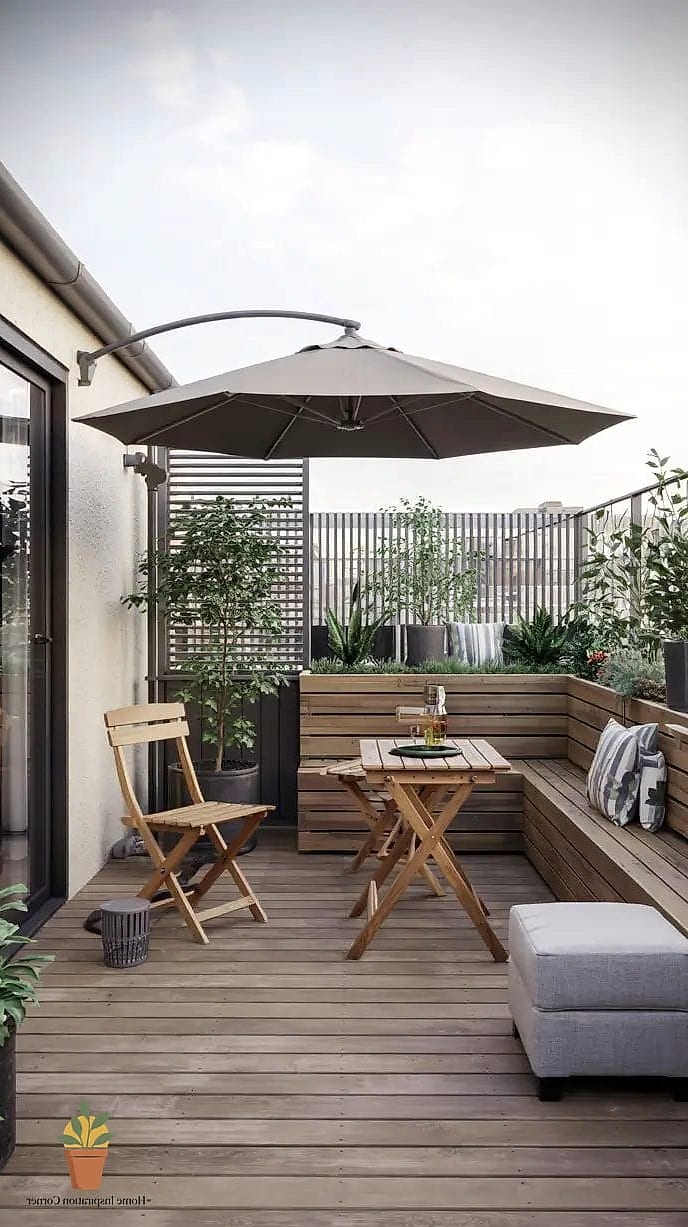
If you love entertaining, a small outdoor kitchen area turns your roof terrace into a genuine hosting space instead of just a place to sit.
A built-in grill, a small counter, and a mini fridge cover most of what you need without requiring a full outdoor kitchen build. Stainless steel appliances hold up best against the elements, and stone or concrete countertops resist weather damage better than wood.
This is a bigger investment, so it makes the most sense for terraces that get regular use for gatherings. Even a simple bar cart can stand in as a budget-friendly starting point.
Weatherproof Rugs to Define Zones
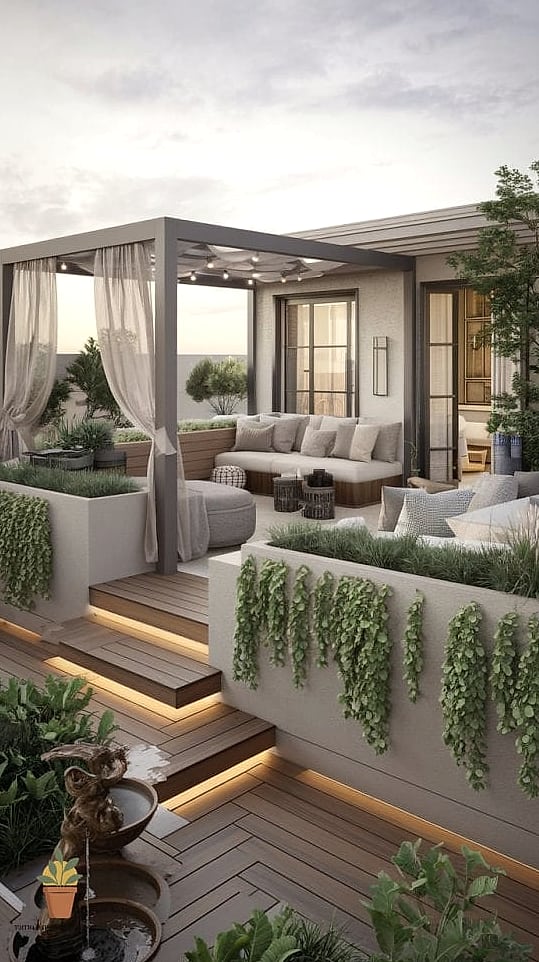
An outdoor rug does more work than people expect. It visually separates a lounge area from a dining area and makes hard surfaces like concrete or tile feel warmer underfoot.
Look for polypropylene or other synthetic materials designed to handle rain and UV exposure without fading. Neutral color palettes are easy to mix with furniture, but a bold pattern can act as the visual anchor for the whole terrace.
Rugs also help hide minor imperfections in flooring, which is a nice bonus if your roof surface isn’t perfectly finished. Just make sure it’s rated for outdoor use, since indoor rugs will mildew fast.
Privacy Screens for a Secluded Feel
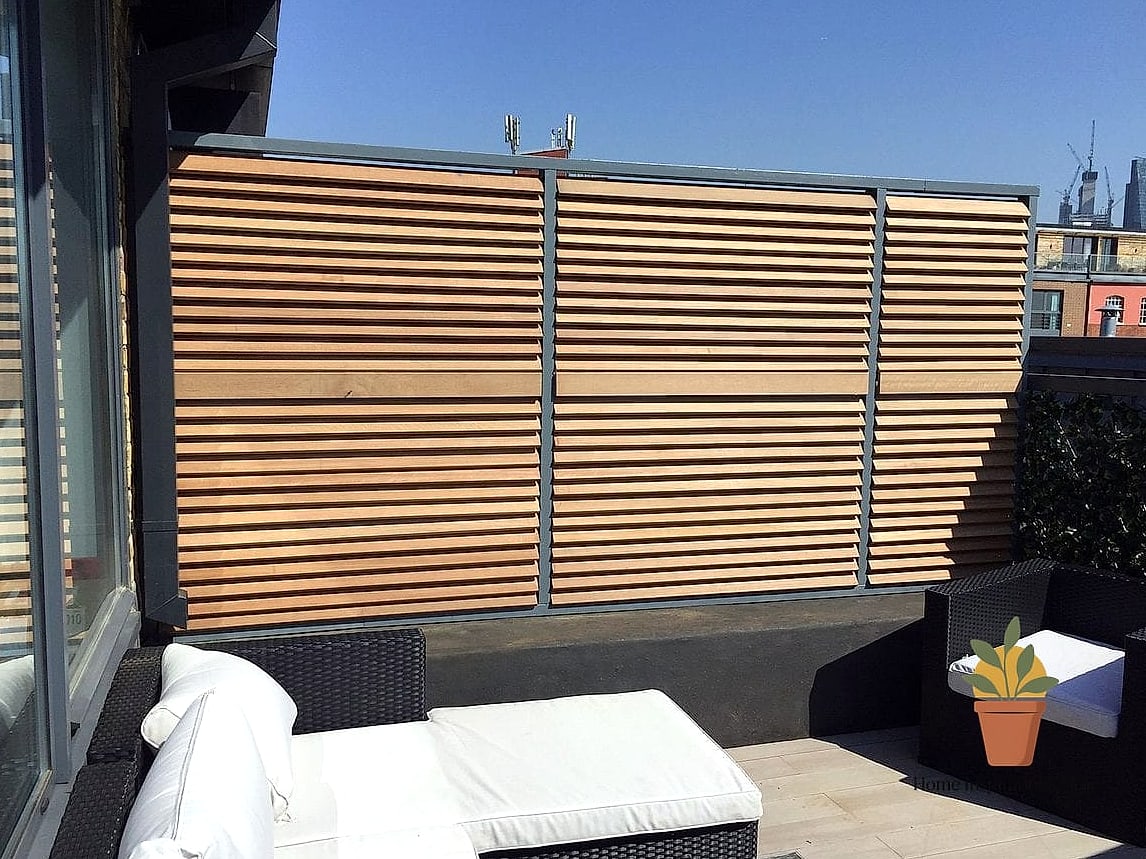
Roof terraces often come with the downside of being visible to neighboring buildings. Privacy screens fix that without closing off the whole space.
Bamboo screening gives a natural, relaxed look and is fairly budget-friendly. Metal or wood lattice panels offer a more architectural feel and can double as a trellis for climbing plants.
Positioning screens strategically around seating areas rather than the whole perimeter keeps the space from feeling boxed in while still giving you the privacy you actually need.
A Cozy Fire Feature
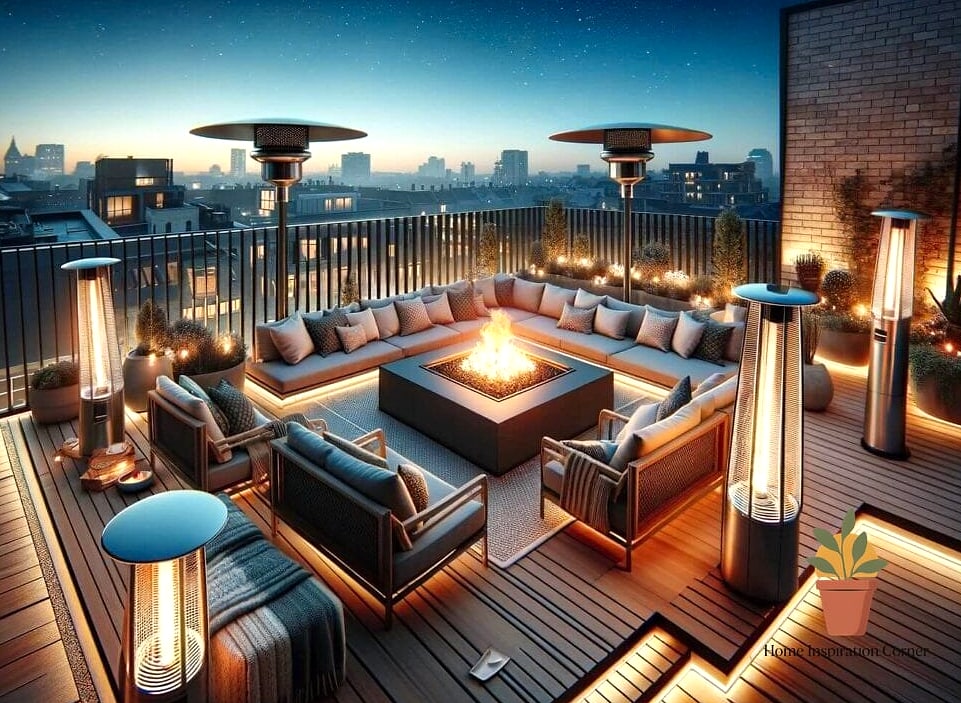
A small fire pit or fire table instantly extends how many months of the year your terrace gets used. It’s also just a nice focal point for gathering around.
Propane fire tables are popular on roof terraces since they don’t produce ash or smoke buildup, which matters in a contained space. Always check local codes and building restrictions before installing anything with an open flame on a rooftop.
Surround it with weather-resistant seating and you’ve got an instant hangout spot, even once the temperature starts dropping in fall.
Vertical Gardens for Small Spaces
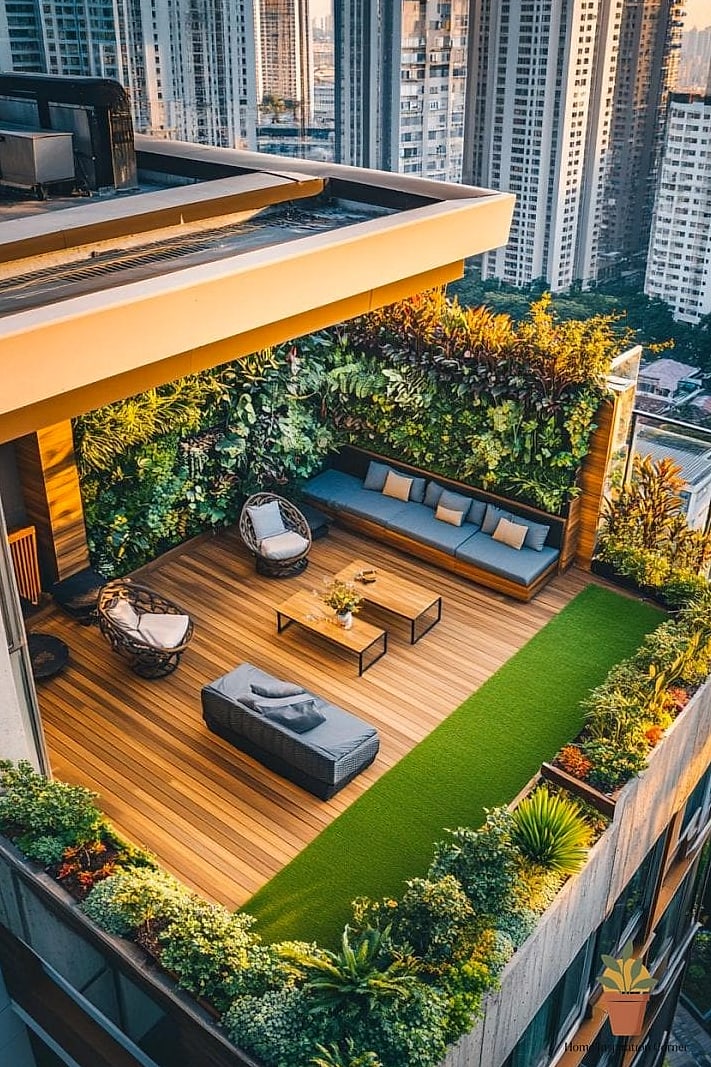
When floor space is tight, growing up instead of out solves a lot of problems. Vertical garden systems let you fit a surprising amount of greenery into a narrow footprint.
Modular wall planters are DIY-friendly and can be rearranged as your plants grow. Herbs, trailing vines, and small flowering plants all do well in this setup, and it adds texture to what might otherwise be a plain wall.
This is a great option for renters too, since many vertical systems attach without permanent drilling into structural walls.
A Dedicated Dining Area
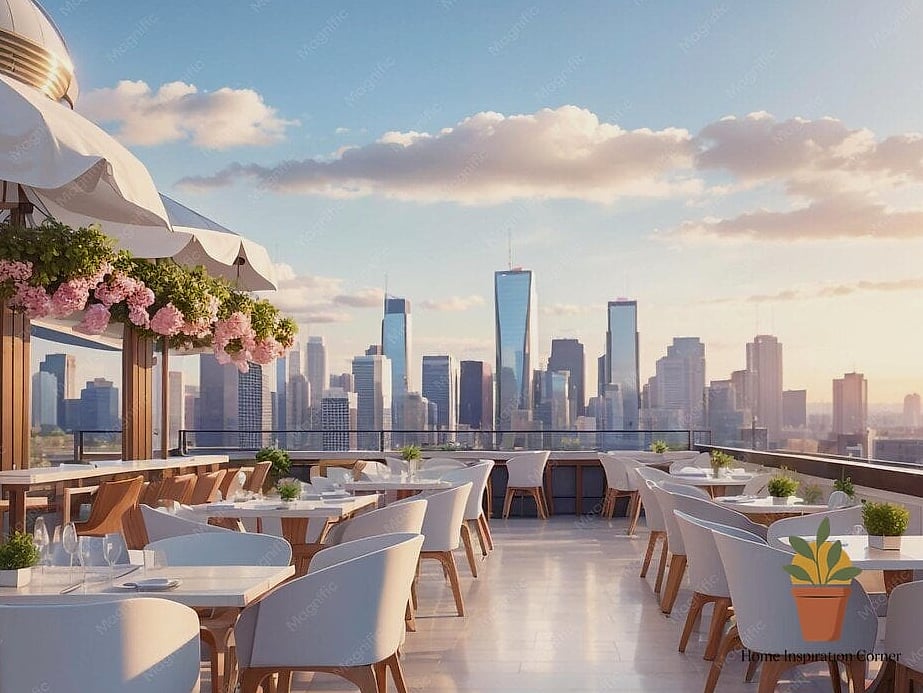
If your terrace is big enough, carving out a specific spot for a dining table makes outdoor meals feel intentional rather than improvised.
A weather-resistant table in teak, aluminum, or concrete-look material holds up well outside. Pairing it with an umbrella or shade sail keeps things comfortable during lunch hours when the sun is at its strongest.
Even a small bistro table for two works if space is limited. The key is giving the dining function its own defined area rather than squeezing it in wherever there’s room.
Hammocks or Hanging Chairs
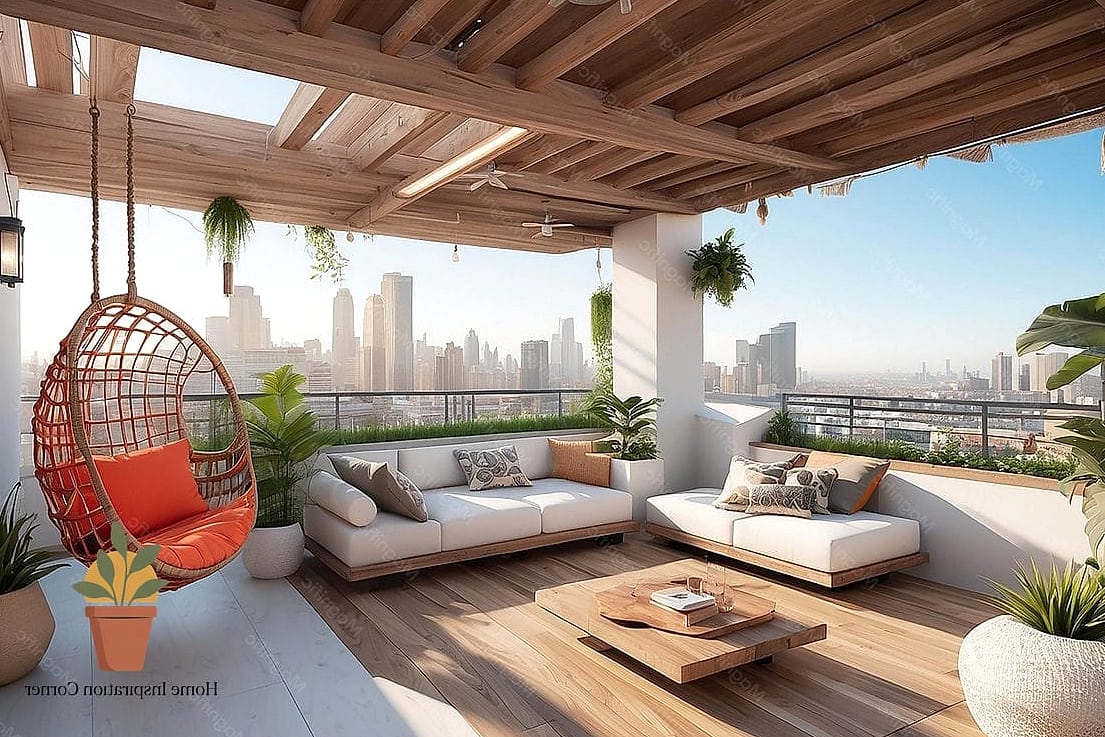
For a more relaxed, lounge-focused terrace, a hammock or hanging egg chair adds a playful element that regular furniture just doesn’t offer.
These work best when there’s a sturdy structure to anchor them to, like a pergola beam or a dedicated stand. They’re also a great use of an awkward corner that might otherwise go unused.
Cushions in weatherproof fabric keep things comfortable, and the visual of a hanging chair swaying gently tends to make the whole space feel more inviting.
Mixed Flooring Materials
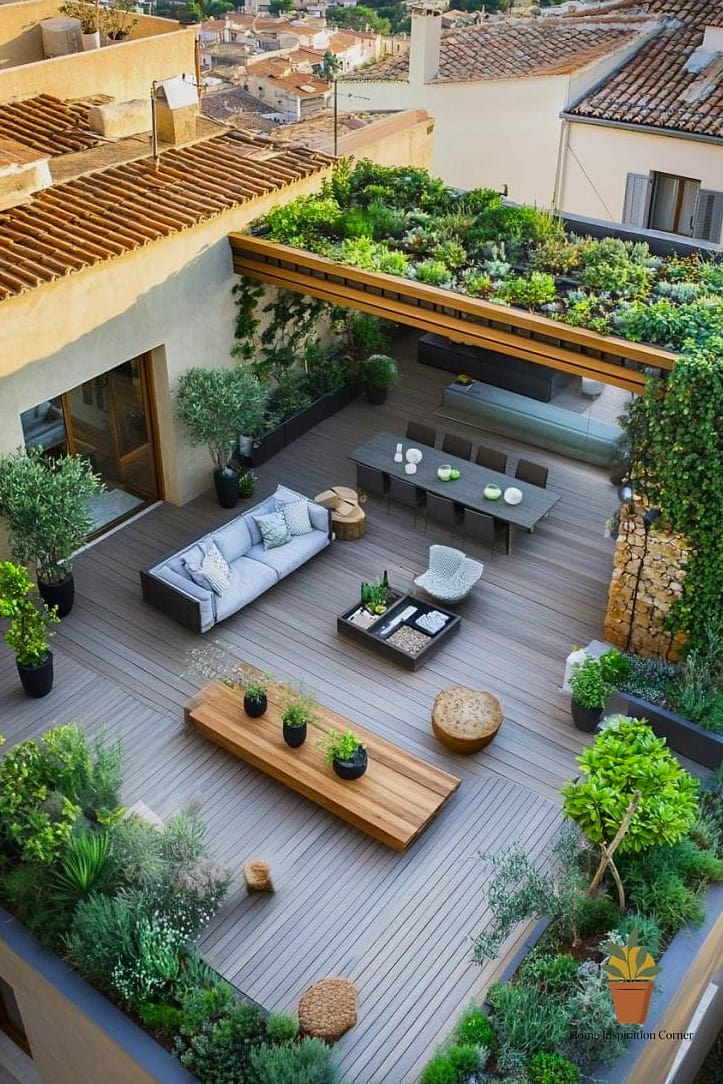
Instead of one uniform surface across the entire terrace, mixing materials like decking, pavers, and gravel can define different zones without needing walls or furniture to do it.
Wood decking works well for lounge areas since it feels warm underfoot. Pavers or tile hold up better in high-traffic zones near a kitchen or dining setup, and a small gravel section can add texture near planters.
This approach takes more planning upfront but gives the terrace a layered, custom feel that a single flat surface can’t match.
A Yoga or Meditation Corner
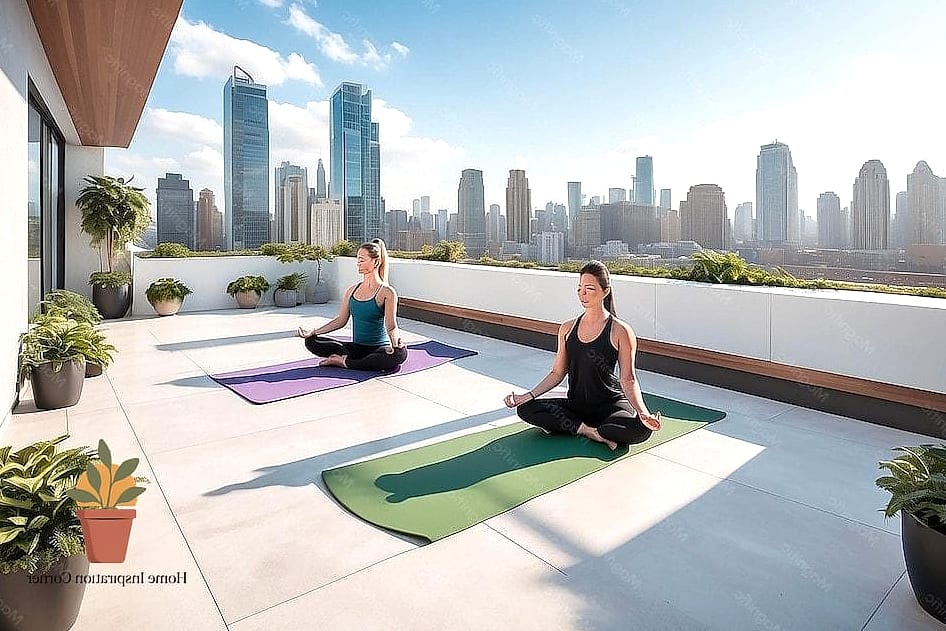
Not every part of a roof terrace needs to be about entertaining. A quiet corner set aside for yoga, stretching, or just sitting with a coffee gives the space some emotional range.
A simple outdoor mat, a small stool, and maybe a plant or two is really all it takes. Positioning this area away from the main seating zone helps it feel separate and calm.
This is one of those low-cost additions that makes a big difference in how the terrace actually gets used day to day.
Statement Outdoor Furniture
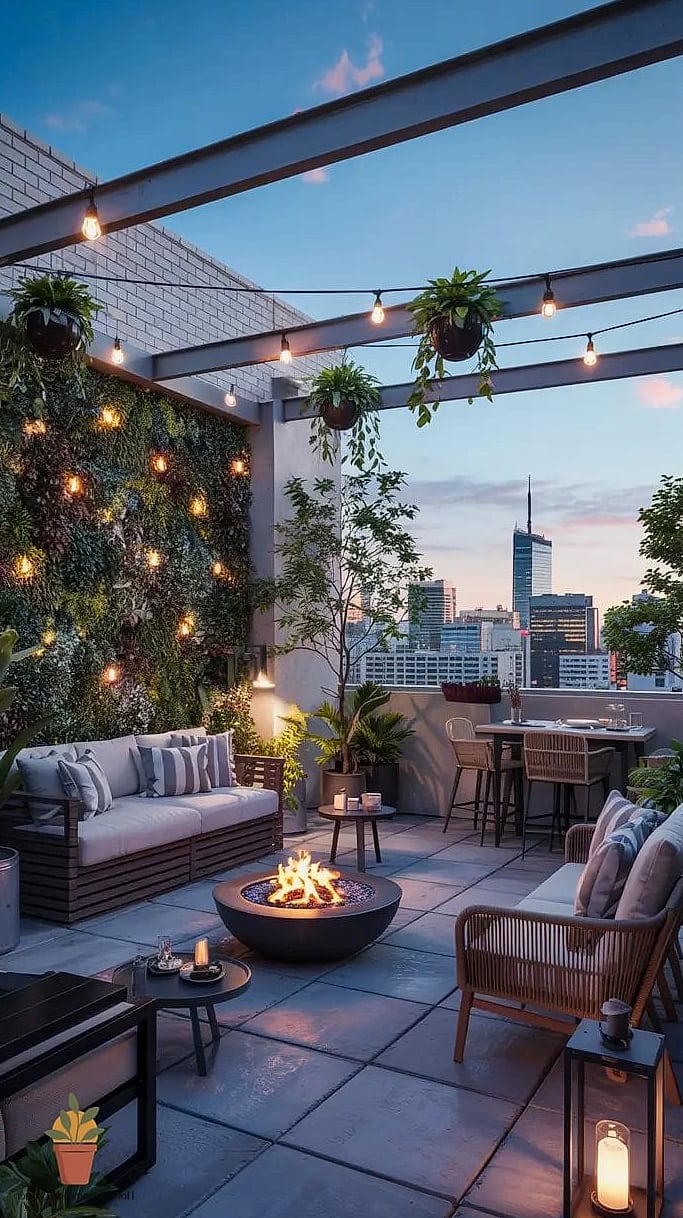
Sometimes the easiest way to elevate a terrace is picking one standout furniture piece and building the rest of the space around it.
A curved sectional, an oversized daybed, or a sculptural lounge chair can act as the visual centerpiece. Neutral cushions let the shape of the furniture do the talking, while a bold color choice makes more of a statement.
This works particularly well on terraces with a more open layout, where there’s room for a piece to actually breathe instead of feeling crowded.
Herb and Vegetable Garden Beds
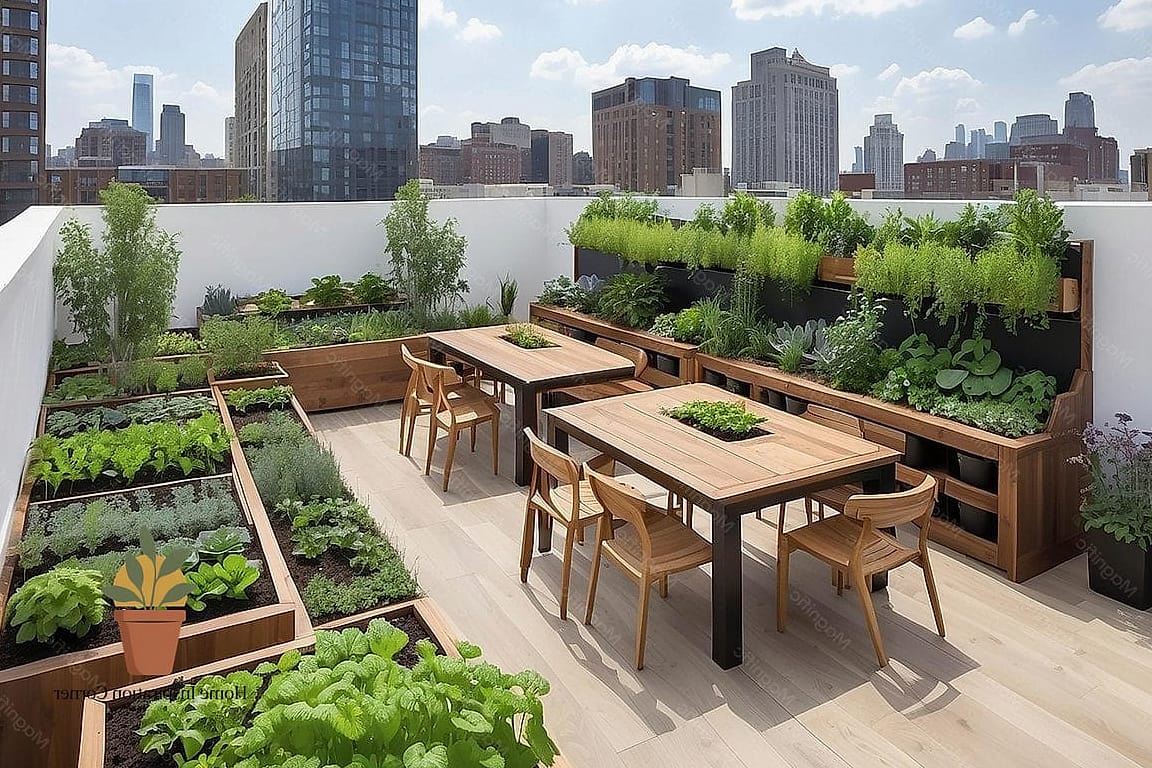
If you like cooking, a dedicated herb or vegetable bed turns your terrace into something genuinely functional beyond just looking nice.
Raised beds with good drainage work best on rooftops, since standing water can damage the surface below. Basil, rosemary, thyme, and cherry tomatoes are all reliable choices for beginners.
This does require more regular maintenance than decorative plants, so it’s worth being honest with yourself about how much time you’ll actually spend tending to it.
A Small Water Feature
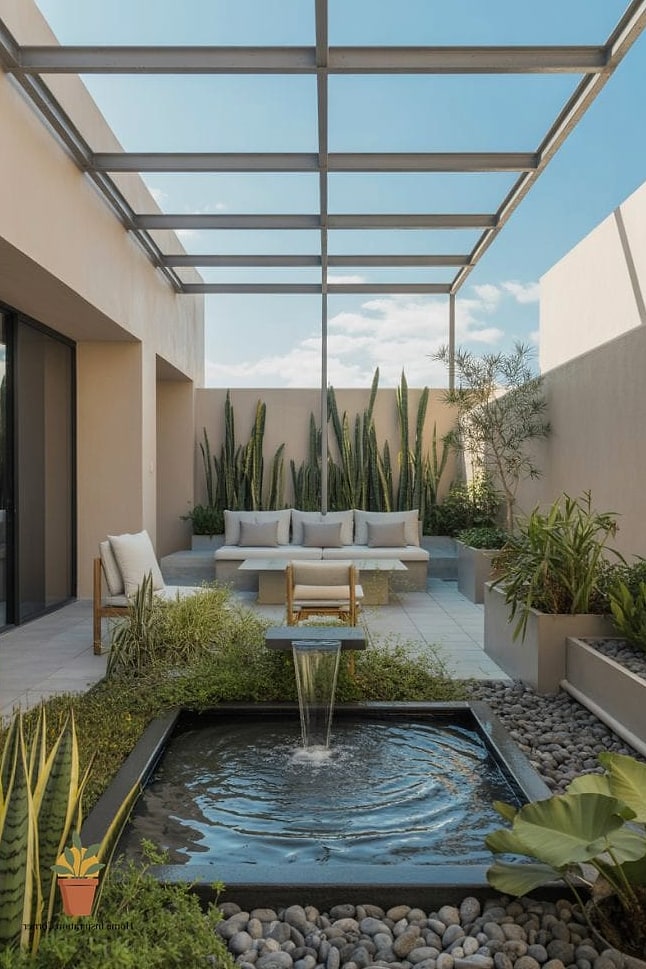
The sound of moving water adds a calming quality that’s hard to replicate any other way. Even a compact fountain can shift the whole feel of a terrace.
Solar-powered fountains are easy to install without any wiring, making them a good renter-friendly option. Larger stone or ceramic features work as a focal point if you have the space and budget for something more substantial.
Just keep an eye on weight, since water features can be heavier than they look once filled.
Modular Furniture for Flexibility
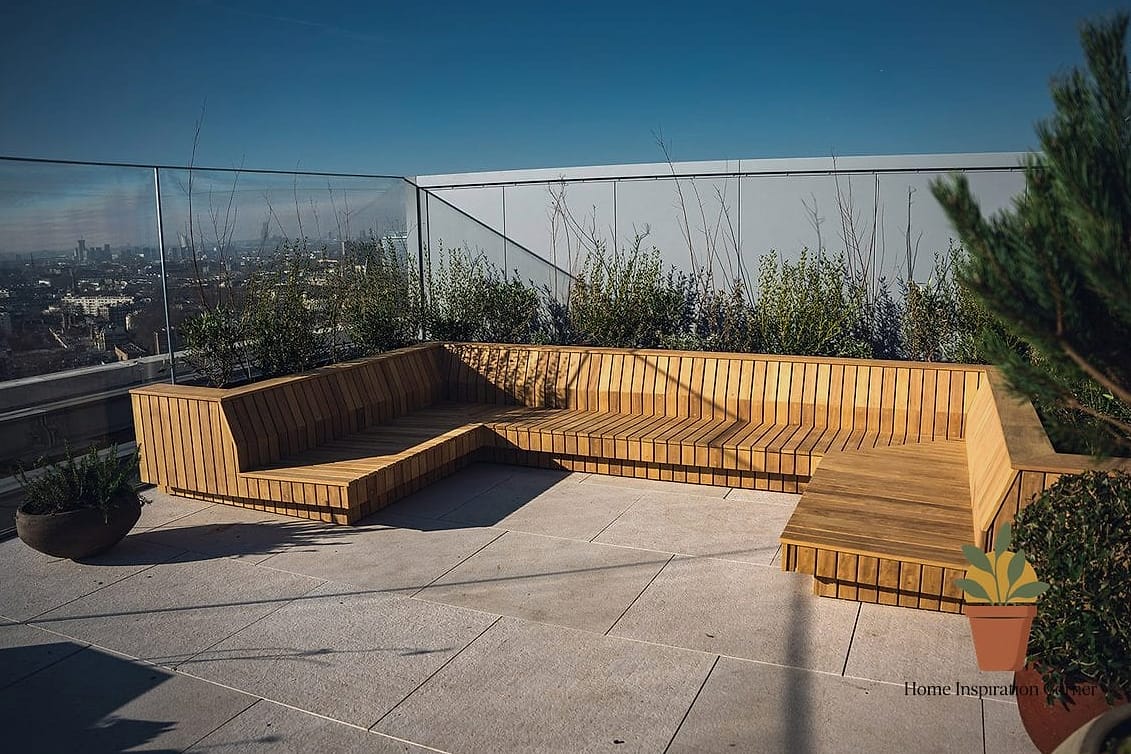
Roof terraces often serve multiple purposes throughout the week, which is where modular furniture really earns its keep.
Sectional pieces that can be rearranged let you switch from a big open lounge setup for a party to a more intimate arrangement for a quiet evening. Storage ottomans double as extra seating and a place to stash cushions or blankets.
This is a practical choice for terraces that host everything from solo mornings to weekend get-togethers.
A Vertical Herb Wall Near the Kitchen Access Point
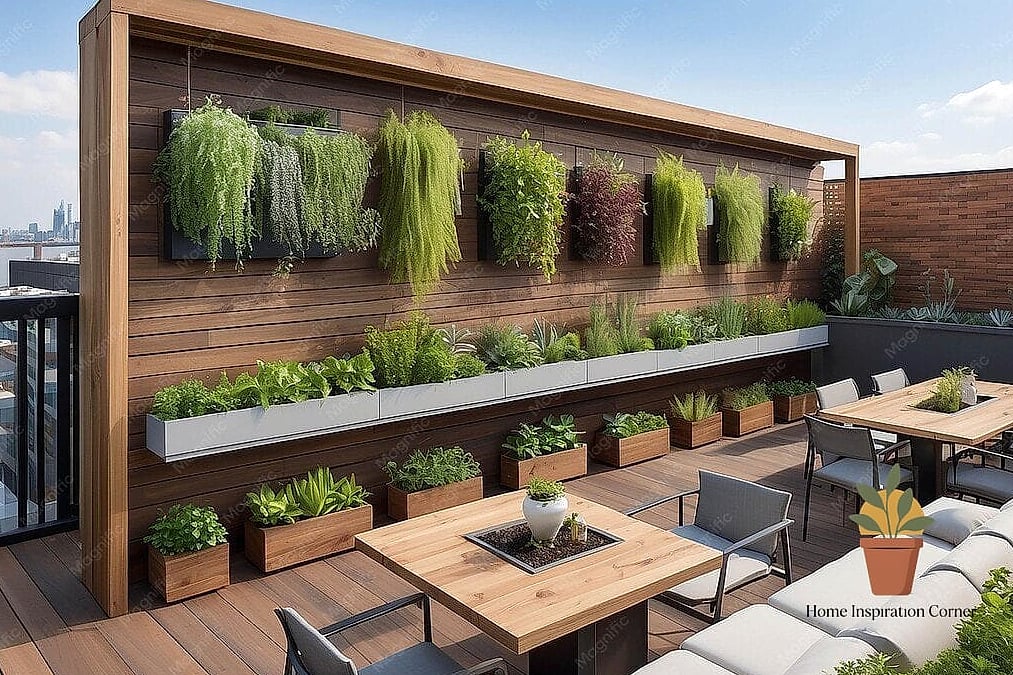
If your terrace connects directly to an indoor kitchen, positioning a small herb wall right near that entry point makes cooking with fresh ingredients an actual habit instead of an occasional treat.
Wall-mounted planters or a simple ladder shelf with pots both work well here. Keeping it close to the door means you’re far more likely to actually use what you’re growing.
This is a small footprint idea that adds a lot of everyday value, especially for anyone who cooks often.
Weather-Resistant Storage Solutions
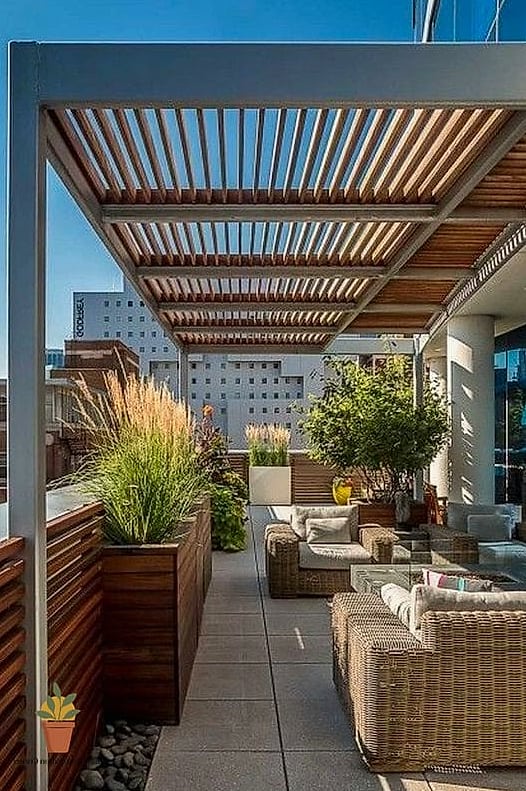
Roof terraces need somewhere to stash cushions, tools, and odds and ends, and a dedicated storage bench or deck box keeps things tidy without eating into usable space.
Resin or treated wood storage boxes handle rain well and blend in as functional furniture rather than looking like plastic bins. Built-in bench storage, mentioned earlier, is another way to combine seating and storage in one piece.
This is one of those unglamorous upgrades that makes the whole terrace easier to maintain and quicker to reset after a party or a storm.
A Cohesive Color Palette Throughout
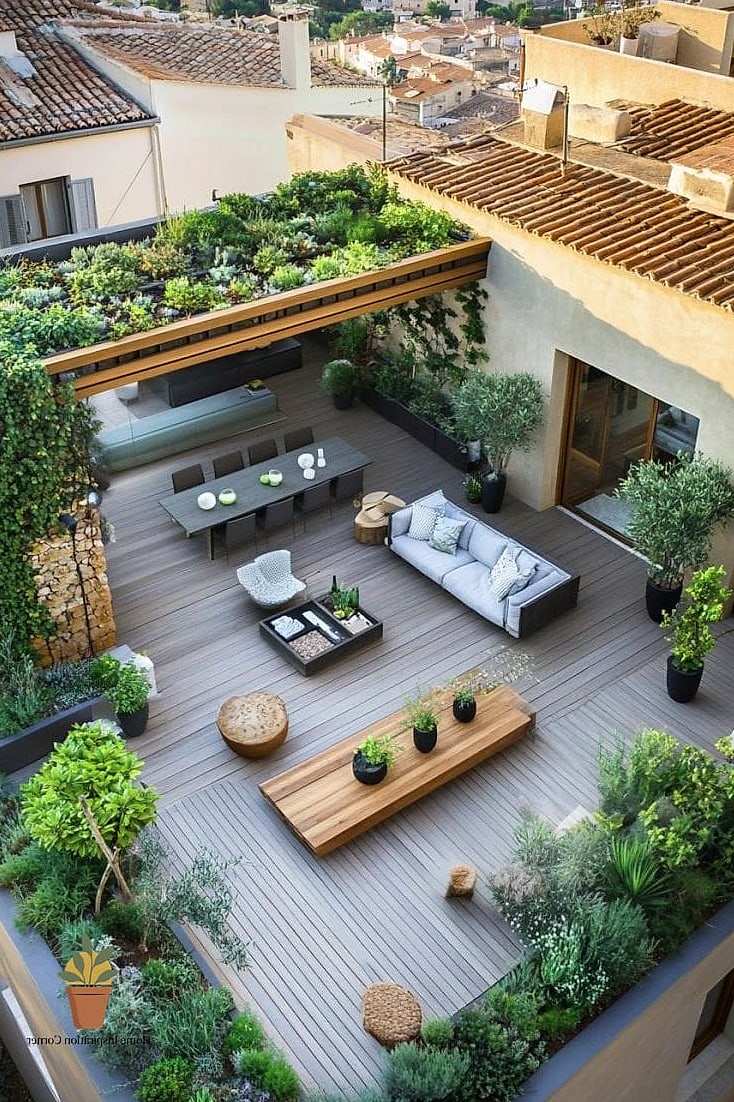
With so many individual elements on a roof terrace, from furniture to planters to lighting, tying it all together with a consistent color palette keeps the space from feeling scattered.
Warm neutrals with wood tones create a relaxed, organic feel, while black accents and greenery lean more modern and graphic. Choosing two or three main colors and repeating them across cushions, planters, and accessories gives the terrace a pulled-together look without needing everything to match exactly.
This is more of a styling principle than a single feature, but it’s often the difference between a terrace that looks curated and one that just looks like a collection of separate purchases.
Bringing a roof terrace together really comes down to picking a handful of these ideas that fit how you actually plan to use the space, rather than trying to cram everything in at once. Start with the basics like seating, shade, and lighting, then layer in the extras as your budget and time allow. The best terraces feel like they evolved naturally, one good decision at a time.