
21 Inflatable Hot Tub Ideas Backyard Photos That Will Inspire Your Next Project
- Deck Corner Nook with Privacy Screens
- Gravel Patio Base with Paver Surround
- Pergola-Covered Retreat
- Rooftop or Balcony Setup
- Poolside Companion Spa
- Fire Pit Adjacent Lounge
- Small Balcony Micro-Spa
- Zen Garden Surround
- Wood Deck Platform Built Around the Tub
- String Light Canopy Setup
- Minimalist Concrete Pad with Modern Furniture
- Tropical Escape with Layered Plants
- Vertical Garden Wall Backdrop
- Family Backyard Fun Zone
- Under-the-Stars Open Sky Setup
- Container Garden Border
- Screened-In Porch Integration
- Coastal-Inspired Wood Deck
- Budget DIY Pallet Surround
- Hillside or Sloped Yard Terrace
- All-Season Insulated Enclosure
21 Inflatable Hot Tub Ideas Backyard Photos That Will Inspire Your Next Project
If you’ve been eyeing an inflatable hot tub for your backyard but aren’t sure how to actually make it look intentional instead of like a random blow-up pool that wandered onto your patio, you’re in the right place. These portable spas have come a long way, and with the right setup, they can look just as inviting as a built-in model at a fraction of the cost. Below are 21 real-world backyard ideas to help you plan a setup you’ll actually want to show off.
Deck Corner Nook with Privacy Screens
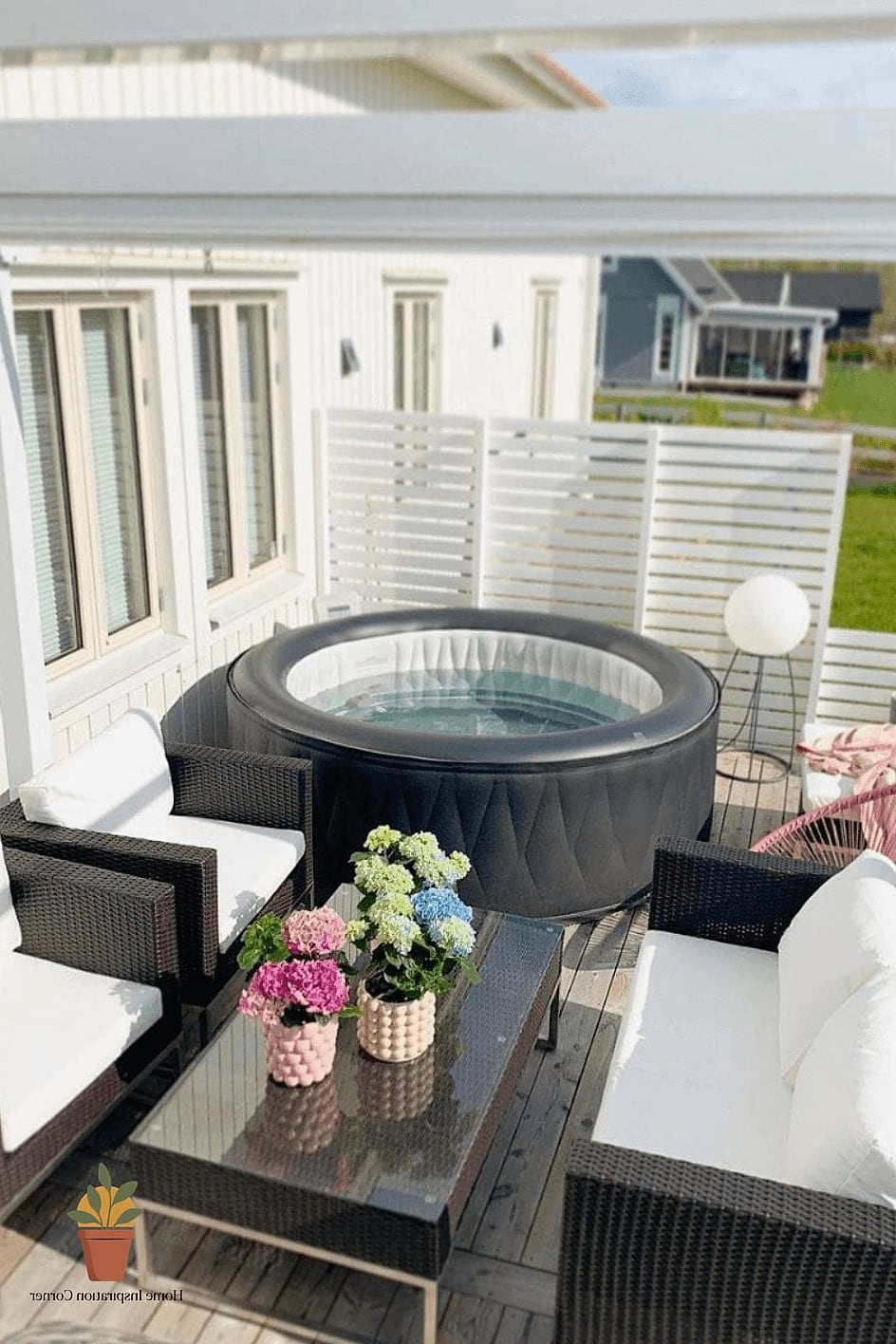
Tucking your inflatable hot tub into a corner of an existing deck is one of the easiest ways to make it feel built-in. Add a couple of lattice panels or slatted privacy screens on the open sides and you instantly get that secluded, spa-like feeling. This works especially well on smaller decks where space is tight. Cedar or bamboo screening adds warmth, while black metal panels lean more modern. Maintenance is simple since you’re not altering the deck structure, just adding to it.
Gravel Patio Base with Paver Surround
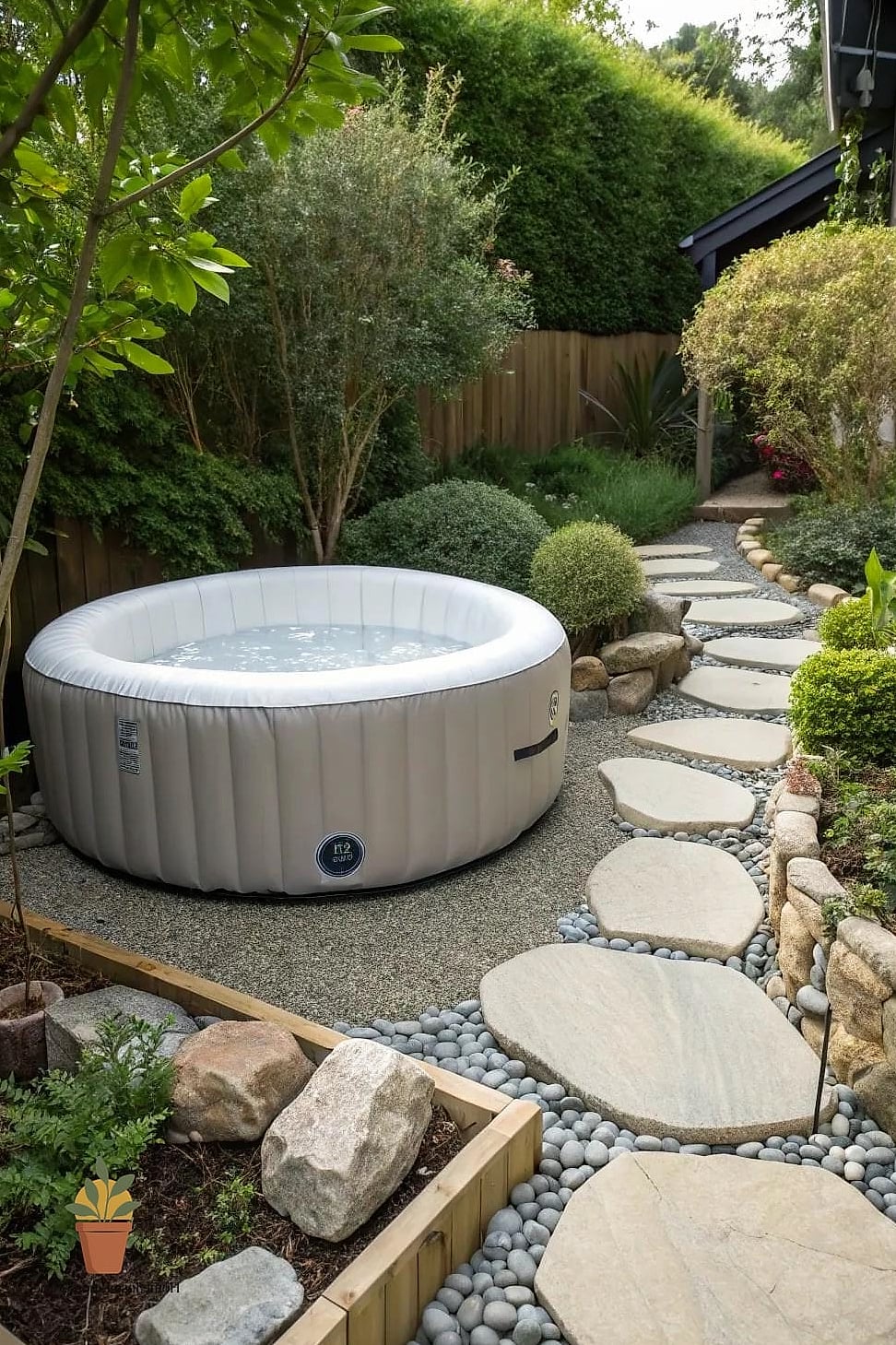
A gravel base topped with a ring of pavers gives your inflatable tub a clean, finished look without pouring concrete. This setup handles drainage well, which matters since these tubs do occasionally splash or need draining. Pea gravel or crushed granite both work nicely and stay cool underfoot compared to solid pavement. It’s a weekend DIY project for most homeowners, and it’s budget-friendly compared to a full patio installation.
Pergola-Covered Retreat
Placing your hot tub under a pergola instantly upgrades the whole vibe. It offers shade during the day and a nice frame for string lights at night. If you already have a pergola, this might be your easiest upgrade on the list. For those building new, a simple 8×8 wood or vinyl structure keeps costs reasonable. Climbing vines like clematis or jasmine soften the structure over a season or two.
Rooftop or Balcony Setup
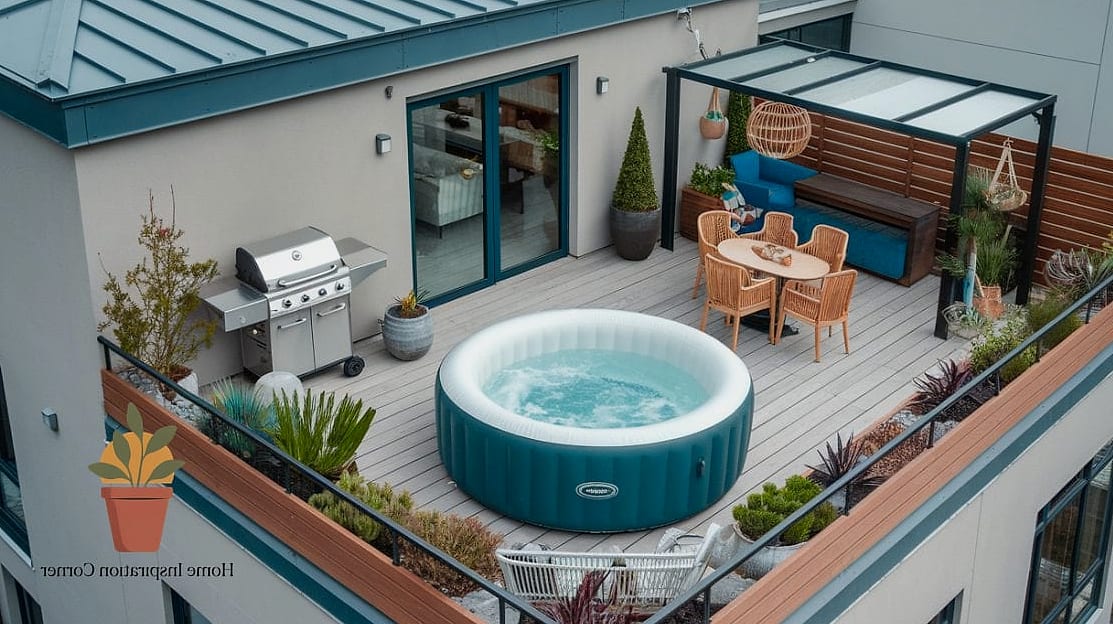
For apartment dwellers or homeowners with a sturdy rooftop deck, an inflatable hot tub can turn unused vertical space into a private oasis. Weight capacity is the big consideration here, so it’s worth checking with a structural professional before filling one up on an elevated surface. Once cleared, add some outdoor rugs and low-profile furniture to keep the area feeling open rather than cluttered.
Poolside Companion Spa
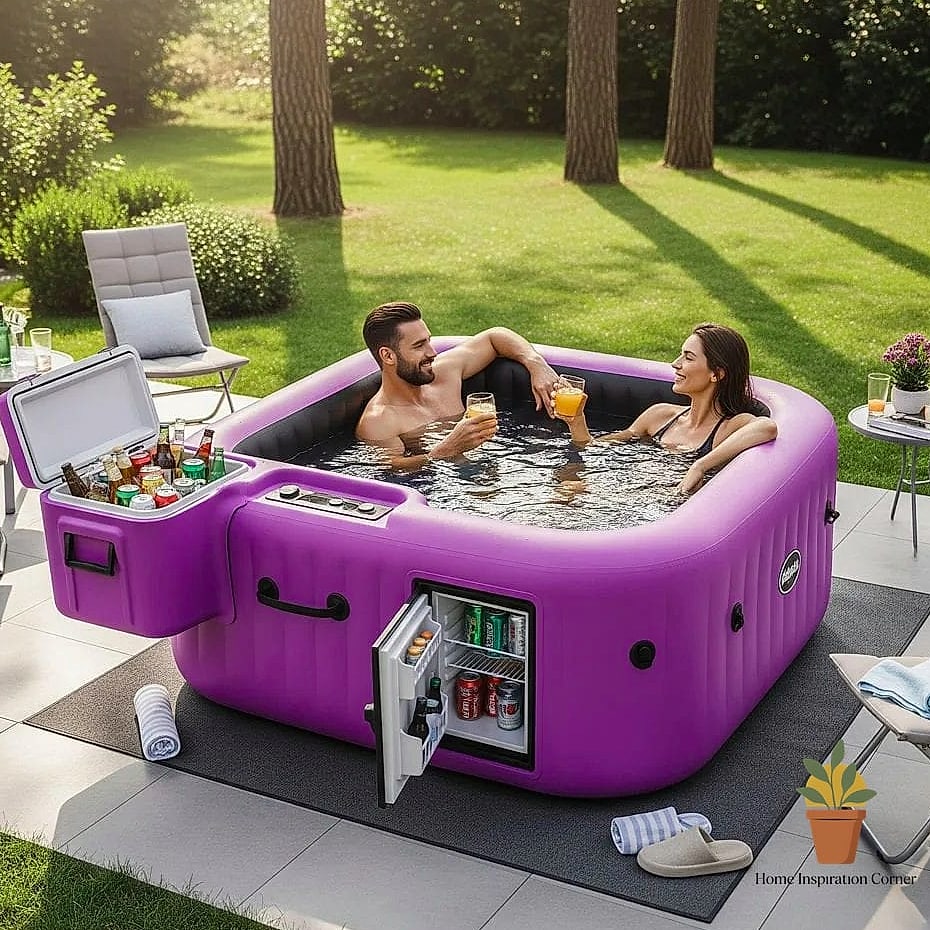
If you already have an in-ground or above-ground pool, setting up an inflatable hot tub nearby creates a resort-style hot-and-cold contrast experience. This is popular with families who want the kids to swim while adults relax separately. Keep a few feet of buffer space and consider matching your tub’s surround materials to your existing pool deck for a cohesive look.
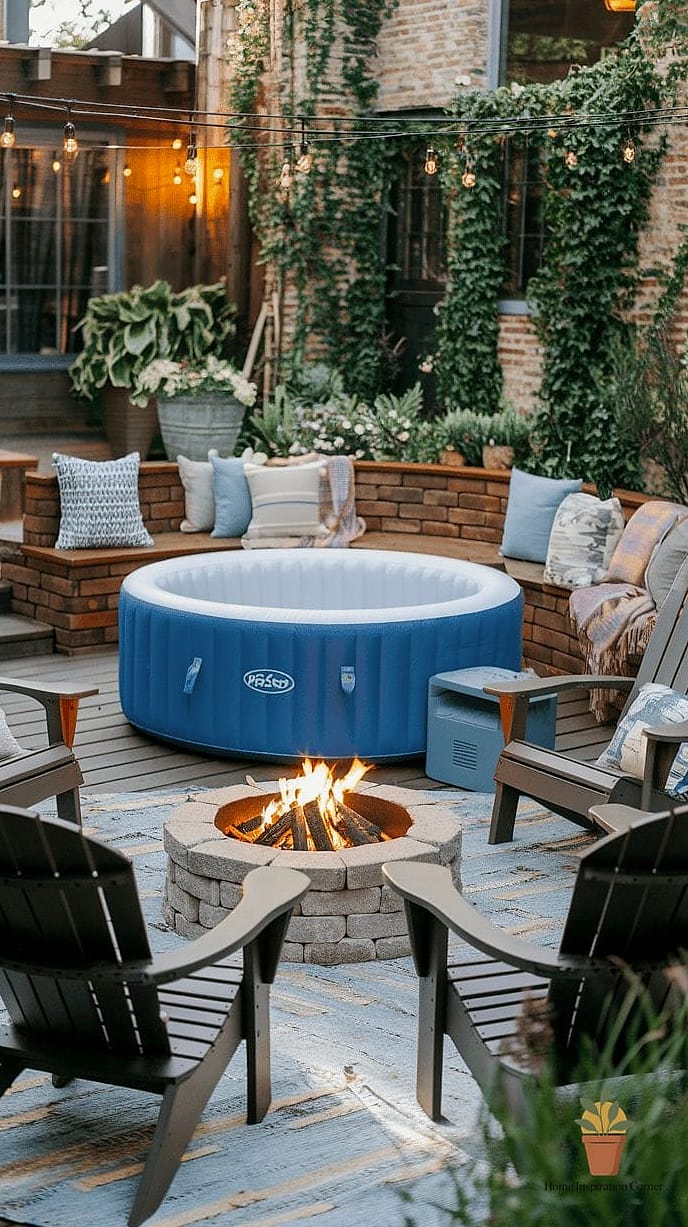
Fire Pit Adjacent Lounge
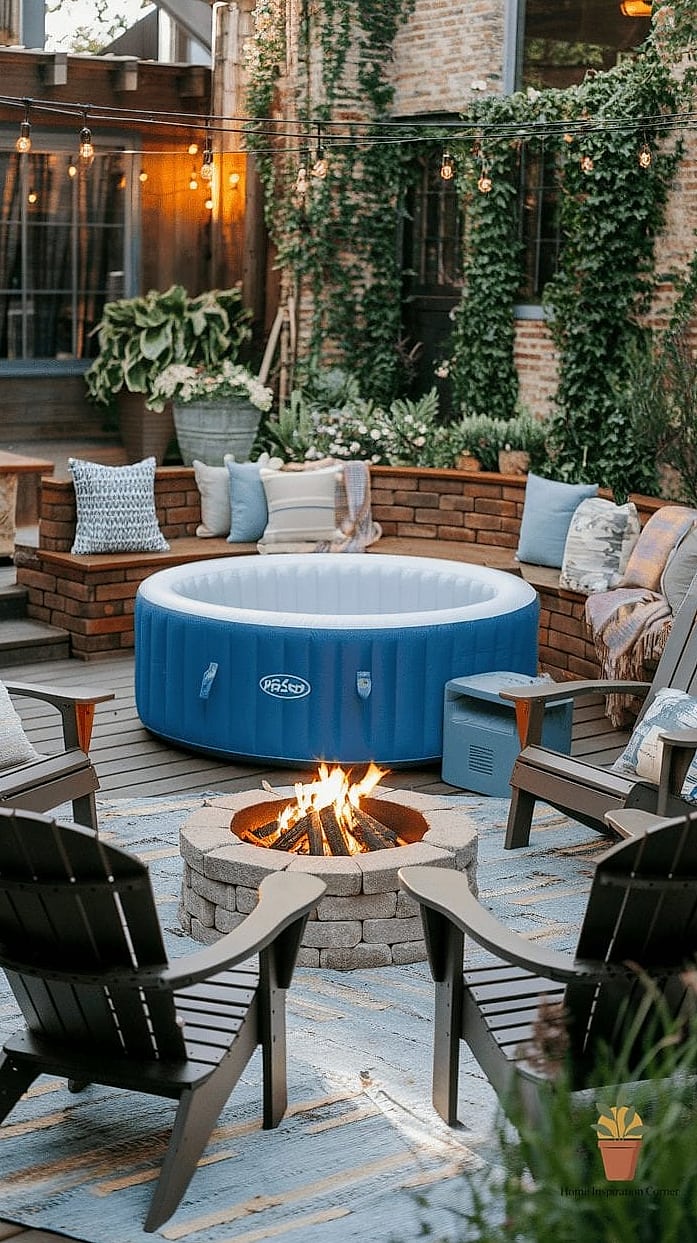
Positioning your inflatable hot tub near a fire pit (at a safe distance, of course) makes for a great cool-weather setup. There’s something about soaking while watching flames that feels more special than either feature alone. Keep at least 10 feet of clearance and use non-flammable materials like pavers or gravel between the two features for safety.
Small Balcony Micro-Spa
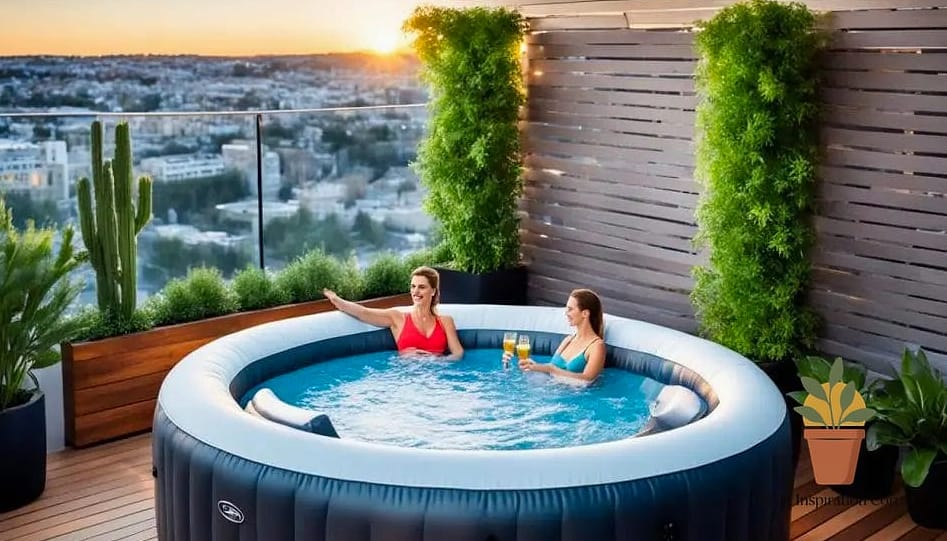
Not every backyard idea requires a yard at all. Compact inflatable tubs fit surprisingly well on small balconies when paired with foldable furniture and vertical planters. This is a renter-friendly option since nothing needs to be permanently installed. Just double-check weight limits with your building management first.
Zen Garden Surround
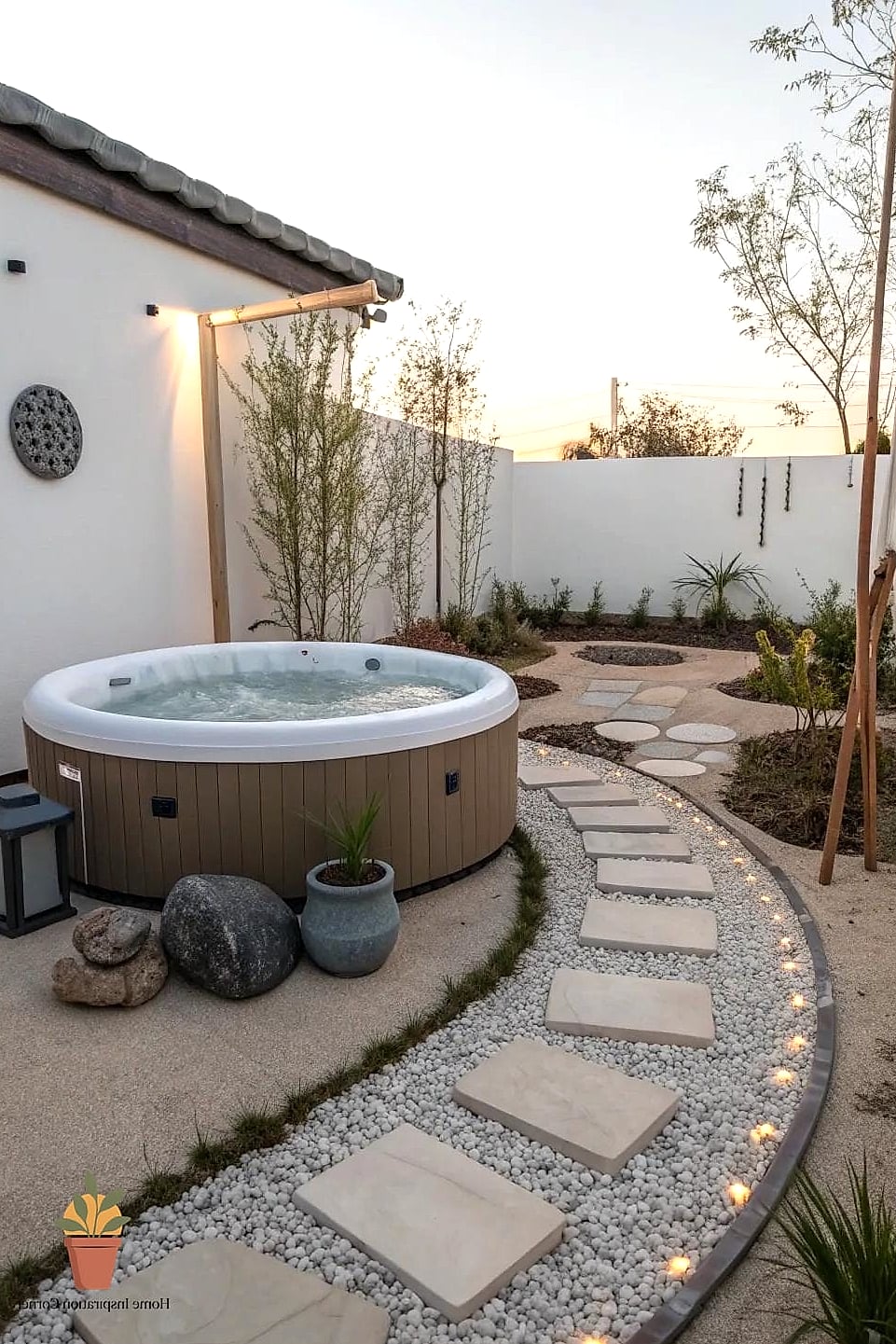
Surrounding your inflatable hot tub with smooth river rocks, a small bamboo fence, and a few sculptural plants creates a calming, spa-like retreat. This look works particularly well for anyone wanting a meditation or wellness-focused backyard corner. Adding a small tabletop fountain nearby enhances the ambient sound without much extra cost.
Wood Deck Platform Built Around the Tub
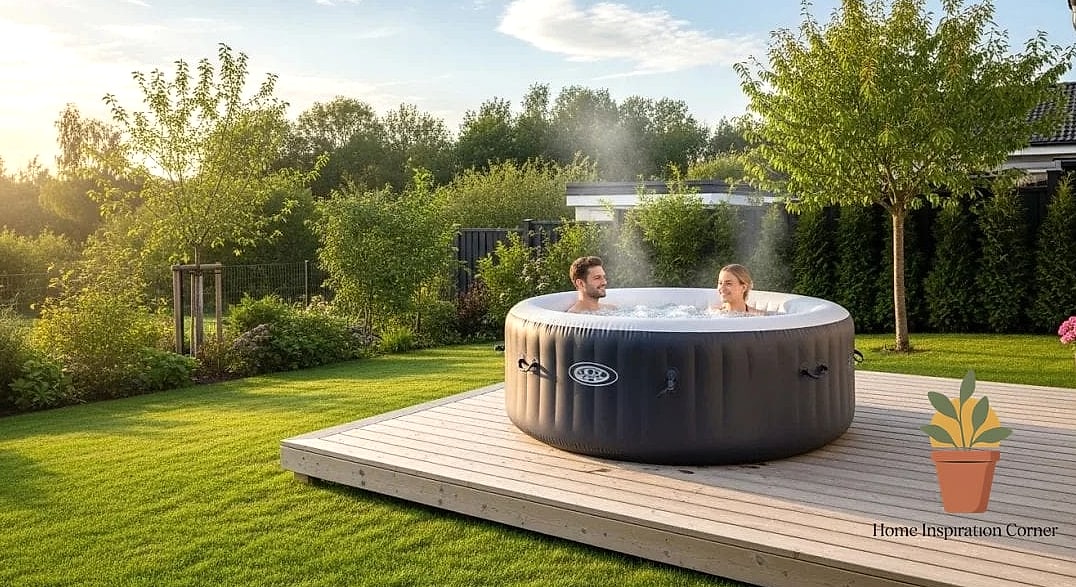
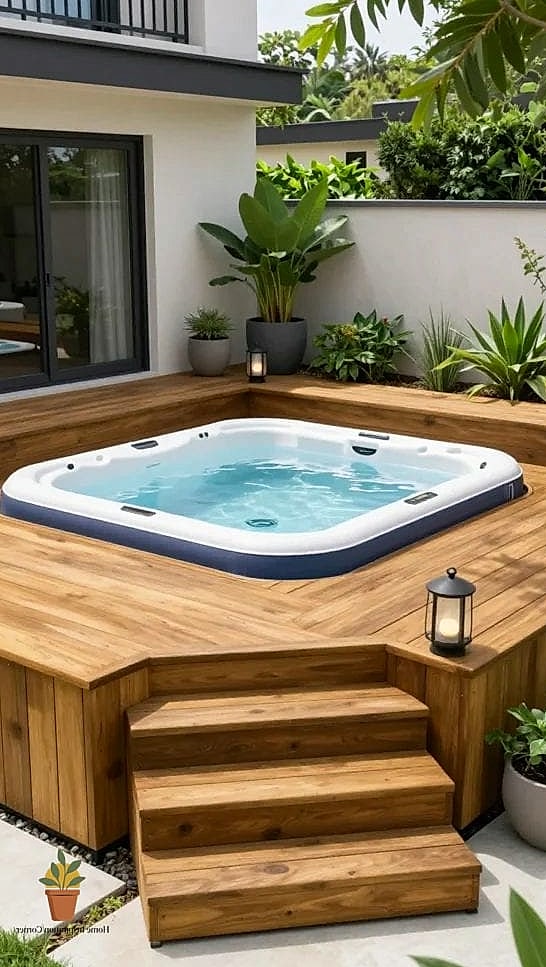
Building a simple raised wood platform with a cutout for your inflatable tub gives it a much more permanent, custom appearance. This project takes more effort but pays off in aesthetics, especially if you stain the wood to match your home’s exterior trim. It also creates a flat, stable surface for stepping in and out.
String Light Canopy Setup
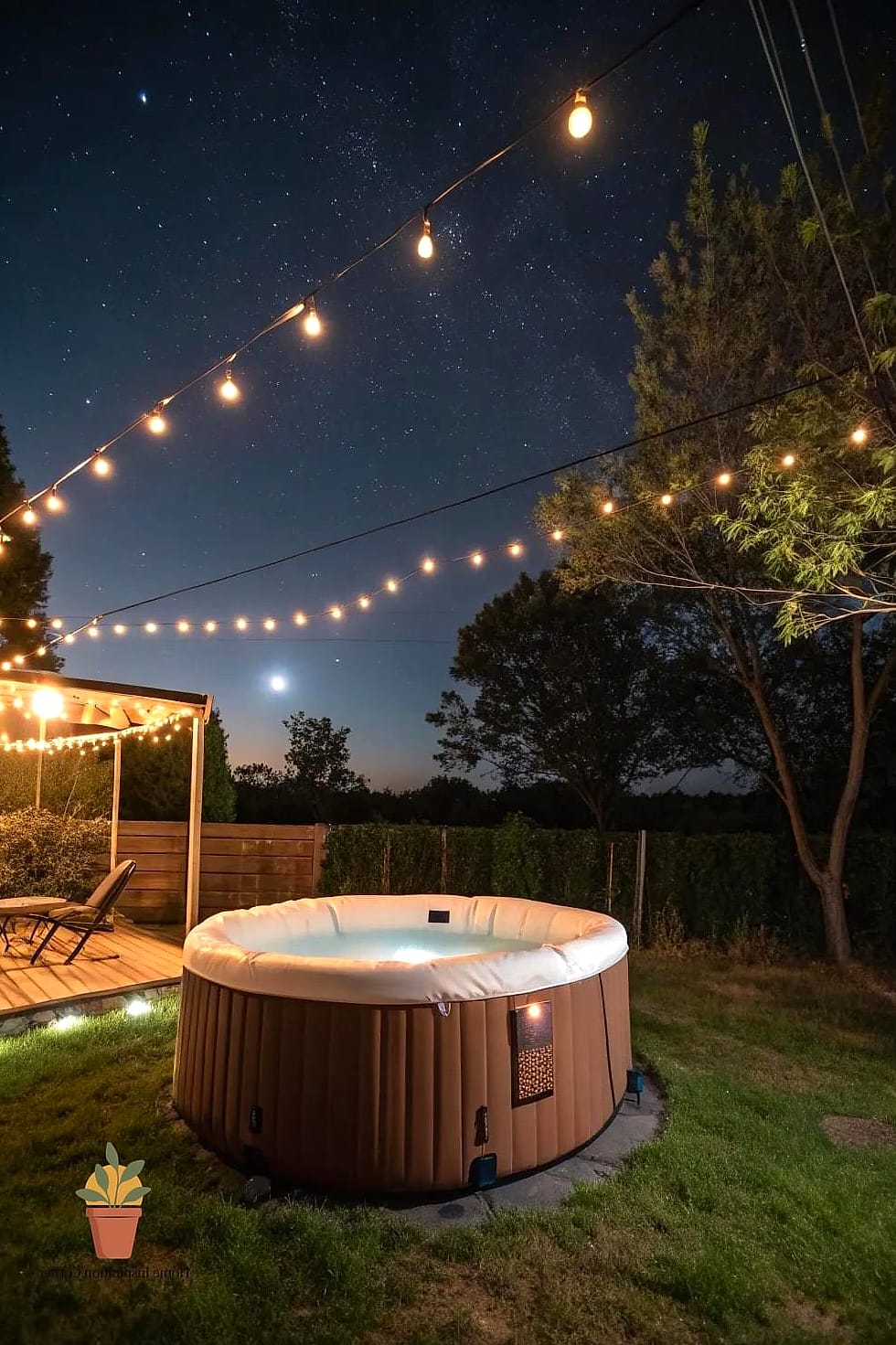
An easy, budget-friendly idea that works in nearly any yard is stringing warm white or Edison-style lights above your tub area. Attach them to a simple frame, existing trees, or your home’s eaves. This is one of those upgrades that instantly makes an ordinary backyard corner feel like an evening destination without much cost or effort.
Minimalist Concrete Pad with Modern Furniture
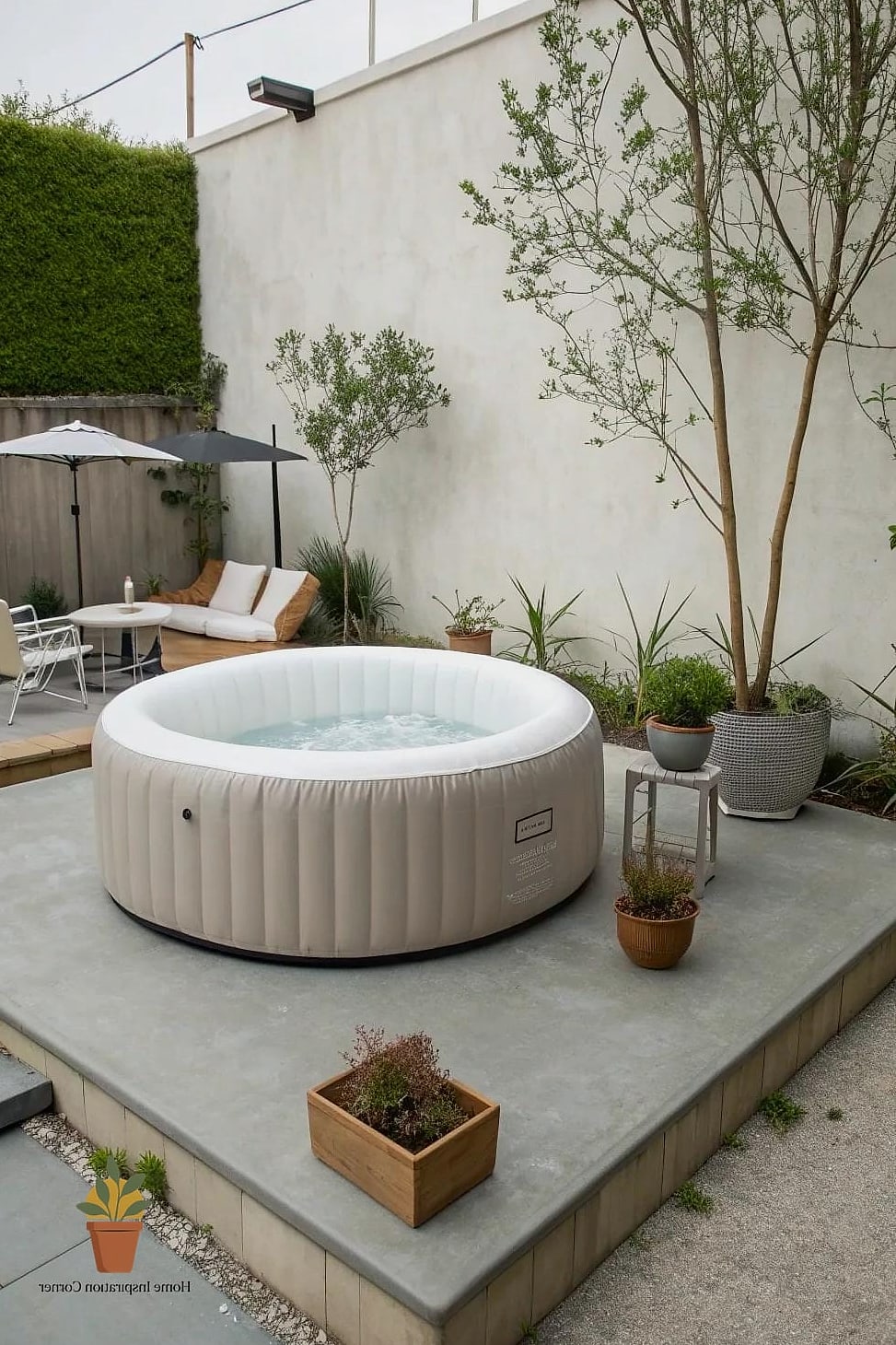
For a more architectural feel, pour a simple square or rectangular concrete pad and pair your inflatable tub with sleek outdoor furniture in black, white, or gray. This works particularly well in modern or Scandinavian-style backyards. Add a single potted olive tree or ornamental grass for a touch of greenery without overwhelming the clean lines.
Tropical Escape with Layered Plants
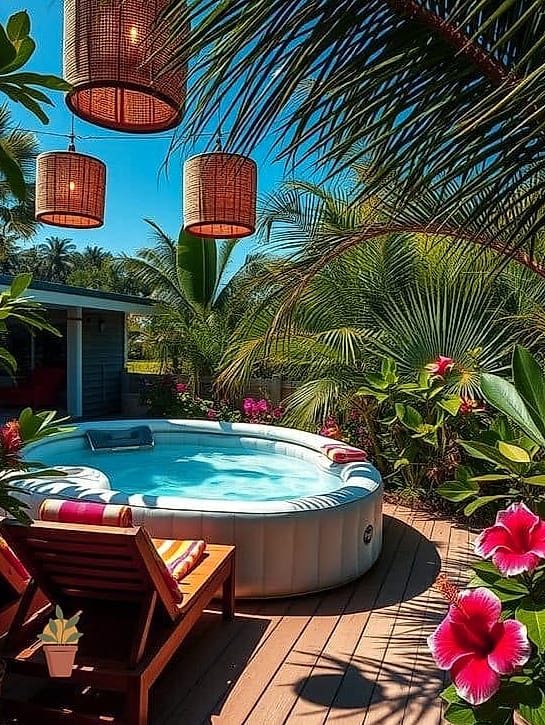
Surround your hot tub with layered tropical plants like elephant ears, palms, and banana trees to create a mini vacation vibe right at home. This idea works best in warmer climates but can be recreated seasonally elsewhere using potted plants you bring indoors for winter. Adding a tiki-style privacy fence completes the look.
Vertical Garden Wall Backdrop
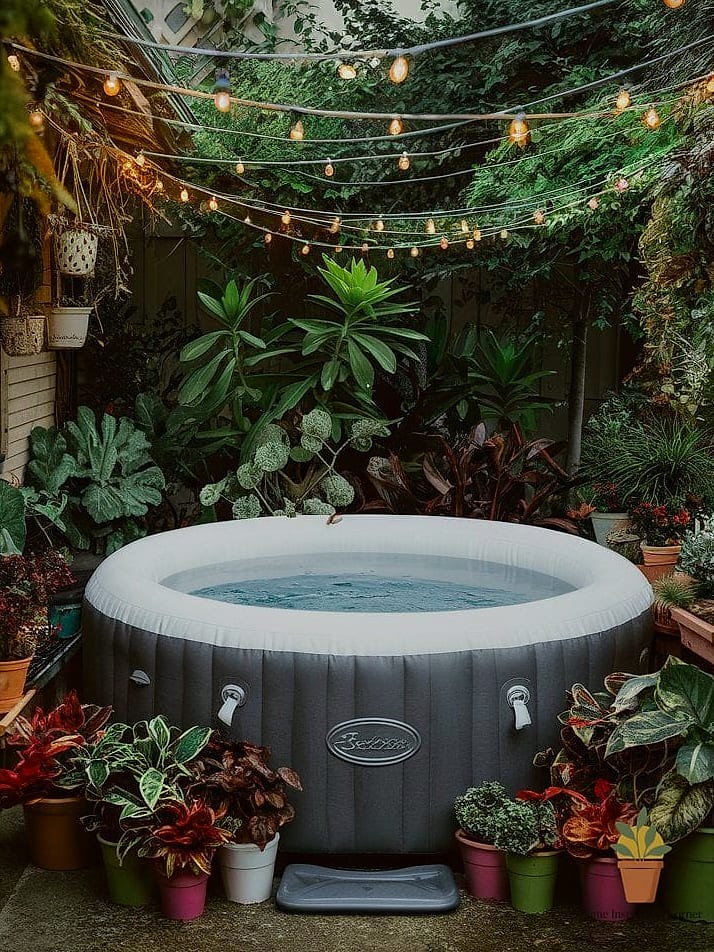
Instead of spreading plants around the ground, install a vertical garden wall or living wall panel behind your inflatable tub. This saves floor space while still delivering a lush, green backdrop. It’s a great pet-friendly option too, since there’s less soil and low plants for pets to disturb.
Family Backyard Fun Zone
If you’re setting this up for the whole family, position the inflatable tub near a play area but with a clear boundary, like a low fence or planter row, so kids know where the “adult zone” begins. Non-slip mats around the tub base add safety, especially with wet feet running back and forth from a nearby trampoline or sandbox.
Under-the-Stars Open Sky Setup
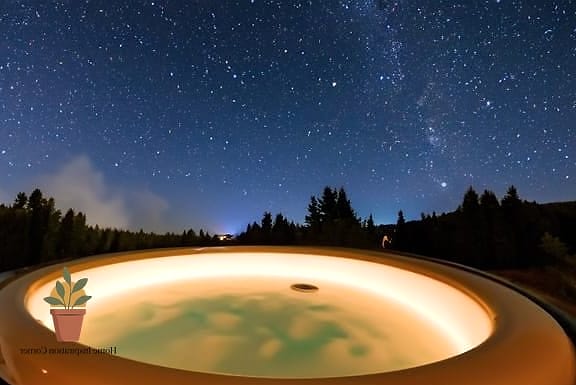
Sometimes the simplest idea is the best one. Placing your inflatable hot tub in an open area of your yard with unobstructed sky views is perfect for stargazing while you soak. Add a small side table for drinks and skip heavy landscaping so the focus stays on the view above.
Container Garden Border
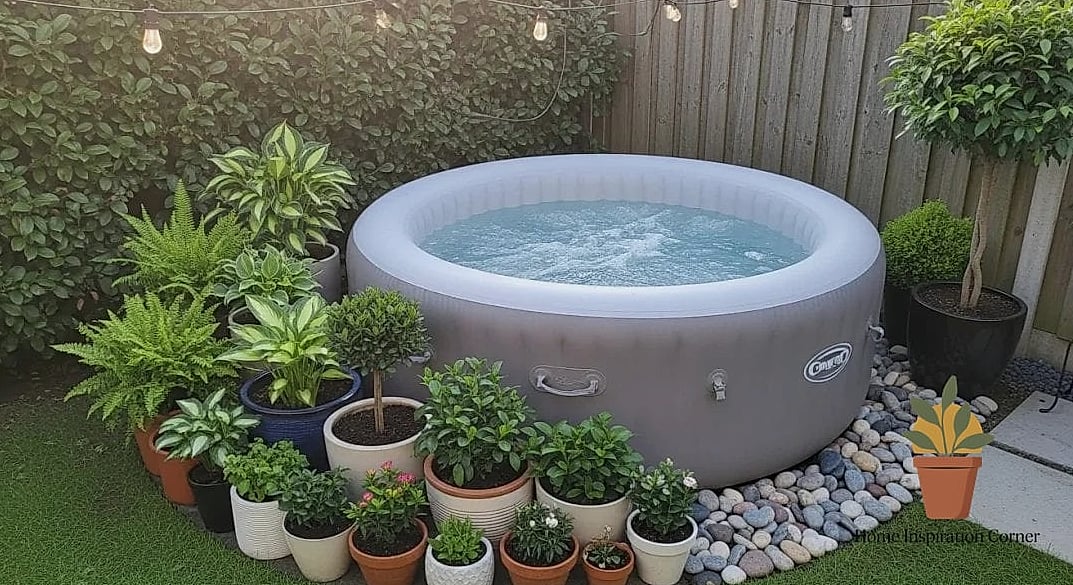
Line the perimeter of your hot tub area with an assortment of container plants in varying heights and colors instead of an in-ground garden bed. This is ideal for renters or anyone who might move the setup later, since everything is portable. Terracotta, concrete, or woven rattan planters all bring different textures depending on your style preference.
Screened-In Porch Integration
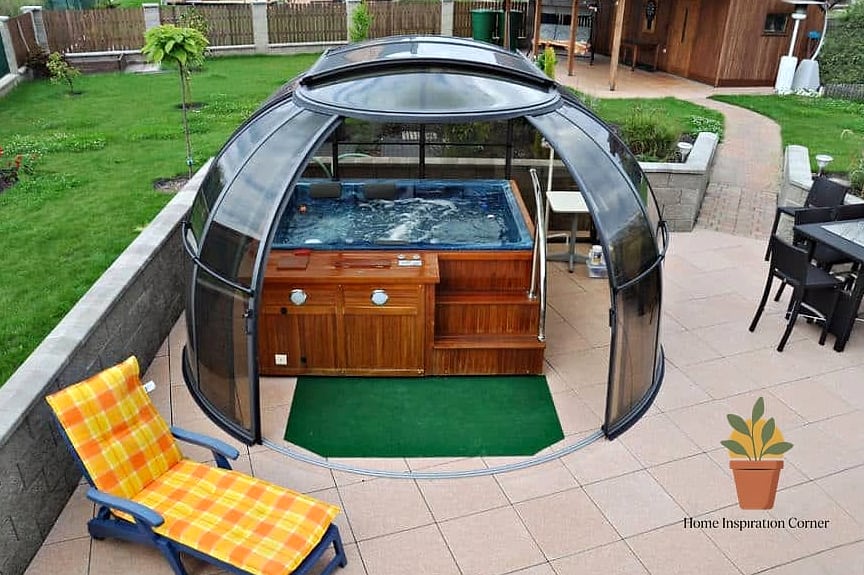
For year-round use in areas with bugs or unpredictable weather, setting an inflatable tub inside a screened porch or three-season room is worth considering. Ventilation and moisture control matter here, so a dehumidifier or good airflow setup helps protect any wood surfaces nearby.
Coastal-Inspired Wood Deck
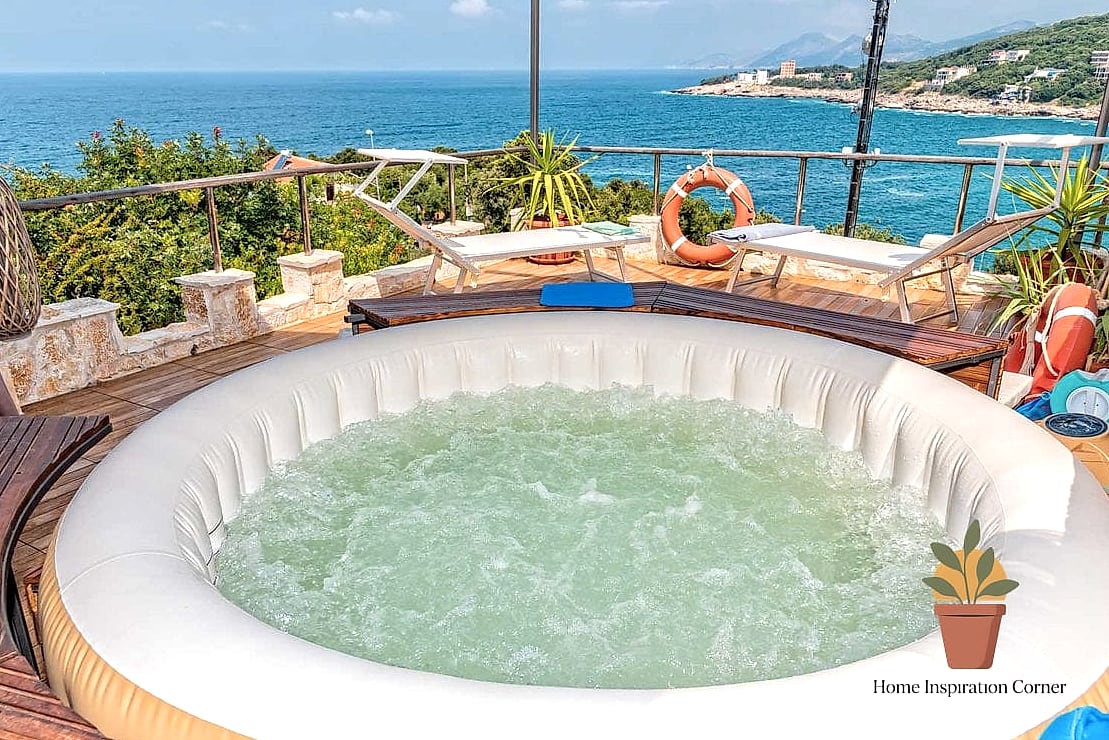
Pair your inflatable tub with whitewashed or gray-toned decking, rope accents, and light blue or sandy neutral cushions for a coastal look. Driftwood-style planters and a few nautical touches, kept subtle, tie the theme together without feeling like a theme park.
Budget DIY Pallet Surround
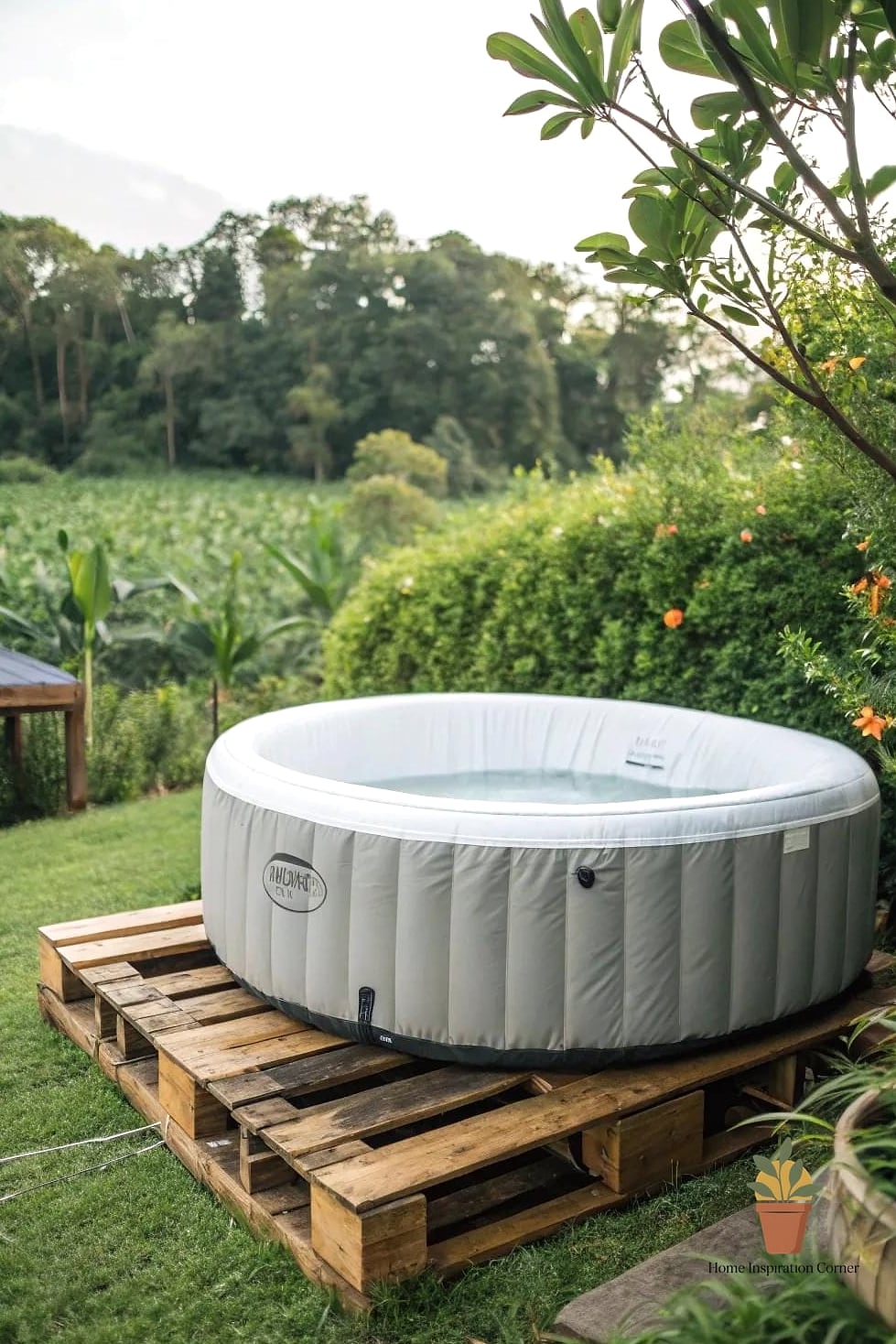
For anyone working with a tighter budget, building a simple surround out of reclaimed wood pallets is a genuinely practical option. Sand down rough edges, add a coat of exterior sealant, and you’ve got an inexpensive frame that hides the tub’s plastic sides while giving the space a rustic, handmade character.
Hillside or Sloped Yard Terrace
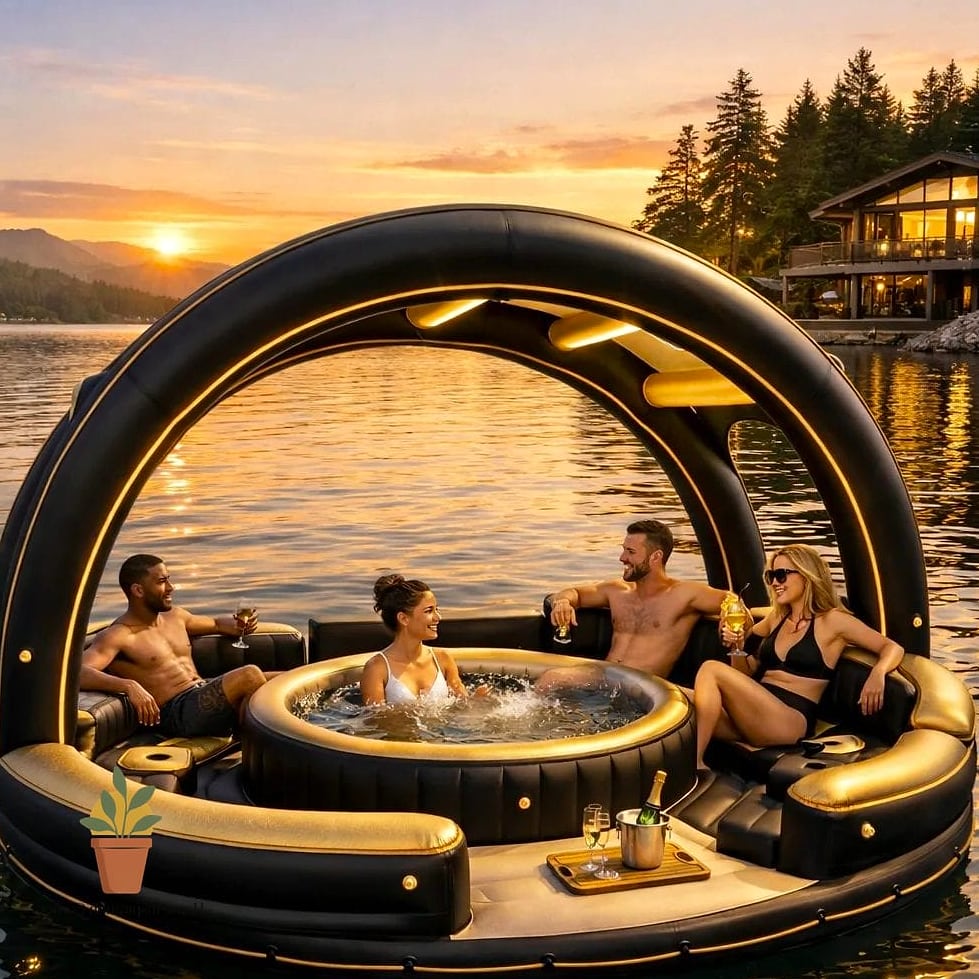
If your backyard has a slope, building a small terraced area with retaining wall blocks creates a level, stable spot for your inflatable tub. This is a bigger project, often worth hiring help for the retaining wall portion, but it makes an otherwise unusable slope into a functional relaxation spot.
All-Season Insulated Enclosure
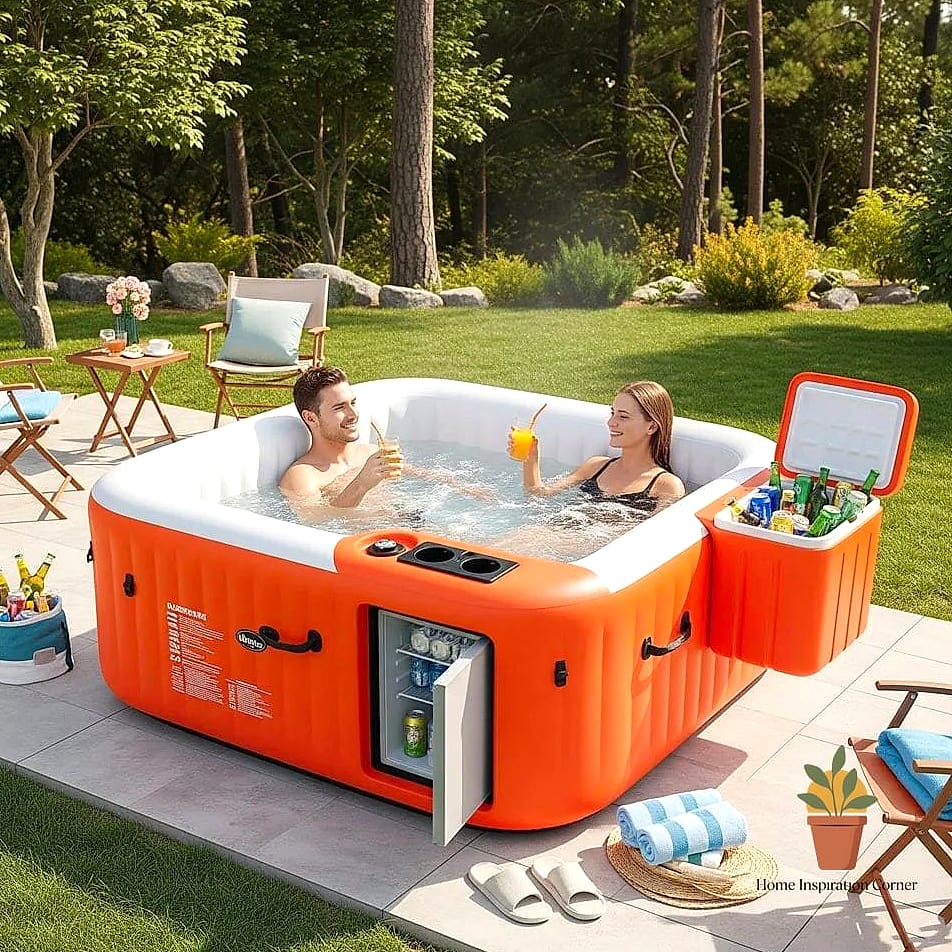
For colder climates, building a simple insulated enclosure with removable wall panels lets you use your inflatable hot tub through winter. Foam board insulation between wood framing keeps heat in, and a removable roof panel helps with snow load. This is more of an advanced DIY project, but it extends your tub’s usability well beyond just summer months.
Whatever direction you go, the beauty of an inflatable hot tub is how adaptable it is. You can start simple with string lights and a gravel patch, then build up toward a more permanent deck or enclosure as your budget allows. Hopefully these ideas gave you a clearer picture of what’s possible for your own backyard.