
23 Backyard Chicken Coop Ideas Inspiration Boards You’ll Want to Copy
- The Classic A-Frame Coop
- The Walk-In Coop with Attached Run
- The Repurposed Playhouse Coop
- The Modern Minimalist Coop
- The Farmhouse-Style Coop with Cupola
- The Elevated Coop on Legs
- The Small-Space Vertical Coop
- The Repurposed Shed Coop
- The Boho-Inspired Coop
- The Coop with a Green Roof
- The Predator-Proof Fort Coop
- The Mini Barn Coop
- The Coop with a Covered Porch
- The Upcycled Wine Barrel Coop
- The Coop with Built-In Nesting Box Access
- The Coop with a Chalkboard Sign
- The Repurposed Dog House Coop
- The Coop with Solar-Powered Lighting
- The Two-Story Coop with Run Below
- The Coop Painted to Match Your House
- The Coop with a Sand or Gravel Run Floor
- The Coop with Hinged Roof Access
- The Coop Surrounded by a Garden Border
23 Backyard Chicken Coop Ideas Inspiration Boards You’ll Want to Copy
If you’ve been down the backyard chicken rabbit hole lately, you already know how many directions you can go with a coop. Some folks want something that looks like a tiny cottage. Others just want their birds safe, dry, and easy to clean out on a Saturday morning. Either way is valid, and honestly the best coops usually borrow a little from both camps.
I’ve pulled together a mix of styles, sizes, and budgets below so you can find something that actually fits your yard, your flock size, and your patience level for weekend projects. Let’s get into it.
The Classic A-Frame Coop
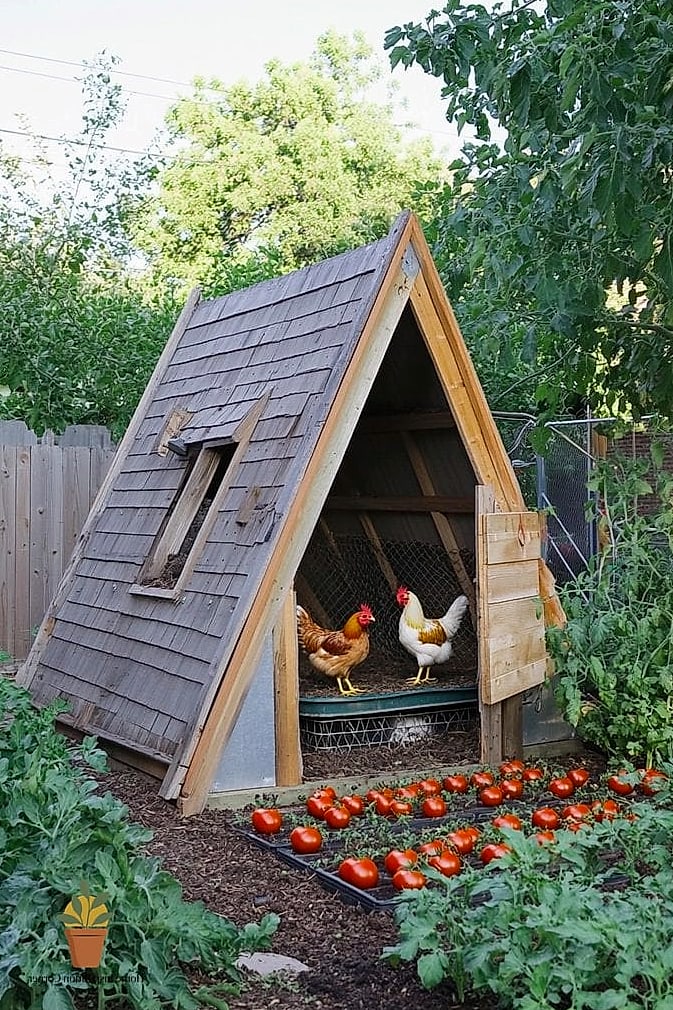
This is the shape most people picture when they think “chicken coop,” and there’s a reason it’s stuck around. The triangular design sheds rain and snow easily, which matters a lot if you live somewhere with real weather. It’s also one of the simpler builds for a first-time DIYer since the roofline doubles as the walls.
A-frames work great for small to medium flocks and tuck nicely into a corner of the yard without eating up too much space. Paint it a soft sage or barn red and it stops looking like a structure and starts looking like a little garden feature.
The Walk-In Coop with Attached Run
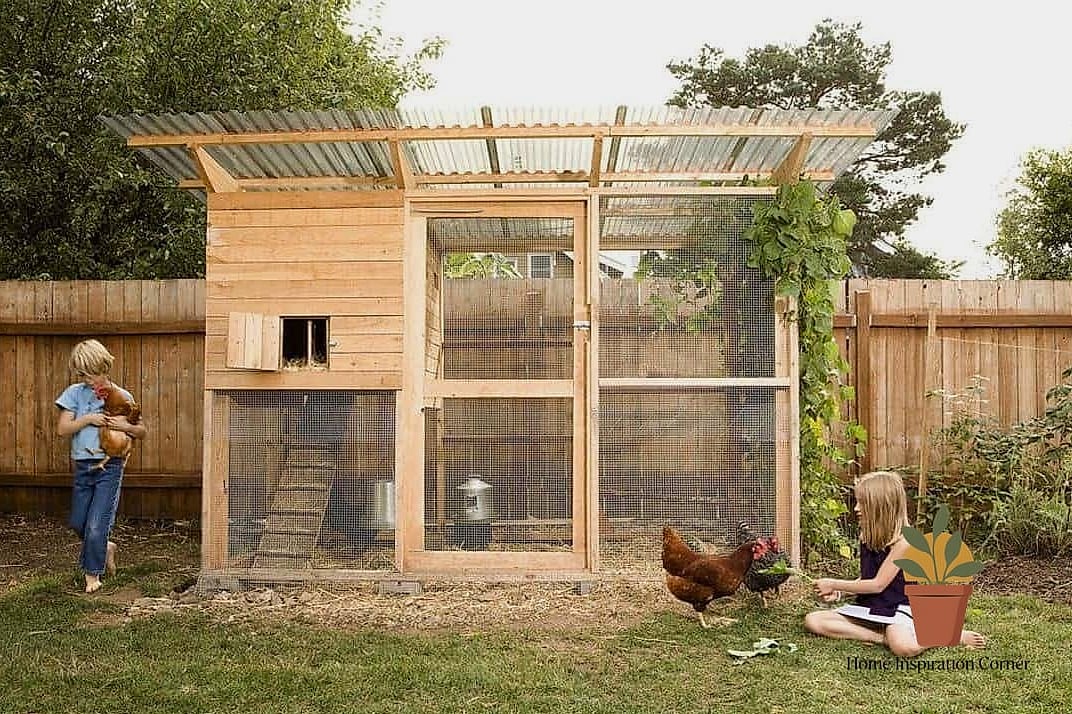
If cleaning out a coop on your knees sounds miserable, a walk-in style solves that instantly. These are tall enough for an adult to stand upright inside, which makes daily chores so much faster. Pair it with an attached run and your birds get protected outdoor space without you needing to open multiple doors.
This setup is ideal for anyone with six or more hens, since the extra square footage prevents overcrowding. It’s a bigger build, so budget more time and materials, but the daily convenience pays off fast.
The Repurposed Playhouse Coop
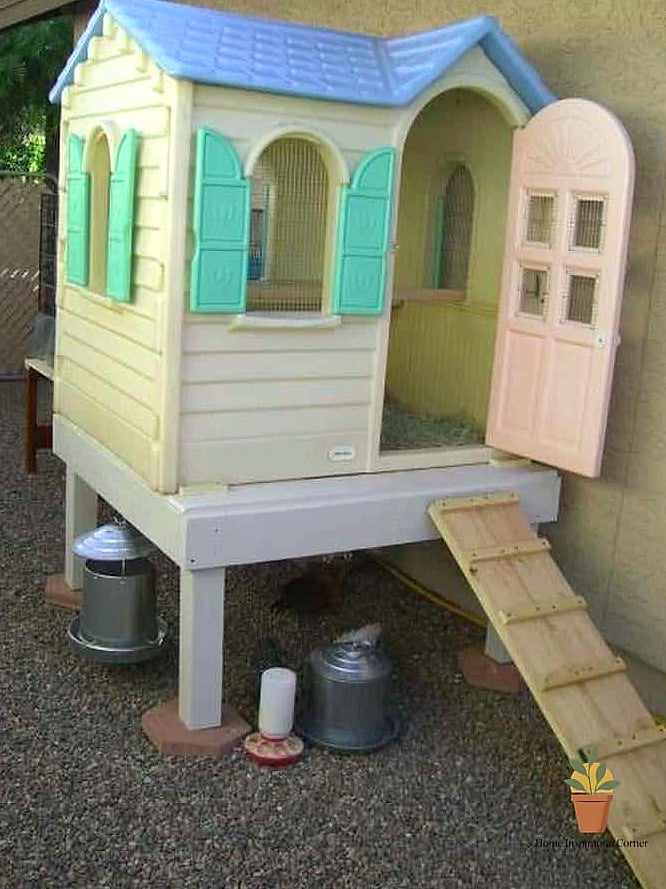
Got an old kids’ playhouse sitting unused? That’s basically a coop waiting to happen. Add some ventilation, nesting boxes, and predator-proof hardware cloth, and you’ve got a full setup without starting from scratch.
This is one of the most budget-friendly routes on this list. It’s also a fun weekend project if you like giving old structures a second life instead of hauling them to the dump.
The Modern Minimalist Coop
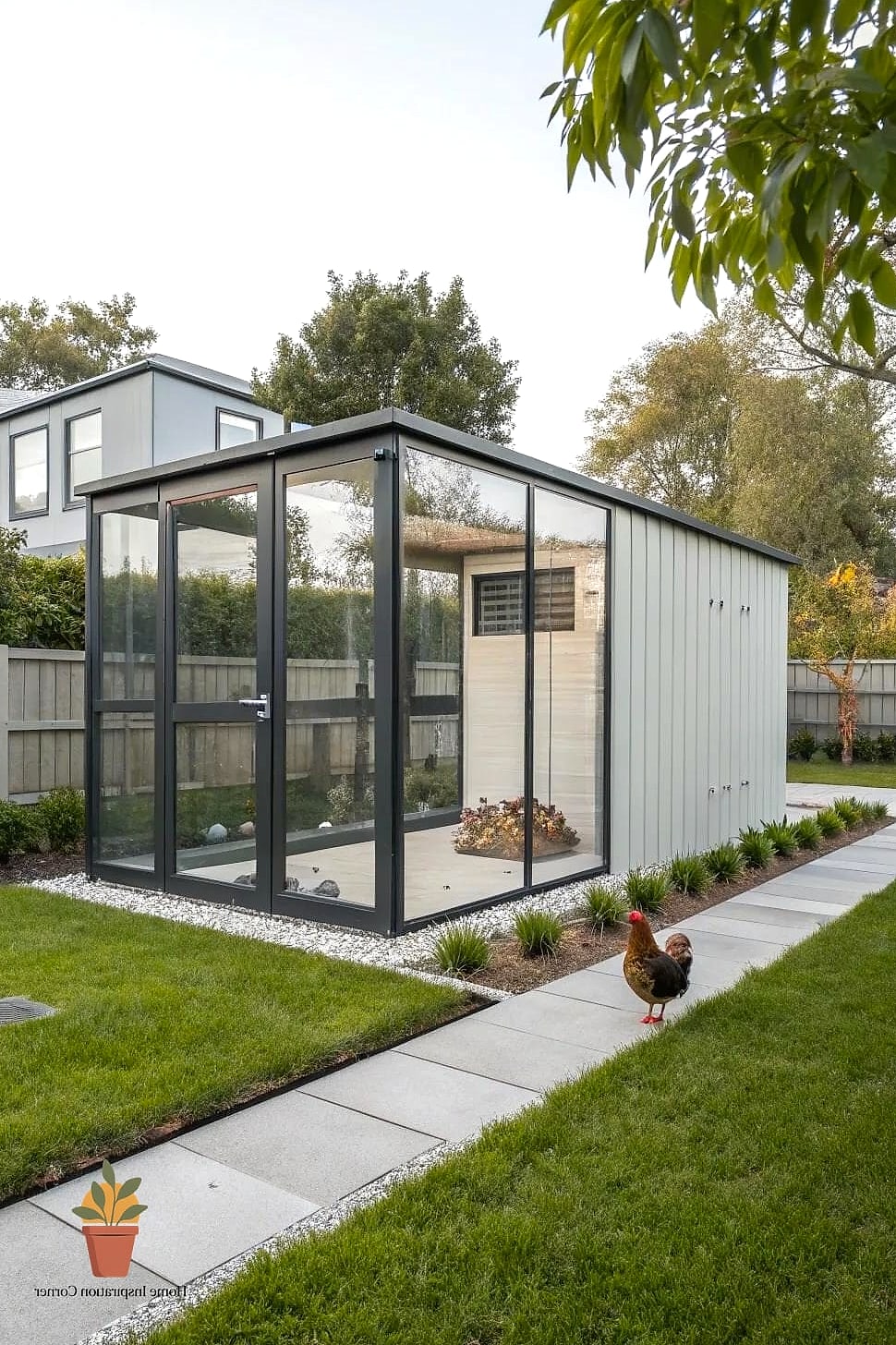
Clean lines, black or charcoal exterior, and simple geometric shapes make this style feel more like a design piece than a farm structure. It’s popular with homeowners who want their coop to blend into a more contemporary backyard rather than stand out.
Matte black hardware and a flat or slightly angled roof keep the look sharp. This style photographs beautifully too, which is probably why you see it all over inspiration boards lately.
The Farmhouse-Style Coop with Cupola
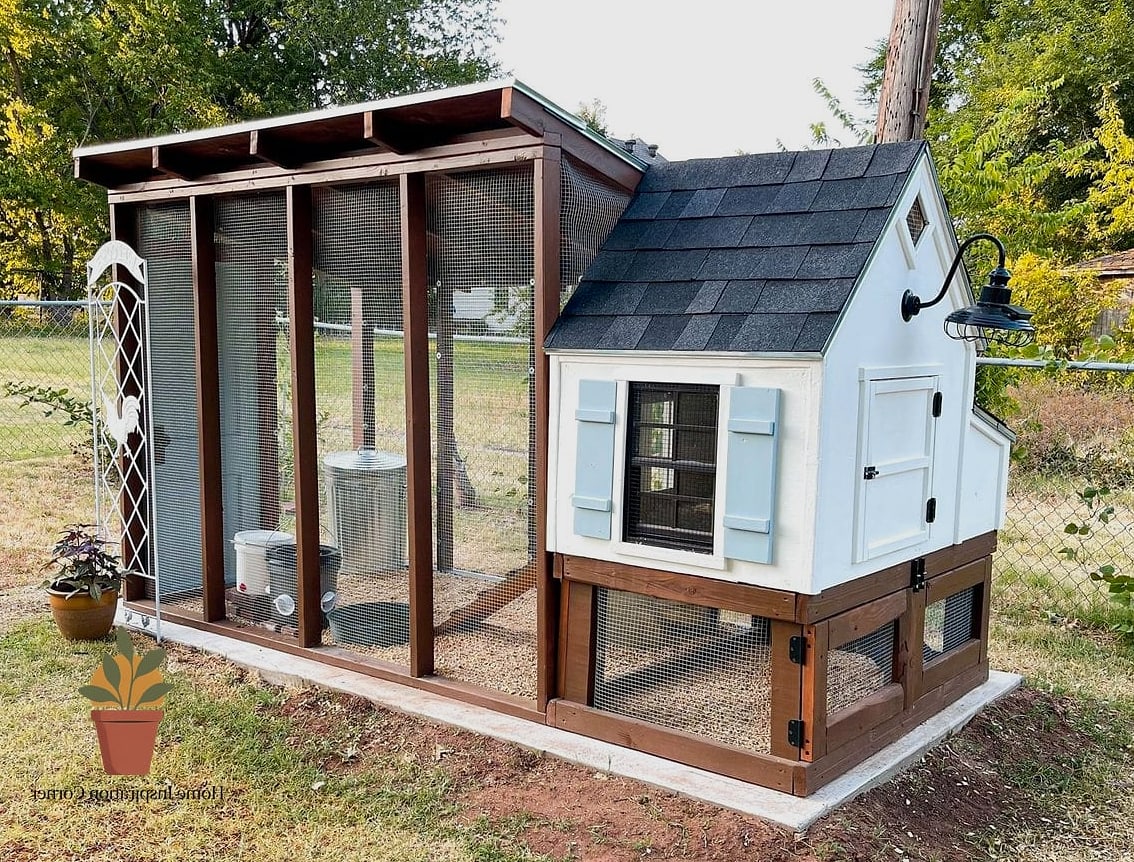
White board-and-batten siding, a little cupola on top, maybe a weathervane. This one leans hard into charm. It pairs well with farmhouse landscaping and feels right at home next to a vegetable garden or raised beds.
The cupola isn’t just decorative either. It helps with ventilation, which keeps the interior cooler in summer and reduces moisture buildup.
The Elevated Coop on Legs
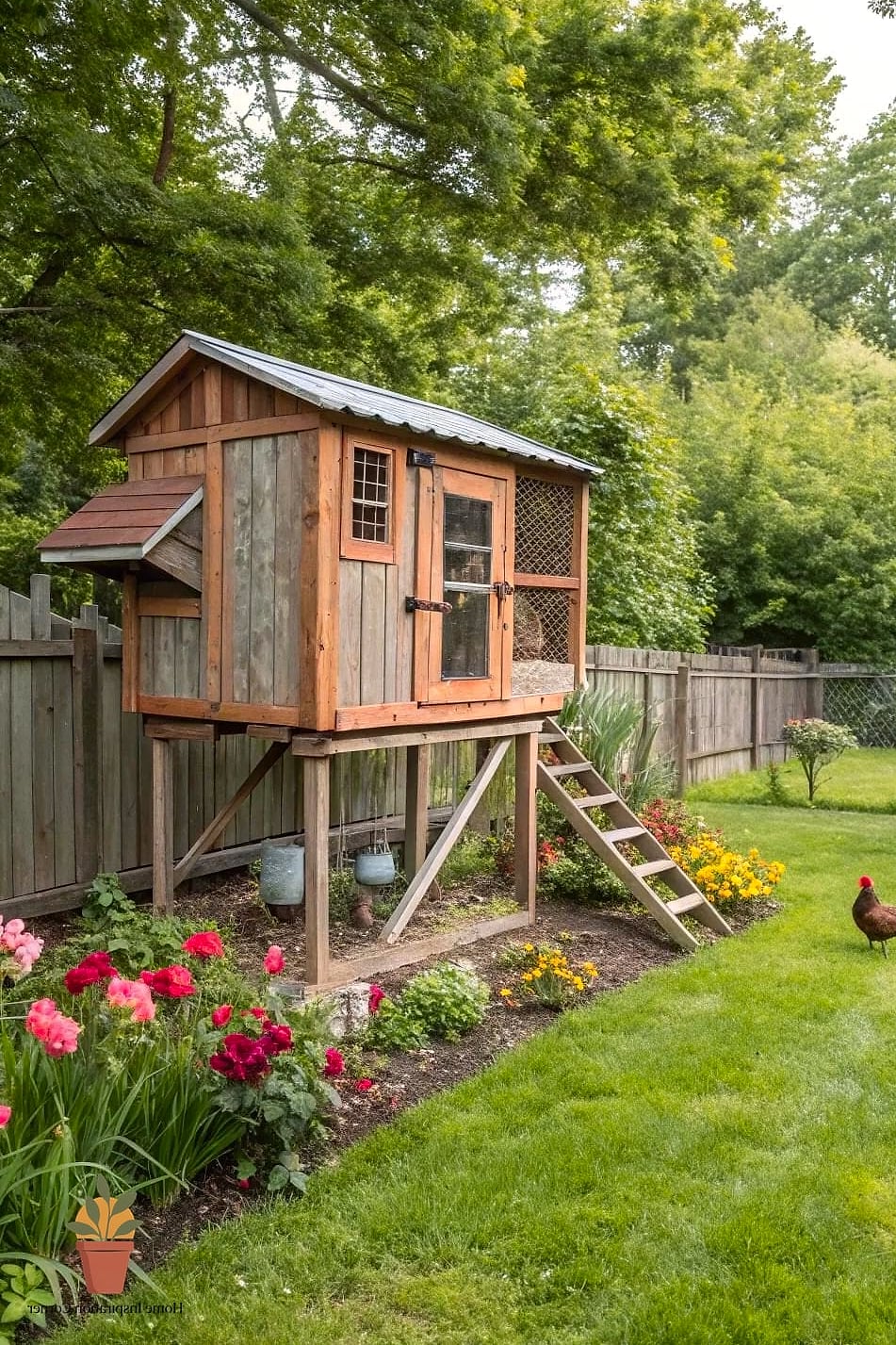
Raising the coop off the ground on sturdy legs does double duty. It protects your flock from ground-level predators and gives them shaded space to hang out underneath during hot afternoons.
This design works especially well in areas with heavy rain or occasional flooding since it keeps bedding dry. Add a ramp for easy access and you’re set.
The Small-Space Vertical Coop
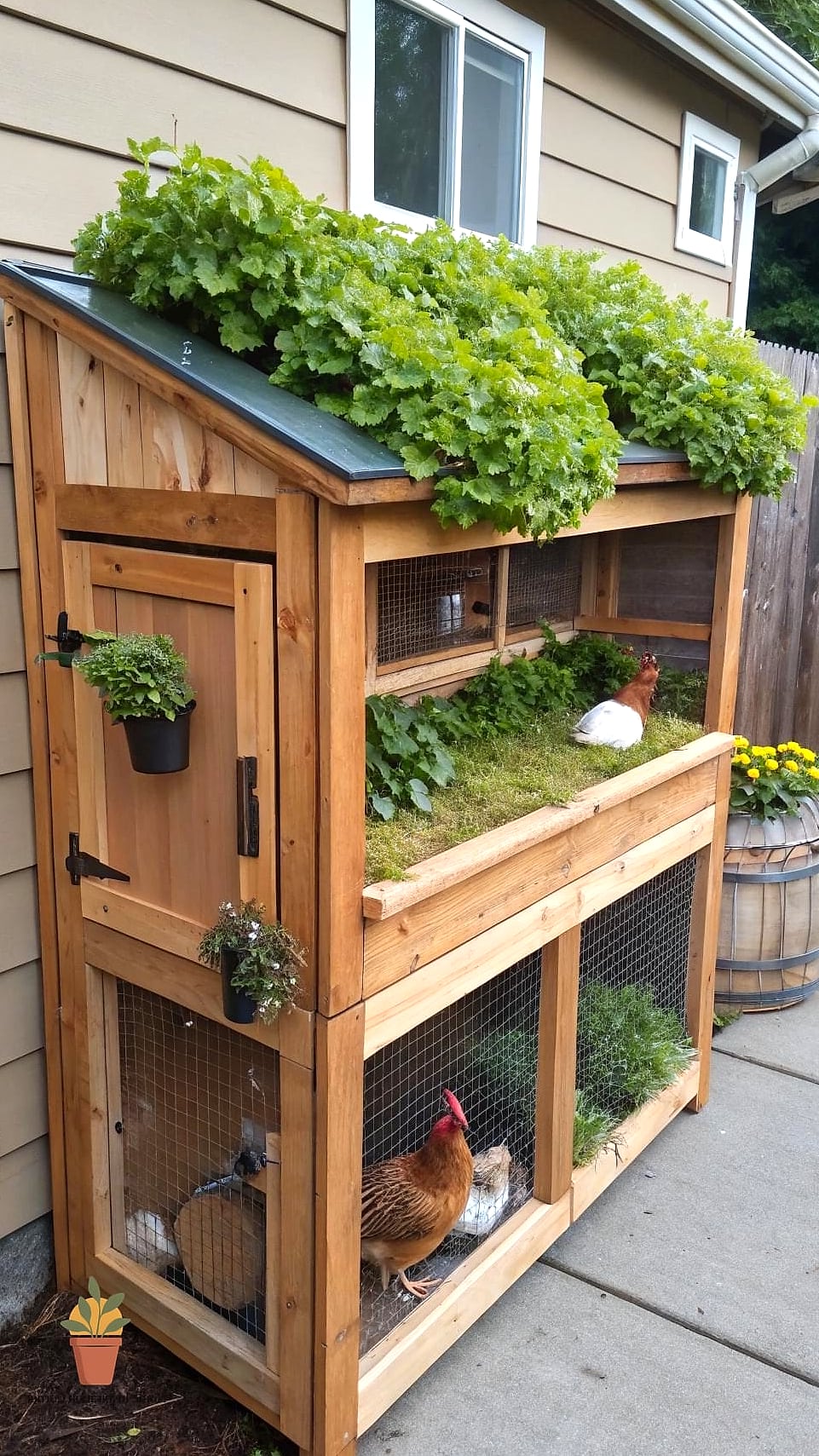
For anyone working with a tiny backyard, vertical designs are a lifesaver. These stack the coop and run on top of each other instead of spreading out horizontally, so you get full function in a fraction of the footprint.
It’s a smart pick for suburban lots or urban homesteaders dealing with strict space limits. Just make sure ventilation runs top to bottom so airflow doesn’t get trapped.
The Repurposed Shed Coop
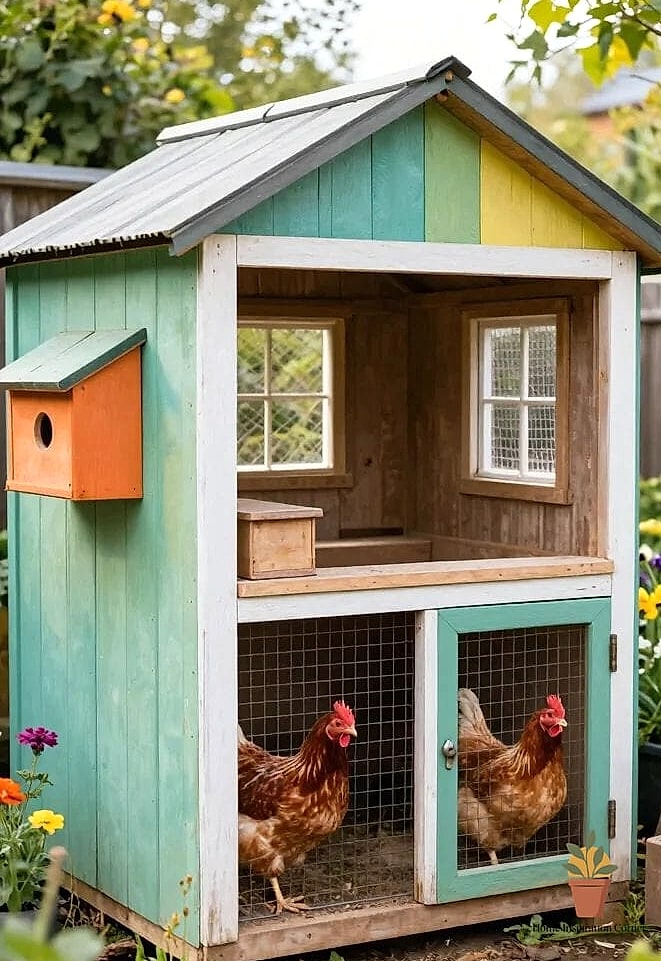
An old garden shed can become a surprisingly solid coop with a few modifications. Cut in some windows for airflow, add roosting bars, and section off a nesting area. Since sheds are already weatherproof, you’re skipping a lot of the harder building steps.
This is a great option if you already have a shed sitting around doing nothing useful.
The Boho-Inspired Coop
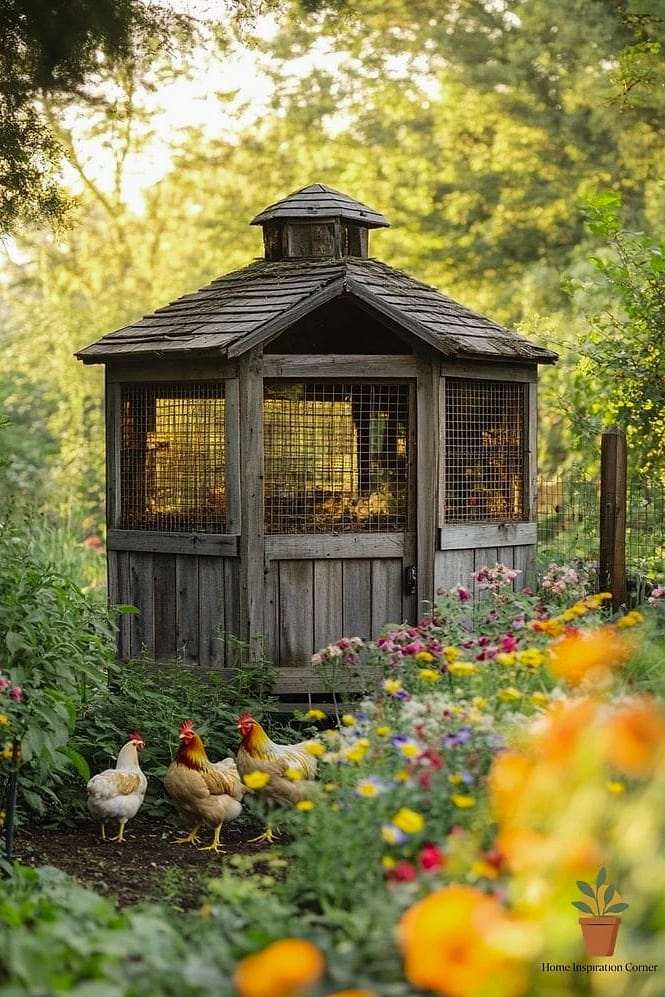
Think natural wood tones, woven accents, and a relaxed, earthy palette. This style often incorporates reclaimed wood and mismatched textures in a way that still feels intentional. It’s less about symmetry and more about warmth.
Hang some string lights nearby if you use the space for evening chores, and it starts feeling like part of your outdoor living area rather than just a utility structure.
The Coop with a Green Roof
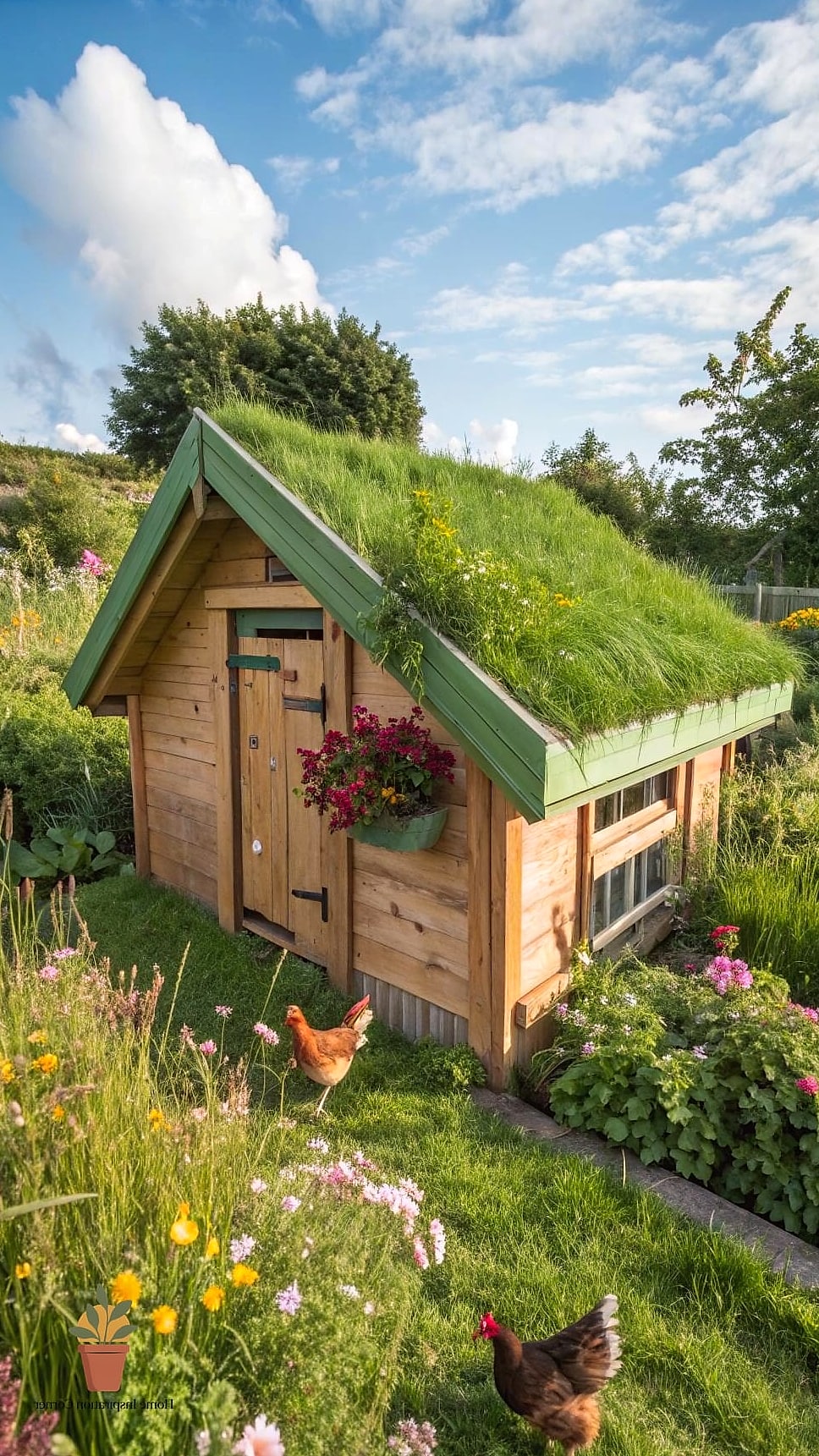
Living roofs aren’t just for tiny houses anymore. A layer of sedum or low-growing greenery on top of a coop adds natural insulation and blends the structure into a garden setting. It also happens to look incredible in photos, which is probably why this idea keeps popping up on inspiration boards.
Keep in mind this requires a slightly reinforced roof structure to handle the extra weight, so it’s more of an intermediate build.
The Predator-Proof Fort Coop

If you’ve dealt with raccoons, hawks, or the neighborhood dog getting a little too curious, a fortified coop might be worth the extra effort. Hardware cloth buried a foot into the ground, secure locking latches, and a fully enclosed run keep your flock safe around the clock.
This style prioritizes function over looks, but you can still dress it up with paint and trim so it doesn’t feel purely utilitarian.
The Mini Barn Coop
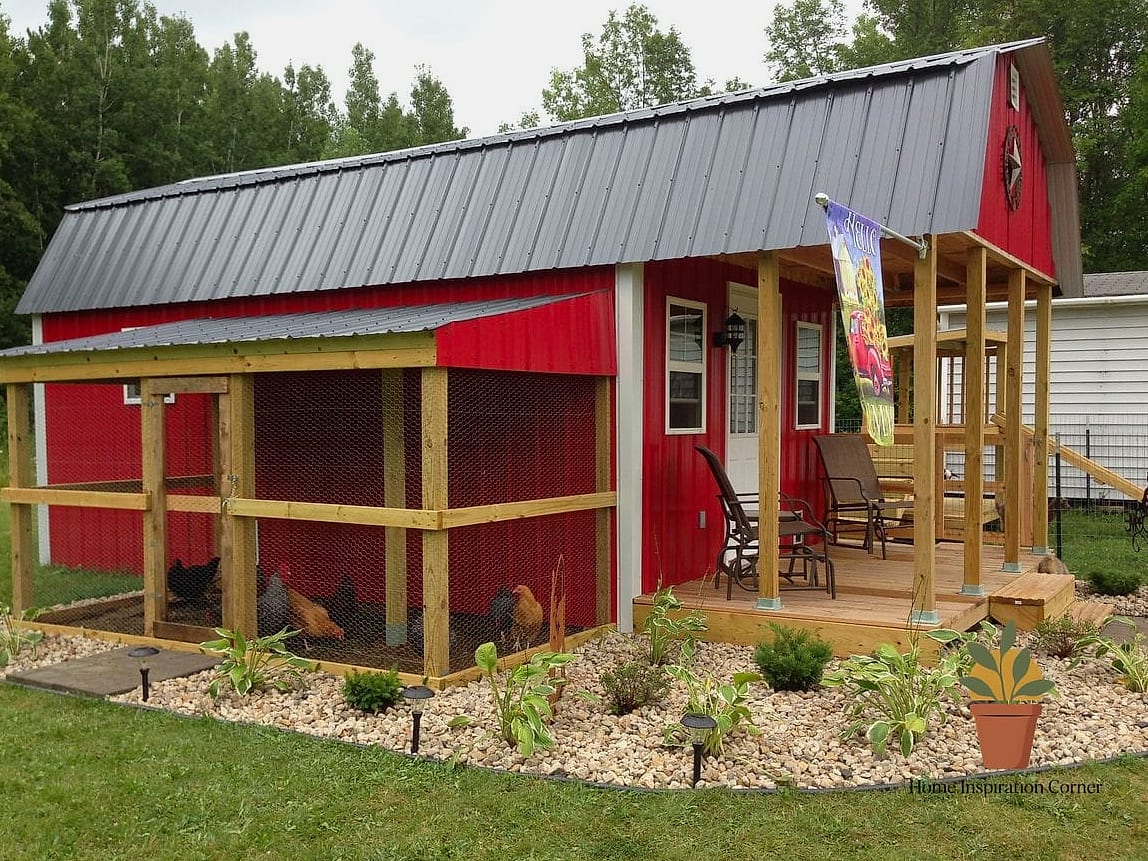
Scaled-down barn shapes with a gambrel roof give you extra headroom inside without needing a huge footprint. That bonus space up top works well for storing feed, bedding, or tools, which keeps clutter out of your garage.
Red and white is the obvious color choice here, but a soft gray with white trim looks just as good and feels a little more modern.
The Coop with a Covered Porch
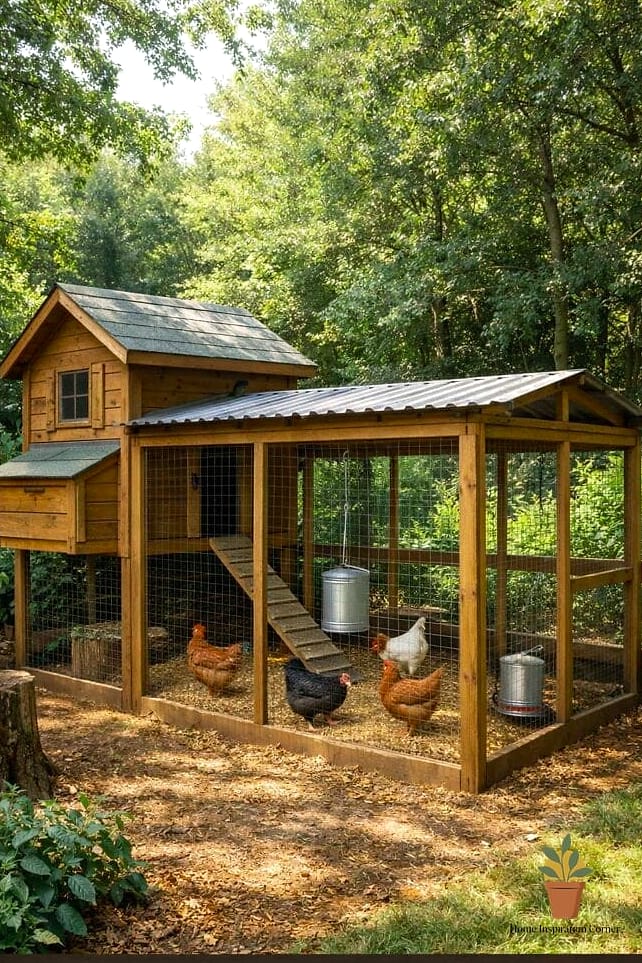
A small covered area attached to the coop entrance gives your hens shaded outdoor space and gives you a dry spot to stand during egg collection on rainy days. It’s a small addition that makes a noticeable difference in daily usability.
This works particularly well in climates with strong sun, since the shade keeps the run cooler.
The Upcycled Wine Barrel Coop
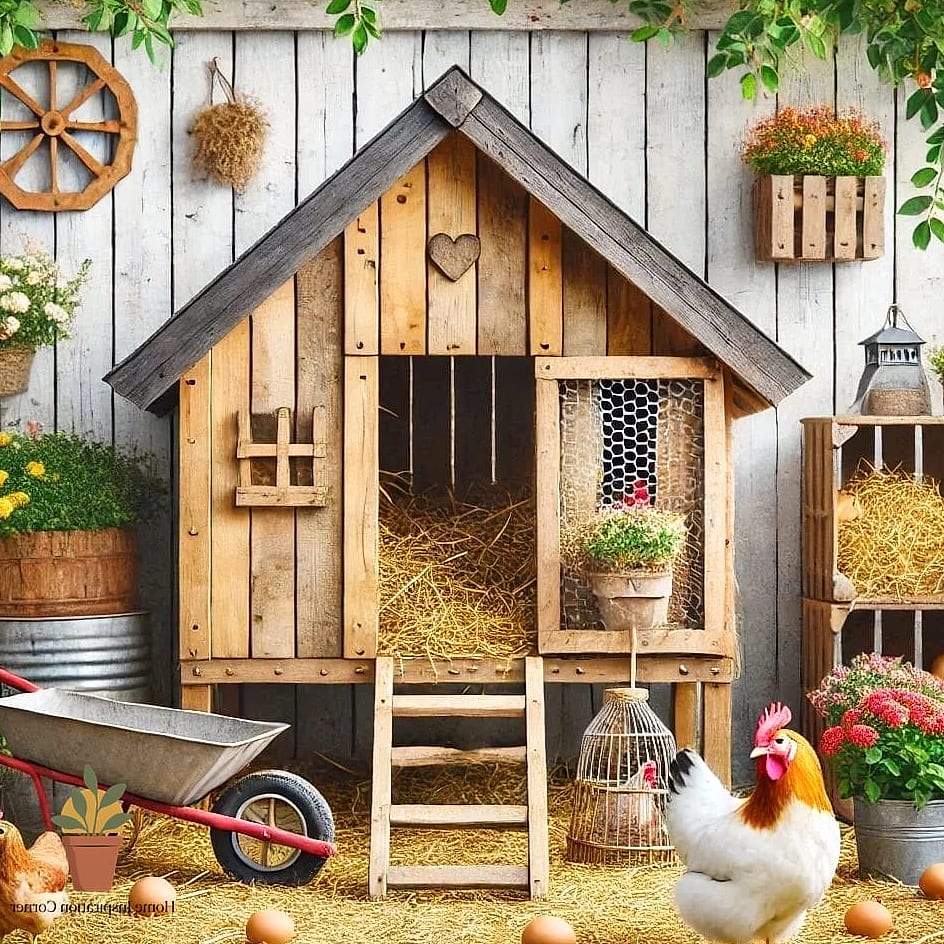
This one’s more niche, but it’s a fun statement piece if you want something conversation-worthy. Wine barrels get cut and modified into rounded coop shapes, giving the whole thing a rustic, one-of-a-kind look.
It’s best suited for one or two hens given the size constraints, so this works better as a supplemental coop than a main one for a larger flock.
The Coop with Built-In Nesting Box Access
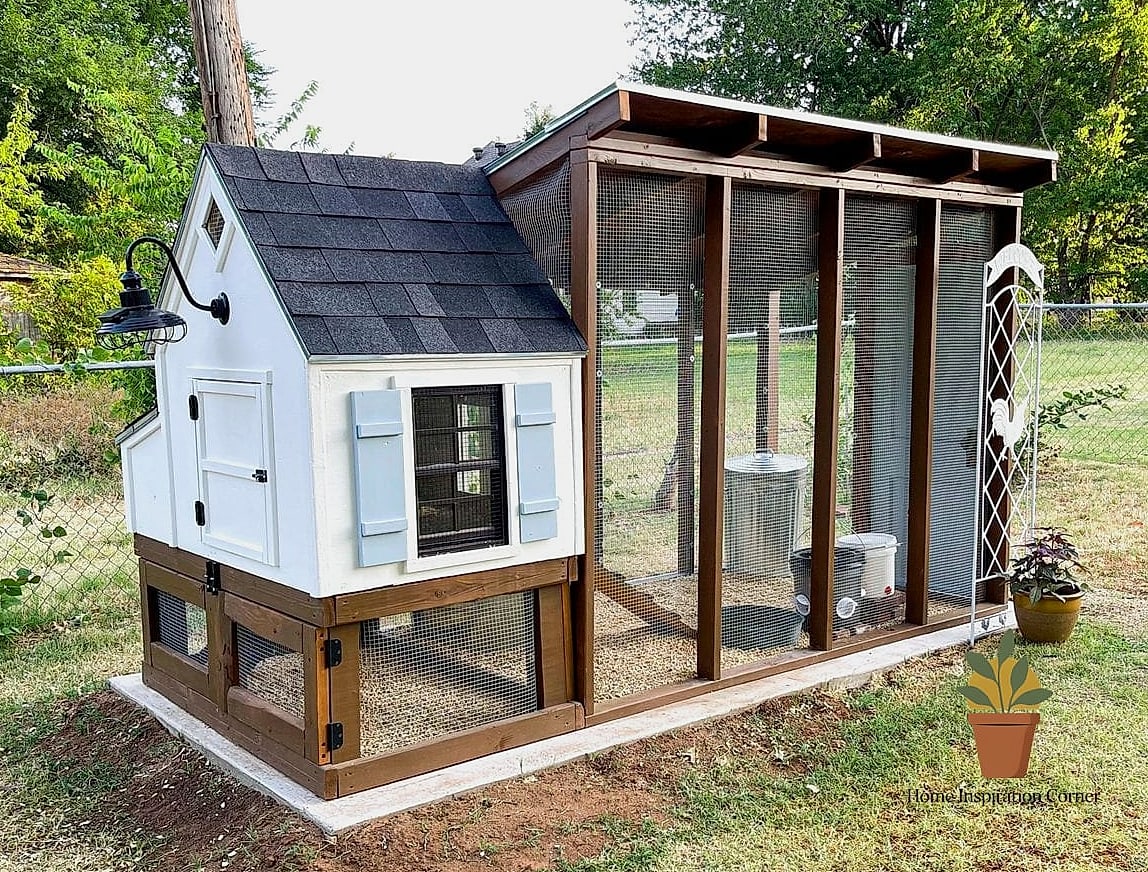
External access doors for nesting boxes are one of those small features that make a huge daily difference. You flip up a hinged panel from outside and collect eggs without ever stepping into the coop itself.
This is worth prioritizing no matter which style you choose, honestly. It saves time and keeps your boots out of the bedding.
The Coop with a Chalkboard Sign
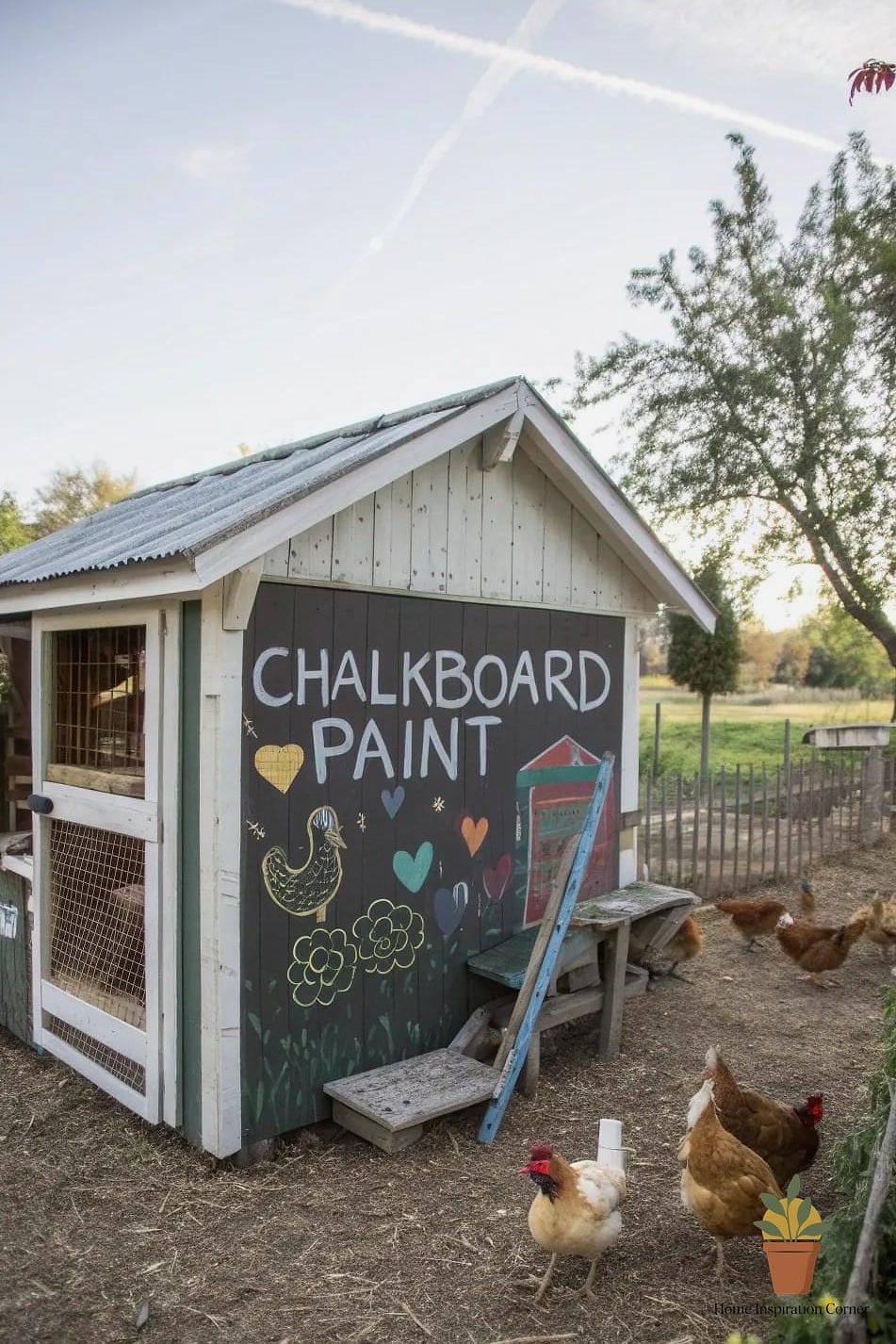
Small styling detail, big personality boost. A little chalkboard or painted wood sign with the coop’s name or a cute saying gives the whole setup a personal touch. It’s an easy, low-cost way to make a plain structure feel more like part of your home.
The Repurposed Dog House Coop
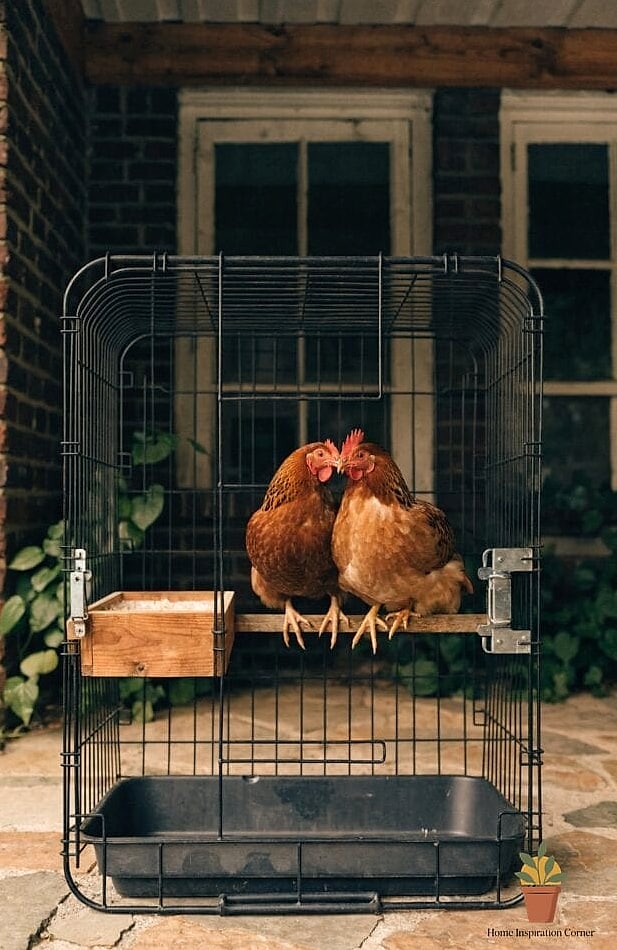
Similar logic to the playhouse idea, but scaled down further. An unused dog house can become a cozy coop for two or three hens with some modification to ventilation and predator-proofing. It’s an especially good starter project if you’re testing the waters with a small flock before committing to something bigger.
The Coop with Solar-Powered Lighting
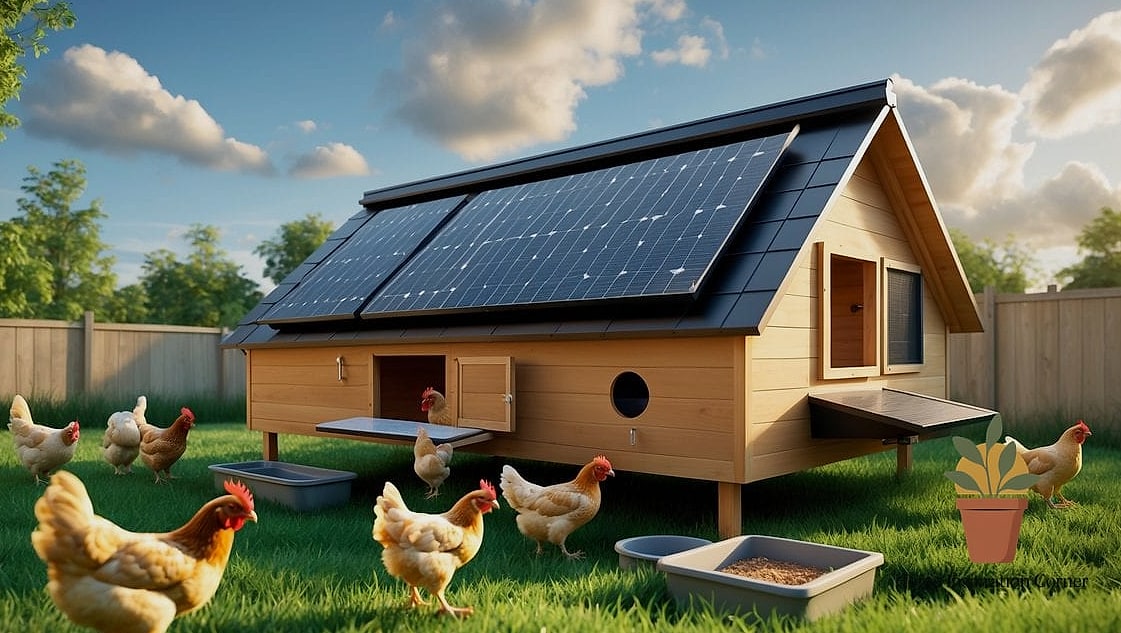
Adding a small solar light or automatic door opener means less manual work for you, especially during shorter winter days when hens need consistent light for egg production. This upgrade isn’t flashy, but it’s one of the more practical additions on this list.
The Two-Story Coop with Run Below
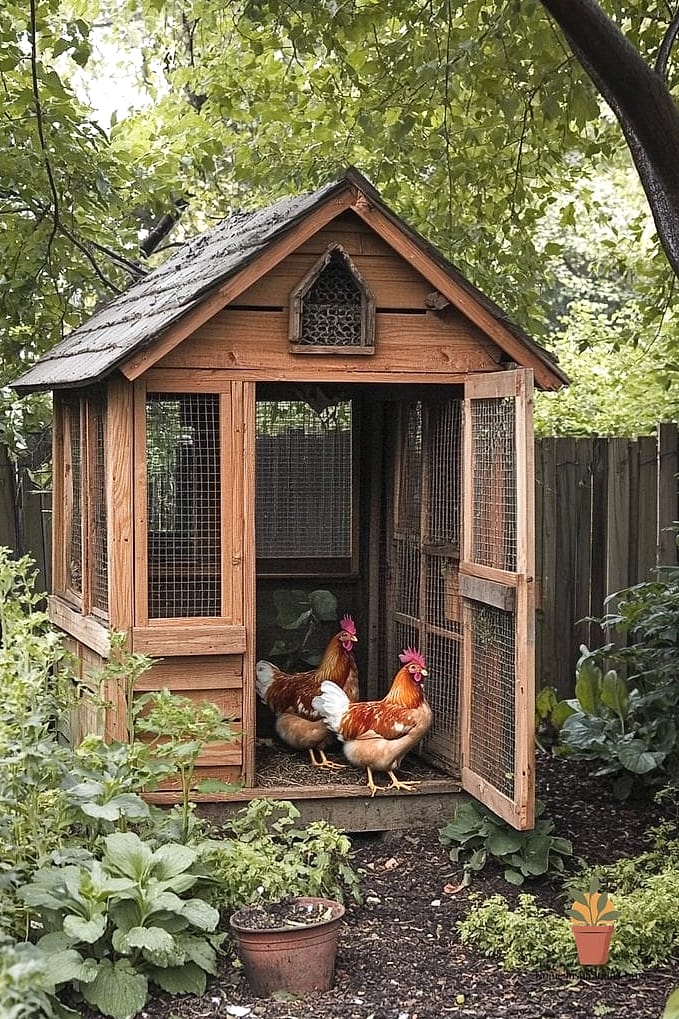
Similar to the elevated design but built out more intentionally, this style puts sleeping and nesting quarters upstairs with the run fully enclosed underneath. It maximizes usable space and keeps the living area separate from the mess of daily scratching and dust bathing.
The Coop Painted to Match Your House
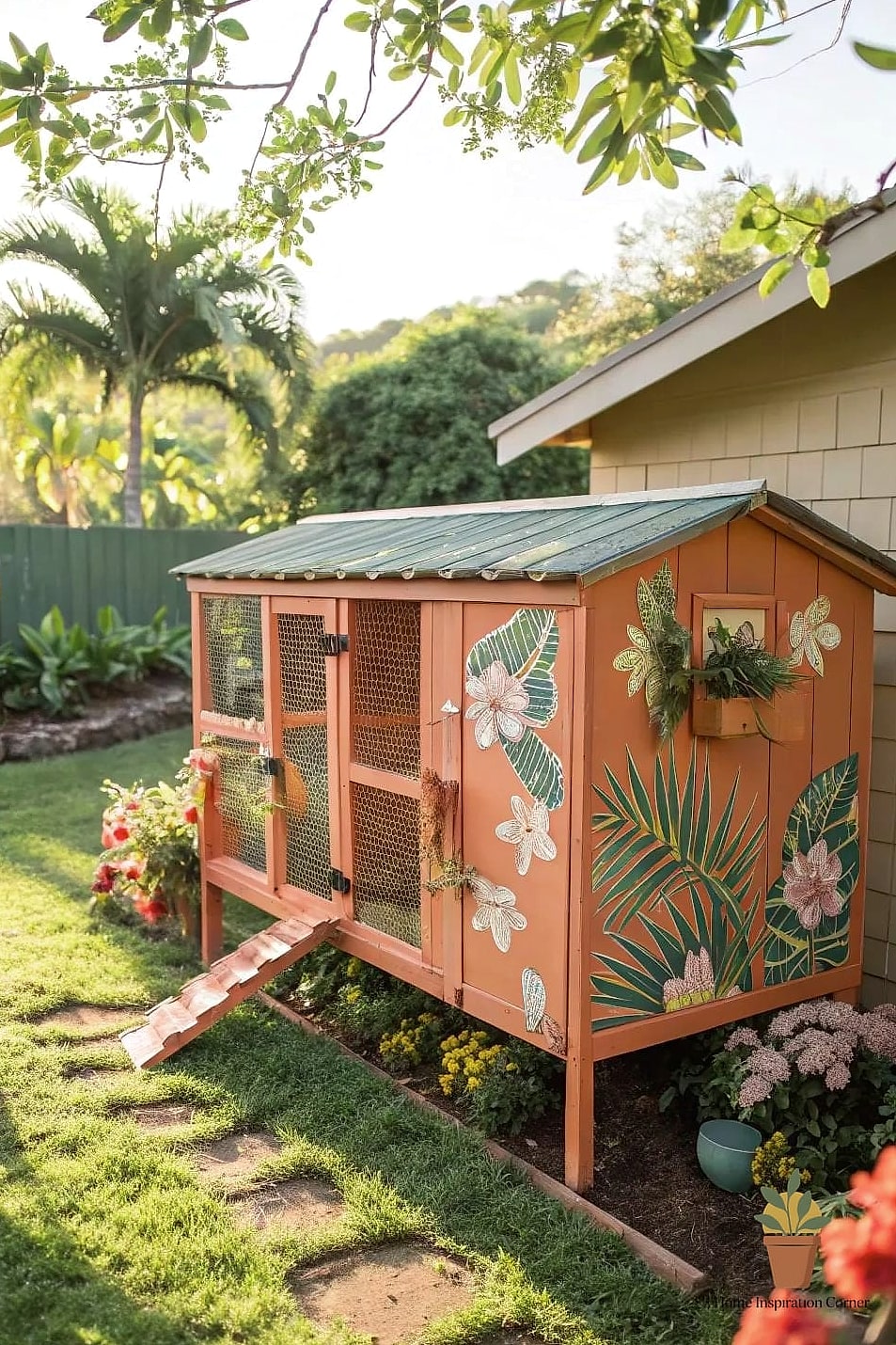
This is a simple styling choice that makes a bigger visual impact than you’d expect. Matching your coop’s trim and siding colors to your actual house ties the whole backyard together instead of looking like a random add-on.
It’s an easy weekend paint project and works with literally any coop shape or size.
The Coop with a Sand or Gravel Run Floor
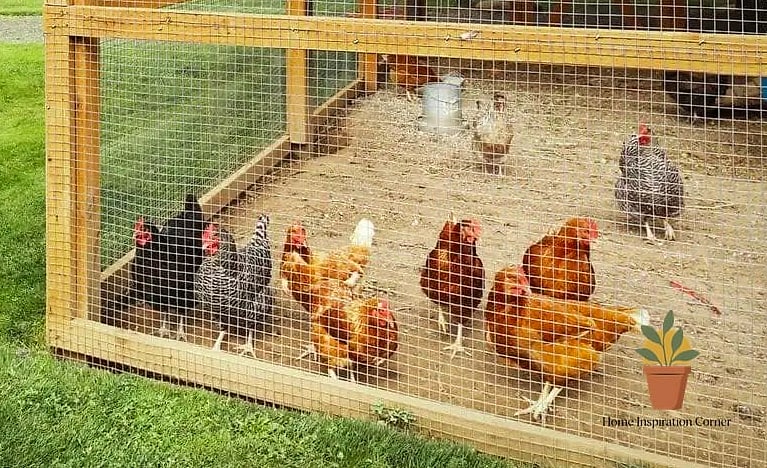
Less about looks, more about maintenance. Sand and gravel drain better than dirt, dry out faster after rain, and make scooping waste noticeably easier. If you’re tired of a muddy, smelly run, this material swap alone can solve a lot of problems.
The Coop with Hinged Roof Access
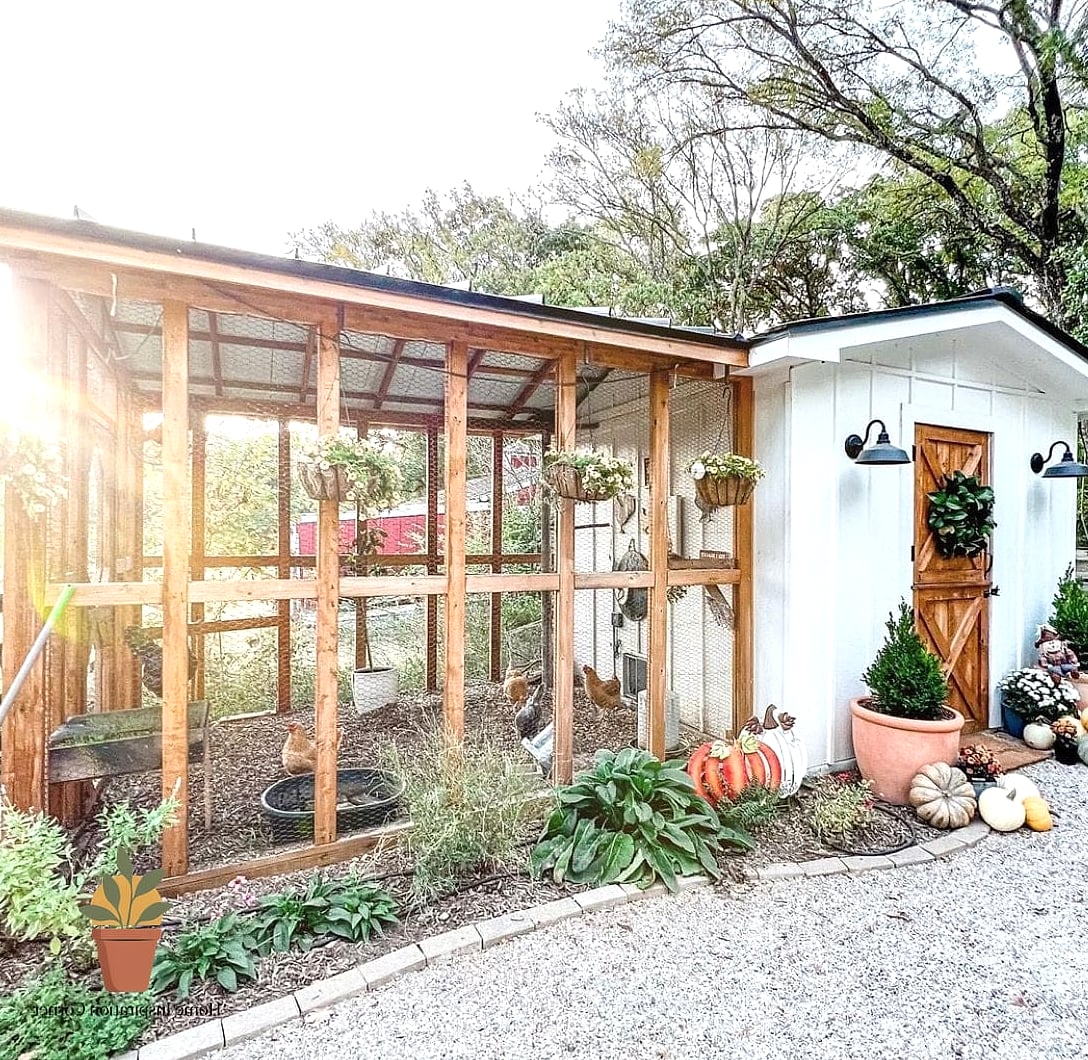
A roof that lifts open on hinges gives you full top-down access for deep cleaning, which is so much easier than crouching through a small door. This feature is especially useful for anyone managing the coop solo, since you can reach every corner without contorting yourself.
The Coop Surrounded by a Garden Border
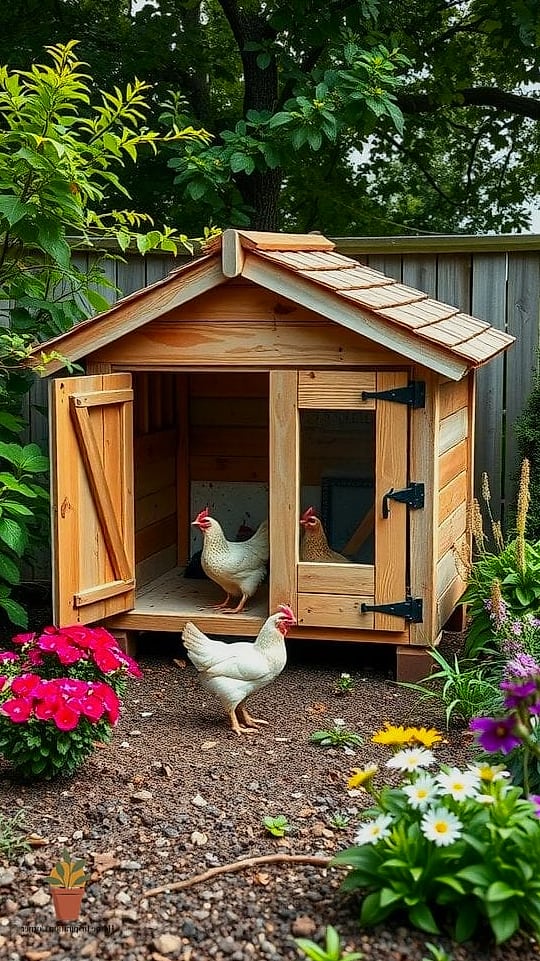
Planting low shrubs, lavender, or ornamental grasses around the base of the coop softens the structure and helps it blend into your landscaping instead of sticking out as an obvious utility building. It also happens to help mask odor a bit, which is a nice bonus nobody talks about enough.
Whichever direction you go, the best coop is really just the one that fits your flock size, your climate, and how much time you realistically want to spend on maintenance. Mix and match a few of these ideas, keep function ahead of form when it matters, and you’ll end up with something you’re actually proud to have in your backyard.