
25 Patio Tiles Designs That Maximize Style and Function
- Classic Travertine Pavers
- Charcoal Porcelain Pavers
- Wood-Look Porcelain Tile
- Herringbone Brick Pavers
- Large-Format Concrete Tiles
- Moroccan-Inspired Cement Tiles
- Bluestone Natural Pavers
- Mosaic Accent Border
- Slate Tile Flooring
- Checkerboard Pattern Tiles
- Terracotta Clay Tiles
- Weathered Gray Wood-Plank Tile
- Basketweave Stone Pattern
- Textured Non-Slip Pool Tiles
- Reclaimed Brick Patio
- Two-Tone Geometric Layout
- Natural Flagstone Patio
- Diamond-Pattern Porcelain Tile
- Pebble and Tile Combination
- Warm Ivory Limestone
- Modern Linear Plank Tile
- Multi-Colored Tumbled Stone
- Sunken Patio Tile Design
- Budget-Friendly Interlocking Deck Tiles
- Two-Level Tiled Patio with Contrasting Materials
25 Patio Tiles Designs That Maximize Style and Function
Your patio is basically an extra room, just one without walls or a ceiling. And just like any room in your house, the flooring makes or breaks the whole vibe. Patio tiles have come a long way from plain gray concrete pavers, and there are so many options now that fit every budget, climate, and style preference.
I’ve pulled together 25 patio tile designs that actually work in real backyards, not just in glossy magazine photos. Some are splurge-worthy, some are weekend DIY projects, and all of them balance good looks with practical performance outdoors.
Classic Travertine Pavers
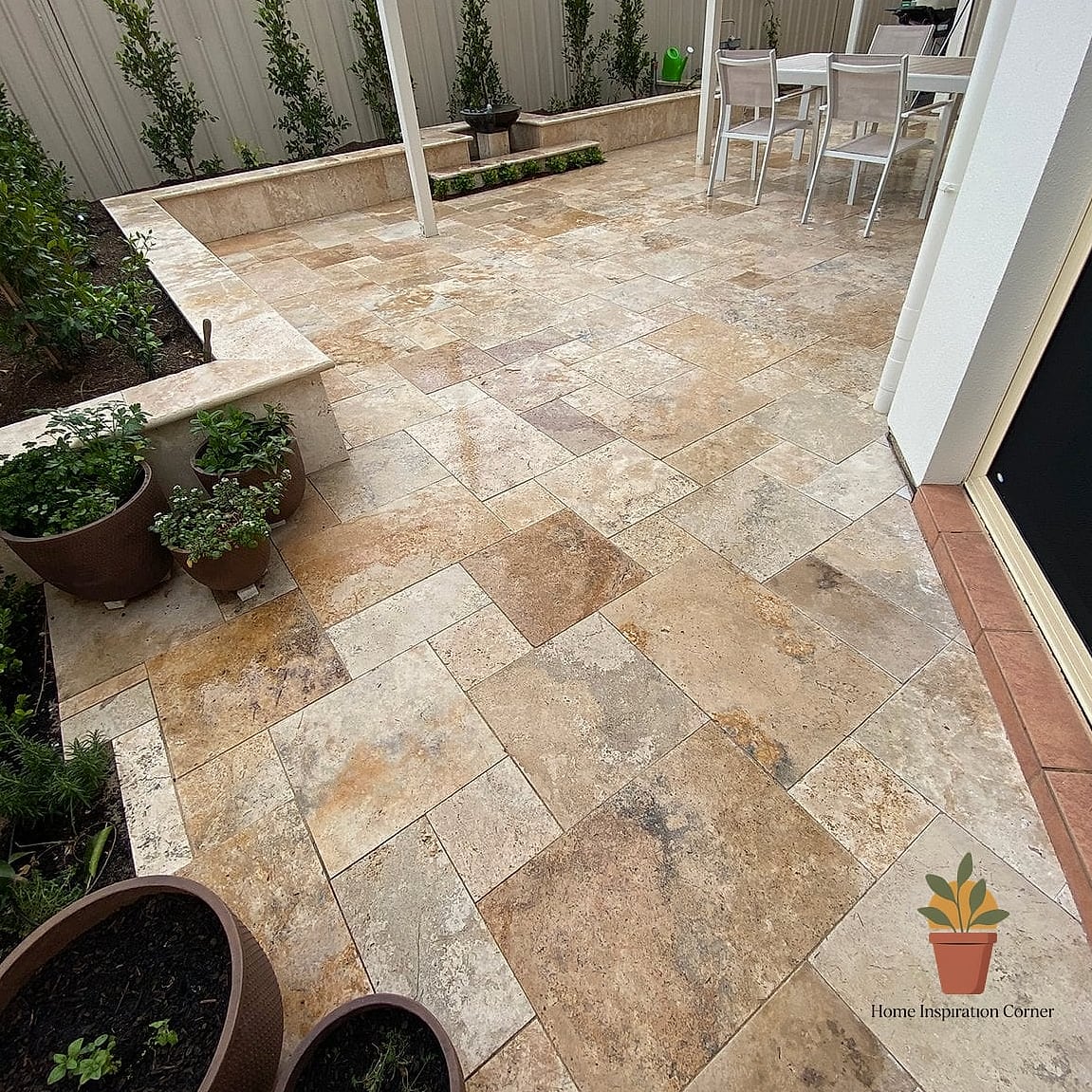
Travertine has been a patio favorite for decades, and there’s a reason it hasn’t gone out of style. The natural stone has this soft, weathered texture that stays cool underfoot even in direct sun, which matters a lot if you’re barefoot by the pool.
It works beautifully in Mediterranean, Tuscan, or transitional outdoor spaces. Homeowners love that no two tiles look exactly alike since it’s a natural material. On the maintenance side, you’ll want to seal it every couple of years to prevent staining, especially near grilling areas.
Charcoal Porcelain Pavers
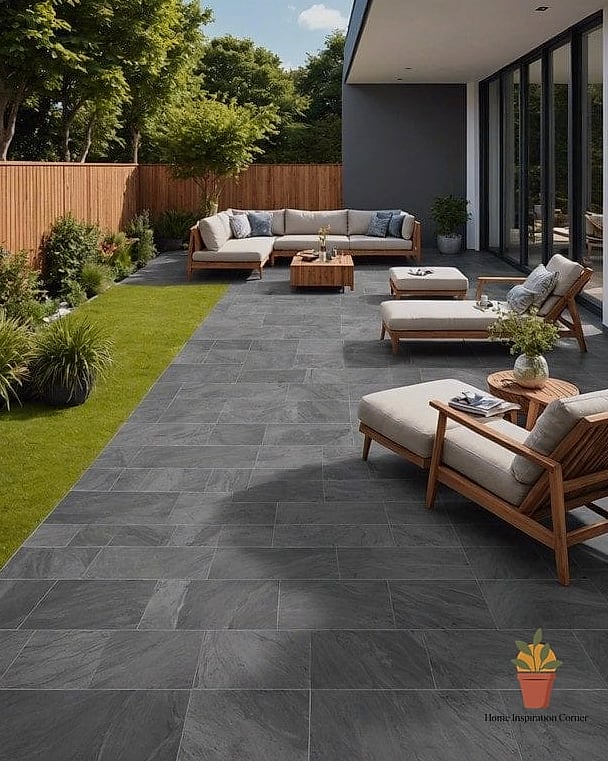
Porcelain pavers have basically taken over the high-end patio scene, and charcoal tones are especially popular right now. They give off a moody, modern look that pairs well with black outdoor furniture and warm wood accents.
Porcelain is incredibly durable, resists fading, and barely absorbs water, so it holds up well through freeze-thaw cycles. It’s a bit pricier upfront, but the low maintenance makes it worth it long term. This is a great pick for anyone who wants a sleek, low-fuss outdoor space.
Wood-Look Porcelain Tile
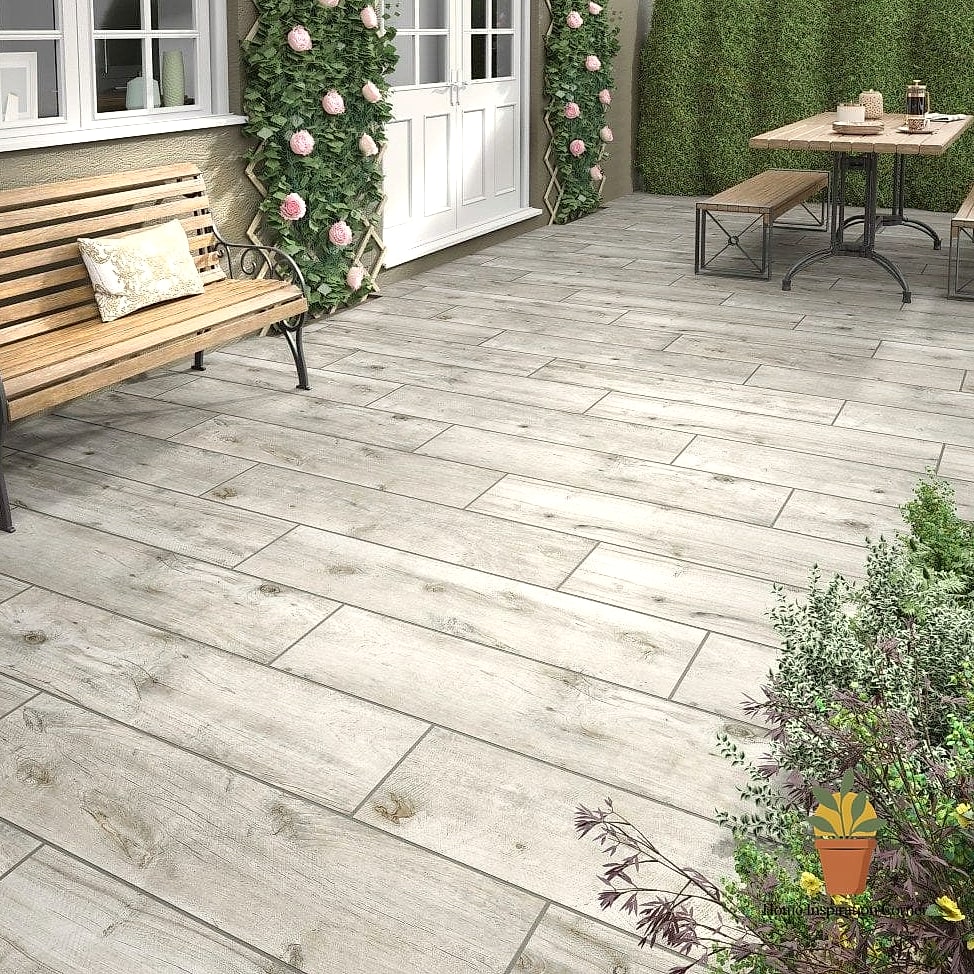
If you love the warmth of wood decking but don’t want the splinters, fading, or constant upkeep, wood-look porcelain tile is the answer. The planks mimic real wood grain surprisingly well, right down to the knots and texture.
These work great on covered patios or areas near a pool since they’re slip-resistant and won’t rot. They’re also pet-friendly, which matters if your dog spends half the day out there with you. Installation typically requires a professional since alignment needs to be precise for that authentic wood-plank look.
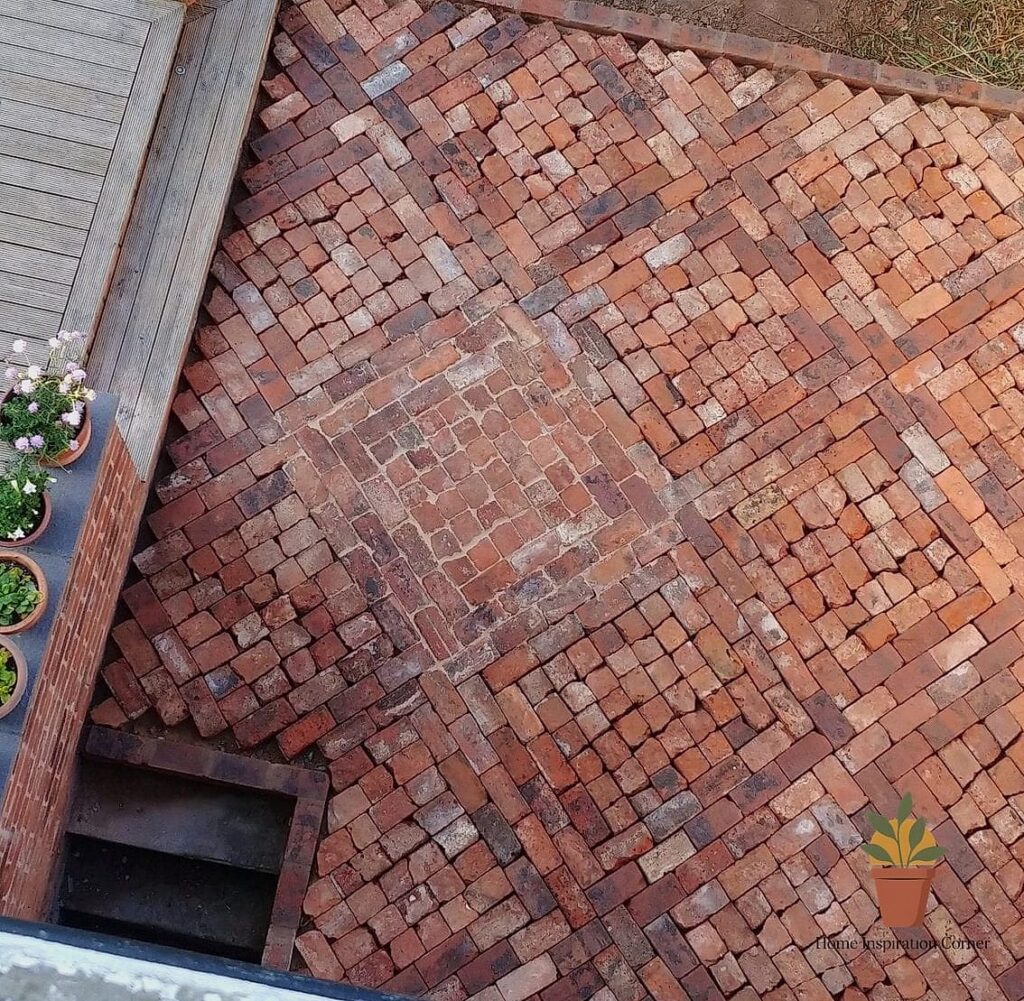
Herringbone Brick Pavers
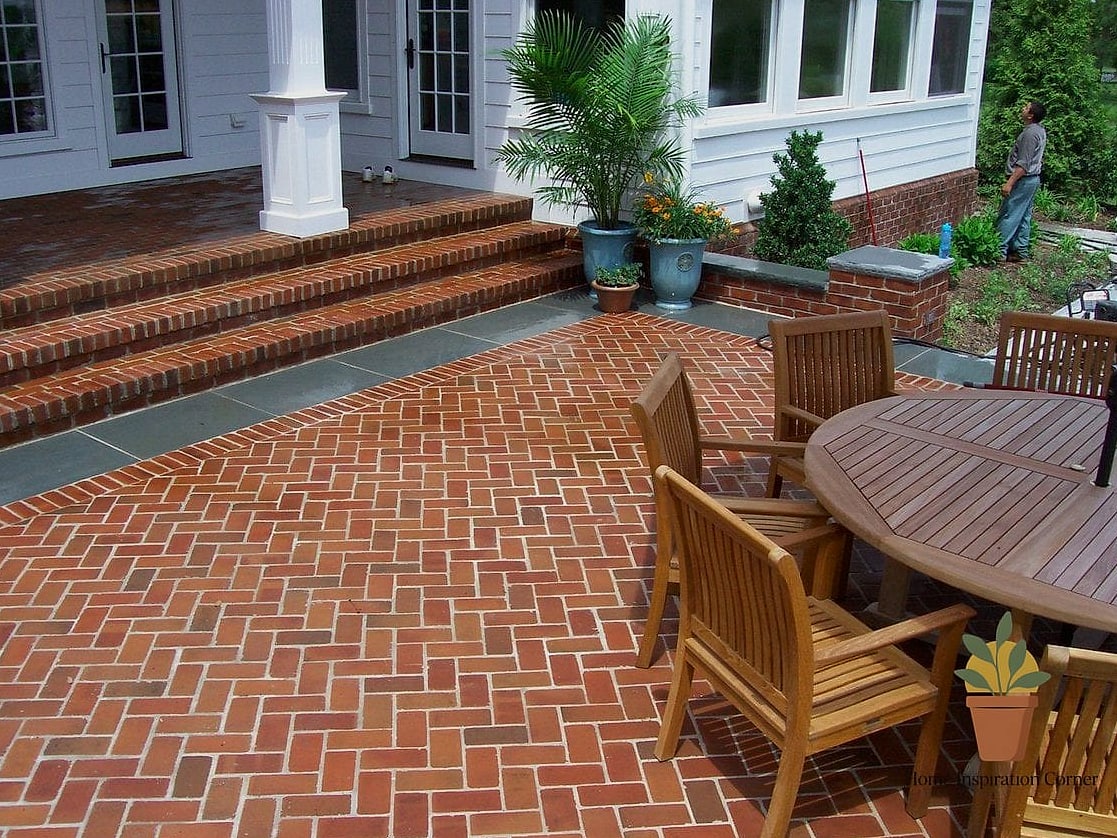
There’s something about a herringbone pattern that instantly makes a patio feel intentional rather than just functional. Classic red or muted terracotta brick pavers laid in this pattern give off cottage or farmhouse charm without trying too hard.
This style works especially well for smaller patios since the diagonal lines create visual movement and make the space feel larger. Brick is fairly low maintenance, though you may need to reapply polymeric sand between joints every few years to keep weeds from creeping in.
Large-Format Concrete Tiles
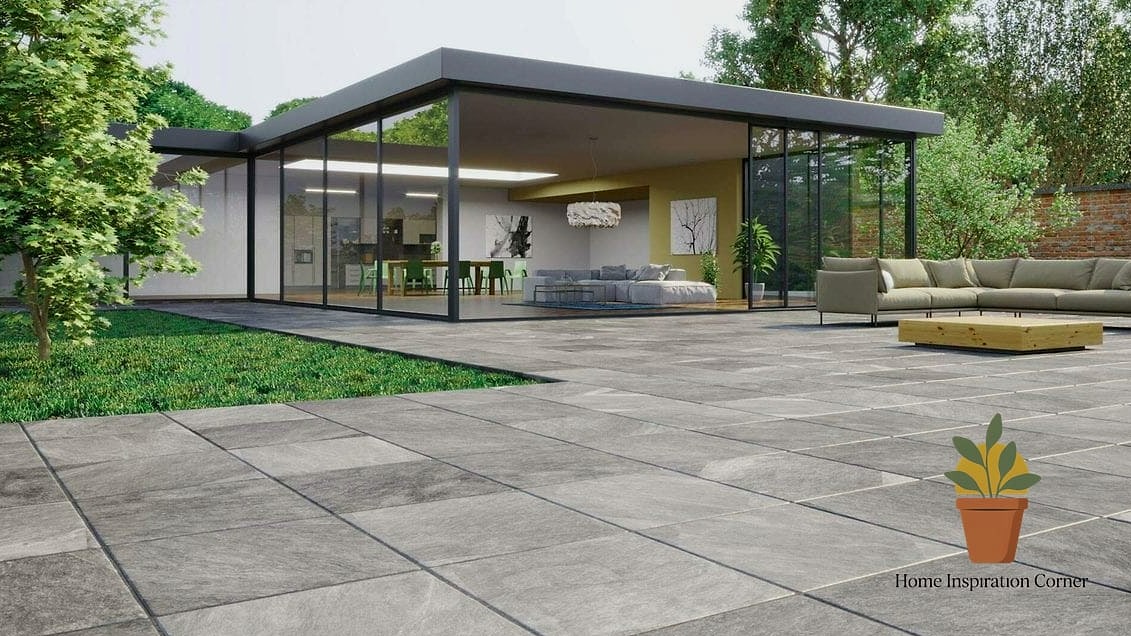
Big, clean-lined concrete tiles are having a real moment in modern and minimalist outdoor design. Going with larger format pieces, think 24×24 inches or bigger, means fewer grout lines and a more streamlined look overall.
This style works great for contemporary homes with clean architectural lines. It’s also one of the more budget-friendly options on this list since concrete tends to run cheaper than natural stone or high-end porcelain. Sealing every couple of years keeps them looking fresh and prevents staining.
Moroccan-Inspired Cement Tiles
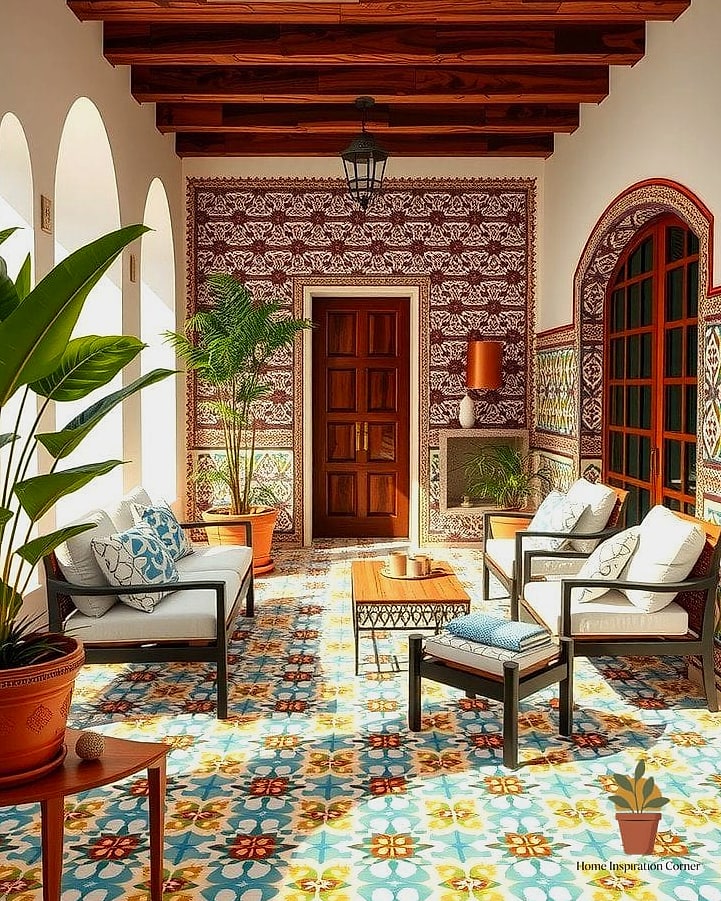
For anyone wanting a patio that feels like a piece of art, patterned cement tiles bring serious personality. Bold geometric designs in blues, terracottas, and creams instantly make an outdoor dining nook or lounge area feel curated.
These tiles work best in covered or partially shaded patios since prolonged sun exposure can fade the pigment over time. They’re a bit more of an investment, but even using them as a border or accent area can make a big style statement without covering the whole space.
Bluestone Natural Pavers
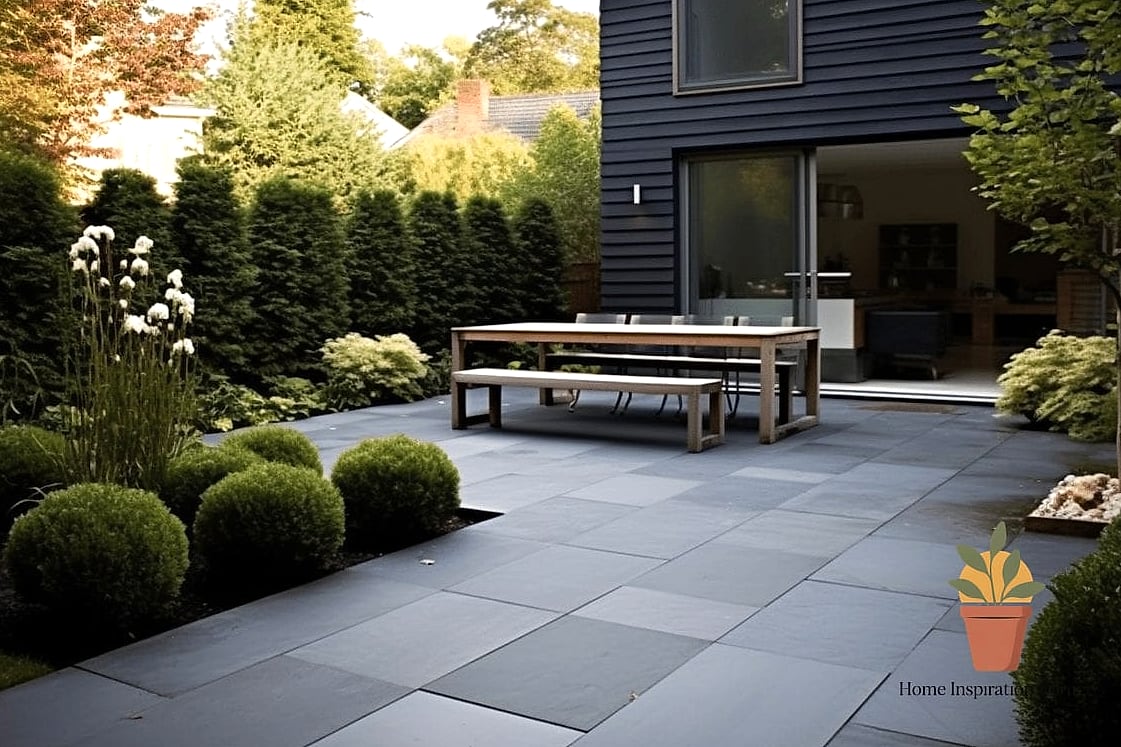
Bluestone has this beautiful blue-gray tone that feels sophisticated without being cold. It’s a favorite among landscape designers because it works with almost any home exterior, from craftsman to modern farmhouse.
The stone has natural cleft texture, which gives good traction even when wet. It’s a solid choice for pool decks or areas that see a lot of rain. Bluestone can be pricier depending on your region, but many homeowners consider it worth the investment for the resale value it adds.
Mosaic Accent Border
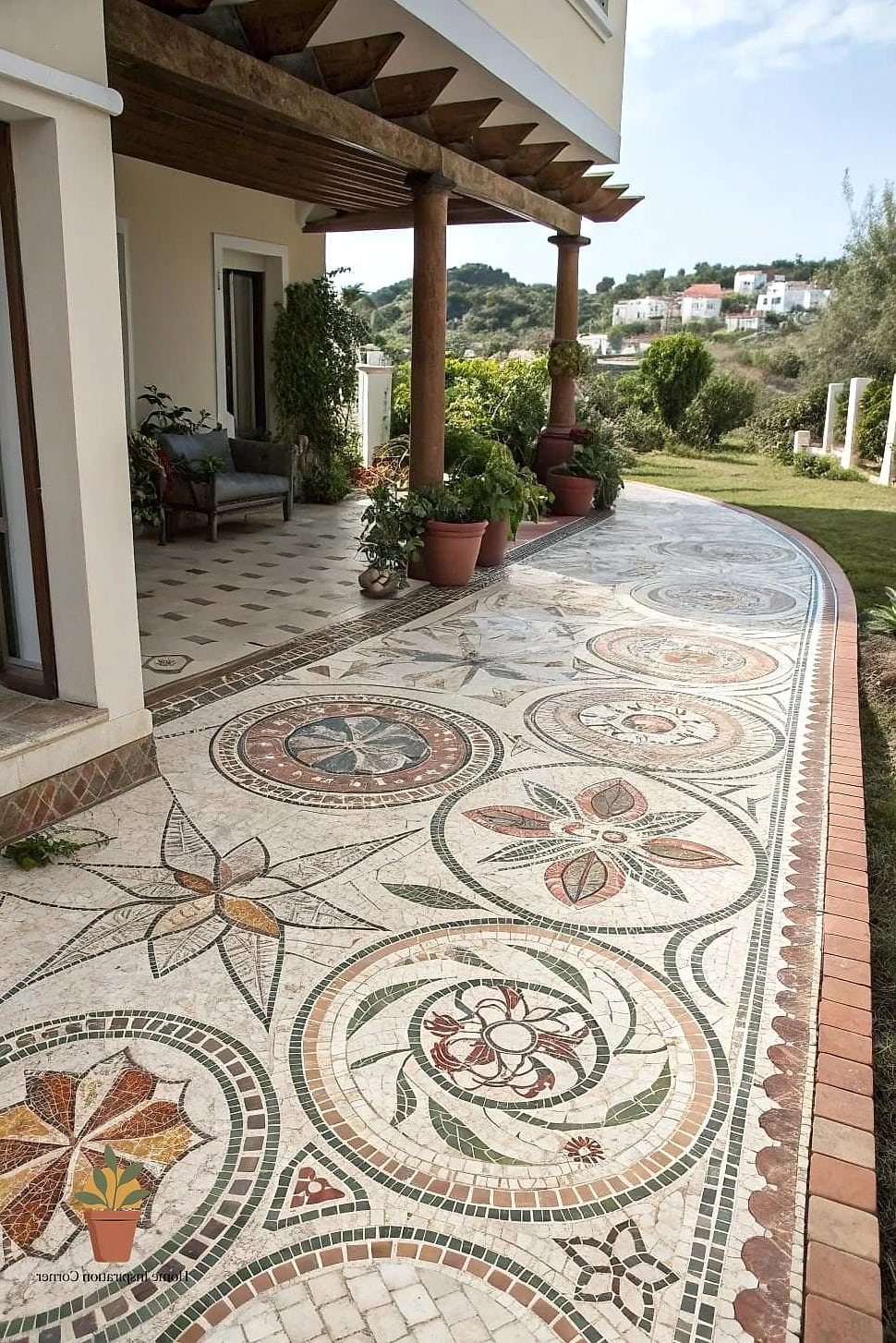
You don’t have to tile your entire patio in one pattern. A mosaic tile border along the edges or around a fire pit area adds a decorative touch without overwhelming the space or your budget.
Small glass or ceramic mosaic tiles in blues and greens work especially well near pools for that Mediterranean feel. This is a great option if you already have a plain paver patio and want to dress it up without a full redo. It’s also a manageable weekend DIY project for confident beginners.
Slate Tile Flooring
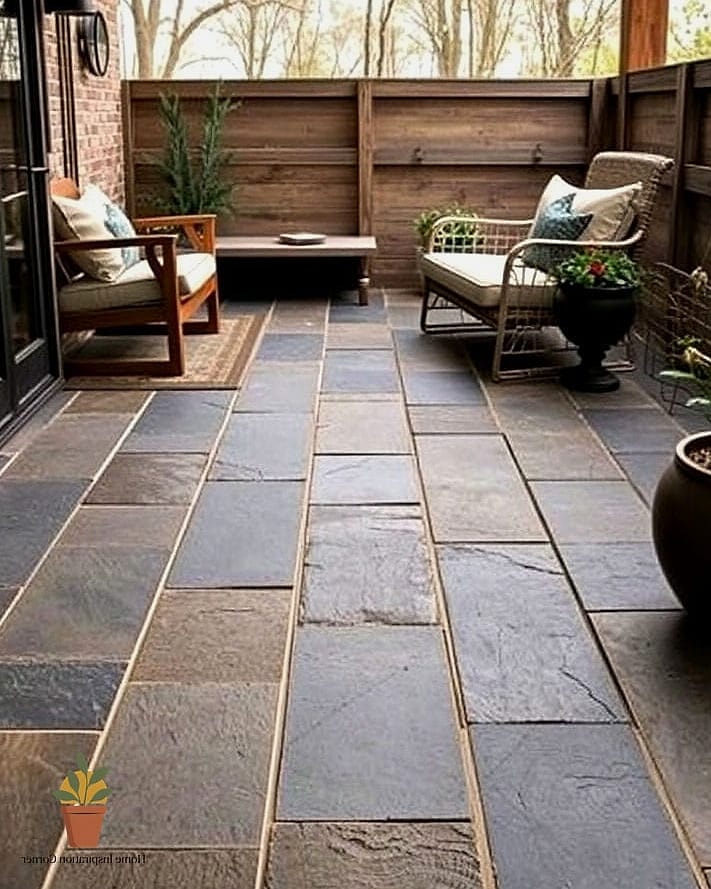
Slate brings a rich, earthy texture that photographs beautifully and holds up incredibly well outdoors. The natural color variation, think deep grays, greens, and rust tones, gives every patio a one-of-a-kind look.
This material is naturally slip-resistant thanks to its textured surface, making it a smart pick for areas around pools or hot tubs. Slate does require periodic sealing to prevent moisture absorption, but many homeowners find the low-key maintenance routine worth it for the payoff.
Checkerboard Pattern Tiles
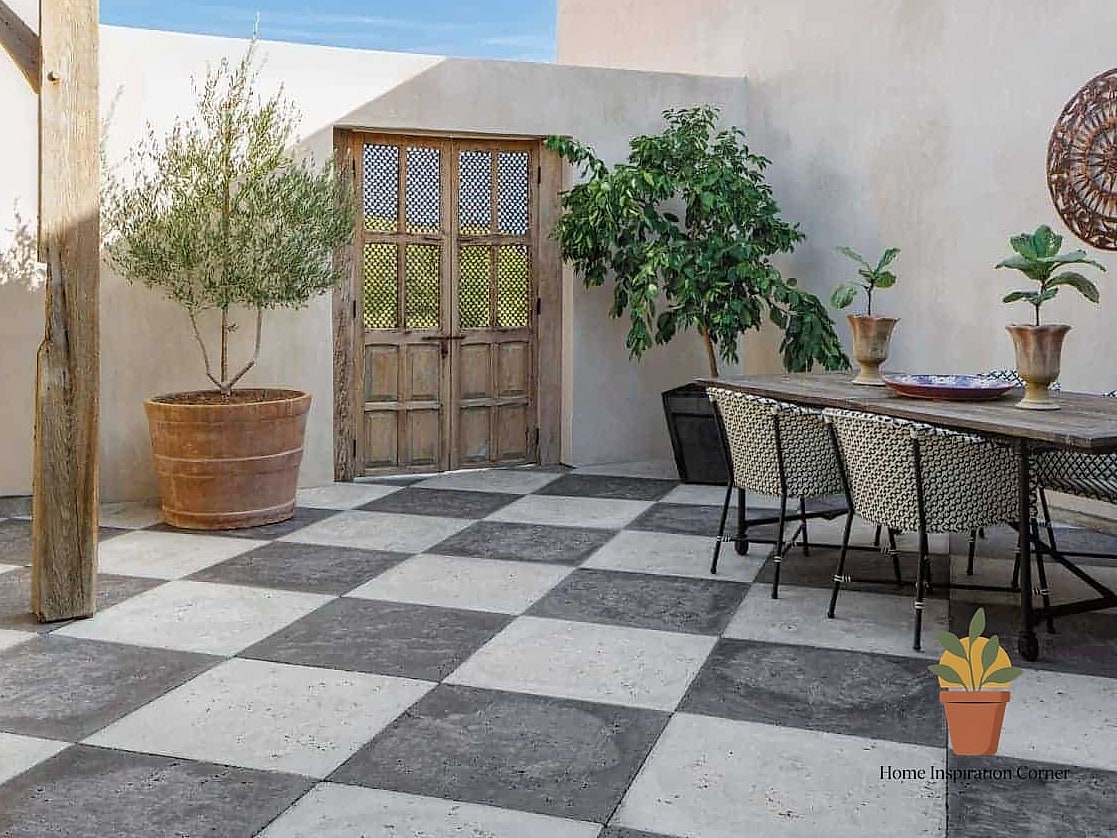
Black and white checkerboard patios feel a little retro in the best way. This design works surprisingly well outdoors, especially on covered porches or courtyard-style patios where you want a bold, graphic statement.
Porcelain or concrete tiles in this layout are easiest to maintain since they resist staining better than natural stone. It’s a fun option if your outdoor style leans more eclectic or vintage-inspired. Just keep in mind that light-colored grout will need more frequent cleaning to stay crisp looking.
Terracotta Clay Tiles
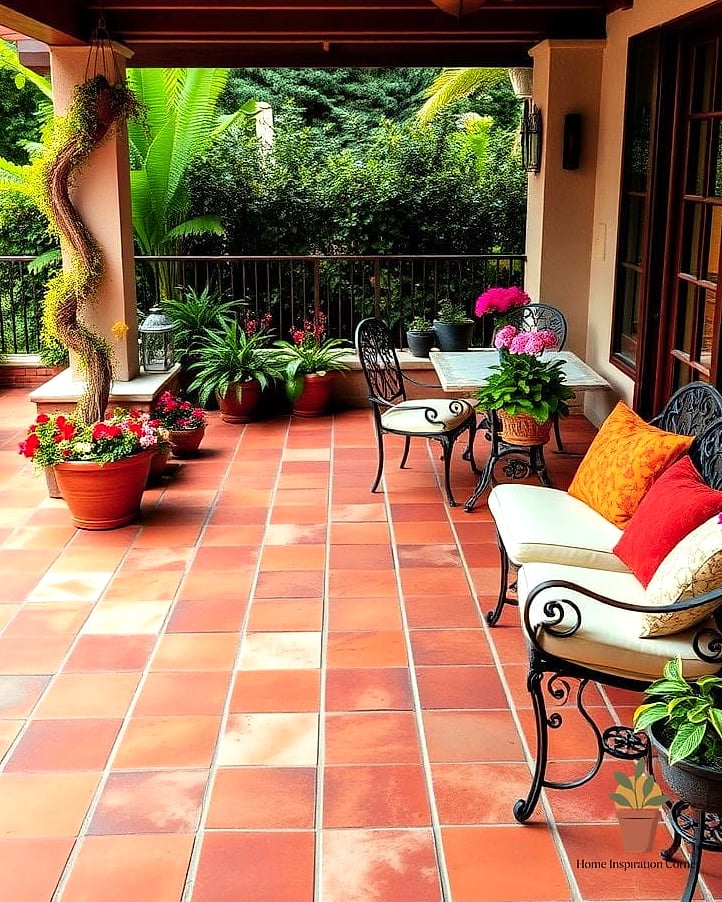
Warm, sun-baked terracotta tiles bring instant Spanish or Southwestern charm to a patio. The rich orange-red tones deepen beautifully with age, which a lot of homeowners actually prefer over a brand-new look.
These tiles perform best in dry, warm climates since they can be more porous than porcelain or concrete. Sealing helps protect against moisture damage in wetter regions. Terracotta pairs beautifully with potted greenery, wrought iron furniture, and warm string lighting for evening gatherings.
Weathered Gray Wood-Plank Tile
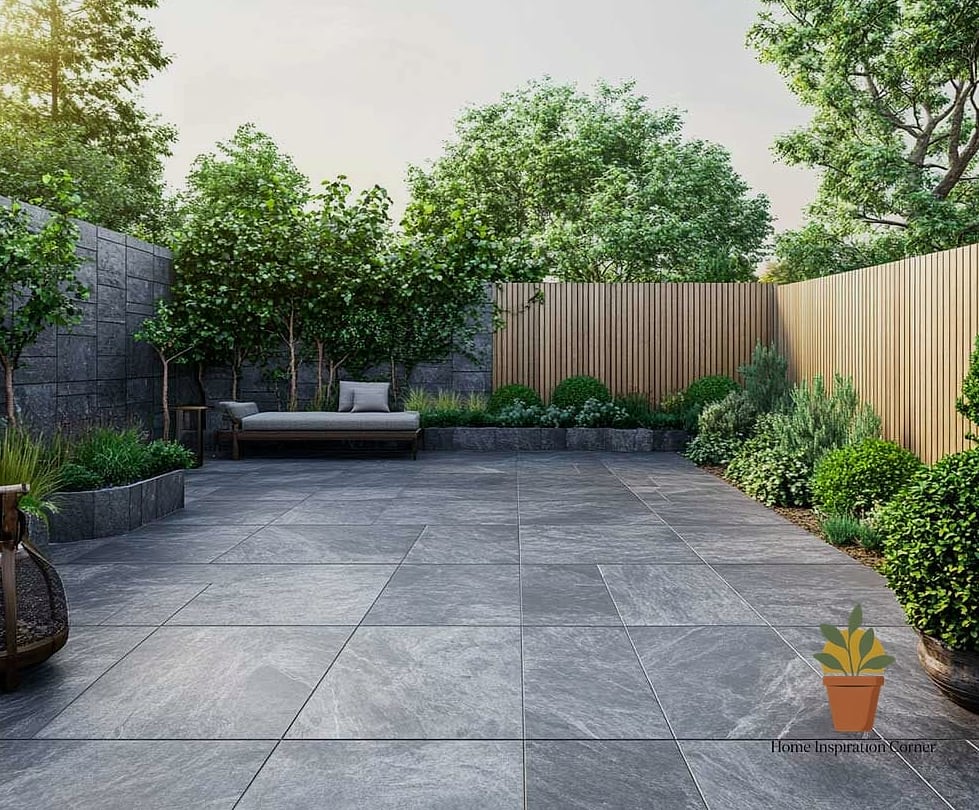
Similar to the wood-look porcelain mentioned earlier, but with a more distressed, driftwood-style finish, this option leans coastal and relaxed rather than warm and traditional. It’s a favorite for beach house patios or anyone going for a soft, breezy aesthetic.
The grayed-out tones pair really well with white or navy outdoor furniture. Since it’s porcelain underneath, it holds up to salty air, humidity, and heavy foot traffic without warping like real wood might.
Basketweave Stone Pattern
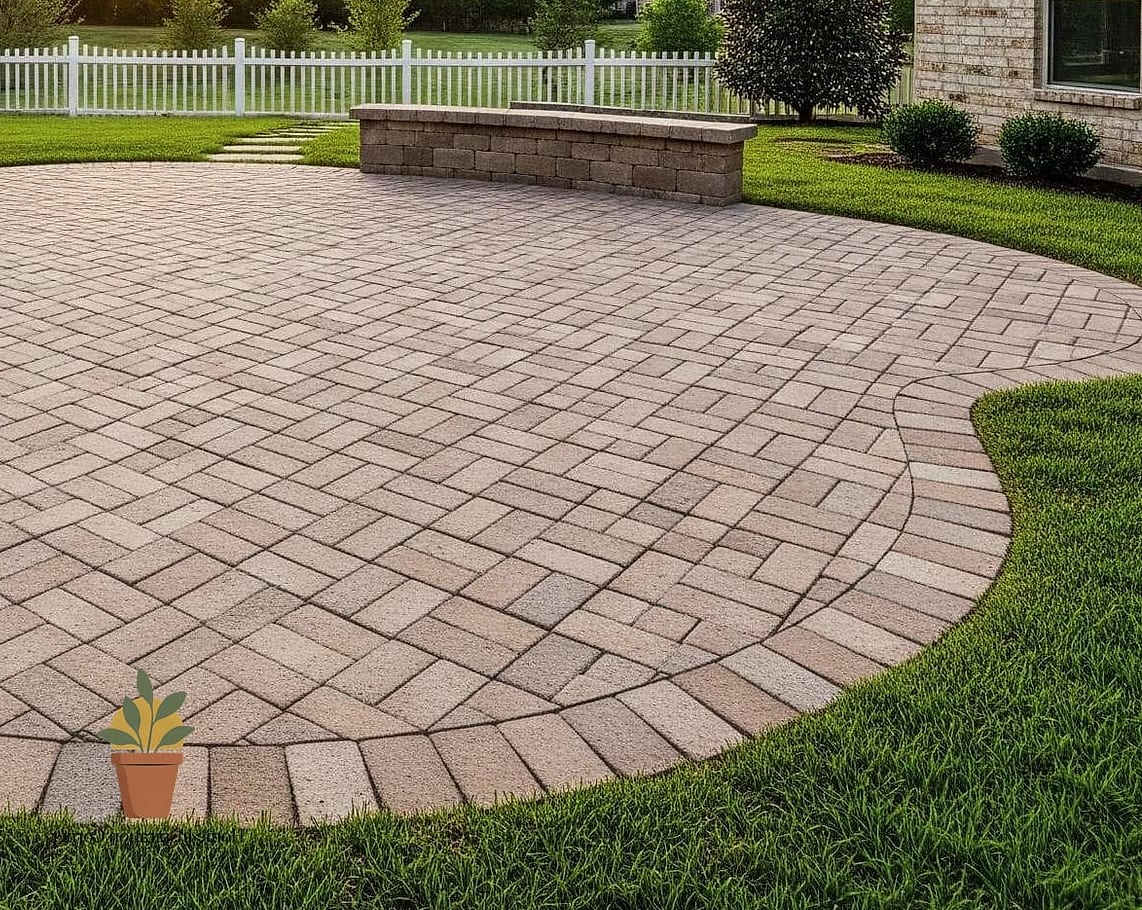
The basketweave layout uses rectangular stone pieces arranged to create a woven visual effect, and it’s a subtle way to add texture without going full pattern-overload. It reads as classic and refined rather than trendy.
This works particularly well in traditional or colonial-style homes. Travertine or limestone are popular material choices for this layout. It’s a slightly more complex installation, so this one’s usually best left to a professional to get the alignment right.
Textured Non-Slip Pool Tiles
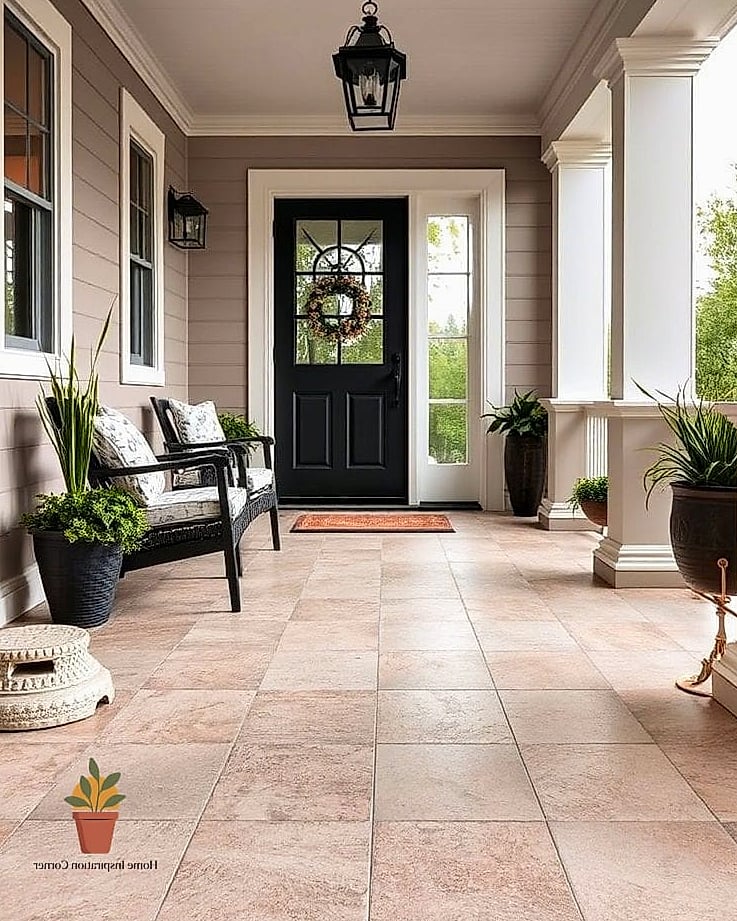
If your patio surrounds a pool, slip resistance isn’t optional, it’s essential. Textured porcelain or natural stone tiles with a matte, gritty finish keep things safer for kids and adults running around with wet feet.
Cool-touch technology is also worth looking into if you live somewhere hot, since certain porcelain tiles are designed to stay cooler even in direct sunlight. This is one area where it really pays to prioritize function alongside style.
Reclaimed Brick Patio
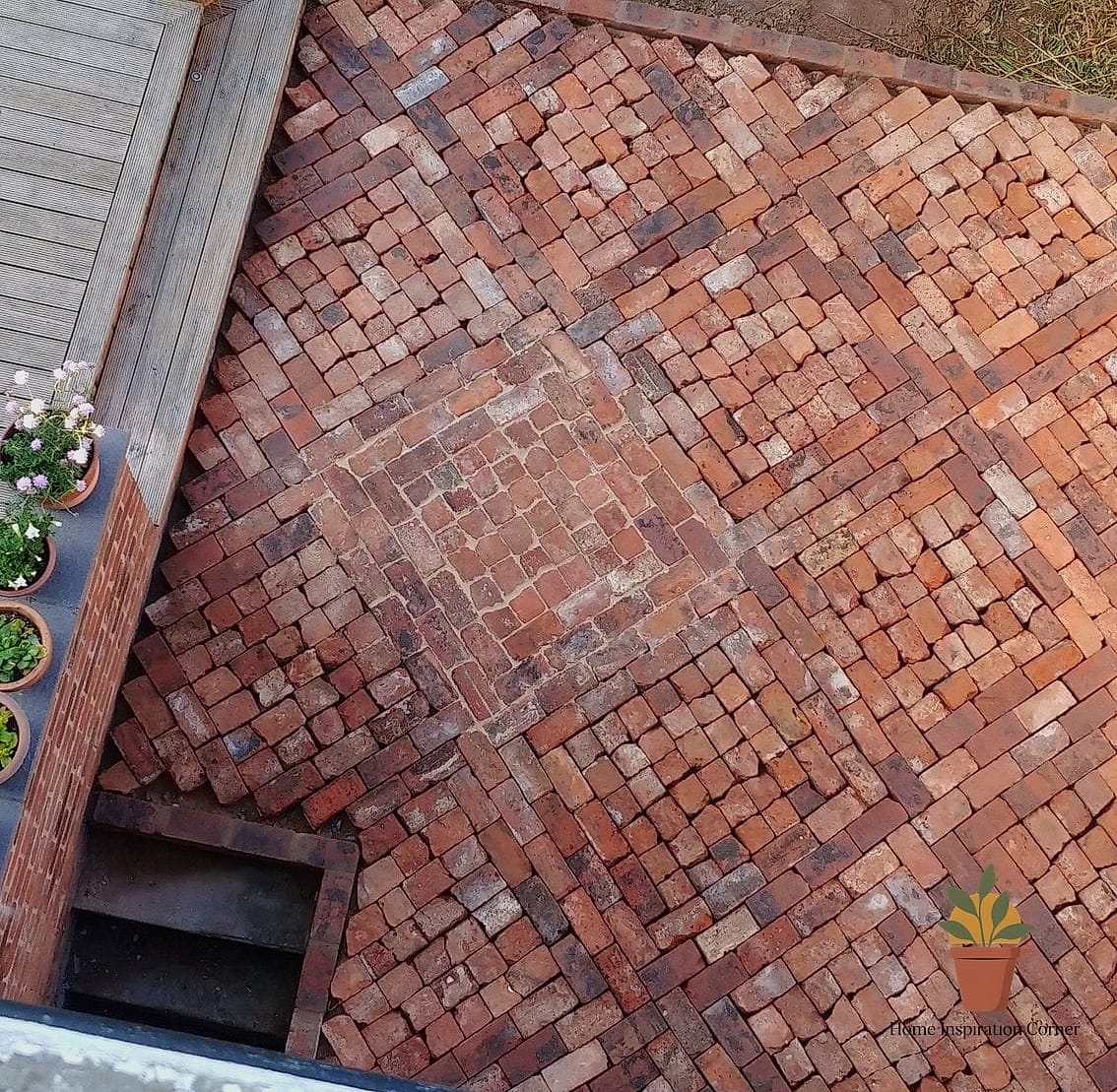
For a patio with built-in character, reclaimed brick is hard to beat. The varied tones, chips, and imperfections give it a lived-in, storybook quality that brand-new materials just can’t replicate.
This is a great sustainable choice if you’re trying to be more eco-conscious with your renovation. Reclaimed brick works beautifully in cottage, farmhouse, or historic-style homes. It does require occasional weed control between joints, but many homeowners feel the charm outweighs the upkeep.
Two-Tone Geometric Layout
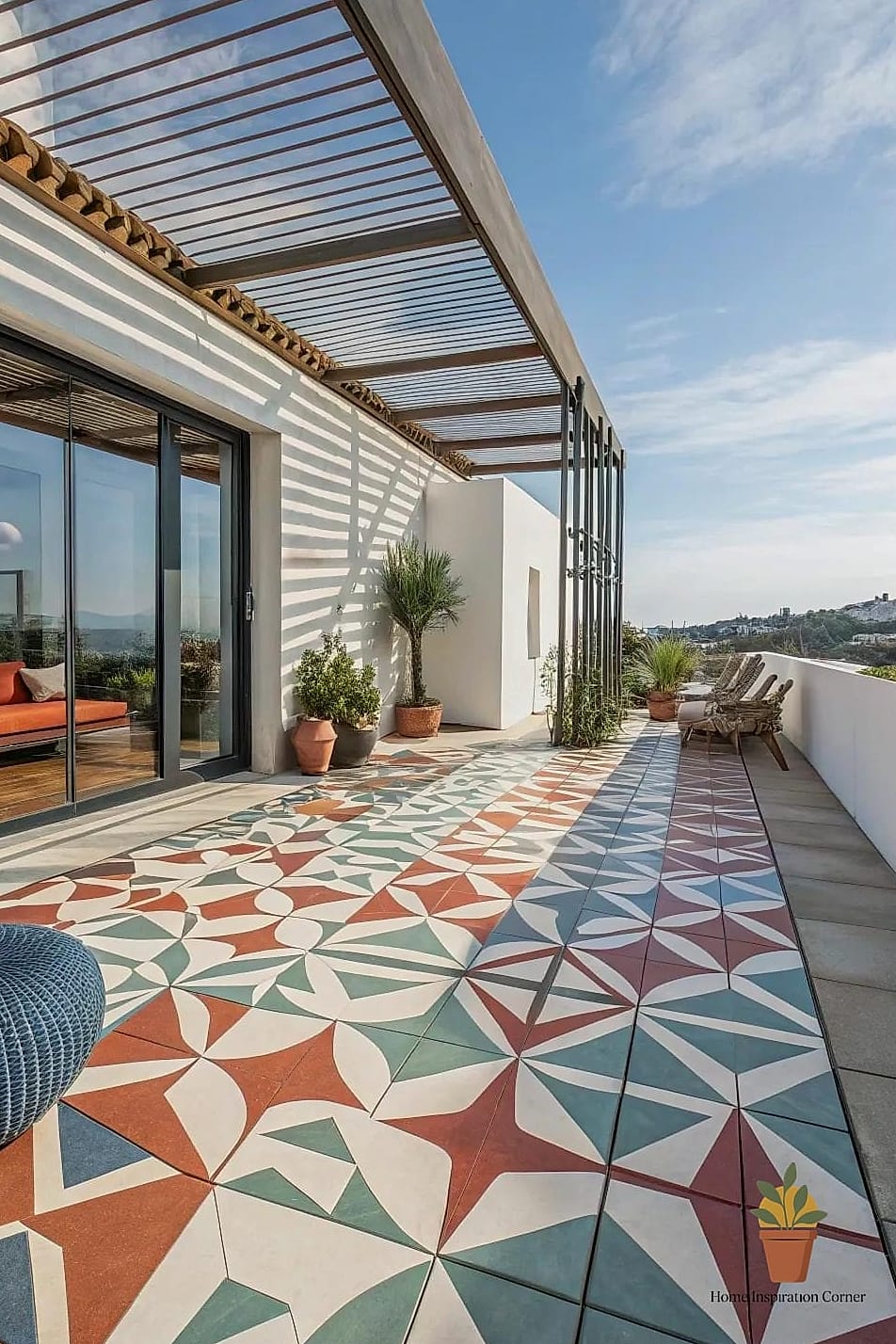
Mixing two tile colors in a geometric pattern, like diamonds, stripes, or chevron, creates a custom, high-end look without necessarily requiring high-end materials. Concrete pavers in two shades of gray, for example, can look surprisingly upscale.
This design works well for modern or transitional patios where you want a statement without going overly bold. It’s also a great way to visually define separate zones, like a dining area versus a lounge space, using the same material family.
Natural Flagstone Patio
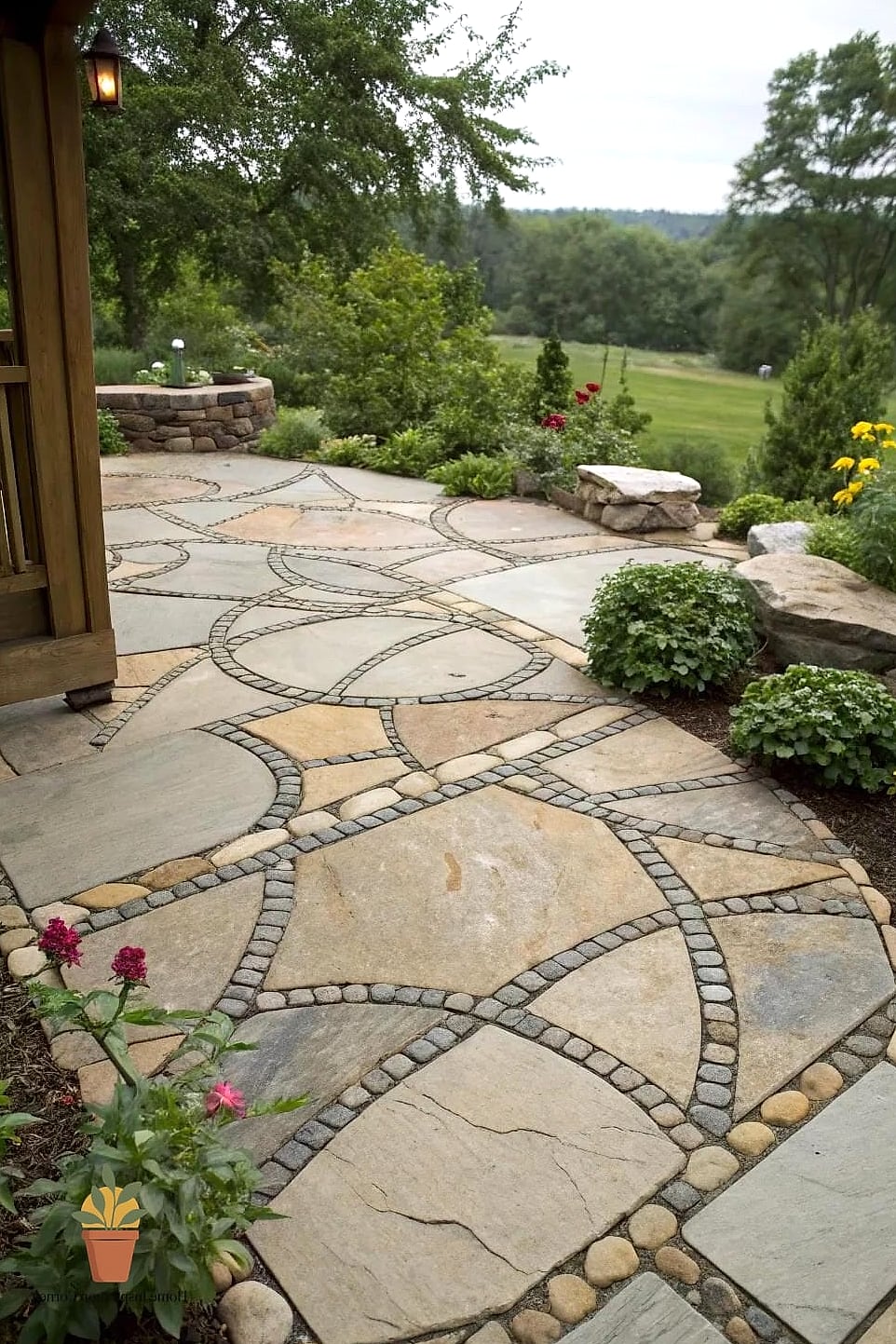
Flagstone has that organic, irregular shape that makes a patio feel like it belongs in the landscape rather than sitting on top of it. Each piece is unique, which gives the whole space a relaxed, unfussy character.
This is a popular choice for rustic, woodland, or naturalistic garden settings. The irregular joints do tend to collect debris, so a occasional sweep or rinse keeps things tidy. It’s a slightly more involved installation process due to the custom fitting required for each stone.
Diamond-Pattern Porcelain Tile
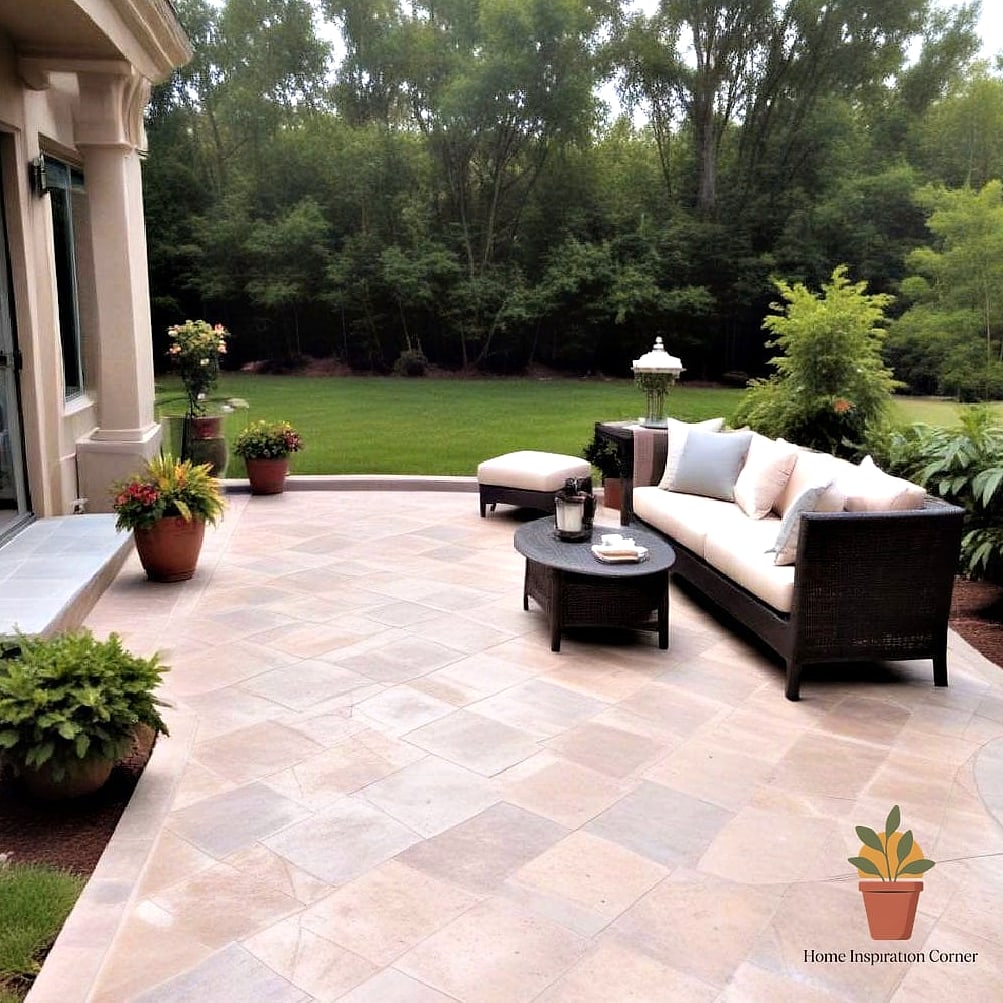
Instead of laying tiles in a standard grid, rotating them 45 degrees into a diamond pattern instantly adds movement and visual interest. It’s a simple styling trick that makes a patio feel more designed without changing the material at all.
This works especially well with large-format square tiles in neutral tones. It’s a great option if you want something modern but not overly minimal. Just budget a little extra for cut pieces along the edges, since the diagonal layout creates more waste during installation.
Pebble and Tile Combination
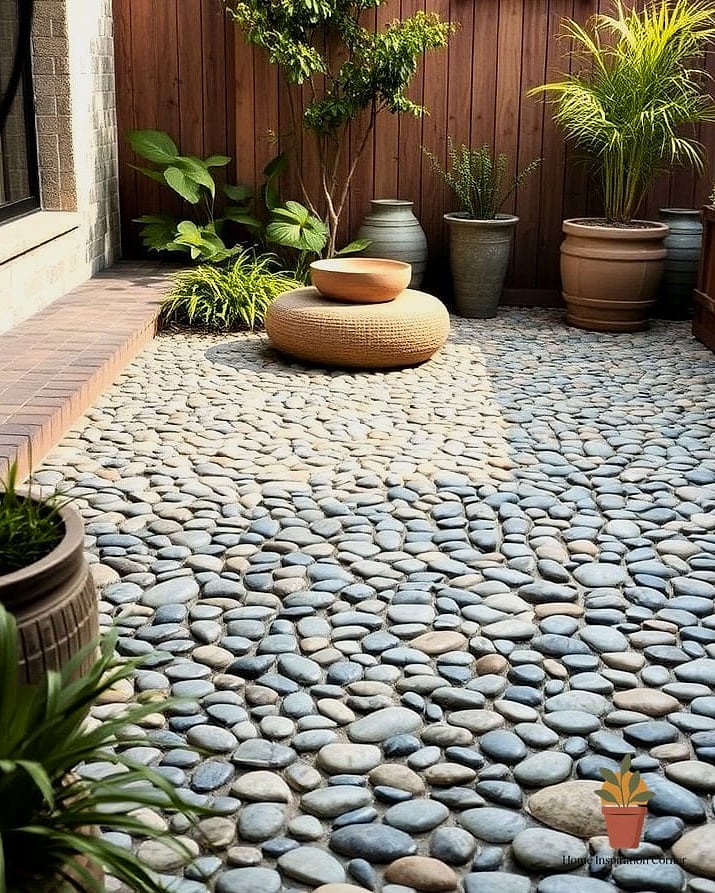
Combining smooth pebbles with tile sections creates a spa-like, zen garden feel that’s becoming more popular in outdoor living spaces. Think tile pathways bordered by river rock, or a tiled seating area surrounded by pebble drainage strips.
This mixed-material approach is great for improving drainage in yards that deal with standing water. It also adds a nice textural contrast that keeps a patio from feeling too flat or uniform.
Warm Ivory Limestone
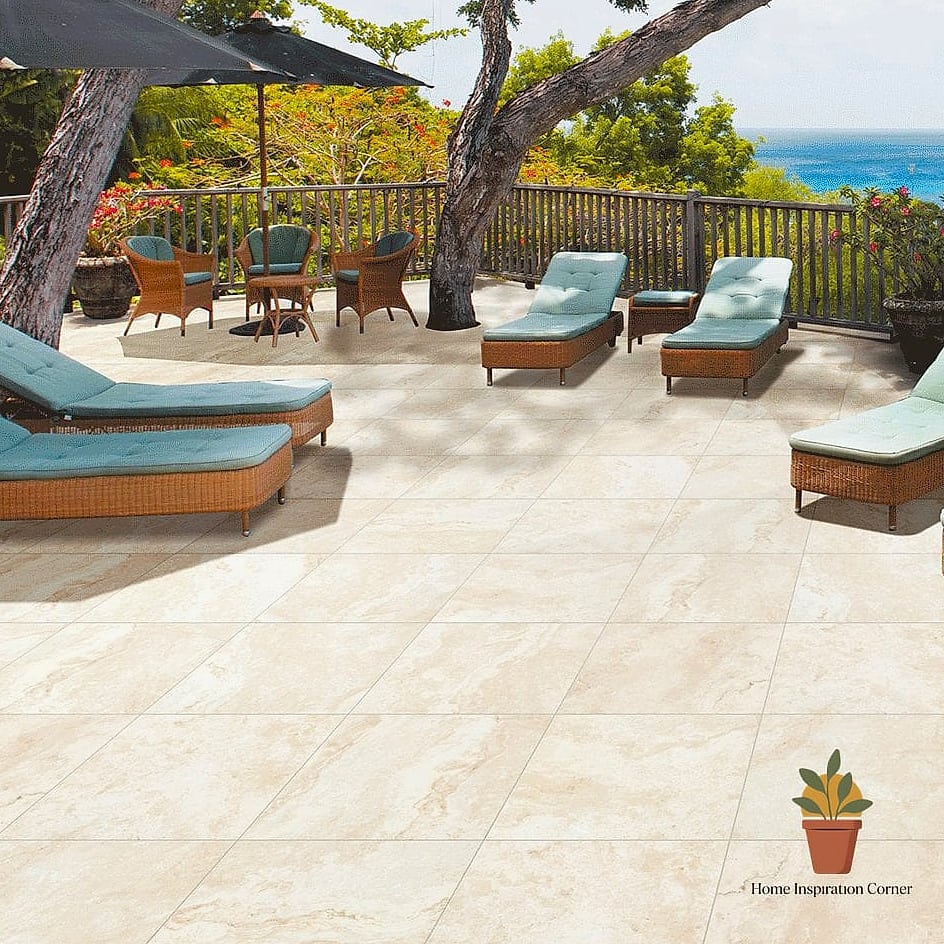
Limestone in warm ivory or cream tones creates a bright, airy patio that reflects heat rather than absorbing it, a genuine perk if you live somewhere hot and sunny. It pairs beautifully with white or natural wood furniture for a soft, coastal-Mediterranean feel.
Limestone is a bit softer than granite or bluestone, so it can be prone to scratching over time. Regular sealing helps protect the surface and keeps the color looking fresh season after season.
Modern Linear Plank Tile
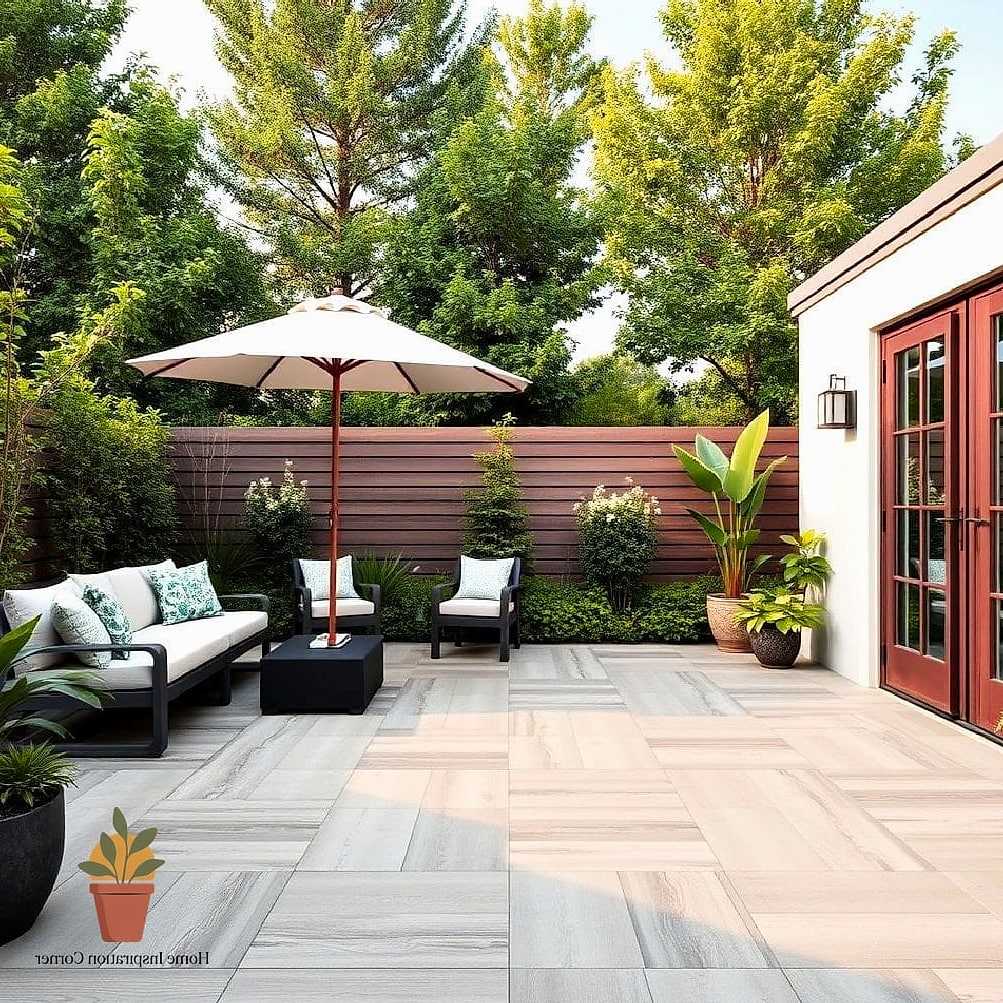
Long, narrow porcelain planks laid in a linear pattern create a clean, directional flow that’s especially striking on rectangular patios. Running the planks toward your home’s entrance or a focal point, like a fire pit, adds a subtle sense of guided movement.
This style suits modern and Scandinavian-inspired outdoor spaces. It’s a nice middle ground between the warmth of wood-look tile and the crispness of a minimalist material palette.
Multi-Colored Tumbled Stone
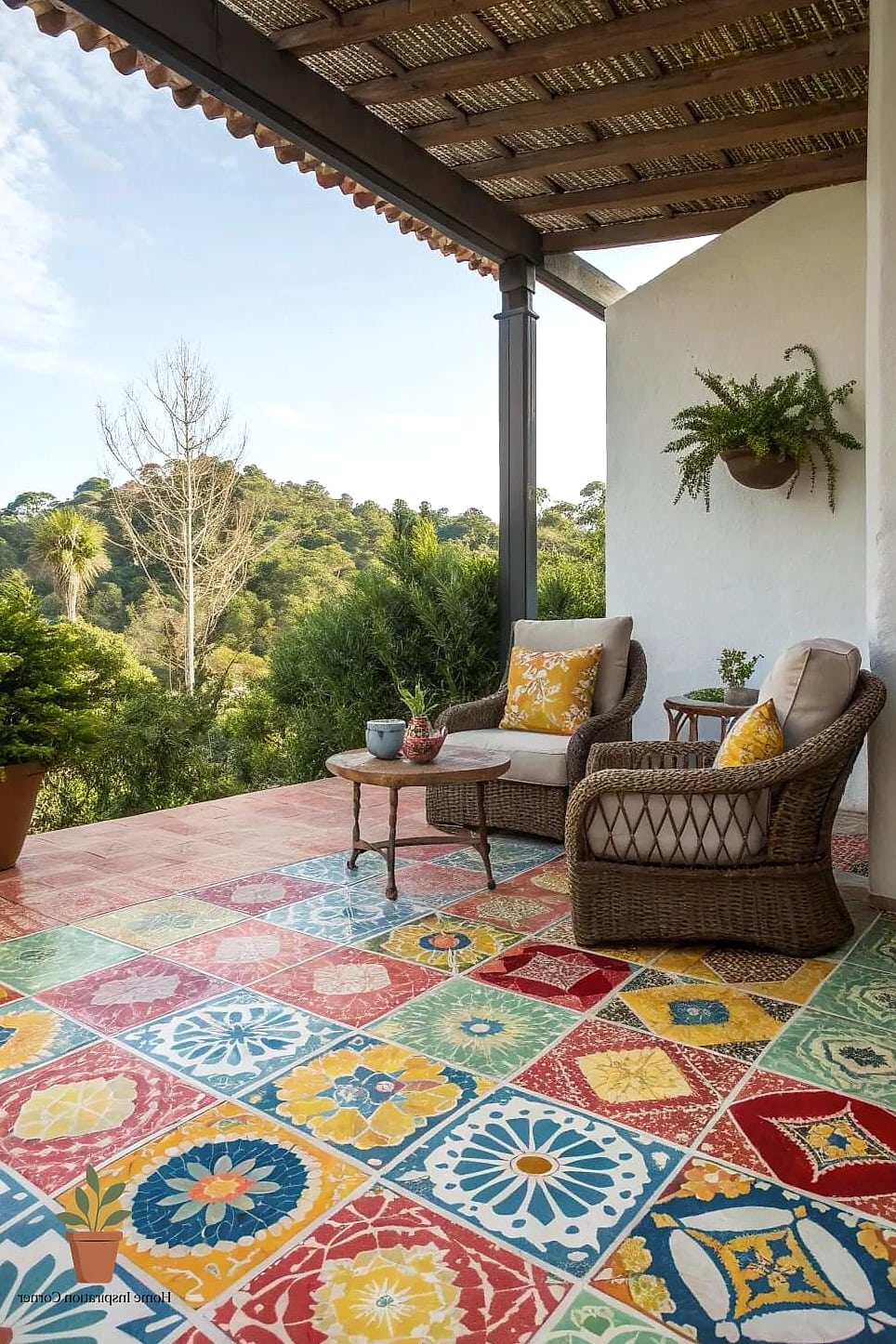
Tumbled stone with soft, rounded edges and a blend of earthy tones, tans, grays, rusts, brings a relaxed, old-world feel to a patio. The tumbling process gives each piece a slightly aged, matte texture that hides scuffs and wear really well.
This is a practical pick for busy backyards with kids or pets since the tumbled finish is forgiving when it comes to visible dirt or minor damage. It fits naturally into rustic, Tuscan, or transitional garden designs.
Sunken Patio Tile Design
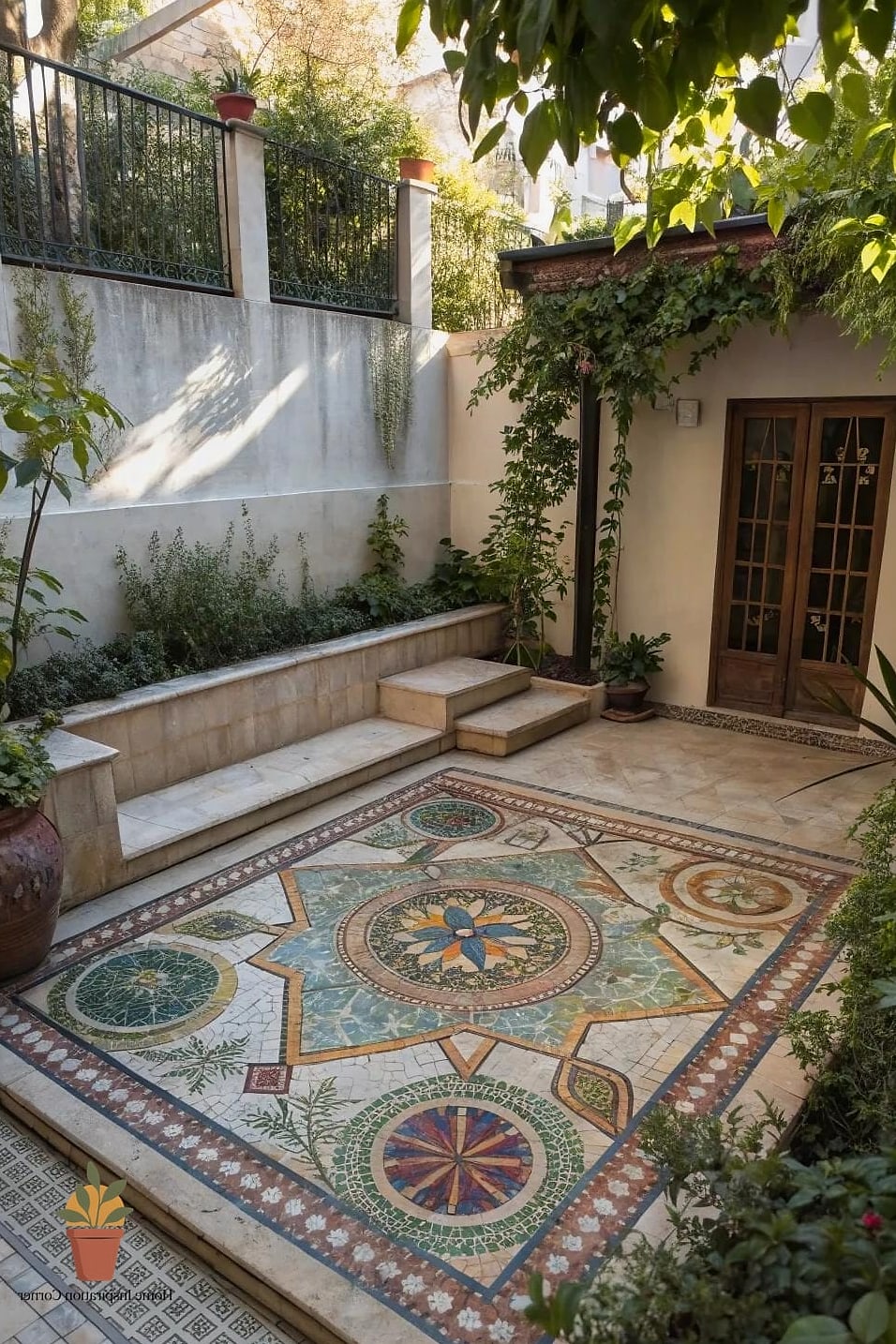
Rather than focusing purely on the tile itself, this idea plays with layout, creating a slightly recessed, sunken seating area finished in tile to define a cozy conversation zone. Large-format concrete or porcelain tiles work well here since they keep the space feeling intentional rather than accidental.
This design adds a real sense of architecture to an outdoor space and works especially well for larger backyards where you want to create distinct zones for lounging versus dining.
Budget-Friendly Interlocking Deck Tiles
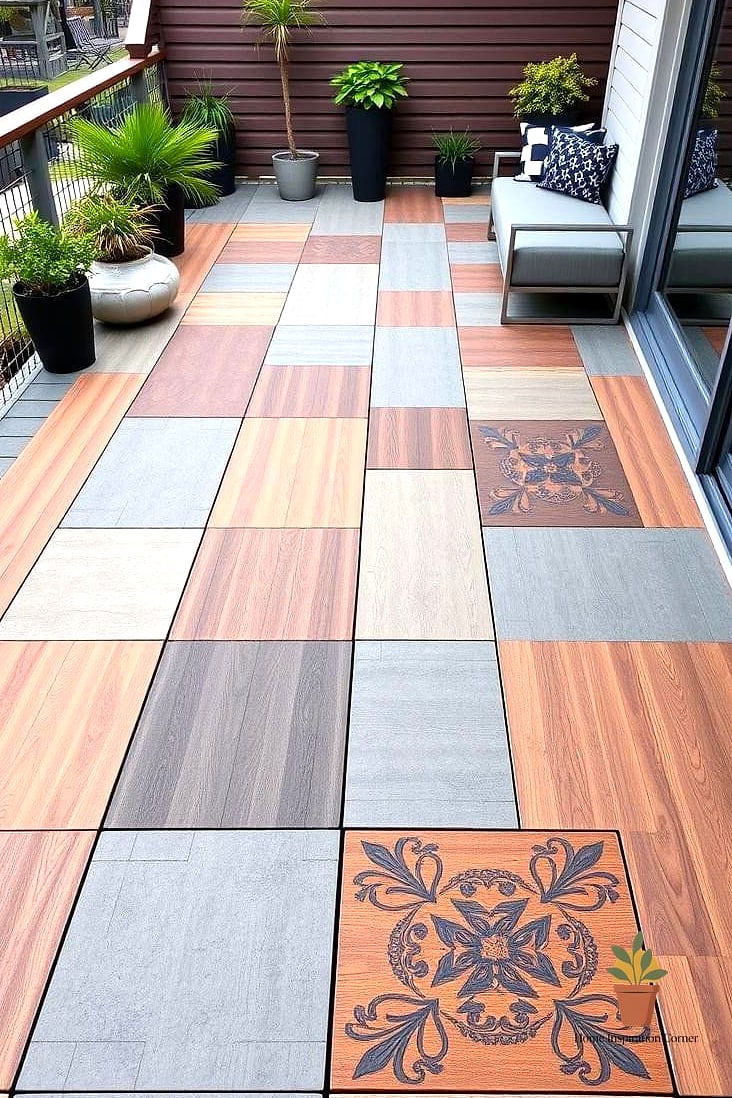
Not every patio upgrade needs a full renovation. Interlocking composite or wood deck tiles snap together over existing concrete and can transform a tired patio in a single weekend. They’re a favorite among renters or anyone testing out a new look before committing.
These tiles are DIY-friendly, require zero grout or mortar, and can be lifted and rearranged if you change your mind later. It’s not a permanent solution, but it’s a genuinely smart option for anyone on a tighter budget.
Two-Level Tiled Patio with Contrasting Materials
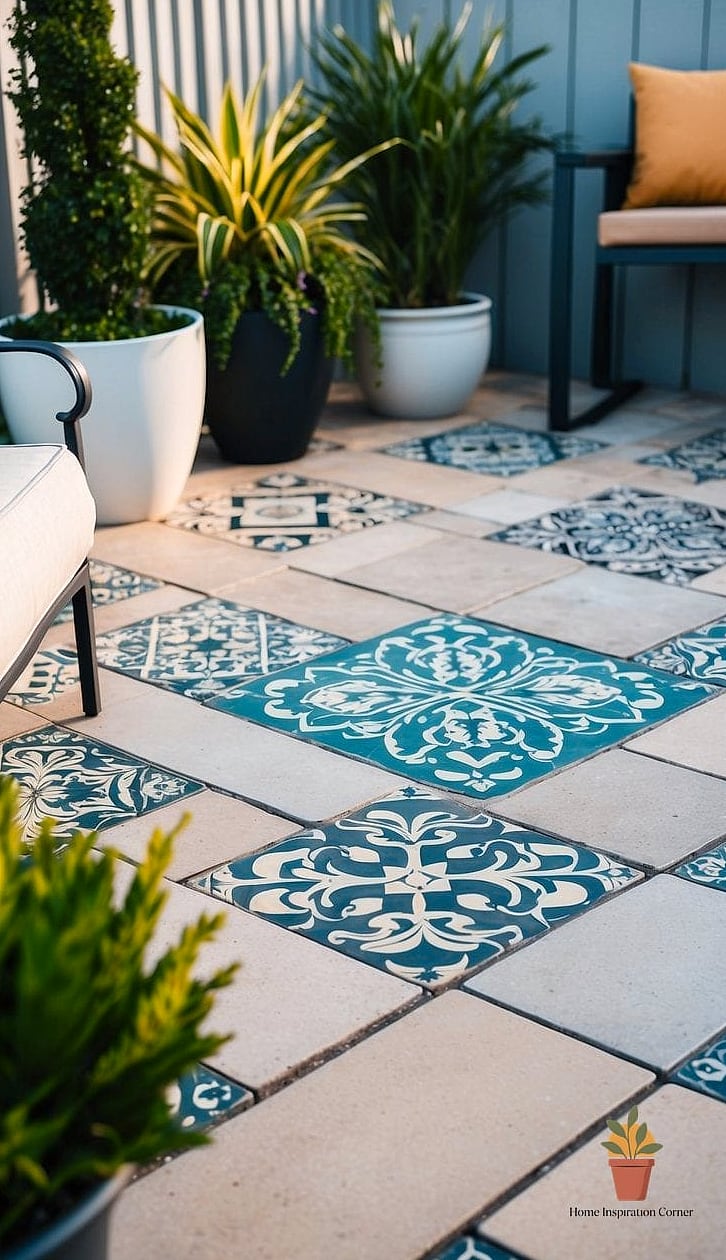
For sloped yards or homes wanting a more dynamic outdoor layout, a two-level patio using different tile materials on each tier adds depth and visual separation. Pairing something like bluestone on the upper level with concrete pavers below creates subtle contrast without clashing.
This approach works well for properties with natural elevation changes and gives you the flexibility to create distinct zones, like a grilling area up top and a fire pit lounge below, each with its own material personality.
Final Thoughts
With so many patio tile designs to choose from, the real key is matching the material to how you actually use your outdoor space. A busy family with pets might lean toward durable porcelain, while someone going for a relaxed garden retreat might fall in love with natural flagstone or tumbled stone instead.
Whatever direction you choose from these 25 patio tiles designs that maximize style and function, the goal is the same: a patio that looks great in photos but performs even better in real life.