
30 Deck Colors Ideas Paint Looks We’re Obsessed With This Year
- Weathered Gray
- Deep Charcoal
- Classic Cedar Brown
- Soft Sage Green
- Crisp White
- Warm Terracotta
- Black Deck Boards
- Natural Honey Tone
- Blue-Gray Coastal Vibes
- Rich Espresso Brown
- Two-Tone Deck Boards
- Muted Taupe
- Bold Navy Blue
- Driftwood Beige
- Olive Green Accents
- Painted White Railings with Natural Deck Boards
- Slate Blue
- Rustic Barn Red
- Light Ash Gray
- Warm Chestnut
- Two-Tone Gray and White
- Deep Forest Green
- Sandy Tan
- Painted Herringbone Pattern Deck
- Soft Blush Undertones
- Classic Gray-Brown Blend
- Matte Black Railings with Natural Wood Deck
- Warm Caramel
- Whitewashed Wood
- Custom Color Matched to Your Home
30 Deck Colors Ideas Paint Looks We’re Obsessed With This Year
Your deck sets the tone for your whole backyard, and picking the right color can honestly make or break the space. I’ve helped friends and clients pick deck stains and paints for years, and I still get excited every time someone asks me for ideas. The right shade can make a small deck feel bigger, a boring deck feel intentional, and a tired deck feel brand new without a full rebuild.
Below are 30 deck colors and paint looks that keep popping up in the best backyard makeovers I’ve seen this year. Some are classic, some are a little bold, and all of them are worth considering before you grab that paintbrush.
Weathered Gray
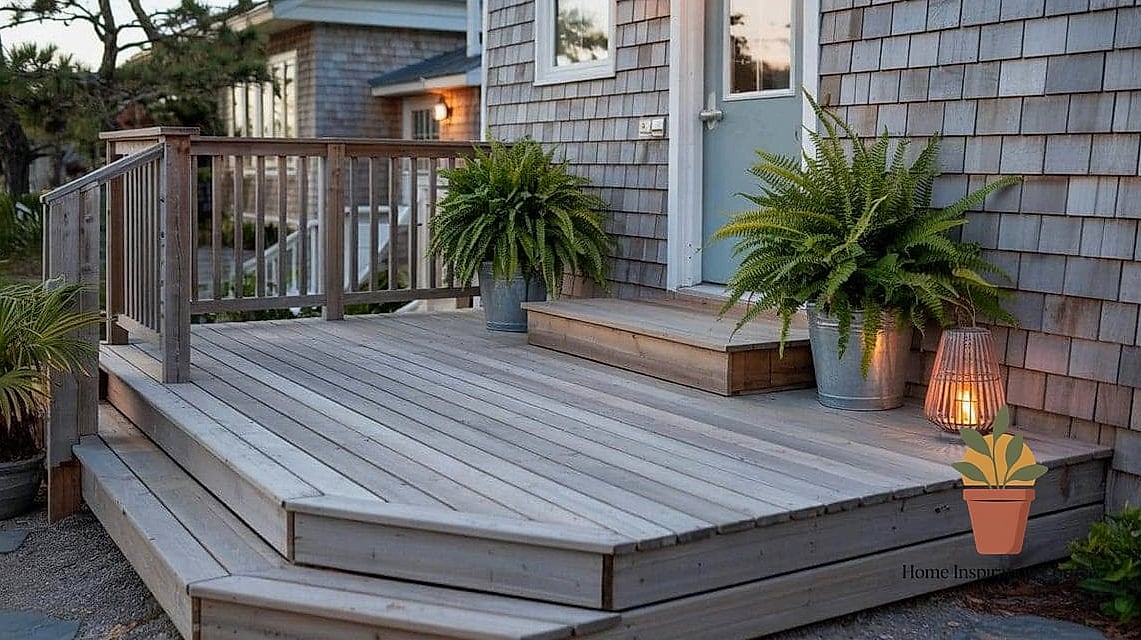
Gray decking has been popular for a while, but the weathered, driftwood-style gray is what people are really gravitating toward now. It mimics the look of naturally aged wood without actually waiting years for that effect. This works especially well on decks that get a lot of sun since it hides fading better than darker tones. It pairs beautifully with white trim, black railings, or natural stone planters.
Deep Charcoal
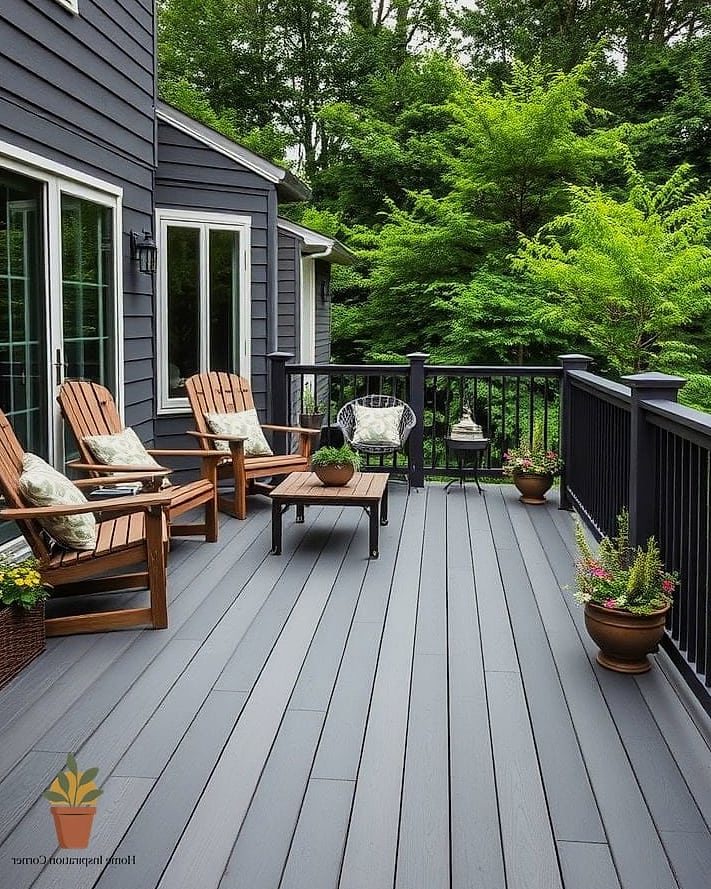
Charcoal decks feel modern and grounded, especially against green landscaping. This color choice works best on larger decks where the dark tone won’t make the space feel closed in. It’s a great pick if you want your outdoor furniture and string lights to really pop against the background. Just know that charcoal can show dust and pollen more than lighter shades, so a quick sweep now and then keeps it looking sharp.
Classic Cedar Brown
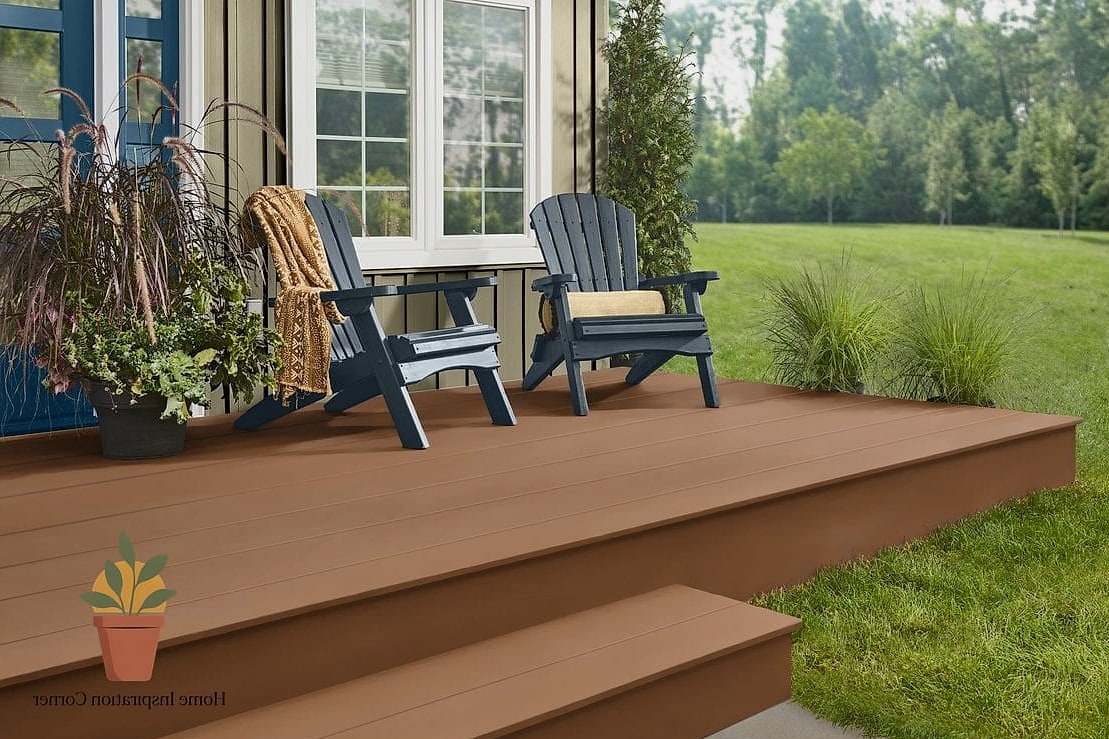
There’s a reason cedar brown never really goes out of style. It’s warm, natural, and complements just about any home exterior. This shade works great for families who want their deck to blend into a wooded backyard rather than stand out. Semi-transparent stains in this tone let the wood grain show through, which adds a nice organic texture.
Soft Sage Green
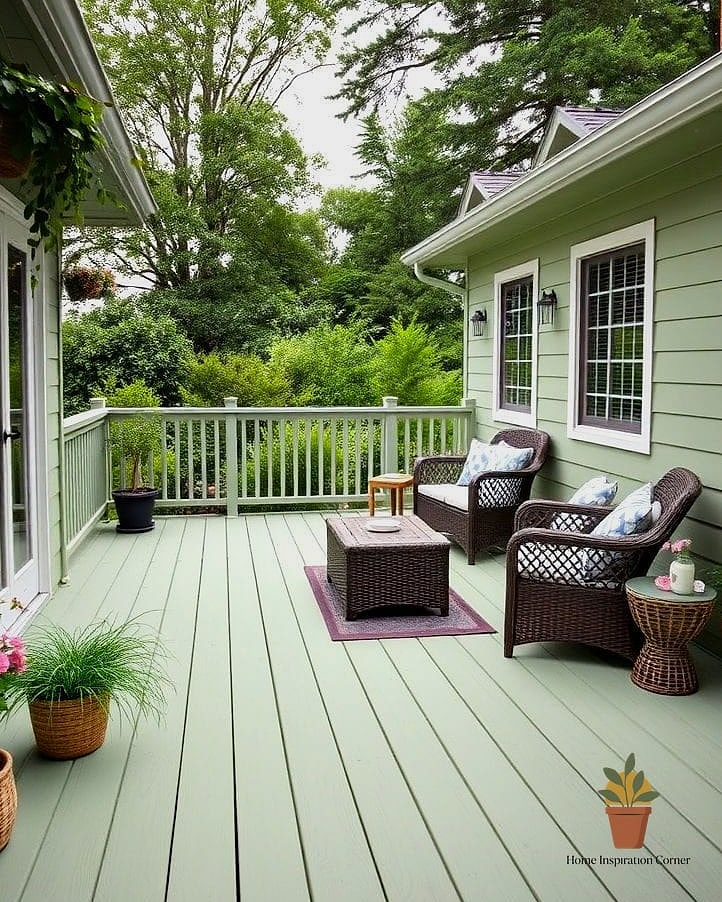
Sage green decks are having a real moment, and I get why. It’s earthy without being too matchy with your lawn, and it gives a calm, cottage-like feel. This color works especially well on decks surrounded by garden beds or potted plants. Pair it with woven furniture and warm string lighting for a look that feels like a little retreat.
Crisp White
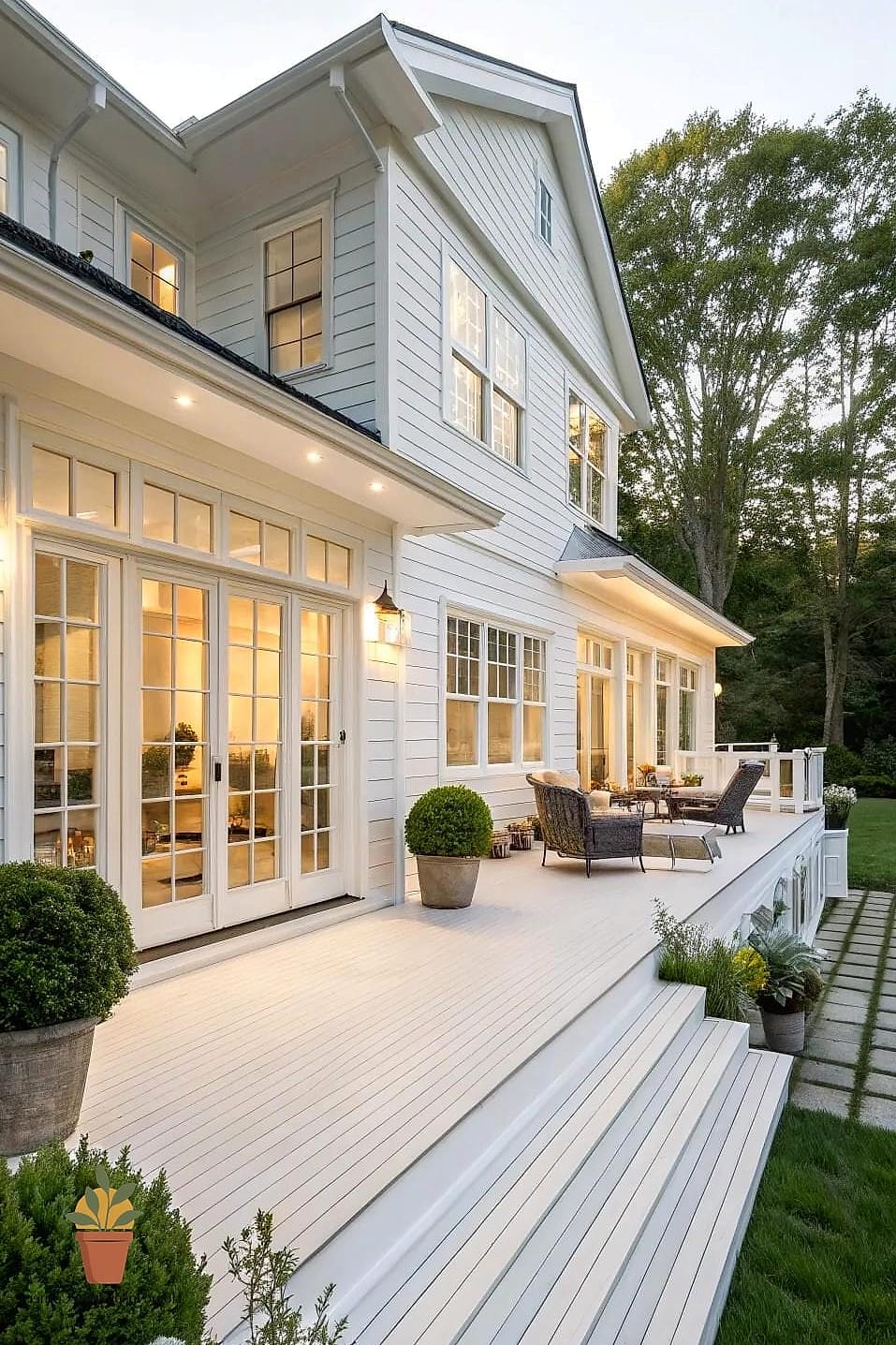
White decks feel coastal and clean, almost like something out of a beach house catalog. This look shines on covered decks or porches where the paint won’t take a beating from constant sun and rain. Keep in mind white shows dirt and scuff marks more than darker colors, so it’s a better fit if you’re willing to do a little extra upkeep. The payoff is a bright, airy space that photographs beautifully.
Warm Terracotta
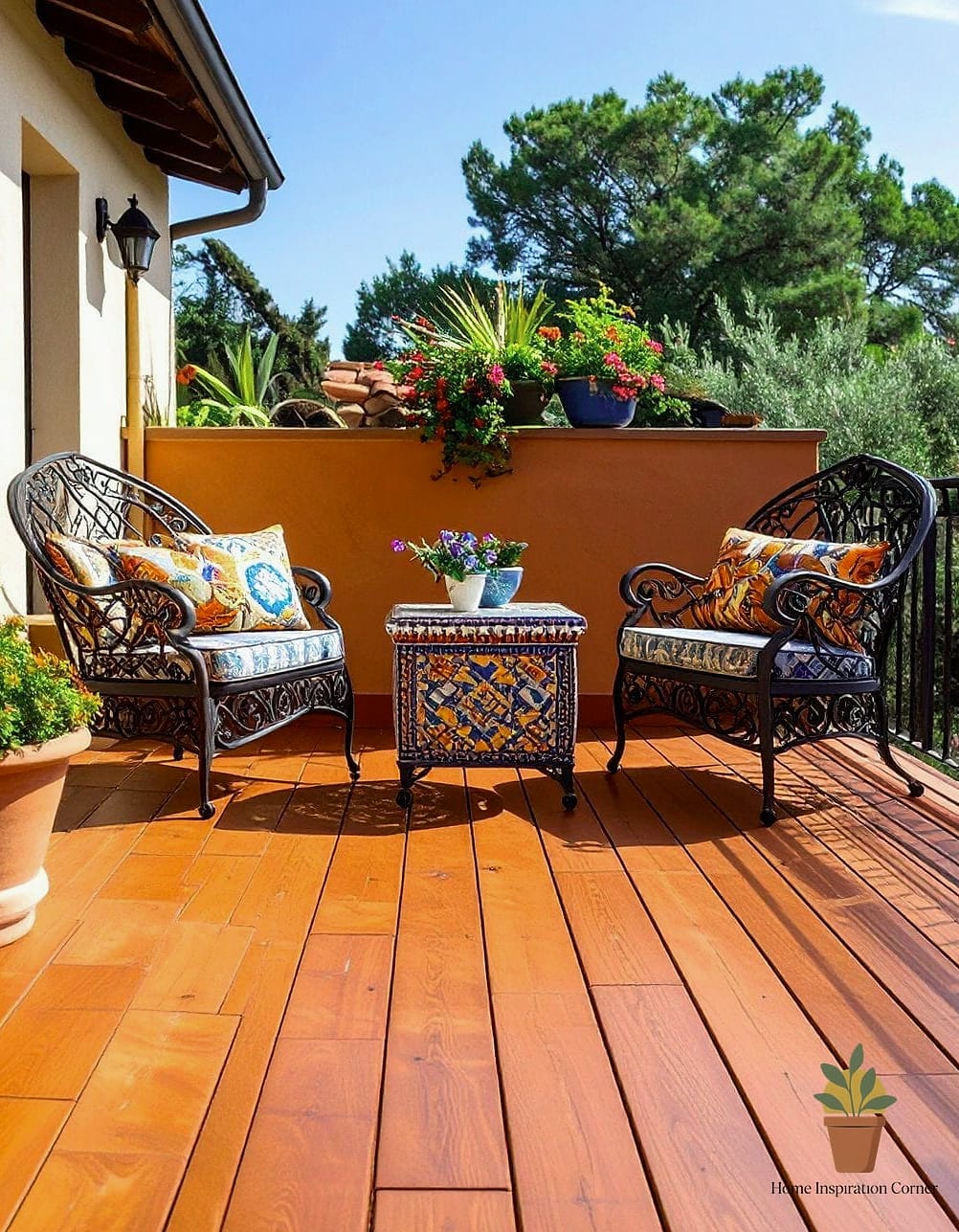
Terracotta is a fun departure from the usual neutral deck colors, and it adds a Mediterranean warmth that feels unexpected in a good way. This shade works best in sunny climates with lots of greenery to balance it out. It’s a bold choice, so it’s often used on smaller accent areas like stair risers or a portion of railing rather than the whole deck.
Black Deck Boards
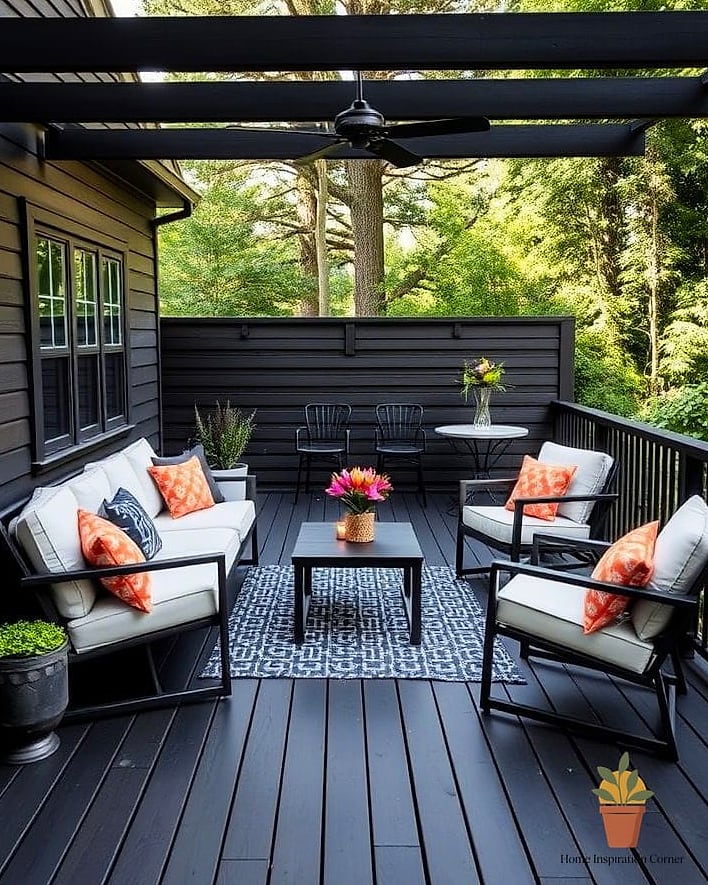
A fully black deck sounds intense, but done right, it looks incredibly sleek and modern. This works best paired with light-colored siding so the contrast doesn’t feel overwhelming. Black decking also absorbs heat, so it’s worth considering your climate before committing to this look for bare feet in summer. Add outdoor rugs and light furniture to soften the overall feel.
Natural Honey Tone
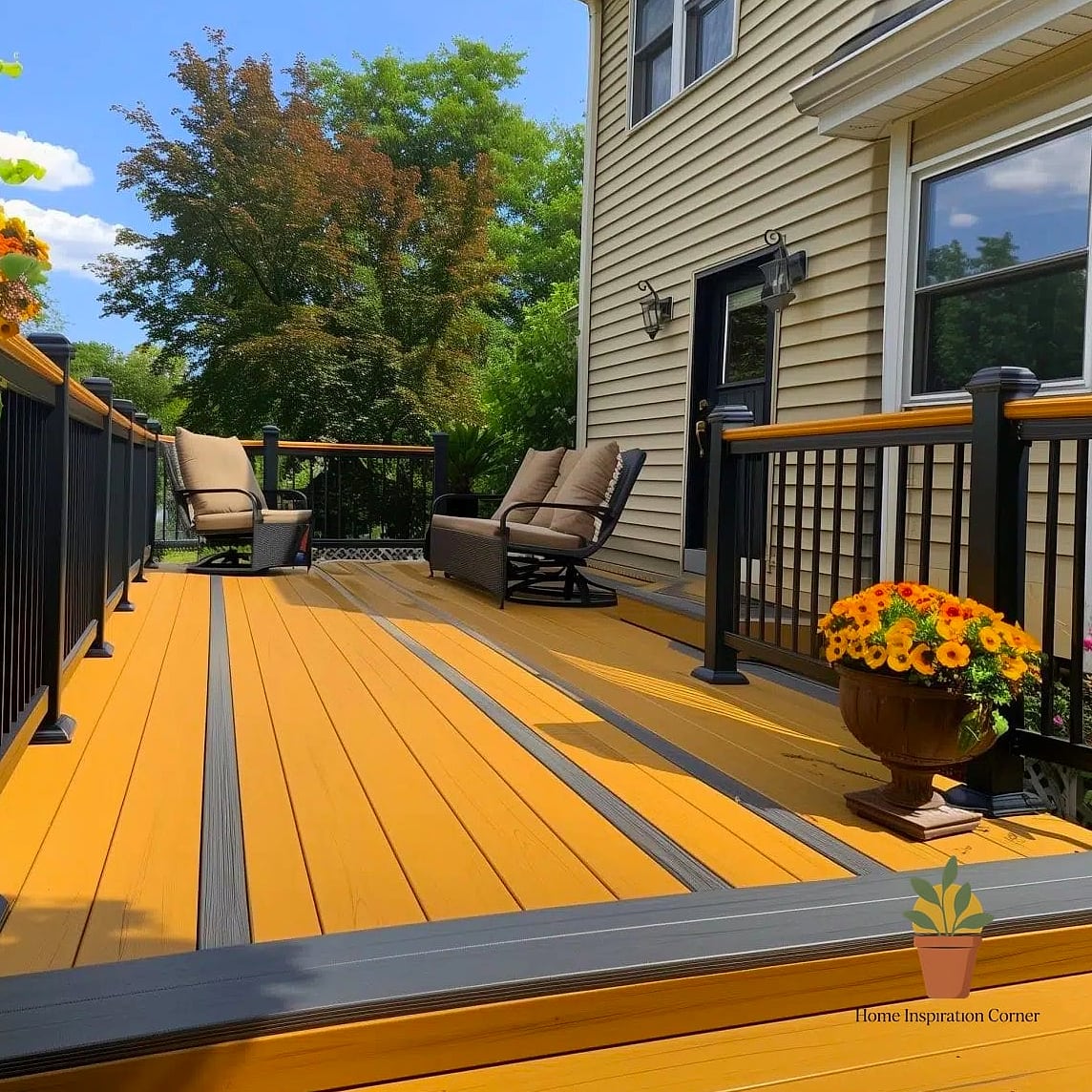
Honey-toned stains bring out the richness in wood grain and give decks a golden, sunlit look even on cloudy days. This is a favorite for newer wood decks where you want to highlight the material rather than cover it up. It’s a forgiving color that hides minor wear well, which makes it a practical pick for high-traffic decks.
Blue-Gray Coastal Vibes
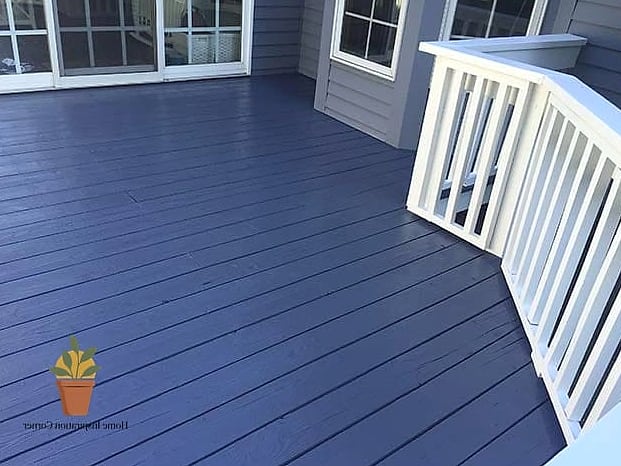
This shade sits somewhere between blue and gray, and it gives decks a relaxed, nautical feel without going full navy. It looks especially good near lake houses or homes with blue or gray siding. This color tends to work well with white railings and natural rope or rattan accents for a breezy finish.
Rich Espresso Brown
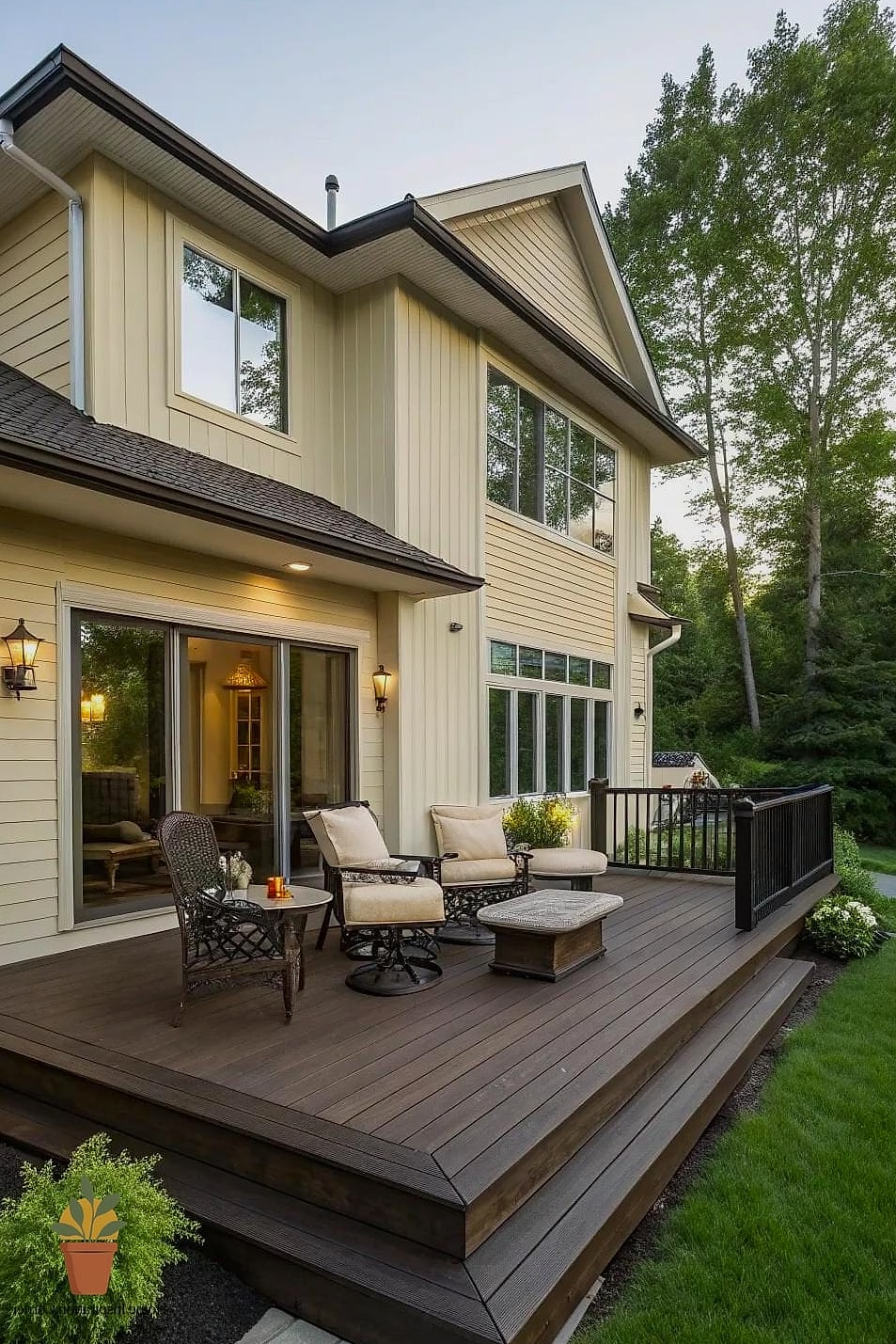
Espresso brown decking feels a little more upscale and dramatic than your standard cedar or brown stain. It pairs nicely with modern outdoor furniture and metal accents. This tone does a great job hiding stains and scuffs, making it a solid pick for decks used often for grilling or entertaining.
Two-Tone Deck Boards
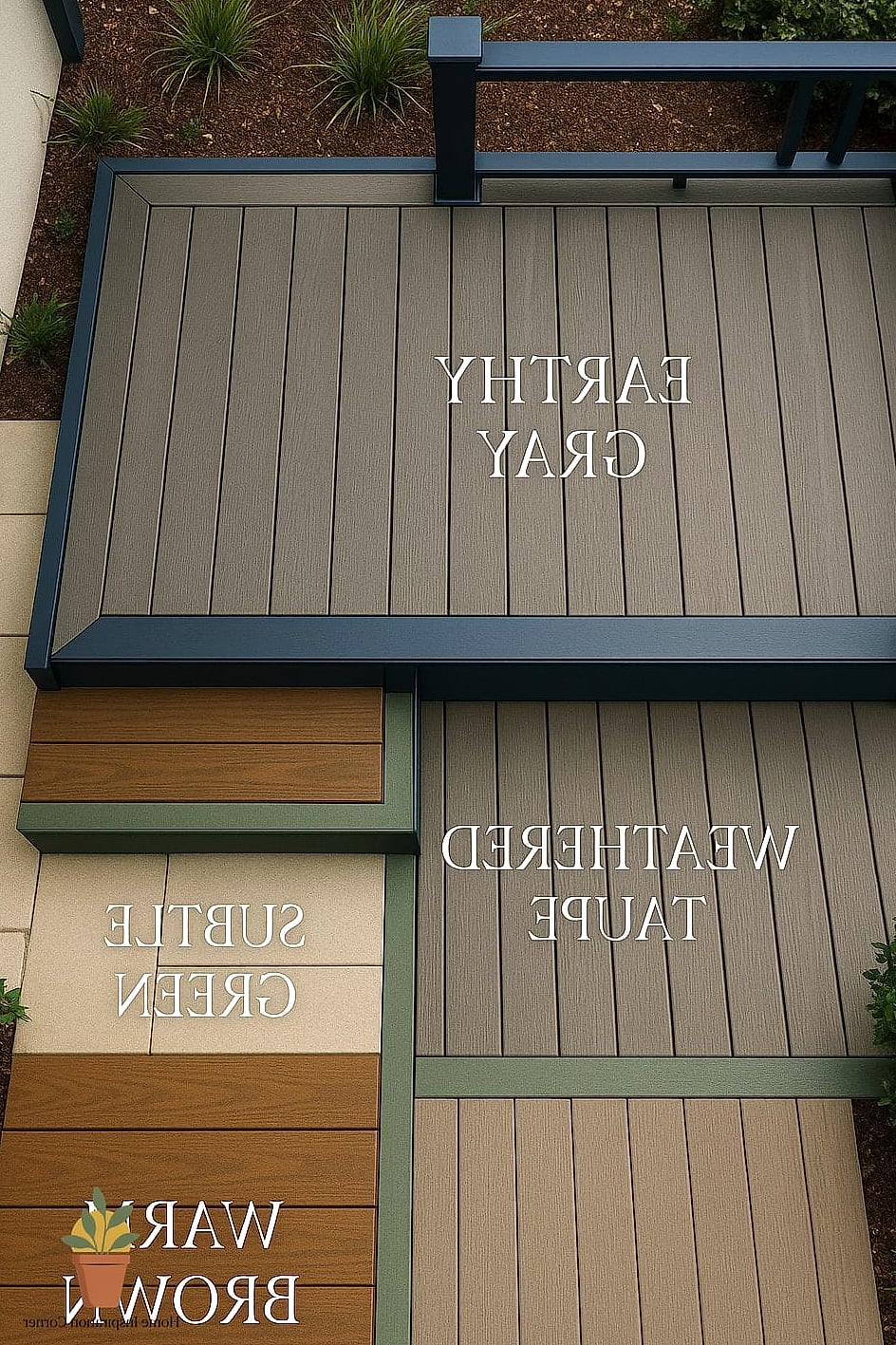
Mixing two colors, like a darker perimeter with lighter center boards, adds visual interest without needing a fancy pattern. This look works well on larger decks where a single color might feel flat. It’s also a smart way to define different zones, like a dining area versus a lounge space, just through color alone.
Muted Taupe
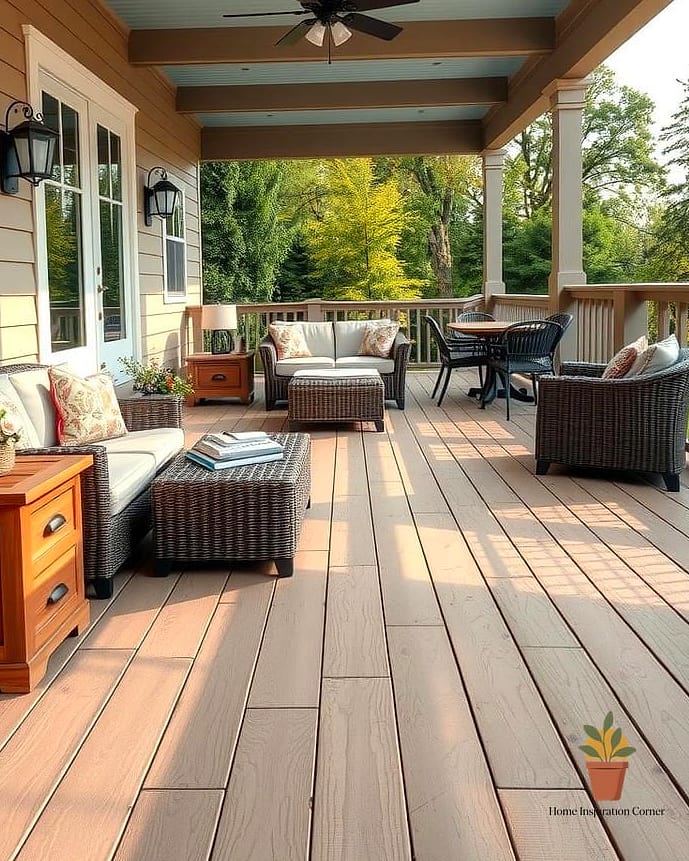
Taupe is the color you choose when you want something warmer than gray but calmer than brown. It’s a versatile neutral that works with almost any home exterior and landscaping style. This shade tends to be popular with people who redo their deck furniture often since it won’t clash with new color schemes down the road.
Bold Navy Blue
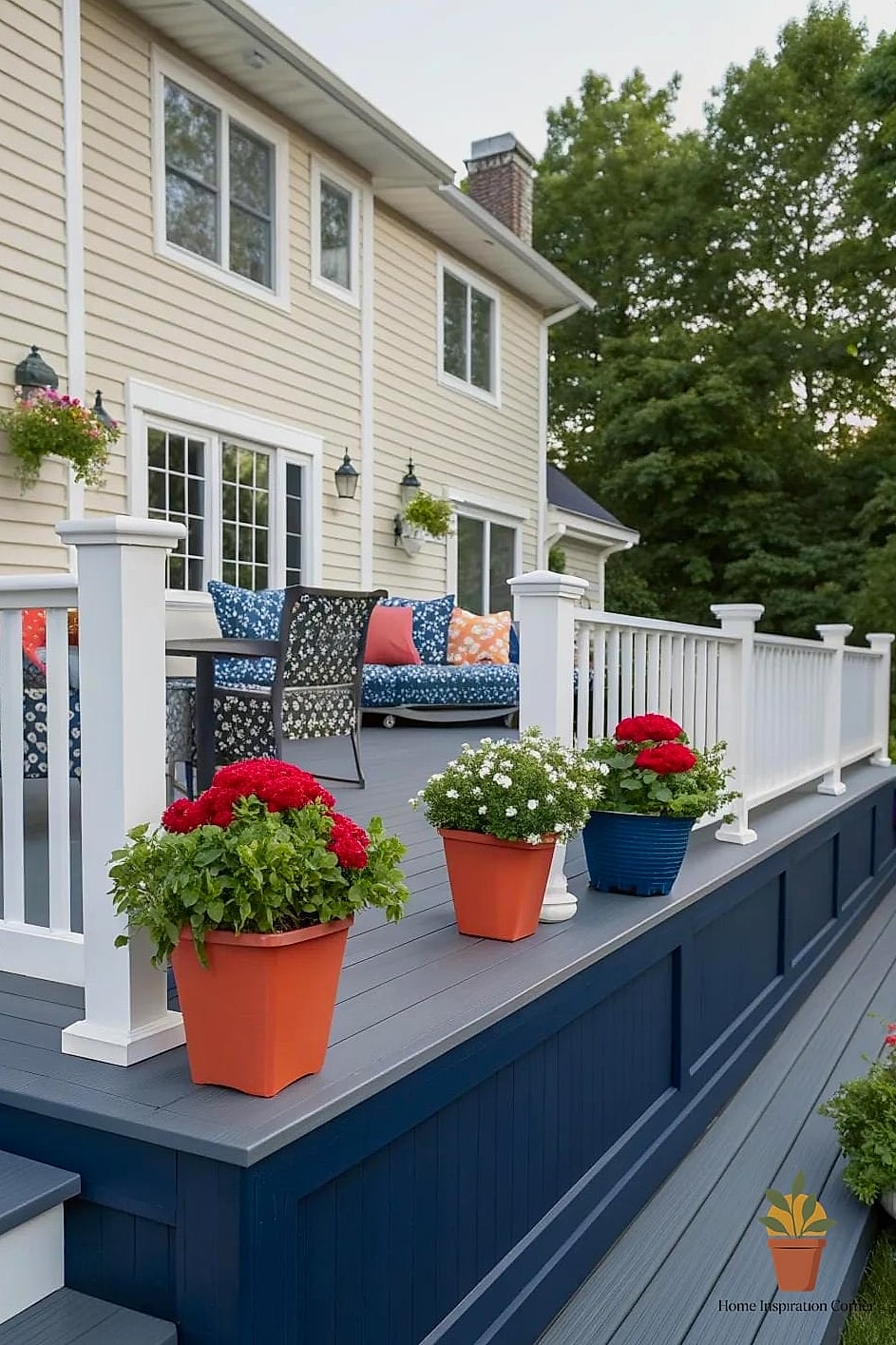
Navy decking feels rich and a little unexpected, especially against white or cream house siding. It works particularly well on decks with a lot of natural light since the color can feel heavy in shaded areas. Pair it with brass or gold hardware for a look that feels more like an outdoor living room than a typical backyard deck.
Driftwood Beige
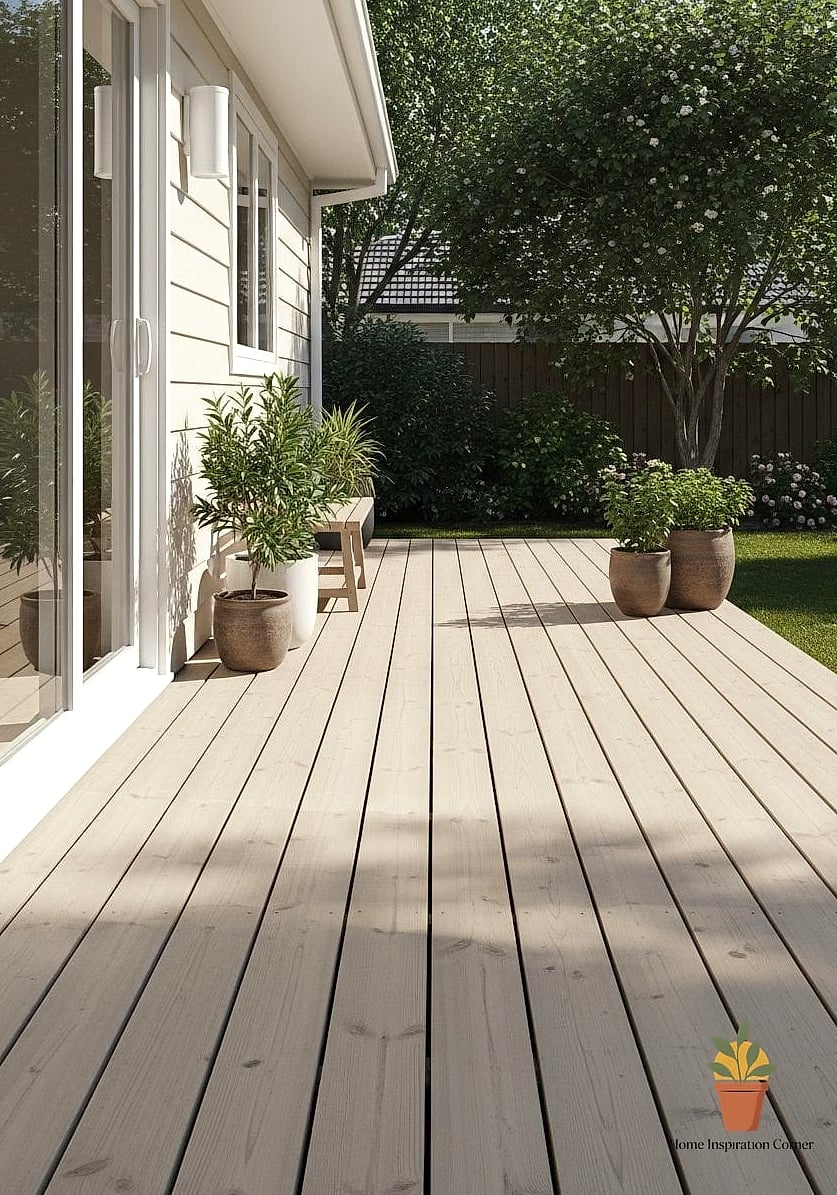
Driftwood beige splits the difference between gray and tan, giving off that relaxed, sun-bleached wood look. It’s a popular choice for decks near pools since it doesn’t show water spots as easily as darker stains. This color also tends to stay cooler underfoot compared to deeper tones, which matters more than people expect during peak summer.
Olive Green Accents
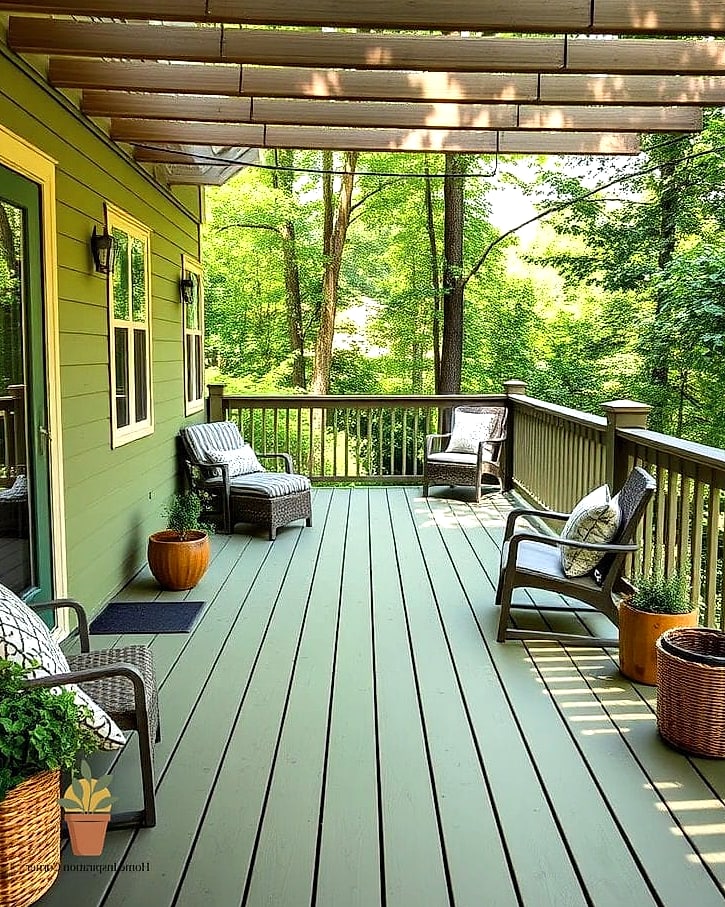
Full olive green decks are less common, but olive used as an accent on railings or steps adds a earthy, grounded touch. This pairs beautifully with wood tones and stone pathways. It’s a great option if you want a hint of color without committing to a fully painted deck.
Painted White Railings with Natural Deck Boards
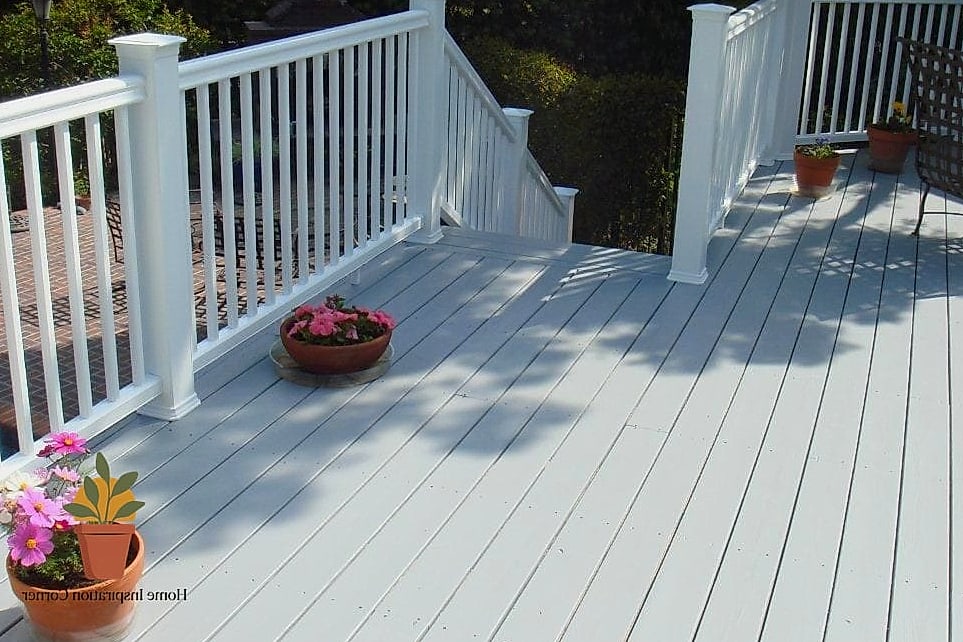
Sometimes the best approach is combining a stained deck surface with painted white railings. This creates contrast and makes the architectural details of the railing stand out. It’s also a practical choice since railings often need repainting more frequently than the deck floor itself.
Slate Blue
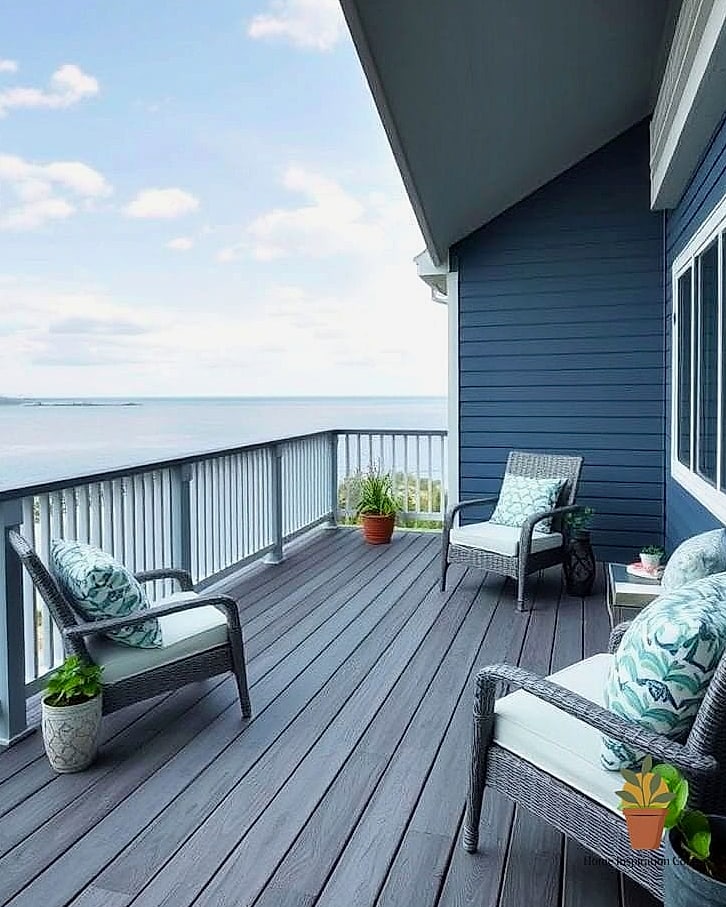
Slate blue is a little moodier than the coastal blue-gray mentioned earlier, leaning more toward a stormy, sophisticated tone. This works well on covered decks where the color won’t fade as quickly from direct sun. It looks especially good with cedar furniture and warm outdoor textiles like striped cushions or woven throws.
Rustic Barn Red
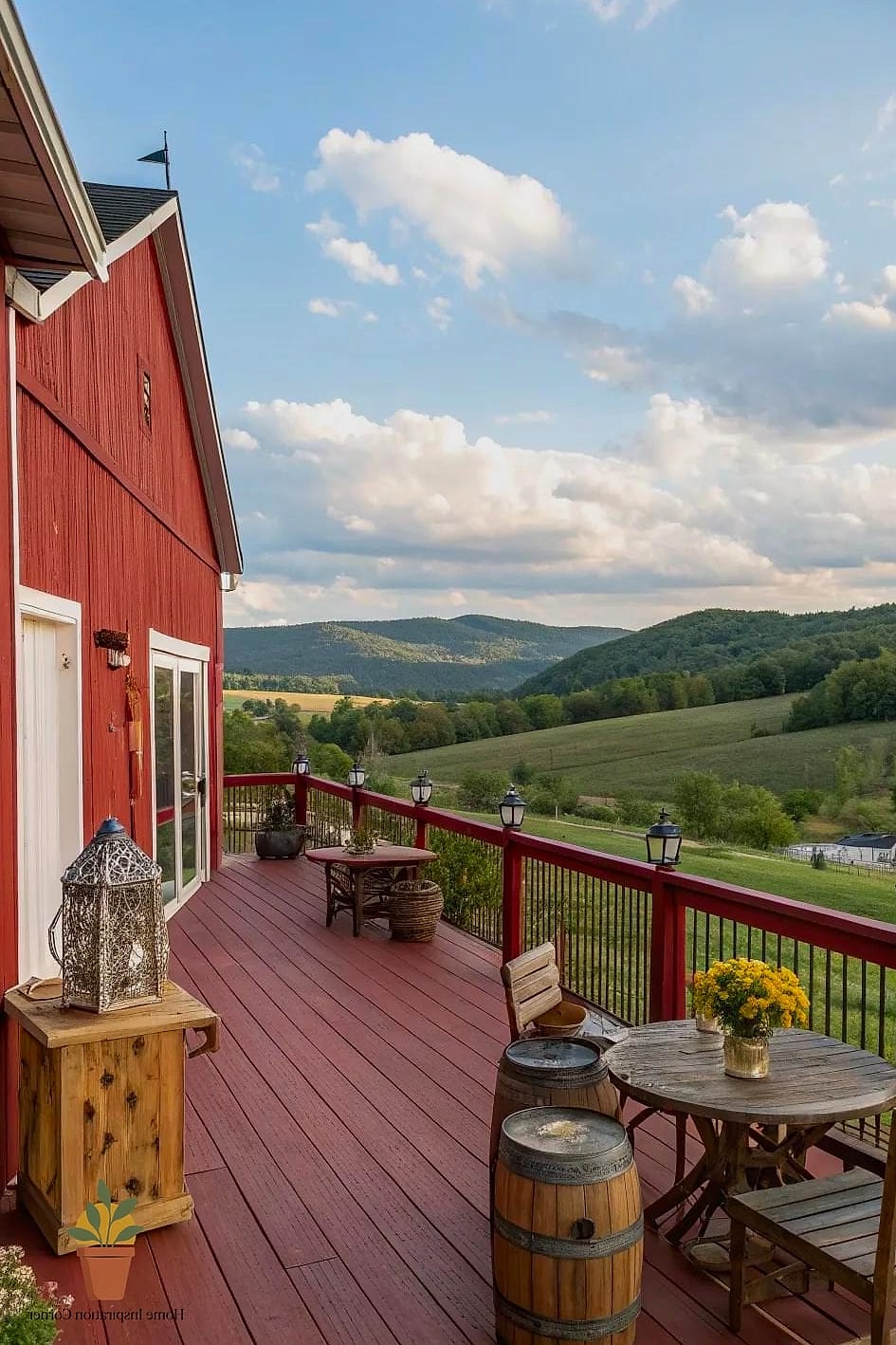
If you want your deck to feel like it belongs on a farmhouse property, barn red is worth considering. This bold color works best as an accent rather than covering the entire deck, often used on doors, planter boxes, or a portion of railing. It adds personality without overwhelming the space.
Light Ash Gray
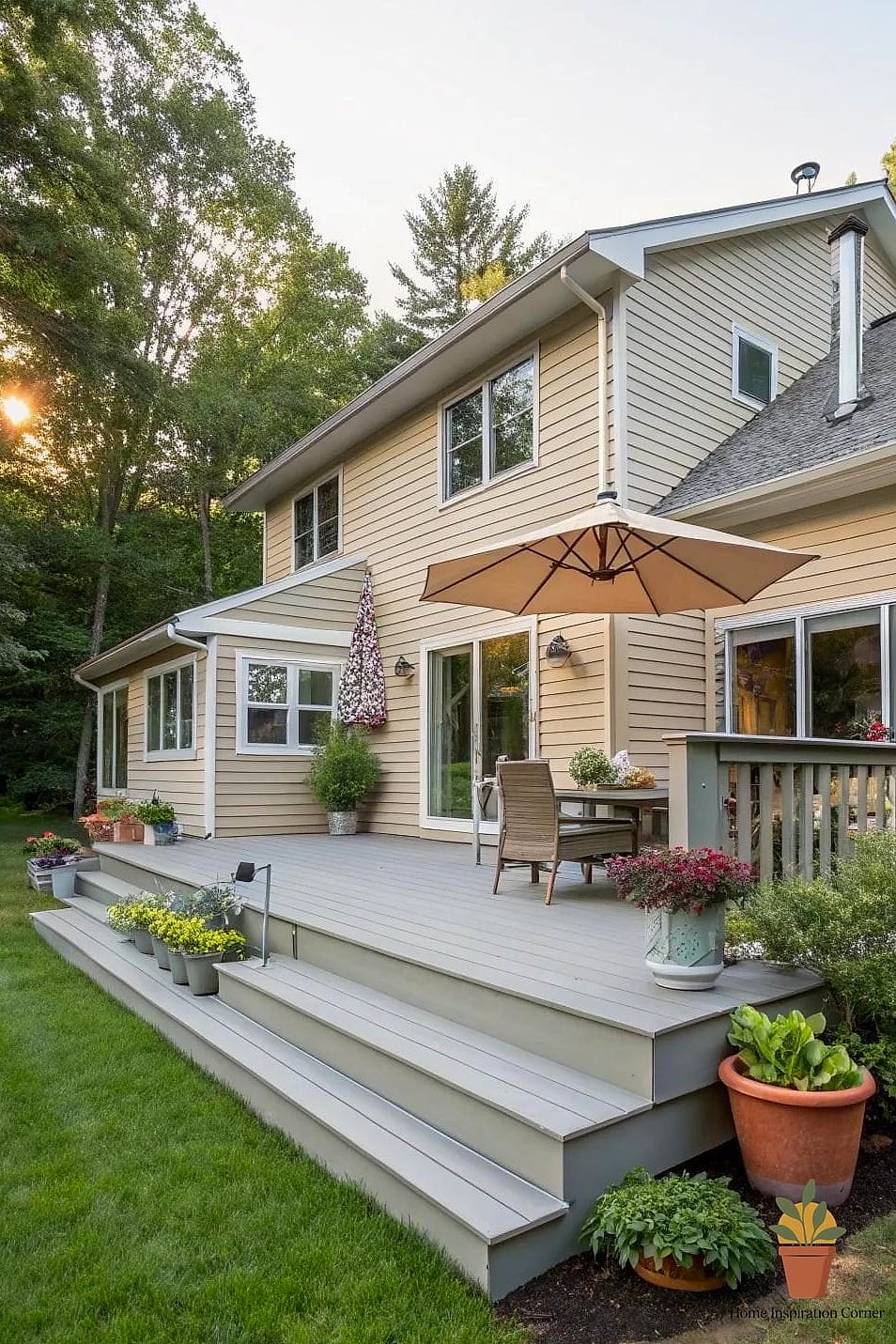
Ash gray is a touch lighter and cooler than the weathered gray mentioned earlier, giving decks a crisp, modern edge. This shade works particularly well with black metal railings and minimalist outdoor furniture. It’s a solid pick for people who want a Scandinavian-inspired backyard aesthetic.
Warm Chestnut
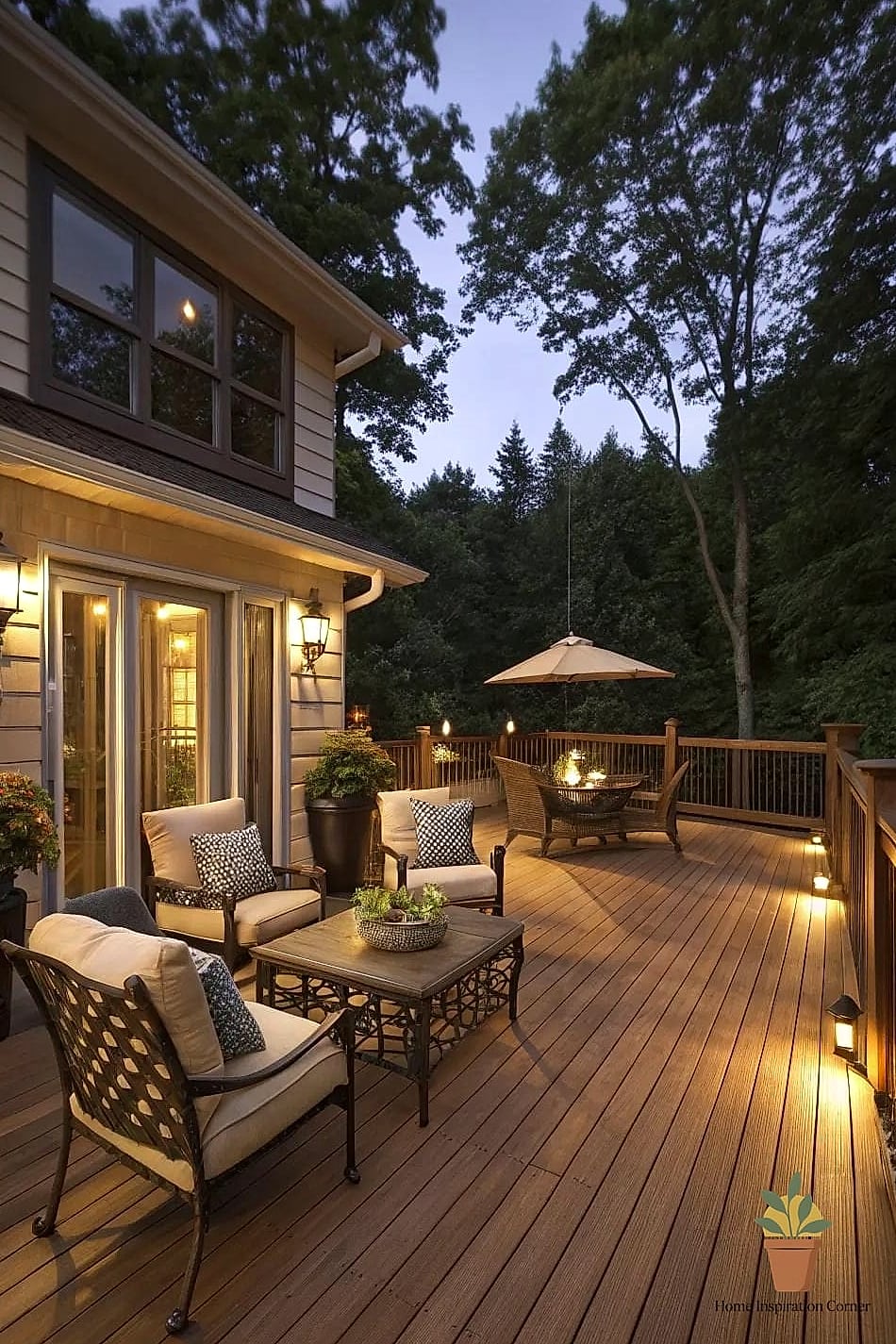
Chestnut stains bring a reddish warmth to wood decking that feels cozy rather than flashy. This color is popular for decks attached to homes with brick exteriors since the tones complement each other naturally. It also tends to hide everyday wear well, which is a bonus if you’ve got kids or pets running around outside often.
Two-Tone Gray and White
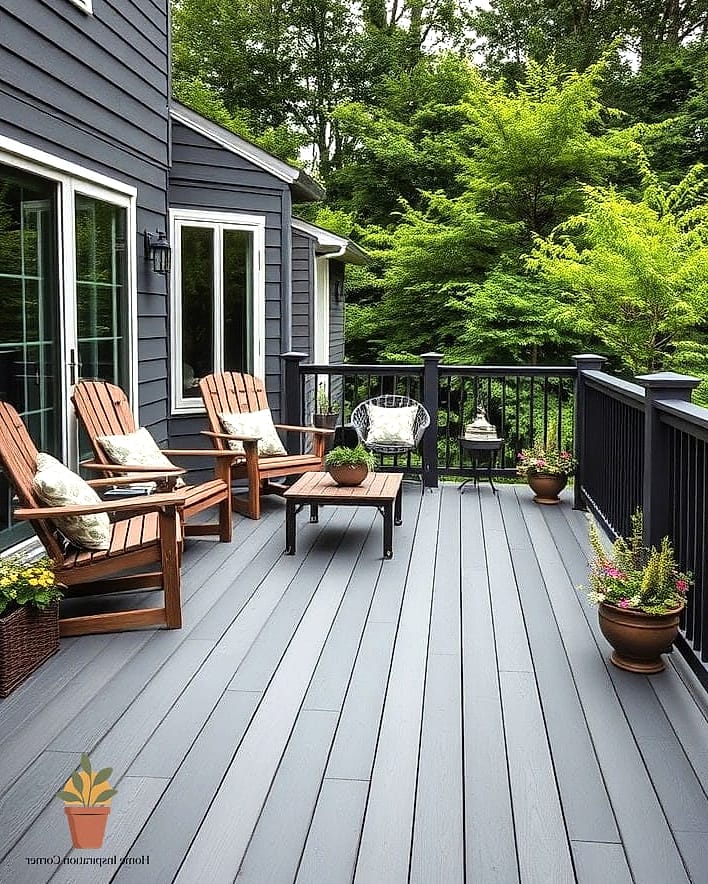
Similar to the two-tone board idea, pairing gray decking with white trim or stair risers creates a crisp, layered look. This combination works especially well on modern farmhouse style homes. It’s an easy way to add dimension without introducing a totally different color palette.
Deep Forest Green
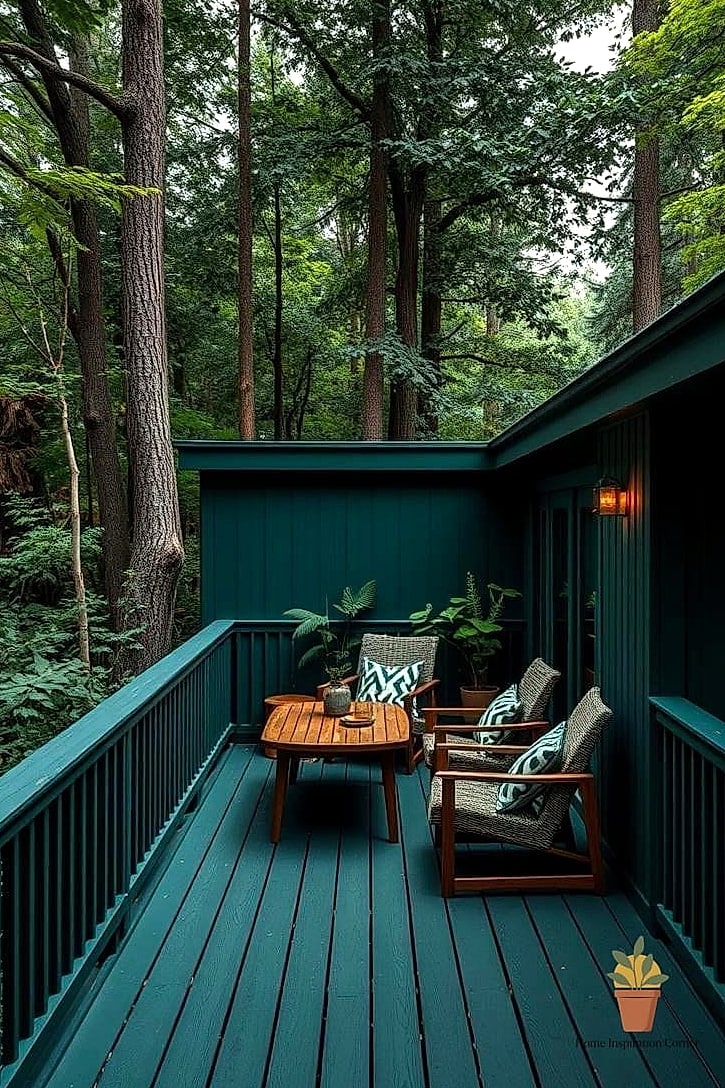
Forest green decks blend right into wooded backyards, which some homeowners love for that tucked-away, cabin-like feel. This color hides pine needles, leaves, and general debris better than lighter shades, which is a practical perk if you’re surrounded by trees. Pair it with natural wood furniture for a look that feels intentional rather than accidental.
Sandy Tan
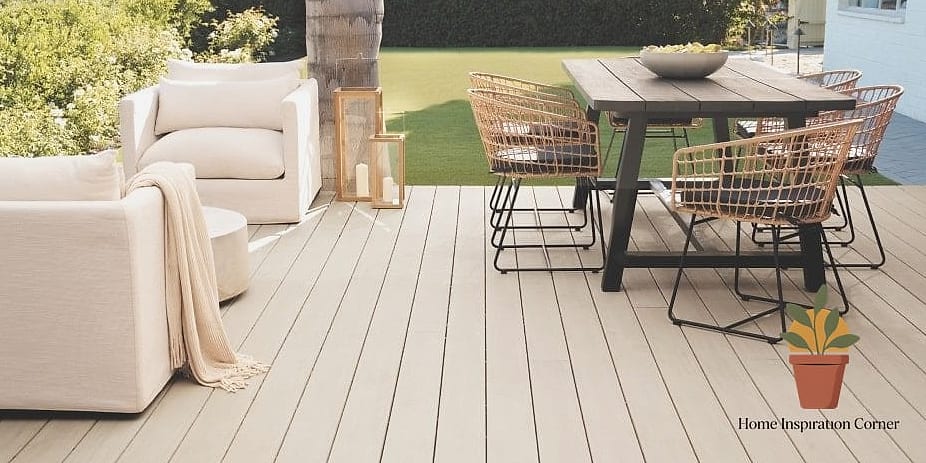
Sandy tan decking gives off warm, beachy energy without leaning too yellow or orange. This color works well in sunny climates since it doesn’t absorb heat as intensely as darker stains. It’s also fairly forgiving when it comes to hiding water spots and general foot traffic marks.
Painted Herringbone Pattern Deck
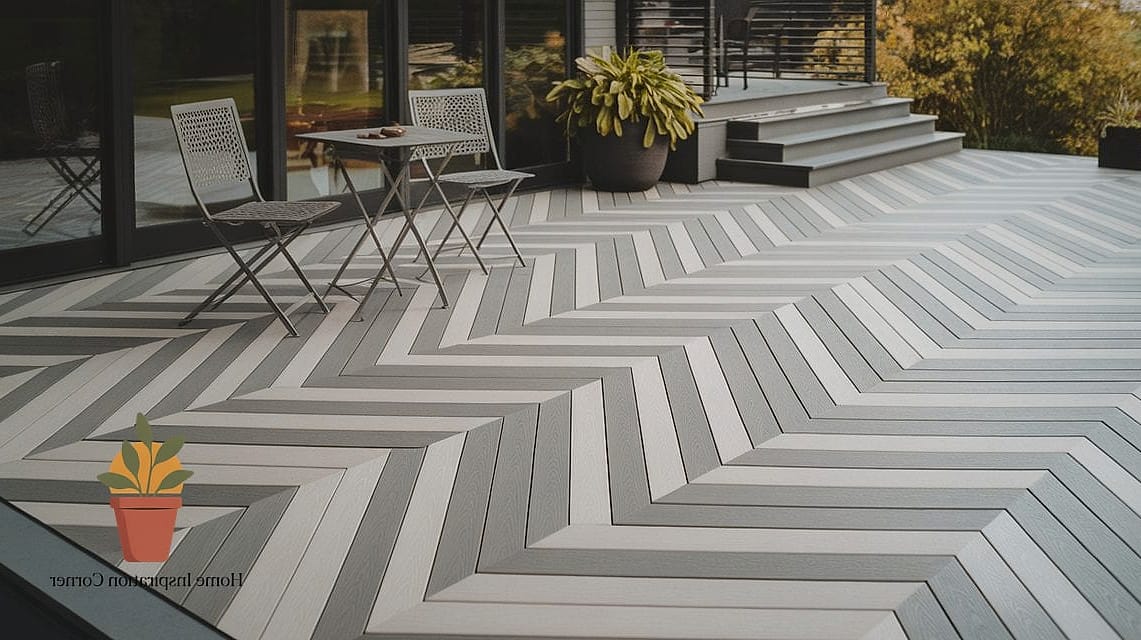
Instead of just changing the color, some homeowners are painting or staining their deck boards in a herringbone pattern for added texture. This works best on smaller decks where the pattern can really be appreciated up close. It’s a bigger project, but the visual payoff makes an ordinary deck feel custom-designed.
Soft Blush Undertones
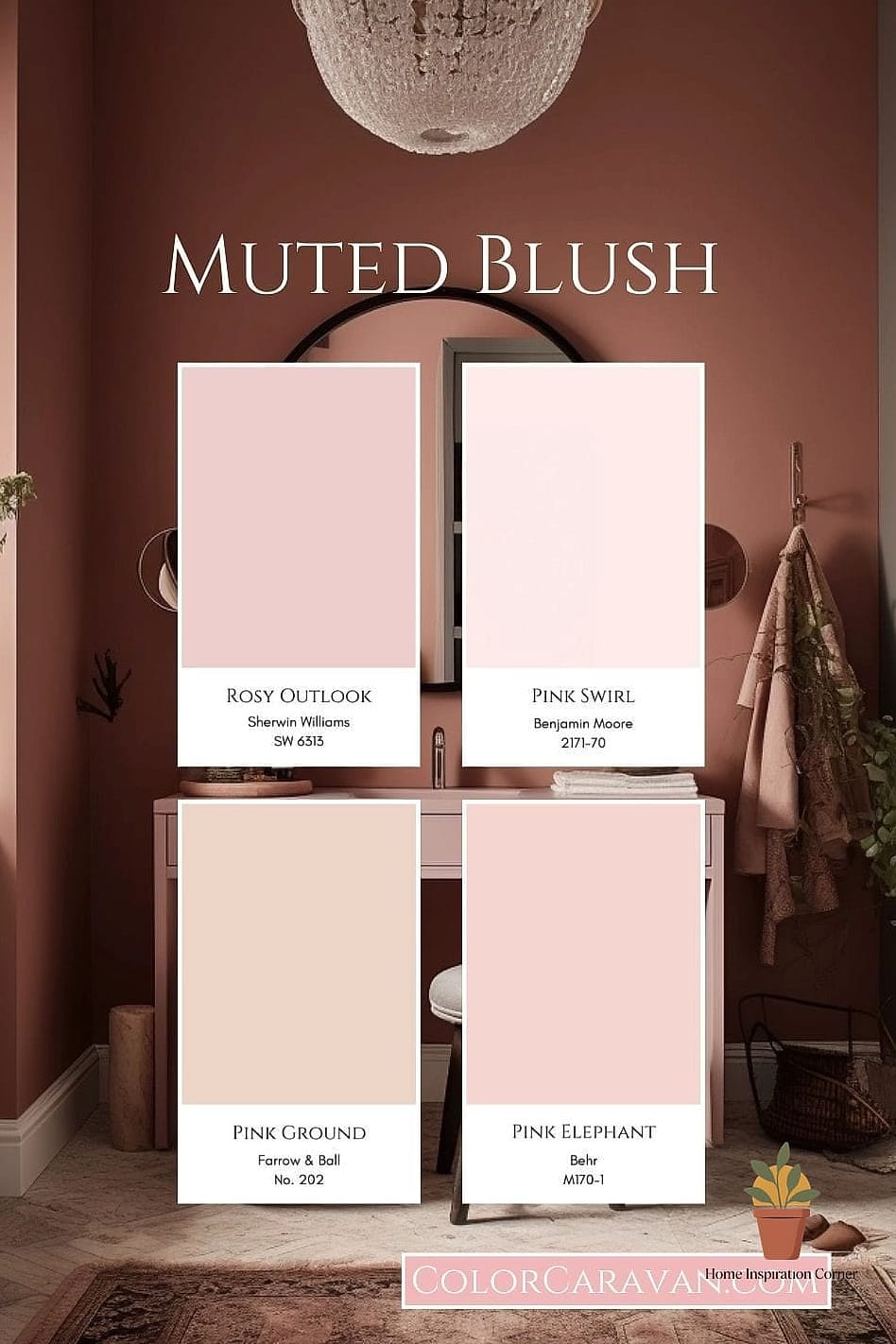
A muted, dusty blush stain is an unexpected but increasingly popular choice for decks attached to more feminine or romantic garden spaces. It works best as an accent on furniture or planter boxes rather than the entire deck surface. Paired with greenery and white string lights, it creates a soft, whimsical feel.
Classic Gray-Brown Blend
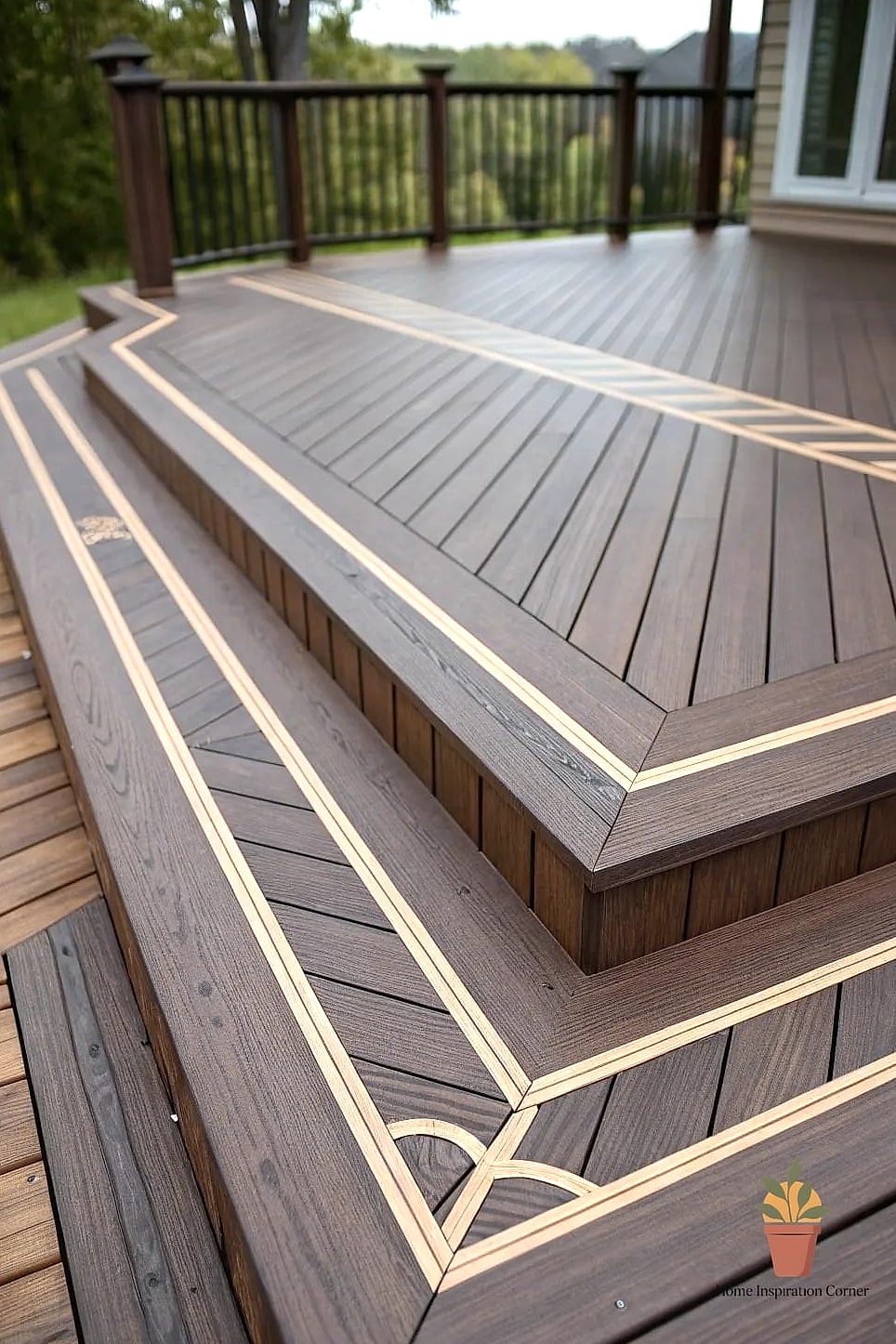
This in-between shade takes the practicality of gray and the warmth of brown and blends them into one versatile stain. It’s a safe bet if you’re worried about committing to a color that might feel dated in a few years. This tone also tends to age gracefully, which means less frequent restaining.
Matte Black Railings with Natural Wood Deck
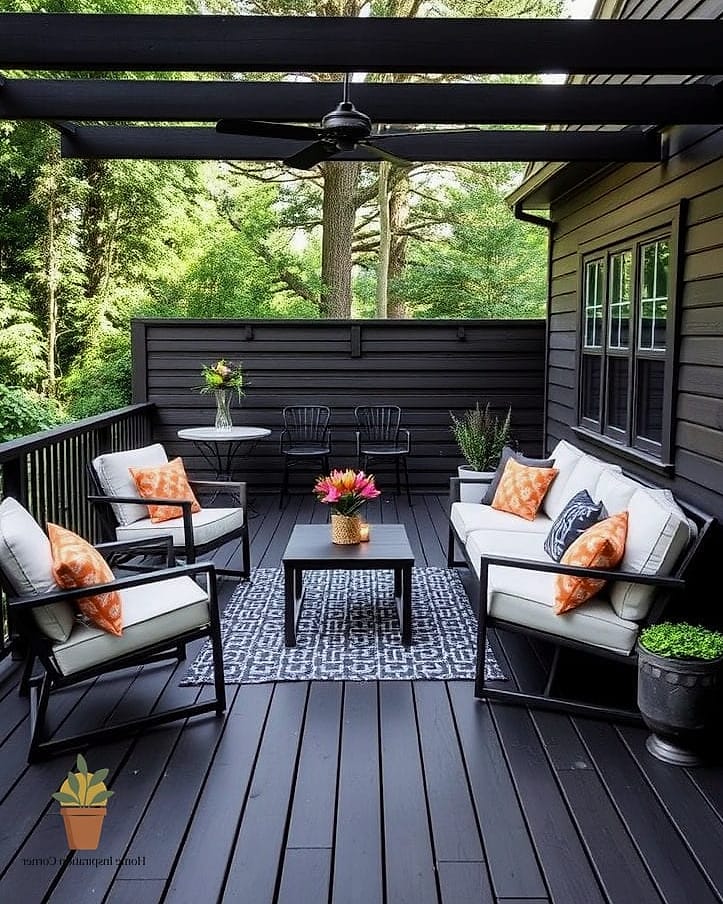
Pairing matte black railings with a natural or lightly stained wood deck creates a striking contrast that feels current and clean. This combination has become a favorite among homeowners updating older decks without replacing all the boards. It’s also one of the more budget-friendly ways to modernize a deck since you’re only repainting the railing.
Warm Caramel
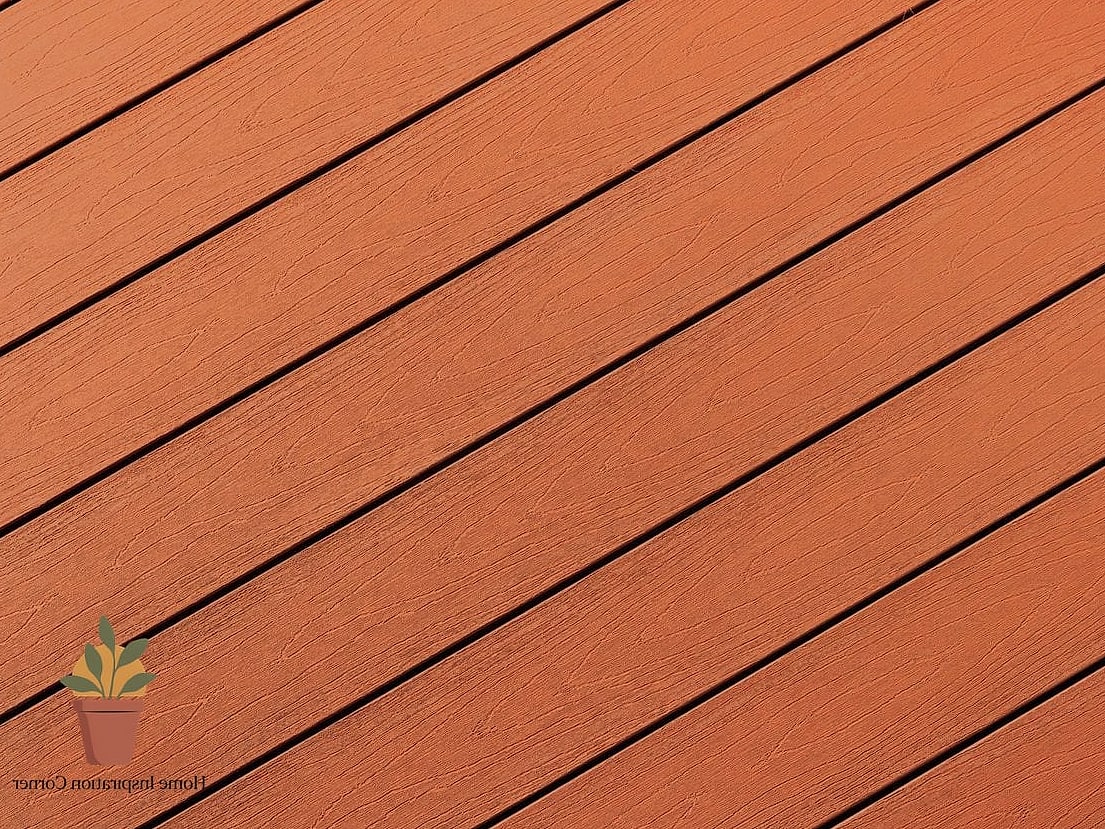
Caramel stains add richness and depth to wood decking, especially in the late afternoon light. This shade works well for decks that double as entertaining spaces since it photographs warmly for those backyard gathering pictures. It also blends nicely with both cool and warm-toned outdoor furniture.
Whitewashed Wood
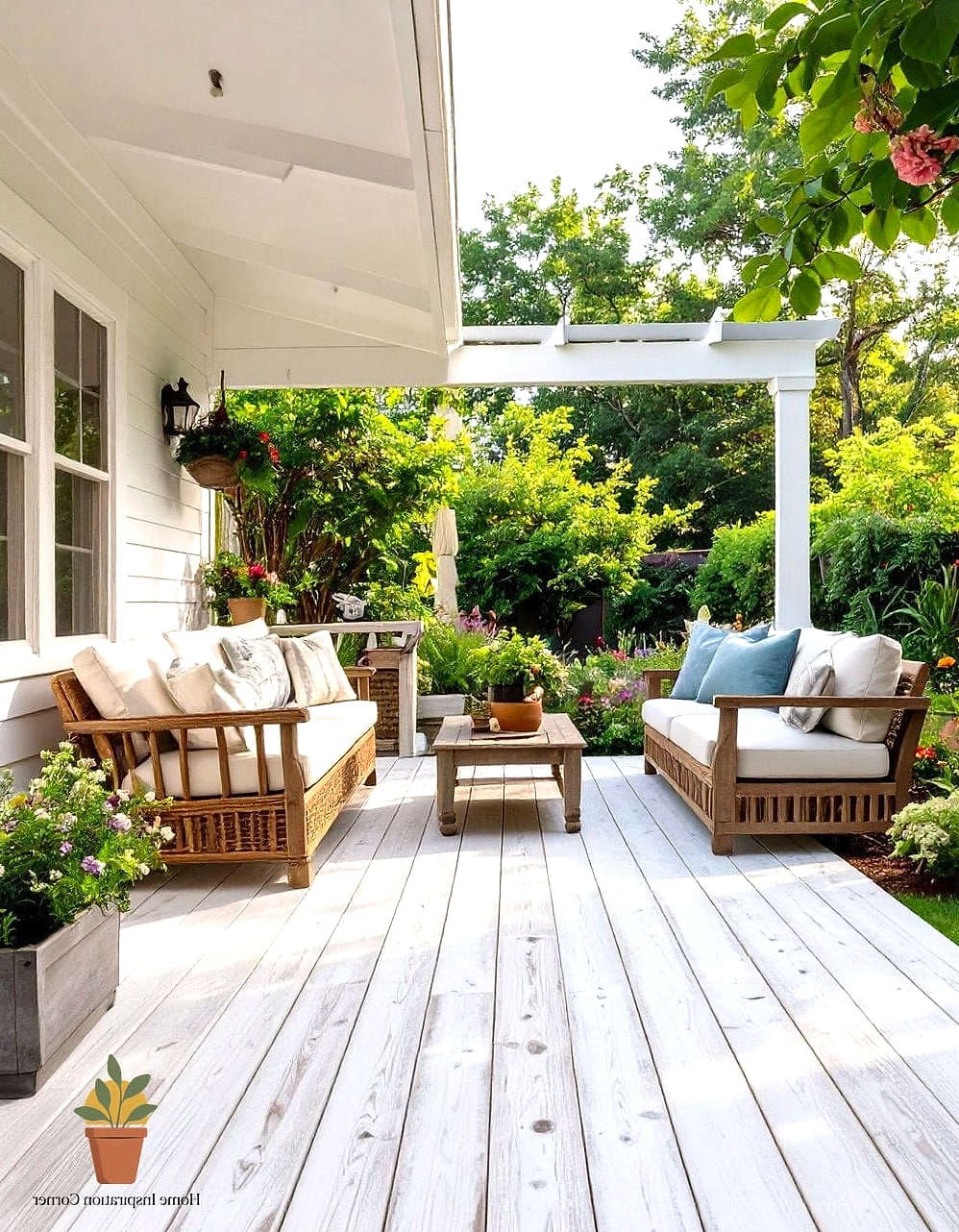
Whitewashing lets the wood grain peek through a light, translucent white finish rather than fully covering it like solid paint. This look is popular for coastal and farmhouse-style homes alike. It requires a bit more maintenance than a solid stain, but the soft, airy result is worth it for a lot of homeowners.
Custom Color Matched to Your Home
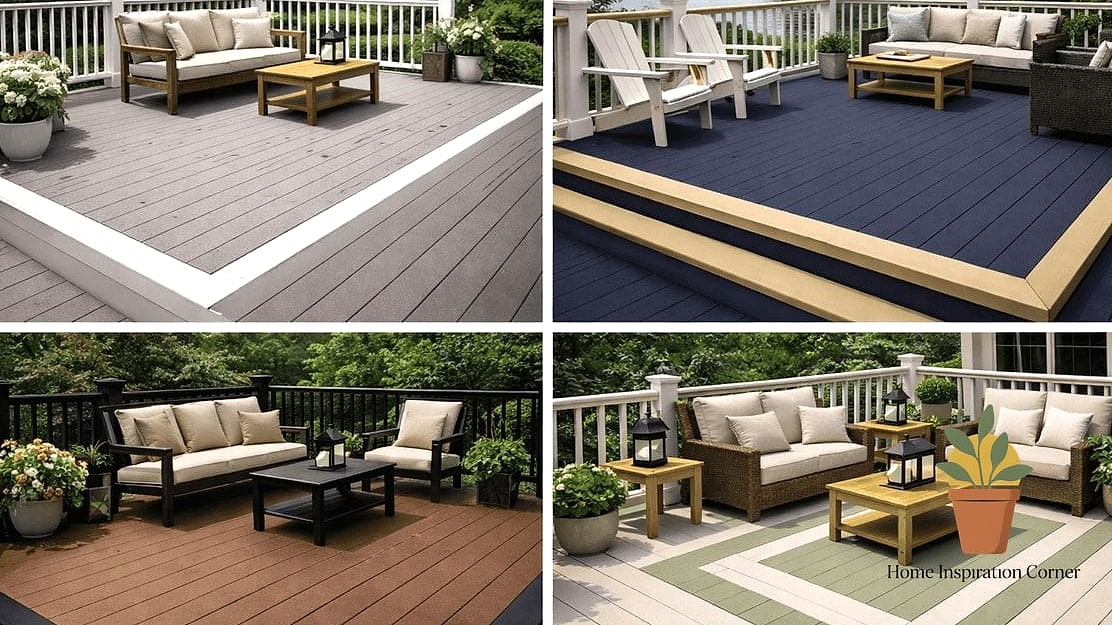
Sometimes the best deck color isn’t a trend at all, it’s whatever shade pulls directly from your home’s siding, shutters, or brick. Paint stores can custom match almost any color you bring in. This approach guarantees your deck feels like an extension of your house rather than a separate project, and it’s a great option if you’re not sure which trend actually fits your space.
Picking a deck color really comes down to how you use the space, how much sun it gets, and what feels right with your home’s exterior. There’s no single right answer here, just a lot of good options depending on your style. Whichever direction you go, a fresh coat of stain or paint is one of the most affordable ways to make your whole backyard feel new again.