
9 Swimming Pool Tiles Ideas That Work in Any Size Home
- Glass Mosaic Tile for That Shimmering Water Effect
- Classic Blue Ceramic Tile Along the Waterline
- Natural Stone Tile for an Organic, Spa-Like Feel
- Small-Format Penny Round Tile for a Retro Charm
- Large-Format Porcelain for a Sleek, Modern Look
- Herringbone Pattern Tile for Added Visual Interest
- Dark Tile for a Moody, Reflective Pool
- Textured Tile for Safety and Grip on Steps and Ledges
- Mixed Tile Layouts for a Custom, Layered Look
9 Swimming Pool Tiles Ideas That Work in Any Size Home
Picking pool tile feels like a small decision until you’re standing in a showroom staring at fifty shades of blue, wondering why this is so complicated. I get it. The tile you choose sets the tone for your entire backyard, affects how the water looks, and honestly determines how much scrubbing you’ll be doing every summer. Whether you’ve got a sprawling resort-style pool or a small plunge pool tucked into a tight side yard, there’s a tile option here that fits your space and your budget.
Glass Mosaic Tile for That Shimmering Water Effect
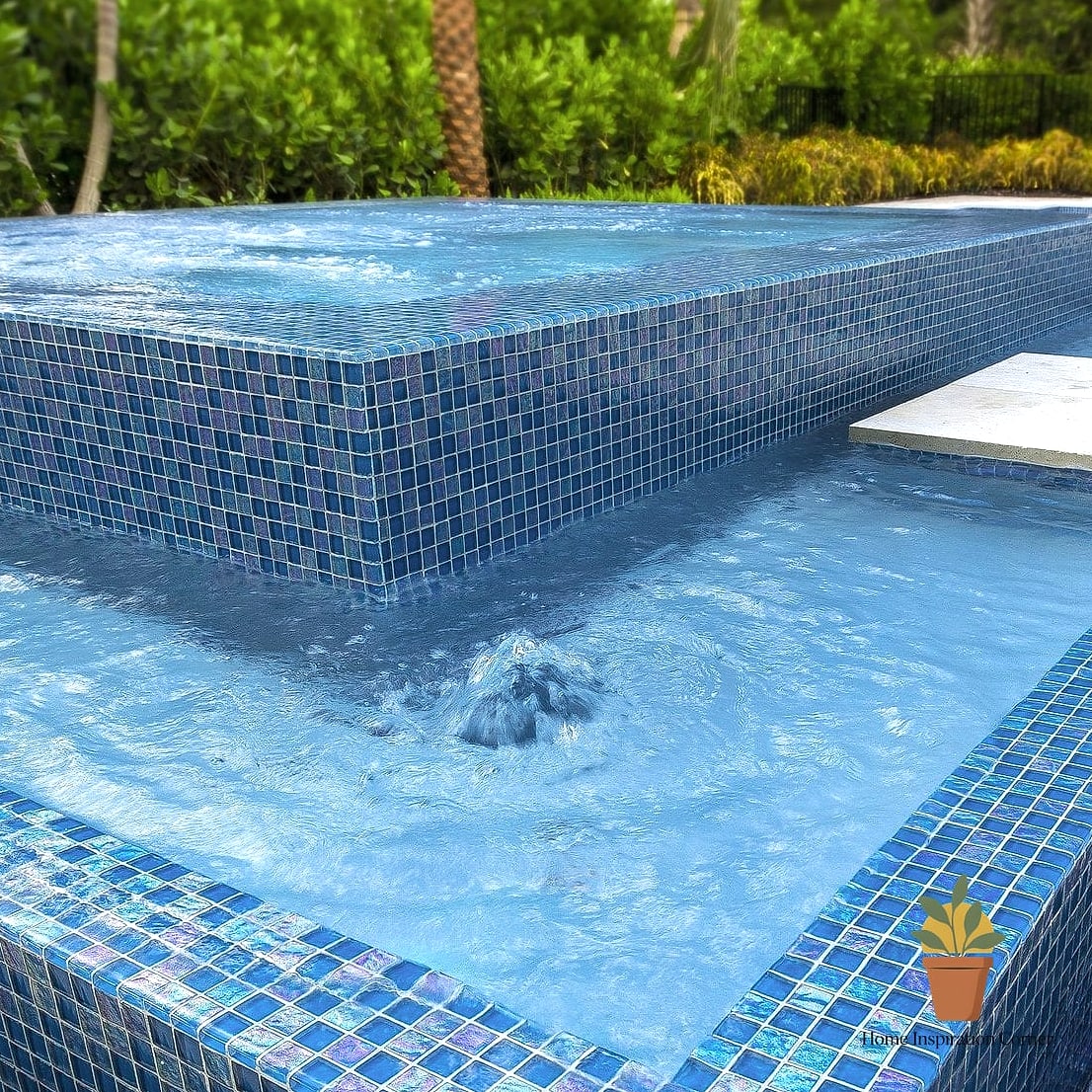
Glass mosaic is the tile everyone points to in magazine photos, and for good reason. It reflects light in a way that ceramic and porcelain just can’t match, giving the water a shimmery, almost jewel-like quality even on overcast days.
This works beautifully in smaller pools where you want the water to feel more dramatic and luxurious than the square footage suggests. It’s also a favorite for spa areas and tanning ledges since the light-catching effect really shows off in shallow water.
Glass mosaic comes in tiny sheets, usually on mesh backing, so installation is more forgiving than you’d think for a DIY-inclined homeowner, though most people still hire a pro for waterline work. Costs run higher than ceramic, but a lot of homeowners treat it as the splurge item and pair it with more budget-friendly tile elsewhere.
Maintenance is pretty easy since glass resists staining and calcium buildup better than porous materials. A soft brush and pool-safe cleaner usually keeps it looking new for years.
Classic Blue Ceramic Tile Along the Waterline
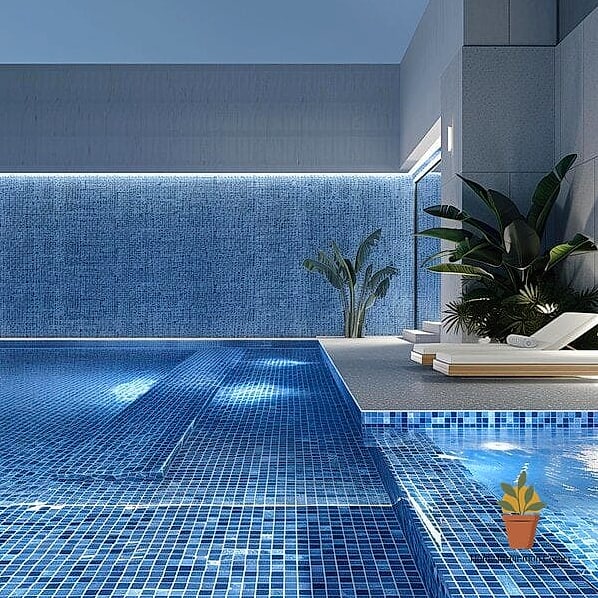
There’s a reason blue waterline tile has been the go-to for decades. It’s affordable, it’s easy to find, and it just works no matter what style your backyard is going for.
This is the tile I recommend most often for people renovating an older pool on a budget. You don’t need to redo the whole pool shell, just the waterline band, and it instantly makes the whole thing look refreshed.
Ceramic holds up fine in most climates, though in areas with hard freezes you’ll want to double check it’s rated for your zone. It’s also one of the more DIY-friendly tile types if you’re comfortable working with thin-set and pool-grade grout.
For a slightly more modern twist, go with a deeper cobalt or teal instead of the classic sky blue. It reads less “builder grade” and more intentional.
Natural Stone Tile for an Organic, Spa-Like Feel
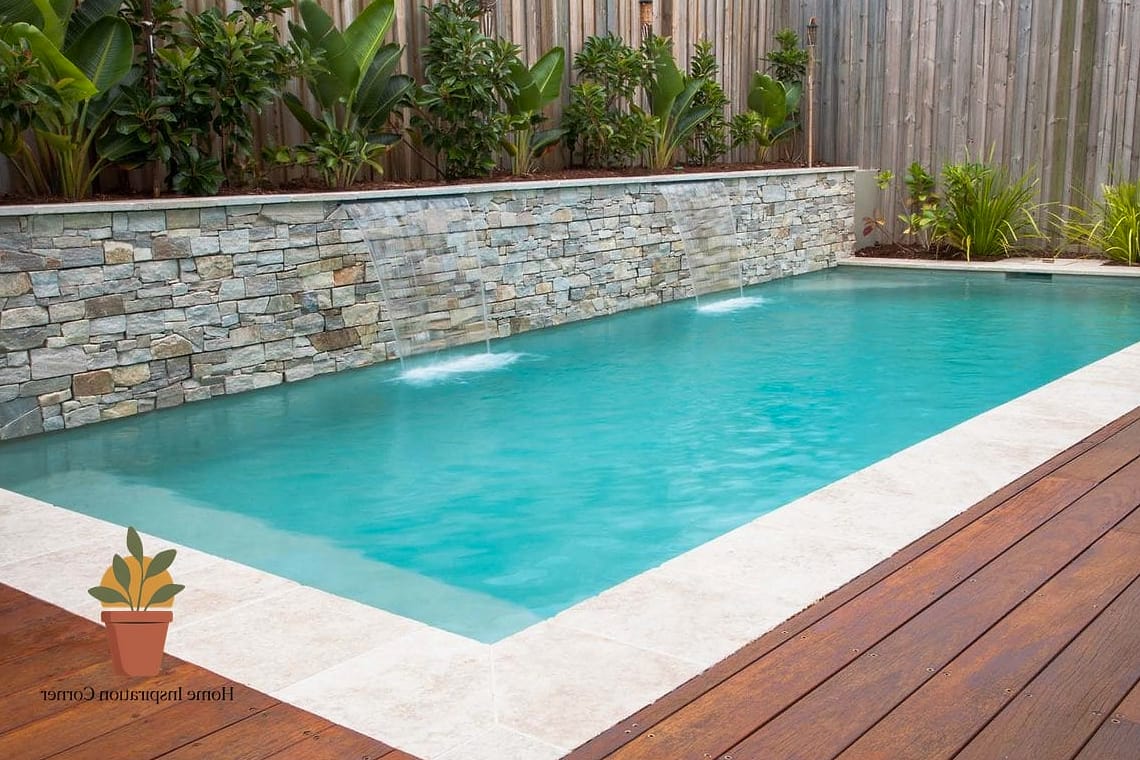
If you’re going for a backyard that feels more like a retreat than a suburban pool, natural stone is worth the investment. Travertine, slate, and limestone all bring texture and warmth that manufactured tile can’t fake.
Stone works especially well around freeform or lagoon-style pools where you’re already leaning into a natural, less geometric look. It also pairs nicely with wood decking and lush greenery if that’s the vibe you’re building.
The tradeoff is maintenance. Natural stone is porous, so it needs sealing and a bit more attention to prevent algae and mineral staining. It’s not a deal breaker, just something to factor into your yearly upkeep routine.
Budget-wise, stone sits on the higher end, but you can keep costs down by using it only on visible ledges or seating areas and pairing it with simpler tile below the waterline.
Small-Format Penny Round Tile for a Retro Charm
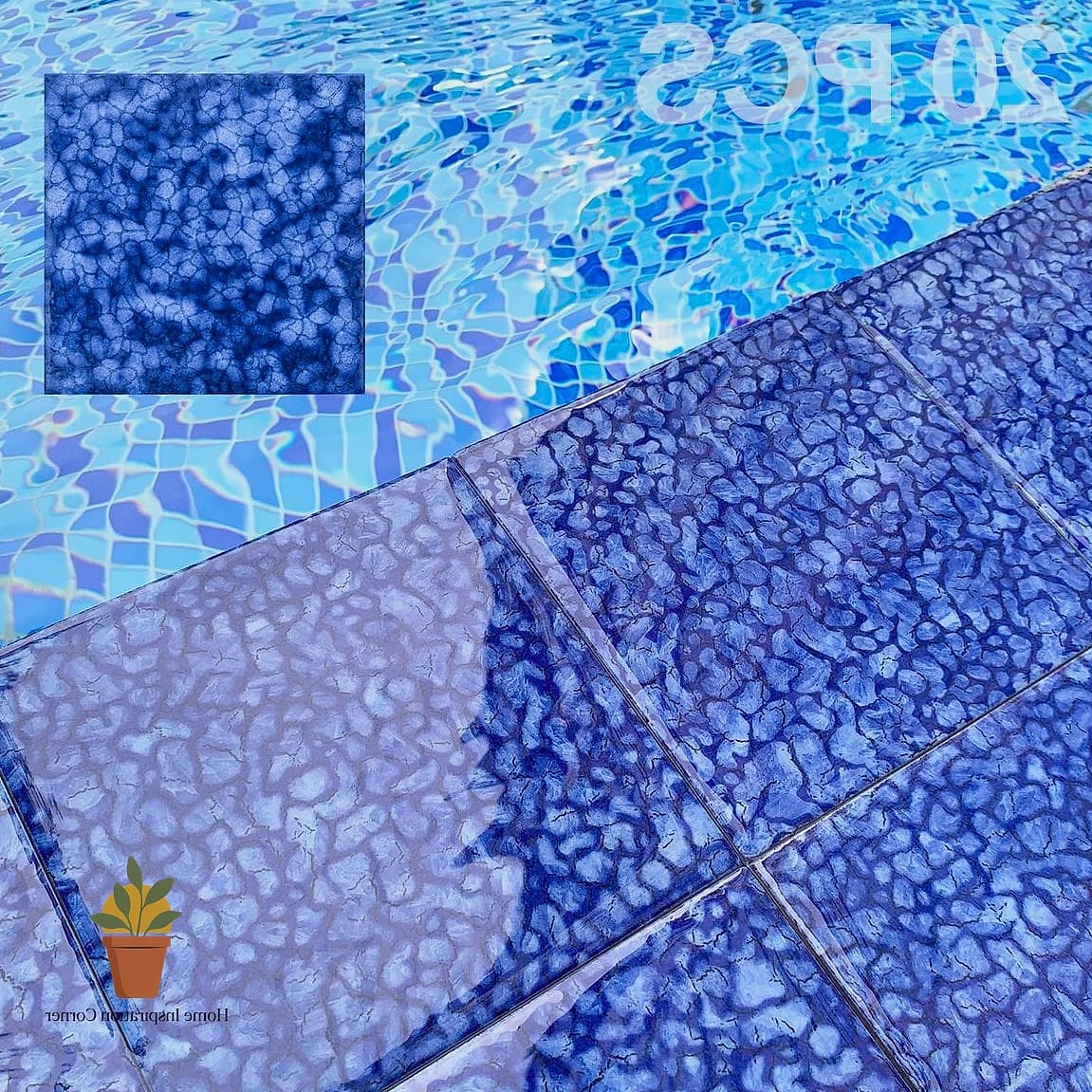
Penny round tile has made a real comeback, and it’s not just a bathroom trend anymore. Those tiny circular tiles bring a playful, almost vintage character to pool spaces, especially when laid in a two-tone pattern.
This is a great choice for smaller pools or plunge pools where a bold pattern won’t feel overwhelming. It also looks fantastic on pool steps, where the small format follows curves and angles way better than large-format tile ever could.
Because the pieces are so small, they come on mesh sheets that make installation more manageable, though grout lines require a bit more cleaning attention over time. If you want the look without the maintenance, some manufacturers now make peel-and-stick pool-safe versions for smaller accent areas, though full submersion applications should still go with a properly installed option.
Large-Format Porcelain for a Sleek, Modern Look
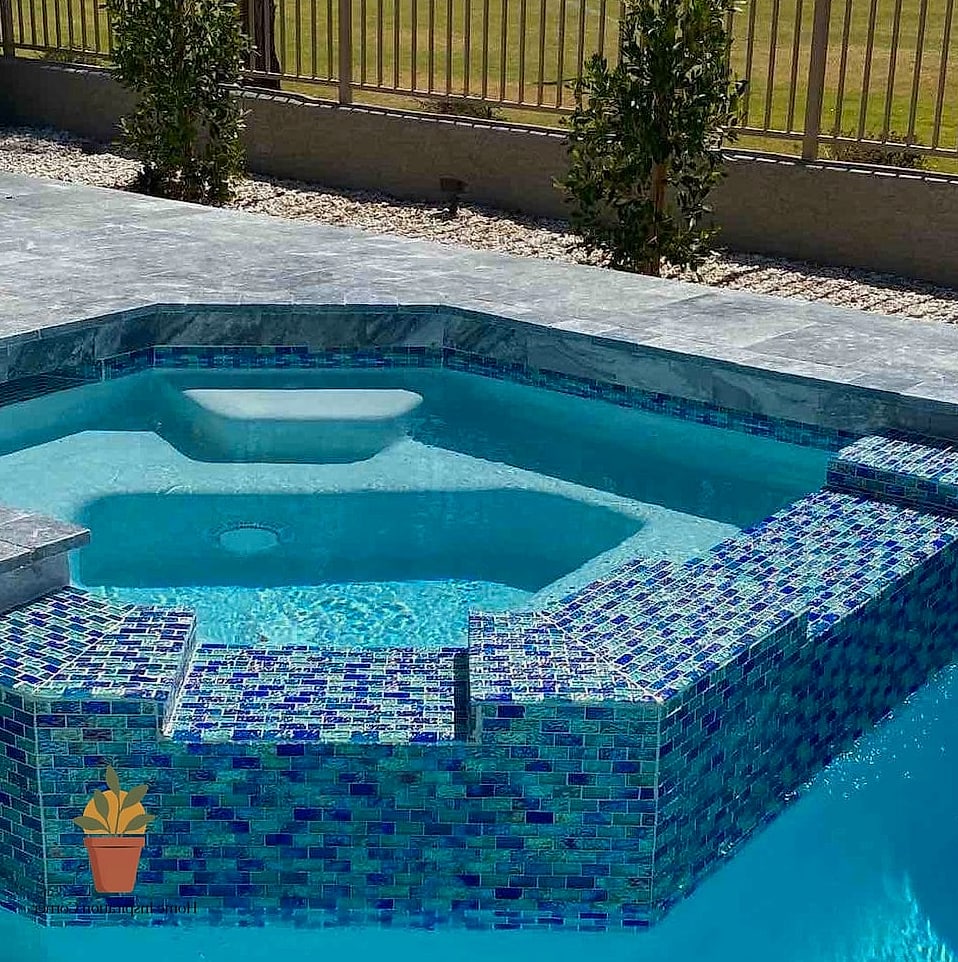
If your style leans modern or minimalist, large-format porcelain tile creates that clean, unbroken surface that makes a pool look almost architectural. Fewer grout lines mean a sleeker appearance and honestly, less scrubbing for you.
This tile shines in geometric pools with straight edges, rectangular shapes, and simple lines. It also works really well on pool decks that flow right into the water’s edge, creating that seamless indoor-outdoor pool feel a lot of homeowners are chasing right now.
Porcelain is durable, resists fading, and handles temperature swings better than a lot of other materials, which makes it a smart pick if you’re in a region with big seasonal shifts. It’s a bit trickier to install because of the size and weight, so this is one project where hiring a professional really pays off.
Herringbone Pattern Tile for Added Visual Interest
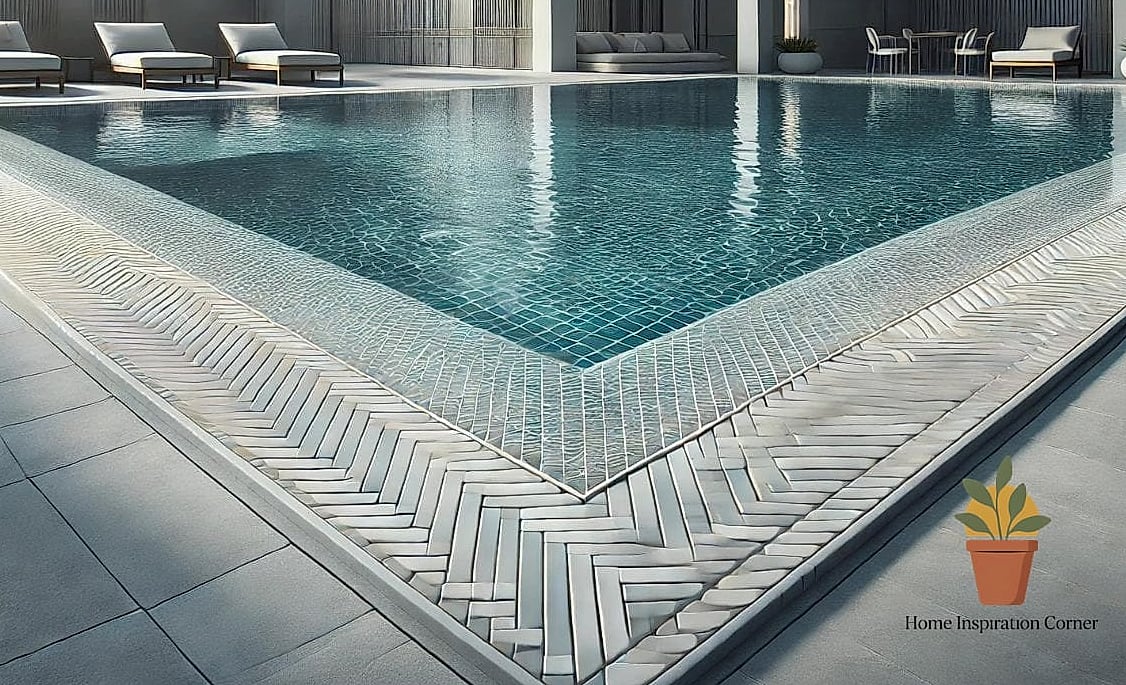
Sometimes it’s not about the tile itself but how you lay it. A herringbone pattern adds movement and texture to a pool that might otherwise feel flat, especially along wide waterlines or decorative borders.
This idea works well in mid-size to larger pools where there’s enough surface area for the pattern to actually read as intentional rather than busy. It’s a nice option if you want something more custom without committing to an unusual tile color.
You can do herringbone in ceramic, porcelain, or even glass, so it’s flexible depending on your budget. Just know that pattern-heavy layouts take more time and precision to install, which usually means a higher labor cost even if the tile itself is affordable.
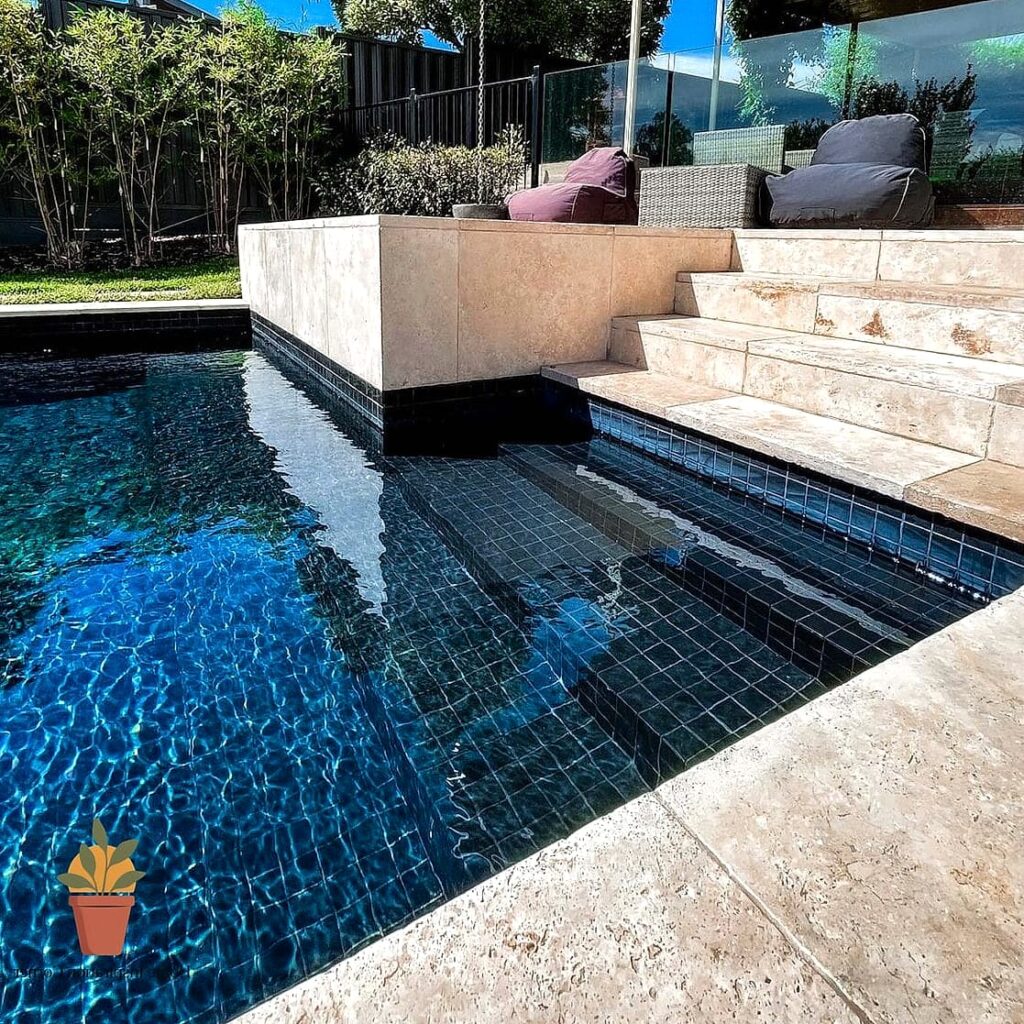
Dark Tile for a Moody, Reflective Pool
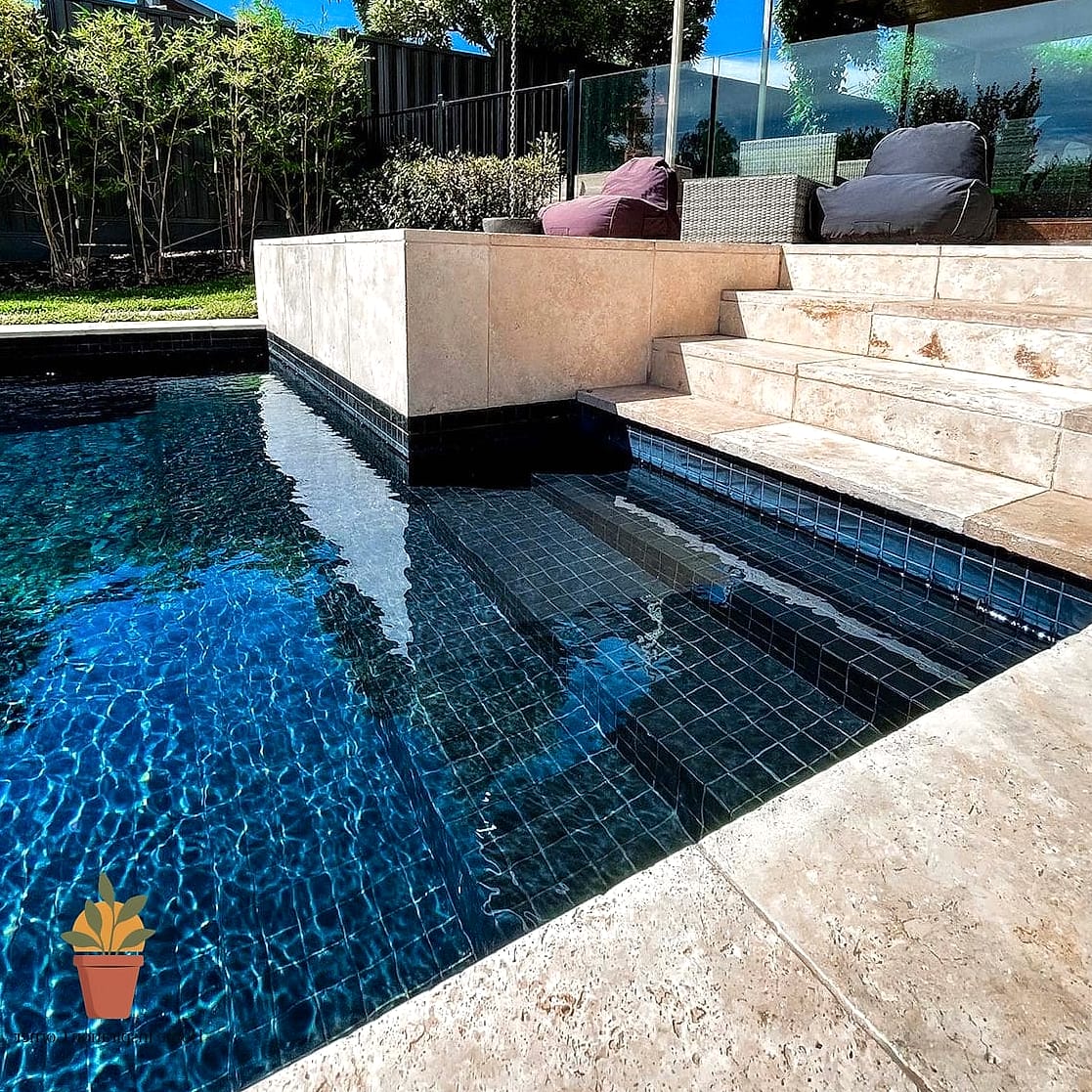
Dark tile, especially in charcoal, black, or deep navy, has become a favorite for homeowners wanting their pool to look more like a still, reflective pond than a typical backyard pool. It’s dramatic in the best way.
This works particularly well in modern or minimalist backyards, and it’s a smart choice if you want the water to visually blend with the surrounding landscaping rather than standing out as a bright turquoise focal point.
One thing worth knowing: dark tile absorbs more heat, which can actually make the water feel warmer in sunny climates. It also tends to show water spots and mineral deposits more visibly than lighter tile, so a regular cleaning routine matters here more than with lighter options.
Pairing dark tile with warm wood decking and brass or matte black fixtures pulls the whole look together nicely.
Textured Tile for Safety and Grip on Steps and Ledges
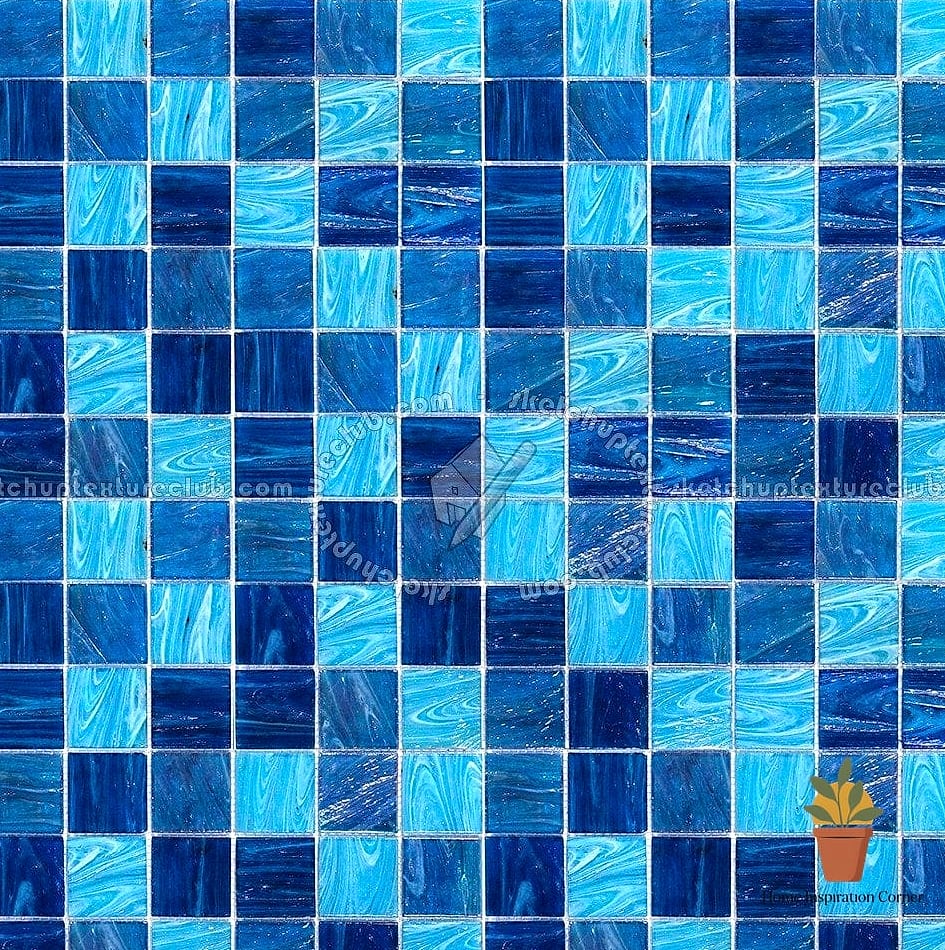
Not every tile decision is about looks. Textured tile matters a lot on pool steps, benches, and shallow areas where wet feet need a little extra grip. It’s one of those practical choices that families with kids or older adults especially appreciate.
This is best used strategically rather than throughout the whole pool. Save the smooth, glossy tile for the main pool body and reserve textured options for high-traffic wet areas where slipping is a real concern.
Textured tile is available in porcelain and stone finishes, so you’re not sacrificing style for safety. It does require a bit more scrubbing since texture can trap grime, but a stiff brush and routine cleaning keeps it in good shape.
Mixed Tile Layouts for a Custom, Layered Look
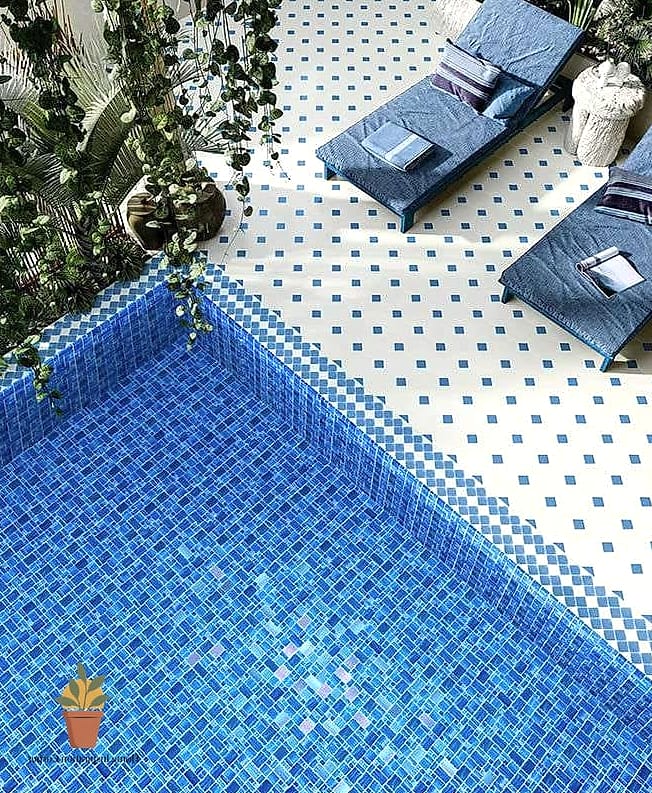
If you can’t commit to just one tile, you don’t have to. Mixing two or three complementary tiles, like a stone ledge, glass waterline accent, and porcelain deck, creates a layered, custom look that feels more designed than anything you’d get from a single material.
This approach works in pools of any size, but it’s especially useful for smaller pools where a single bold statement piece paired with a neutral base keeps things interesting without feeling cluttered. It also gives you flexibility to spend more on a small accent area and save on the larger surfaces.
The key here is sticking to a cohesive color palette so the mix feels intentional instead of accidental. A designer or experienced tile installer can help balance proportions if you’re nervous about pulling it off yourself.
Whichever direction you go, the best pool tile is really the one that matches how you use the space, how much upkeep you’re willing to do, and what makes you excited to walk outside every morning. There’s no wrong answer among these nine options, just different personalities for different backyards.