
11 Penthouse Garden Rooftop Terrace Tips From Top Interior Designers
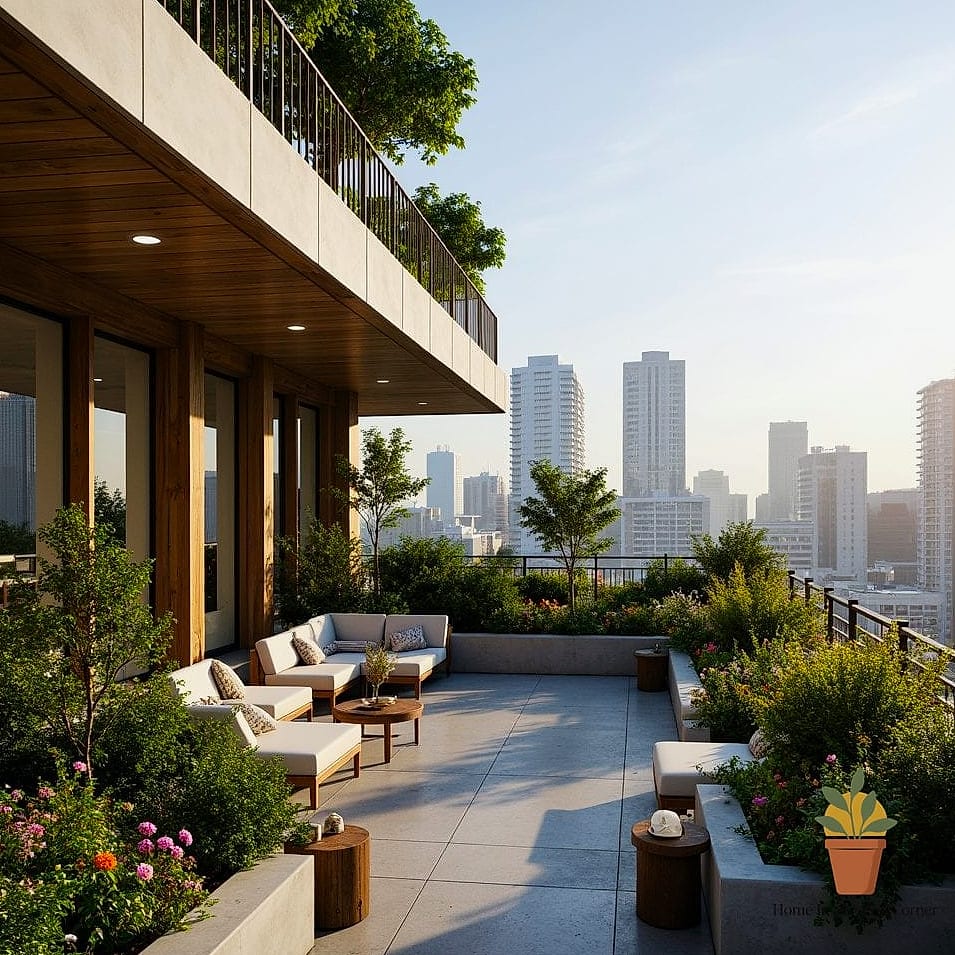
- Anchor the Space With a Defined Layout
- Choose Furniture That Can Handle Weather Without Looking Institutional
- Layer Your Lighting Instead of Relying on One Fixture
- Bring in Greenery That Actually Survives Rooftop Conditions
- Add a Windbreak Before You Add Anything Delicate
- Use a Pergola or Shade Sail to Extend Usable Hours
- Incorporate an Outdoor Kitchen or Bar Cart Depending on Space
- Add Water for Sound and a Sense of Calm
- Pick a Cohesive Color Palette That Complements the Skyline
- Build in Storage So the Space Stays Clutter-Free
- Add Personal Touches So It Doesn’t Feel Like a Hotel Rooftop
11 Penthouse Garden Rooftop Terrace Tips From Top Interior Designers
If you’re lucky enough to have a penthouse rooftop or a garden terrace up top, you already know it’s basically an extra room with the best view in the building. The tricky part is making it feel as intentional and lived-in as the rest of your home instead of an afterthought with a couple of sad lawn chairs. I’ve pulled together advice from designers who work on these spaces regularly, and honestly, a lot of it comes down to small decisions that make a huge difference.
Anchor the Space With a Defined Layout
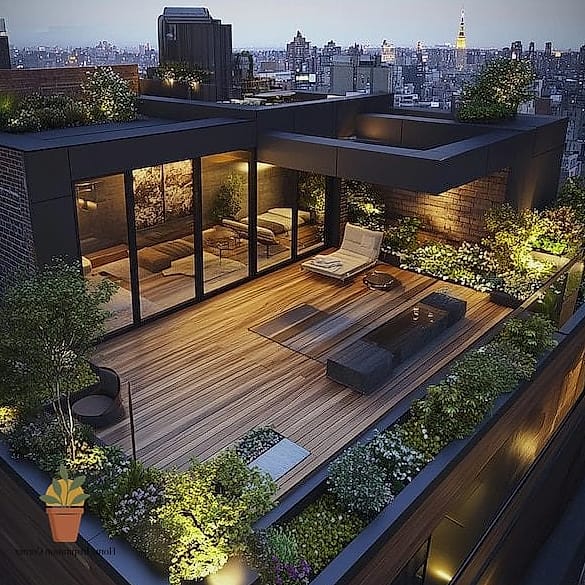
One of the biggest mistakes people make with a rooftop terrace is treating it like one big open area instead of a series of purposeful zones. Designers love breaking these spaces into a dining area, a lounge corner, and maybe a little reading nook if square footage allows.
Outdoor rugs are your best friend here since they visually separate zones without needing walls or planters. A jute or flatweave rug rated for outdoor use holds up well against sun and rain while still feeling soft underfoot. This trick works whether you’ve got 200 square feet or a sprawling penthouse garden the size of a small apartment.
Choose Furniture That Can Handle Weather Without Looking Institutional
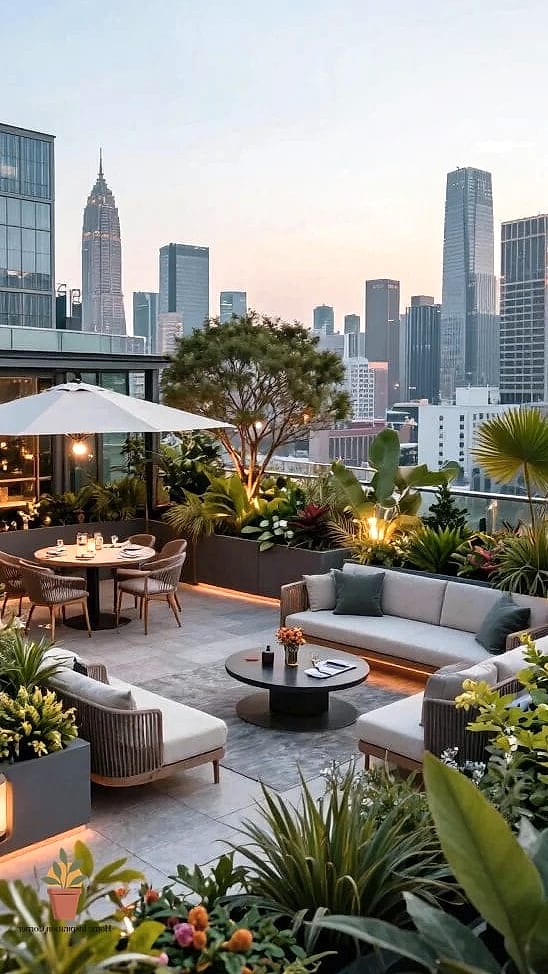
Nobody wants their terrace to look like a hotel pool deck. Teak, powder-coated aluminum, and all-weather wicker are the materials designers reach for again and again because they age gracefully instead of just falling apart.
Cushions matter just as much as the frames. Look for solution-dyed acrylic fabrics like Sunbrella, since they resist fading and mildew way better than standard outdoor fabric. This is one of those upgrades that instantly makes a rooftop feel more custom without requiring a full renovation.
Layer Your Lighting Instead of Relying on One Fixture
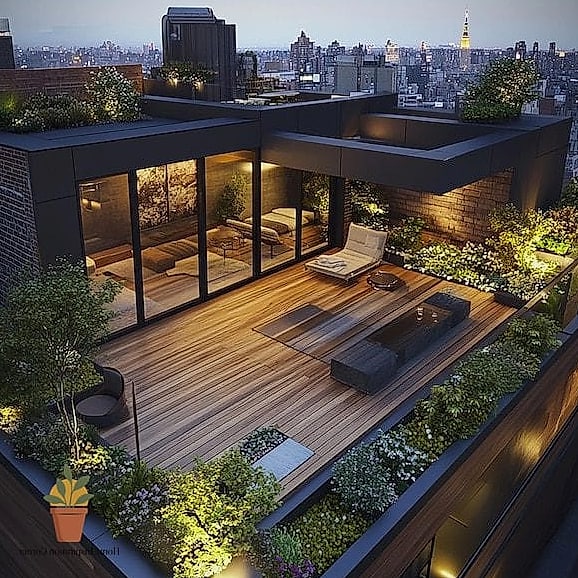
A single string of café lights is fine, but it’s not going to carry an entire evening on its own. Designers typically layer three types of lighting on a terrace: ambient (string lights or lanterns), task (lighting near a grill or dining table), and accent (uplighting on trees or architectural features).
Solar-powered path lights along planters are a renter-friendly and budget-friendly way to add that accent layer without an electrician. If you’re doing a full build-out, low-voltage landscape lighting wired into the terrace gives you way more control over brightness and placement.
Bring in Greenery That Actually Survives Rooftop Conditions
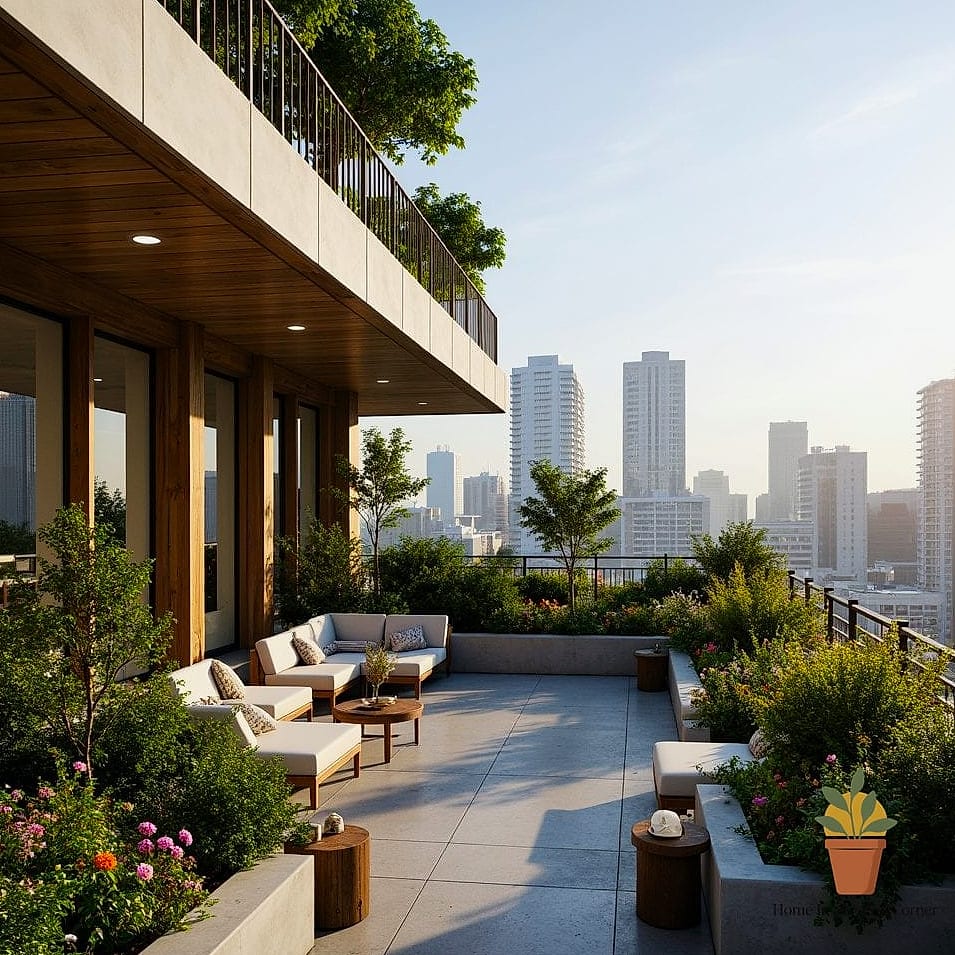
Rooftops get more wind, more direct sun, and more temperature swings than a backyard garden, so not every plant is going to make it up there. Ornamental grasses, boxwood, lavender, and olive trees in large containers tend to be the go-to choices because they’re tough and still look polished.
Raised planter boxes with good drainage are worth the investment since standing water is a real problem on rooftops. If you want an instant privacy screen, a row of tall grasses or bamboo in planters does double duty as greenery and a windbreak.
Add a Windbreak Before You Add Anything Delicate
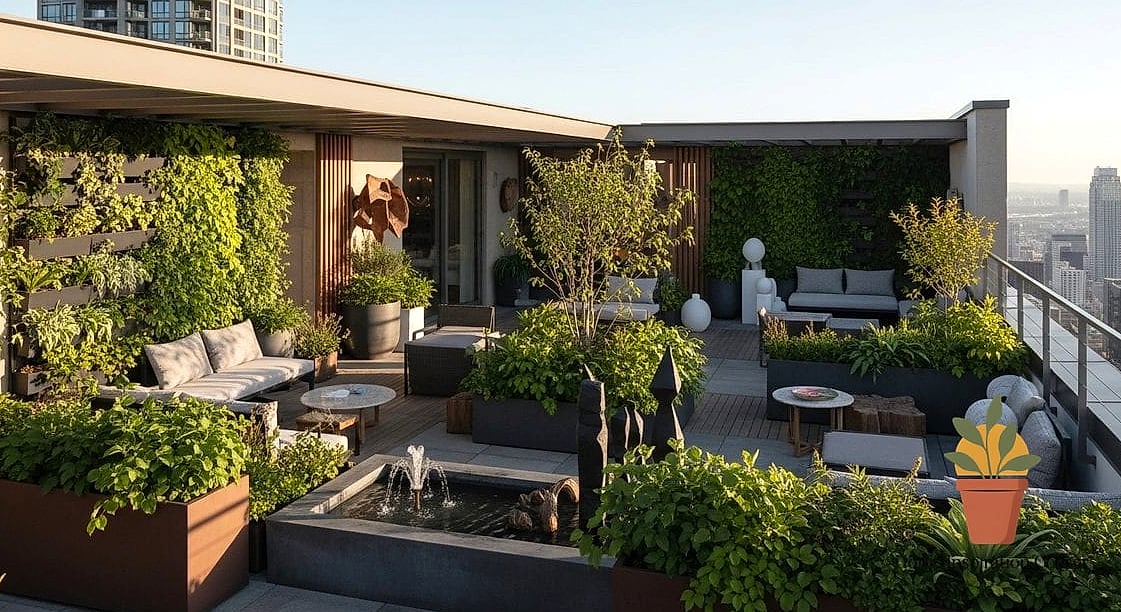
This one gets overlooked constantly. Rooftops are exposed, and wind can shred umbrellas, topple planters, and make sitting outside genuinely unpleasant. Designers usually recommend solving for wind before picking out furniture or decor.
Glass panels, pergolas with lattice sides, or even dense hedging in planters can cut wind significantly. Once that’s handled, your string lights stay up, your umbrellas stay open, and your outdoor candles actually stay lit.
Use a Pergola or Shade Sail to Extend Usable Hours
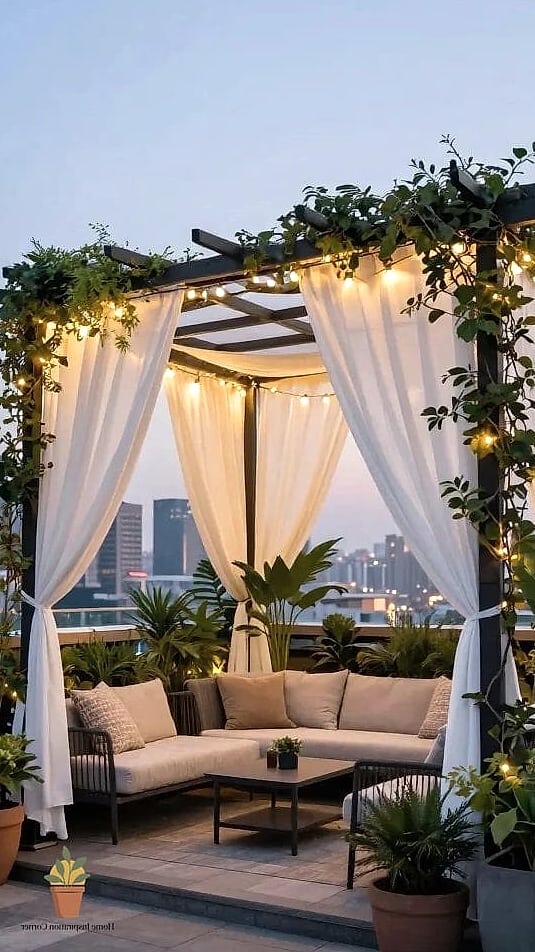
Direct sun on a rooftop is intense, and without shade, you’re only going to use the space in the early morning or evening. A pergola with retractable canvas panels gives you flexibility to open it up on cloudy days and close it during peak sun.
Shade sails are a more budget-friendly option and still look modern and architectural when installed at slightly different angles. Either way, this addition makes your penthouse terrace usable for way more hours in the day, which honestly makes the whole investment feel worth it.
Incorporate an Outdoor Kitchen or Bar Cart Depending on Space
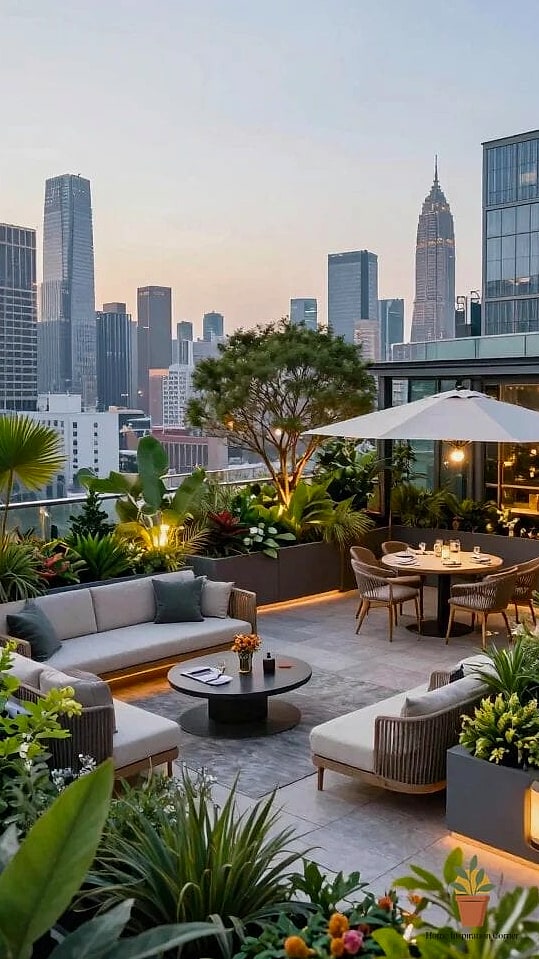
Not every terrace has room for a full outdoor kitchen, and that’s okay. Designers scale this idea based on square footage: a built-in grill station with counter space for bigger terraces, or a simple bar cart with a small fridge for tighter layouts.
Stainless steel and weatherproof cabinetry hold up best if you’re going the built-in route. For smaller setups, a teak bar cart on wheels gives you flexibility to rearrange the space depending on the season or the occasion.
Add Water for Sound and a Sense of Calm
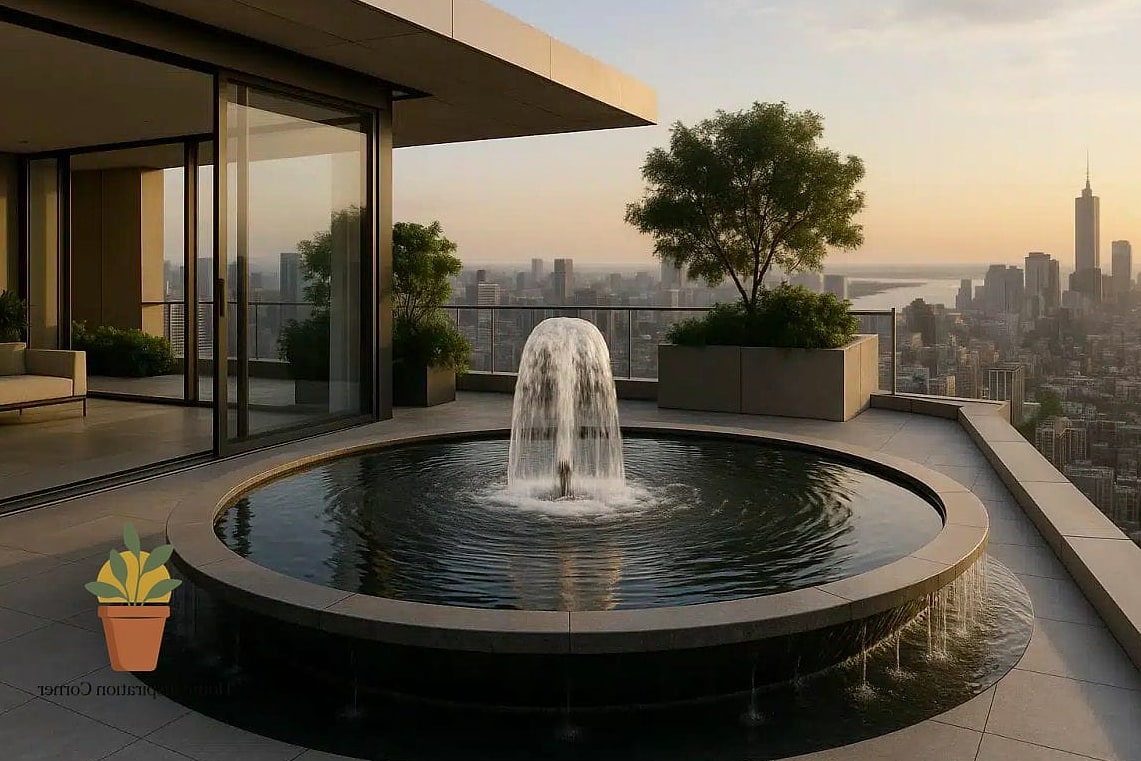
A small water feature changes the whole mood of a rooftop terrace. It masks city noise, adds movement, and honestly just feels a little luxurious without requiring a massive footprint.
A tabletop fountain works in tighter spaces, while a built-in reflecting pool or a wall-mounted water feature suits larger penthouse gardens. Maintenance is minimal if you choose a recirculating pump system, though you’ll want to clean it out seasonally to prevent algae buildup.
Pick a Cohesive Color Palette That Complements the Skyline
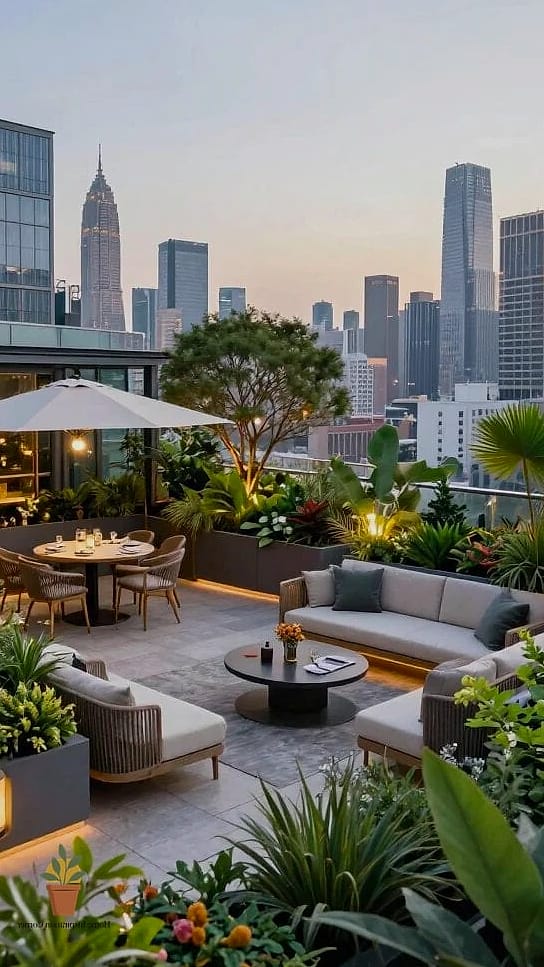
It’s easy to go overboard with color on a terrace, but designers tend to stick to a neutral base with one or two accent colors that tie back to the interior of the home. Warm neutrals, sandy tones, and deep greens tend to look sophisticated against a city skyline instead of competing with it.
Save bold colors for smaller accents like throw pillows or planters rather than large furniture pieces. This keeps the space feeling curated and lets the view actually be the star of the show.
Build in Storage So the Space Stays Clutter-Free
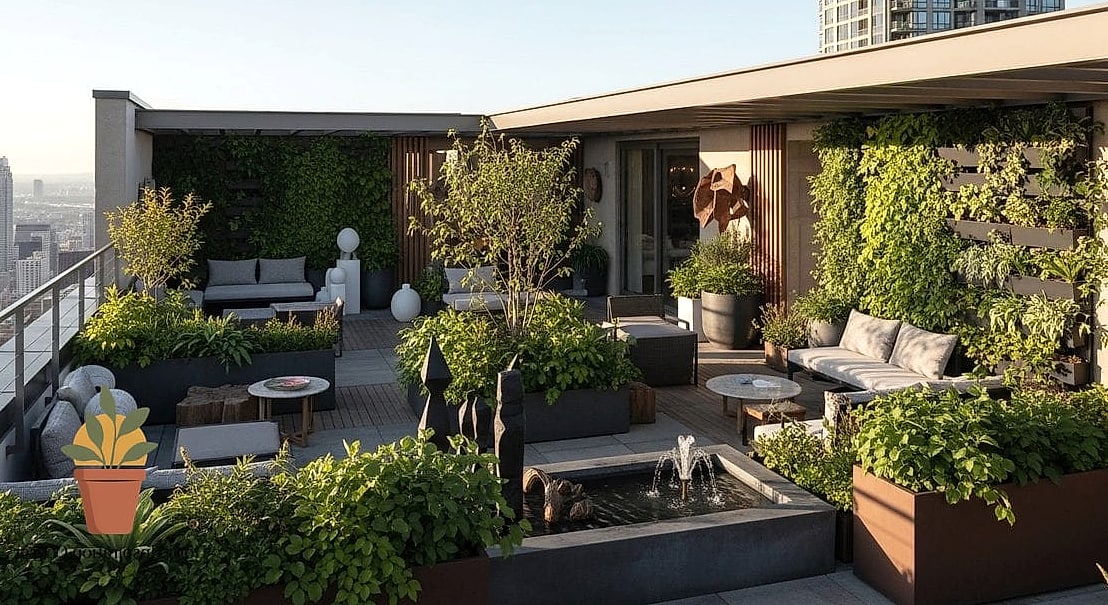
Cushions, string light extension cords, gardening tools, and grill accessories all need somewhere to live, and nobody wants that stuff visible on a terrace this nice. A weatherproof storage bench doubles as extra seating and hides everything from cushions to citronella candles.
Built-in storage under bench seating or inside planter walls is a great option if you’re doing new construction or a full renovation. For rented penthouses, freestanding deck boxes in a matching material to your furniture keep things tidy without any permanent changes.
Add Personal Touches So It Doesn’t Feel Like a Hotel Rooftop
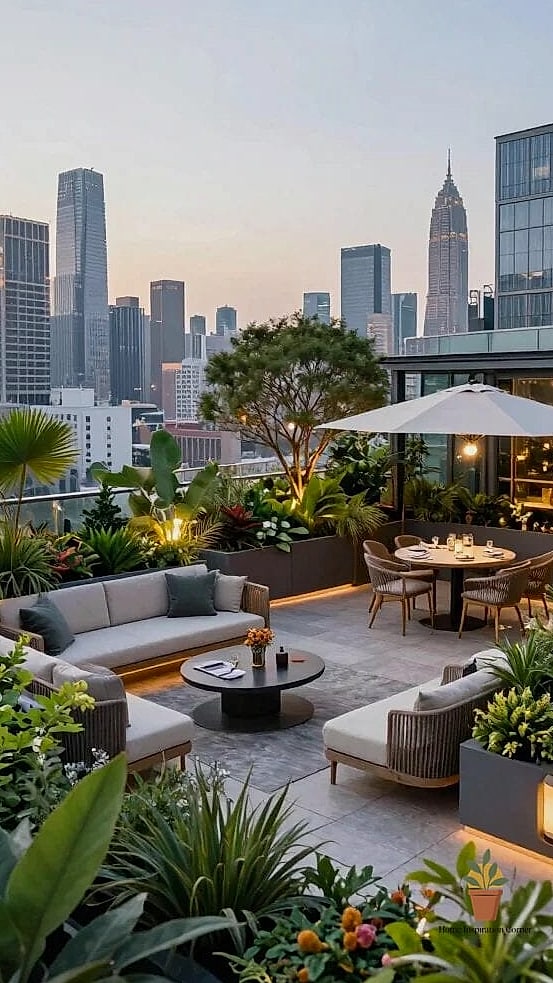
The last tip designers mention almost every time is to make sure the space actually reflects the people living there. That might mean a collection of ceramic planters you picked up while traveling, an outdoor rug in a pattern you genuinely love, or a small herb garden by the kitchen entrance.
Seasonal decor swaps, like switching out pillow covers or adding string lights around the holidays, keep the terrace feeling current throughout the year. These small, personal details are usually what separates a beautifully designed rooftop from one that just looks like a showroom.
Putting together a rooftop terrace that checks every box on this list doesn’t happen overnight, and that’s completely normal. Start with the bones, like layout, wind protection, and shade, then layer in furniture, greenery, and personal touches as your budget allows. Whether you’re working with a cozy corner terrace or a full penthouse garden, these tips from top interior designers give you a solid framework for building a space you’ll actually want to spend time in.