
15 Patio Deck Designs Ideas That Are Both Stylish and Practical
- Multi-Level Deck with Distinct Zones
- Covered Pergola Patio
- Sunken Patio Lounge
- Wraparound Wood Deck
- Small Balcony Patio Makeover
- Modern Concrete Patio with Fire Feature
- Composite Deck in Neutral Tones
- Rooftop Deck with City Views
- Tropical Oasis Patio
- Minimalist Japandi-Inspired Deck
- Deck with Built-In Bench Seating
- Patio with Outdoor Kitchen
- Boho Patio with Layered Textiles
- Deck with Retractable Awning
- Coastal-Inspired Patio Retreat
15 Patio Deck Designs Ideas That Are Both Stylish and Practical
Your patio or deck is basically an extra room, except it comes with better lighting and no ceiling to paint. Still, so many outdoor spaces end up feeling like an afterthought instead of a spot you actually want to spend time in. The good news is that a few smart design choices can turn a bare slab of concrete or a tired wood deck into somewhere you actually look forward to hanging out. Below are 15 patio deck designs ideas that are both stylish and practical, whether you’re working with a tiny apartment balcony or a sprawling backyard.
Multi-Level Deck with Distinct Zones
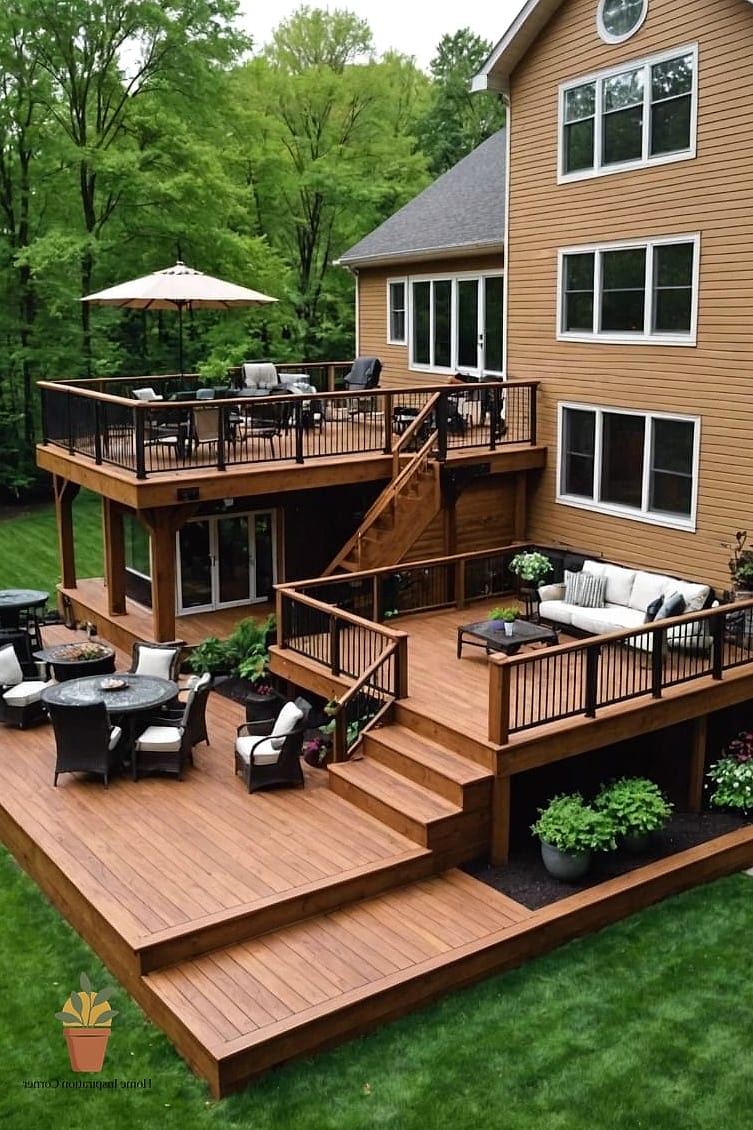
Splitting a deck into different levels instantly makes it feel more intentional. One tier can hold the dining table, another a lounge area, and a smaller platform can be reserved for a fire pit or hot tub. This works especially well on sloped yards where a single flat deck isn’t really an option anyway. Wood or composite decking both work here, though composite holds up better if you’re not into yearly staining. The height changes also help define spaces without needing walls or furniture to do all the work.
Covered Pergola Patio
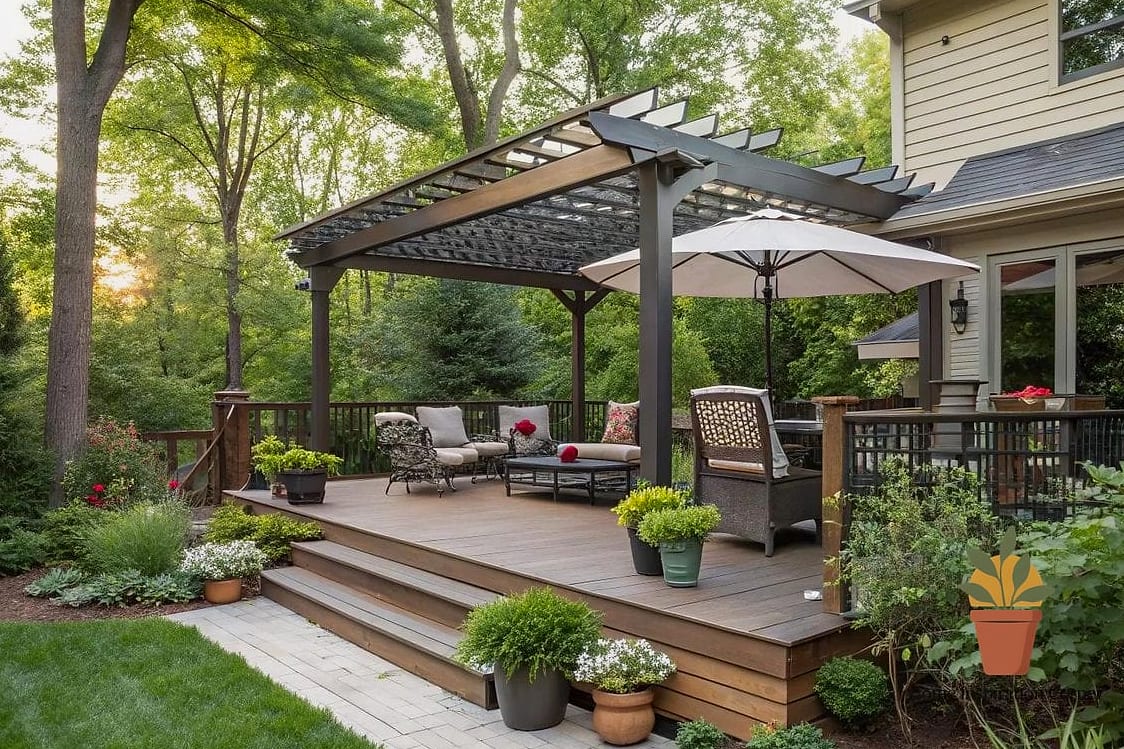
A pergola gives you that sweet spot between fully open and fully enclosed. String lights, hanging plants, or a retractable canopy can all be added depending on how much shade or privacy you want. Cedar and redwood are popular for their natural resistance to rot, though a powder-coated aluminum pergola is a solid low-maintenance alternative. This setup works great over a dining area since it keeps direct sun off your food without blocking the breeze.
Sunken Patio Lounge
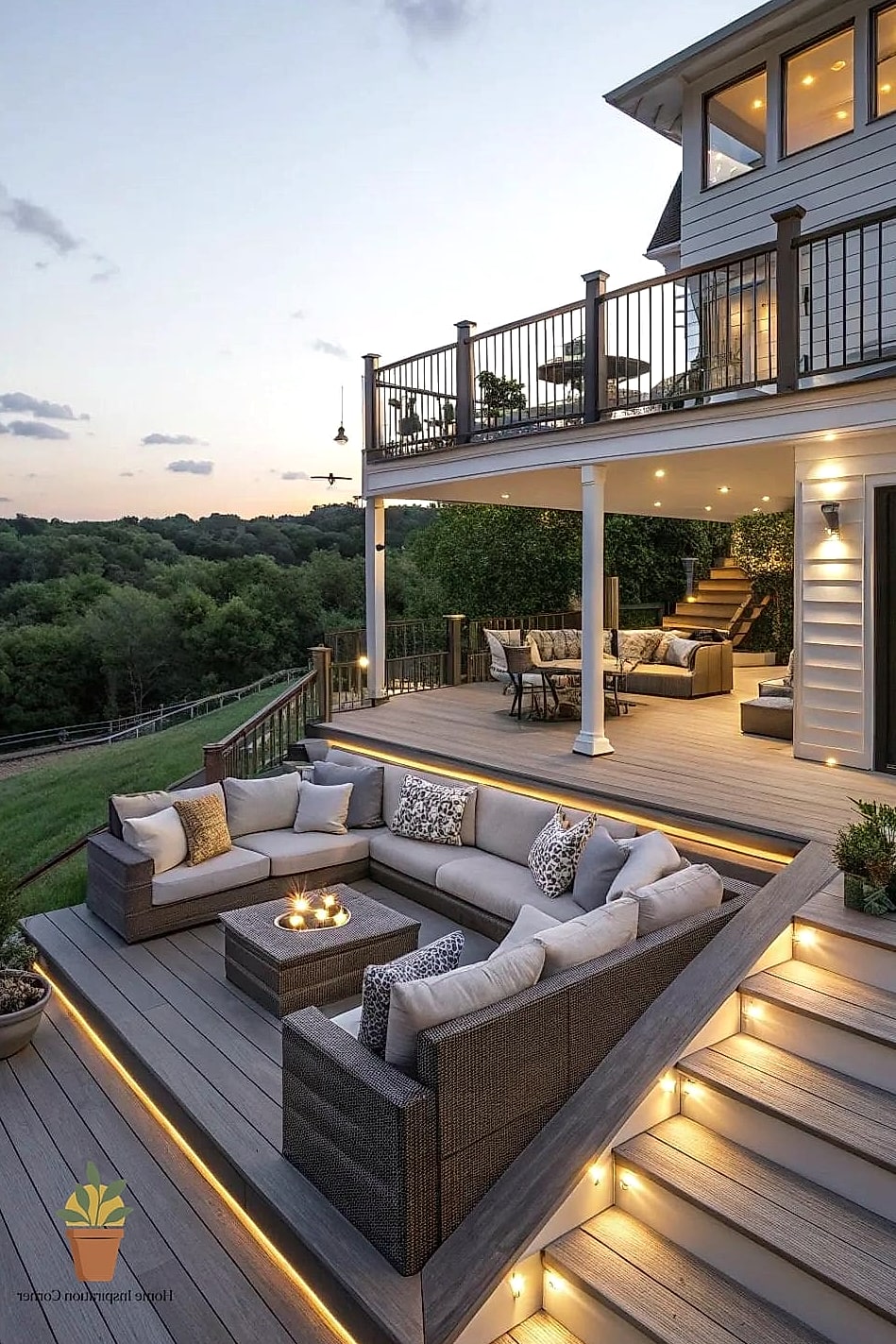
There’s something about a slightly sunken seating area that makes a patio feel more like an outdoor living room. Built-in bench seating with weatherproof cushions wraps the space, and a fire pit or low table sits in the center. It’s a favorite for anyone who wants conversation-friendly seating without dragging furniture around. Just keep drainage in mind during the design phase, since sunken areas can collect water if they’re not graded properly.
Wraparound Wood Deck
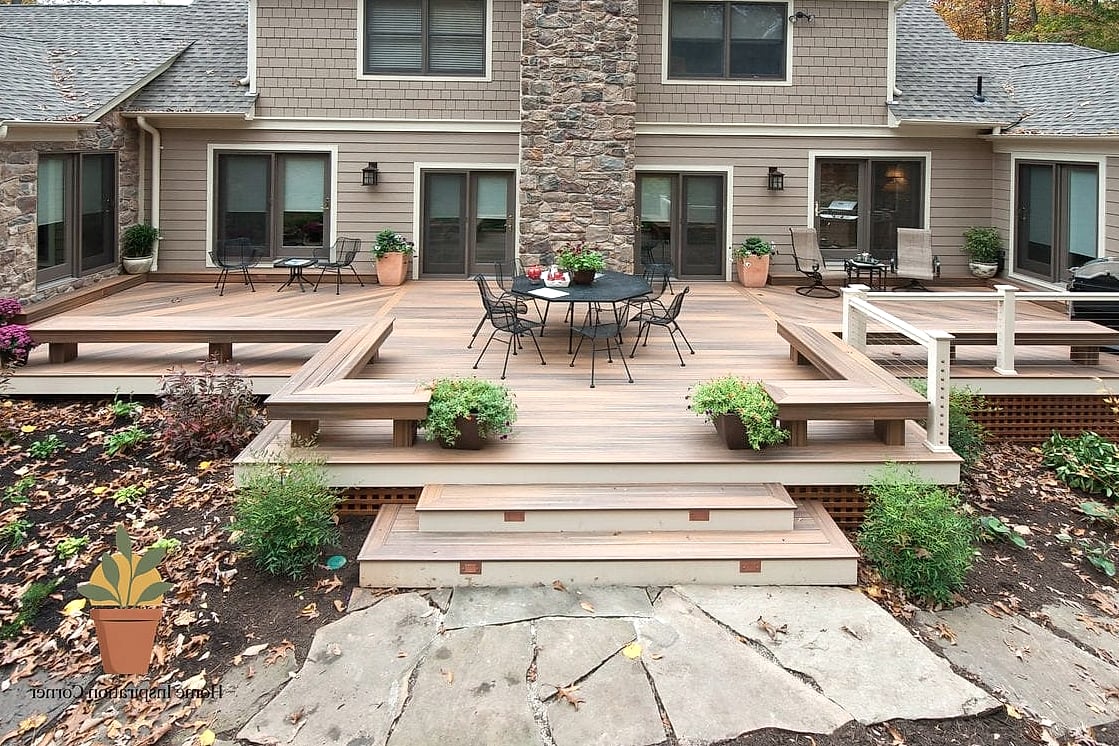
If your home has the footprint for it, a wraparound deck adds serious curb appeal and gives you multiple entry points from inside the house. Pressure-treated pine keeps costs down, while ipe or tigerwood brings a richer look if the budget allows. This style works particularly well on farmhouse and craftsman homes. Just be ready for a bit more upkeep since more square footage means more sealing and staining down the line.
Small Balcony Patio Makeover
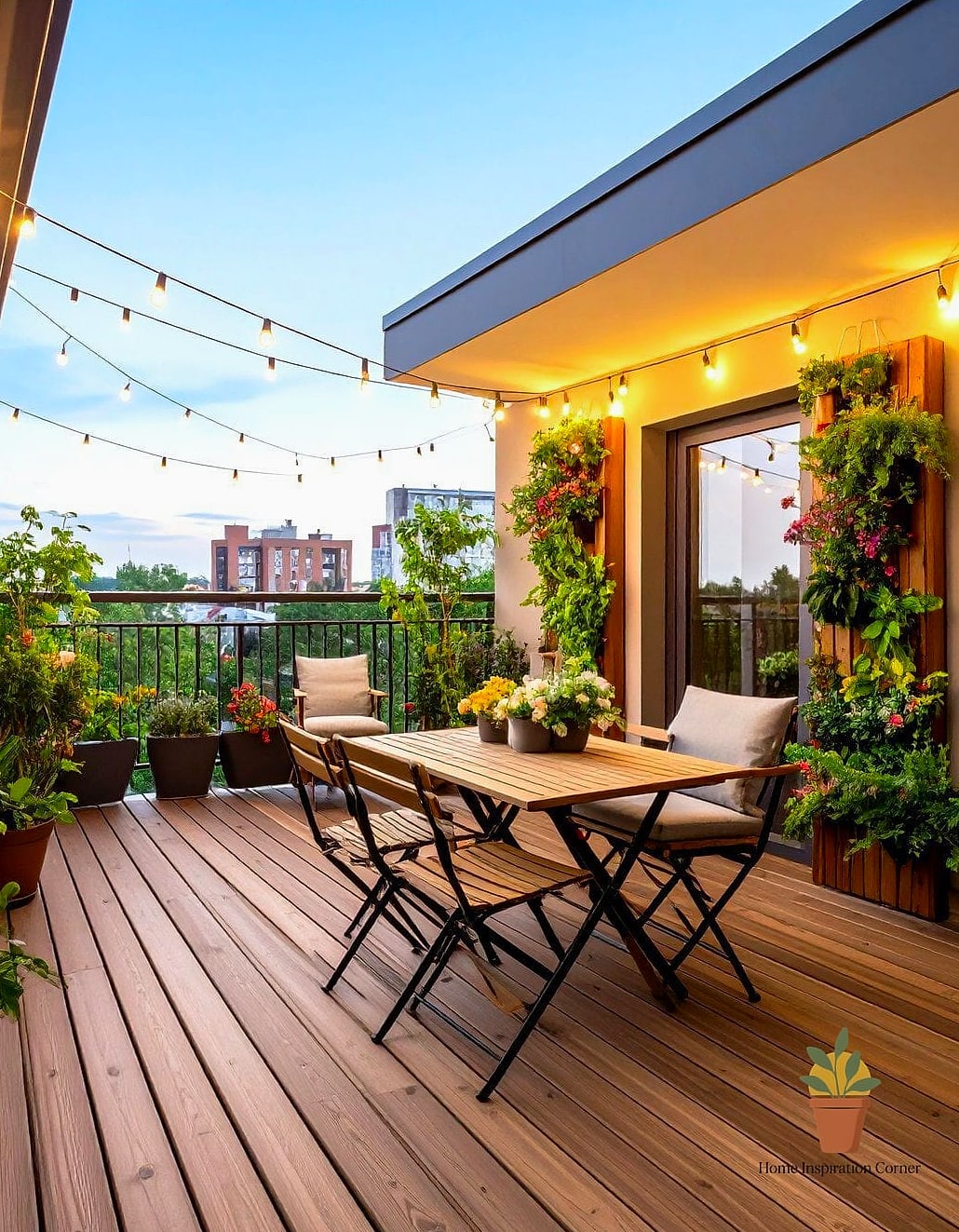
Not everyone has a backyard, and that’s fine because even a narrow balcony can feel like a real outdoor spot. Foldable bistro sets, vertical planters, and a small outdoor rug go a long way here. Interlocking deck tiles are a renter-friendly option since they snap into place over existing concrete without any permanent changes. String lights or a small solar lantern add ambiance without needing an outlet.
Modern Concrete Patio with Fire Feature
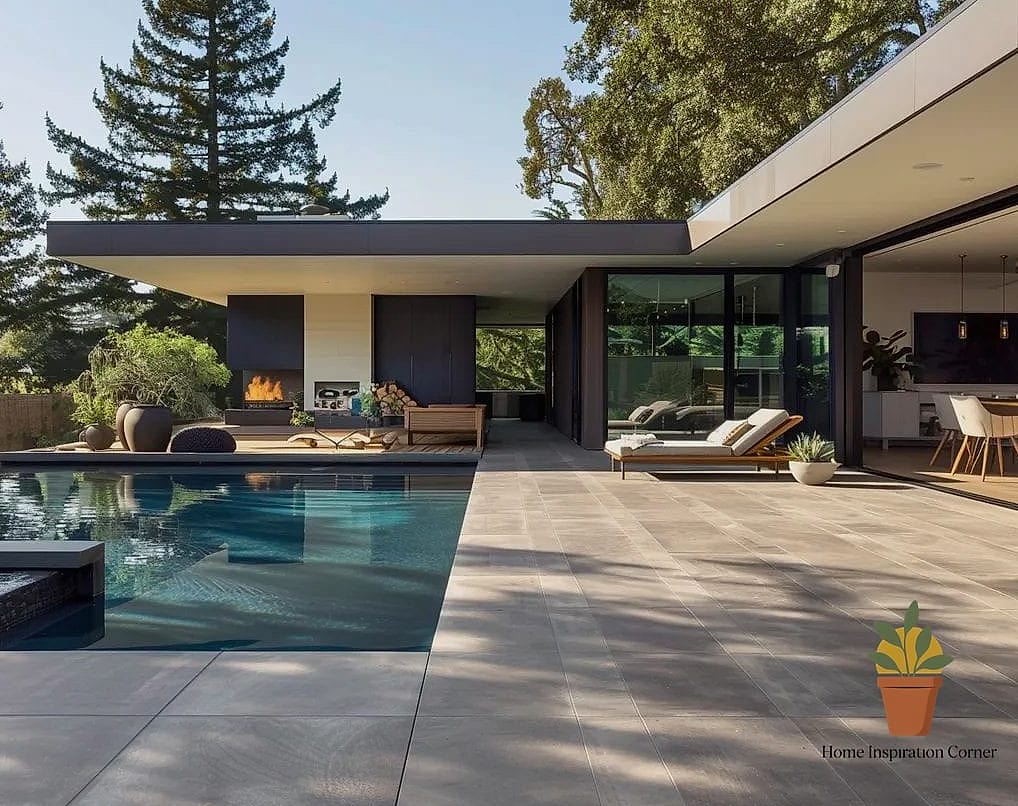
Polished or stamped concrete gives a clean, modern base that pairs beautifully with a built-in fire feature. Linear gas fire pits are popular right now because they read as sleek rather than rustic. Concrete is also one of the easier surfaces to maintain since it just needs an occasional rinse and resealing every few years. Pair it with modular outdoor sofas for a lounge-like feel that still looks put together.
Composite Deck in Neutral Tones
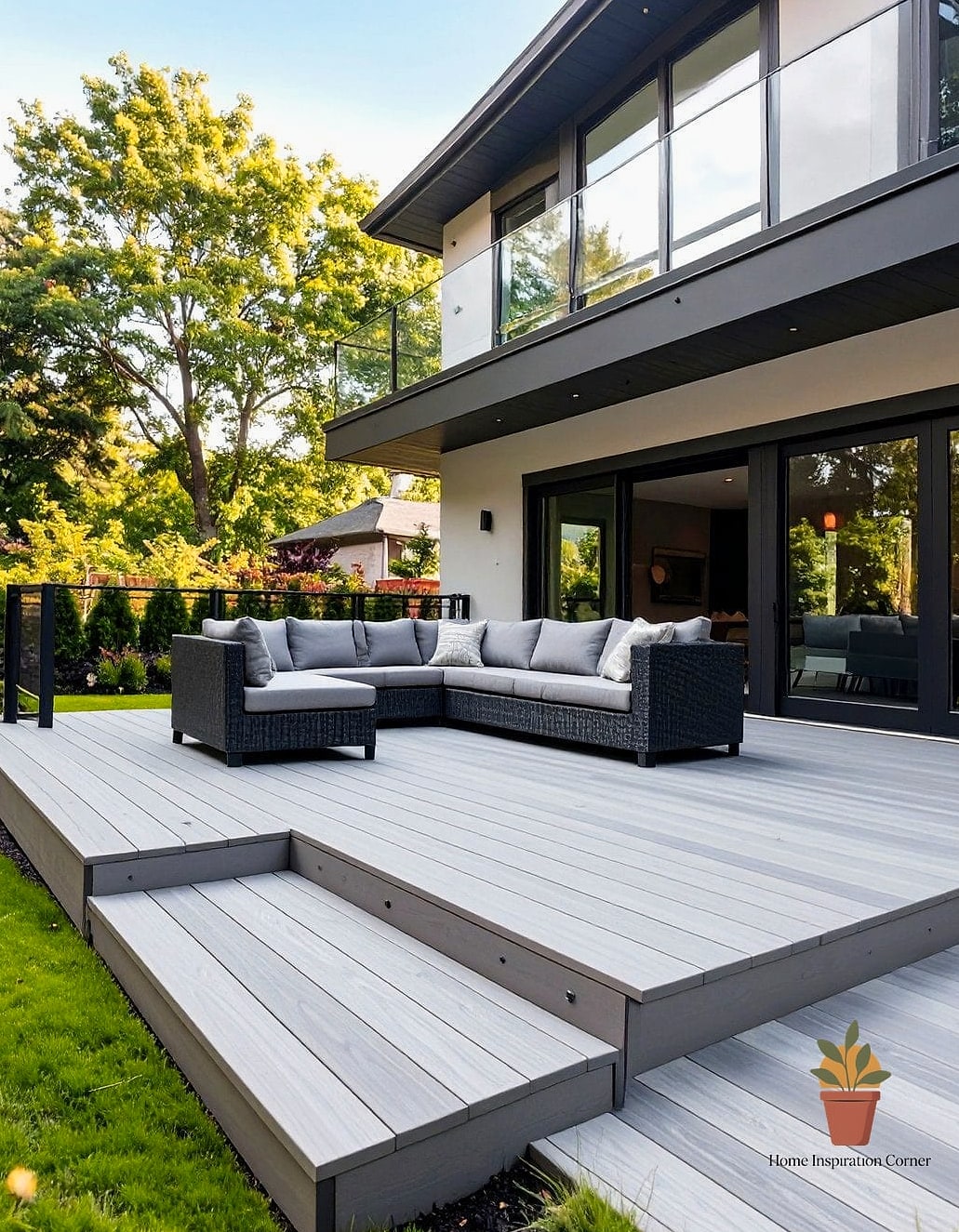
Composite decking has come a long way from the plasticky look it had years ago. Now you can get boards that mimic weathered gray wood or warm walnut tones, and they resist fading, warping, and splintering far better than natural wood. This is a great pick for anyone who wants the look of a wood deck without the annual maintenance routine. It’s also a smart option in humid climates where real wood tends to struggle.
Rooftop Deck with City Views
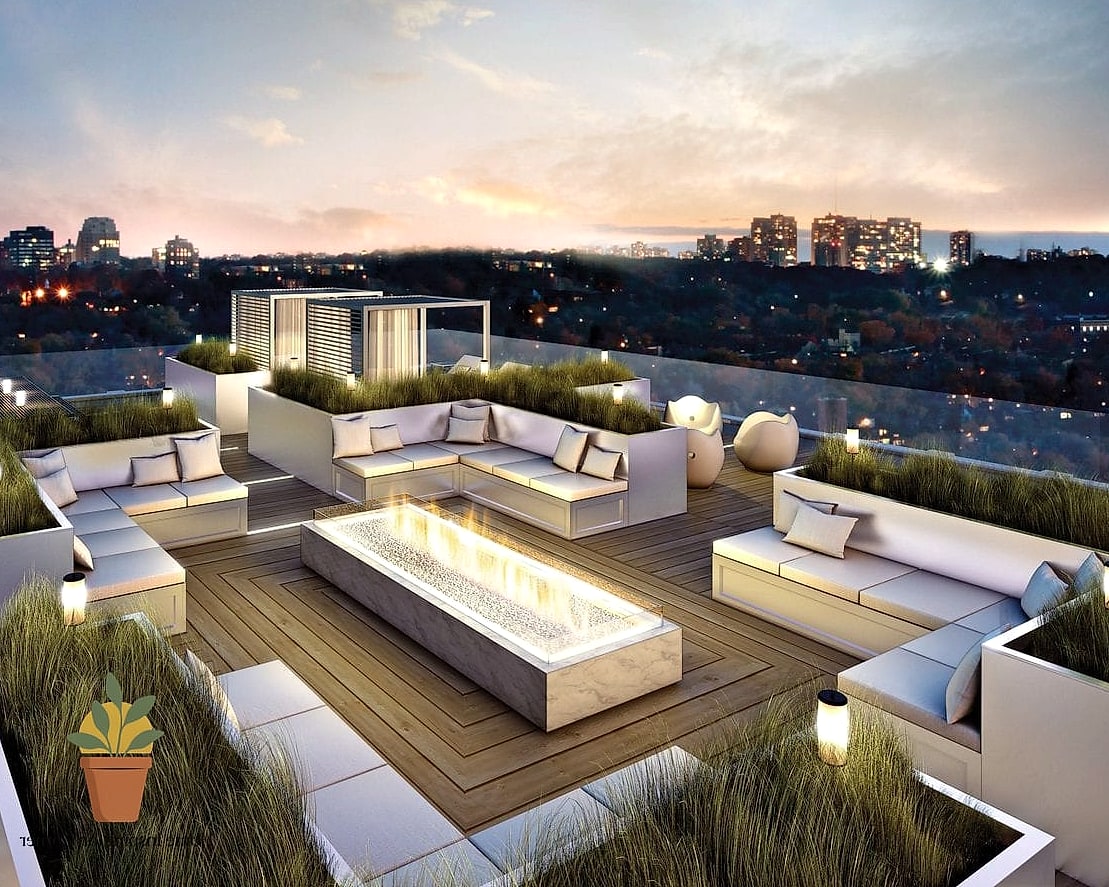
If you’re working with a rooftop, lean into the view instead of fighting it. Glass or cable railings keep sightlines open, while low-profile furniture keeps the space from feeling cluttered. Planters with ornamental grasses or small trees soften the hard edges of a city skyline. Just make sure the structure is rated for the added weight before committing to heavier furniture or planters.
Tropical Oasis Patio
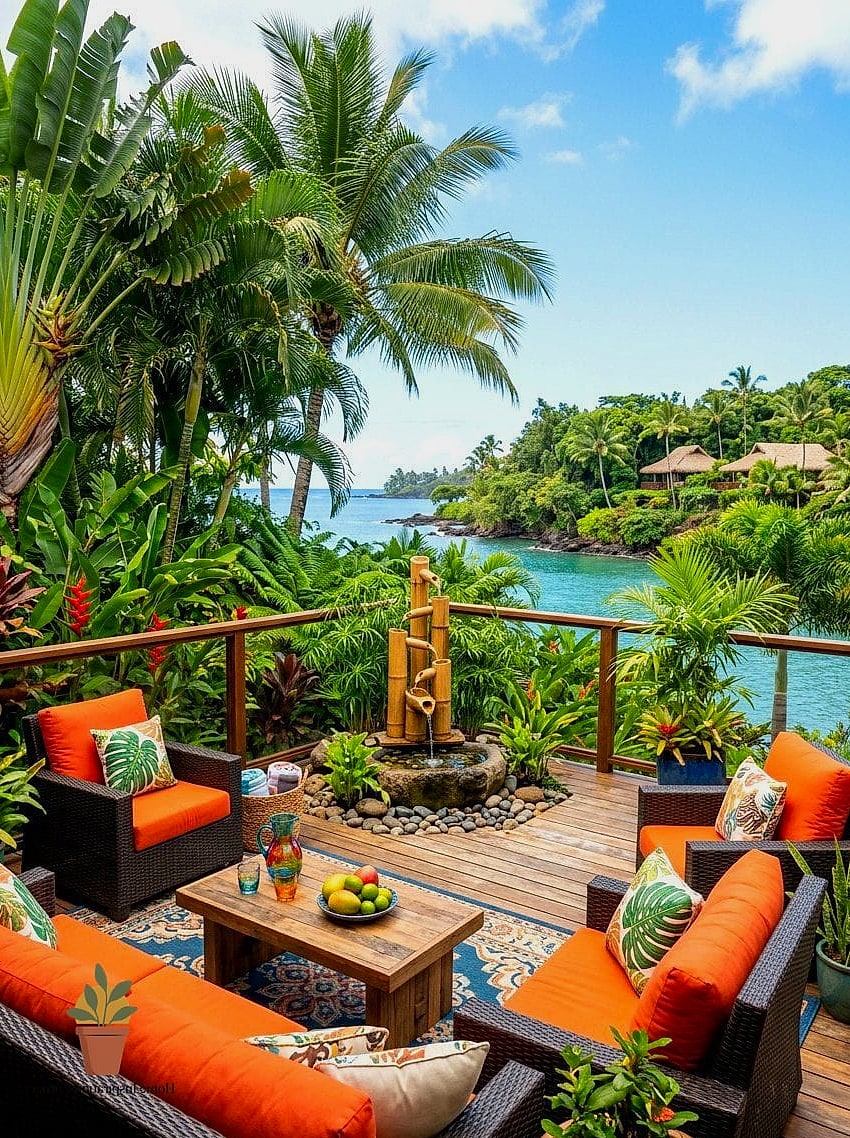
Layering greenery is really what sells this look. Think large potted palms, hanging ferns, and maybe a small water feature tucked into a corner. Teak furniture with woven accents fits the vibe without feeling like a theme park. This style tends to work best in warmer climates, though container gardening lets you fake it even if you’re not in the tropics.
Minimalist Japandi-Inspired Deck
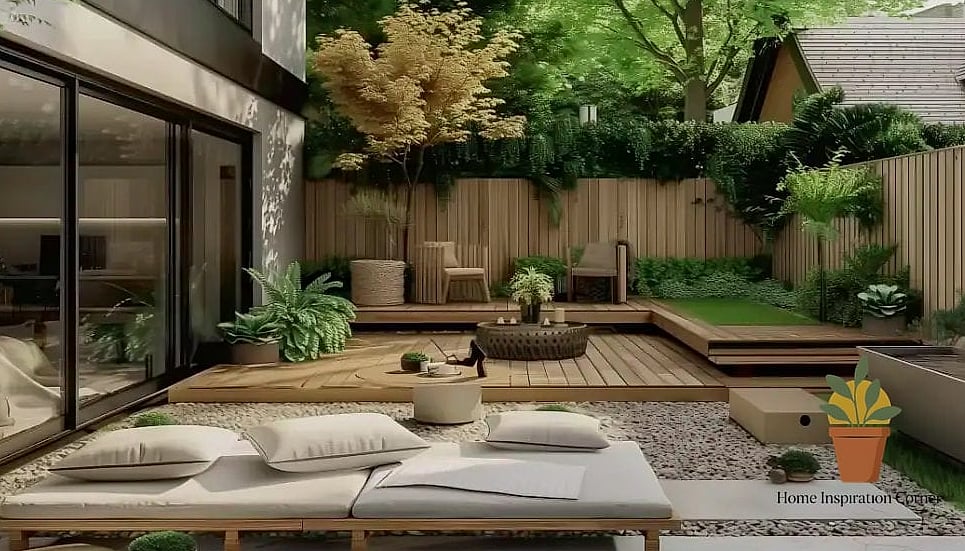
Japandi design has made its way outdoors, and it looks right at home on a patio. Natural wood tones, simple lines, and a neutral color palette keep things calm rather than busy. A low wooden bench, a single sculptural planter, and maybe a small water basin do more visual work than a dozen accessories would. This is a great direction if you want your outdoor space to feel like a breather from the rest of the day.
Deck with Built-In Bench Seating
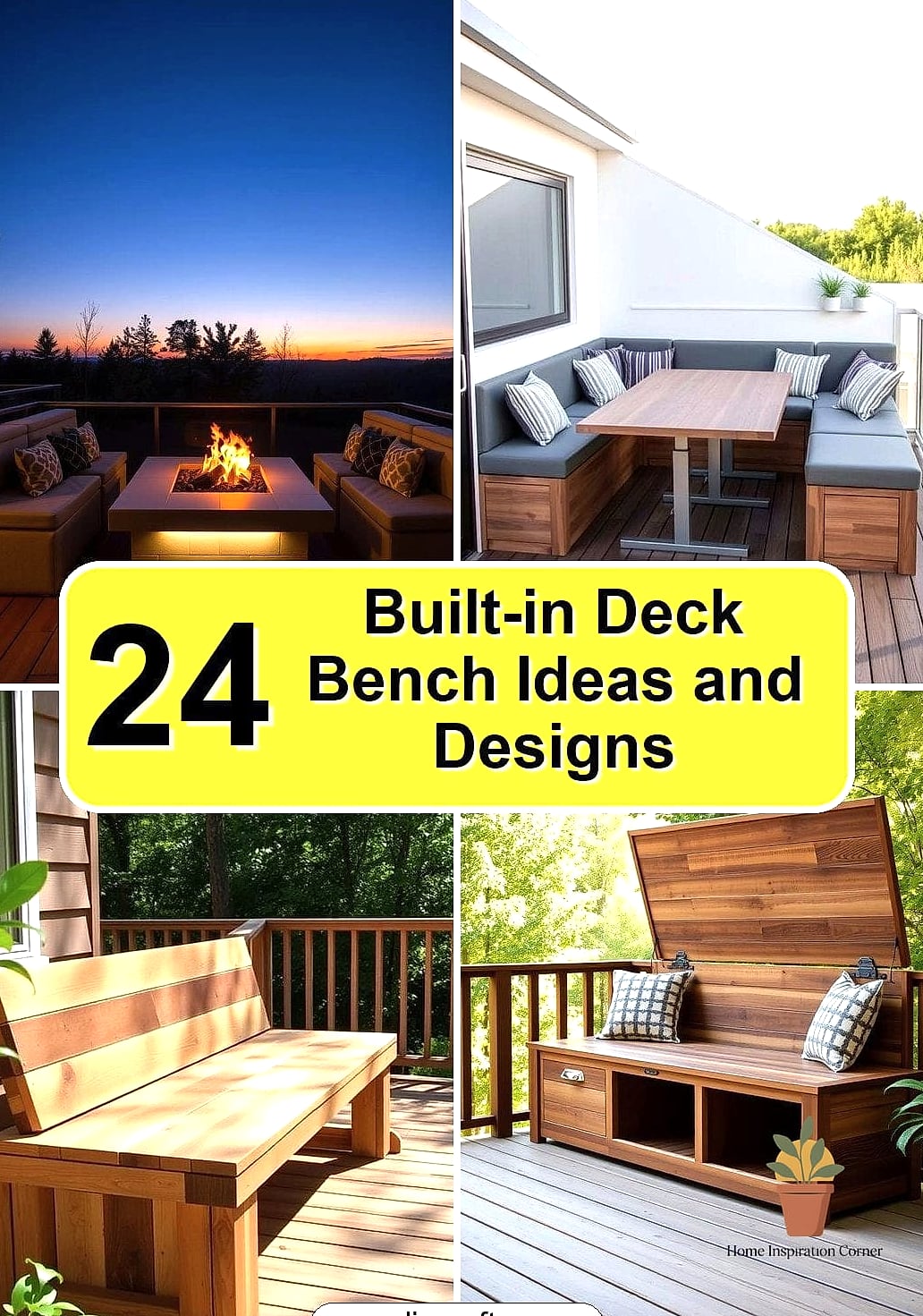
Built-in benches free up floor space and give you storage underneath if you build them with lift-top lids. They’re especially handy on smaller decks where every square foot matters. Cushions in weatherproof fabric make them comfortable enough for lounging, not just sitting for a few minutes. This is also one of the more budget-friendly upgrades since you’re using materials you likely already have on hand for the rest of the deck.
Patio with Outdoor Kitchen
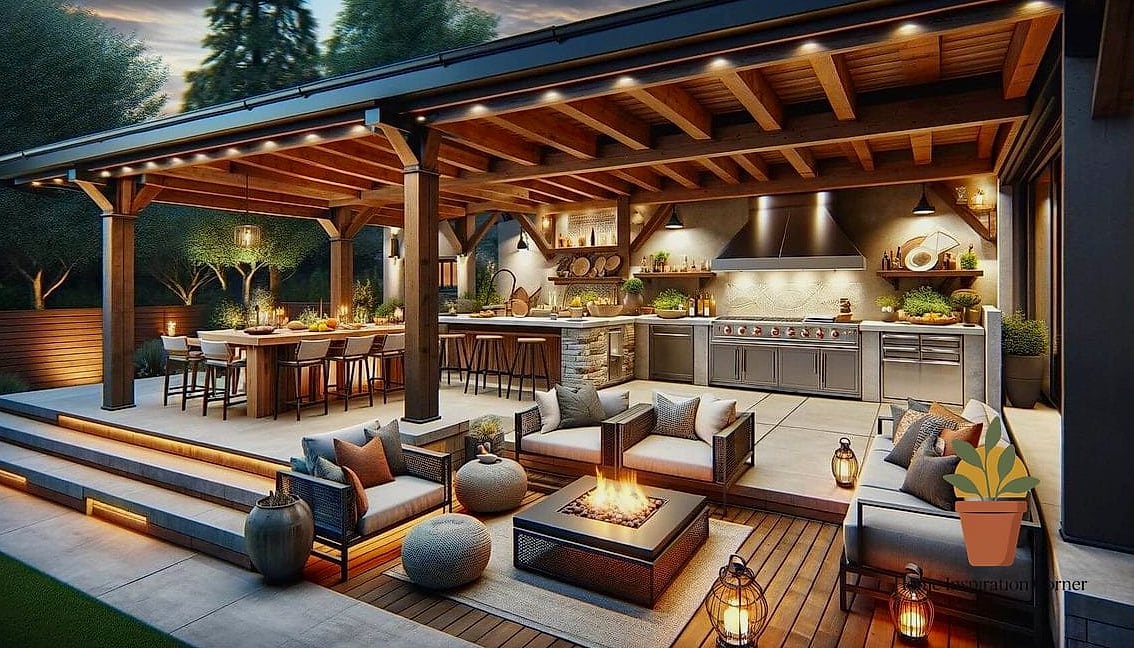
An outdoor kitchen turns your patio into the place where dinner actually happens instead of just where you eat it. A built-in grill, small fridge, and a stretch of counter space cover the basics without going overboard. Stainless steel appliances hold up better against the elements than you might expect, and stone or tile counters are easy to wipe down after a cookout. This setup pays off most for people who genuinely love hosting.
Boho Patio with Layered Textiles
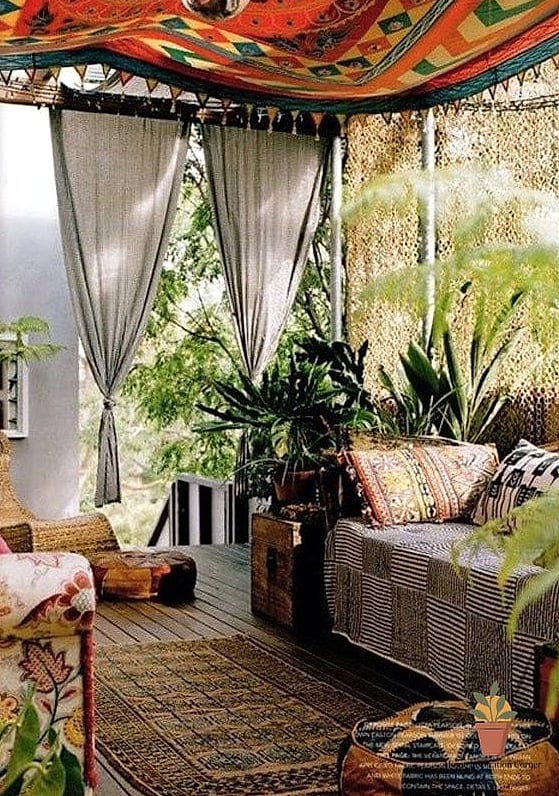
This look leans into pattern and texture rather than a strict color scheme. Rattan chairs, patterned outdoor rugs, and floor cushions create a lived-in, relaxed feel. Macrame plant hangers and string lights add warmth once the sun goes down. It’s a forgiving style too, since mismatched pieces actually work in its favor rather than against it.
Deck with Retractable Awning
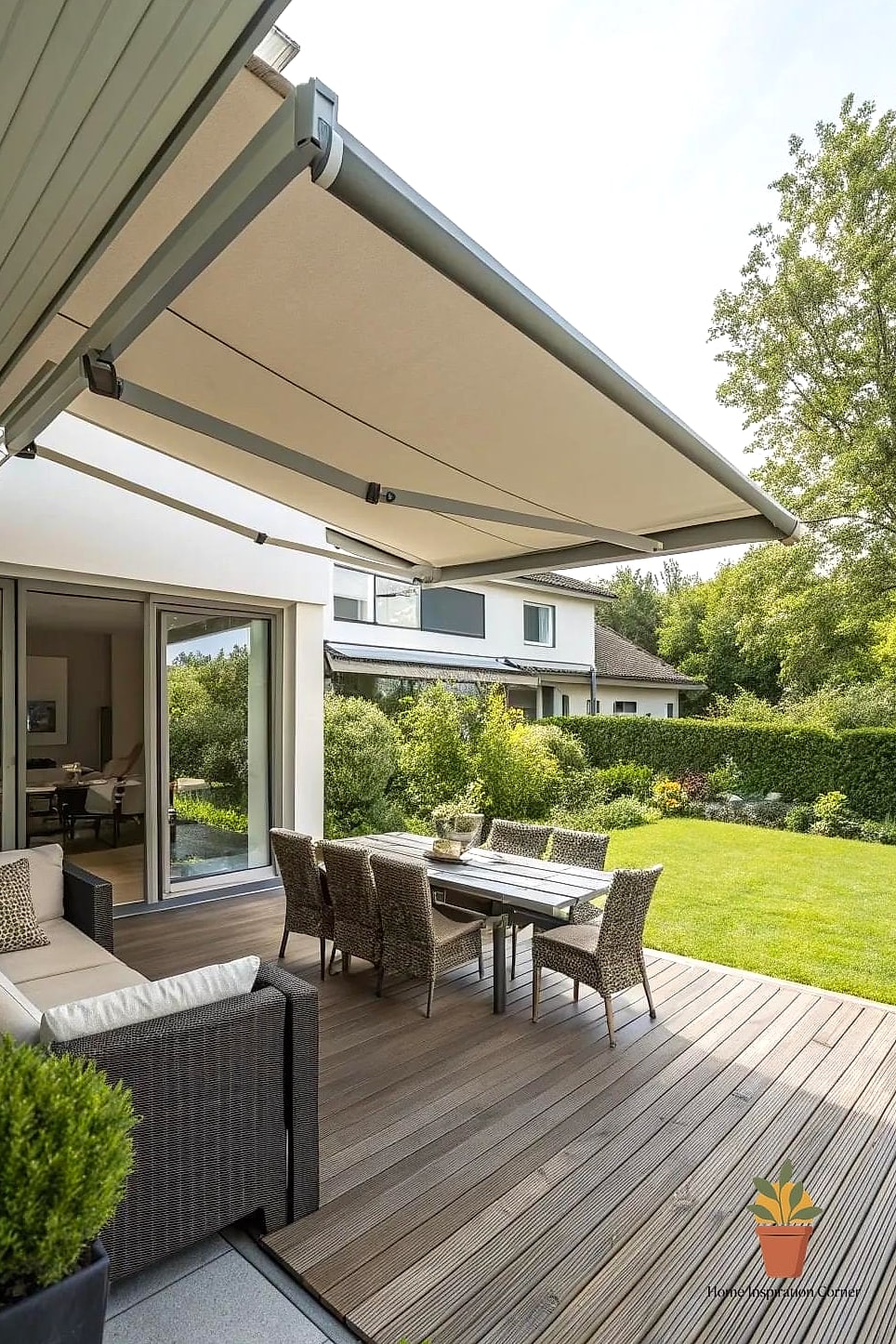
A retractable awning gives you control over sun and shade without committing to a fixed structure. Motorized versions are convenient, though manual crank models cost less and still get the job done. This is a smart choice for decks that face west, where afternoon sun can get intense. Fabric awnings come in enough colors now that they can actually complement your house rather than just being a functional add-on.
Coastal-Inspired Patio Retreat
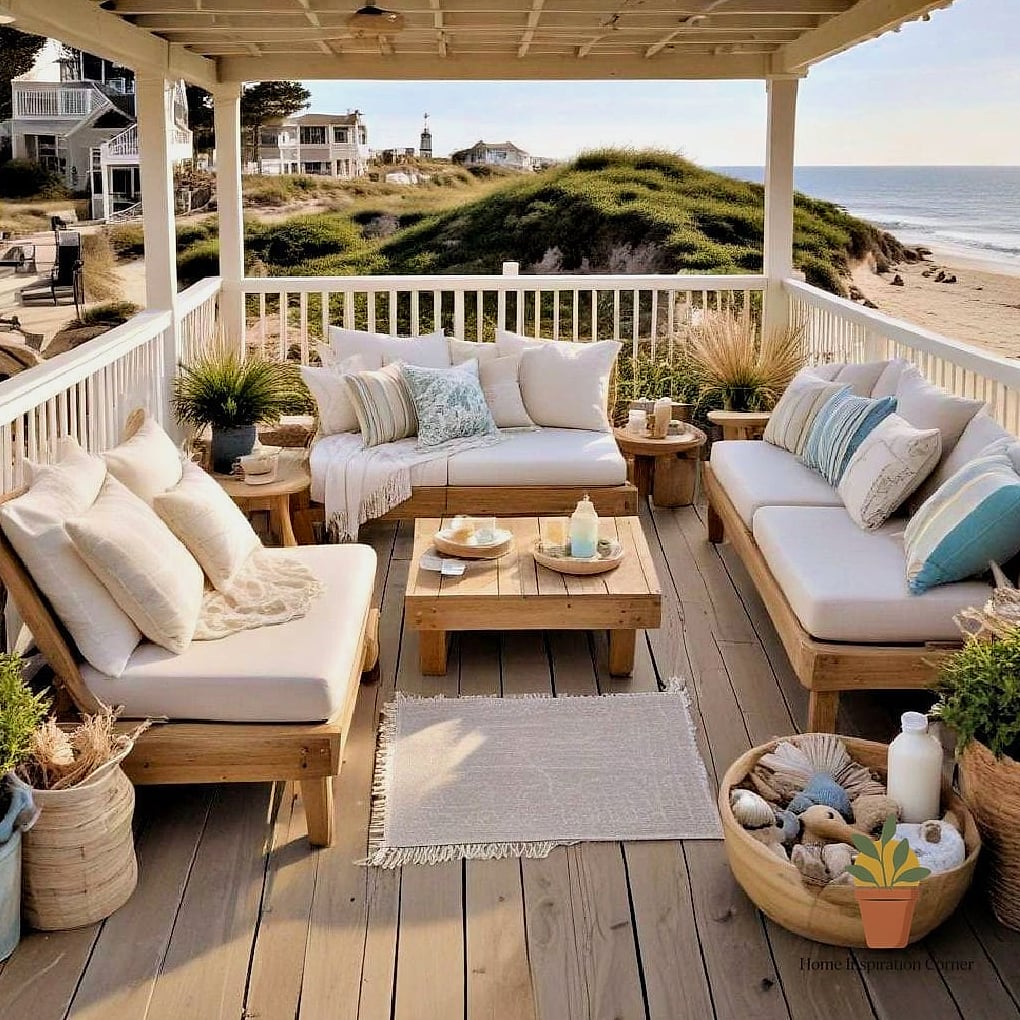
White or whitewashed wood, blue and white textiles, and simple woven furniture bring a coastal feel even if you’re nowhere near the ocean. Weather-resistant fabrics matter more here since lighter colors show wear if they’re not treated properly. A few nautical touches like rope accents or a striped umbrella round out the look without tipping into theme territory. This style tends to feel especially fresh in spring and summer.
Whichever direction you go with your patio deck designs, the best results come from picking a style that actually matches how you use the space, not just how it photographs. A deck built for quiet mornings with coffee needs different features than one built for weekend cookouts with a crowd. Start with function, layer in the style you’re drawn to, and the practical side tends to fall into place naturally.