
15 Creative Patio Railing Ideas Ideas You Haven’t Seen Before
- Cable Railing with a Steel Frame
- Horizontal Wood Slats with Wide Gaps
- Black Metal Railing with Vertical Bars
- Glass Panel Railing
- Mixed Wood and Metal Combo Railing
- Vertical Cable with Wood Posts
- Bent Metal Wave Pattern Railing
- Bamboo Panel Railing
- Perforated Metal Panel Railing
- Rope and Wood Nautical Railing
- Living Green Railing with Built-In Planters
- Two-Tone Painted Spindles
- Frosted Acrylic Panel Railing
- Industrial Pipe Railing
- Stone and Metal Combo Railing
15 Creative Patio Railing Ideas Ideas You Haven’t Seen Before
Your patio railing does way more work than most people give it credit for. It’s not just there to keep you from tumbling off the deck — it’s basically a frame around your whole outdoor view. And yet it’s usually the last thing anyone thinks about when planning a patio refresh.
If you’ve been staring at the same builder-grade white spindles for years, I promise there’s a better way. These 15 ideas cover everything from budget-friendly weekend projects to bigger investments that’ll make your patio look like it belongs in a magazine.
Cable Railing with a Steel Frame
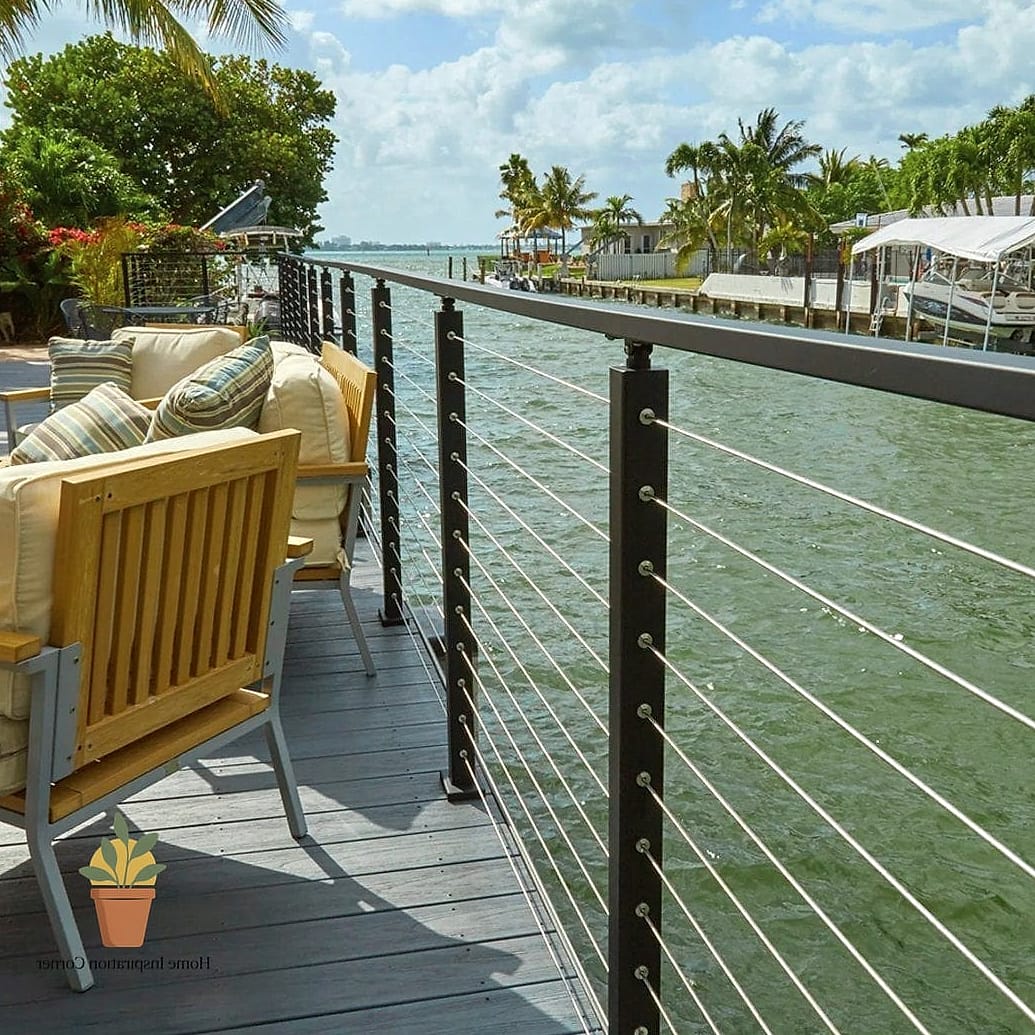
Cable railing has been popping up everywhere lately, and for good reason. Thin horizontal steel cables stretch between sturdy posts, giving you an almost invisible barrier that keeps your view completely open.
This works best on modern or contemporary homes, especially ones with a view worth protecting — think backyards facing a lake, mountains, or just a nicely landscaped yard. Homeowners love it because it feels sleek without feeling cold. Powder-coated black frames are popular right now, though bronze and stainless steel finishes are catching on too.
The tradeoff is installation. Cable tension needs to be set correctly, so this is more of a hire-a-pro situation than a weekend DIY. Maintenance is minimal — just an occasional wipe-down to keep the cables looking crisp.
Horizontal Wood Slats with Wide Gaps
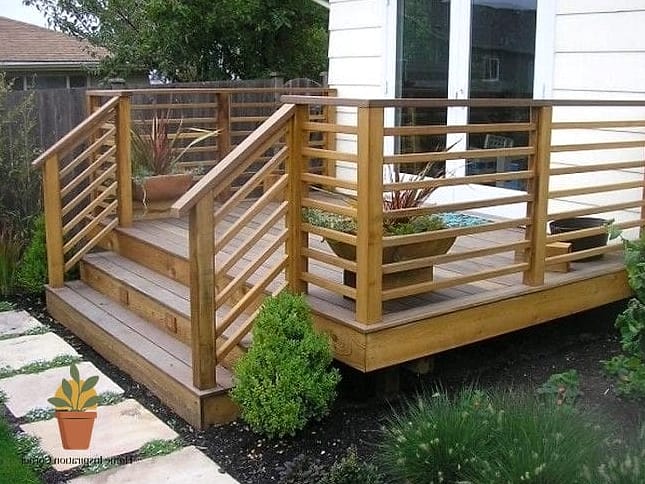
Ditch the traditional vertical spindles and go horizontal instead. Wide, flat wood slats spaced a few inches apart give your railing a warm, cabin-meets-modern look that feels intentional rather than trendy.
This style shines on farmhouse and craftsman-style homes, and it pairs beautifully with warm wood tones elsewhere on the patio, like a cedar pergola or teak furniture. It’s also fairly DIY-friendly if you’re comfortable with a miter saw and a level.
Cedar and pressure-treated pine are the go-to materials, and a matte exterior stain keeps the wood grain visible instead of hiding it under glossy varnish. Just know that wood needs re-staining every couple of years to hold up against weather.
Black Metal Railing with Vertical Bars
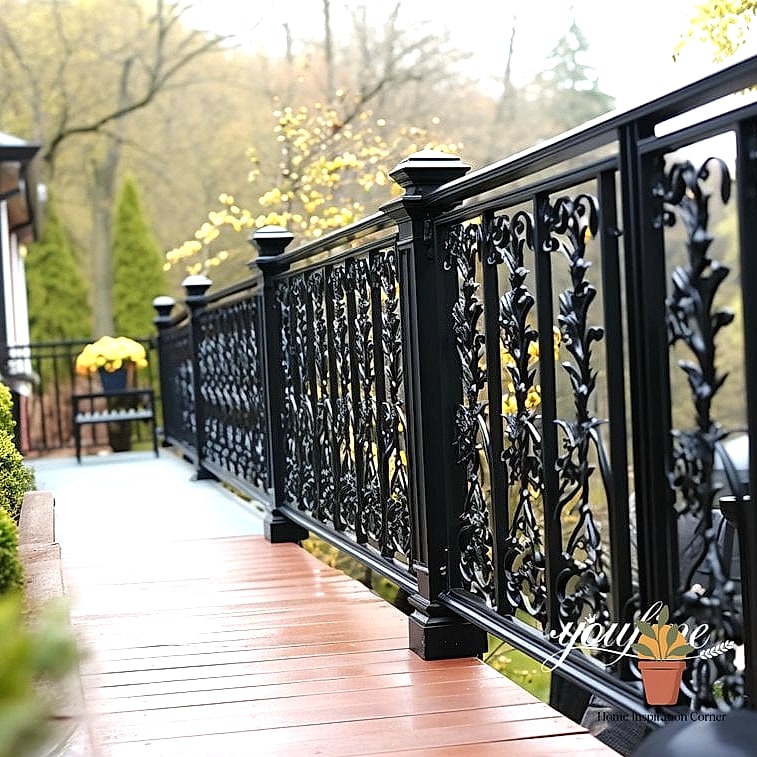
Sometimes the classic look just needs a color update. Swapping traditional white railing for matte black vertical bars instantly makes a patio feel more current without changing the layout at all.
This is one of those upgrades that instantly makes a patio feel more custom without requiring a full renovation. It works on almost any house style, which is part of the appeal — modern farmhouse, traditional colonial, even craftsman bungalows.
Black fixtures have been a steady trend for a few years now, and they tend to hide dirt and weather stains better than lighter finishes. A powder-coated aluminum option is more budget-friendly than wrought iron and skips the rust-prone maintenance.
Glass Panel Railing
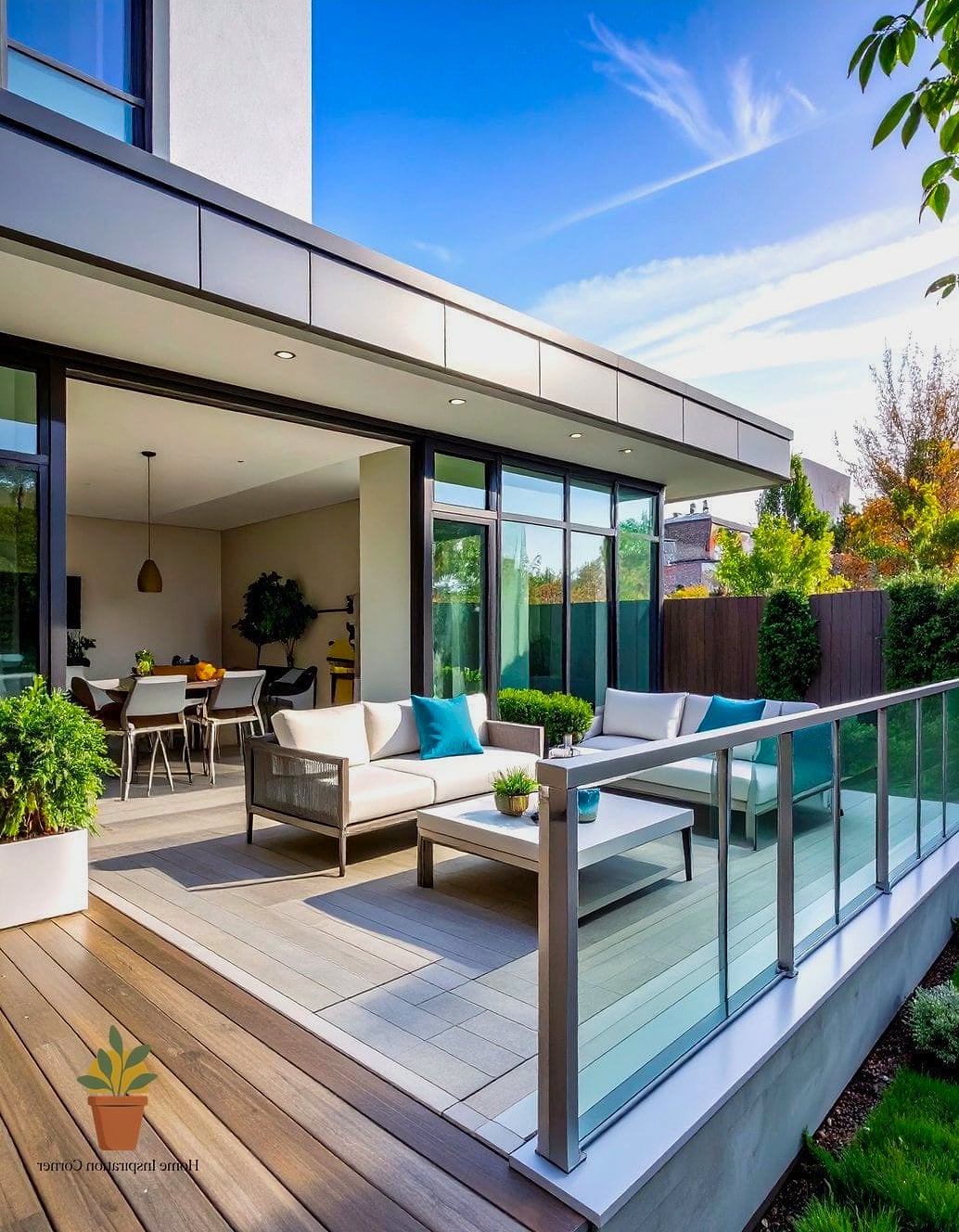
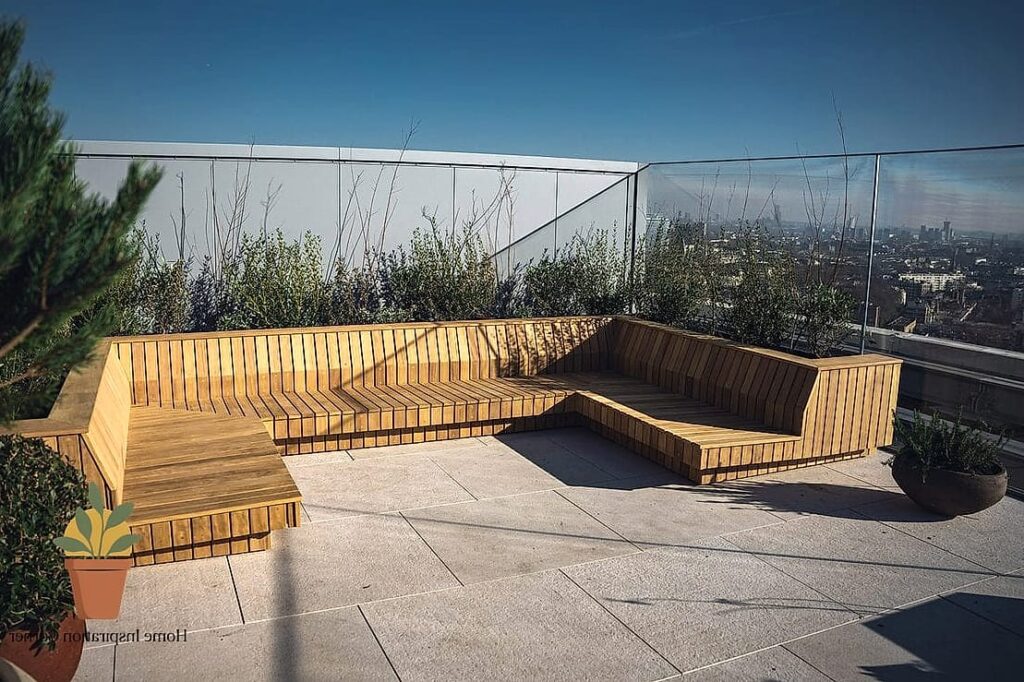
If an unobstructed view is your top priority, tempered glass panels are hard to beat. Instead of spindles or cables, you get full sheets of glass held in place by a metal or wood frame.
This is a favorite for hillside homes, waterfront properties, or any patio where the whole point is admiring what’s beyond it. It also does a great job blocking wind without blocking light, which makes your patio feel usable on breezier days.
Glass does require more frequent cleaning than other materials, especially if you’re near trees or in a rainy climate. But newer low-iron and tempered glass options are more durable and scratch-resistant than older versions.
Mixed Wood and Metal Combo Railing
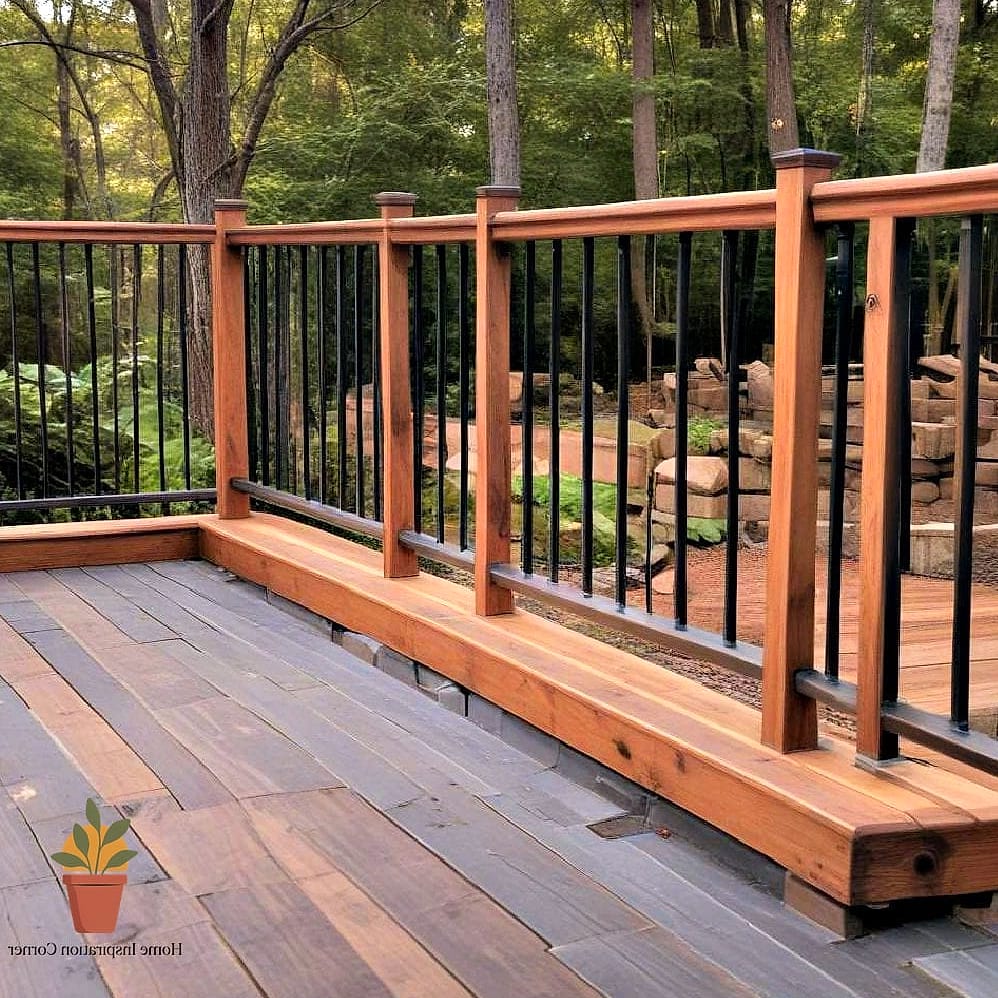
Why choose one material when you can layer two? Combining wood top rails with metal spindles or cable infill gives you warmth and structure in the same design.
This hybrid approach works particularly well for transitional-style homes that don’t fit neatly into “modern” or “traditional.” A wood cap rail is also more comfortable to rest your arms on than cold metal, which matters more than people expect once they actually start using the space.
Popular pairings include a walnut or cedar top rail with black metal balusters underneath. It’s a nice middle ground if you love the industrial look but don’t want your whole patio to feel like a warehouse.
Vertical Cable with Wood Posts
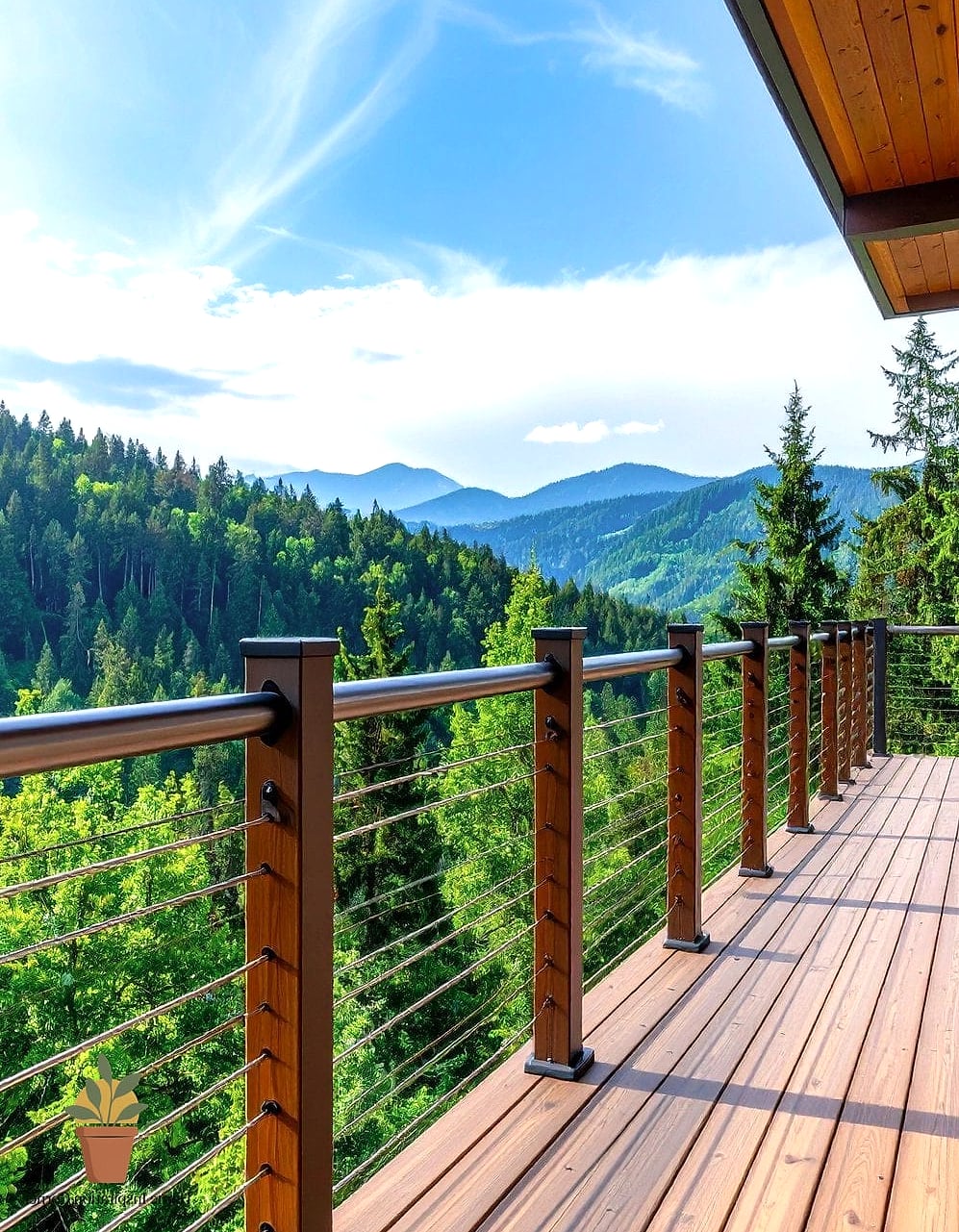
This is a slight twist on the cable railing idea, but the wood posts change the whole personality of the design. Instead of an all-metal look, you get warm wood posts anchoring sleek stainless cables.
It’s a great option if your home has a lot of natural wood elements already — think exposed beams, wood siding, or a timber-frame porch — and you want the railing to blend in rather than stand out. Cedar and redwood posts age into a soft silvery-gray if left unsealed, which some homeowners actually prefer for a relaxed, coastal feel.
Sealing the wood every year or two keeps it from splitting, especially in climates with big temperature swings.
Bent Metal Wave Pattern Railing
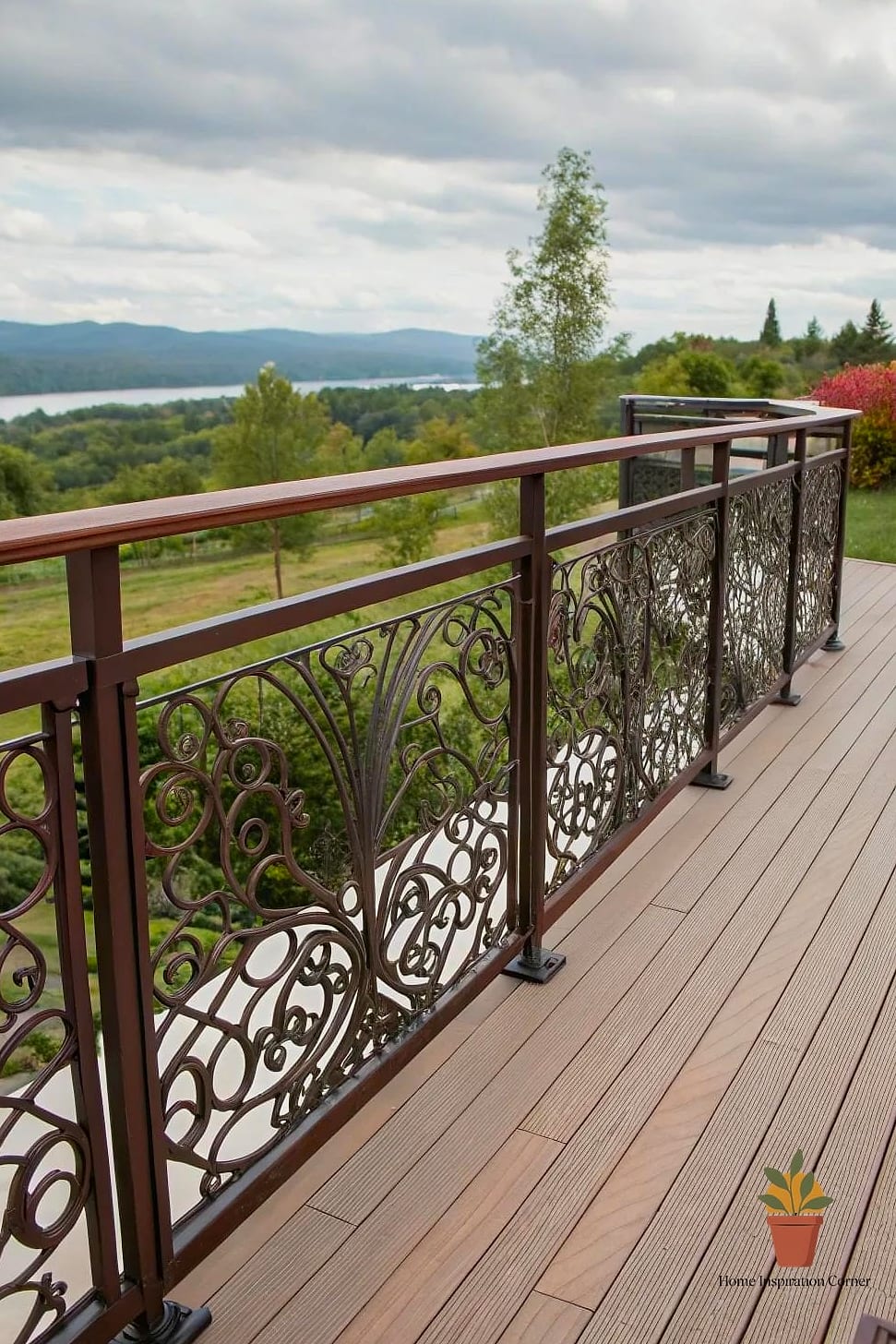
For something genuinely different, curved or wave-patterned metal railing adds a sculptural element most patios are missing. Instead of straight lines, the metal bends into soft curves that catch the light differently throughout the day.
This works surprisingly well on modern homes with curved architectural details, like arched doorways or rounded patio edges. It’s more of a custom, higher-budget option since it usually requires a metal fabricator, but it turns your railing into a genuine design feature instead of an afterthought.
Powder-coated bronze or matte black finishes tend to look the most intentional here, rather than overly decorative.
Bamboo Panel Railing
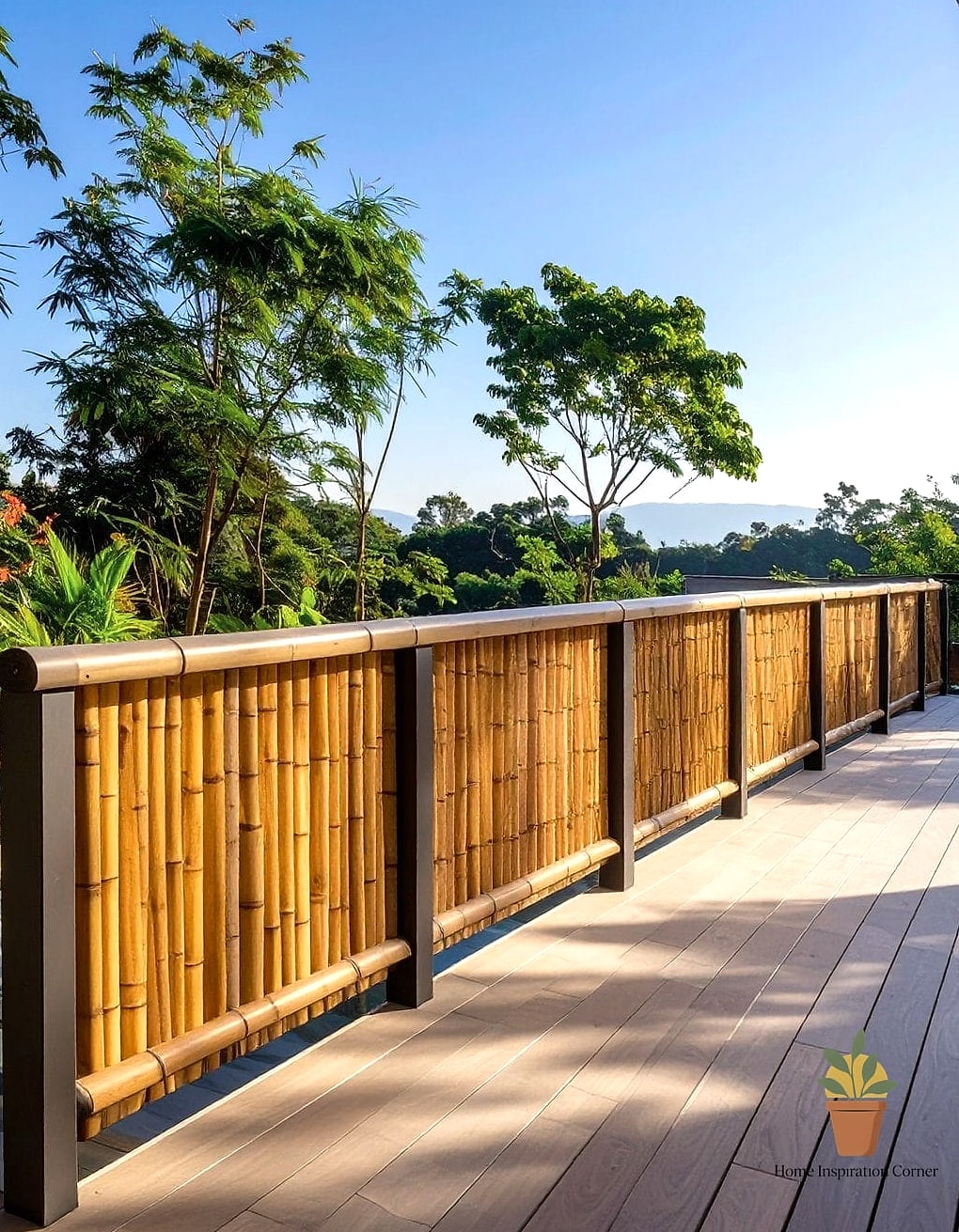
Bamboo brings a totally different texture to the table — light, natural, and a little bit tropical without going full tiki bar. Woven or slatted bamboo panels slot between simple wood or metal posts.
This is a natural fit for coastal patios, backyard lounges, or anywhere you want a laid-back, resort-style vibe. It’s also a relatively affordable material compared to hardwoods or metal, making it a nice option if you’re working with a tighter budget.
Bamboo does need a protective sealant to hold up outdoors long-term, and it’s worth checking that the specific product is rated for exterior use before installing.
Perforated Metal Panel Railing
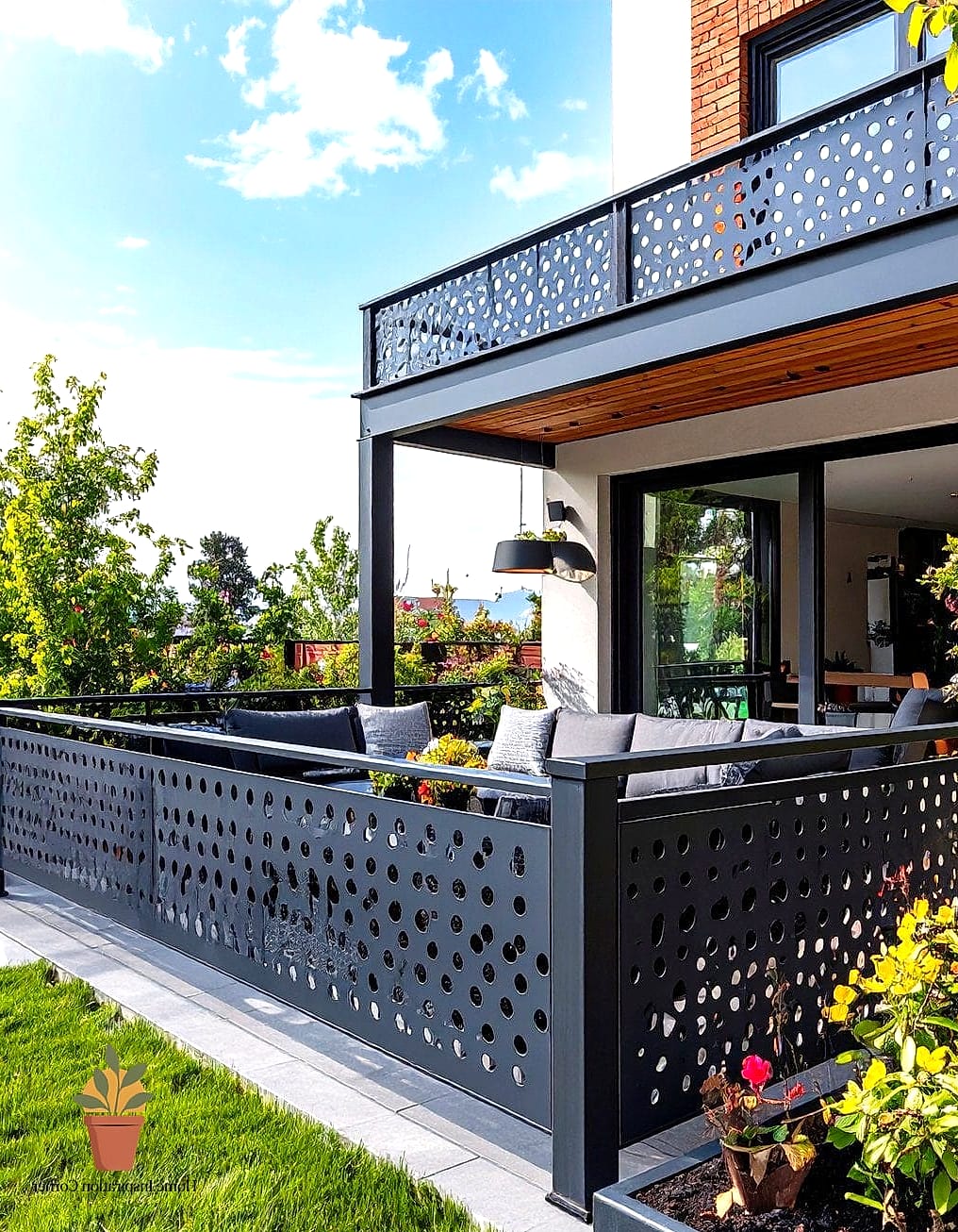
Perforated metal panels — sheets of metal punched with small repeating holes or patterns — give you privacy and airflow at the same time. From a distance they can look almost lace-like, depending on the pattern chosen.
This is a great pick for patios that back up to a neighbor’s yard or a busy street, since it offers more visual coverage than open spindles without fully closing off the space. Geometric or floral perforation patterns add a decorative touch that a plain panel wouldn’t.
Aluminum is the most common material choice since it resists rust, and it typically only needs a rinse with a hose a few times a year.
Rope and Wood Nautical Railing
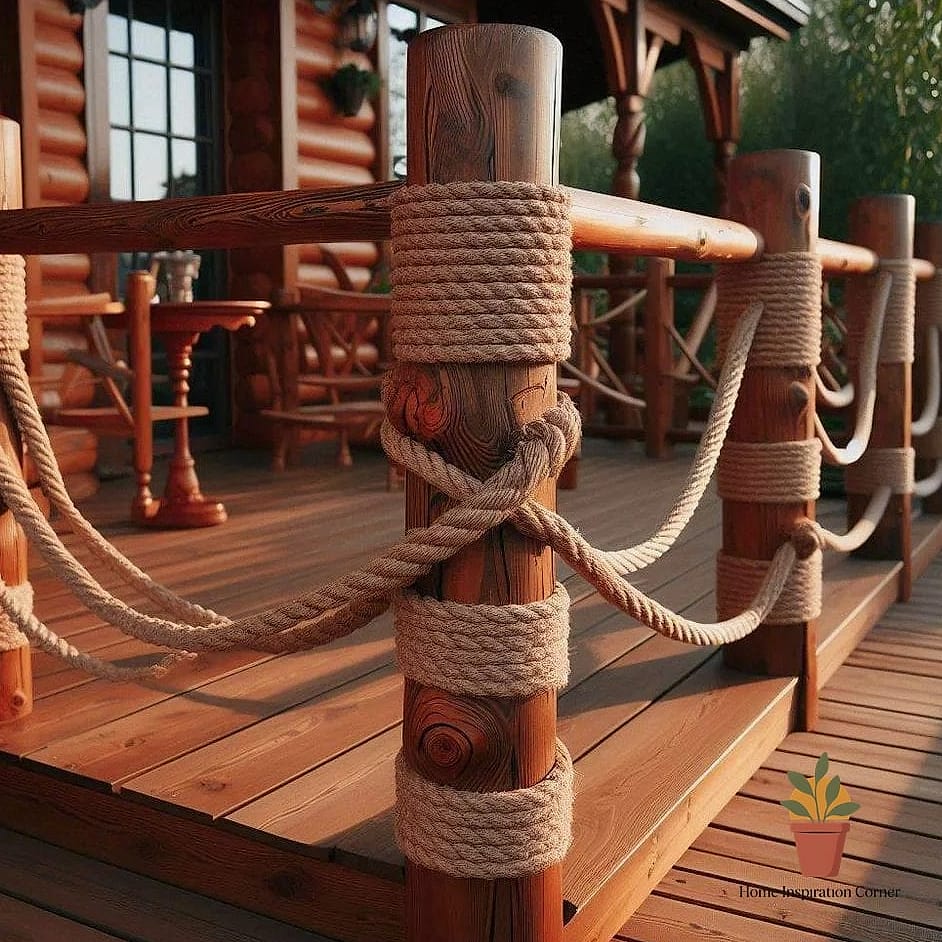
Thick marine-grade rope threaded between wood posts brings genuine coastal character to a patio, especially if your home is near water or you just love that beachy aesthetic.
It’s less structurally rigid than metal cable, so it works best on lower patios or as a decorative accent rather than the primary safety barrier where local codes require something sturdier. Always double check your local building requirements before going this route.
Natural manila rope ages beautifully into a weathered look, while synthetic rope options resist mildew better if you’re in a humid climate.
Living Green Railing with Built-In Planters
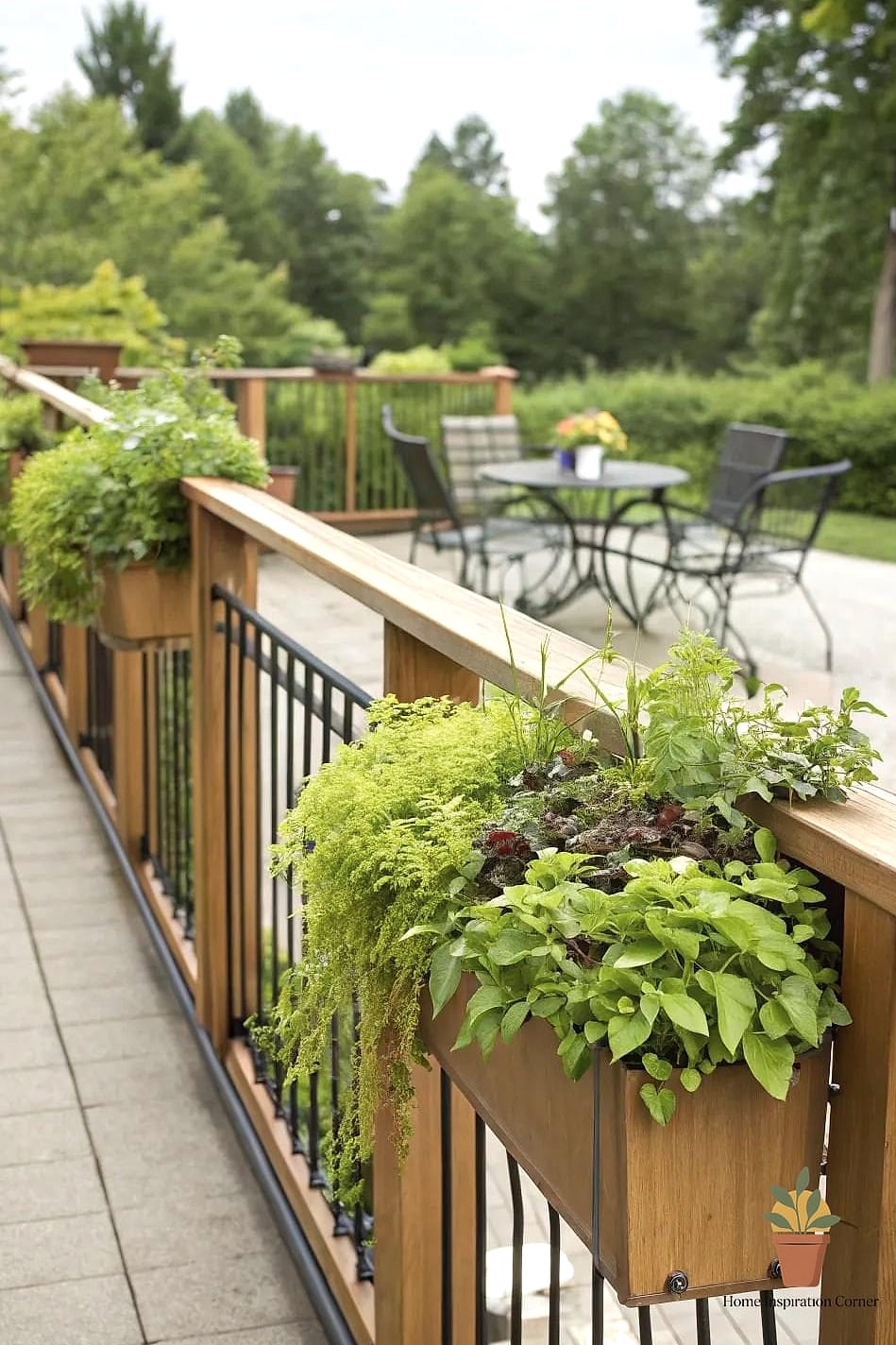
Turn your railing into a mini garden by choosing a design with built-in planter boxes along the top or attached to the sides. Trailing greenery like ivy or creeping jenny softens the hard lines of any railing material underneath.
This idea is perfect for patio owners who want more greenery but don’t have a lot of ground space for actual garden beds. It also doubles as a privacy screen once plants fill in, which is a nice bonus for patios facing neighbors.
Drainage is the main thing to plan for — make sure planters have proper drainage holes so water doesn’t pool and damage the railing material underneath.
Two-Tone Painted Spindles
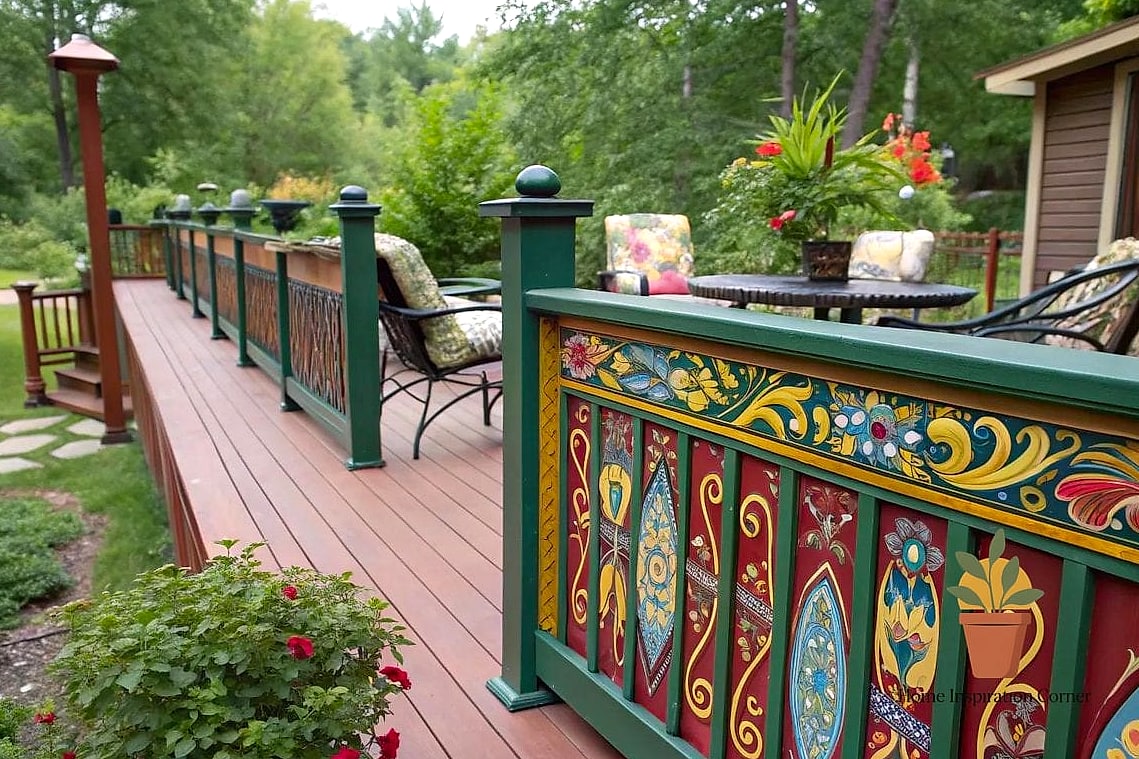
Here’s a budget-friendly idea that’s almost entirely paint and patience: paint your spindles a slightly different shade than your top and bottom rails. A soft sage green spindle against a white rail, for example, adds subtle depth without being loud.
This works on basically any existing railing, which makes it one of the easiest ideas on this list to try over a weekend. It’s especially nice for renters or anyone not ready to commit to a full railing replacement.
Exterior-grade paint is a must here since regular paint won’t hold up to sun and rain the same way. Plan on a fresh coat every few years depending on your climate.
Frosted Acrylic Panel Railing
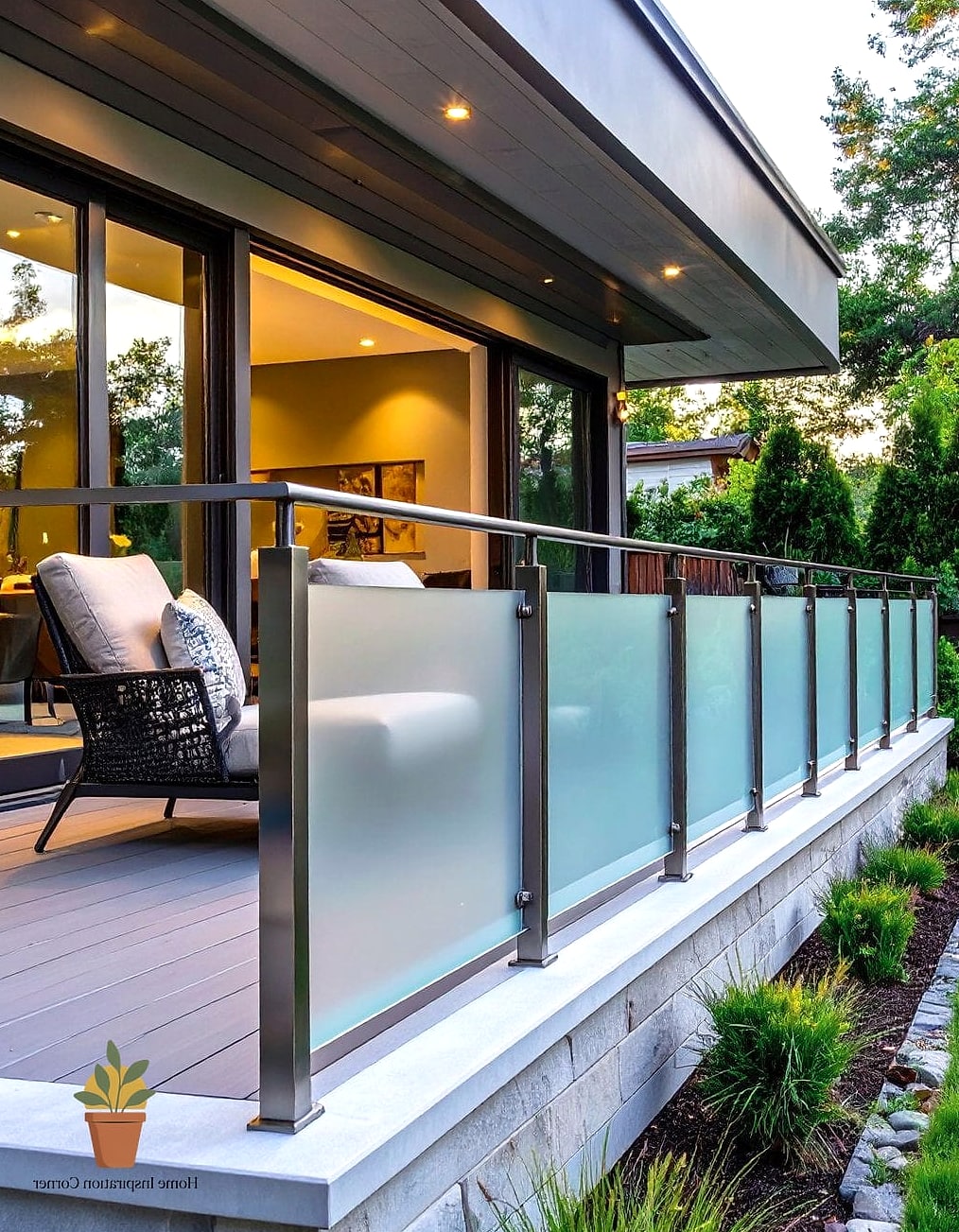
Frosted or textured acrylic panels give you the clean look of glass railing at a fraction of the cost and weight. The frosted finish also adds privacy that clear glass simply can’t.
This is a solid choice for patios that are close to a neighboring property or a shared wall, where you want light to pass through without anyone getting a clear view in. It’s also lighter than tempered glass, which can make DIY installation more manageable for confident homeowners.
Acrylic is more prone to scratching than glass over time, so it’s worth avoiding abrasive cleaners when wiping it down.
Industrial Pipe Railing
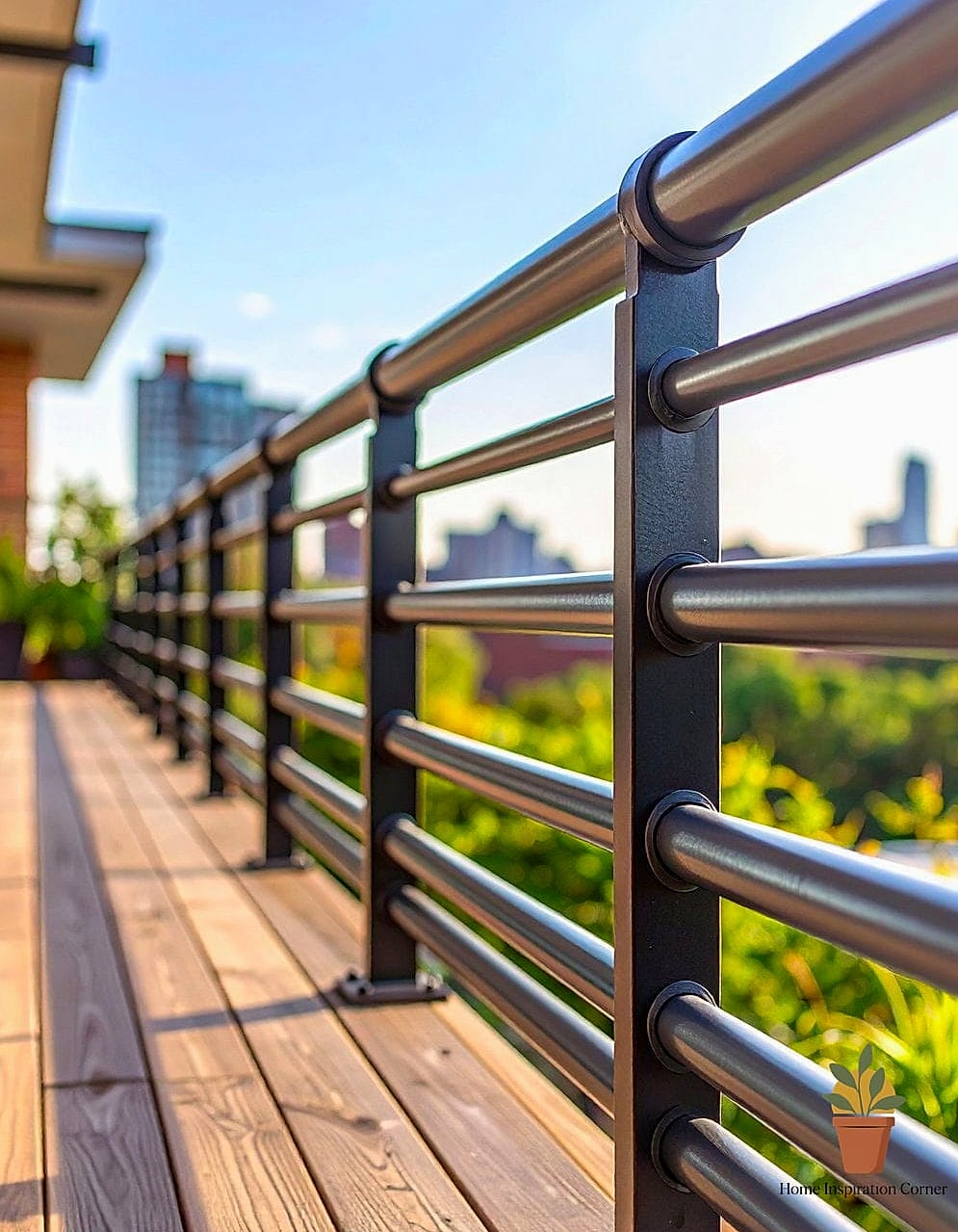
Black iron pipe fittings, the kind you’d find in industrial shelving, make for a surprisingly stylish railing option. The exposed joints and fittings give it an intentional, warehouse-loft feel.
This look pairs naturally with modern farmhouse or industrial-style homes, especially ones that already use exposed pipe elsewhere, like shelving or light fixtures. It’s a genuinely DIY-friendly project too, since pipe fittings thread together without welding.
A matte black finish is standard, but some homeowners are opting for raw or slightly rusted pipe finishes sealed with a clear coat for an even more rustic edge.
Stone and Metal Combo Railing
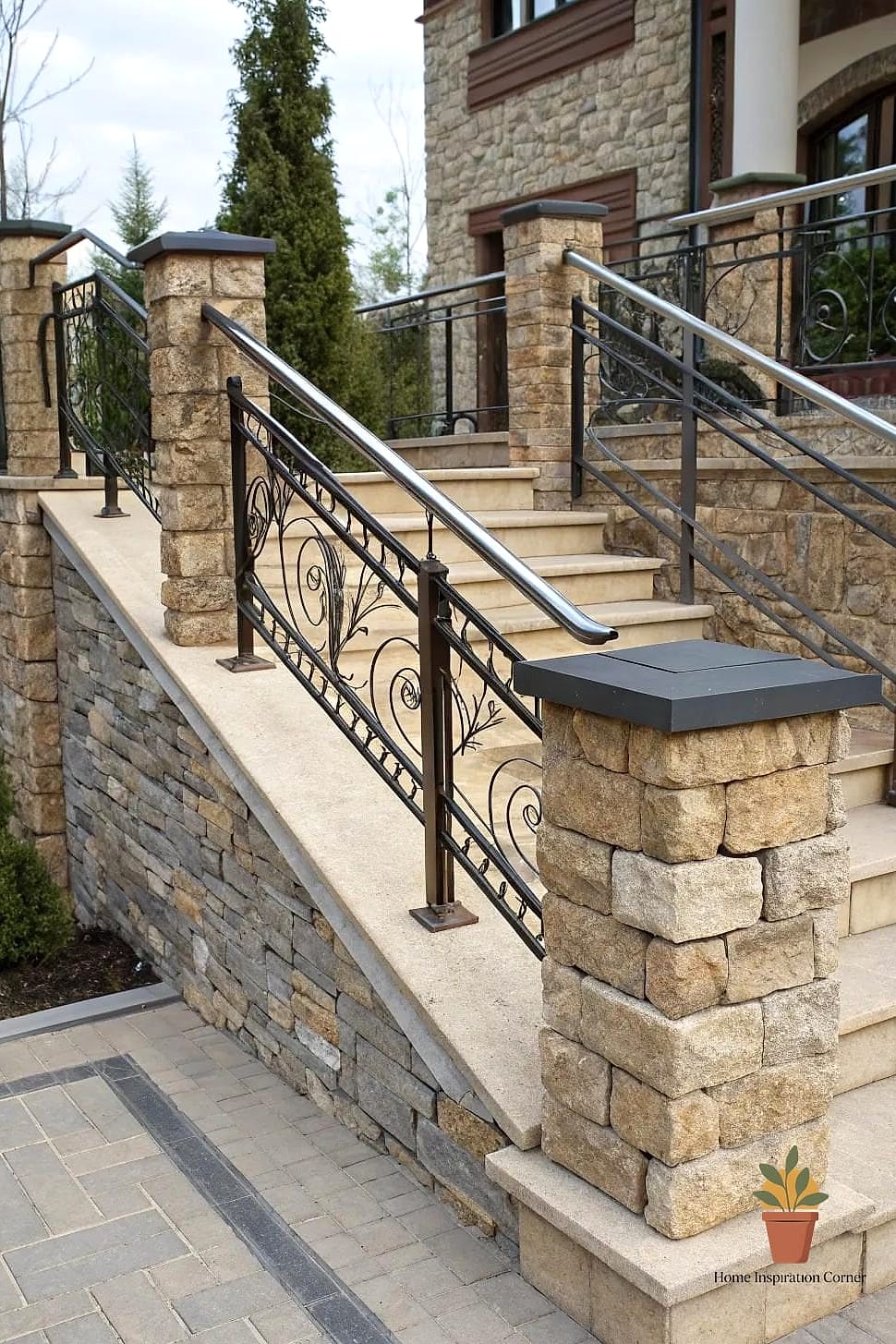
Pairing low stone knee walls with metal railing on top gives you the best of both worlds — solid, grounded structure at the base with an open, airy feel above it. It’s a step up in both cost and visual weight compared to standard railing.
This combo works especially well on patios with a strong outdoor living room feel, where the stone can echo a fireplace, retaining wall, or stone accents elsewhere in the yard. Natural stone or manufactured stone veneer are both options depending on budget.
Because the stone portion is more of a masonry project, this one usually calls for professional installation, though the metal top rail can sometimes be a later DIY addition.
Whichever direction you go, remember that railing doesn’t have to be purely functional. It’s one of the few features on your patio you’re guaranteed to notice every single time you walk outside, so it’s worth choosing something that actually makes you happy to look at. Start with whatever fits your budget and skill level, and don’t be afraid to mix ideas from this list to make something that’s genuinely your own.