
7 Backyard Oasis Designs You Need to See Right Now
7 Backyard Oasis Designs You Need to See Right Now
Your backyard has way more potential than you’re probably giving it credit for. I know it’s easy to look at that patch of grass or that sad, half-finished patio and feel overwhelmed, but you don’t need a massive budget or a professional crew to turn things around. Some of the best backyard oasis designs I’ve come across started as pretty basic spaces before someone got smart about layout, lighting, and a few key features. Here are seven ideas worth stealing, whether you’re working with a sprawling yard or a modest little patch behind a townhouse.
Sunken Lounge Pit with Built-In Seating
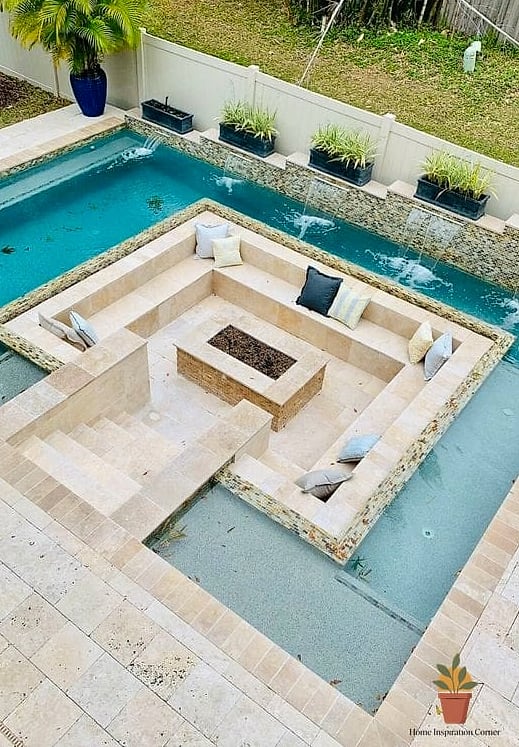
There’s something about sitting slightly below ground level that makes a backyard feel instantly cozier and more intentional. A sunken lounge area, usually centered around a fire pit, creates a natural gathering spot without needing a single piece of furniture hauled in from a store.
This works best in yards with enough depth to accommodate the dig-out, though some homeowners fake the effect with a raised surrounding patio instead of actually excavating. Either way, the visual drop creates a room-like feeling outdoors.
Concrete, stone, or even treated wood can frame the seating ledges, and built-in cushions make it comfortable enough to linger for hours. Warm wood tones on the bench seating pair nicely with a stone or brick fire pit in the center. If you’re handy, this is a doable weekend-warrior project, though the excavation part is smart to hire out unless you really know what you’re doing with drainage.
Maintenance is fairly low once it’s built, though you’ll want to check cushions for weather damage each season and keep the fire pit area clear of debris.
Poolside Cabana with Outdoor Kitchen
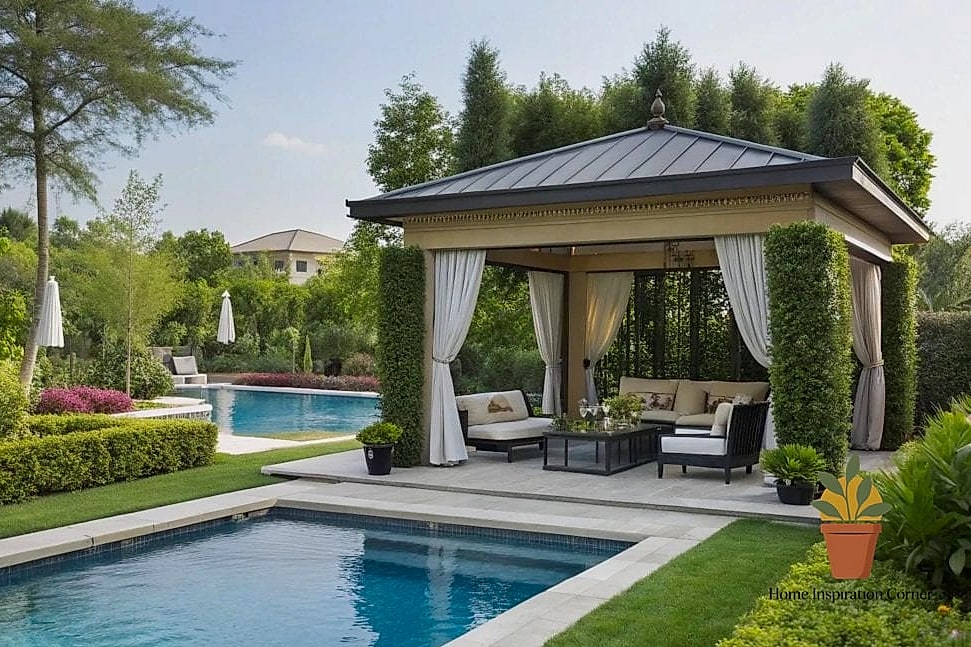
If your backyard oasis includes a pool, a cabana setup turns the whole area into something that feels more like a resort than a residential yard. This design pairs a shaded lounging structure with an adjacent outdoor kitchen, so nobody has to run back inside every time someone wants a drink refill.
This setup shines in larger yards with pools that already get a lot of family or entertaining use. The kitchen portion typically includes a grill, small fridge, and counter space, often finished in weather-resistant quartz or a durable natural stone that can handle sun exposure without fading.
I always tell people to think about traffic flow here. You want the kitchen close enough to the pool that nobody’s tracking water everywhere, but positioned so cooking smoke or heat doesn’t blow directly over the lounging area. Brushed brass or matte black fixtures on the outdoor kitchen give it a more finished look than standard stainless steel.
Budget-wise, this is one of the pricier ideas on this list. A pared-down version might skip the cabana structure and just add a simple pergola with a small bar cart instead.
Zen Garden Retreat with a Water Feature
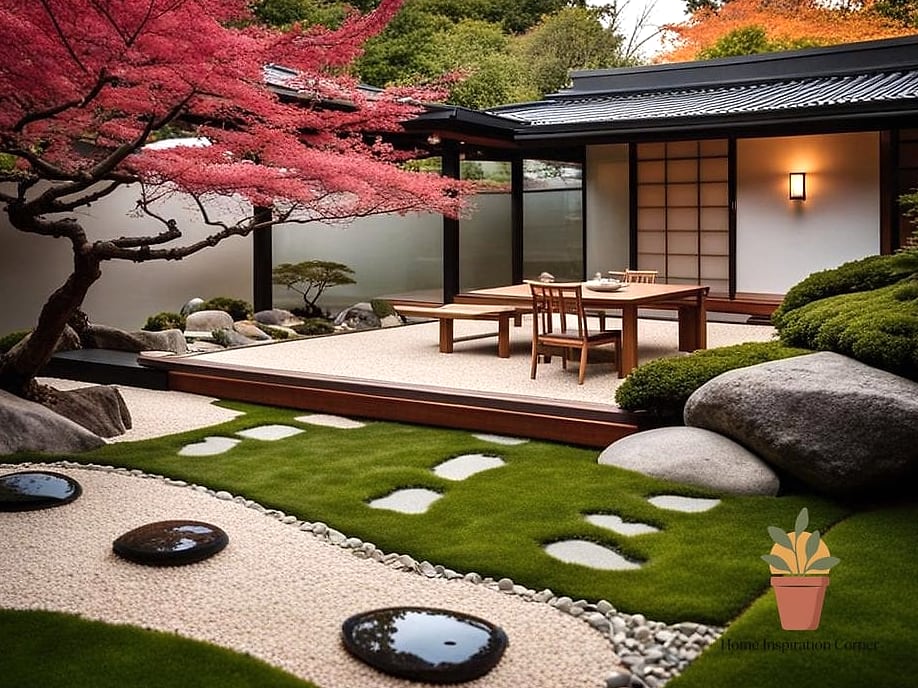
Not every backyard oasis needs a fire pit or a pool. Sometimes the goal is quiet, and a Japanese-inspired garden with a small water feature does that beautifully. Think raked gravel, smooth stones, low-maintenance greenery, and the gentle sound of trickling water instead of loud entertaining spaces.
This design works particularly well in smaller yards or side-yard spaces that don’t get much other use. It’s also a great option for people who want a peaceful corner rather than transforming the entire property.
Materials tend to lean natural: stone pathways, bamboo accents, and simple wood elements rather than anything glossy or overly polished. A small pond or a simple bubbling fountain adds movement without requiring the upkeep of a full pool. Textured finishes on stone borders help the space feel organic rather than manufactured.
This is genuinely one of the more renter-friendly ideas here too, since a lot of the elements (planters, a small tabletop fountain, gravel in a defined bed) can be temporary rather than permanent installations.
Multi-Level Deck with Layered Lighting
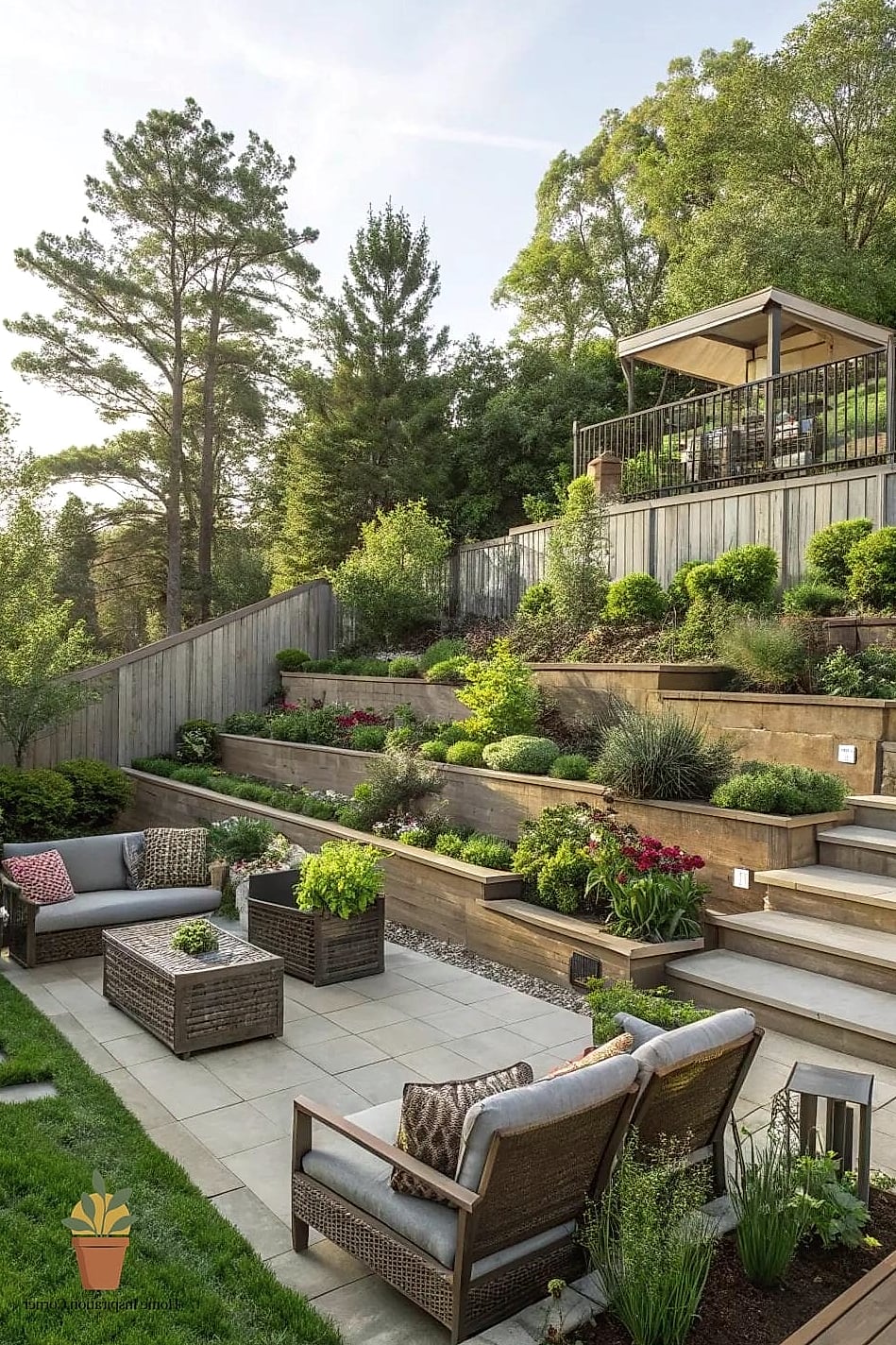
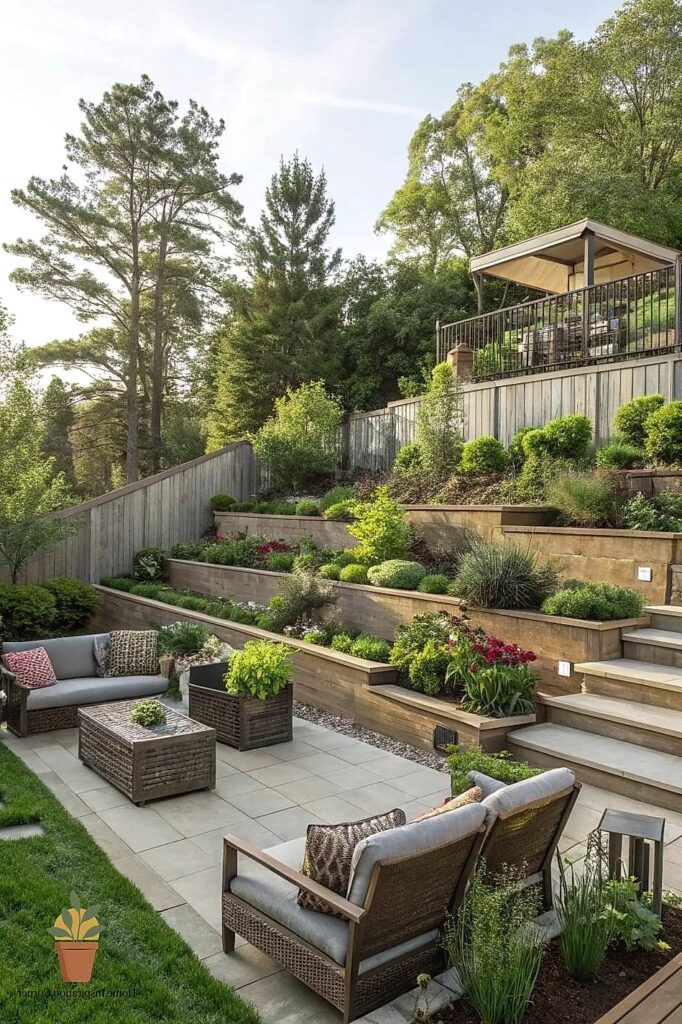
A single flat deck can feel a little one-note after a while. Breaking your outdoor space into levels, even just two tiers, adds visual interest and lets you separate zones for dining, lounging, and maybe a small garden bed or hot tub.
This idea works especially well on sloped lots where a single-level deck would need extensive leveling anyway. Instead of fighting the slope, you use it.
Wood decking in warm tones remains the classic choice, though composite materials have gotten a lot better looking in recent years and require less maintenance over time. I’ve seen people mix the two, using composite for high-traffic areas and real wood accents for railings or planters.
Layered lighting is what really makes this design feel like an oasis at night rather than just a deck. String lights overhead, step lights along the level changes, and a few low path lights create depth without needing to blast the whole space with a single overhead fixture. This is also a spot where solar-powered lighting options can save you from running electrical lines everywhere.
Upkeep depends heavily on material choice. Real wood needs sealing every year or two, while composite decking mostly just needs a rinse and occasional scrub.
Hammock Grove with Hanging Lanterns
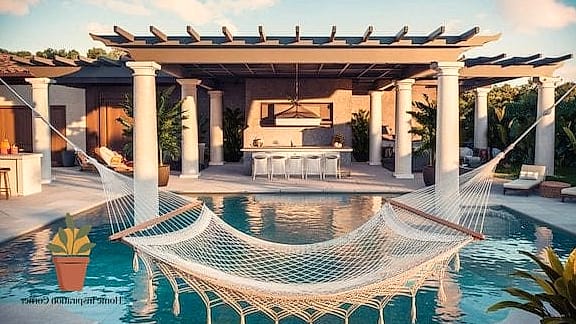
This one’s for people who want their backyard oasis to feel more like a permanent vacation spot than a place for hosting parties. A cluster of two or three hammocks strung between sturdy posts or mature trees, surrounded by string lights or hanging lanterns, creates a genuinely relaxing focal point.
It works in almost any yard size, honestly, which is part of why I love recommending it. Even a smaller backyard can fit one well-placed hammock with a simple stand if you don’t have trees positioned right.
Keep the surrounding area simple. A layer of mulch, some potted greenery, and maybe a small side table for drinks is really all you need. Overdoing the decor here works against the relaxed vibe the hammocks are going for.
Family-friendly households might want to double-check weight limits and anchor points, especially if kids are going to be using them too. Canvas or rope hammocks tend to hold up better outdoors than woven fabric ones, which can mildew if they stay damp too long.
Outdoor Dining Pergola with Climbing Vines
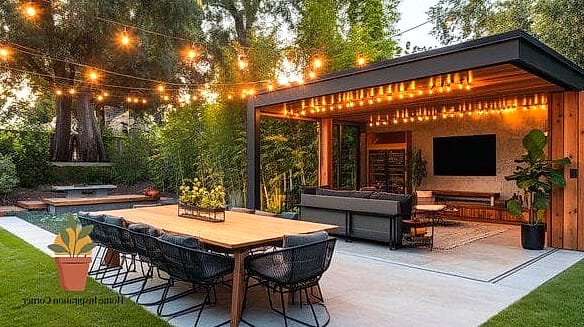
A pergola over your dining table does double duty: it defines the space visually and gives you actual shade during peak sun hours. Add some climbing vines like wisteria or jasmine, and you get a canopy that looks intentional rather than store-bought.
This design tends to work best for yards that already have a decent-sized patio or dining area but feel exposed or shadeless. It’s also a solid mid-range option cost-wise, sitting comfortably between a basic patio upgrade and a full outdoor kitchen buildout.
Wood or metal framing both work, though I lean toward wood for a warmer look that photographs better if you’re the type who likes sharing backyard photos online. String lights woven through the pergola beams add ambiance once the sun goes down, and a neutral color palette on your outdoor dining set keeps the whole area feeling cohesive rather than cluttered.
One thing worth mentioning: vines take time to establish, sometimes a full season or two before they really fill in. Patience pays off here, but don’t expect instant results the way you would with, say, hanging planters.
Minimalist Courtyard with Raised Planter Beds
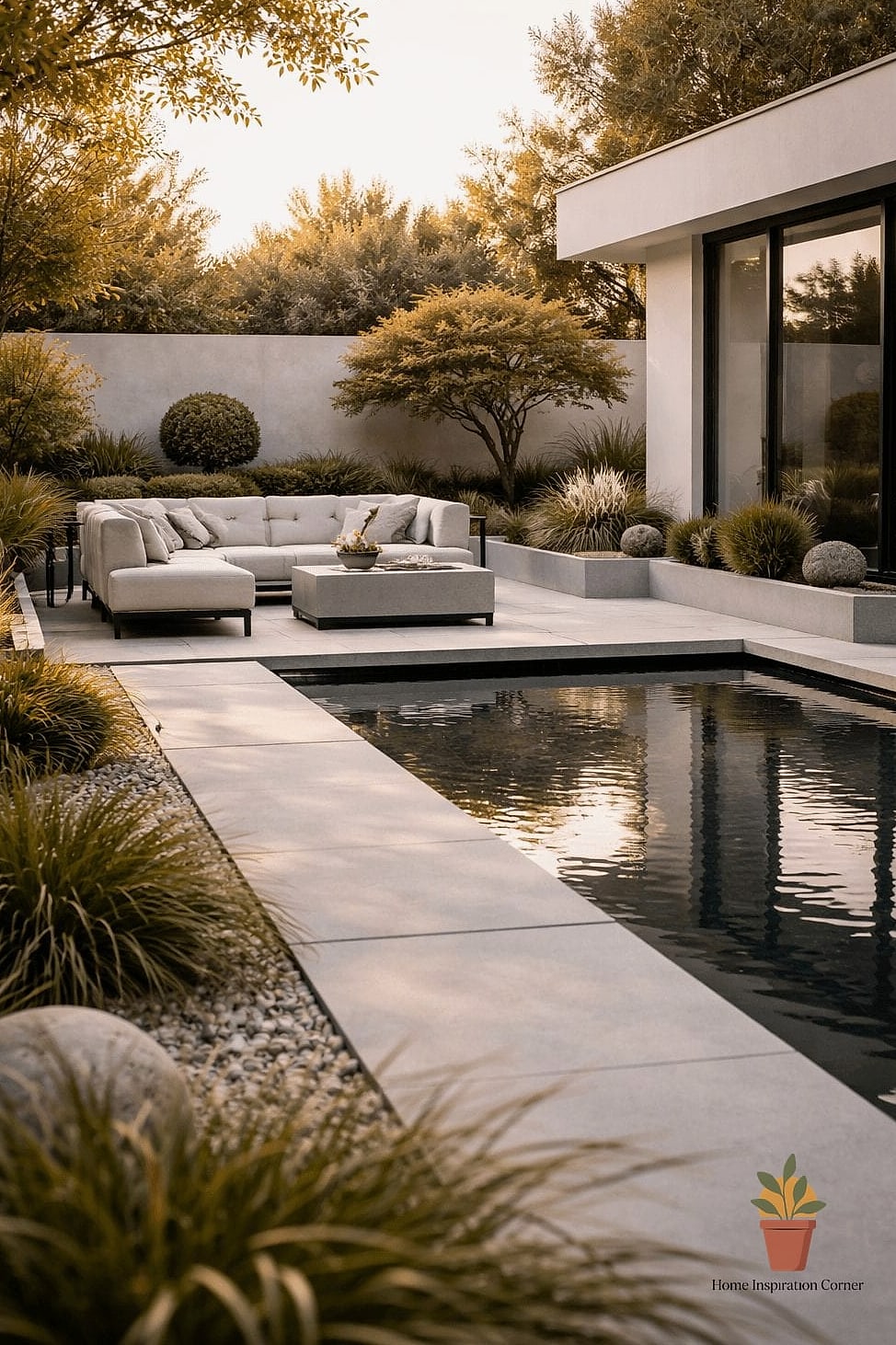
Not everyone has a sprawling backyard, and that’s exactly why this idea deserves a spot on the list. A minimalist courtyard design uses raised planter beds, simple pavers, and clean lines to make even a tiny outdoor space feel like a legitimate oasis rather than an afterthought.
This is ideal for townhomes, smaller lots, or anyone dealing with an oddly shaped side yard that doesn’t lend itself to bigger builds. Raised beds also solve drainage and soil-quality problems that a lot of small yards deal with.
Stick to a simple material palette: concrete or gravel for the ground, wood or metal for the planter boxes, and a limited plant selection so things don’t feel busy. Herbs, small shrubs, or a few flowering plants work well without requiring a ton of maintenance.
This is also one of the most budget-friendly and DIY-friendly options here. A weekend of building a few planter boxes and laying pavers can genuinely transform a neglected side yard into something you actually want to sit in.
Final Thoughts
The best backyard oasis designs aren’t necessarily the most expensive ones. They’re the ones that actually fit how you use your outdoor space, whether that’s hosting big dinners, soaking in a pool, or just reading a book in a hammock at sunset. Pick the idea from this list that matches your yard’s size, your budget, and honestly, your personality, and go from there. Small changes in lighting and layout tend to make a bigger difference than people expect.