
9 Patio Door Window Treatments Concepts That Are Actually Achievable on a Budget
- Ready-Made Curtain Panels on a Tension Rod
- Vertical Blinds Reimagined With a Fresh Slat Swap
- Roman Shades Made From a Flat Sheet
- Sliding Panel Track Blinds
- Bamboo or Woven Wood Shades
- Frosted Window Film for Instant Privacy
- A Layered Curtain and Sheer Combo
- Cordless Cellular Shades on Clearance
- A No-Sew Fabric Valance With Store-Bought Panels
- Final Thoughts
9 Patio Door Window Treatments Concepts That Are Actually Achievable on a Budget
Patio doors are a weird design puzzle. You want privacy and light control, but most window treatment options either cost a fortune or make your sliding door completely useless. I’ve helped enough people figure out their patio doors to know the struggle is real — you’re dealing with a wide, tall expanse of glass that most standard curtains and blinds just weren’t built for.
The good news is you don’t need custom drapery or motorized shades to make this work. There are plenty of ways to dress up that big glass slider without draining your savings account. Here are nine that actually hold up in real homes.
Ready-Made Curtain Panels on a Tension Rod
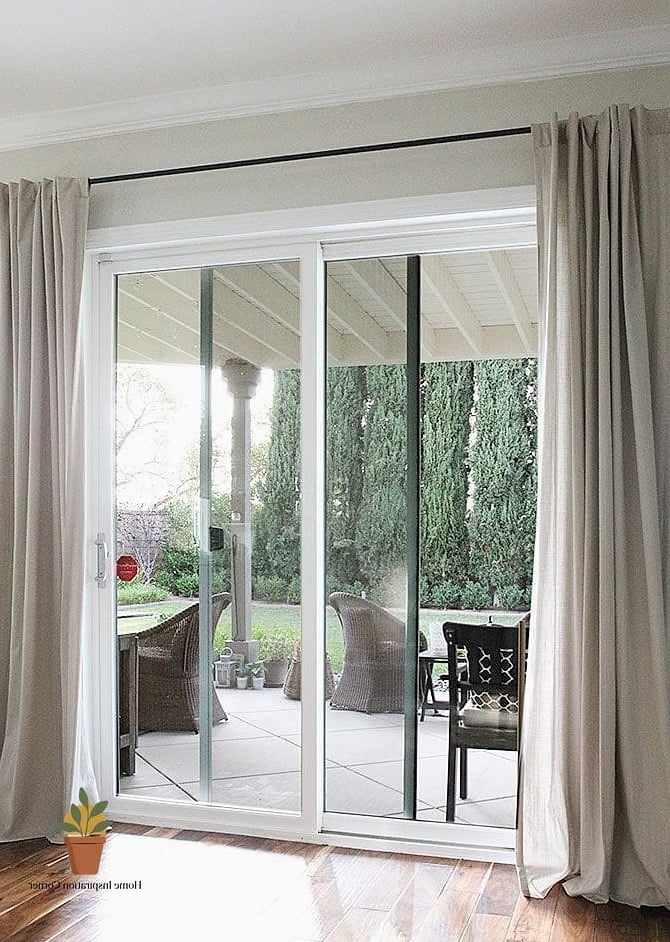
This is the cheapest fix that still looks intentional. Grab two or three wide curtain panels, hang them on a tension rod above the door frame, and you’ve got instant softness without drilling a single hole.
It works best in rentals or anywhere you’re not ready to commit to permanent hardware. Linen-look panels in a neutral color palette read more expensive than they are, and they let light filter through during the day while giving you privacy at night.
The trick is buying panels wider than you think you need. Patio doors are long, and skimpy curtains just look sad bunched to one side. Go for extra width so they stack nicely when pushed open.
Vertical Blinds Reimagined With a Fresh Slat Swap
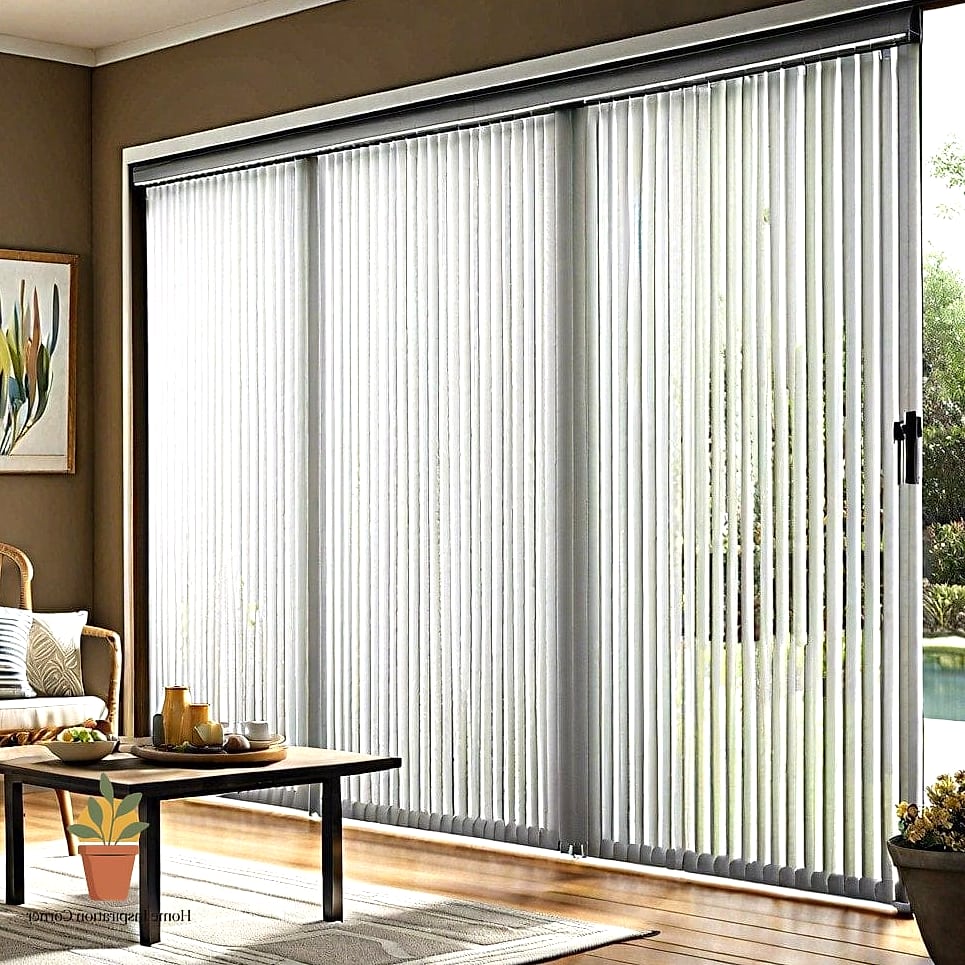
I know, vertical blinds have a reputation. But if you already have a working vertical blind system, swapping the slats instead of replacing the whole unit is one of the most budget-friendly upgrades around.
You can find fabric or faux-wood replacement slats online for a fraction of what a new custom treatment would cost. This works especially well in older homes or apartments where the original blinds are functional but visually dated.
It’s not glamorous, but it’s practical, and it means you’re not tossing hardware that still does its job. Great option if you’re renting and want something that still feels like an upgrade without permanent changes.
Roman Shades Made From a Flat Sheet
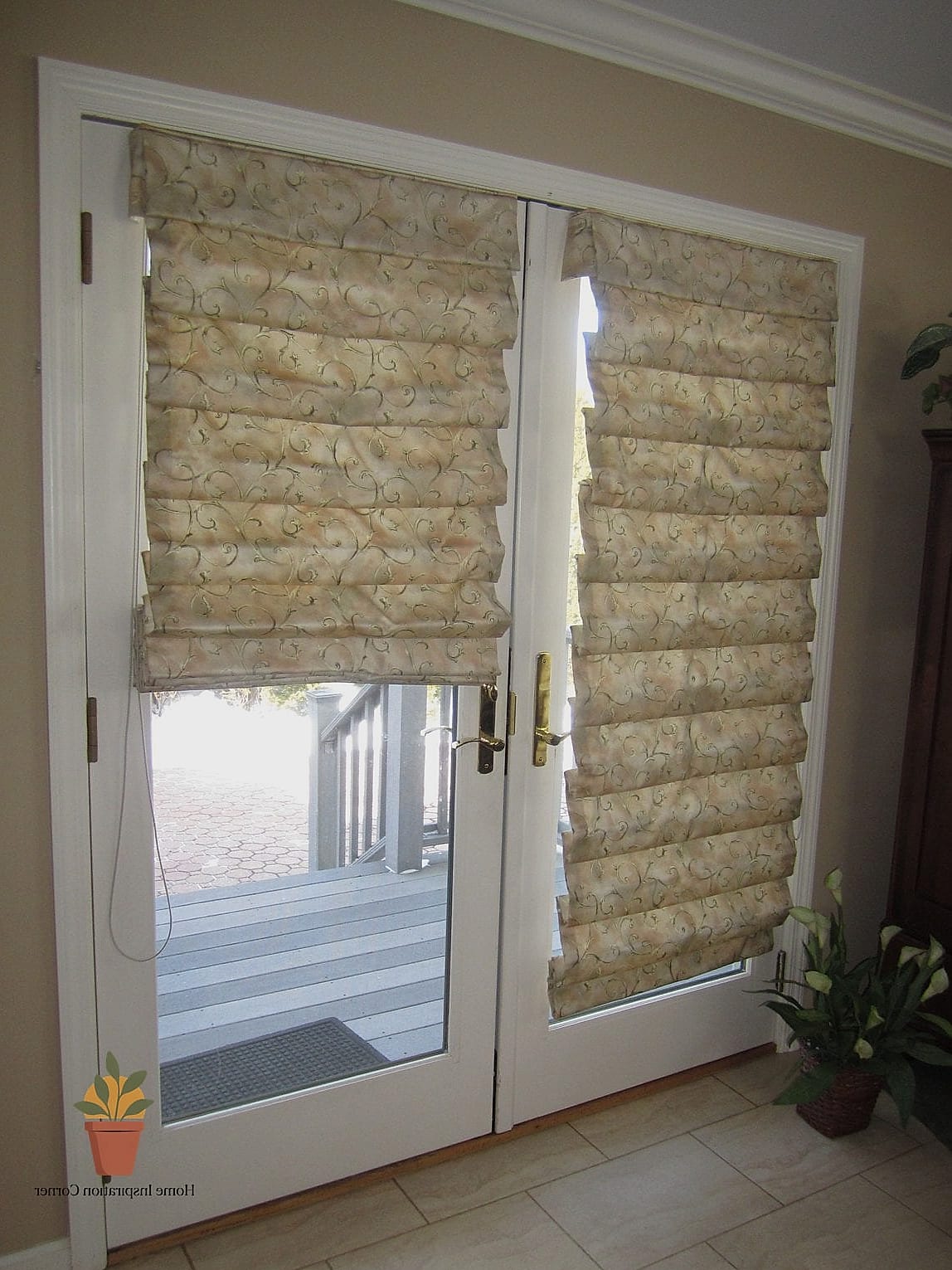
This one surprises people every time. A flat bed sheet in a pattern or texture you love can be turned into a simple roman shade with basic sewing skills — or even fusible tape if sewing isn’t your thing.
It works particularly well for patio doors because sheets come in generous widths, so you’re not piecing together fabric. Look for a linen-blend or cotton sheet with some weight to it so it holds its shape when raised.
This is a favorite for anyone who wants a custom look without paying custom prices. Family-friendly too, since you can toss it in the wash if little hands leave marks on it.
Sliding Panel Track Blinds
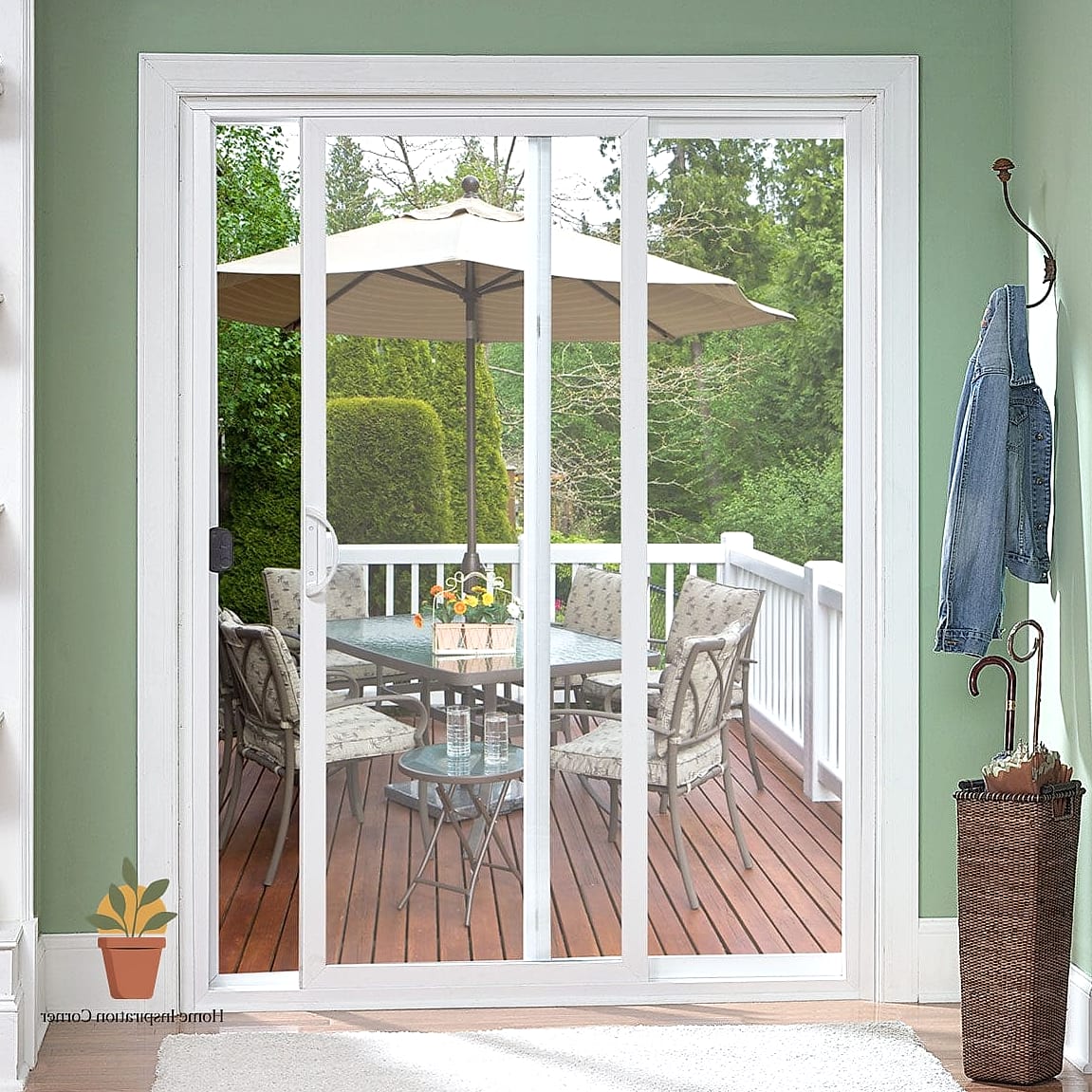
If your patio door slides, panel track blinds slide right along with it, which makes them one of the more functional budget window treatments concepts on this list. They’re basically wide fabric panels that glide on a track, similar to how a closet door works.
These are great for large glass doors because they cover the whole width evenly instead of bunching to one side like curtains can. Many home stores carry basic versions in neutral fabrics that won’t break the bank.
Maintenance is minimal — a quick vacuum with a brush attachment keeps them dust-free. Pet owners tend to like these since there aren’t cords dangling for curious paws to grab.
Bamboo or Woven Wood Shades
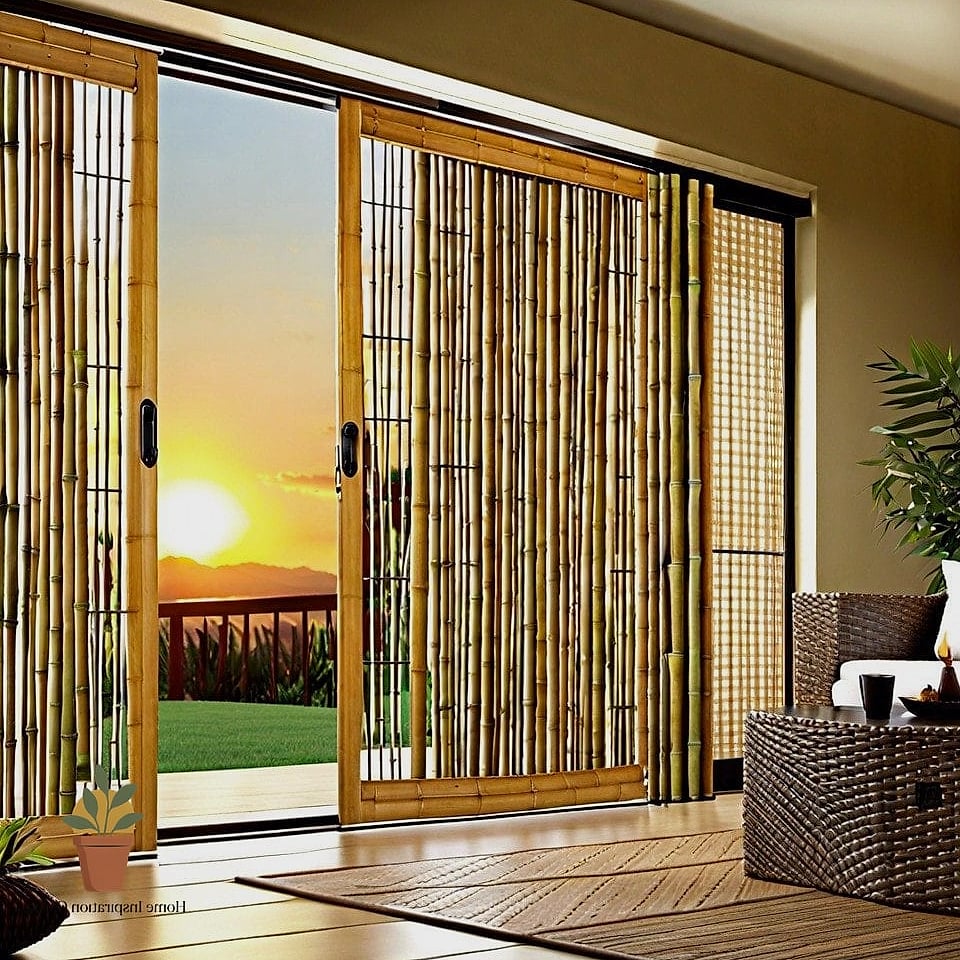
Woven wood shades bring in warm wood tones and natural texture, which is a nice contrast if the rest of your space leans toward cooler finishes. They’re widely available in affordable ready-made sizes now, so custom pricing isn’t your only option anymore.
These work beautifully in sunrooms, breakfast nooks, or any spot near a patio door where you want an organic, textured feel. The light that filters through has a soft, warm quality that most people love.
One thing to keep in mind: they’re not fully blackout, so if you need total darkness for a bedroom slider, pair them with a simple curtain panel for backup coverage.
Frosted Window Film for Instant Privacy
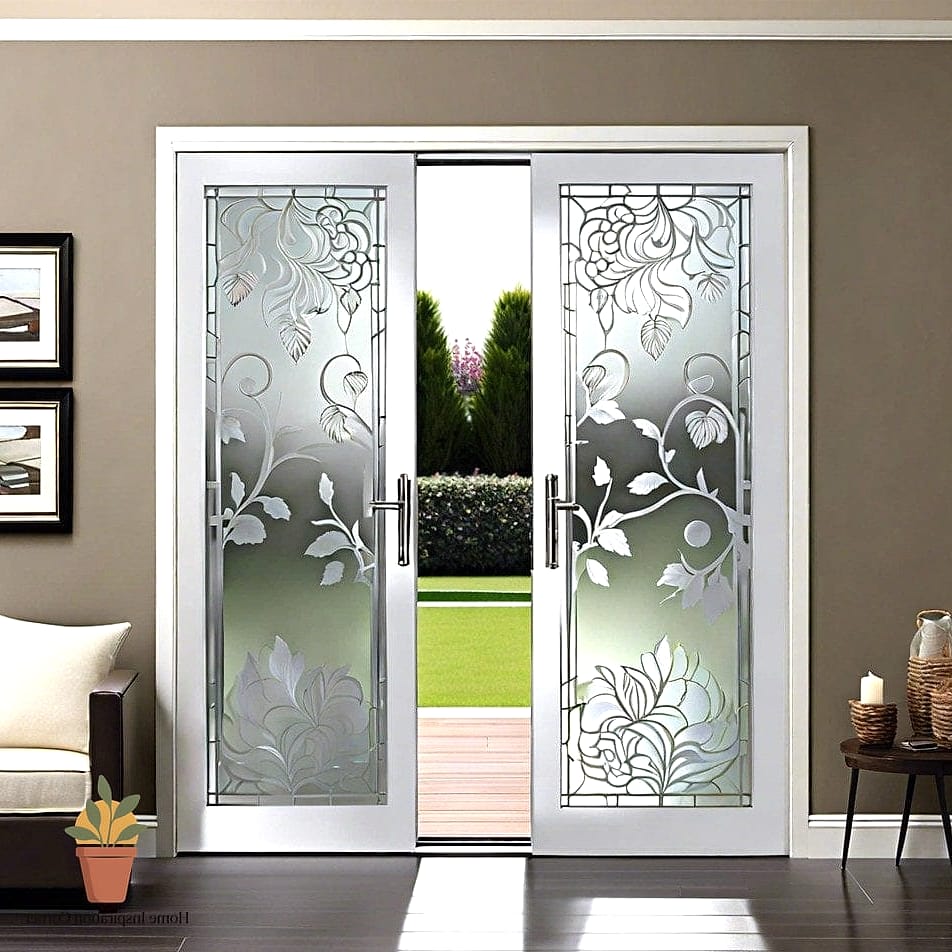
Sometimes you don’t need to cover the door at all — you just need privacy without losing natural light. Frosted or textured window film is one of the most budget-friendly window treatments concepts because a single roll covers a lot of ground for very little money.
This works great for ground-floor patio doors facing a neighbor’s yard or a busy walkway. You still get daylight pouring in, just without anyone seeing directly through the glass.
It’s renter-friendly too, since most films are removable without damaging the glass. Just measure carefully and use a squeegee when applying — trust me, air bubbles are annoying to fix after the fact.
A Layered Curtain and Sheer Combo
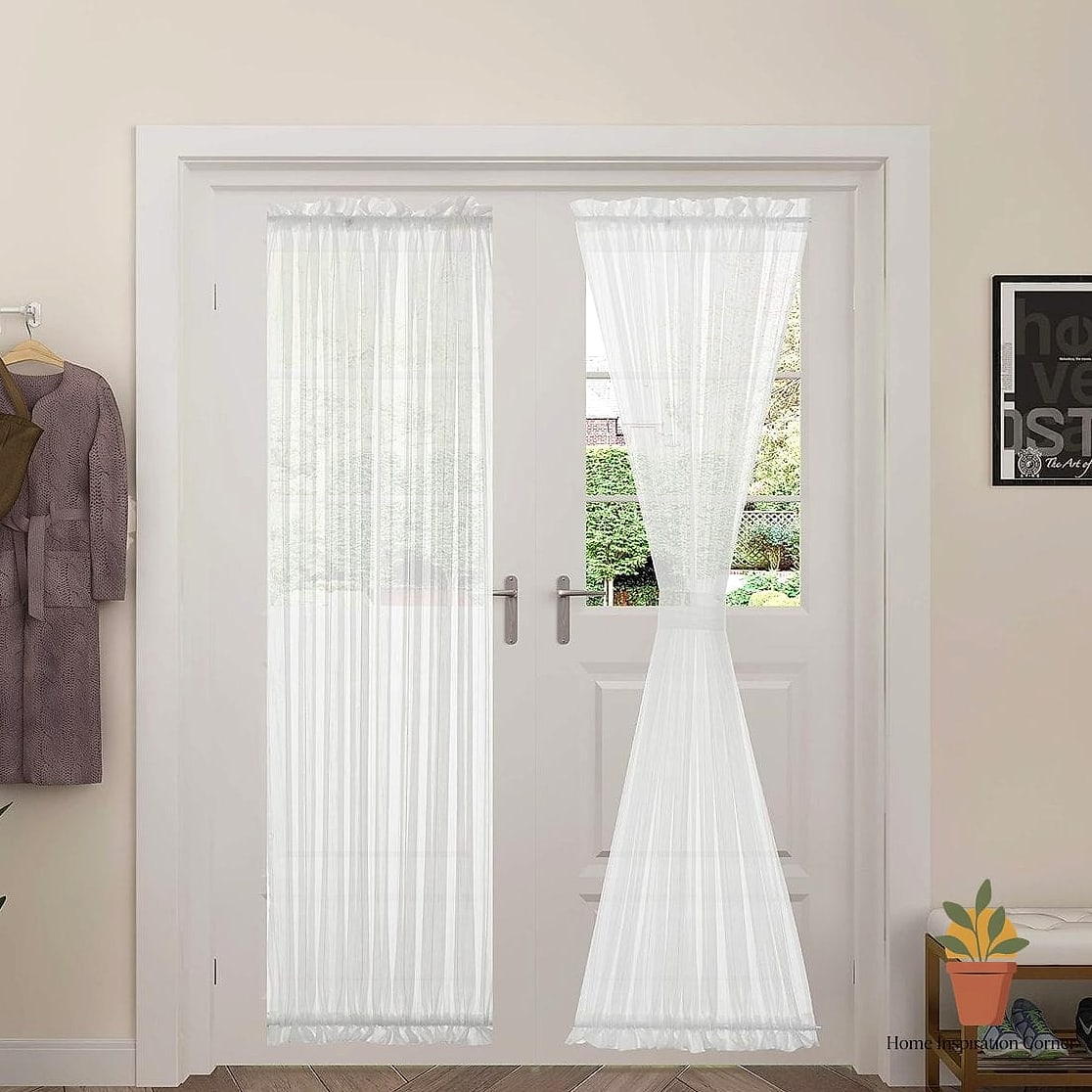
Layering a sheer panel with a heavier curtain gives you flexibility throughout the day. Keep the sheer closed for privacy and diffused light, then add the heavier panel at night for full coverage.
This concept works especially well in living rooms or dining areas where the patio door gets a lot of use throughout the day. You’re not stuck choosing between light and privacy — you get both, depending on what you layer.
Thrift stores and clearance racks are goldmines for this. You don’t need matching curtains from the same collection; a similar color family is enough to make it look pulled together.
Cordless Cellular Shades on Clearance
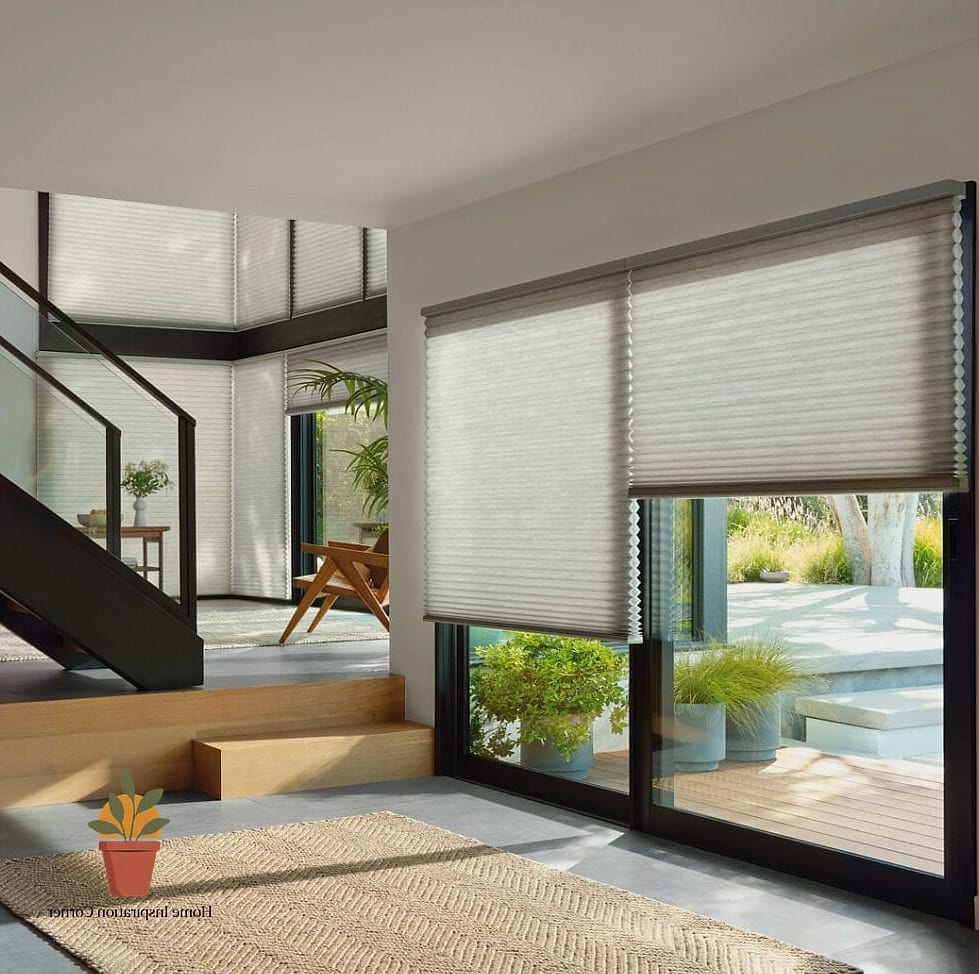
Cellular shades have gotten a bad reputation for being pricey, but clearance sections and off-season sales change that math fast. Cordless versions are especially great for patio doors since there’s no dangling cord getting in the way of the sliding mechanism.
These shades also add a layer of insulation, which is a nice bonus if your patio door tends to let in drafts. That’s a practical perk that goes beyond just looks — lower energy bills are always welcome.
Light filtering options let daylight through softly, while room-darkening versions work well if the door is in a bedroom or media room. Either way, they stack neatly at the top when raised, keeping the view clear.
A No-Sew Fabric Valance With Store-Bought Panels
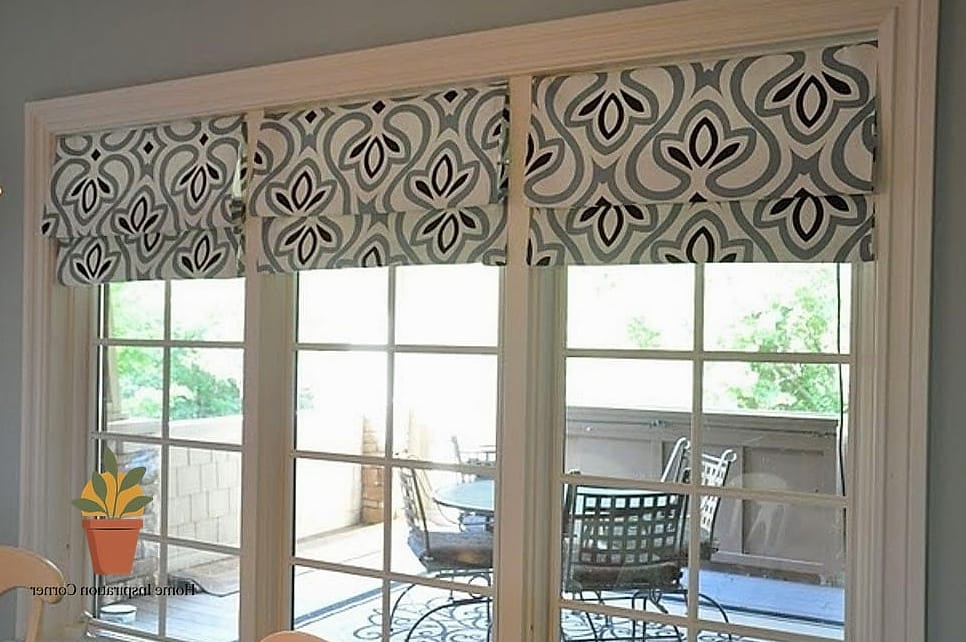
If you want a finished, layered look without full-length treatments, pair a simple no-sew valance with basic ready-made panels. The valance adds a tailored top detail while the panels handle the actual coverage.
This works well in kitchens or dining spaces near a patio door, where floor-length curtains might feel like too much. A shorter valance keeps things airy while still framing the glass nicely.
You can make the valance from remnant fabric using fusible hem tape, which keeps the whole project firmly in DIY territory. It’s an easy weekend project that makes a rental or starter home feel more finished.
Final Thoughts
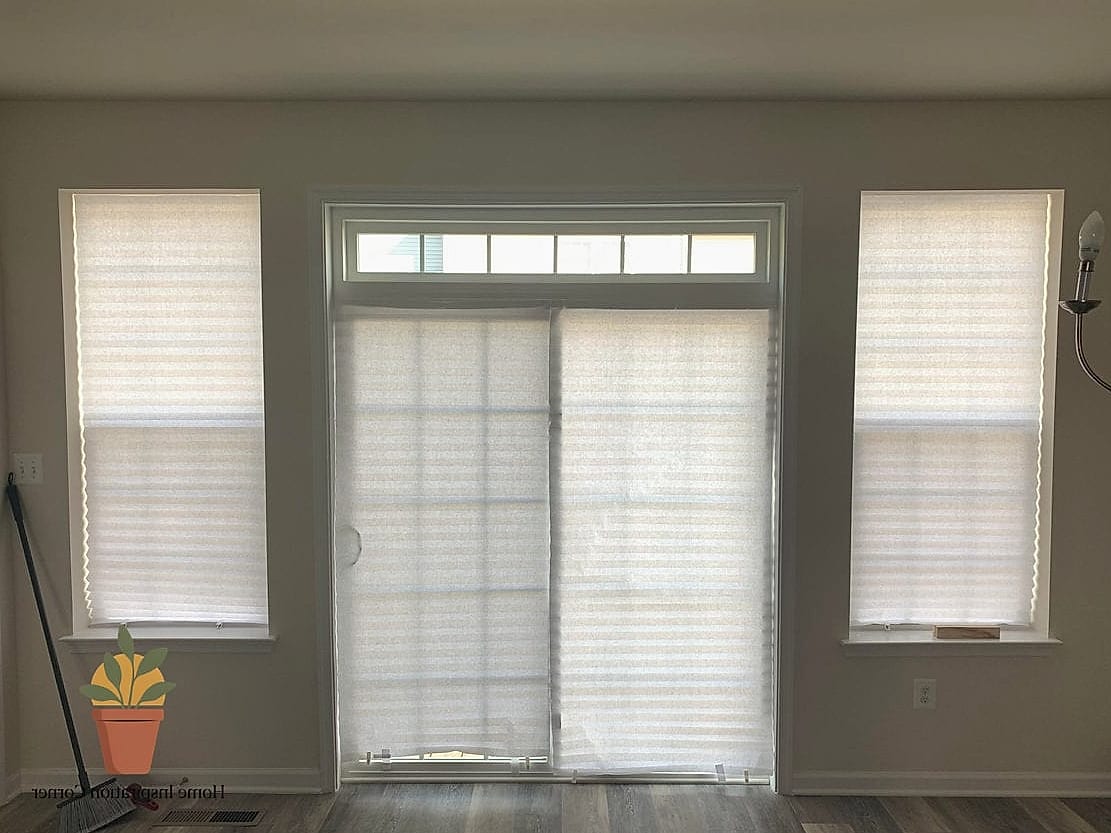
Dressing a patio door doesn’t have to mean choosing between a bare window and a treatment that costs more than the door itself. Most of these options use materials you can find at a regular home store, a thrift shop, or even in your linen closet already.
The best approach really depends on your space — how much privacy you need, how much light you want to keep, and whether you’re renting or staying put. Mix and match a couple of these concepts if you need to, since there’s no rule saying you have to pick just one.
Whatever direction you go, patio door window treatments don’t need a big budget to look intentional. Sometimes the simplest, most affordable fix ends up being the one you love living with the most.