
9 Backyard House Before and After Transformations to Inspire
- From Dead Grass to a Low-Maintenance Gravel Patio
- Turning a Bare Concrete Slab Into an Outdoor Living Room
- Overgrown Side Yard Reimagined as a Narrow Garden Path
- A Plain Wood Fence Gets a Board-and-Batten Upgrade
- Empty Corner Transformed Into a Cozy Fire Pit Nook
- Sad Wooden Deck Rebuilt With Composite Decking
- Blank Backyard Wall Turned Into a Vertical Herb Garden
- Cluttered Storage Area Hidden Behind a Custom Screen
- Flat, Empty Lawn Transformed Into a Multi-Level Garden Bed Layout
9 Backyard House Before and After Transformations to Inspire
There’s something almost addictive about a good before and after photo. One minute you’re looking at a patch of dead grass and a sad concrete slab, and the next you’re staring at what looks like a boutique hotel courtyard. I’ve spent years pulling ideas from backyard renovations, and the transformations that stick with me are never the ones with the biggest budgets. They’re the ones where someone looked at an awkward, underused space and figured out exactly what it needed.
If you’re standing in your own backyard right now feeling a little uninspired, this list is for you. These nine transformations cover everything from tiny patios to sprawling lawns, and each one proves you don’t need a magazine-worthy budget to make a real difference.
From Dead Grass to a Low-Maintenance Gravel Patio
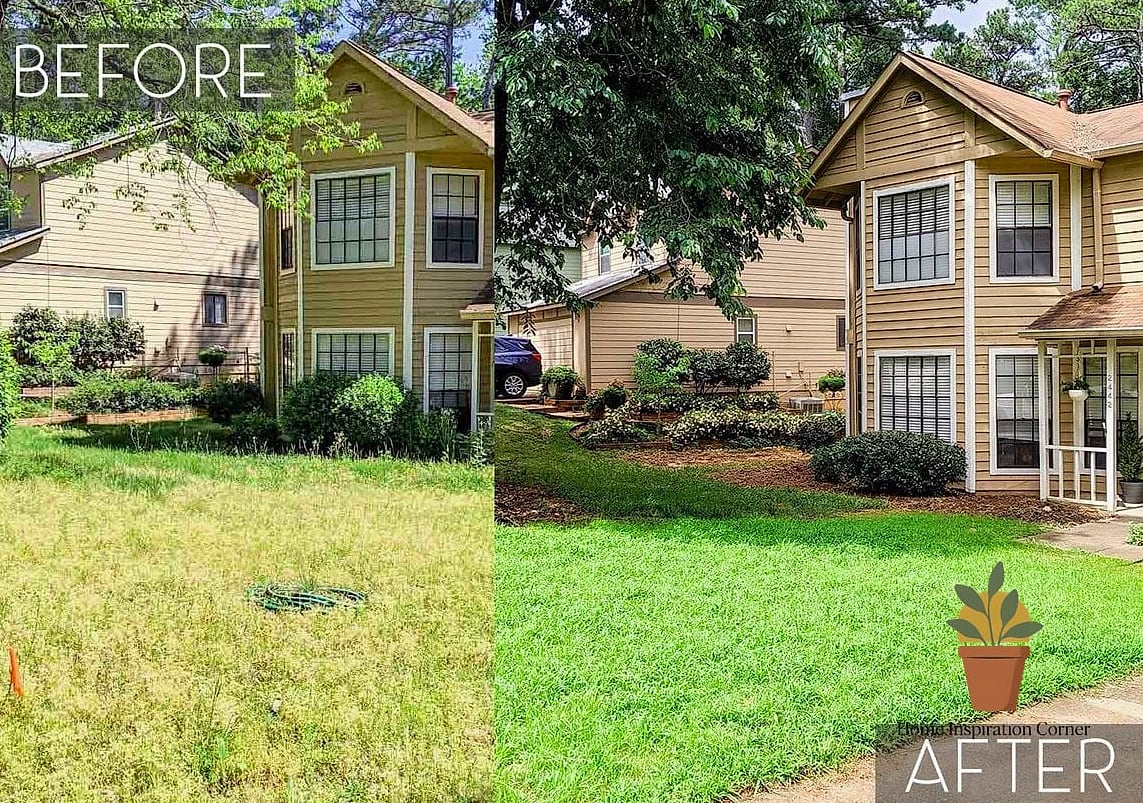
This is probably the most common backyard glow-up out there, and for good reason. A struggling lawn gets ripped out and replaced with a compacted gravel base, sometimes with pavers set into it for a defined seating area.
It works especially well in drier climates or yards that get partial shade, where grass just refuses to cooperate no matter what you do. Homeowners love this one because it cuts watering and mowing down to basically nothing.
For materials, decomposed granite gives a softer, more natural look, while pea gravel reads a little more modern and clean. Add a fire pit, a couple of Adirondack chairs, and some string lights, and the whole area suddenly feels intentional instead of neglected. Budget-wise, this is one of the more affordable transformations on this list, especially if you rent equipment and do the grading yourself.
Turning a Bare Concrete Slab Into an Outdoor Living Room
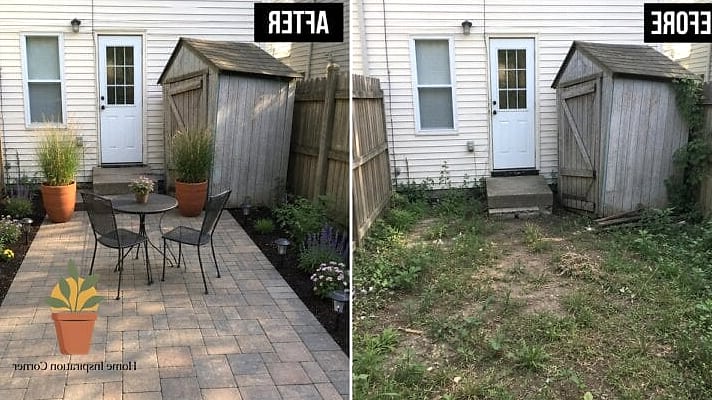
A lot of backyards have this one already, an unused concrete patio that’s been sitting there doing nothing. The transformation here isn’t structural at all, it’s purely about layering in furniture and texture.
This idea shines in yards where the patio is the only usable flat surface. Add an outdoor rug, a low sectional, a coffee table, and some oversized planters, and that slab suddenly reads like an extension of the living room.
Warm wood tones on furniture frames pair nicely with neutral cushions, and if you want something durable, look for fabrics rated for outdoor use so they hold up against sun fading. This project is renter-friendly too, since none of it is permanent. You can pack it all up if you move.
Overgrown Side Yard Reimagined as a Narrow Garden Path
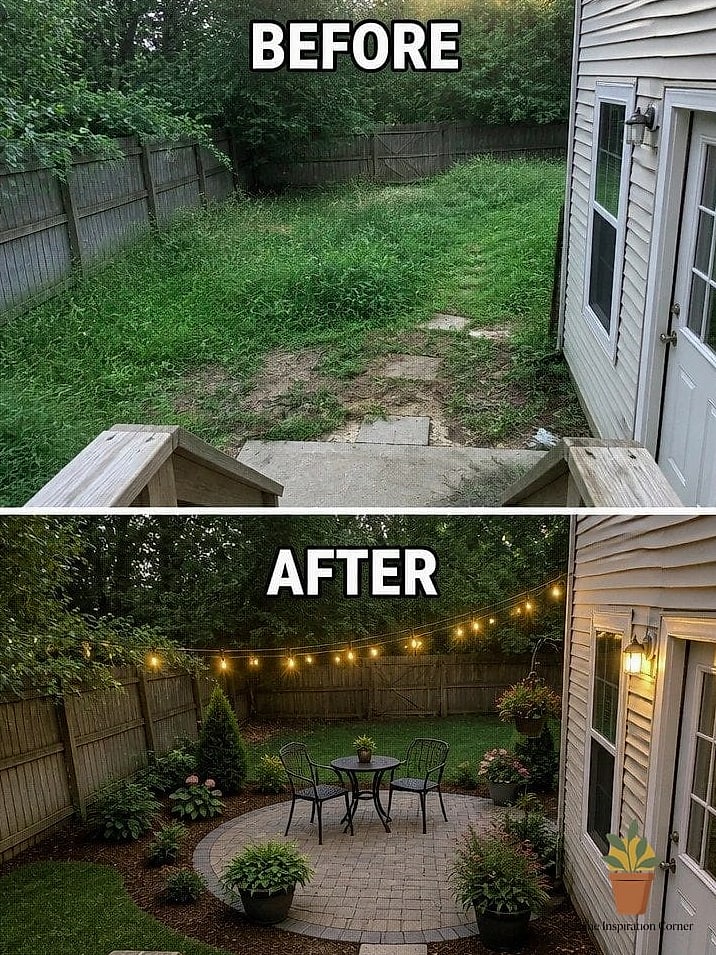
Side yards are the forgotten middle child of backyard design. They’re usually just a strip of dirt or weeds between the house and the fence, and most people ignore them completely.
One transformation I keep coming back to takes that narrow strip and turns it into a proper garden path with stepping stones, low-growing groundcover, and a few well-placed potted plants along the fence line.
This works particularly well for pet owners since a defined path keeps dogs from digging up random patches of dirt. Stick with hardy, low-maintenance plants like sedum or creeping thyme between the stones, since narrow spaces tend to get less consistent sun and water. It’s a small footprint project, but it makes the whole side of the house feel finished instead of forgotten.
A Plain Wood Fence Gets a Board-and-Batten Upgrade
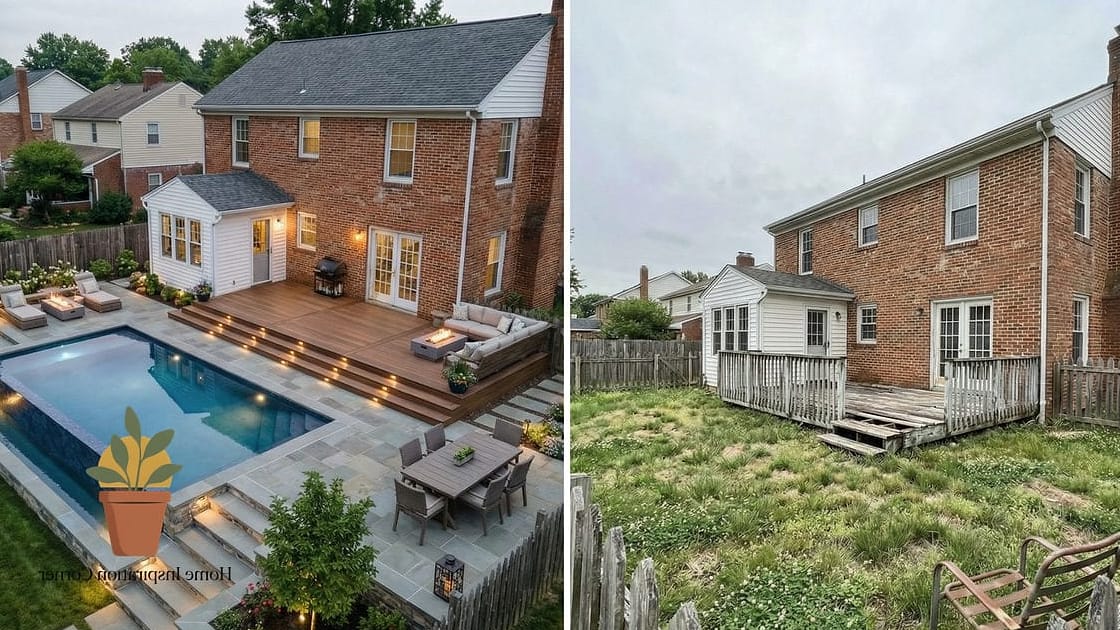
Sometimes the biggest visual change in a backyard has nothing to do with landscaping at all. Swapping a basic privacy fence for board-and-batten paneling instantly makes a yard feel more custom without touching a single plant.
This is a great option if your existing fence is structurally fine but just looks tired or dated. The vertical lines from the batten strips add texture and make the space feel taller and more architectural.
A dark charcoal or matte black stain has become the go-to choice lately, and it pairs beautifully with greenery since the plants pop against the darker background. It’s a moderately DIY-friendly project if you’re comfortable with basic tools, though it does take patience since you’re working board by board.
Empty Corner Transformed Into a Cozy Fire Pit Nook
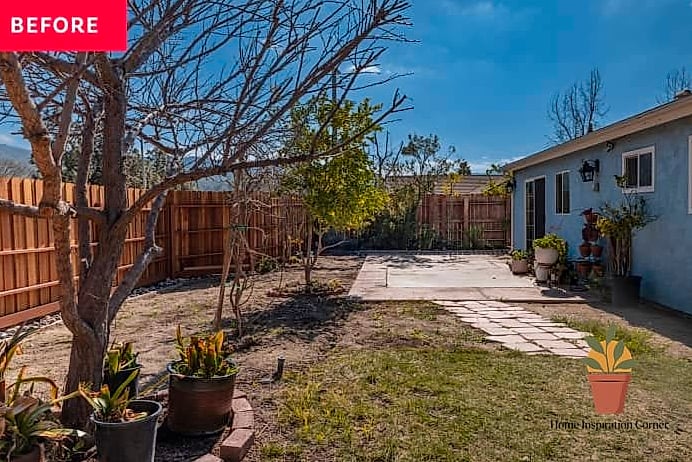
Every yard has that one dead corner nobody knows what to do with. One of my favorite transformations takes that exact spot and builds a fire pit nook using a simple ring of pavers or a prefab steel fire pit.
This idea works best in yards with at least a little bit of flat, open space away from the house and any low-hanging branches. Surround it with a few weatherproof chairs or a curved bench, and toss down an outdoor rug if you want it to feel a little more finished.
Natural stone pavers give a more timeless look, while a metal fire pit ring keeps things budget-friendly and easy to move if you change your mind later. Just make sure to check local regulations on open flames before committing.
Sad Wooden Deck Rebuilt With Composite Decking
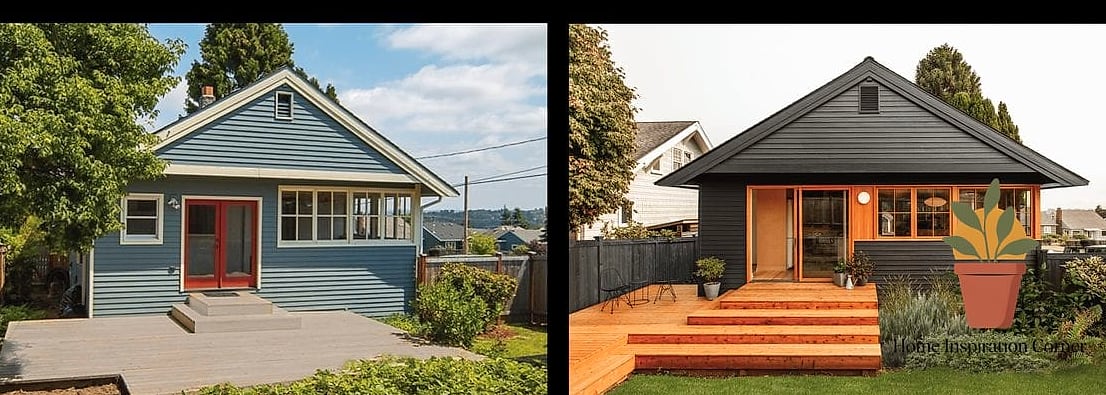
An old wooden deck that’s warped, splintering, or just plain gray with age is one of those problems that’s easy to ignore until it becomes a safety issue. Swapping it out for composite decking is a transformation that pays off in both looks and longevity.
This upgrade is ideal for homeowners who are tired of the annual staining and sealing that wood decks demand. Composite boards come in warm wood-tone colors now, so you don’t lose that natural look, you just lose the maintenance headache.
Add built-in bench seating along the edges for extra function without eating into your usable space, and consider a lighter color if your deck doesn’t get much shade, since darker composite can get surprisingly hot underfoot in direct sun. It’s a bigger investment than most items on this list, but it tends to last decades longer than wood.
Blank Backyard Wall Turned Into a Vertical Herb Garden
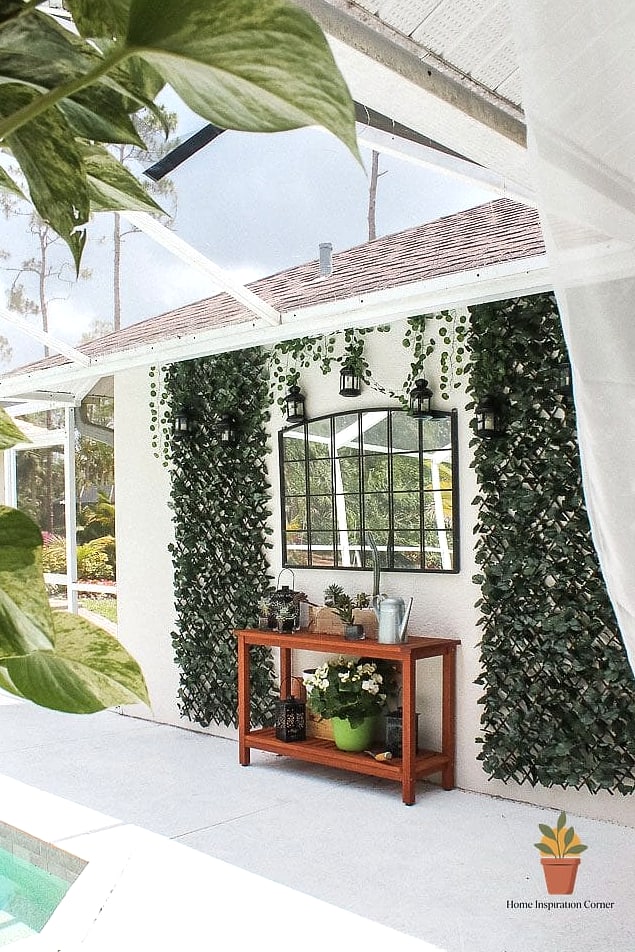
If you’re working with a small backyard or a wall that just stares back at you doing nothing, a vertical herb garden is one of the most satisfying transformations to pull off. Wall-mounted planters or a modular grid system let you grow herbs and small plants without using any ground space at all.
This works great near a kitchen door, so you can step outside and grab basil or rosemary while you’re cooking. It’s also a nice option for renters, since a lot of these systems mount with hooks or brackets that don’t require permanent drilling.
Terra cotta pots add a classic look, while galvanized metal planters lean more modern and industrial. Just keep in mind that vertical gardens dry out faster than in-ground beds, so a simple drip irrigation system can save you from daily watering duty.
Cluttered Storage Area Hidden Behind a Custom Screen
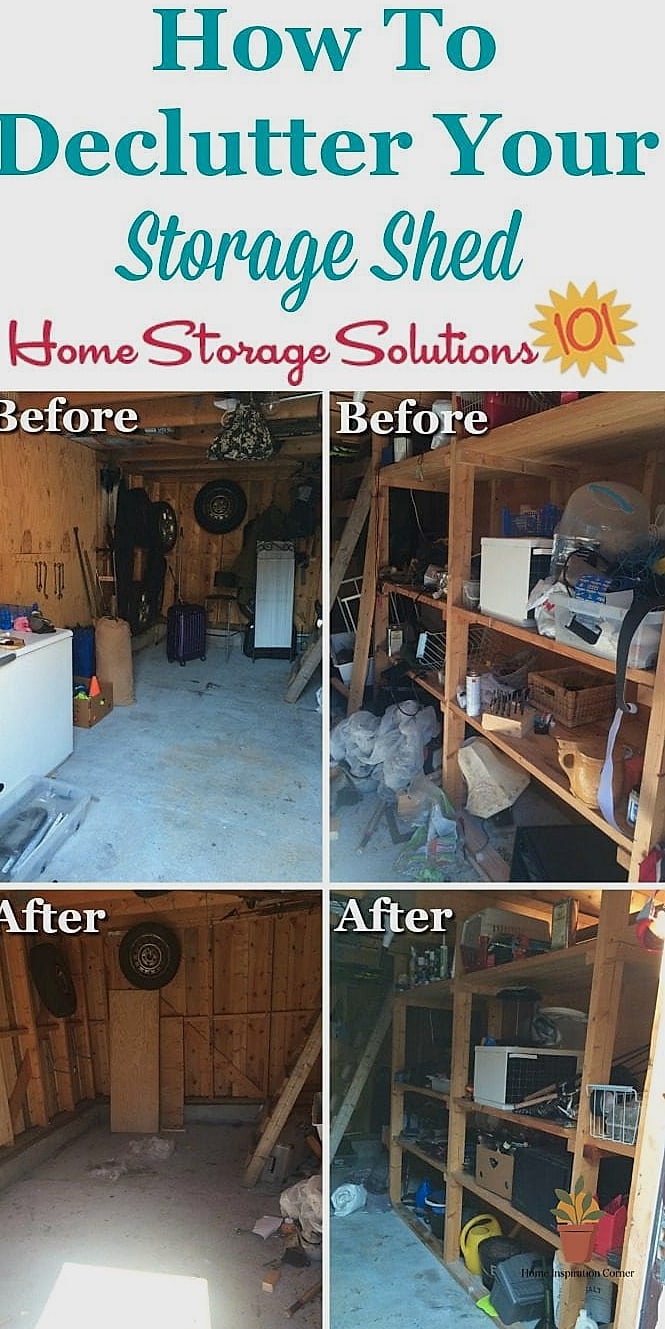
Trash cans, garden tools, pool equipment, it all has to live somewhere, and in a lot of backyards that somewhere is just out in the open. One transformation that quietly makes a huge difference is building a simple slatted screen or fence panel to hide that clutter from view.
This is especially useful for smaller backyards where storage areas end up front and center instead of tucked away. A horizontal slat design in a stained or painted wood gives you airflow while still blocking the eyesore behind it.
You can go simple with a few fence panels on hinges, or get a little more custom with a lockable gate if you’re storing anything valuable. Either way, it’s one of those upgrades that makes the whole yard feel more put-together, even though the change itself is pretty contained.
Flat, Empty Lawn Transformed Into a Multi-Level Garden Bed Layout
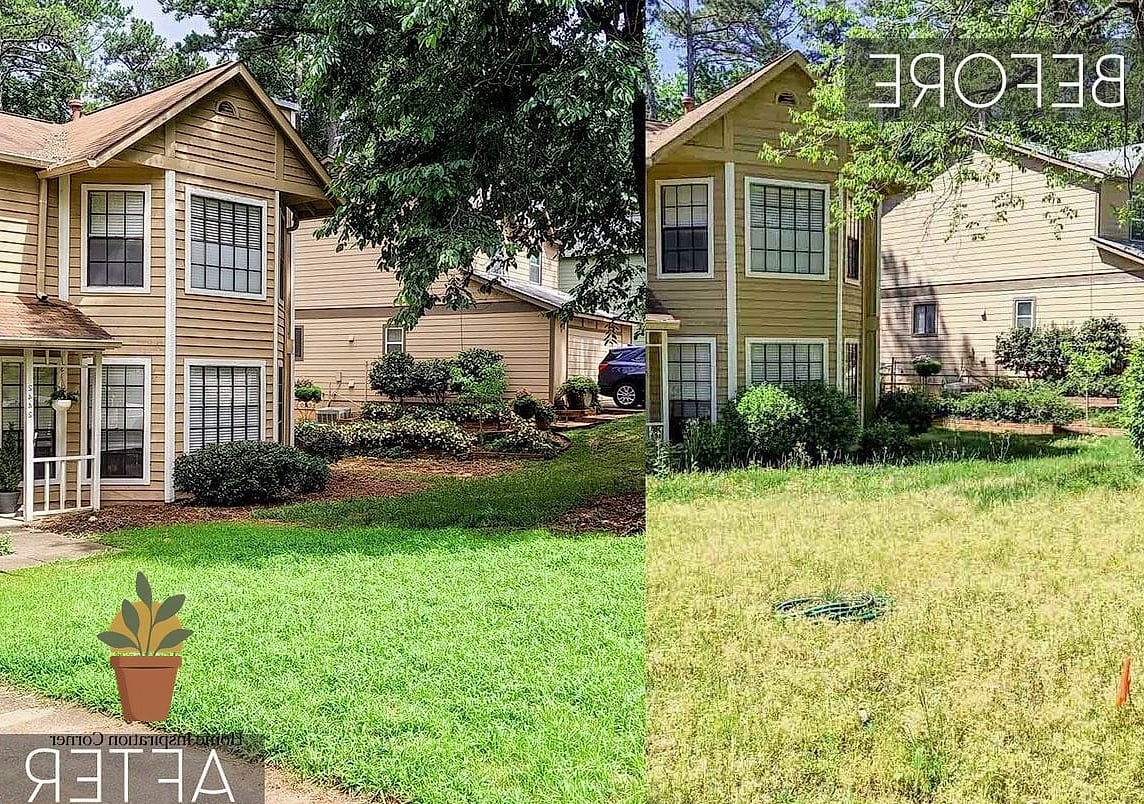
A completely flat lawn isn’t a bad thing, but it can feel a little uninspired, especially in larger backyards. Adding raised garden beds at varying heights creates depth and gives the eye something to travel across instead of one flat stretch of green.
This transformation works particularly well for families who want to get into growing their own vegetables but don’t want to deal with poor native soil. Raised beds let you control the soil quality completely, which matters a lot if your yard has heavy clay or drainage issues.
Cedar and redwood are popular choices since they naturally resist rot, though galvanized metal beds have become trendy too and tend to last even longer. Stagger the bed heights and add a mulched path between them, and suddenly a plain lawn turns into something that feels like an actual garden rather than just grass.
Final Thoughts
Looking back over these nine backyard house before and after transformations, the common thread isn’t money, it’s noticing what a space actually needs instead of what looks good on paper. A gravel patio solves a drainage problem. A screen hides clutter. A vertical garden makes use of a wall nobody was looking at anyway.
If you’re planning your own backyard update, start small. Pick the one area that bothers you the most every time you walk outside, and tackle that first. Once you see how much of a difference even one focused project makes, it’s hard not to get a little addicted to the process yourself.