
12 Flagstone Patio Ideas to Steal From Interior Designers
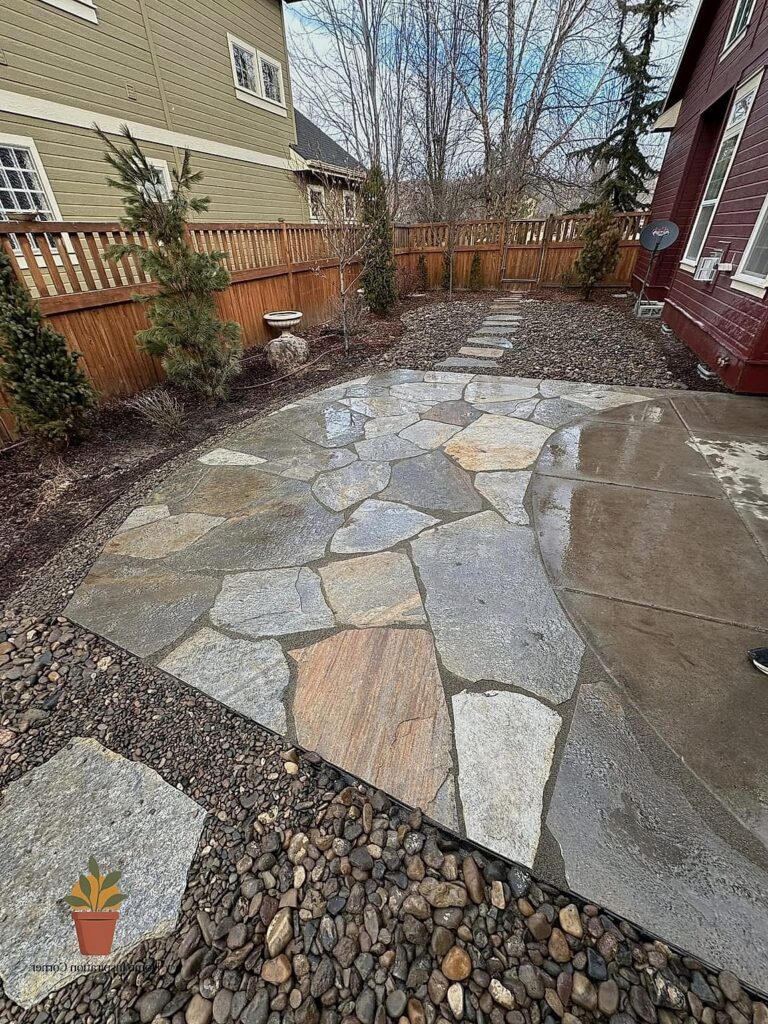
- Classic Random Flagstone with Wide Gravel Joints
- Tight-Fit Flagstone for a Cleaner, More Modern Look
- Flagstone Stepping Pads Set into a Lawn
- Bluestone Flagstone for a Cool, Sophisticated Palette
- Warm Sandstone Flagstone for a Desert or Southwestern Feel
- Flagstone Patio with a Built-In Fire Pit Ring
- Flagstone Steps That Blend Into the Patio Design
- Flagstone Paired with Moss or Creeping Thyme Ground Cover
- Multi-Colored Flagstone Mosaic Patio
- Raised Flagstone Patio with a Stacked Stone Retaining Wall
- Flagstone Patio with Inlaid Brick or Metal Banding
- Small-Scale Flagstone Patio for Balconies or Courtyards
12 Flagstone Patio Ideas to Steal From Interior Designers
Flagstone has this quiet confidence that other patio materials just don’t have. It’s irregular, earthy, and somehow looks intentional no matter how it’s laid out. Interior designers love it because it bridges the gap between a wild garden and a polished outdoor living space, and homeowners love it because it ages beautifully instead of just looking worn out.
If you’re planning a patio refresh or starting from scratch, these twelve ideas will give you a real sense of what’s possible with flagstone right now.
Classic Random Flagstone with Wide Gravel Joints
This is the look most people picture when they hear the word flagstone. Irregular stones are fitted together like a puzzle, with the gaps filled in using pea gravel or crushed granite instead of mortar.
It works especially well for casual backyard patios, cottage-style homes, and anywhere you want the space to feel like it grew naturally rather than got installed. The gravel joints also help with drainage, which matters a lot if you live somewhere with heavy rain.
Maintenance is pretty low, though you’ll want to top off the gravel every so often as it settles or gets kicked around. Budget-wise, this is one of the more affordable ways to use flagstone since you’re skipping the mortar and skilled masonry labor.
Tight-Fit Flagstone for a Cleaner, More Modern Look
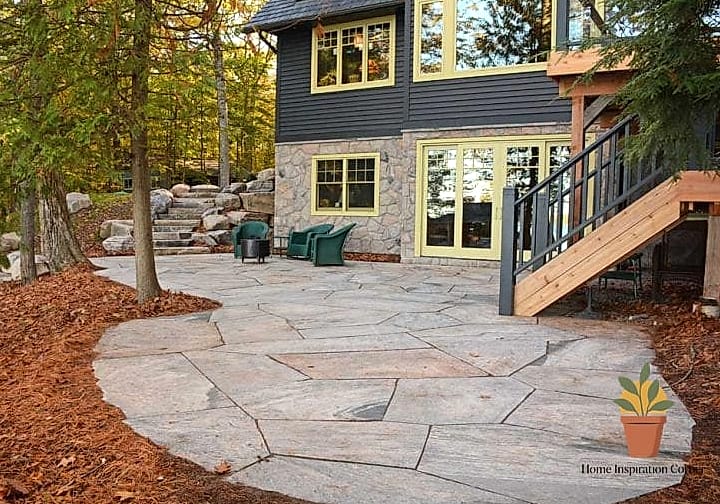
If the gappy, rustic version isn’t your speed, ask your installer about a tight-fit or “fitted” flagstone pattern. The pieces are cut and arranged so the joints are barely visible, giving you a surface that reads almost like a natural stone floor.
This version shows up a lot in modern and transitional outdoor designs, especially around pools or near sleek architectural homes. It photographs beautifully too, which is probably why designers keep using it in portfolio shots.
It does require more skilled labor and precise cutting, so it costs more upfront. But the payoff is a patio that feels elevated without losing that organic, natural stone texture people love flagstone for in the first place.
Flagstone Stepping Pads Set into a Lawn
Instead of one continuous patio surface, individual flagstone pieces are spaced out and set directly into grass, creating a path-like feel even in a stationary sitting area. It’s a favorite for cozy fire pit zones or small seating nooks tucked into a larger yard.
Homeowners love this option because it keeps things feeling soft and green rather than fully hardscaped. It’s also one of the more budget-friendly flagstone ideas since you’re using fewer stones overall.
The tradeoff is upkeep. You’ll need to trim around each stone regularly, and the grass between them can get muddy in wet climates. It’s a great fit for drier regions or anyone who doesn’t mind a little extra lawn maintenance.
Bluestone Flagstone for a Cool, Sophisticated Palette
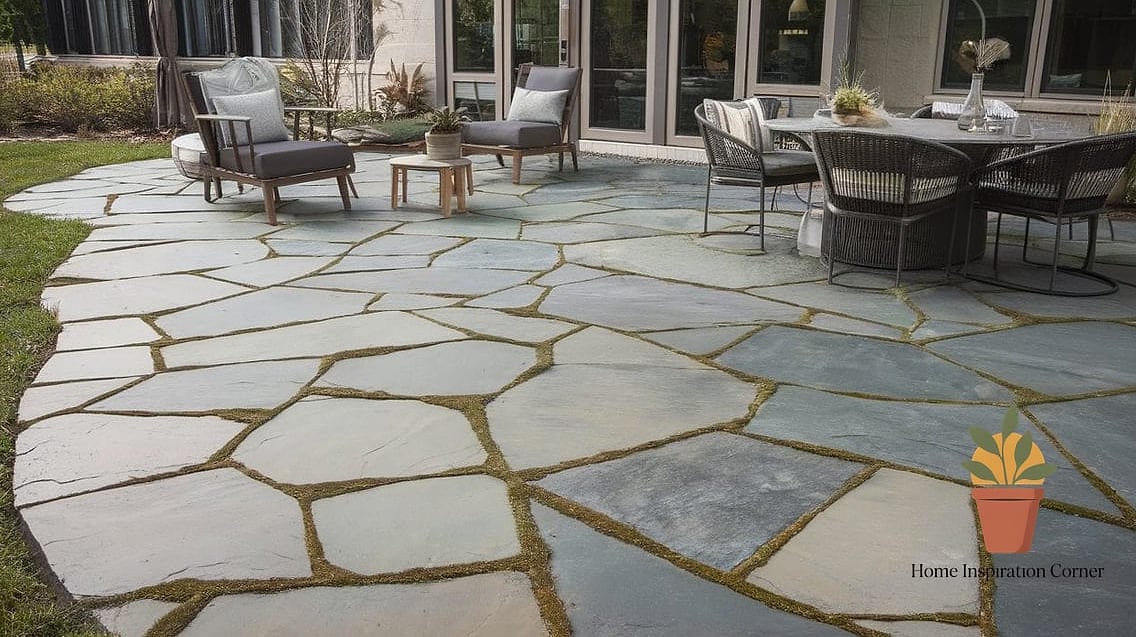
Not all flagstone looks the same, and bluestone is a favorite among designers for good reason. It has these soft blue-gray undertones that pair beautifully with white or gray home exteriors, black metal furniture, and modern landscaping.
It tends to show up most in Northeastern homes and coastal-adjacent properties, though honestly it works just about anywhere you want a cooler, more refined color story outdoors. Thermal bluestone (with a slightly textured, non-slip surface) is a smart pick for pool decks.
It’s a mid-to-high price point depending on your region, since bluestone often needs to be shipped in. Sealing it every couple of years keeps the color rich and helps prevent staining from leaves or dirt.
Warm Sandstone Flagstone for a Desert or Southwestern Feel
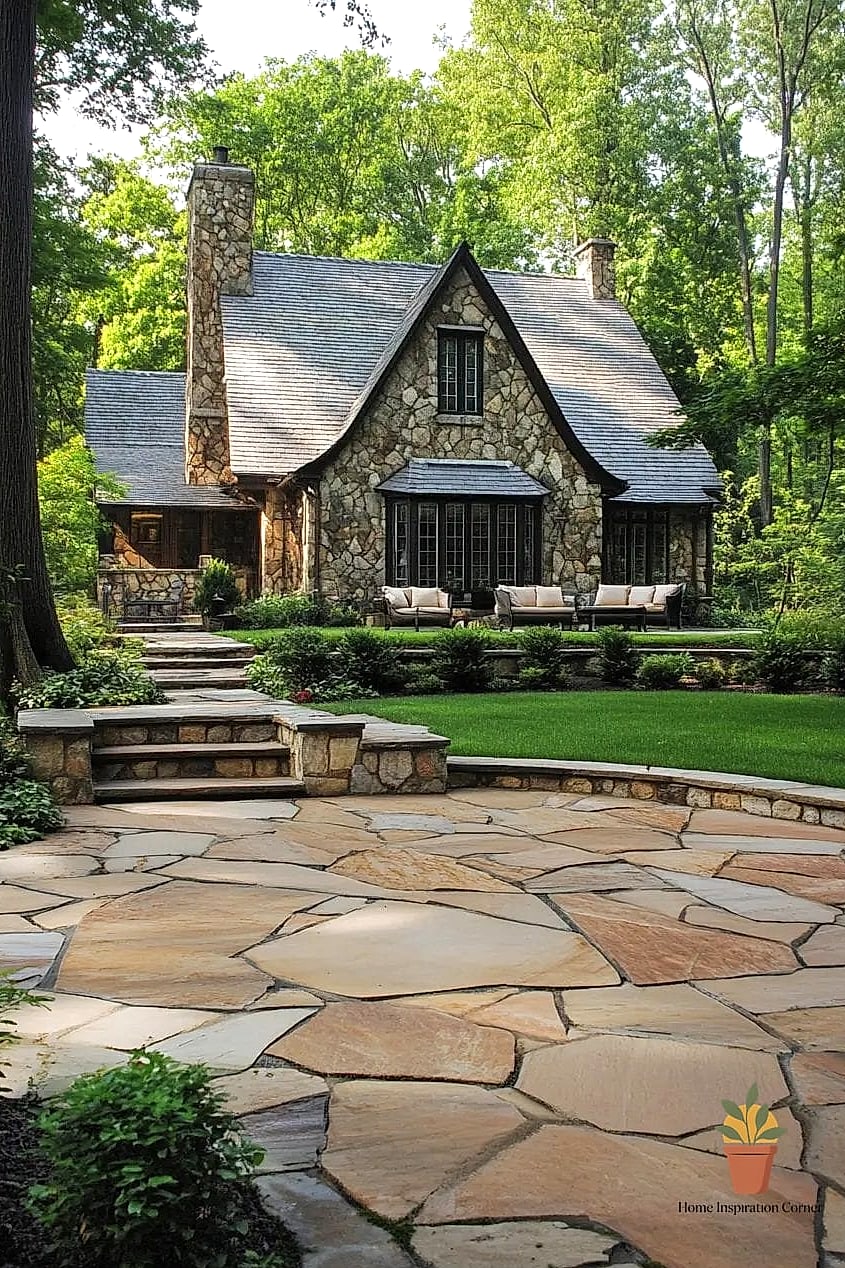
Sandstone flagstone leans into warm tans, oranges, and rust tones that feel right at home in Southwestern, Mediterranean, or desert-inspired backyards. It has a slightly softer, more textured surface than bluestone, which gives it a very grounded, sun-baked personality.
This is a great choice if your home already has warm wood tones, terracotta planters, or stucco exterior walls you want to tie into the patio. It creates that cohesive, everything-belongs-together look designers are always chasing.
Sandstone is a bit more porous than other flagstone types, so sealing it isn’t optional here, it’s essential. Without it, you’ll deal with more staining from spills, dirt, and organic debris over time.
Flagstone Patio with a Built-In Fire Pit Ring
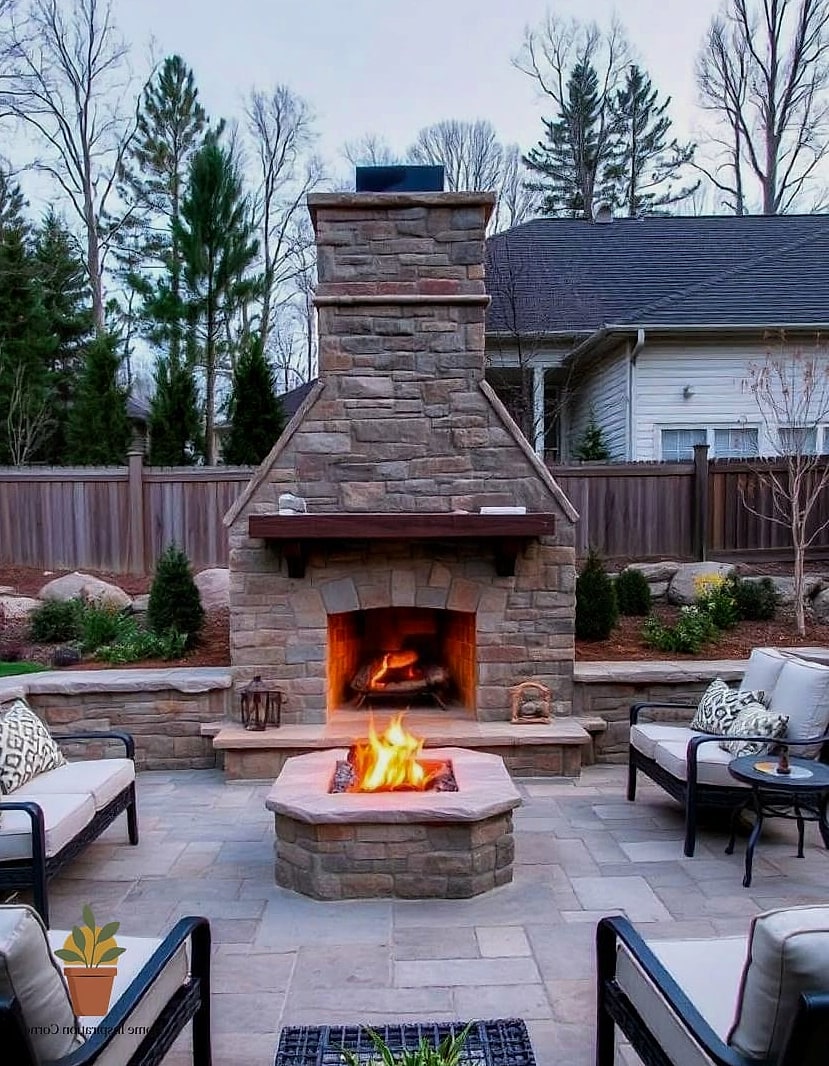
Pairing flagstone with a circular fire pit area is one of those combinations that just works. The irregular stone softens the geometry of the fire pit, and the whole setup feels more like an outdoor living room than a random backyard feature.
This idea shines in larger backyards where you want a defined gathering spot separate from the main dining or lounging area. Add some Adirondack chairs or a built-in stone bench ring, and you’ve basically created a year-round hangout spot.
Budget can vary a lot here depending on whether you go with a simple metal fire pit insert or a custom stone surround. Either way, keep gravel or a fire-safe hard surface directly around the pit for practicality and safety.
Flagstone Steps That Blend Into the Patio Design
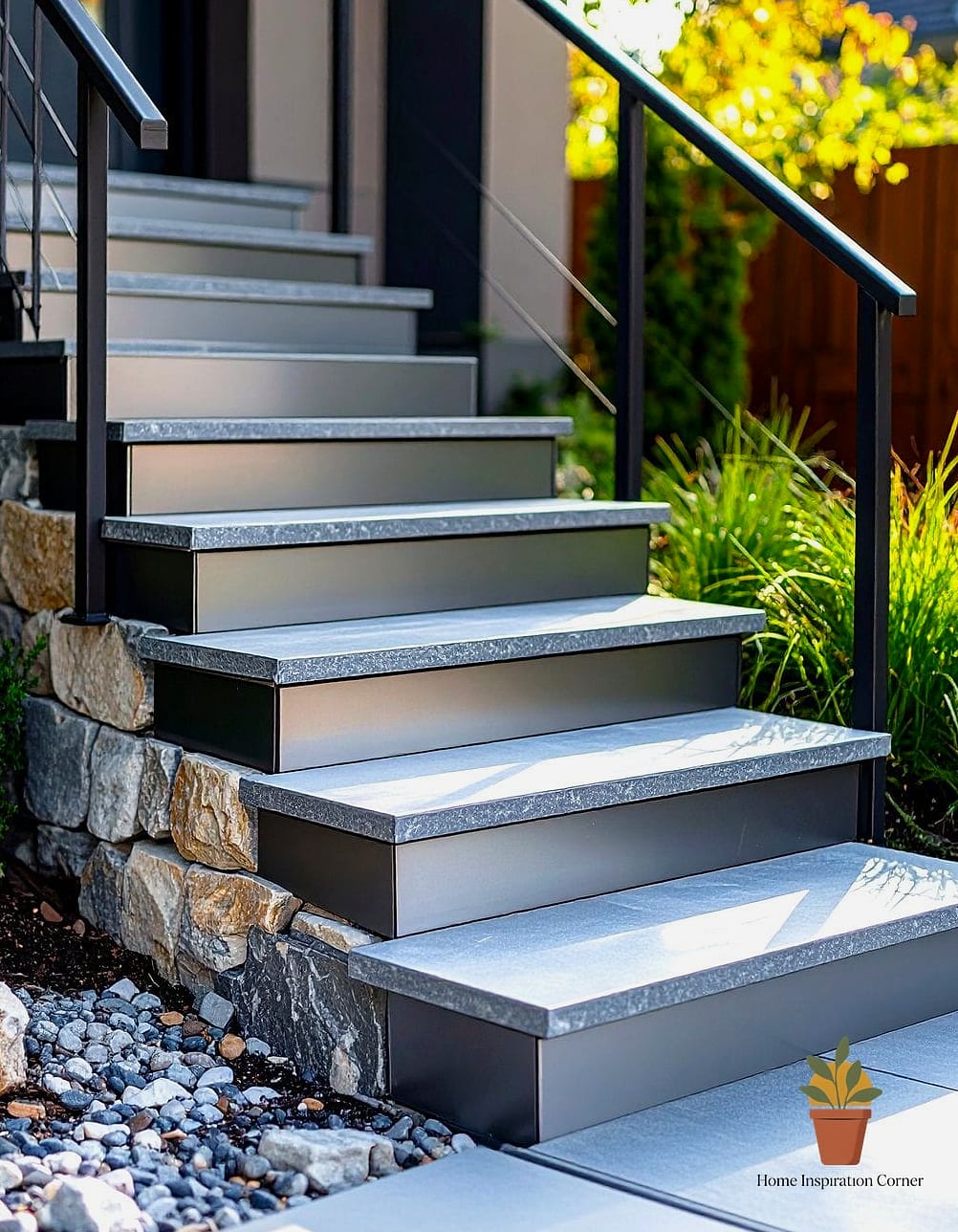
Instead of treating steps as an afterthought, some of the best flagstone patios use the same stone for both the patio surface and any steps leading up to it. This creates a seamless, custom look rather than a jarring transition between materials.
It’s a smart move for sloped yards or multi-level outdoor spaces, and it reads as much more expensive and cohesive than mixing materials halfway through the design. Designers use this trick constantly to make outdoor spaces feel like one continuous thought.
Installation is more labor-intensive since each step needs to be cut and fitted individually. But if you’re already investing in a flagstone patio, extending it to the steps is often worth the extra cost for how polished the final result looks.
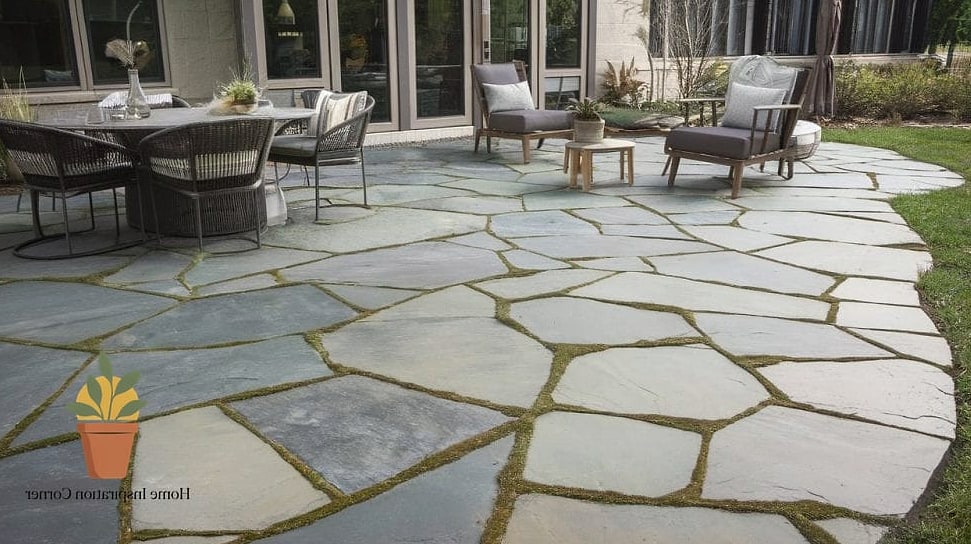
Flagstone Paired with Moss or Creeping Thyme Ground Cover
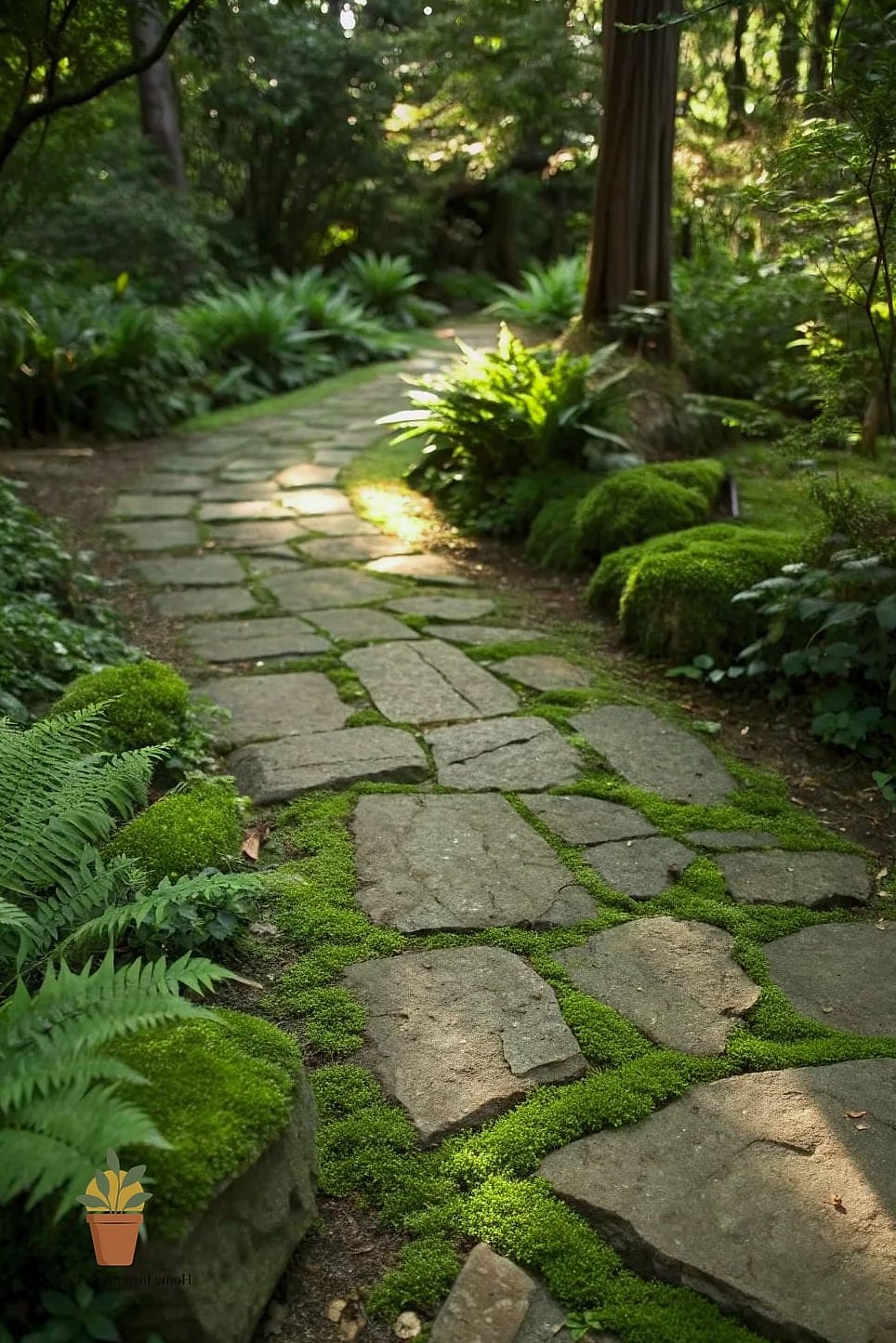
For a softer, more whimsical look, some designers plant low ground covers like moss, creeping thyme, or Irish moss in the joints between flagstone pieces instead of gravel or mortar. It’s a favorite in shaded gardens and cottage-style backyards.
Creeping thyme even releases a light herbal scent when you walk across it, which is a small detail that makes a huge difference in how a space feels. It’s genuinely one of my favorite upgrades because it’s subtle but people always notice something feels special.
This option needs a bit more care than gravel joints, since you’re maintaining living plants. Moss prefers shade and consistent moisture, while creeping thyme wants more sun, so match the ground cover to your patio’s actual light conditions.
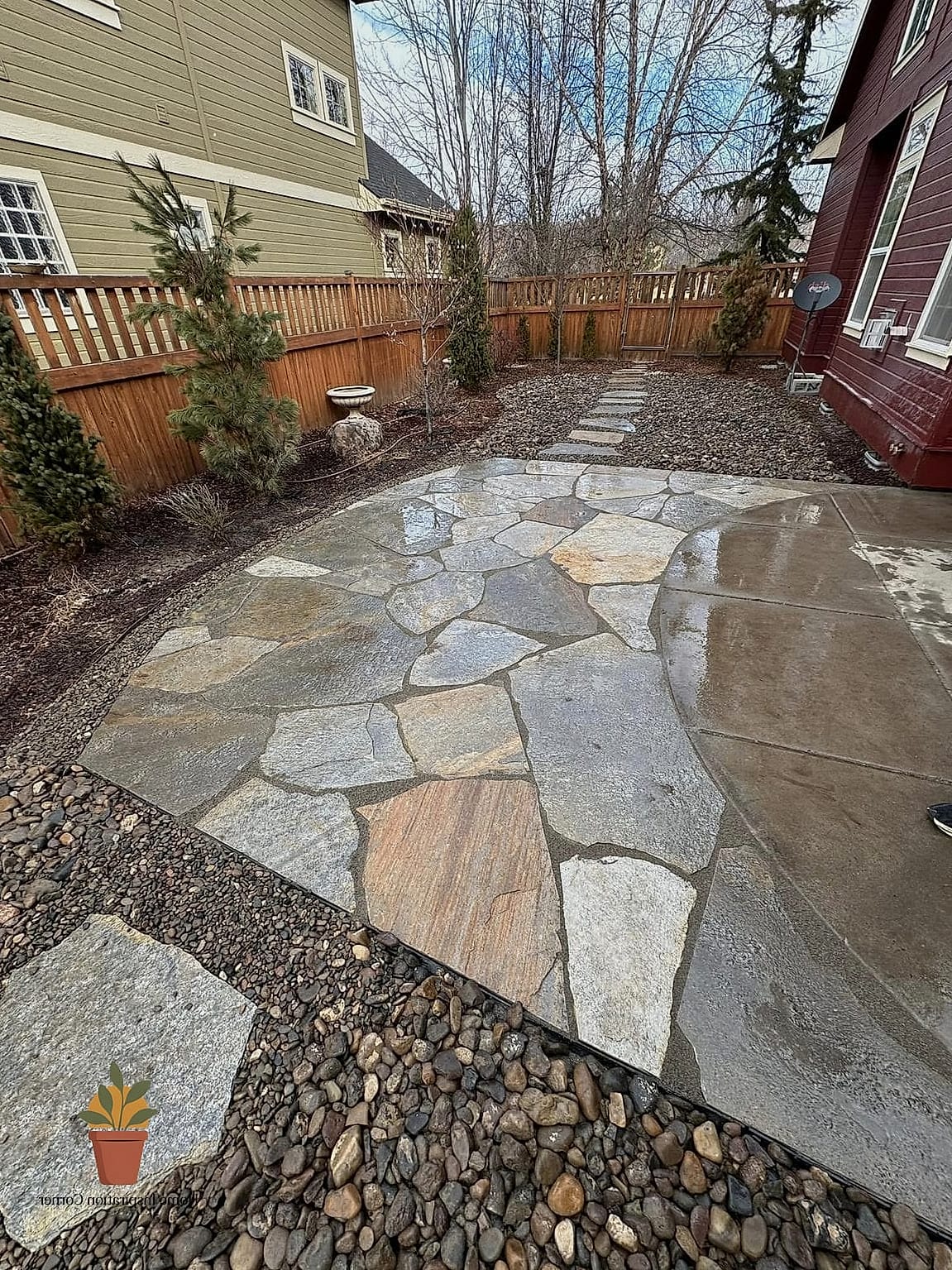
Multi-Colored Flagstone Mosaic Patio
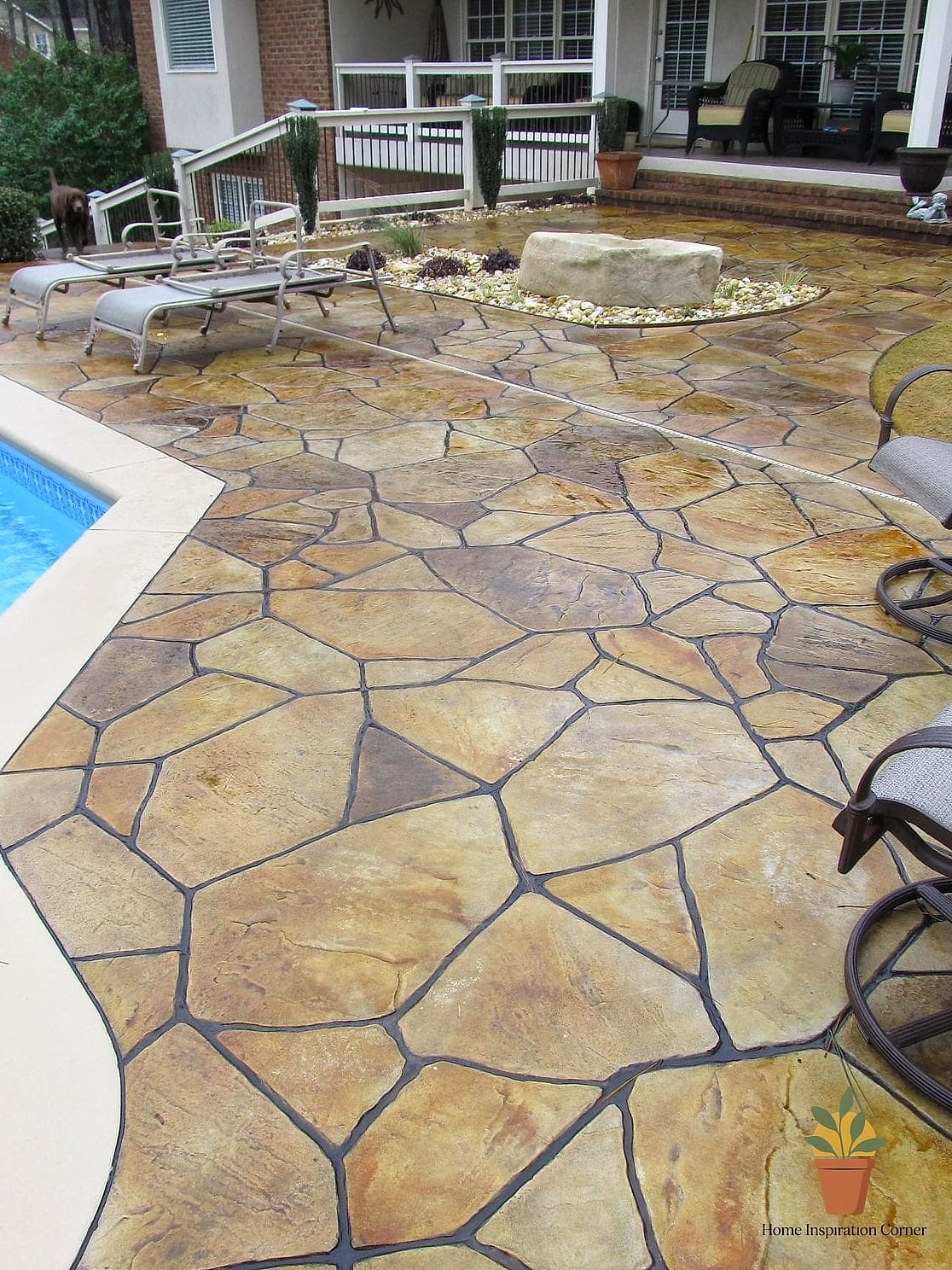
Rather than sticking to one stone color, some patios mix several flagstone tones together, think tans, grays, and rusty reds, arranged almost like a mosaic. It creates visual movement and works especially well in larger patios that could otherwise feel flat or monotonous.
This approach is popular in rustic, farmhouse, and eclectic outdoor designs where a little unpredictability is part of the charm. It also happens to be a practical choice if you’re sourcing stone locally, since quarries often sell mixed-color pallets at a lower cost than sorted single-tone stone.
The main thing to watch is balance. A good installer will distribute the colors evenly across the space instead of clustering similar tones together, which keeps the mosaic effect looking intentional rather than accidental.
Raised Flagstone Patio with a Stacked Stone Retaining Wall
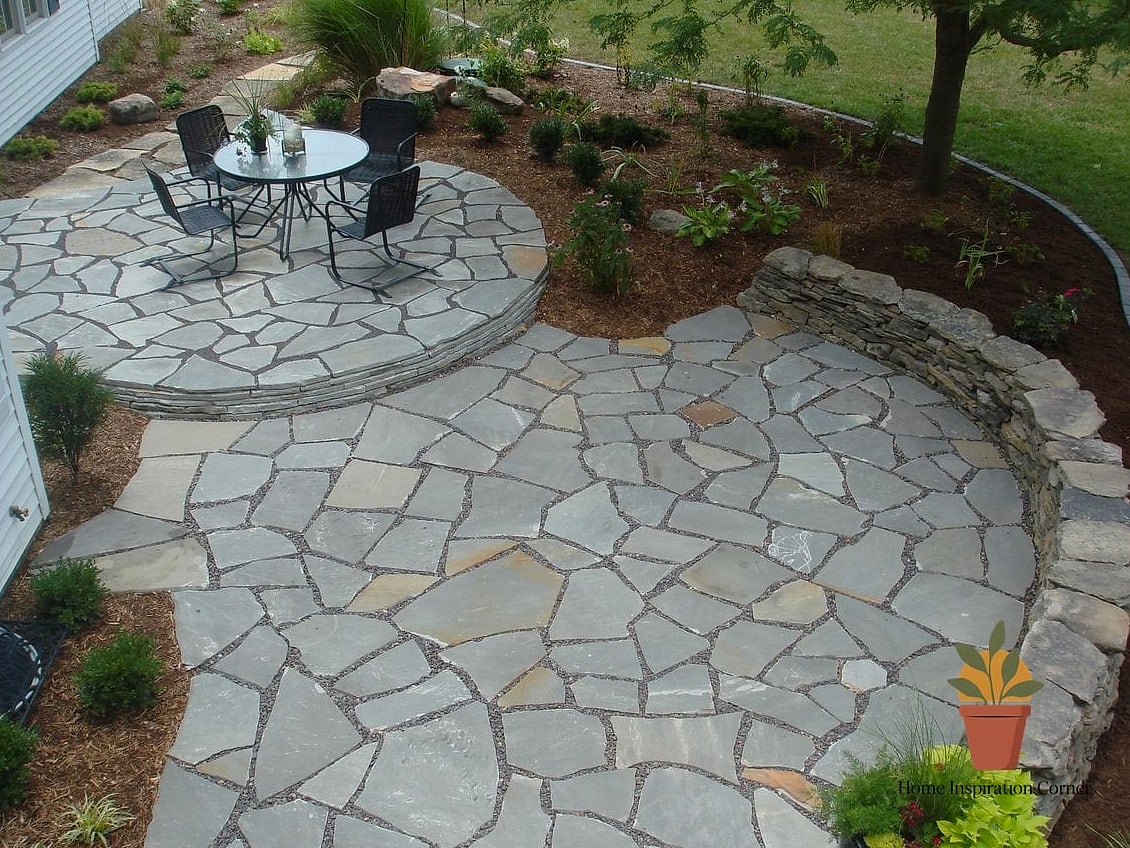
On sloped properties, a raised flagstone patio paired with a stacked stone retaining wall solves a practical problem while looking genuinely great. The wall creates a defined edge, and using coordinating stone for both the wall and patio ties the whole thing together.
This setup works well for backyards that need better drainage management or extra usable flat space where the yard naturally slopes. It also adds a nice sense of elevation and privacy compared to a flush, ground-level patio.
Because it involves structural retaining elements, this is one of the more expensive and technically demanding options on this list. It’s worth hiring a landscape professional rather than tackling it as a weekend DIY project.
Flagstone Patio with Inlaid Brick or Metal Banding
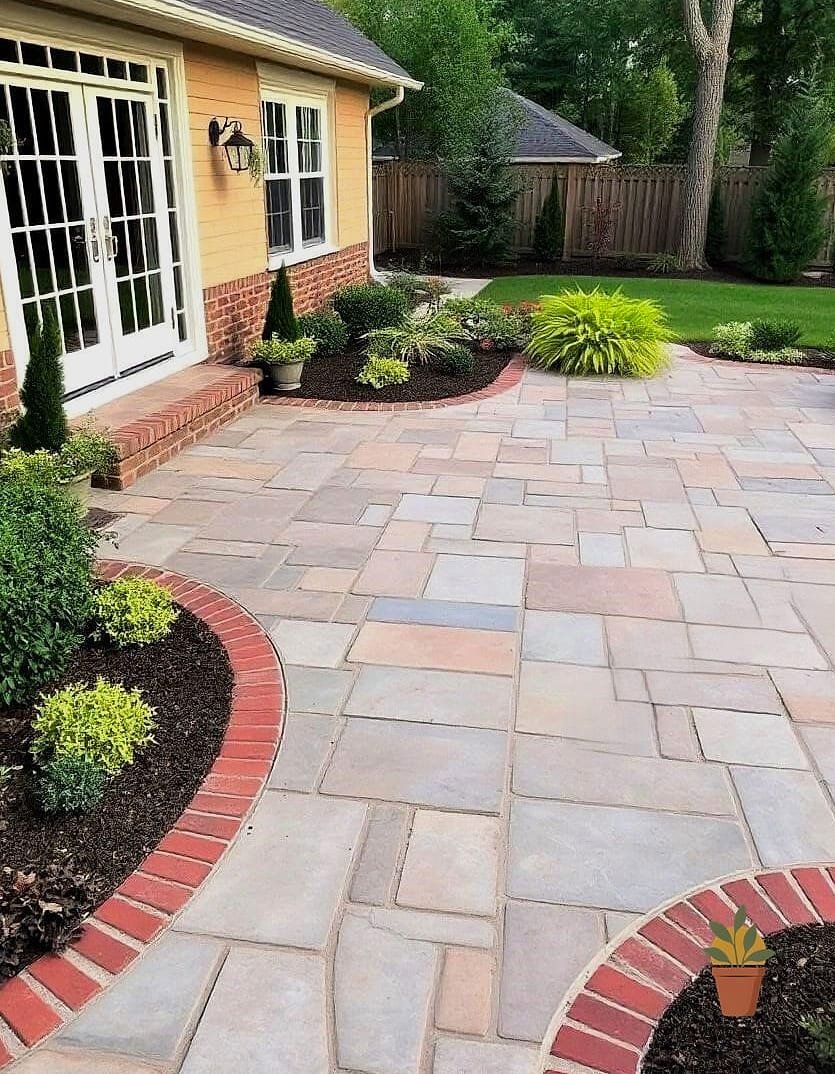
Adding a thin band of brick, metal edging, or contrasting stone within a flagstone patio creates a subtle design detail that separates zones, like distinguishing a dining area from a lounge space, without needing walls or furniture to do it.
This idea is especially popular in more curated, designer-driven outdoor spaces where every element feels purposeful. A copper or brass metal band can also pick up on other warm metal accents you’re using in outdoor lighting or furniture.
It does add complexity and cost to installation since you’re working with multiple materials that need to meet cleanly. But the visual payoff, especially from a bird’s-eye view or upstairs window, is honestly pretty striking.
Small-Scale Flagstone Patio for Balconies or Courtyards
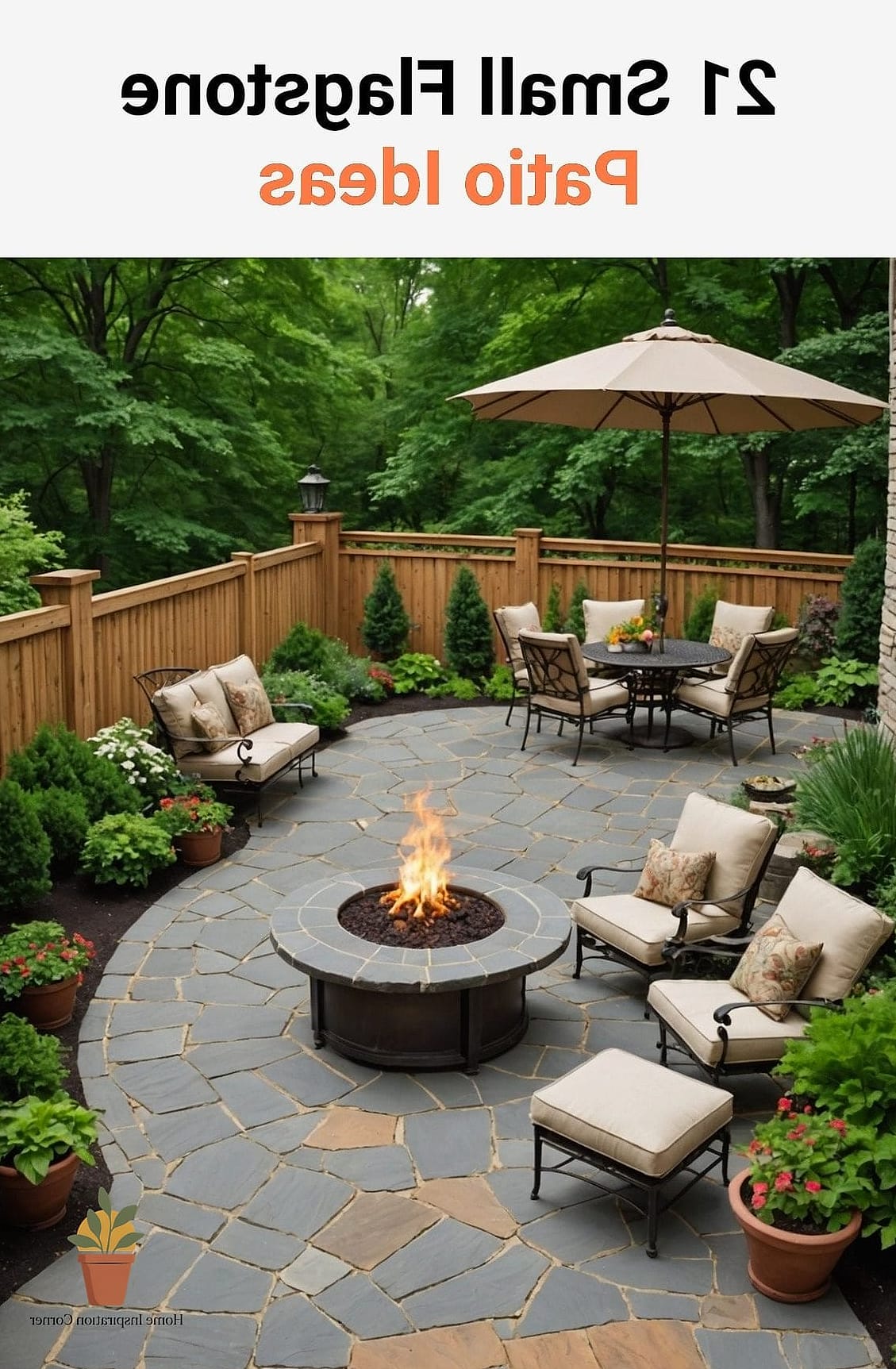
Flagstone isn’t just for sprawling backyards. Thin-cut flagstone tiles can be used on smaller balconies, courtyards, or even rooftop spaces to bring that same natural stone texture into a compact footprint.
This is a great option for townhomes, city gardens, or anyone working with a smaller outdoor area who still wants that organic, high-end material instead of standard concrete pavers. Lighter stone colors can also help a small space feel a bit more open.
Weight matters here, especially for elevated balconies, so thin-cut or lightweight flagstone tiles are usually the way to go rather than full-thickness stone. It’s worth checking your structure’s weight capacity before committing to a design.
Final Thoughts
Flagstone is one of those materials that rewards a little planning without demanding perfection, which is probably why designers keep coming back to it. Whether you go with tight, modern joints or a loose, gravel-filled cottage look, the beauty of flagstone is that it never really goes out of style. Pick the version that fits how you actually use your outdoor space, and the rest tends to fall into place.