7 Backyard Art Studio Before and After Transformations to Inspire
7 Backyard Art Studio Before and After Transformations to Inspire
If you’ve ever daydreamed about having a creative space that’s actually separate from your kitchen table or a cluttered corner of the garage, you’re going to love this roundup. Backyard art studios have become one of the most popular small-structure projects out there, and it’s easy to see why. They give you privacy, natural light, and a spot that’s entirely dedicated to making a mess without anyone complaining about paint on the carpet.
What I love most about these transformations is how different they can look depending on your budget, your yard, and your personal style. Some folks start with a falling-apart shed and turn it into something magazine-worthy. Others build from scratch with big windows and polished concrete floors. Either way, watching the before and after is genuinely satisfying.
Let’s walk through seven real-feeling transformations that show just how much potential a backyard structure can have.
The Forgotten Shed Turned Bright Studio
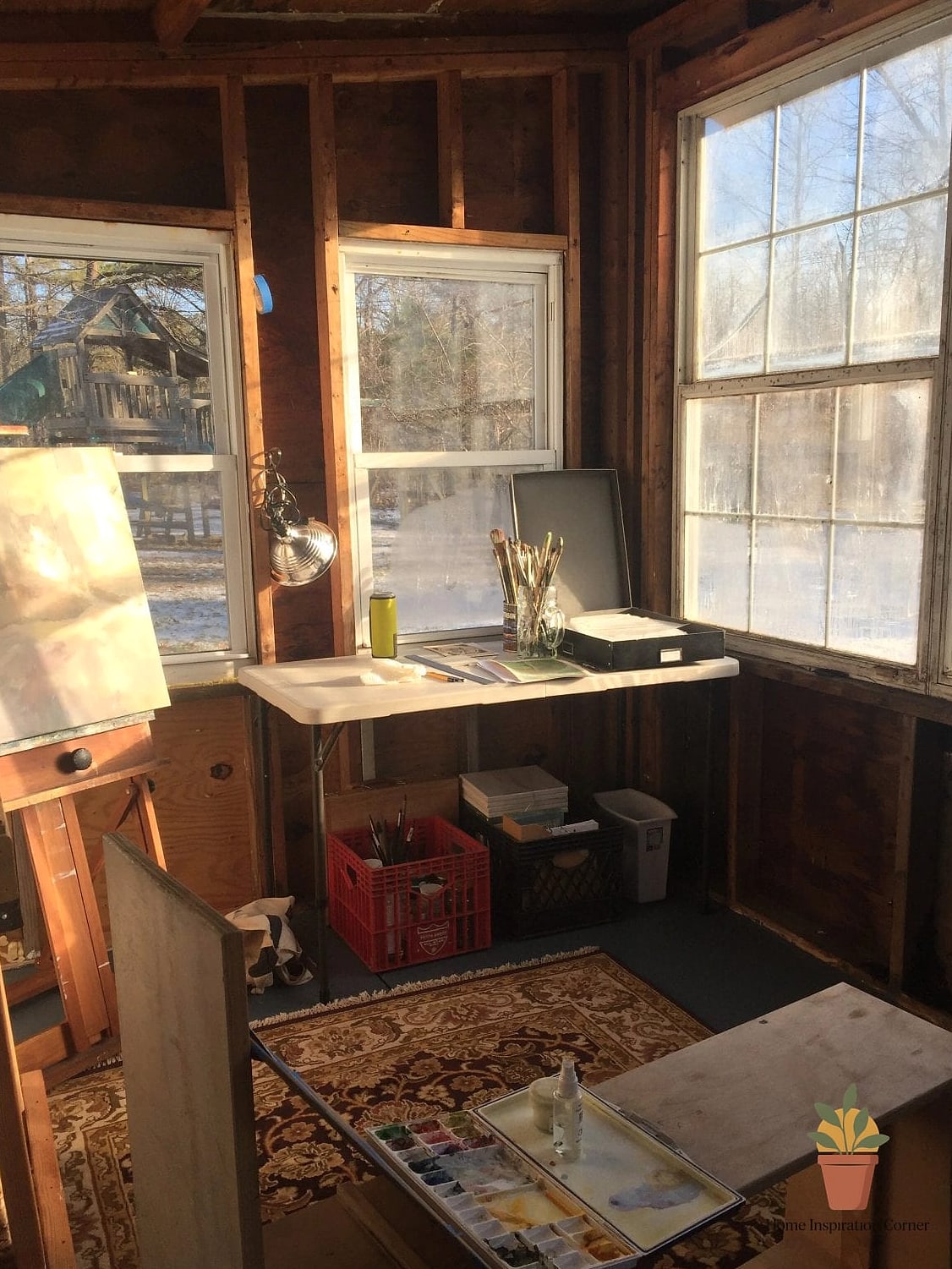
This one starts about as humble as it gets: a leaning, weather-beaten shed that was mostly storing old paint cans and spiderwebs. The transformation begins with structural repairs, then moves into the fun part.
New windows on two sides bring in natural light, which matters more than people realize when you’re trying to judge color accurately on a canvas. The walls get a fresh coat of matte white paint, and the floor is swapped for durable vinyl plank flooring that can handle spills and scuffs.
This approach works best for anyone starting with an existing structure rather than building new, since it keeps costs relatively low. Homeowners love it because the “after” photos barely look like the same building. A few open shelves and a rolling cart for supplies finish the space off without making it feel cluttered.
The Modern Glass-Wall Studio
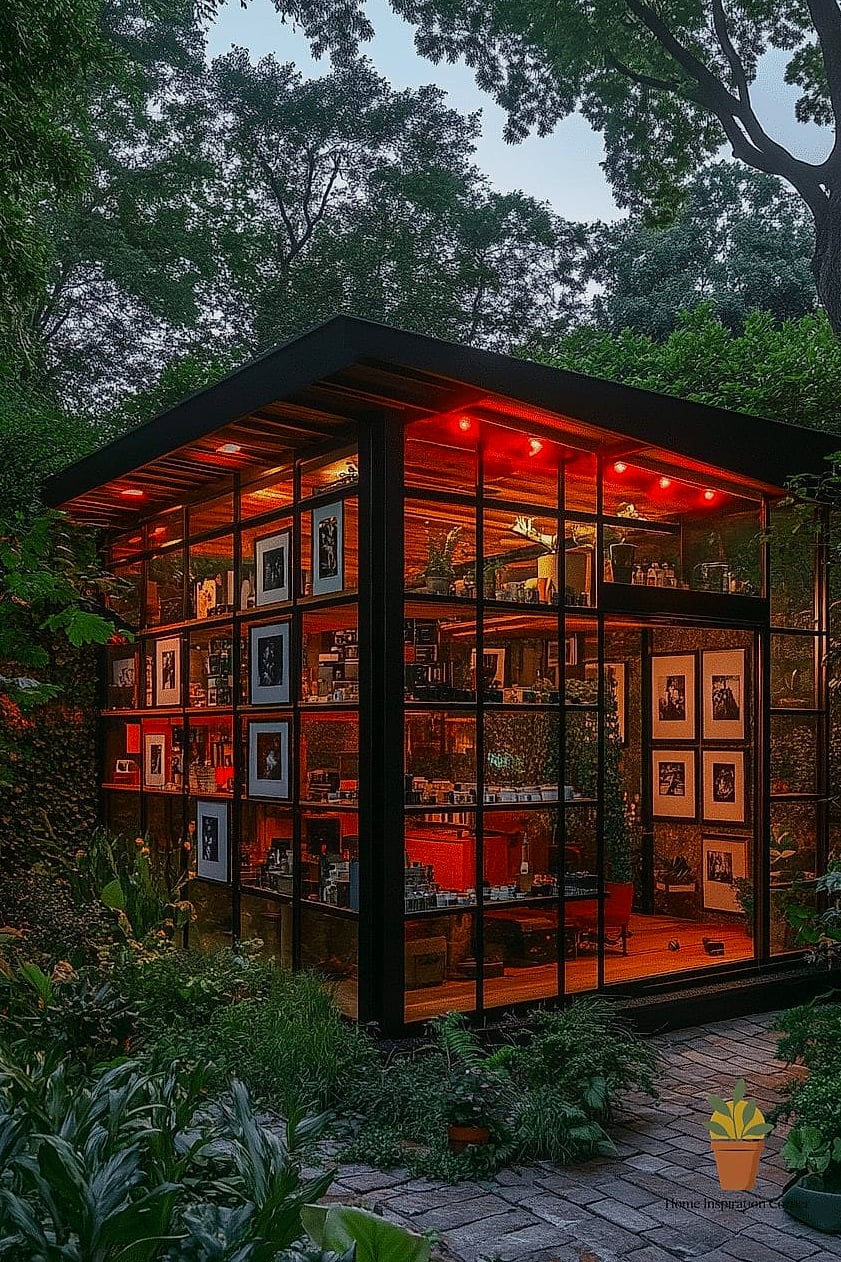
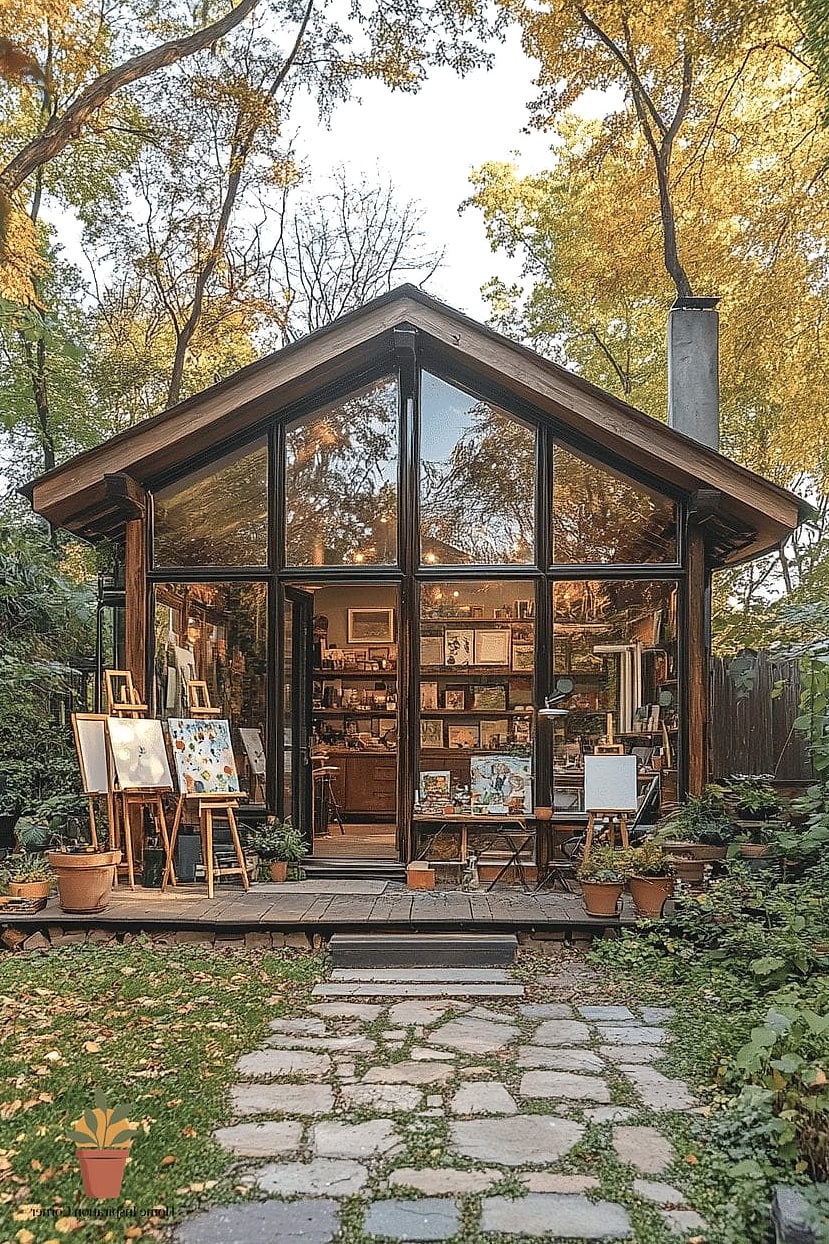
For a more contemporary before and after, this transformation swaps a plain wooden box for a studio with an entire glass wall facing the backyard. It’s a bigger investment, but the payoff is a space that feels connected to nature while you work.
Inside, the palette stays neutral: warm wood tones on the flooring, white walls, and black metal fixtures for a bit of contrast. This is the kind of setup that photographs beautifully, which makes sense if you’re using the studio to shoot content or sell work online.
Best for larger backyards with some privacy from neighbors, since glass walls mean less concealment. Maintenance-wise, you’ll want to budget time for window cleaning, but the tradeoff in natural light is usually worth it for painters and photographers alike.
The Cozy Cottage-Style Retreat
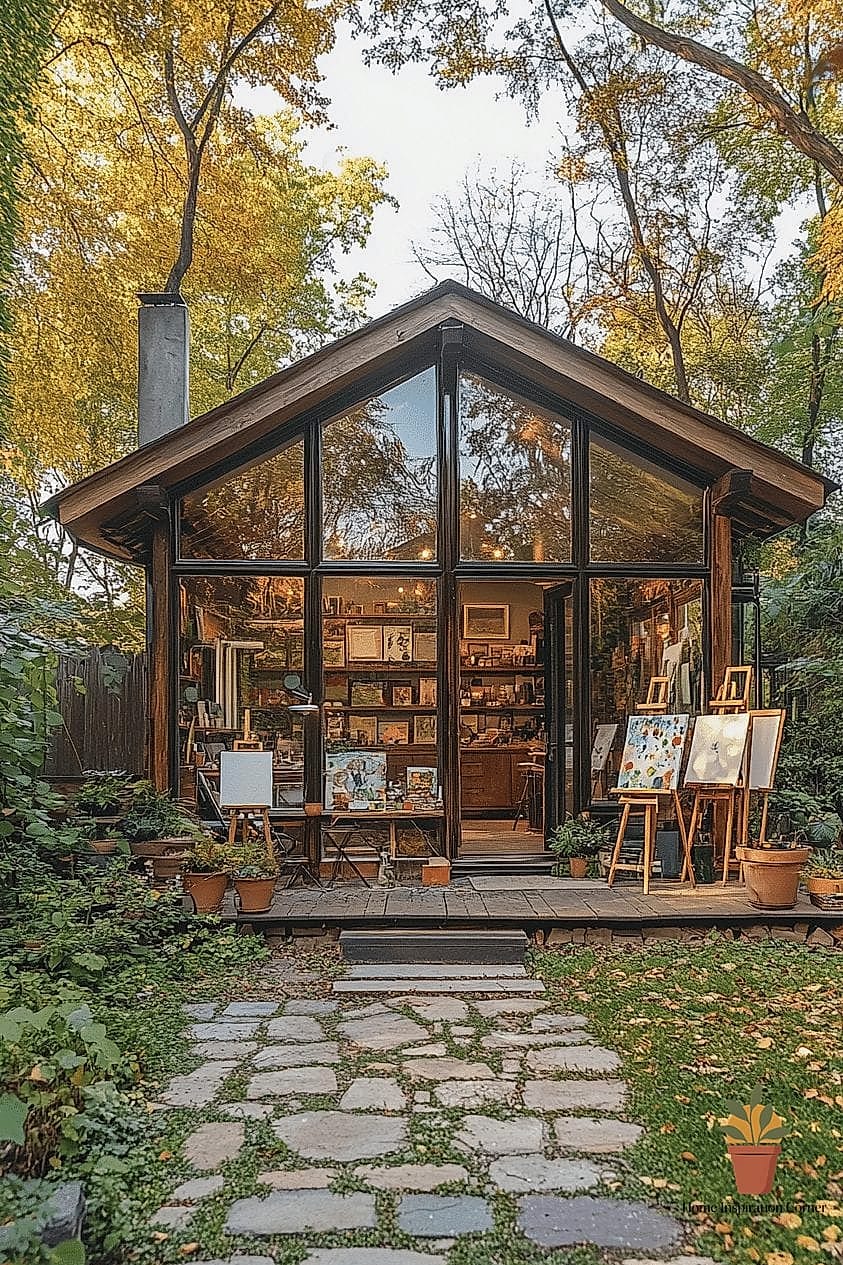
Not every studio needs to look sleek and modern. This transformation takes a plain rectangular shed and gives it cottage charm with board-and-batten siding, a Dutch door, and flower boxes under the windows.
Inside, the vibe shifts too. Instead of stark white walls, this one uses a soft sage green with white trim, plus open shelving for jars of brushes and supplies. A vintage-style pendant light adds warmth without looking dated.
This style works particularly well if your backyard already leans traditional or farmhouse, and it’s a great pick for anyone who wants their studio to feel like an escape rather than a workshop. Budget-friendly versions can skip the custom door and use peel-and-stick wallpaper accents instead.
The Multi-Purpose Studio and Guest Space
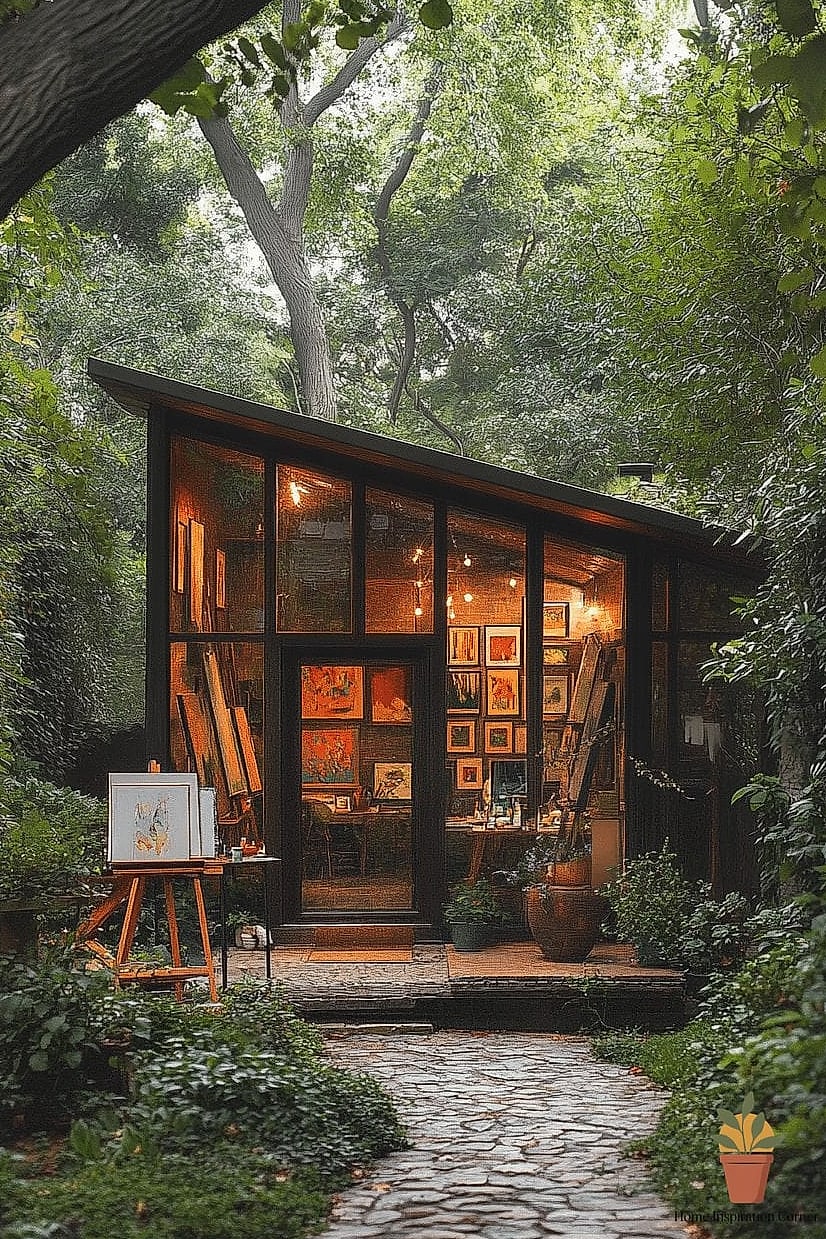
Some people can’t dedicate an entire structure to just art, and that’s where this dual-purpose transformation comes in handy. The before photo shows a bare-bones outbuilding with no insulation or finished walls. The after includes insulation, drywall, and a murphy bed that folds up against the wall when not in use.
During the day, it’s a fully functioning studio with a large worktable and pegboard storage for tools. At night or when guests visit, it converts into a comfortable sleeping space.
This is ideal for smaller lots where you can’t justify two separate structures. It does require more planning upfront, especially around electrical and HVAC, but the flexibility pays off for years.
The Industrial-Inspired Workshop Studio
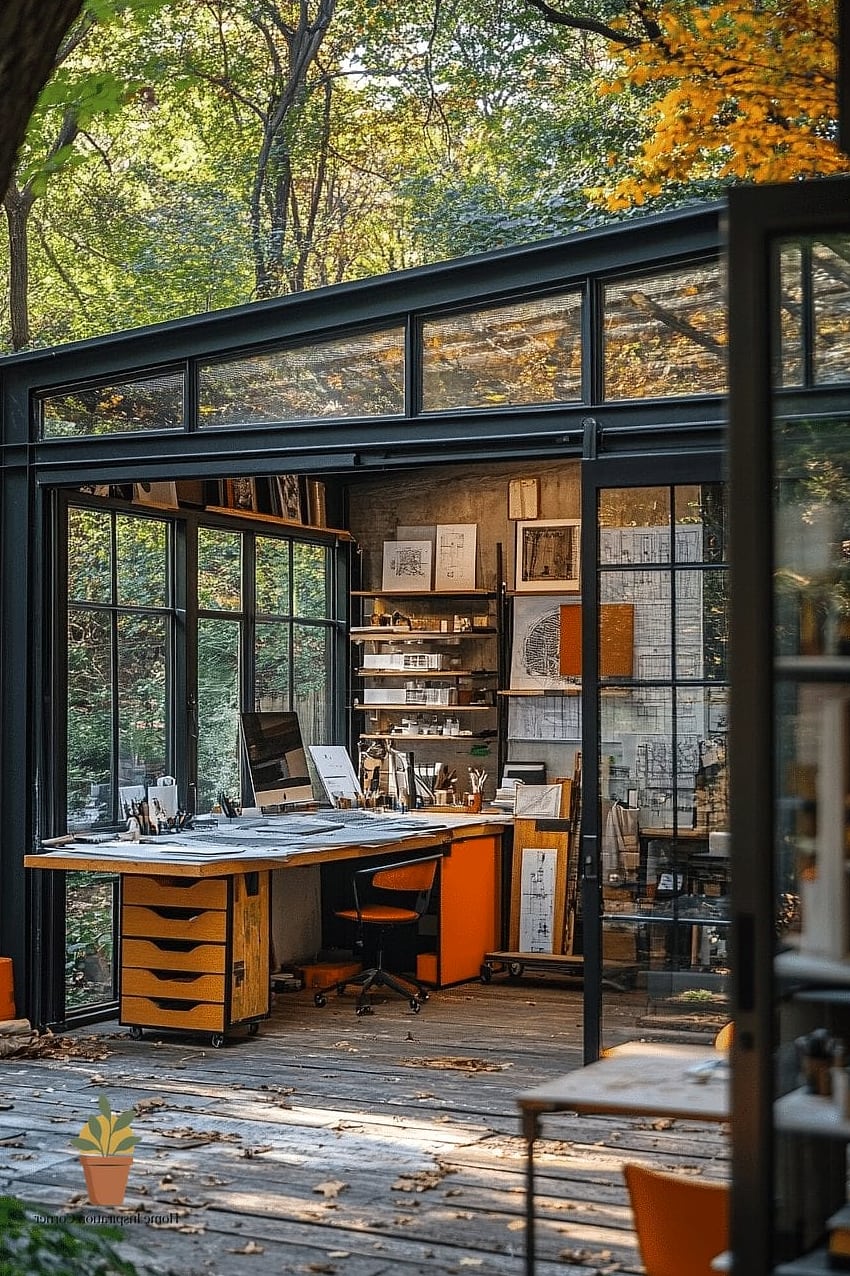
If your art involves woodworking, metalwork, or anything messier than watercolors, this transformation might resonate. The before is a cluttered detached garage with no real organization. The after leans industrial: exposed beams, black metal shelving units, and a polished concrete floor that can take a beating.
Storage here is all about function. Pegboards hold tools, labeled bins keep hardware sorted, and a rolling workbench gives flexibility for different projects. Lighting is layered, with overhead fixtures plus a few adjustable task lamps aimed at the workbench.
This style holds up well for pet owners and families too, since the durable flooring and washable surfaces make cleanup simple. It’s not the prettiest option in this list, but it’s arguably the most practical for hands-on creative work.
The Boho-Inspired Painting Studio
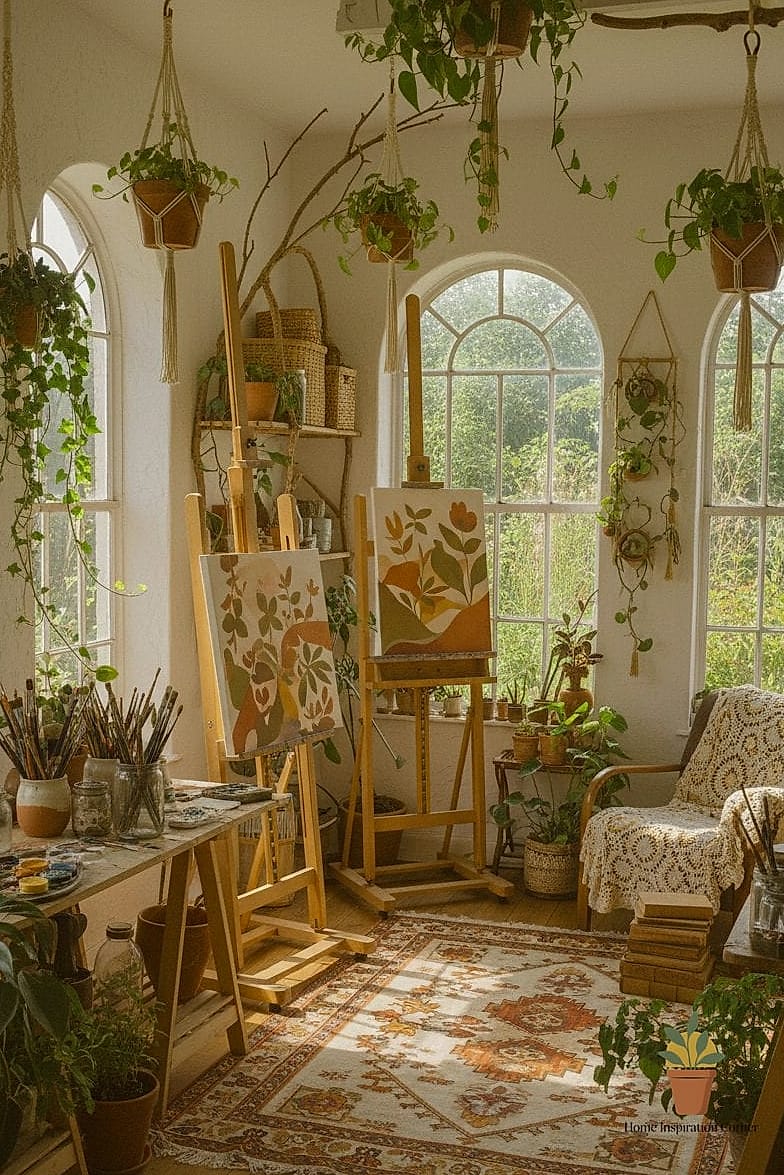
This transformation takes a plain white box of a shed and gives it serious personality. Before, it was sterile and cold, more like a storage unit than a creative space. After, it’s layered with texture: a jute rug on the floor, macrame wall hangings, and a mix of wood and rattan furniture.
The color palette leans warm and earthy, with terracotta accents against otherwise neutral walls. Large windows with sheer curtains soften the natural light instead of letting it flood in harshly, which painters working with delicate mediums tend to appreciate.
This look is especially popular with people who want their studio to feel like a personal sanctuary rather than a purely functional space. It’s also fairly renter-friendly if you’re working with a structure you don’t own outright, since most of the decor is removable.
The Compact Studio for Small Backyards
Not everyone has room for a full-size shed, and this transformation proves you don’t need one. The before shows a tiny, awkward corner of the yard that wasn’t being used for much of anything. The after is a compact studio, barely larger than a garden shed, that still manages to feel functional.
The trick here is smart use of vertical space. Floating shelves hold supplies without taking up floor room, and a fold-down desk attaches directly to the wall so it can tuck away when not needed. A single large window keeps the small footprint from feeling cramped.
This is one of the best options if you’re working with a tight budget or a small lot, since the materials and labor scale down significantly. It’s proof that a dedicated creative space doesn’t require a ton of square footage to feel worthwhile.
Final Thoughts
Looking at these seven backyard art studio before and after transformations, the biggest takeaway is that there’s no single right way to do this. Some people want a bright, glass-walled retreat. Others want something cozy and cottage-like, or purely functional for messy hands-on work.
What ties them all together is the shift from wasted or underused space to something genuinely purposeful. Whether you’re starting with a run-down shed or building fresh, a backyard art studio can become one of the most rewarding upgrades you make to your property, both for your creative work and honestly, just for your own headspace.
If you’re planning your own project, take some time to think about how you actually work. A painter with big canvases needs different things than someone doing detailed illustration or pottery. Use these transformations as a starting point, then adjust the details to fit how you’ll really use the space day to day.