19 Victorian Terrace Hallway Ideas Perfect for Every Home Style
- Encaustic Tile Flooring
- Deep, Moody Wall Colors
- Picture Rail Gallery Wall
- Wainscoting or Dado Paneling
- Runner Rugs in Traditional Patterns
- Brass Stair Rods and Hardware
- Statement Ceiling Rose and Cornicing
- Wallpapered Ceiling or Upper Walls
- Built-In Bench with Storage
- Vintage-Style Pendant Lighting
- Herringbone Wood Flooring
- Bold Striped or Geometric Runner
- Coat and Hat Hooks with Character
- Console Table as a Landing Spot
- Arched Doorway Details
- Layered Lighting with Wall Sconces
- Stripped and Painted Floorboards
- Under-Stair Storage Nook
- Mirror Placement for Light and Space
- Contrasting Front Door and Hallway Trim
19 Victorian Terrace Hallway Ideas Perfect for Every Home Style
Victorian terrace hallways are narrow, quirky, and full of character all at once. Original coving, high skirting boards, and those long, tunnel-like proportions give you a lot to work with, even if the square footage says otherwise. The trick is choosing ideas that celebrate the bones of the house instead of fighting them.
Whether you’re restoring period details or leaning into something more modern, there’s a way to make this space work harder for you. Here are 19 ideas to get you thinking.
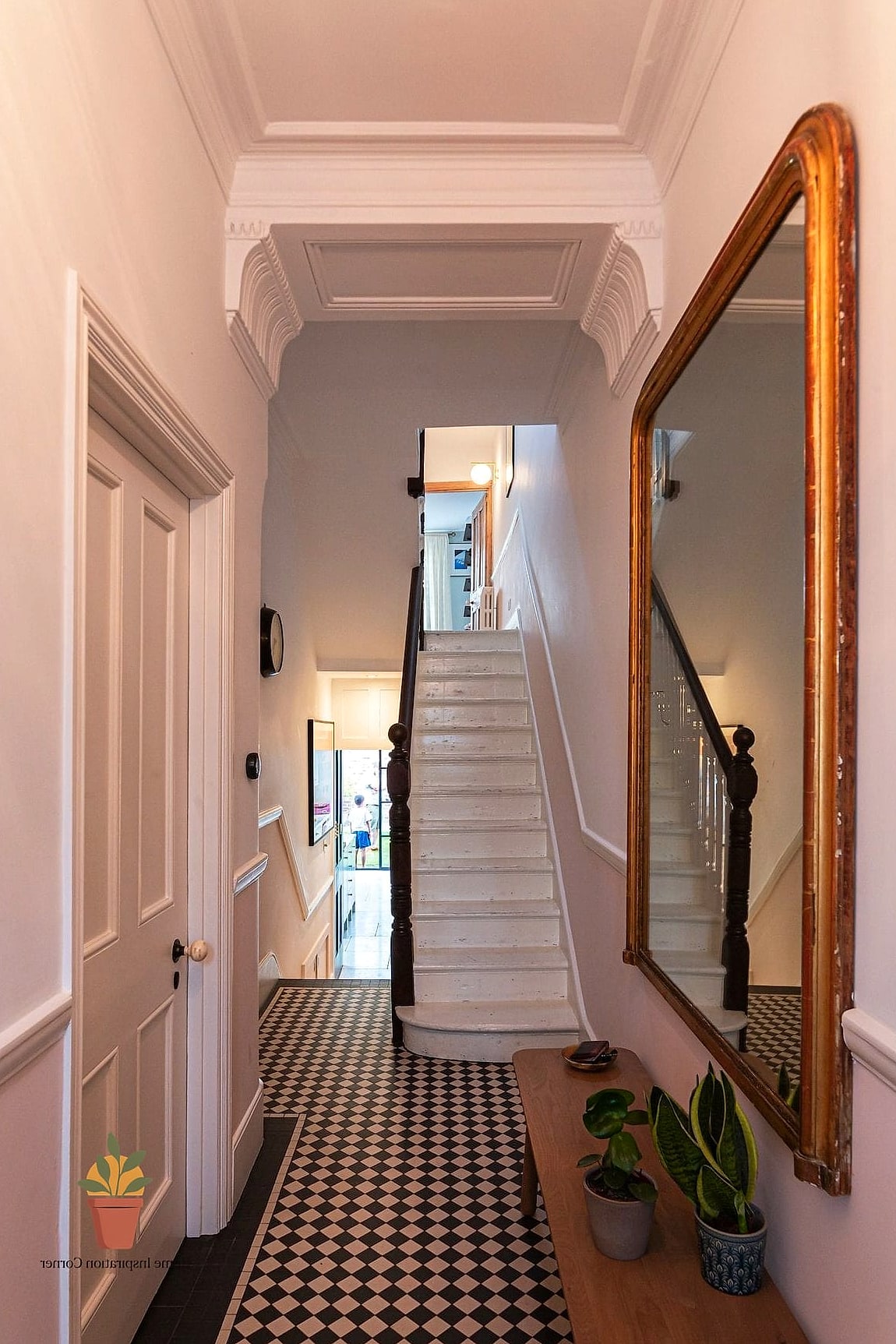
Encaustic Tile Flooring
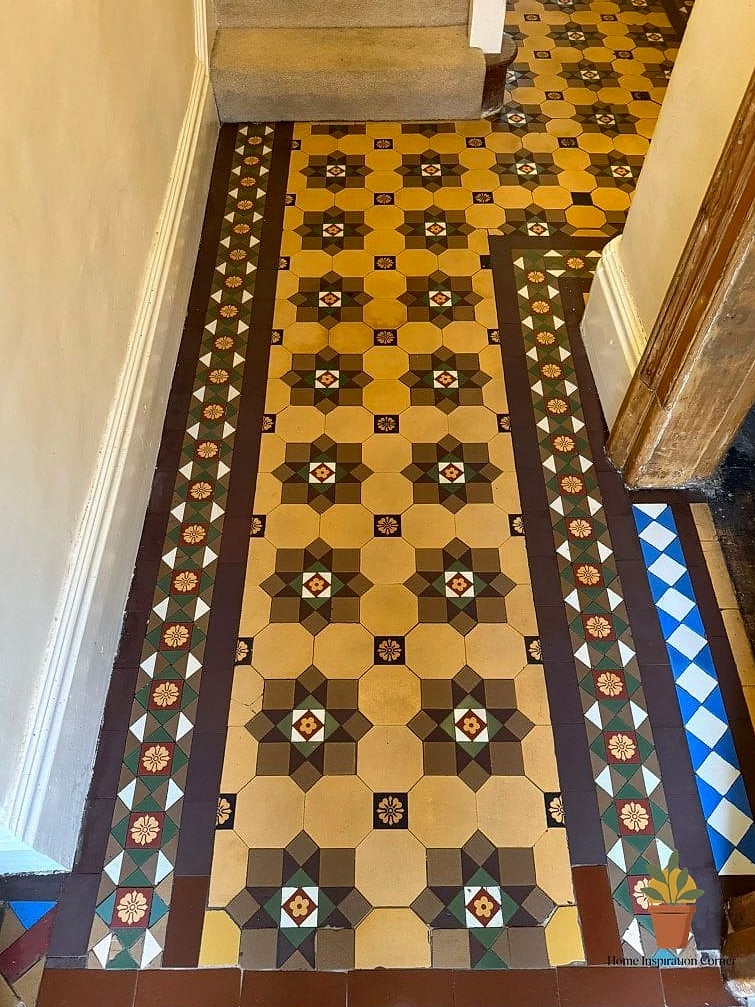
This is the classic Victorian hallway move, and for good reason. Geometric encaustic or Minton-style tiles in black, red, and buff tones instantly signal the era of the house and set a gorgeous tone before guests even reach the living room.
Original tiles are worth preserving if you’re lucky enough to have them. If not, reproduction versions are widely available and far more affordable than they used to be. They’re durable, wipe clean easily, and handle muddy boots and paw prints without much fuss.
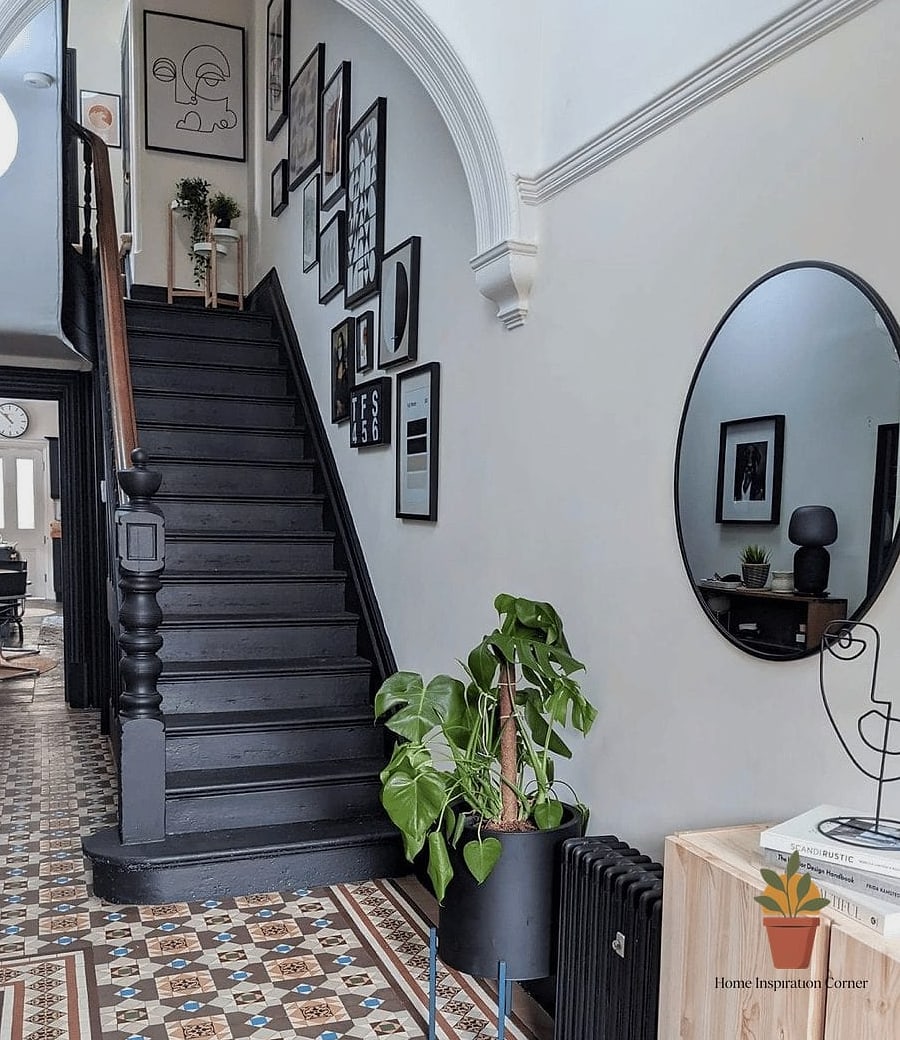
Deep, Moody Wall Colors
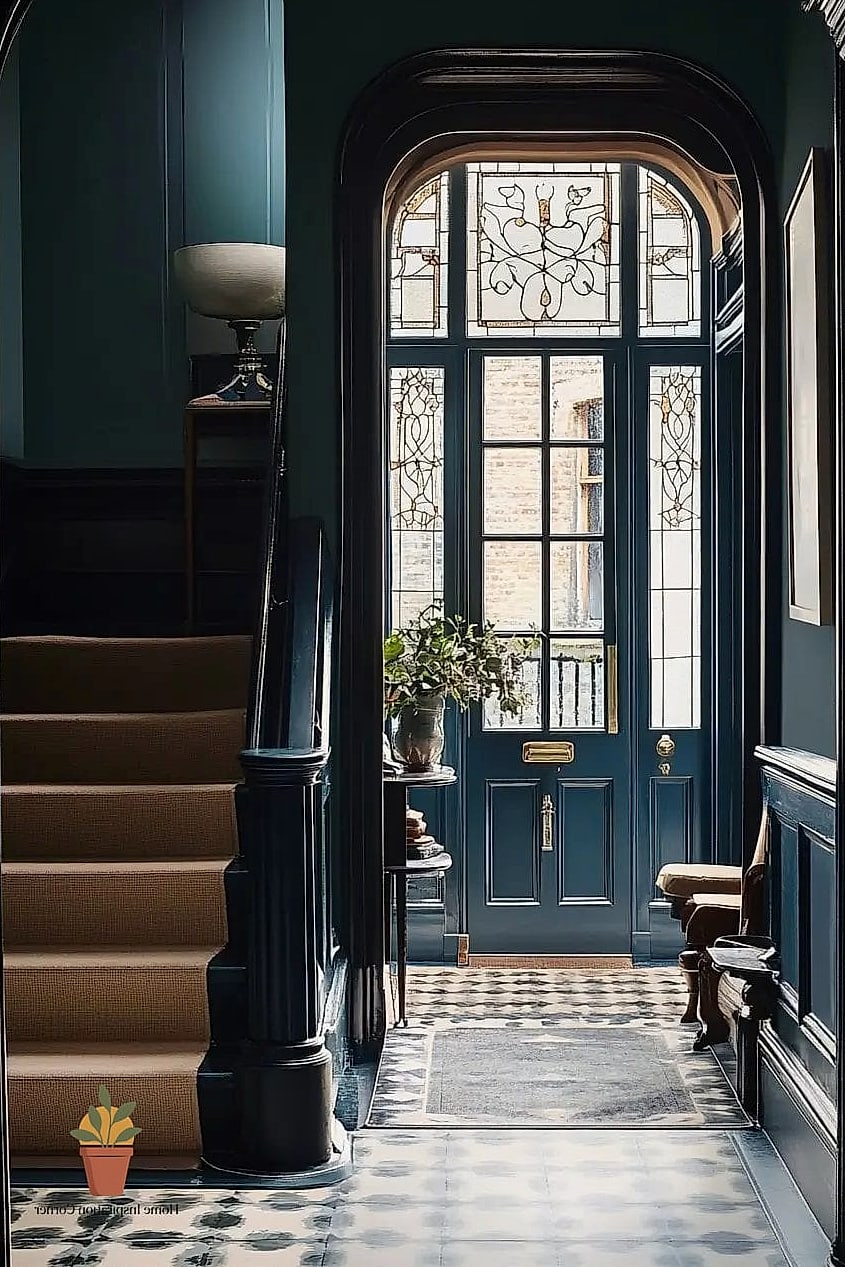
Narrow hallways don’t always need to go light and bright to feel good. A deep color like inky green, aubergine, or charcoal can actually make a tight space feel intentional and cozy rather than cramped.
Pair it with a lighter ceiling to keep things from feeling closed in. This approach works especially well if your hallway is more of a transitional space than somewhere people linger, since you can be a bit bolder with the palette.
Picture Rail Gallery Wall
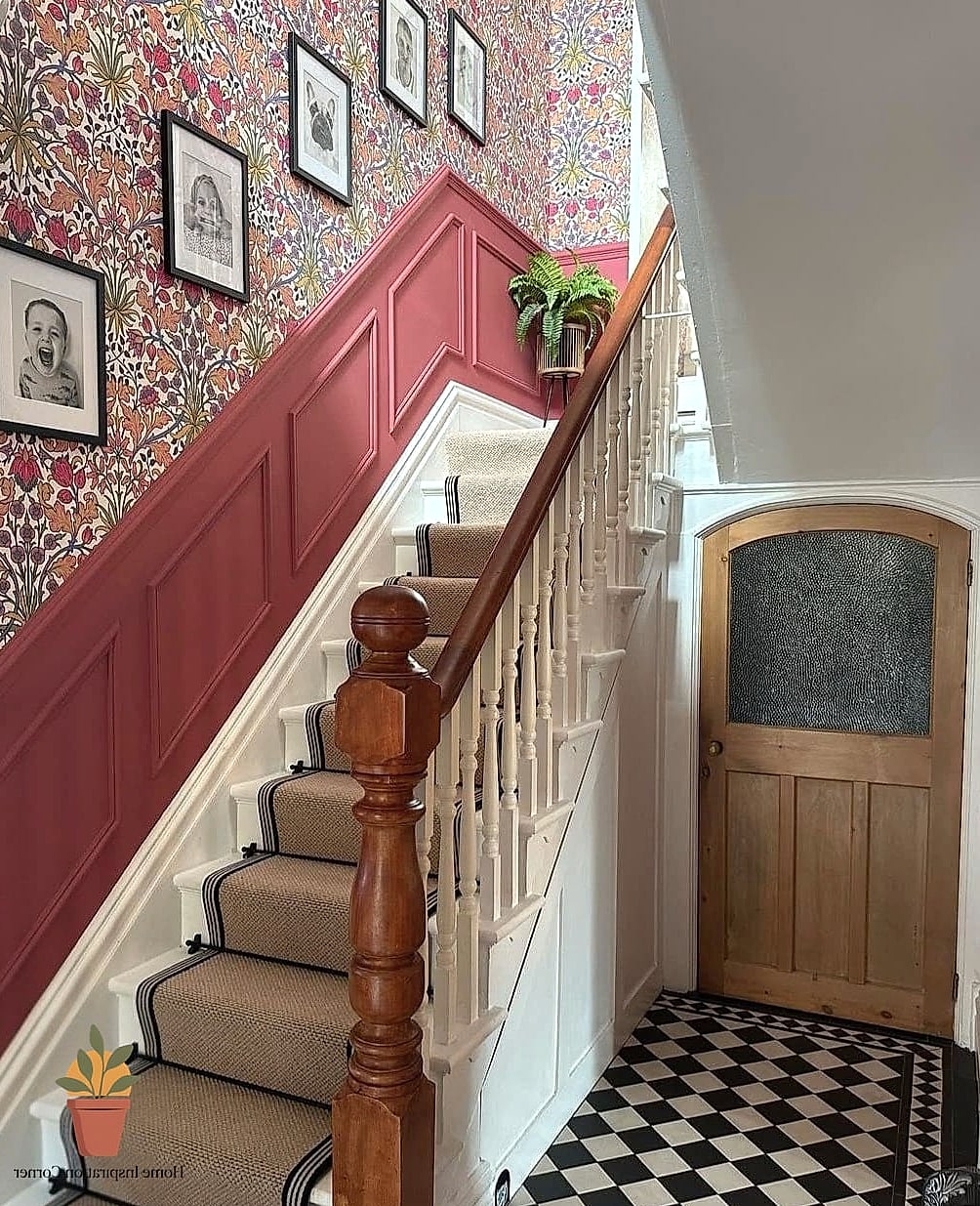
Original picture rails are a gift if your terrace still has them. Hanging artwork or framed photos from the rail rather than drilling directly into the plaster keeps things period-appropriate and protects those older walls.
Mix frame sizes and finishes for a collected-over-time look, or keep everything matching black or brass for something more polished. Either way, it fills that long stretch of wall without feeling like an afterthought.
Wainscoting or Dado Paneling
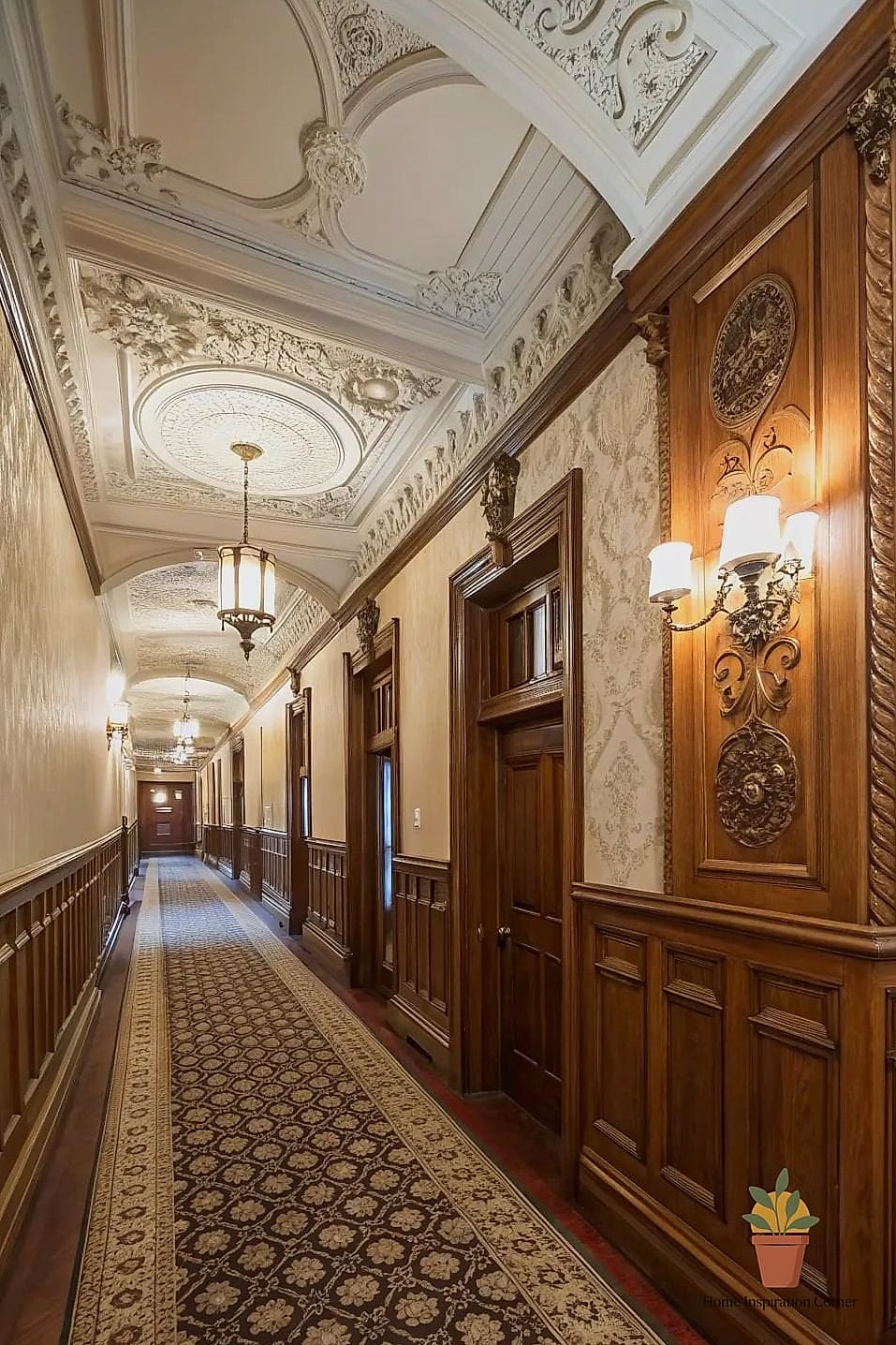
Adding paneling to the lower half of the wall is one of those upgrades that instantly makes a hallway feel more finished without requiring structural work. It’s a nod to Victorian architecture, but it also protects walls from scuffs and pram wheels.
Paint the paneling a contrasting color to the upper wall, or keep it tonal for something subtler. Either way, it adds texture and depth to a space that can otherwise feel a bit flat.
Runner Rugs in Traditional Patterns
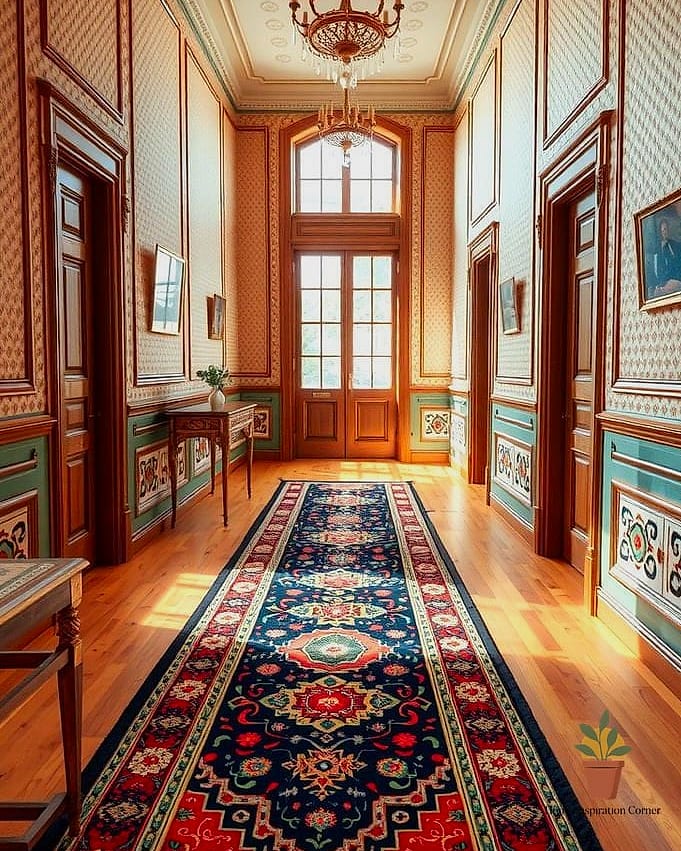
A long, narrow runner is practically made for these hallways. Persian-style or kilim patterns complement the period features nicely, while also protecting original floorboards or tile from daily wear.
Go for a natural fiber blend if you’re dealing with a lot of foot traffic, since they tend to hide dirt better than pure wool. Just make sure to grab a non-slip pad underneath, especially if you’ve got tile or hardwood beneath it.
Brass Stair Rods and Hardware
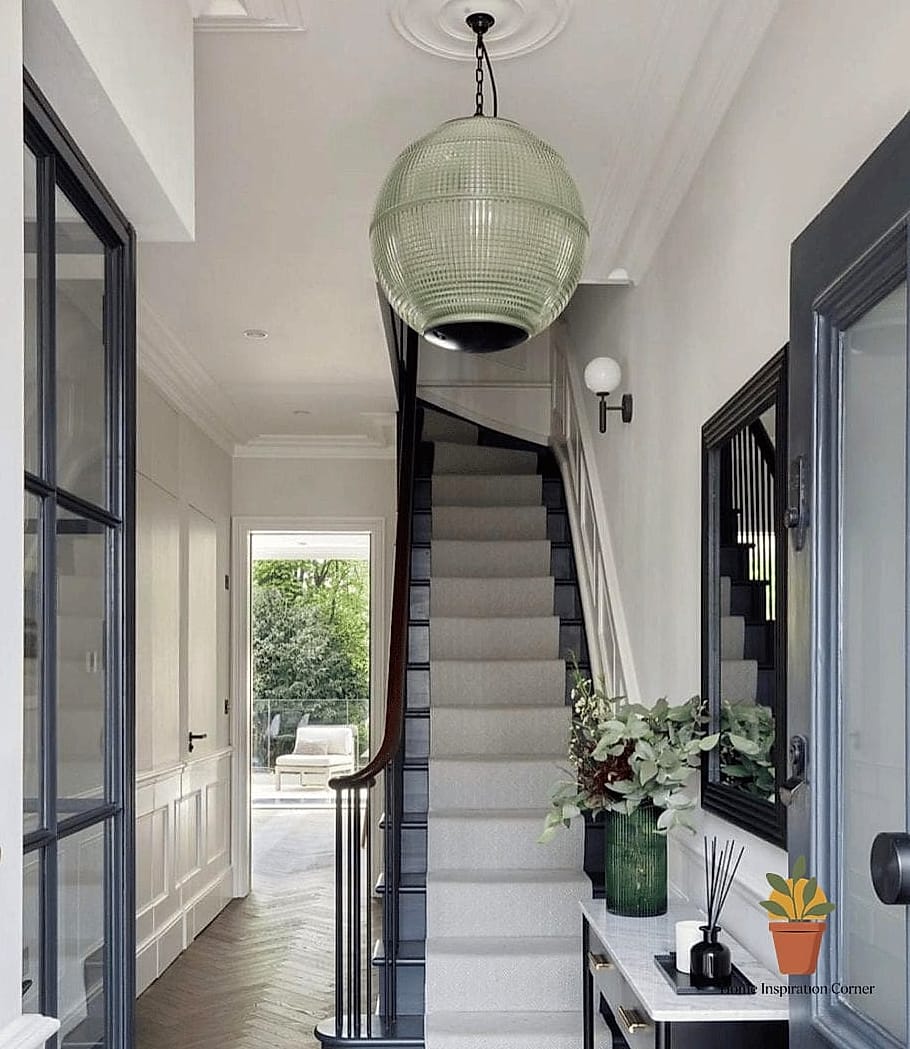
If your hallway leads to a staircase, small hardware details make a real difference. Polished or brushed brass stair rods, door handles, and coat hooks add warmth and a sense of craftsmanship that suits the era.
This is a budget-friendly swap compared to bigger renovations, and it’s genuinely satisfying how much a few well-chosen fixtures can elevate the whole space. Just try to keep the metal finish consistent throughout for a cohesive look.
Statement Ceiling Rose and Cornicing
Look up before you do anything else to your hallway. Original ceiling roses and cornicing are often still intact in these homes, and highlighting them with paint or subtle gilding can be a showstopper.
If yours were removed at some point, plaster reproductions are easy to source and install. It’s a small architectural detail that pulls a lot of visual weight, especially when the ceiling has no obstruction from the front door to the stairs.
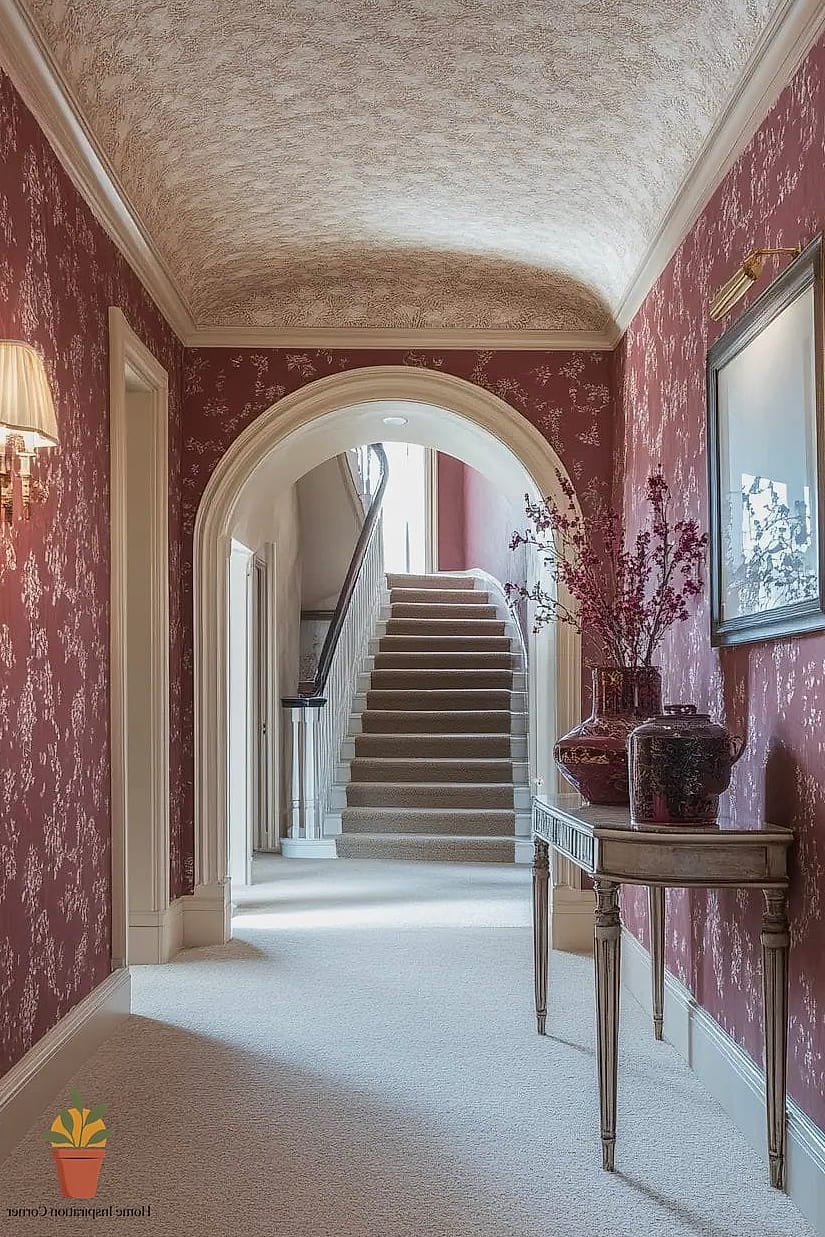
Wallpapered Ceiling or Upper Walls
Wallpaper above a dado rail is a lovely way to add pattern without overwhelming a narrow space. William Morris prints or smaller-scale florals feel right at home in a Victorian terrace, and they photograph beautifully.
If you’re nervous about committing to a full wallpapered wall, try it just on the ceiling instead. It’s an unexpected touch that draws the eye up and makes the space feel taller than it is.
Built-In Bench with Storage
A narrow bench tucked near the front door gives you somewhere to sit while pulling on shoes, plus hidden storage underneath for the stuff that otherwise piles up. It’s a practical addition that doesn’t need much depth to work.
Choose a bench with a hinged lid for shoes and umbrellas, or pair an open bench with woven baskets underneath. Either setup keeps clutter contained without taking up floor space you don’t have.
Vintage-Style Pendant Lighting
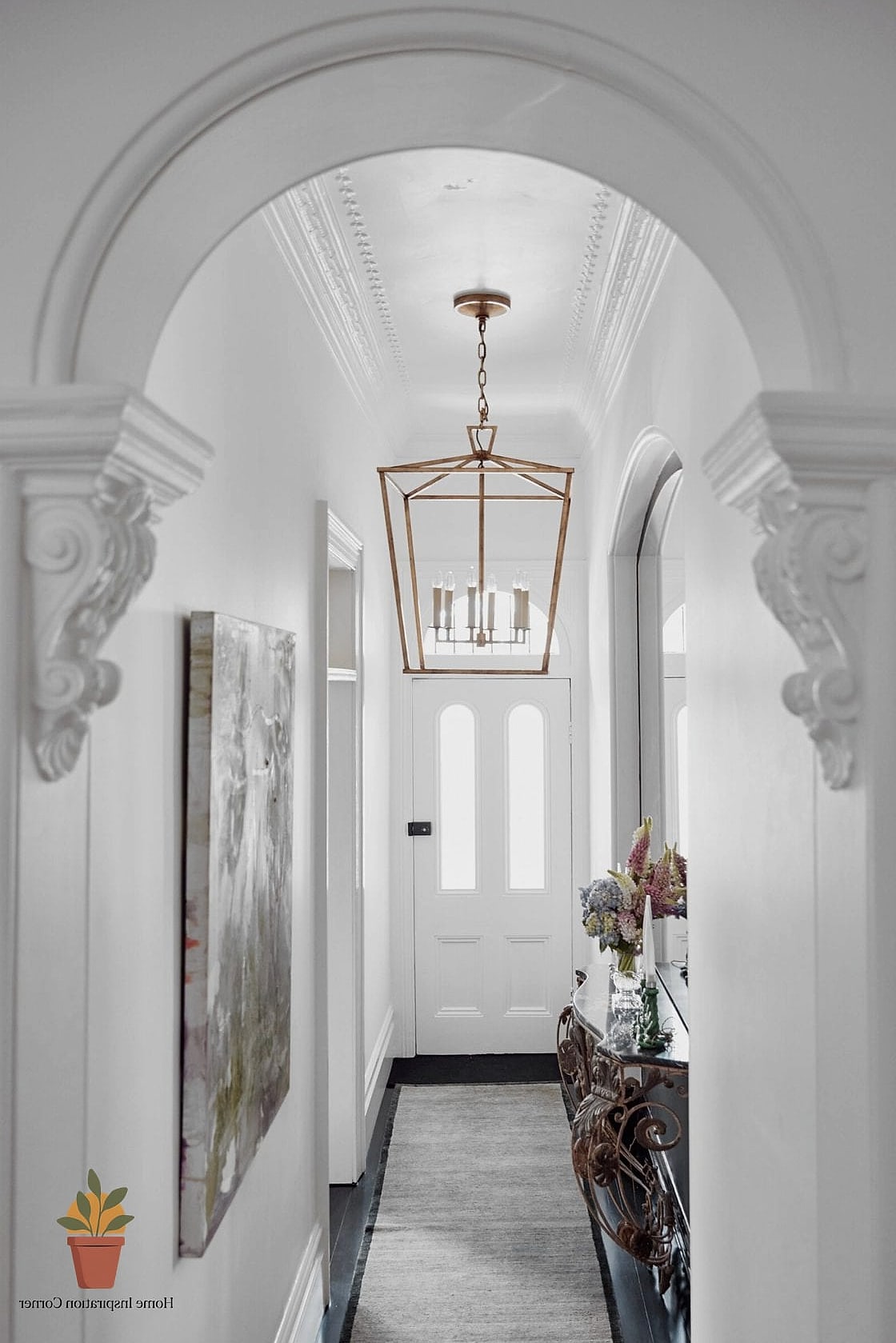
Hallways in these homes often rely on a single central light, so make it count. A vintage-inspired pendant in brass, glass, or fluted detail adds character while doing the practical job of lighting a long, dim space.
If your hallway runs particularly long, consider two smaller pendants spaced along the ceiling rather than one fixture trying to do all the work. Layering in a wall sconce near the door helps too.
Herringbone Wood Flooring
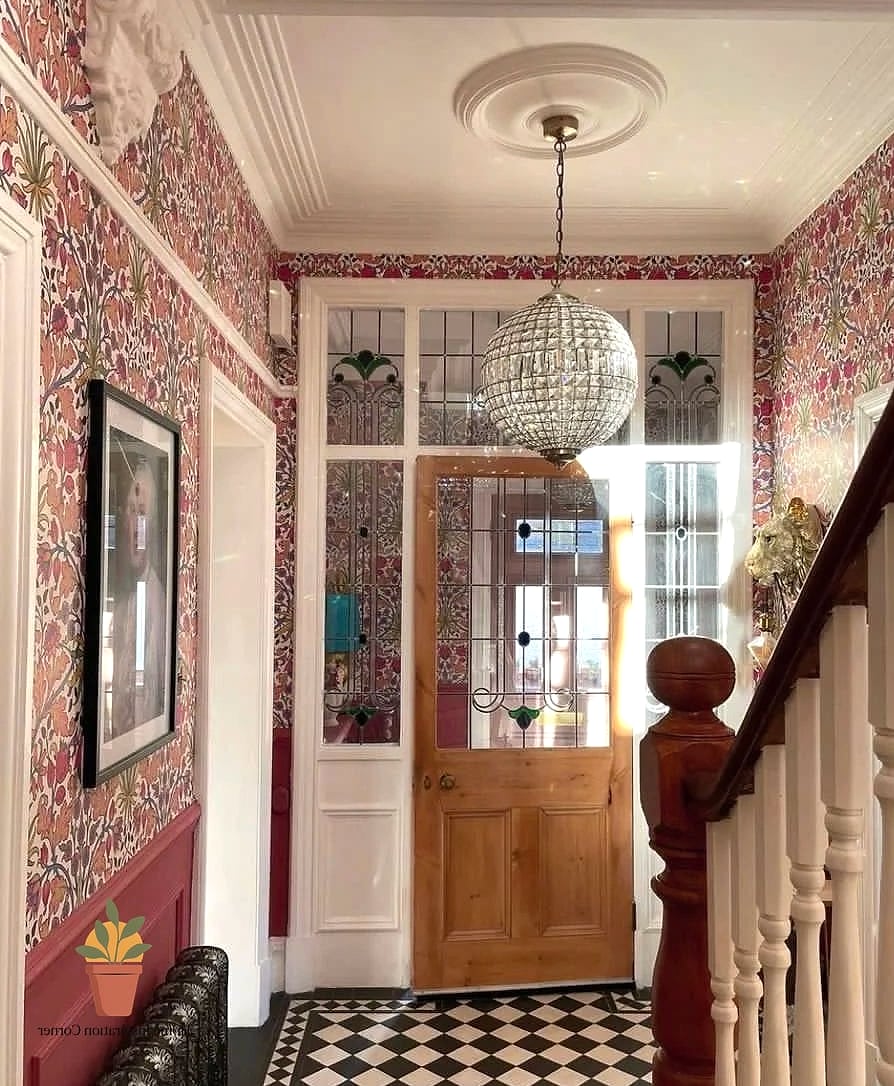
For hallways without original tile, herringbone parquet is a beautiful alternative that still nods to the period. The angled pattern adds movement to a narrow corridor and catches light in a way that straight boards don’t.
Engineered wood versions are more forgiving with humidity and easier to install than solid parquet, which matters in older homes with uneven subfloors. It’s a bit of an investment, but it tends to add real value to the home.
Bold Striped or Geometric Runner
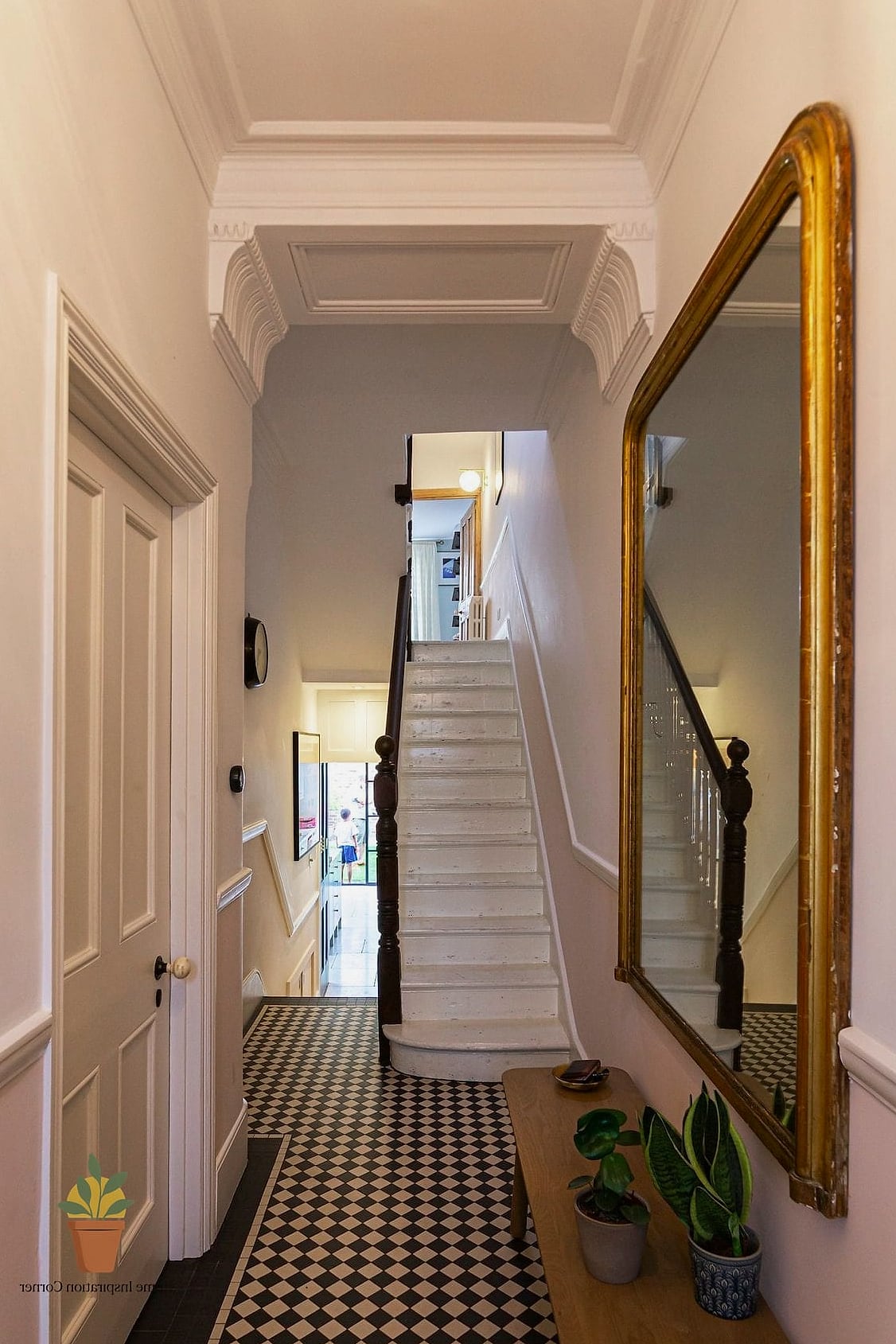
If patterned tile isn’t your thing, a striped or geometric runner rug can do similar visual work. Horizontal stripes across a narrow hallway trick the eye into seeing more width, while vertical patterns can emphasize the length.
This is a nice option for renters too, since it’s a no-commitment way to add personality without touching the floor underneath. Just size it up correctly so it doesn’t look like an afterthought.
Coat and Hat Hooks with Character
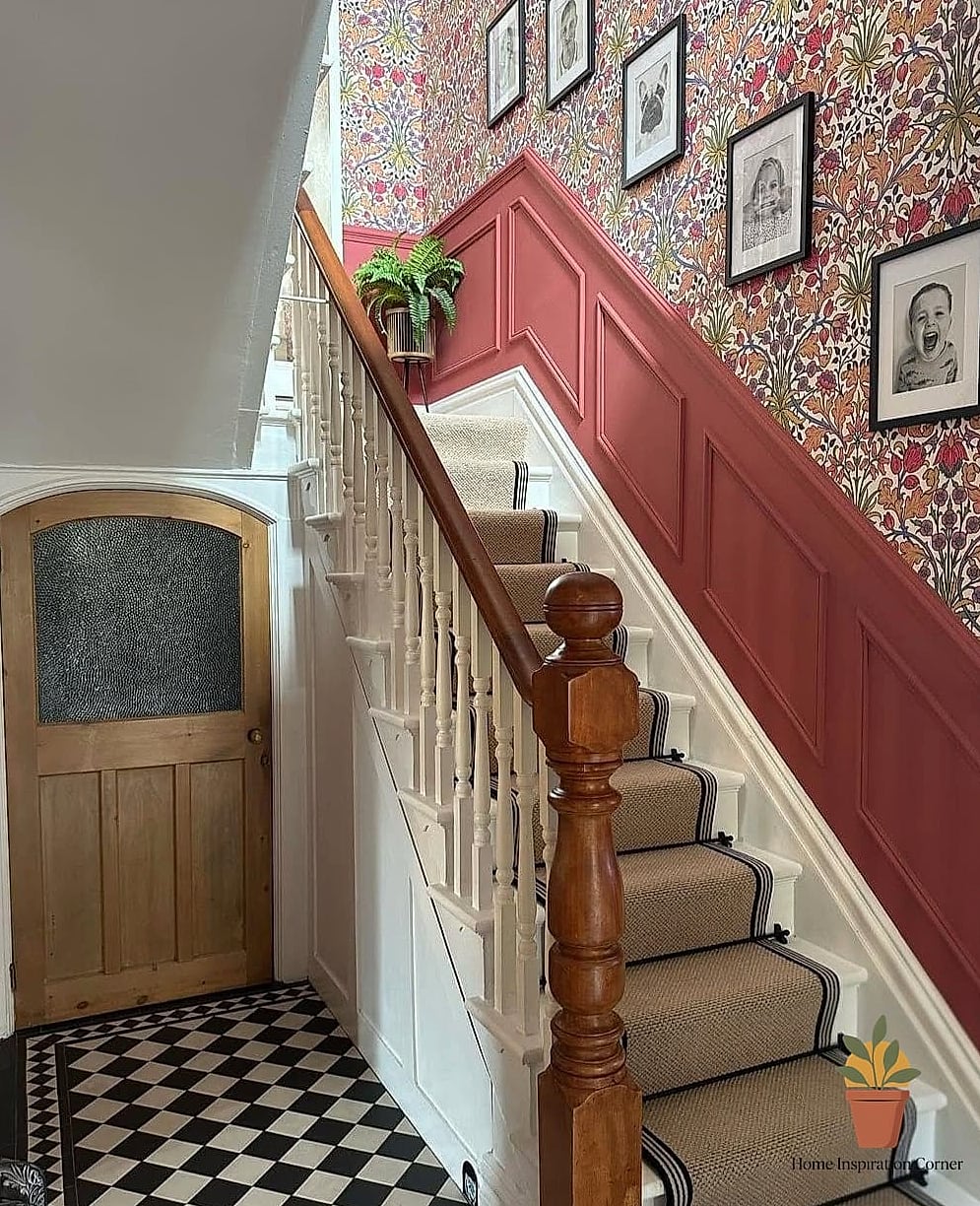
Skip the generic hook strip and look for reclaimed or antique-style hooks instead. Mismatched vintage hooks along a rail add charm and function in equal measure, and they’re an easy weekend project.
Space them at varying heights if you’ve got a mixed household of adults and kids. It keeps things organized and saves you from a pile of coats dumped over the stair banister.
Console Table as a Landing Spot
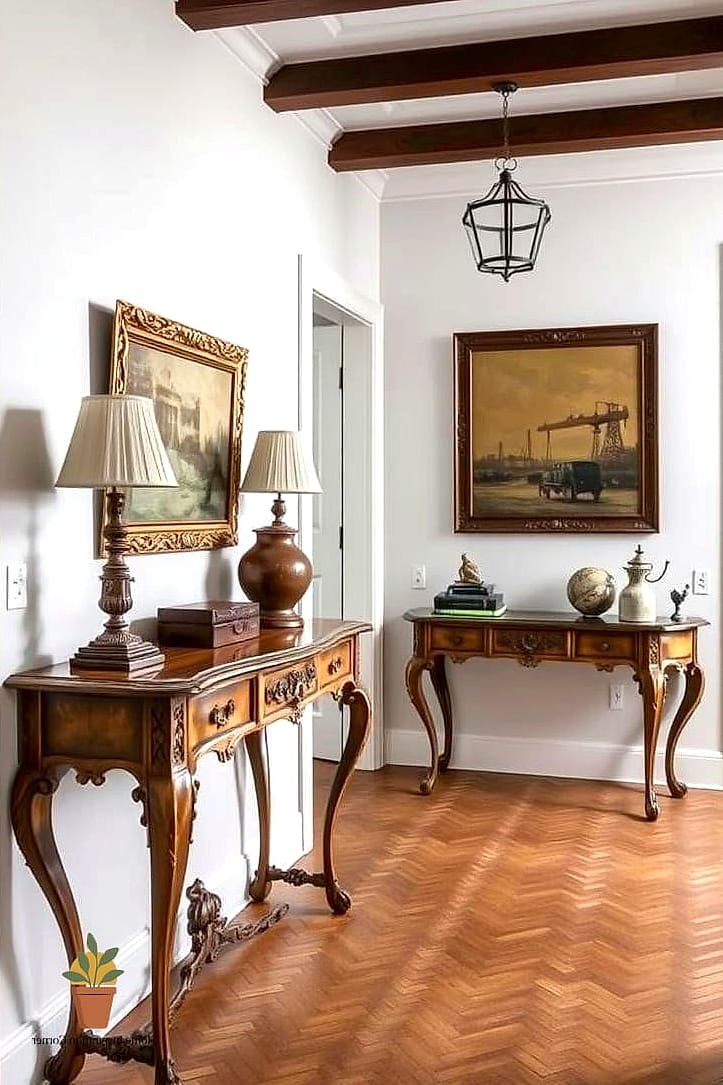
A slim console table just inside the door gives keys, post, and bags somewhere to land instead of the floor. Look for a narrow depth, ideally under a foot, so it doesn’t eat into your walking space.
A reeded or fluted front adds texture without bulk, and a small drawer keeps the surface from becoming a catch-all. Top it with a lamp or a small vase of greenery for a welcoming first impression.
Arched Doorway Details
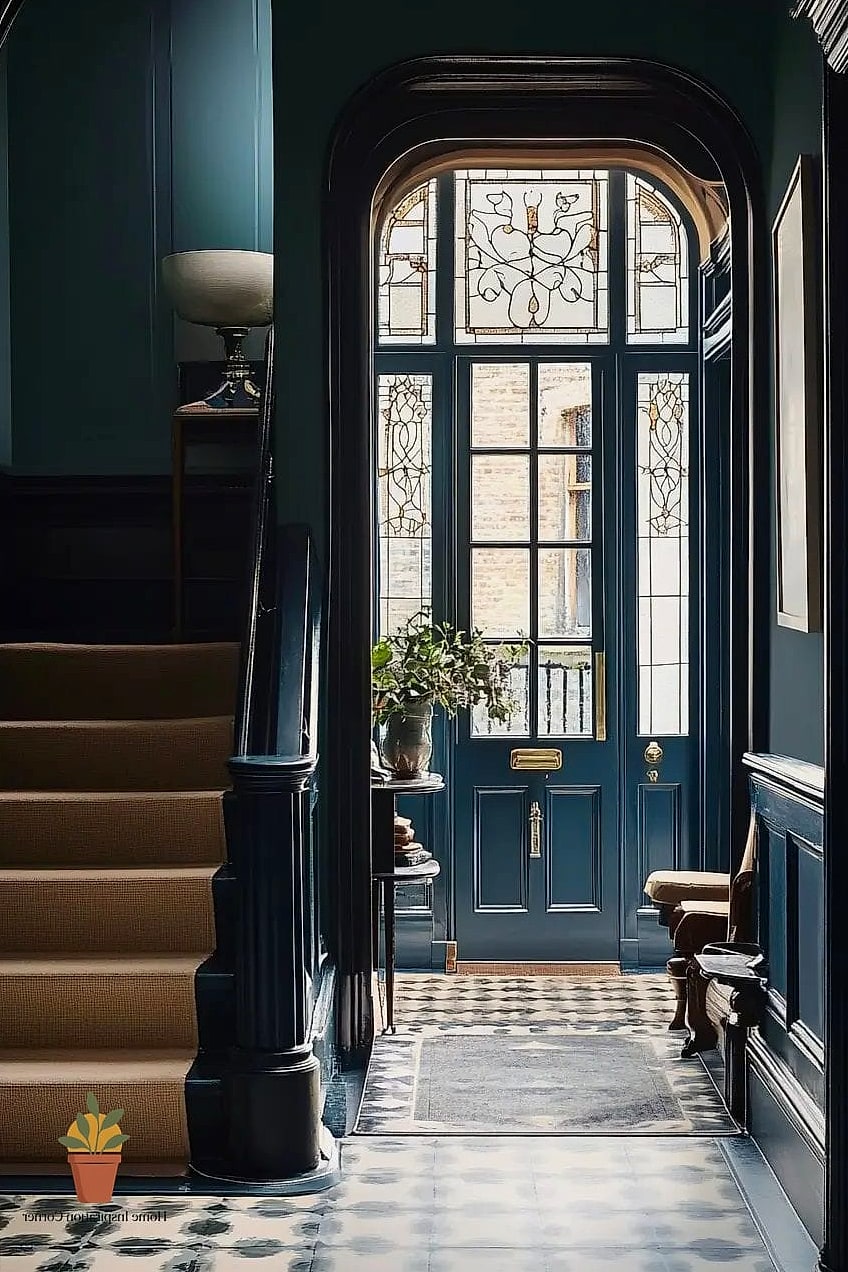
If your terrace has an original arched doorway between the hallway and front room, don’t cover it up. Highlighting the curve with paint or a contrasting trim color draws attention to one of the more distinctive architectural features of the house.
Where arches have been squared off over the years, reinstating the curve is a bigger project but one that restoration-minded homeowners often find worth the effort. It’s a small detail that reads as authentically Victorian.
Layered Lighting with Wall Sconces
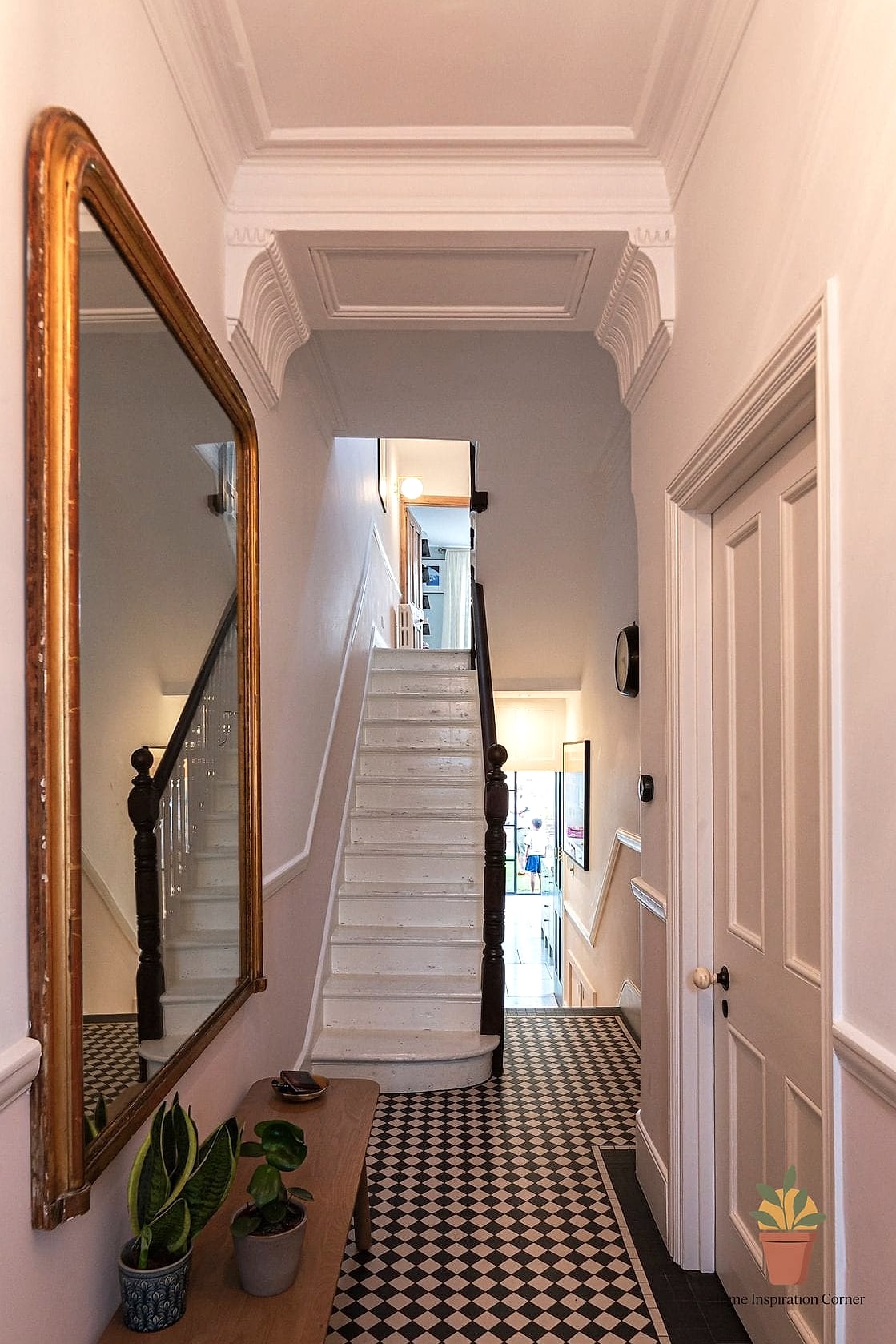
Relying on a single overhead light leaves most hallways feeling flat and a little gloomy. Adding wall sconces at intervals along the corridor creates pools of warm light that make the space feel considered rather than purely functional.
This works particularly well alongside dark paint colors, since the contrast of light and shadow adds depth. Dimmer switches are worth the extra cost here, letting you adjust the mood depending on the time of day.
Stripped and Painted Floorboards
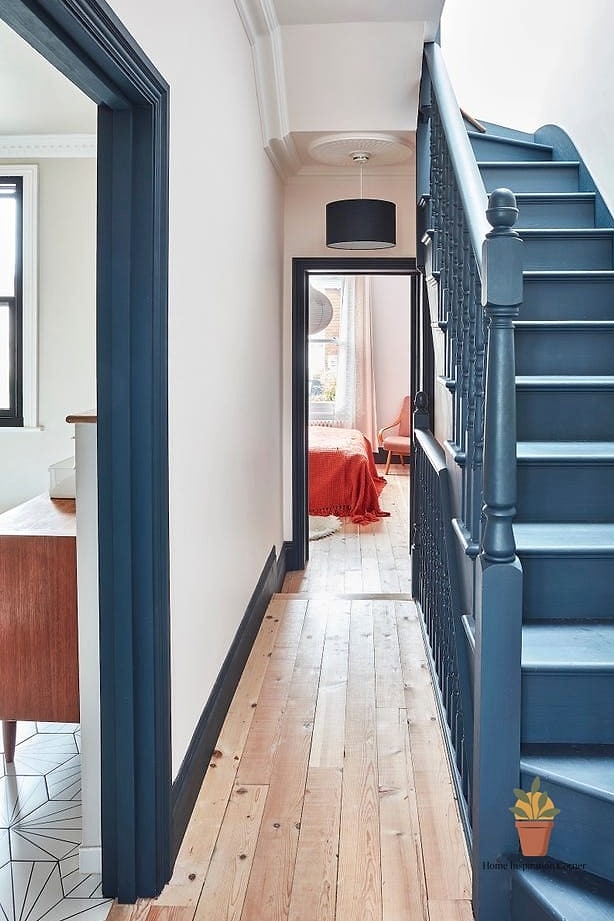
Not every terrace has original tile, and that’s fine. Stripping back existing floorboards and painting them in a durable floor paint, often in soft grey, off-white, or a deep color, gives a fresh, cottage-like feel while keeping things budget-friendly.
A few coats of a hard-wearing finish will help it stand up to daily traffic. This is also one of the more DIY-friendly options on this list if you’re comfortable with a sander and some patience.
Under-Stair Storage Nook
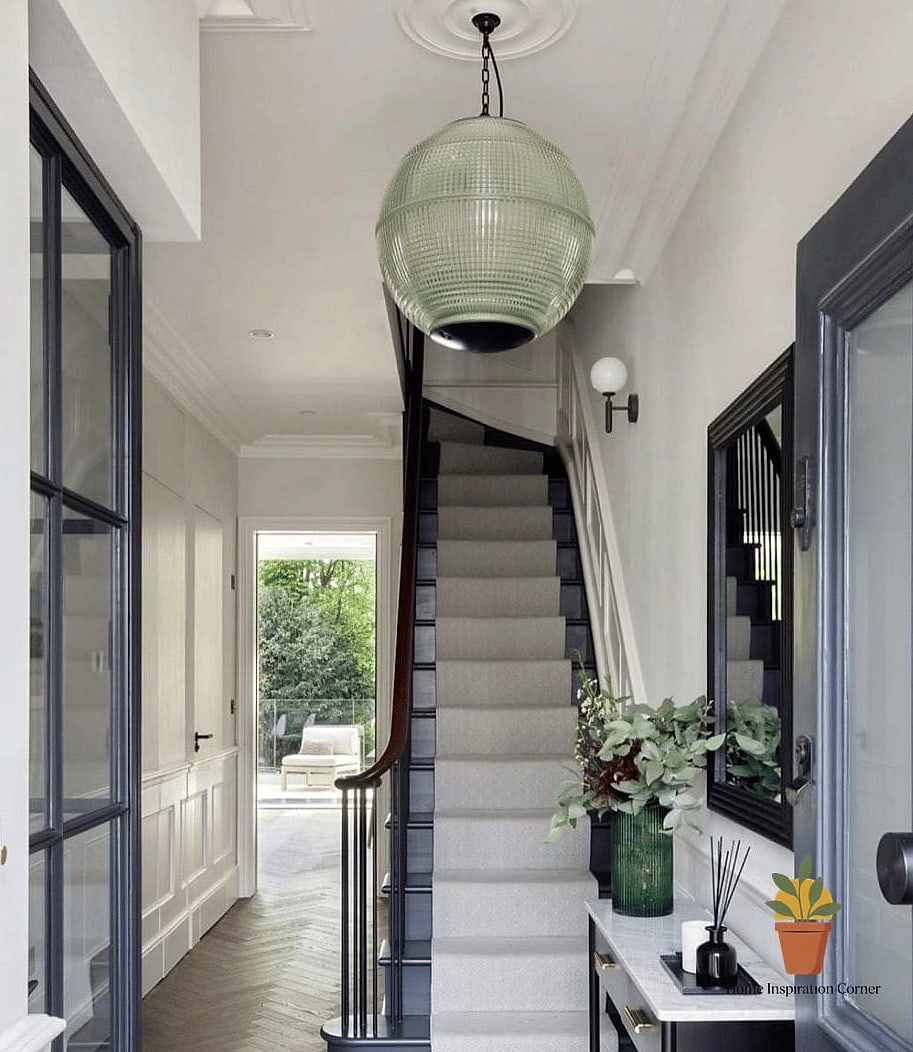
The space beneath the staircase is often wasted in these homes, but it doesn’t have to be. Built-in shelving, a small desk nook, or pull-out drawers can turn dead space into something genuinely useful.
For smaller budgets, even open shelving with baskets does the job without a full carpentry project. It’s especially handy for families needing somewhere to stash shoes, bags, and sports gear near the door.
Mirror Placement for Light and Space
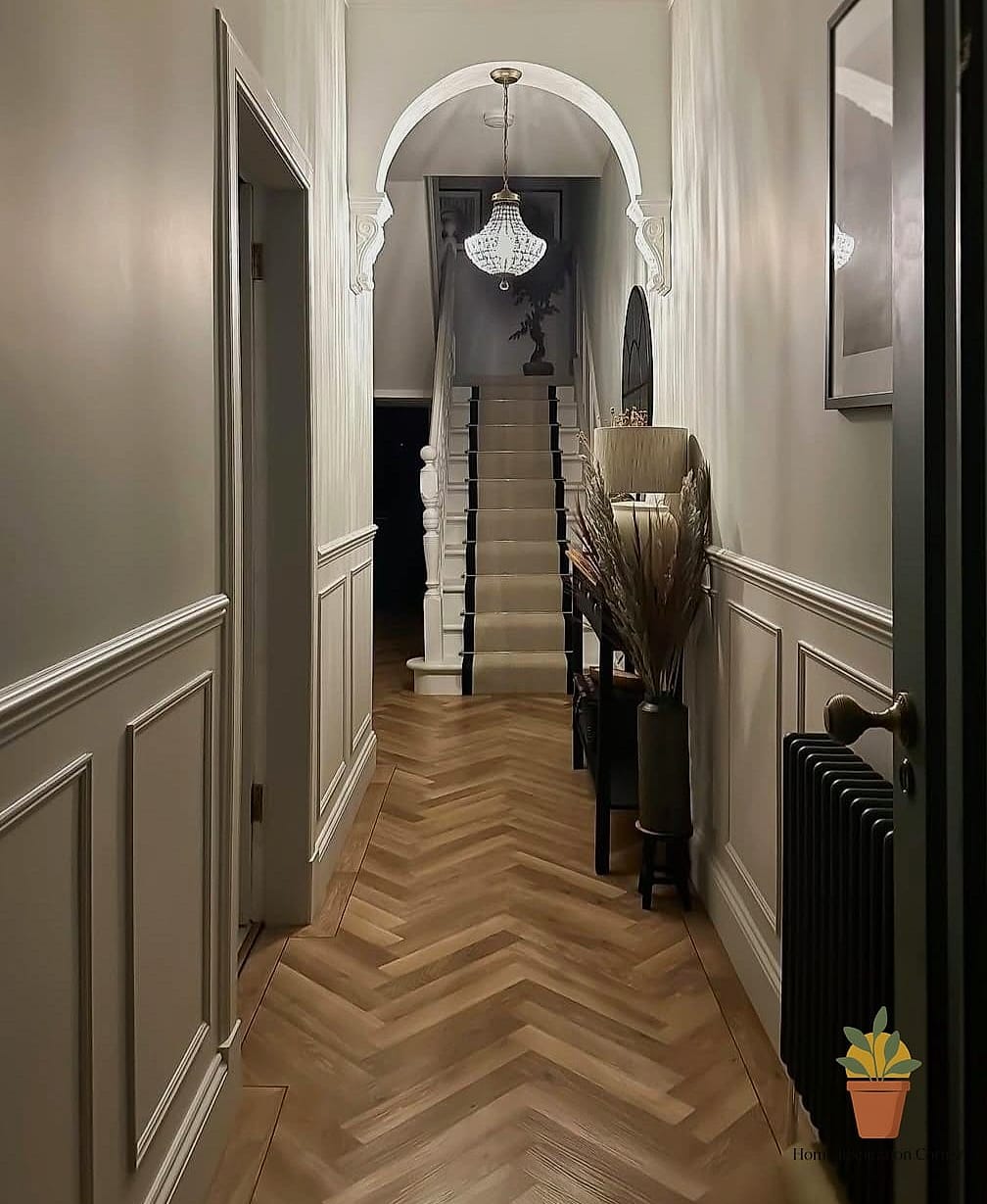
A well-placed mirror does double duty in a Victorian hallway: it bounces available light around a space that often has none of its own, and it visually widens a narrow corridor. An arched or ornate frame suits the period nicely.
Position it opposite a window or near the front door where it can catch daylight. Beyond the practical benefits, it’s usually the last thing people check before heading out, which is reason enough to have one there.
Contrasting Front Door and Hallway Trim
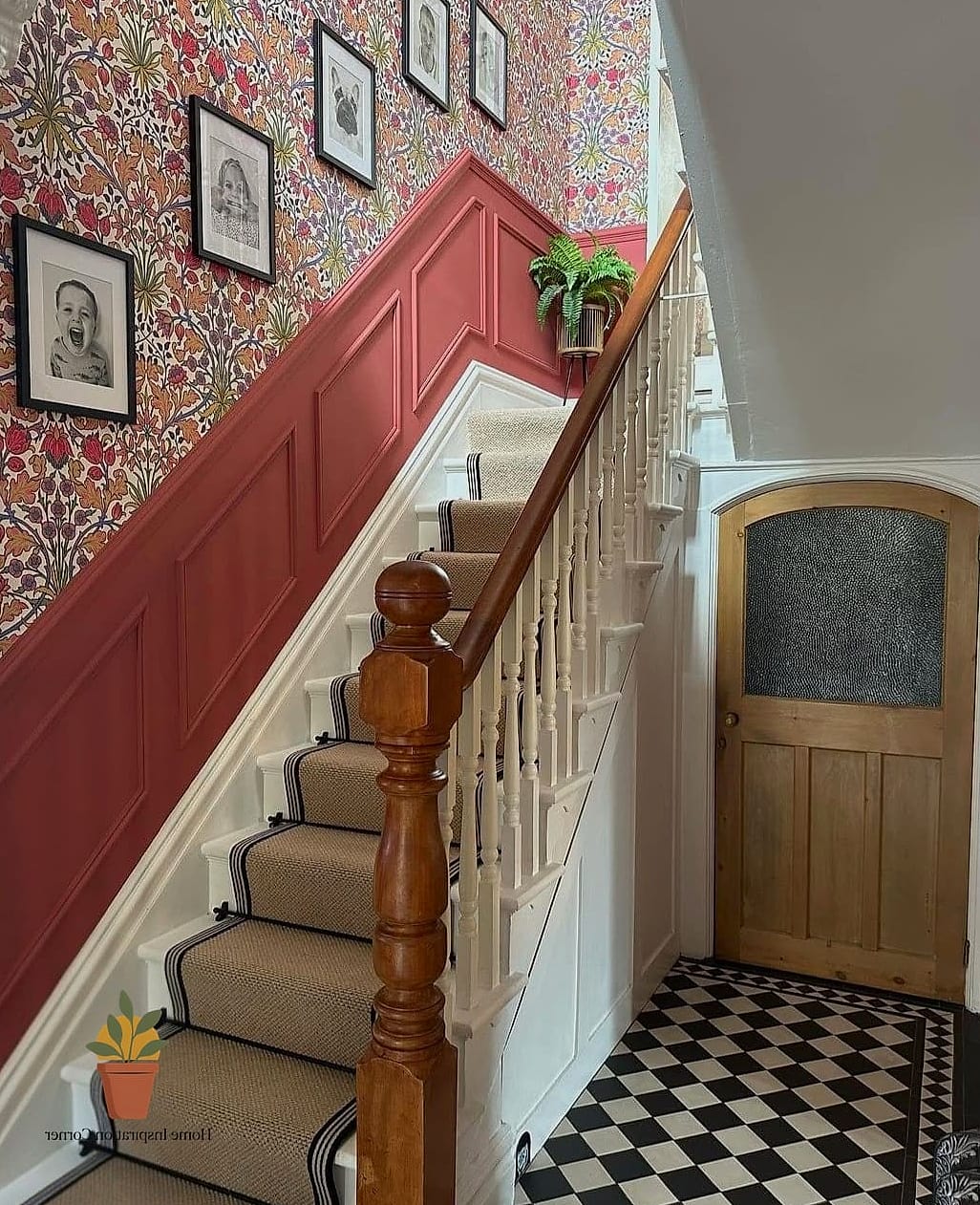
The transition from front door to hallway is worth thinking about as one continuous design moment. Painting the interior of the front door and the surrounding trim to match or complement the hallway color creates a sense of flow the second you walk in.
This is a small, inexpensive update that pulls the whole entry together. It’s also a nice way to tie in personality, whether that’s a bold color pop or a subtle tonal match with the rest of the space.
Putting even three or four of these ideas together can completely change how a Victorian terrace hallway feels, without needing to knock down walls or blow the budget. Start with whichever original features you still have, lean into them, and build the rest of the space around what makes the house special in the first place.