
11 Backyard Retaining Walls Ideas That Will Transform Your Space
- Natural Stone Terracing
- Modern Concrete Block Walls
- Timber and Wood Retaining Walls
- Tiered Garden Retaining Walls
- Curved Retaining Walls
- Retaining Walls with Built-In Seating
- Gabion Retaining Walls
- Brick Retaining Walls
- Low Border Retaining Walls
- Retaining Walls with Integrated Lighting
- Mixed-Material Retaining Walls
11 Backyard Retaining Walls Ideas That Will Transform Your Space
If your yard has a slope, a drop-off, or a section that just doesn’t feel usable, a retaining wall might be the fix you didn’t know you needed. Beyond the practical job of holding back soil, these walls can completely change how a backyard looks and functions. They add structure, create new planting areas, and give you flat, usable space where you didn’t have any before.
The good news is retaining walls come in so many styles that there’s really something for every budget and every aesthetic. Whether you’re working with a steep hillside or just want to define a garden bed, here are eleven ideas worth considering.
Natural Stone Terracing
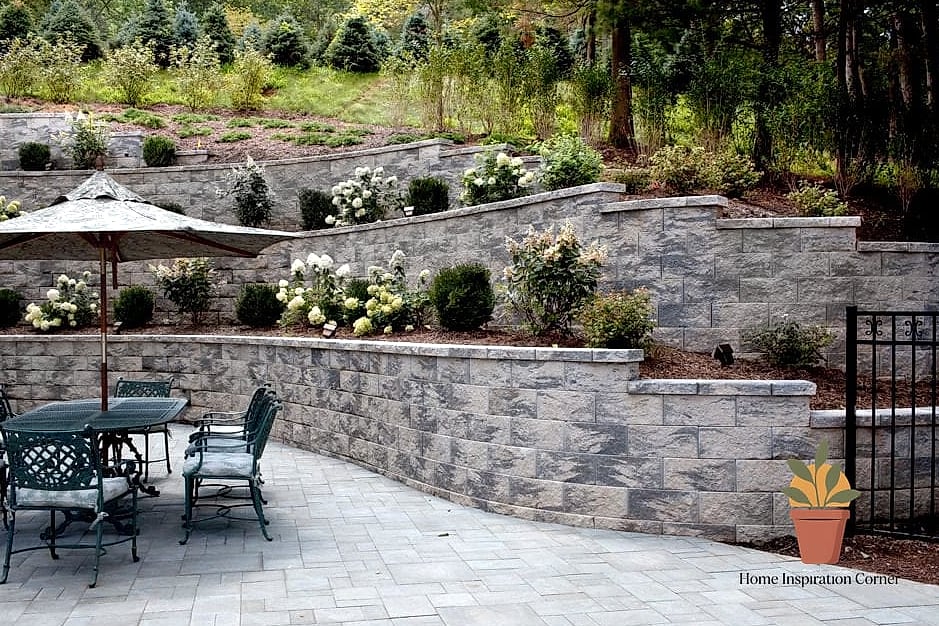
There’s something about stacked natural stone that just feels like it belongs outside. This style uses irregular, chunky stones fitted together without much (or any) mortar, creating a rustic, organic look that ages beautifully over time.
It works especially well on sloped properties where you want to create multiple flat terraces for planting or seating. Homeowners love it because no two stone walls ever look identical, so your yard ends up with a one-of-a-kind feature. Materials like fieldstone, limestone, or river rock all give slightly different vibes, from earthy and warm to cool and gray.
On the maintenance side, these walls hold up well against weather, though you’ll want to check for shifting stones every year or two, especially after a hard winter. It’s a project that can get pricey with professional installation, but it’s also doable as a DIY weekend project if you’re patient and don’t mind heavy lifting.
Modern Concrete Block Walls
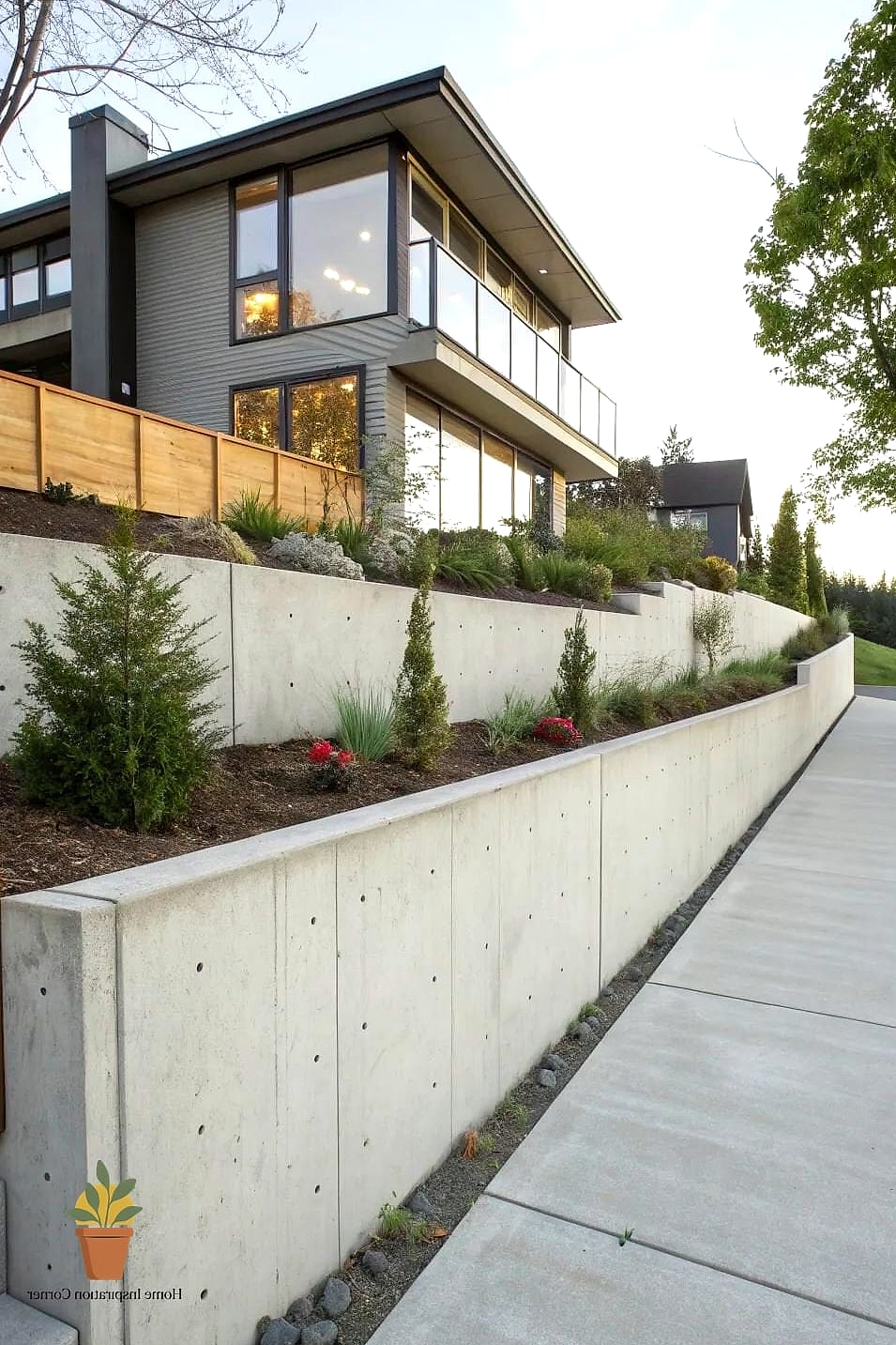
If your style leans more clean and contemporary, poured or block concrete walls are worth a look. These have crisp lines and a smooth, uniform finish that pairs nicely with modern landscaping and minimalist outdoor spaces.
This option works best for smaller yards or urban properties where a sleek look matters more than a rustic one. People gravitate toward it because it’s low-maintenance and incredibly durable, and it can be tinted or stained in different colors to match your home’s exterior.
Budget-wise, concrete block systems are often more affordable than natural stone and easier to install since the blocks are uniform and interlock. For a softer touch, you can pair the wall with warm wood accents on nearby planters or seating to keep it from feeling too stark.
Timber and Wood Retaining Walls
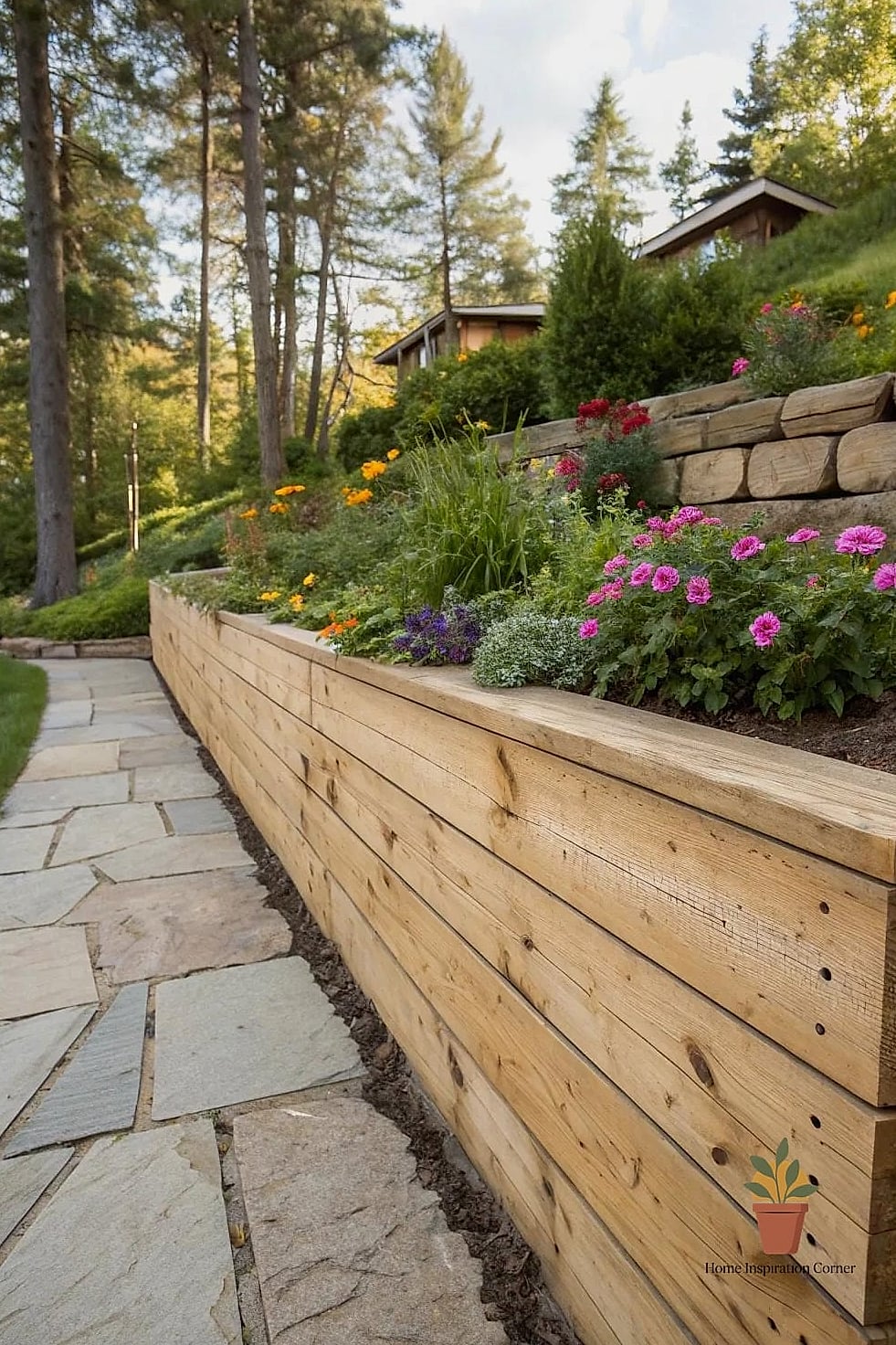
Wood retaining walls bring a warm, cabin-like feel that natural stone and concrete just can’t replicate. Pressure-treated timbers or railroad-tie-style beams stack horizontally to create a wall that looks great in cottage-style, farmhouse, or wooded backyard settings.
This style shines in yards with mature trees or a more rustic overall landscape design. It’s also one of the more budget-friendly options, making it appealing if you’re tackling a bigger slope on a smaller budget.
The tradeoff is that wood doesn’t last as long as stone or concrete, especially in wet climates, so you’re looking at eventual replacement down the line, maybe every 15 to 20 years depending on the wood quality and moisture exposure. Cedar and redwood resist rot better than standard pine, so it’s worth spending a little more upfront if longevity matters to you.
Tiered Garden Retaining Walls
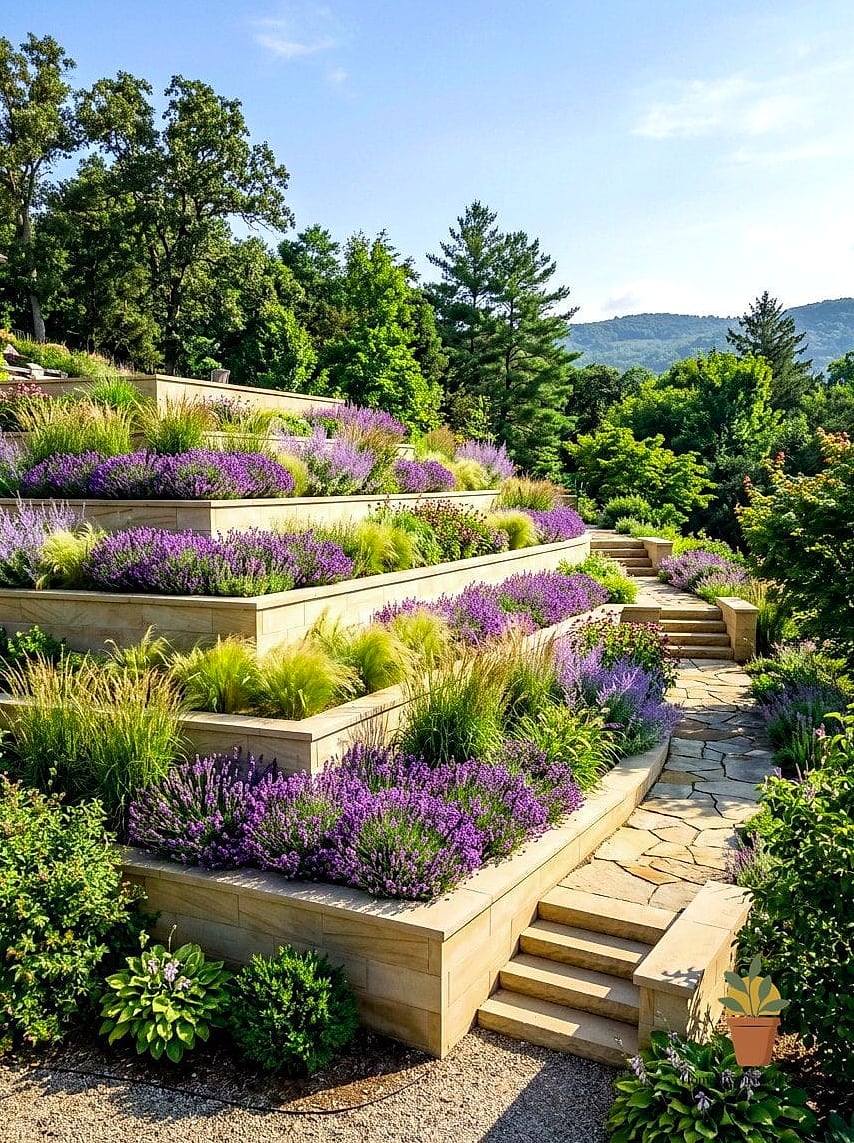
Instead of one tall wall, this idea breaks a slope into several shorter walls stacked like steps, each one holding its own planting bed. It’s a fantastic way to turn a steep, unusable hillside into a series of gardens you can actually walk through and tend to.
This works particularly well for anyone who loves gardening but has been fighting an awkward slope for years. The tiered look also adds visual interest, since each level can feature different plants, colors, or textures, from flowering perennials up top to herbs or vegetables lower down.
Materials can vary here too. Brick, stone, or concrete block all work, so you can match whatever fits your existing landscape. Just keep in mind that more tiers mean more retaining structures to maintain, though the payoff in usable garden space is often worth it.
Curved Retaining Walls
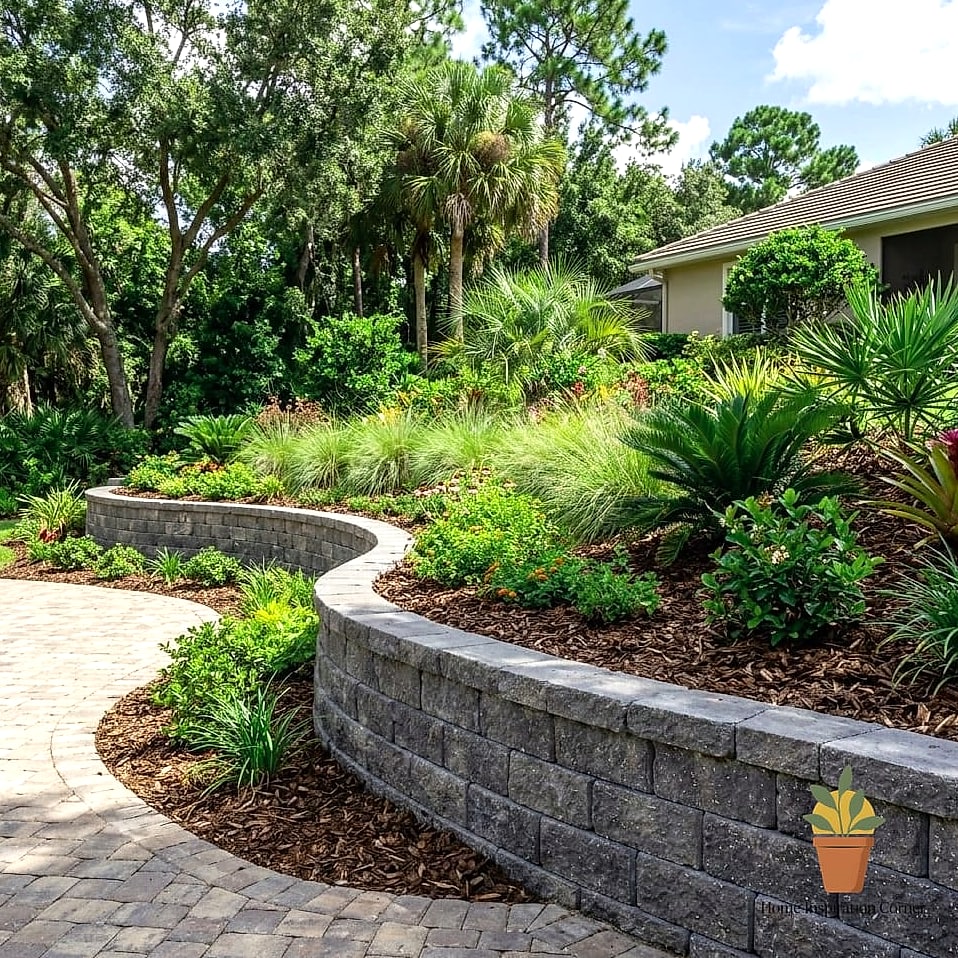
Straight lines aren’t the only option. Curved retaining walls soften a yard’s overall look and can guide the eye through a space in a way that feels intentional rather than boxy.
These work great around patios, pool areas, or anywhere you want a more flowing, natural transition between different yard levels. Homeowners tend to love the way a curve makes a backyard feel bigger and less segmented, almost like a professionally landscaped resort.
Curved walls are typically built with smaller modular blocks designed to bend, since traditional straight blocks don’t flex well. This makes installation a bit trickier and often better suited for a contractor rather than a DIY project, but the visual payoff is hard to beat.
Retaining Walls with Built-In Seating
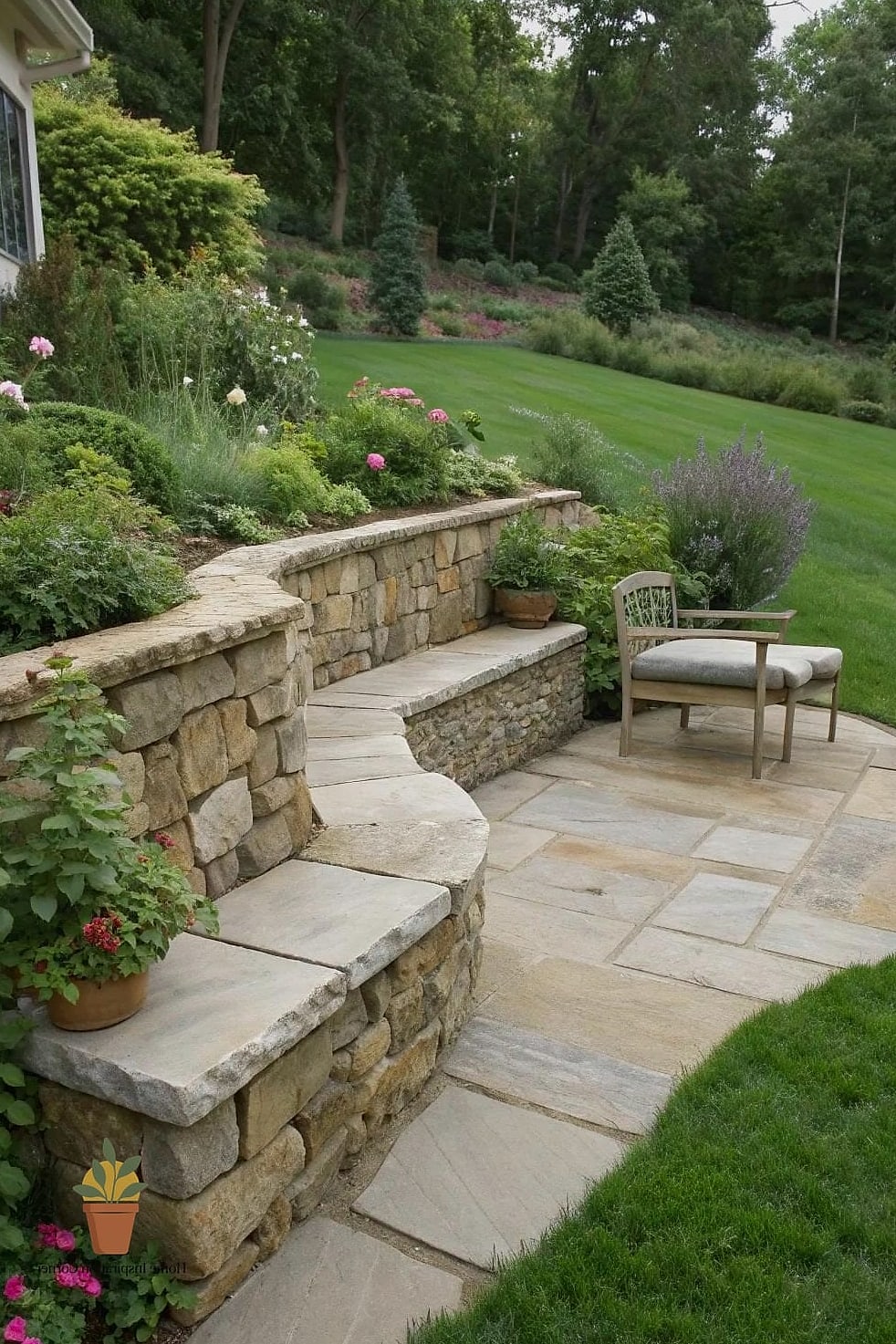
Why build a wall and a bench separately when you can combine them? Wider retaining walls, typically topped with flat capstones or wood, can double as extra seating for gatherings, morning coffee, or just soaking up the yard.
This idea is perfect for backyards that host get-togethers but don’t have a ton of room for separate furniture. It’s also a smart move for smaller properties since it maximizes function without eating up more space. Concrete block and natural stone both work well here, especially when topped with a smooth, comfortable cap material.
For extra comfort, some homeowners add outdoor cushions or built-in lighting along the base, which makes the space feel more like an intentional living area after dark.
Gabion Retaining Walls
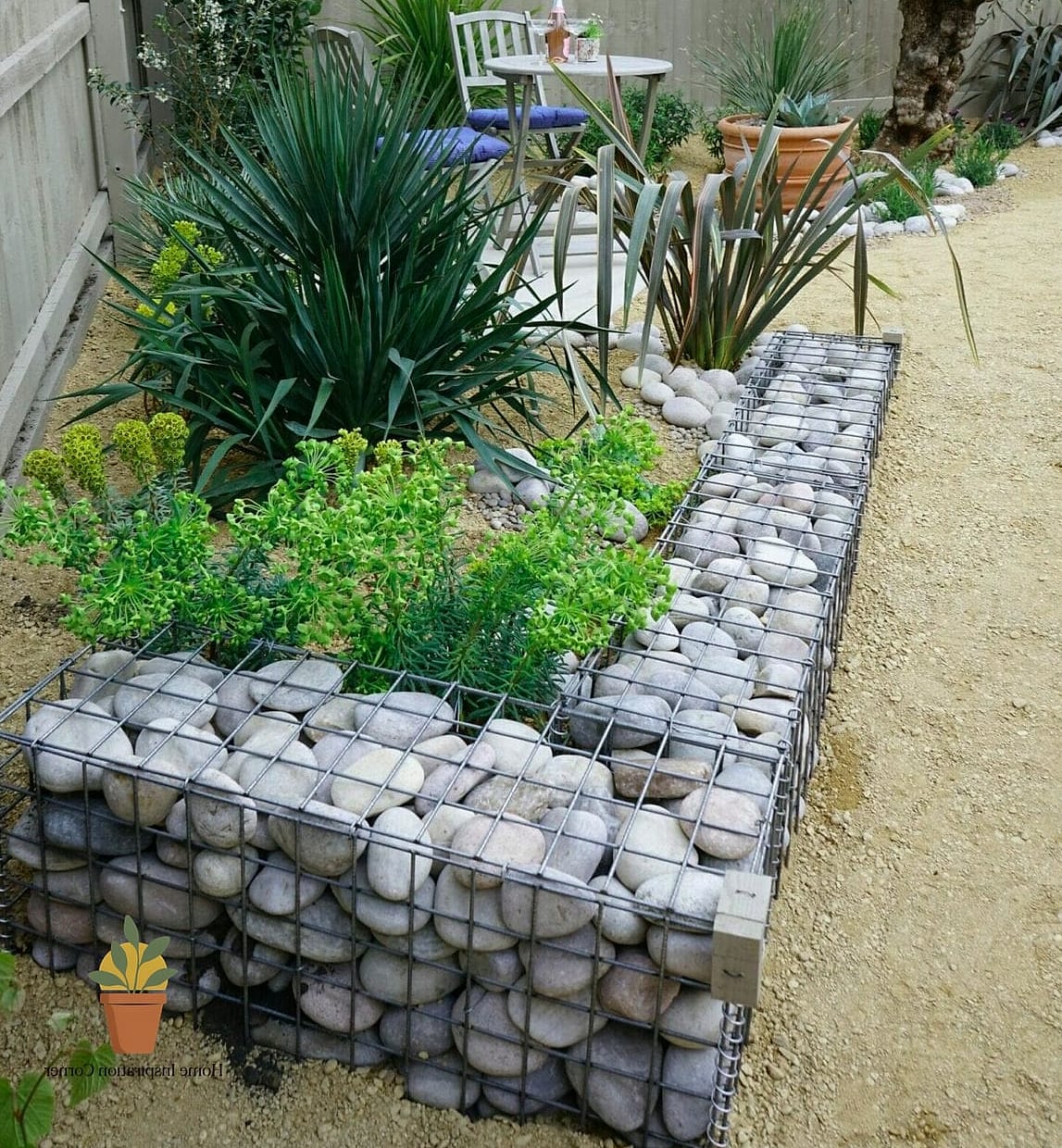
Gabion walls use wire cages filled with stone, creating a distinctive textured look that’s part industrial, part natural. They’ve become increasingly popular in modern and rustic-modern landscape designs because they bring texture without needing mortar or heavy stacking skills.
This style works particularly well in contemporary yards, near water features, or anywhere you want an eye-catching focal point rather than just a functional wall. People love that you can fill the cages with whatever stone matches your yard’s palette, from gray river rock to warm earth tones.
On the practical side, gabion walls drain exceptionally well since water flows right through the gaps, which makes them a solid choice in areas that get heavy rain. They’re also relatively low-maintenance, though the wire cages can eventually need replacing after many years of exposure.
Brick Retaining Walls
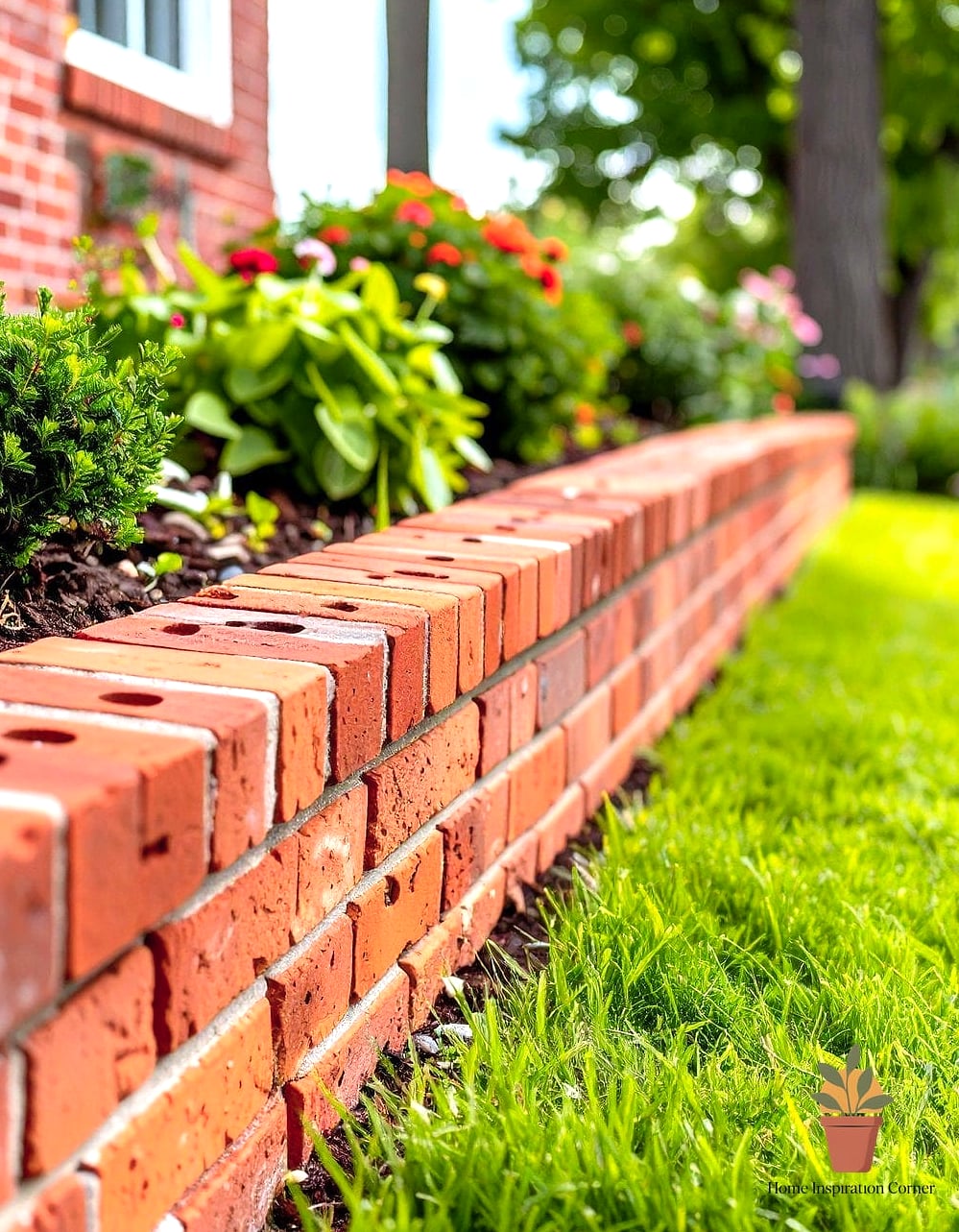
Brick brings a classic, slightly traditional feel that works beautifully with older homes or yards with a more formal garden style. The uniform shape and warm reddish tones give a polished, structured look that’s a little different from the more casual feel of stone.
This option is ideal if your home’s exterior already features brick, since matching materials creates a cohesive look between your house and landscape. It’s also a durable choice that holds up well over decades with minimal upkeep beyond the occasional repointing of mortar joints.
Brick can be pricier than concrete block but tends to be more budget-friendly than premium natural stone. For a more updated look, some homeowners paint or whitewash the brick to fit a modern farmhouse aesthetic instead of the traditional red-brick appearance.
Low Border Retaining Walls
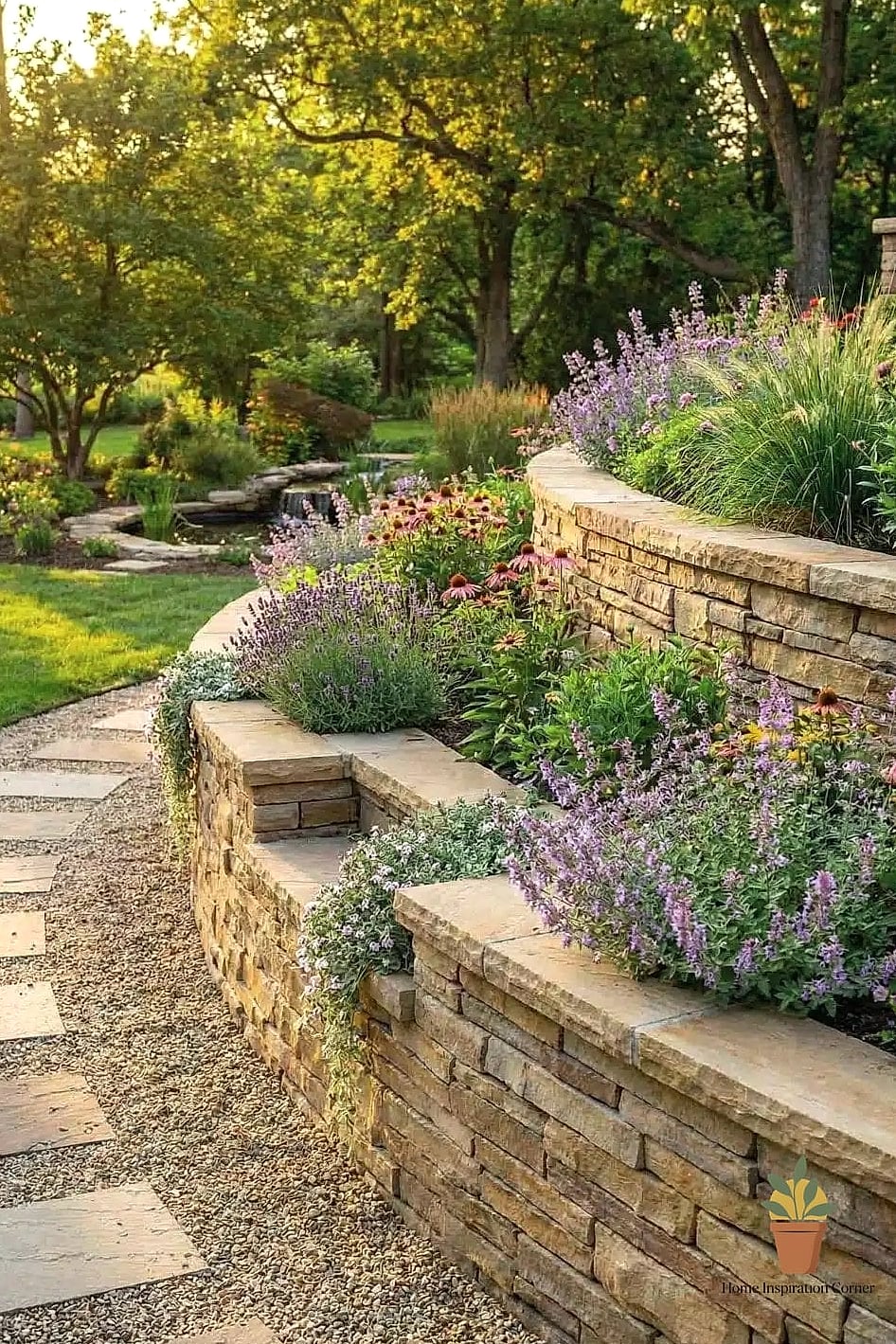
Not every retaining wall needs to be dramatic or tall. Sometimes a low wall, just one or two courses high, is all you need to define a garden bed, hold back a slight grade change, or edge a pathway.
This idea works well in yards that don’t have a serious slope problem but still want a clean, finished border between lawn and landscaping. It’s also one of the most beginner-friendly DIY projects on this list since the scale is small and forgiving of minor mistakes.
Interlocking concrete pavers make this an especially quick weekend project, and they come in enough colors and textures to match nearly any style. It’s a low-cost way to add structure to flower beds or vegetable gardens without a huge investment of time or money.
Retaining Walls with Integrated Lighting
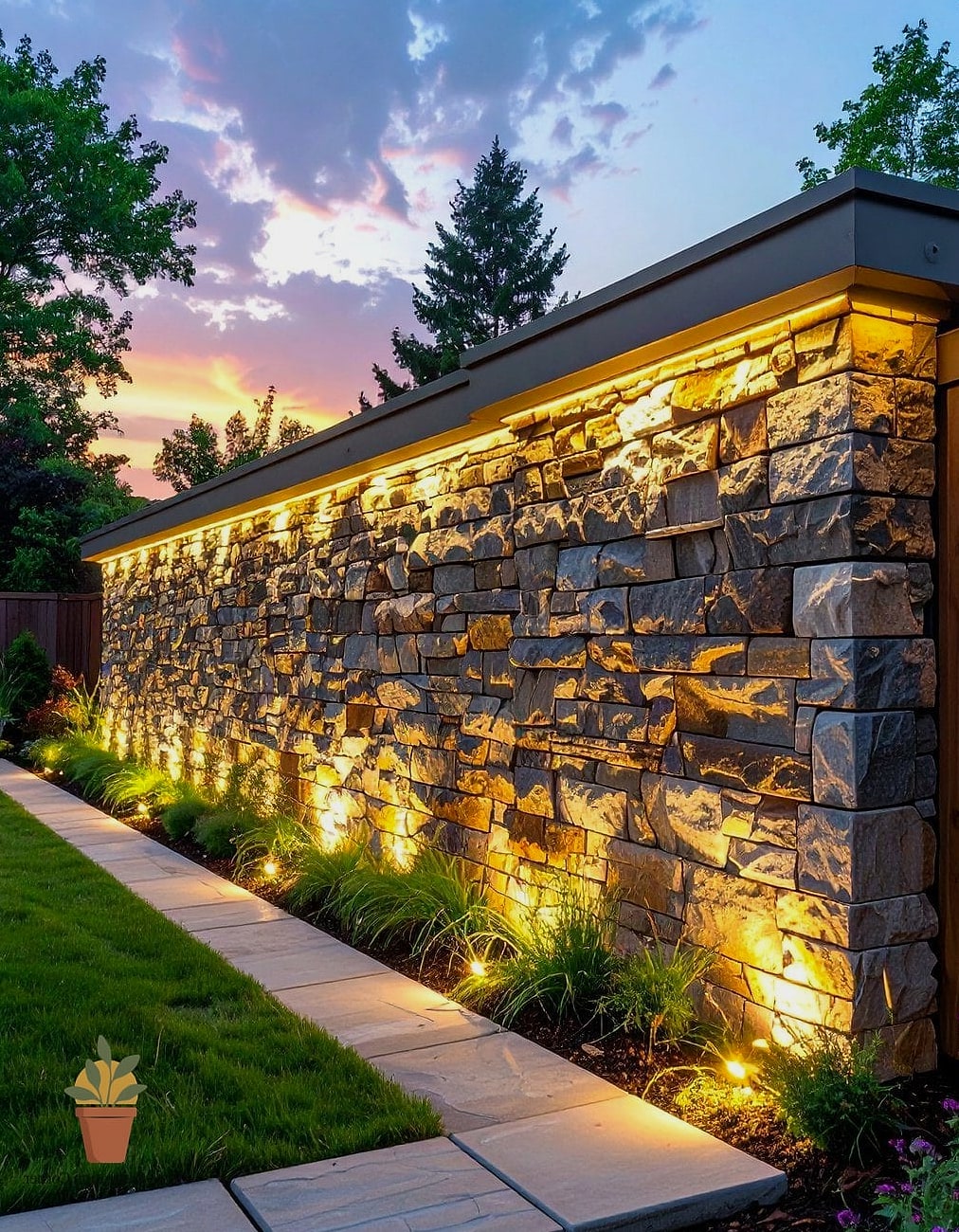
Adding lighting directly into a retaining wall turns a purely functional feature into something that extends your outdoor living space well into the evening. Small LED fixtures can be built into the wall face or tucked under capstones for a soft, ambient glow.
This idea works especially well for walls near patios, walkways, or seating areas where safety and atmosphere both matter. Homeowners love how it highlights the wall’s texture at night while also making steps or grade changes easier to see.
Layered lighting like this pairs nicely with landscape lighting elsewhere in the yard for a cohesive look. It does add some upfront electrical work, so it’s worth budgeting for a professional if you’re not comfortable running low-voltage wiring yourself.
Mixed-Material Retaining Walls
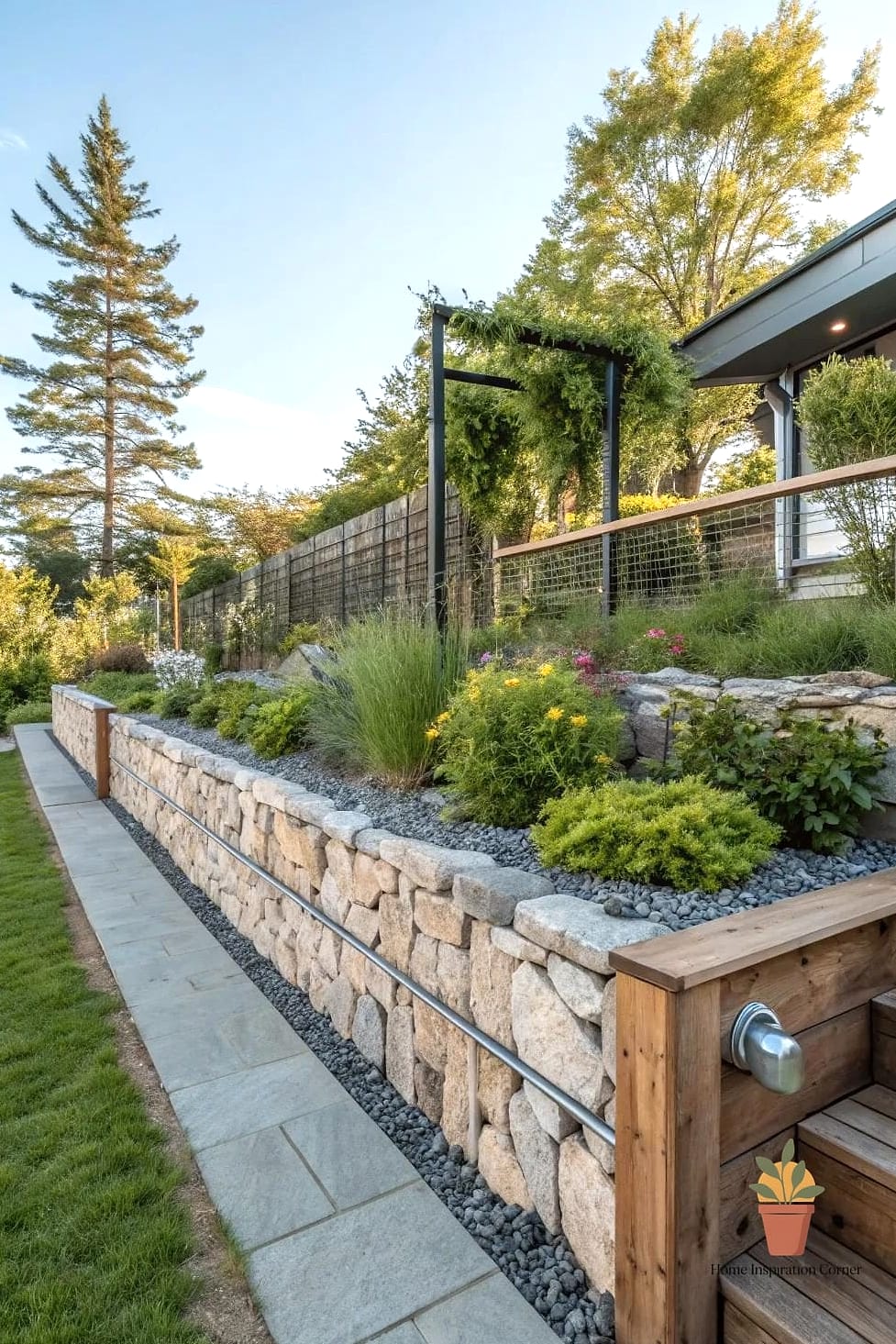
Sometimes the best-looking wall isn’t made from just one material. Combining stone with wood accents, or concrete block with a wood cap, gives you texture and visual interest that a single material alone can’t achieve.
This approach is great for yards with an eclectic style or for anyone who wants their retaining wall to feel more custom rather than off-the-shelf. It’s also a smart way to blend a durable base material with a warmer, more decorative top layer.
Because you’re combining materials, cost and maintenance vary depending on what you choose, but this flexibility is part of the appeal. You get to tailor the wall to your specific taste rather than committing to one look for the entire structure.
Final Thoughts
Whichever direction you go, a retaining wall can genuinely change how your backyard looks and feels, not to mention how much of it you can actually use. From rustic natural stone to sleek concrete or gabion walls, there’s an option here for nearly every style and budget. Take a look at your yard’s slope, your overall aesthetic, and how much maintenance you’re willing to take on, and you’ll likely find one (or a combination) of these ideas fits right in.