
25 Patio Covers Attached To House Ideas to Upgrade Your Home This Weekend
- Classic Gable Patio Cover
- Flat Roof Patio Cover for Modern Homes
- Louvered Pergola Cover with Adjustable Slats
- Solid Insulated Roof Patio Cover
- Open Lattice Patio Cover
- Wood Beam Cover with Exposed Rafters
- Metal Roof Patio Cover
- Retractable Awning Attached to the House
- Patio Cover with Ceiling Fans Built In
- Vaulted Patio Cover with Skylights
- Rustic Timber Frame Patio Cover
- Stucco-Finished Patio Cover to Match Your House
- Patio Cover with Integrated Outdoor Kitchen
- Cedar Slat Privacy Patio Cover
- Contemporary Cantilevered Patio Cover
- Patio Cover with String Lights and Lanterns
- Curved Roof Patio Cover
- Patio Cover with Ceiling Beadboard
- Glass Roof Patio Cover
- Patio Cover Extending from a Second-Story Deck
- Craftsman-Style Patio Cover with Tapered Columns
- Patio Cover with Built-In Rain Gutters
- Two-Tone Patio Cover Design
- Patio Cover with Hanging Planters and Greenery
- Patio Cover Matching Your Home’s Roofline and Shingles
25 Patio Covers Attached To House Ideas to Upgrade Your Home This Weekend
If your patio has been sitting there begging for a little shade and structure, an attached patio cover might be exactly the weekend project you need. It’s one of those upgrades that instantly makes your backyard feel like an extension of your home instead of an afterthought. Whether you’re working with a small builder-grade slab or a sprawling deck, there’s a patio cover style here that fits your house, your climate, and your budget. Let’s get into it.
Classic Gable Patio Cover
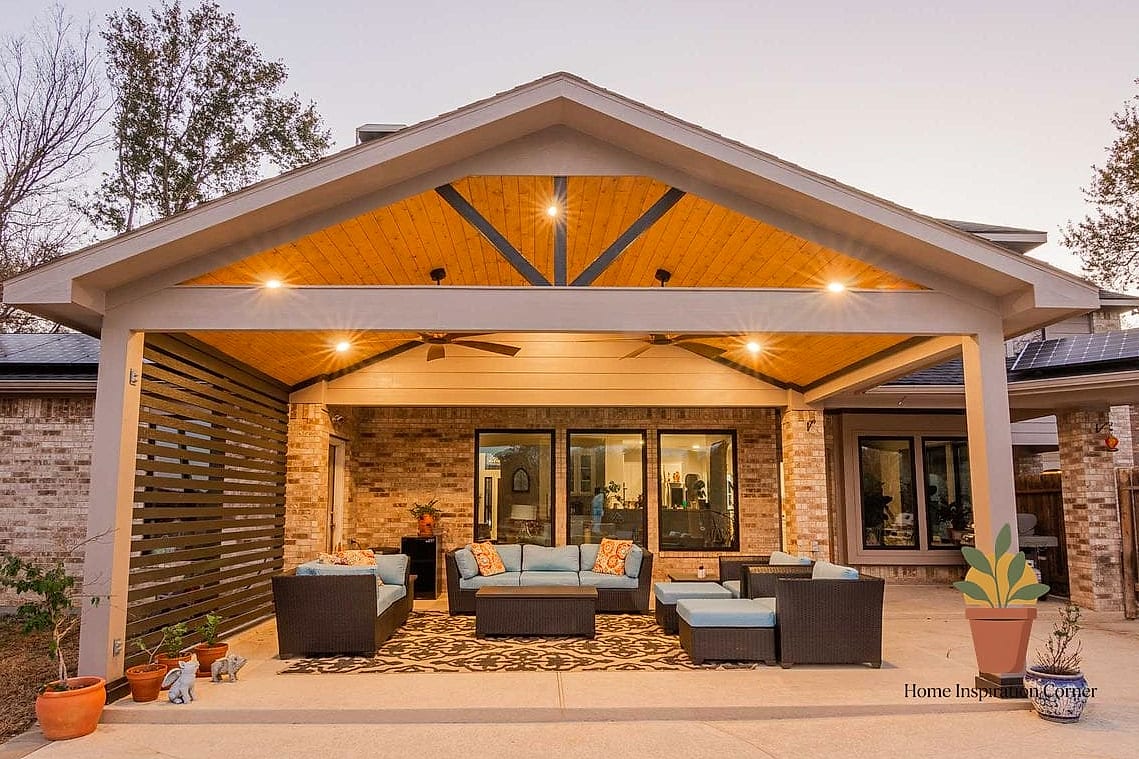
A gable patio cover has that triangular roofline you see on traditional houses, and it’s a natural match if your home already has a pitched roof. It ties the addition into your existing architecture instead of looking bolted on. These work great over larger patios where you want a real sense of height. Cedar or engineered wood beams give it warmth, while the peaked shape helps rain and snow slide right off.
Flat Roof Patio Cover for Modern Homes
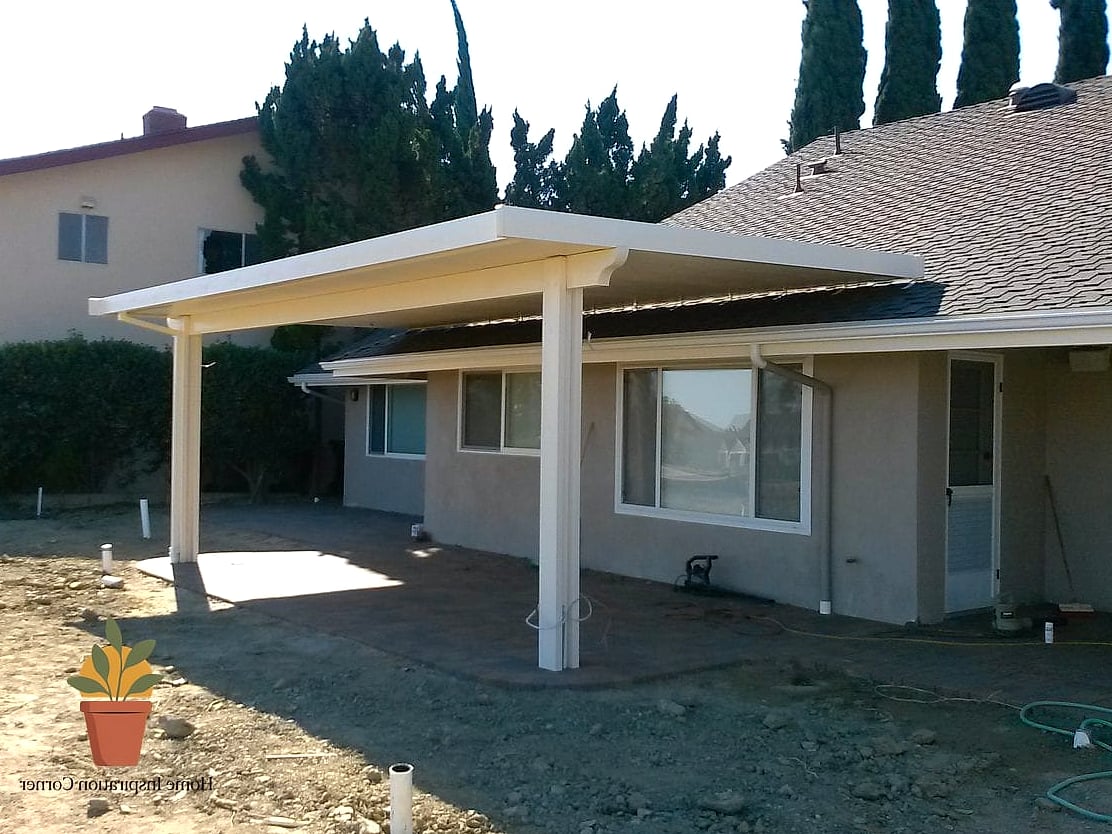
If your house leans modern or mid-century, a flat roof cover keeps those clean horizontal lines going. It’s a simple, low-profile option that pairs beautifully with black metal railings and minimalist furniture. Flat covers are also a bit more budget-friendly since there’s less framing involved. Just make sure your contractor builds in a slight slope for drainage.
Louvered Pergola Cover with Adjustable Slats
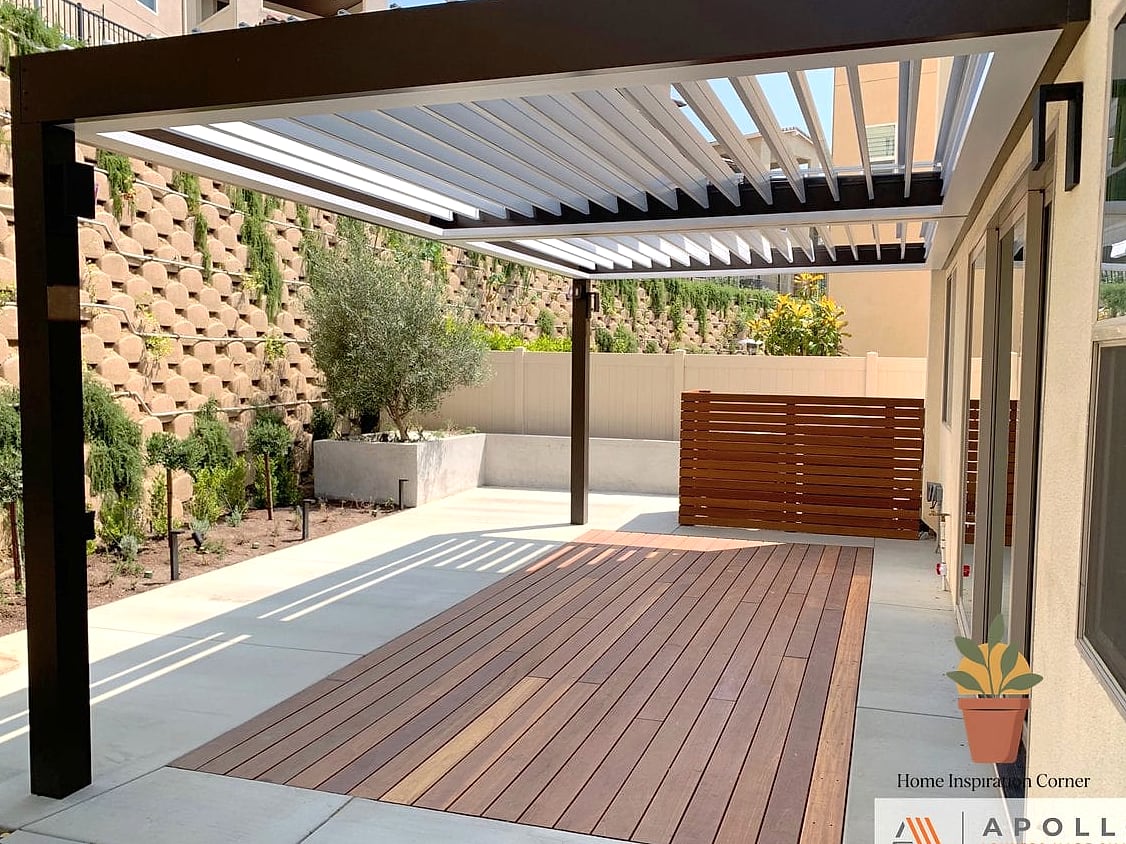
This one’s for people who can’t decide how much sun they want. Motorized or hand-cranked louvers let you tilt the slats open for full sun or closed for shade, sometimes even closing tight enough to handle light rain. They’re a bigger investment upfront, but homeowners love the flexibility year-round. Aluminum louvered covers also skip the wood maintenance entirely.
Solid Insulated Roof Patio Cover
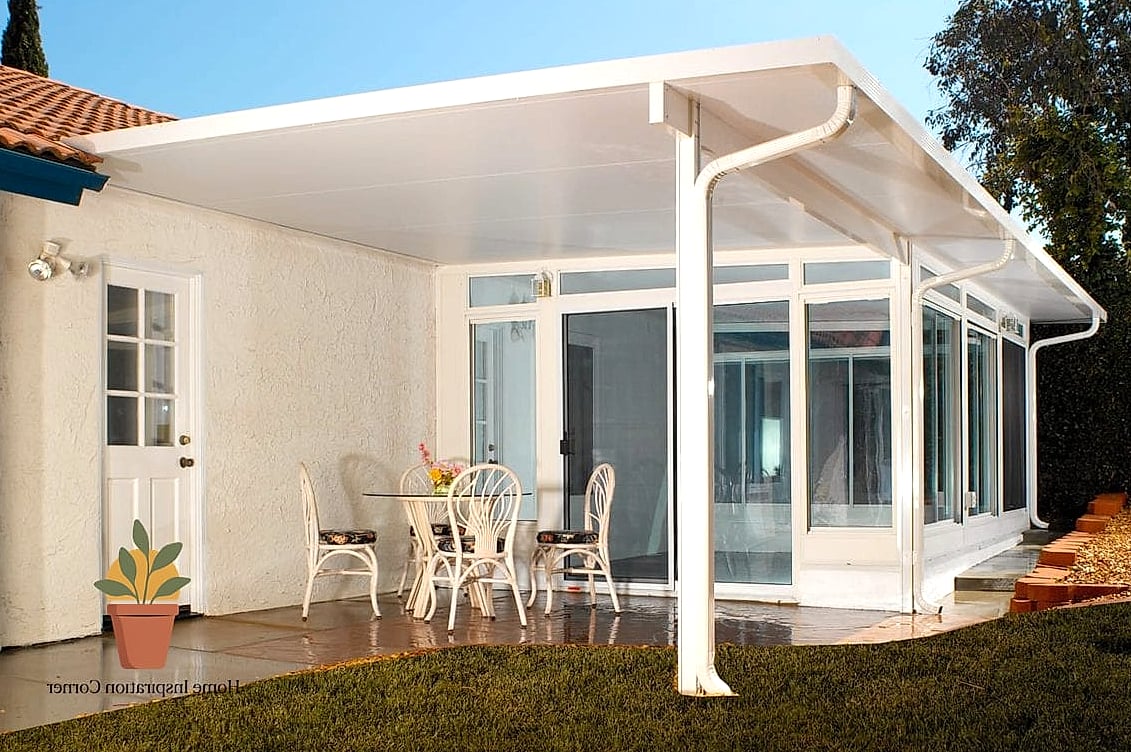
An insulated patio cover uses foam-core panels sandwiched between metal skins, which actually helps regulate temperature underneath. This makes the space usable even on hotter afternoons, since it blocks heat transfer better than a basic wood roof. It’s a popular pick for anyone turning their patio into a true outdoor living room with a TV or sound system. The finished underside also looks clean, almost like drywall.
Open Lattice Patio Cover
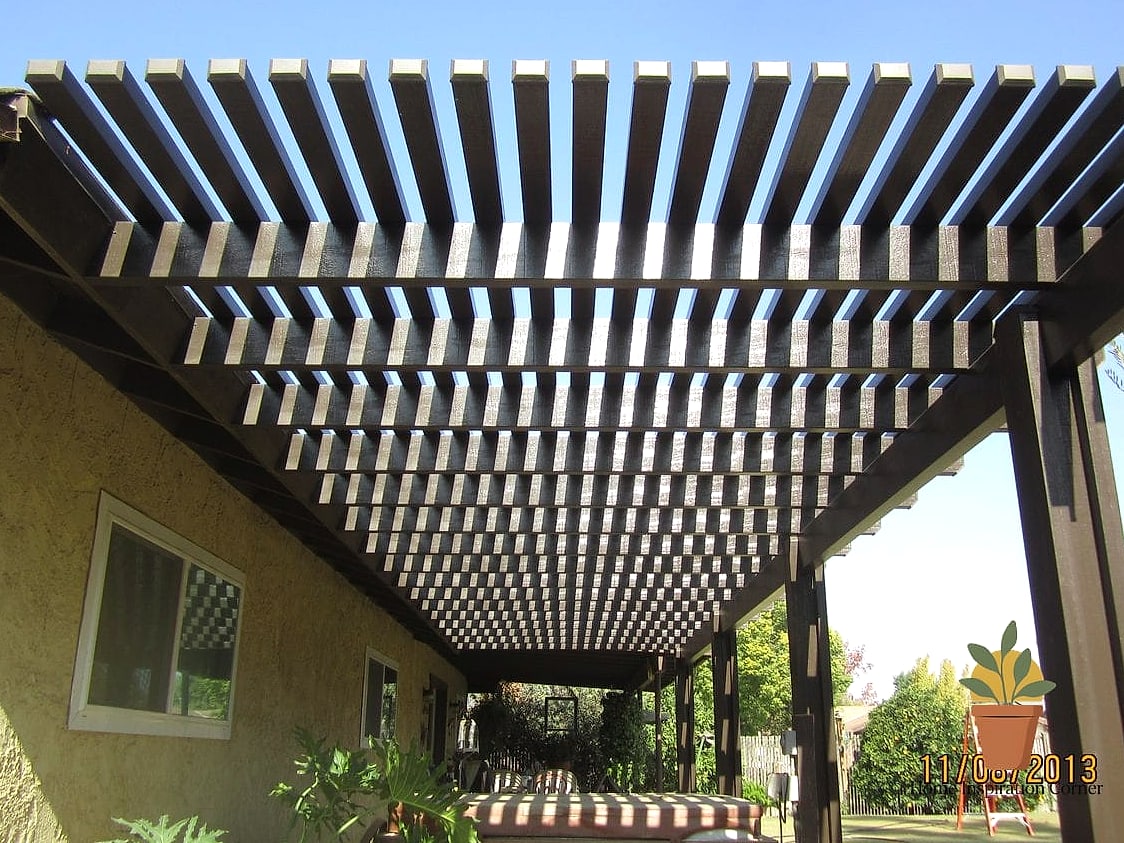
A lattice cover gives you partial shade with a lot of charm, letting dappled light filter through instead of blocking it completely. It’s a favorite for anyone who wants to grow climbing vines like wisteria or jasmine along the top. Over time the greenery fills in and creates natural, ever-changing shade. This style is also one of the easier DIY-friendly options if you’re comfortable with basic carpentry.
Wood Beam Cover with Exposed Rafters
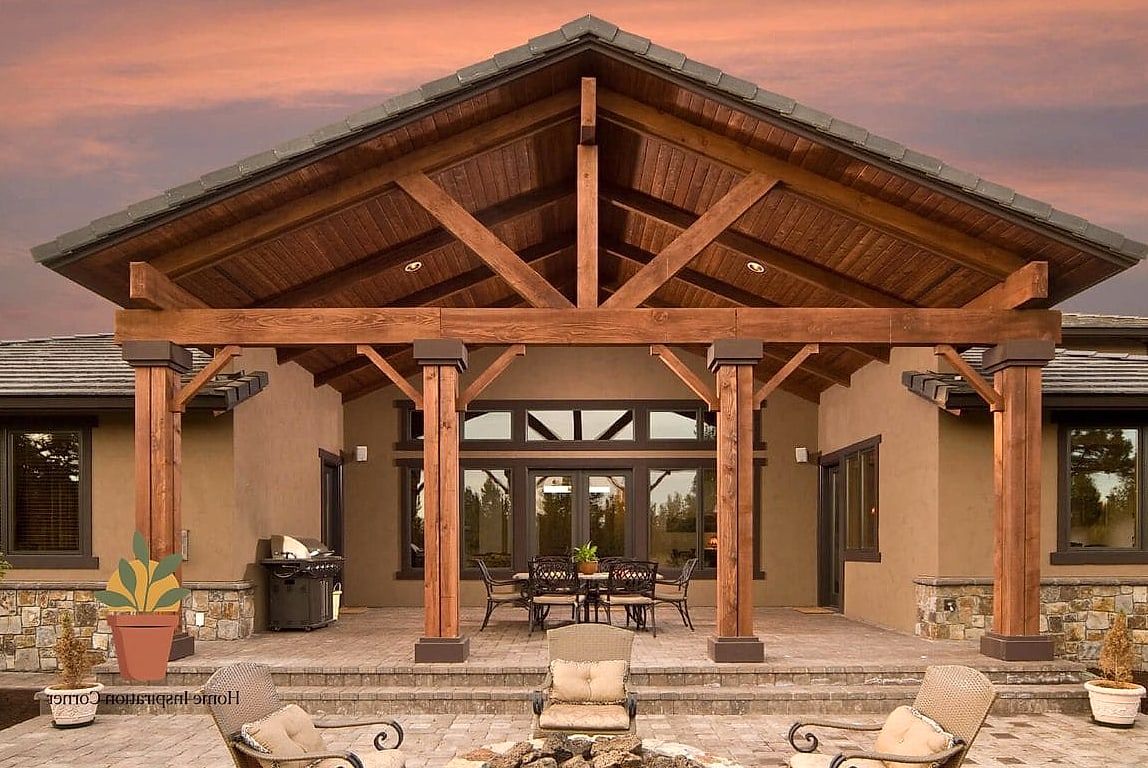
Exposed rafter tails give a patio cover that craftsman, almost cabin-like feel. It works especially well on bungalow or craftsman-style homes where the architecture already has that detail on the main roofline. Stain the beams a warm walnut or leave them natural for a more rustic look. This style photographs beautifully and tends to be a favorite on home tours.
Metal Roof Patio Cover
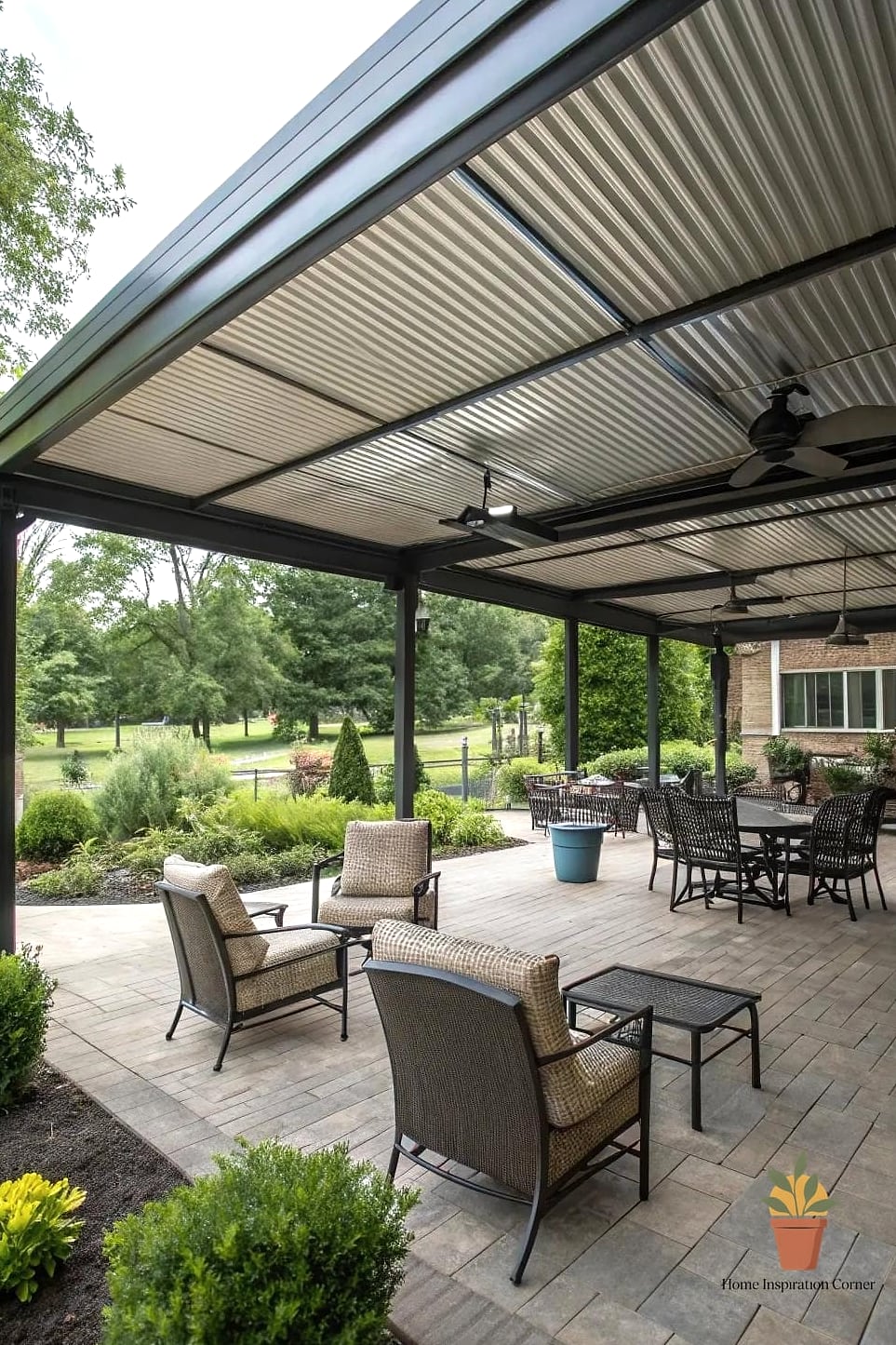
Corrugated or standing-seam metal roofing over a patio brings a farmhouse or industrial vibe depending on the color you choose. Metal is low maintenance, fire resistant, and handles heavy rain better than shingles. Some homeowners even like the sound of rain on a metal roof from underneath. It’s a durable choice if you’re in a region with harsh weather swings.
Retractable Awning Attached to the House
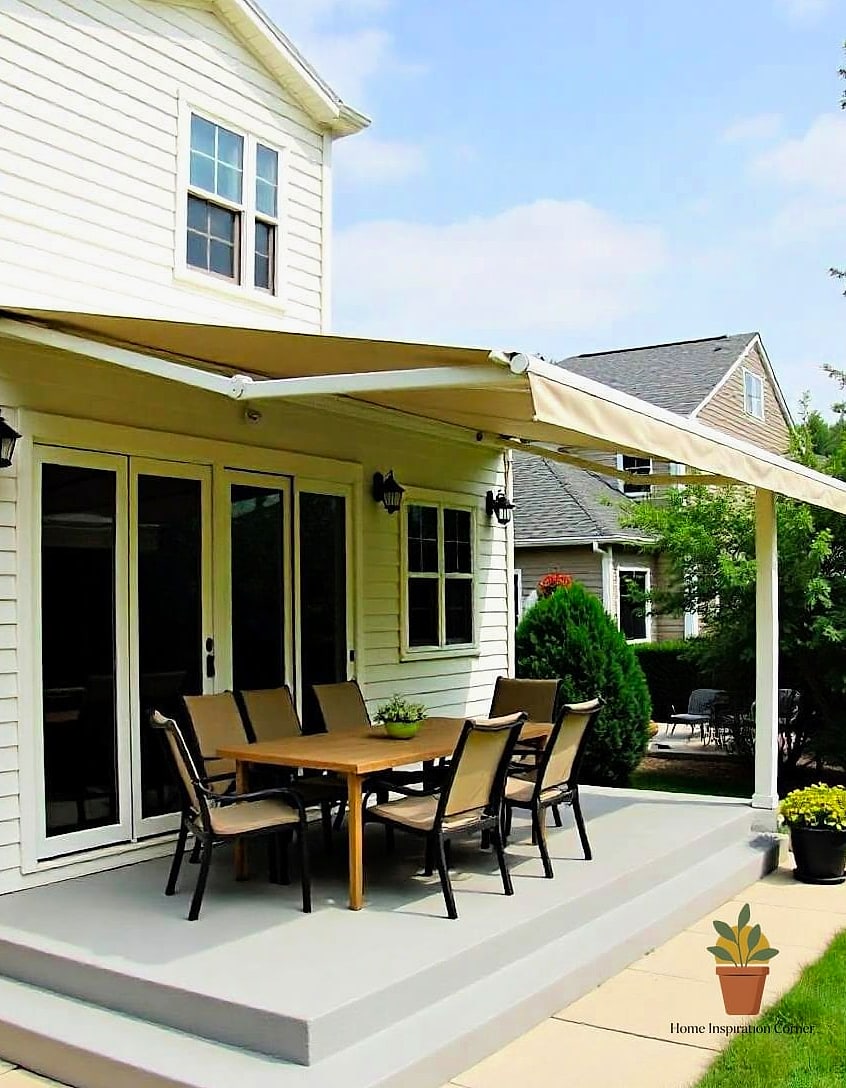
If you’re not ready to commit to a permanent structure, a retractable awning gives you shade on demand without changing your home’s exterior. Motorized versions can extend or retract with a remote, and many now have wind sensors that pull them in automatically during storms. This is a great renter-friendly-ish option too, since some models attach without major structural changes. Stripe patterns still look great, but solid neutral fabrics are trending right now.
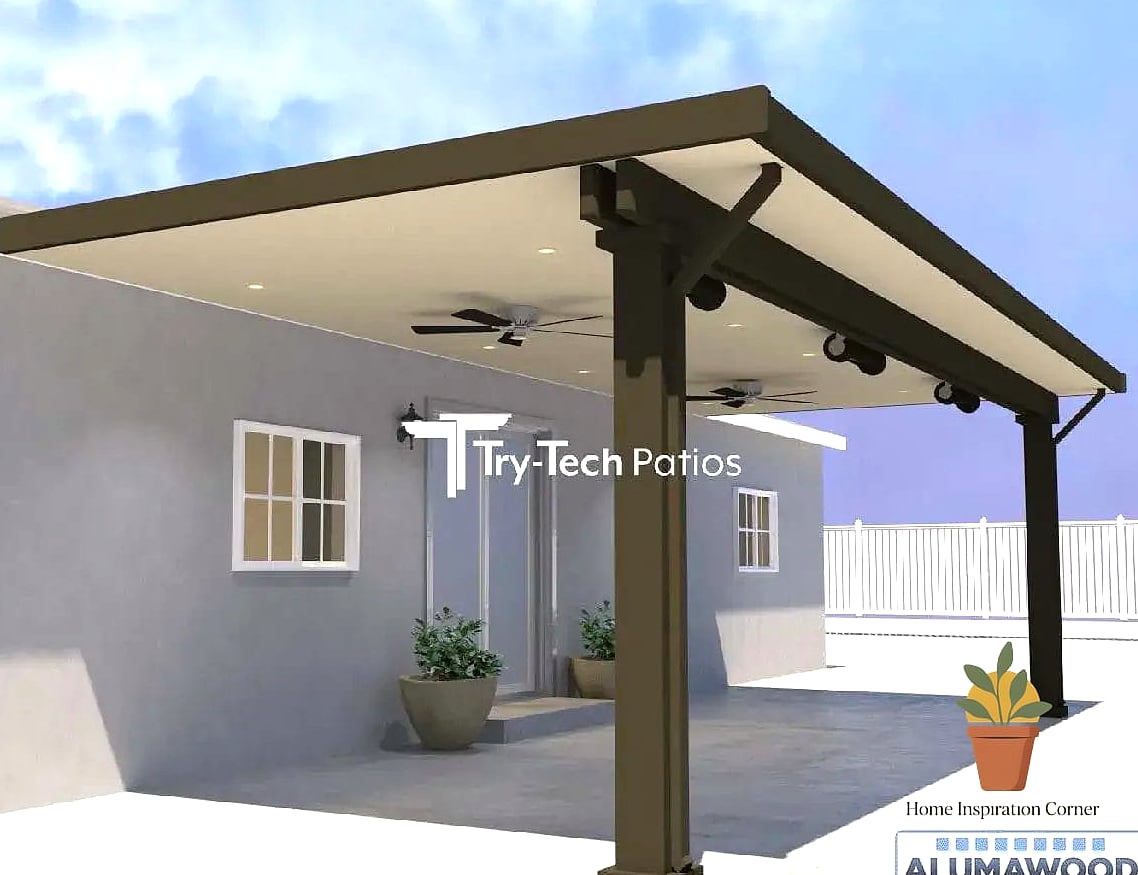
Patio Cover with Ceiling Fans Built In
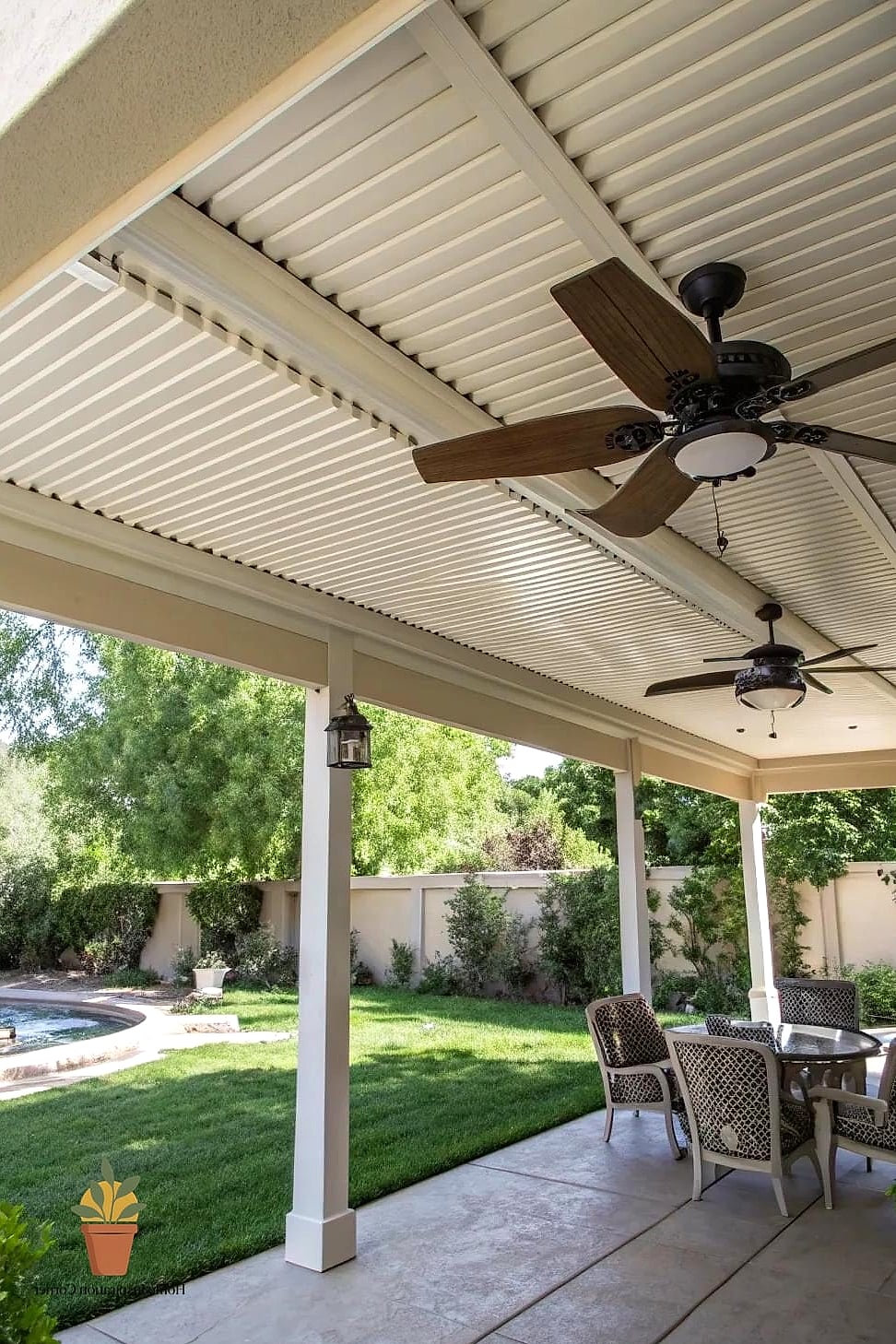
Adding one or two outdoor-rated ceiling fans to your patio cover makes a huge difference on humid evenings. It’s a small addition that pays off constantly, especially paired with a solid roof that traps a bit of shade. Look for fans rated for wet or damp locations depending on how exposed your patio is. Bronze or matte black finishes tend to blend into most cover styles.
Vaulted Patio Cover with Skylights
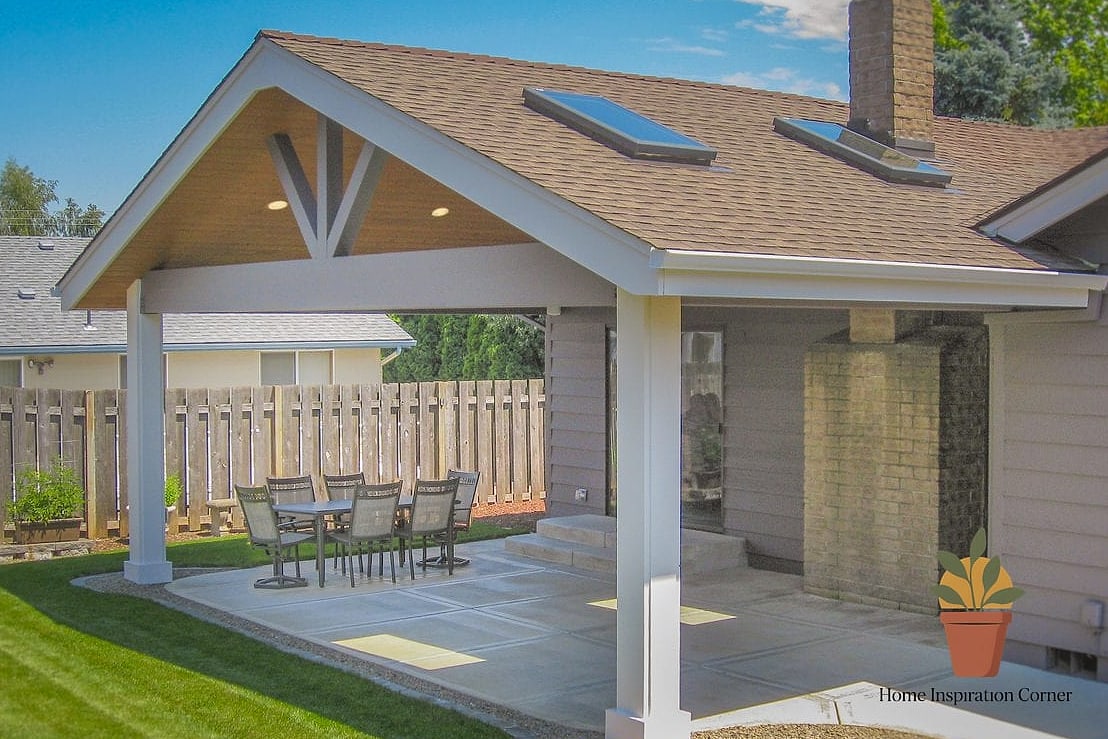
A vaulted ceiling with a few polycarbonate or glass skylight panels gives you shade without making the space feel dark or closed in. It’s a nice middle ground between a solid roof and open pergola. Homeowners love this for keeping the patio bright during the day while still cutting direct sun exposure. Just know skylight panels need occasional cleaning to stay clear.
Rustic Timber Frame Patio Cover
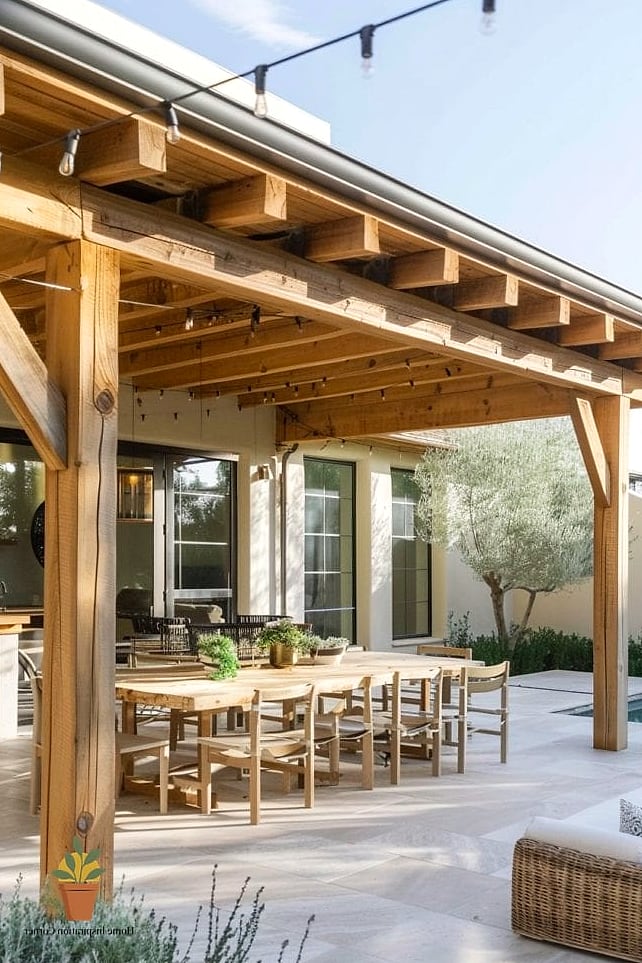
Heavy timber framing with exposed joinery gives a patio cover a substantial, almost barn-like presence. This style tends to suit larger properties and farmhouse-style homes especially well. The thick beams create dramatic shadows throughout the day, which is a small detail that makes a big visual impact. It’s a pricier option but one that ages beautifully with minimal upkeep if properly sealed.
Stucco-Finished Patio Cover to Match Your House
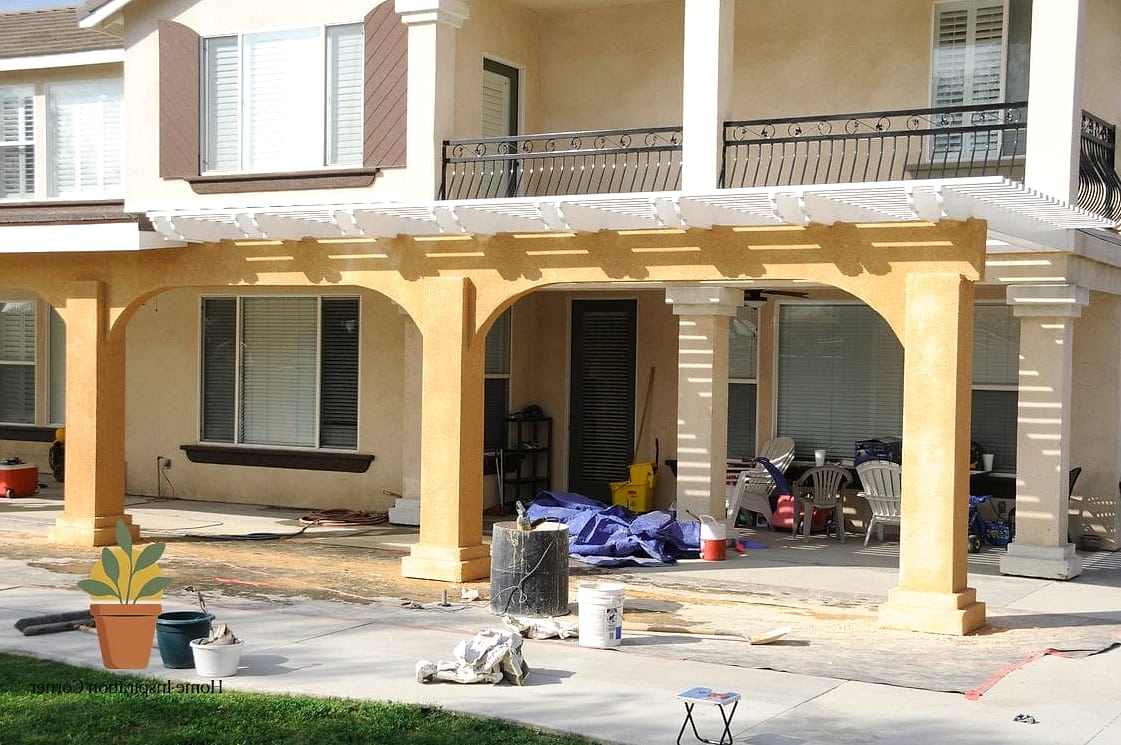
For homes with stucco exteriors, matching that same finish on the patio cover’s support columns creates a seamless look. It reads less like an addition and more like the house was always designed this way. This is especially popular in Mediterranean, Spanish, and Southwestern style homes. Pair it with terracotta tile flooring underneath for a cohesive finish.
Patio Cover with Integrated Outdoor Kitchen
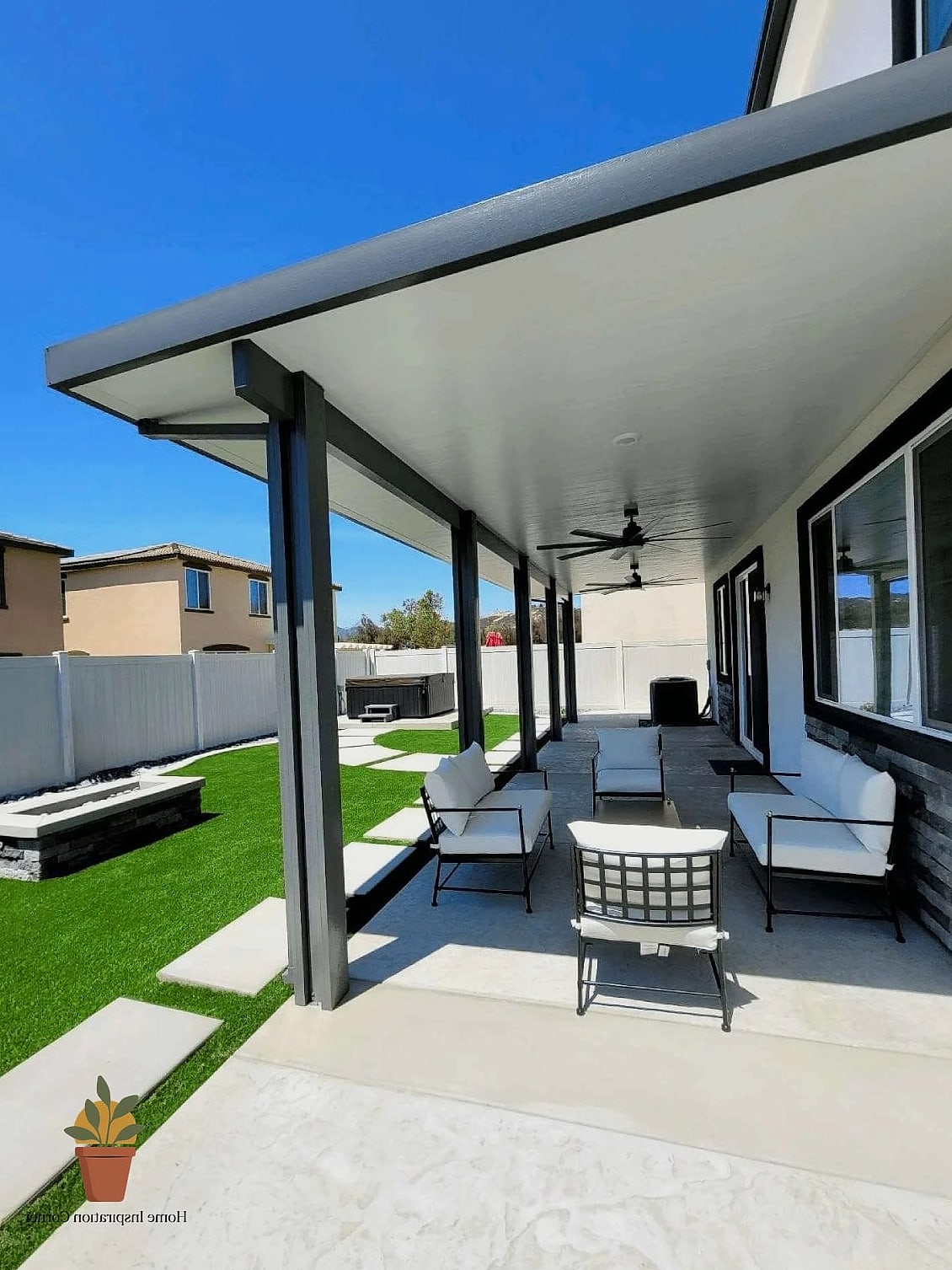
If you’re already covering the patio, it’s worth thinking about tucking in a grill station, mini fridge, or countertop underneath. The roof protects your appliances from sun and rain damage, which extends their lifespan significantly. Quartz or concrete countertops hold up well outdoors and resist staining better than natural stone. This setup turns weekend cookouts into a much smoother experience.
Cedar Slat Privacy Patio Cover
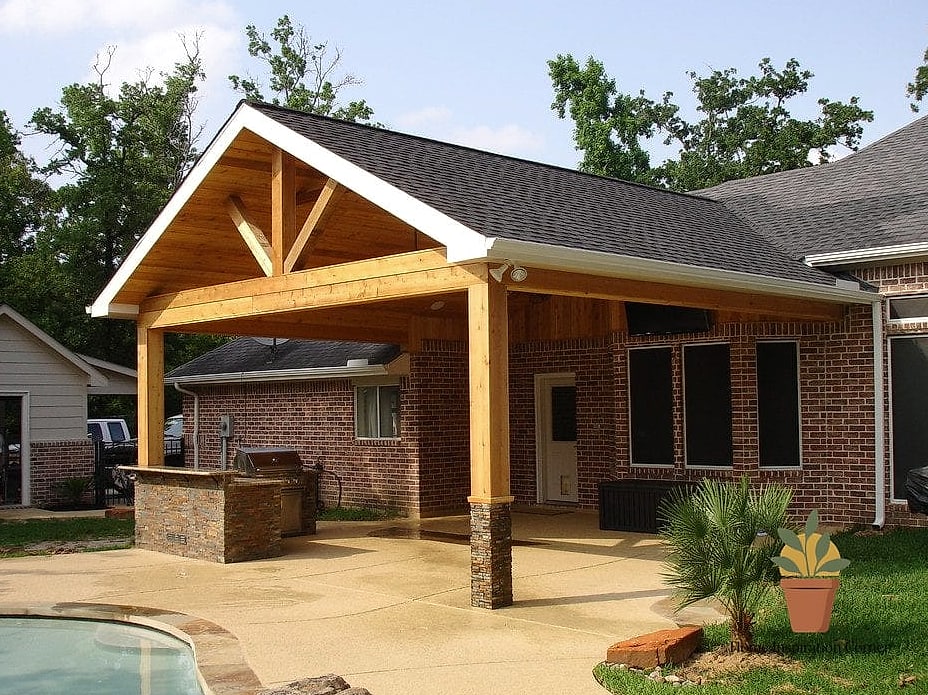
Adding vertical cedar slats along one or two sides of your patio cover gives you privacy from neighbors without fully enclosing the space. It still lets airflow and light through while blocking direct sightlines. This works especially well on smaller lots where patios sit closer together. Leave the cedar to weather naturally to a soft gray, or seal it to keep the warm tone.
Contemporary Cantilevered Patio Cover
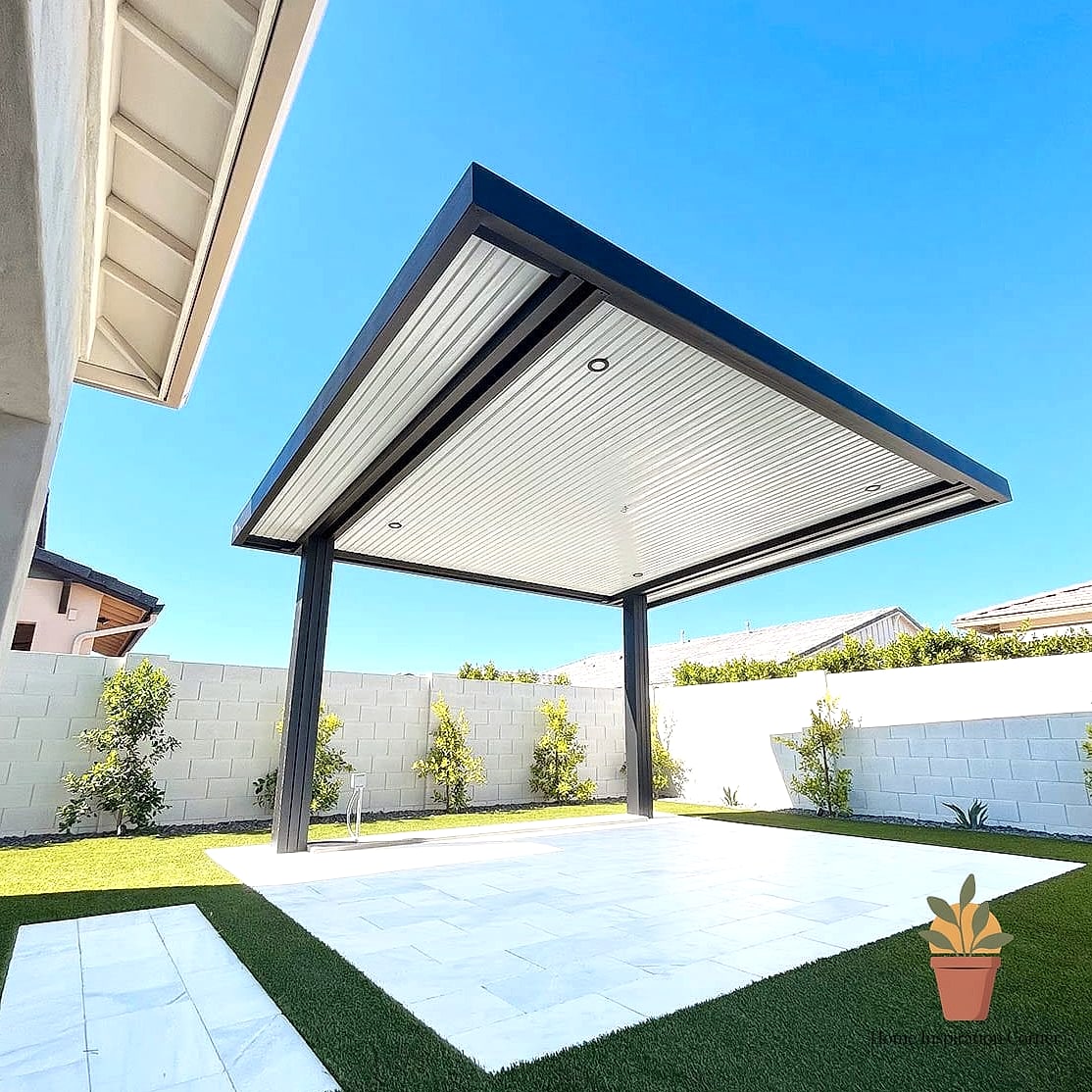
A cantilevered design skips traditional support posts, giving you an open, unobstructed view from your patio. It’s a striking architectural statement that works particularly well on modern homes with large glass doors leading outside. Because there’s more engineering involved, this one typically needs a structural engineer’s input. The payoff is a sleek, floating look that feels custom.
Patio Cover with String Lights and Lanterns
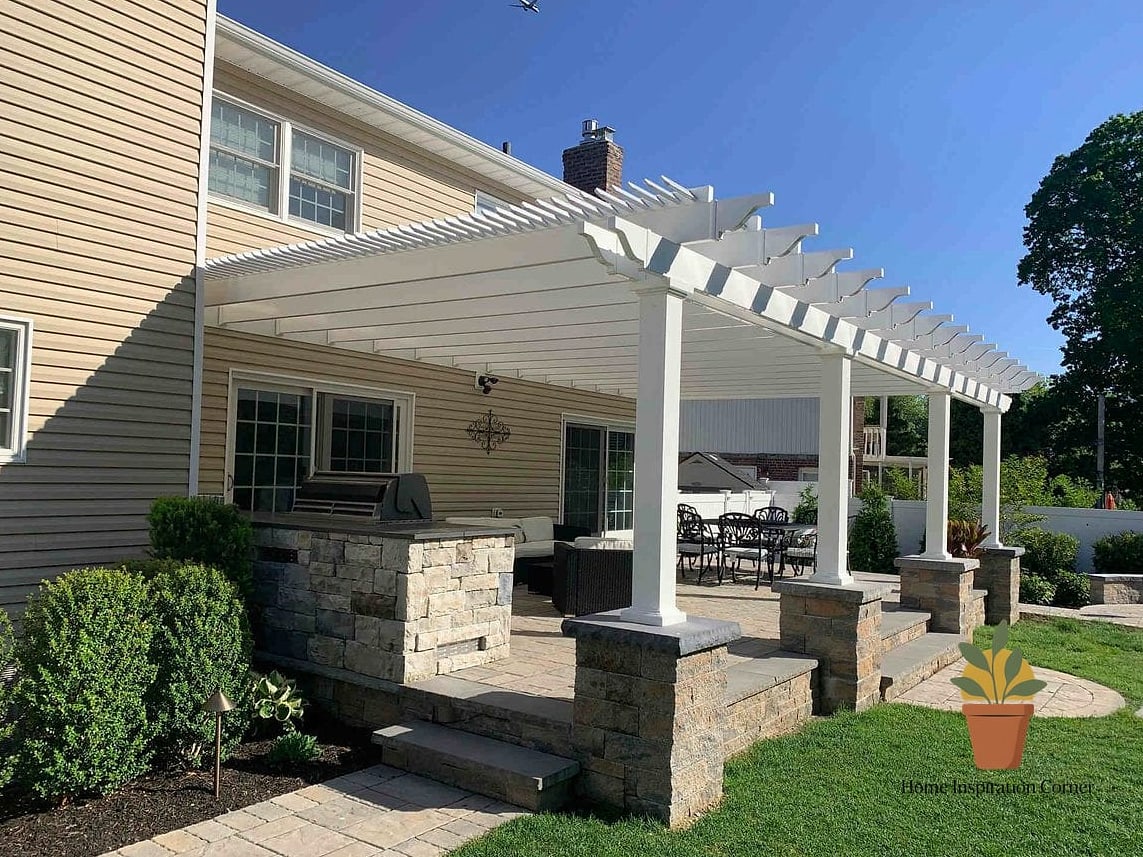
Sometimes the cover itself is simple, and the real personality comes from how you light it. Draping string lights across the beams or hanging lanterns from the rafters instantly makes the space feel cozy at night. This is one of the most budget-friendly ways to dress up a plain patio cover. Warm white bulbs tend to look more inviting than cool white or multicolor options for everyday use.
Curved Roof Patio Cover
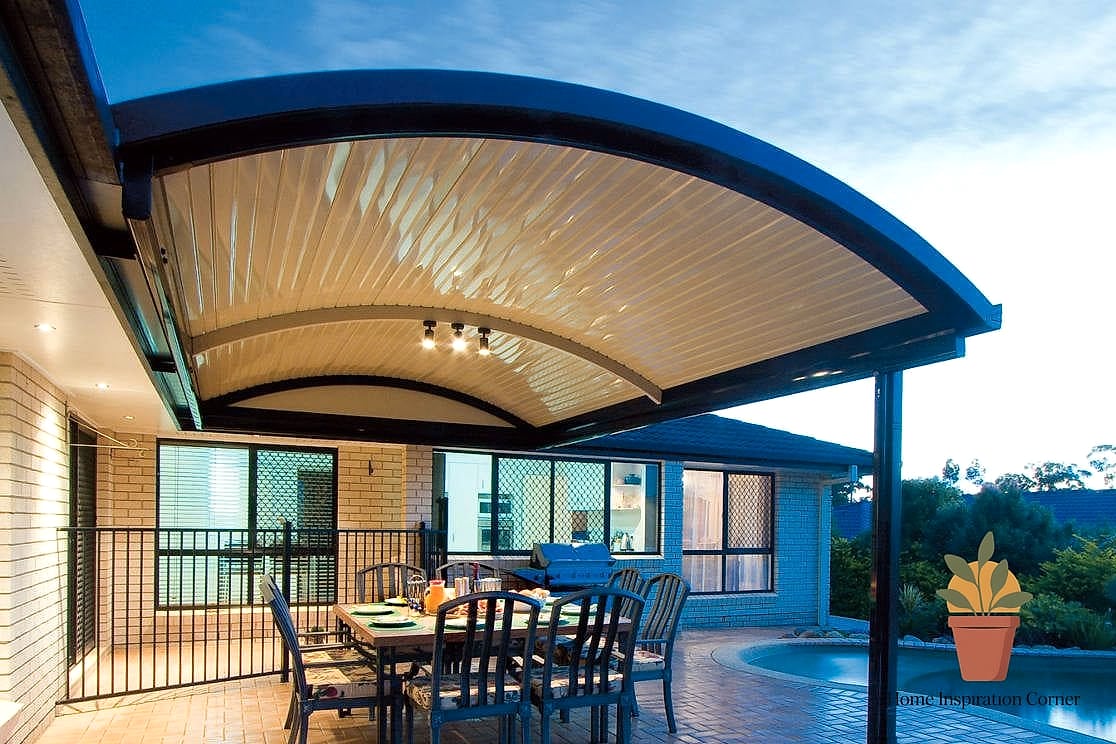
A gently curved or arched roofline softens the look of a patio cover, which is a nice contrast if your home has a lot of straight architectural lines. Polycarbonate curved panels let light through while still providing shade and rain protection. This style tends to suit contemporary and coastal homes especially well. It’s also a good option if you want something visually distinct from your neighbors’ standard gable covers.
Patio Cover with Ceiling Beadboard
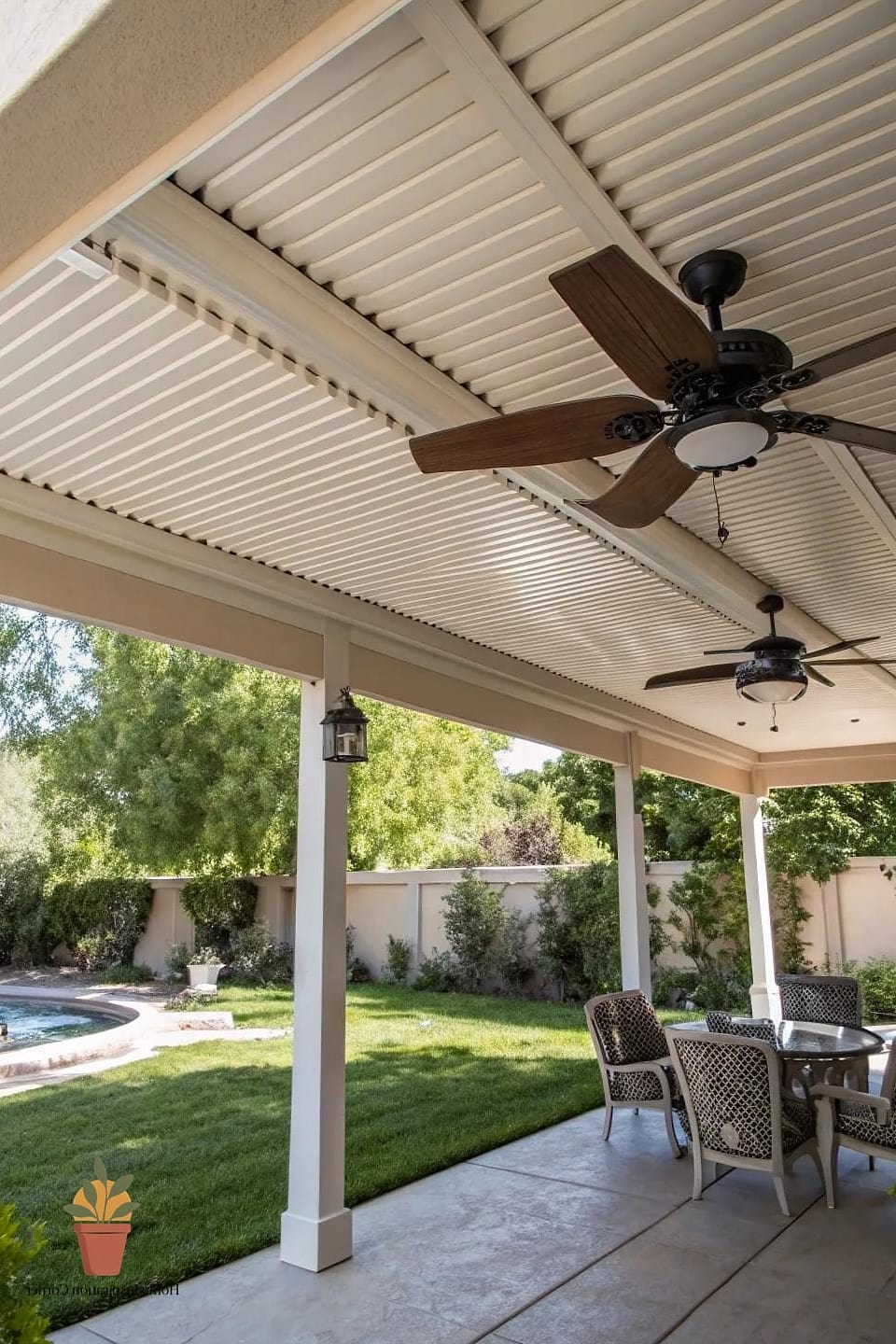
Adding beadboard paneling to the underside of your patio cover gives it a finished, almost indoor-outdoor room feel. Paint it a soft blue or classic white for a coastal touch, or match your home’s trim color for consistency. This detail elevates a basic cover into something that feels intentional and designed. It’s a relatively affordable upgrade if you already have the structure built.
Glass Roof Patio Cover
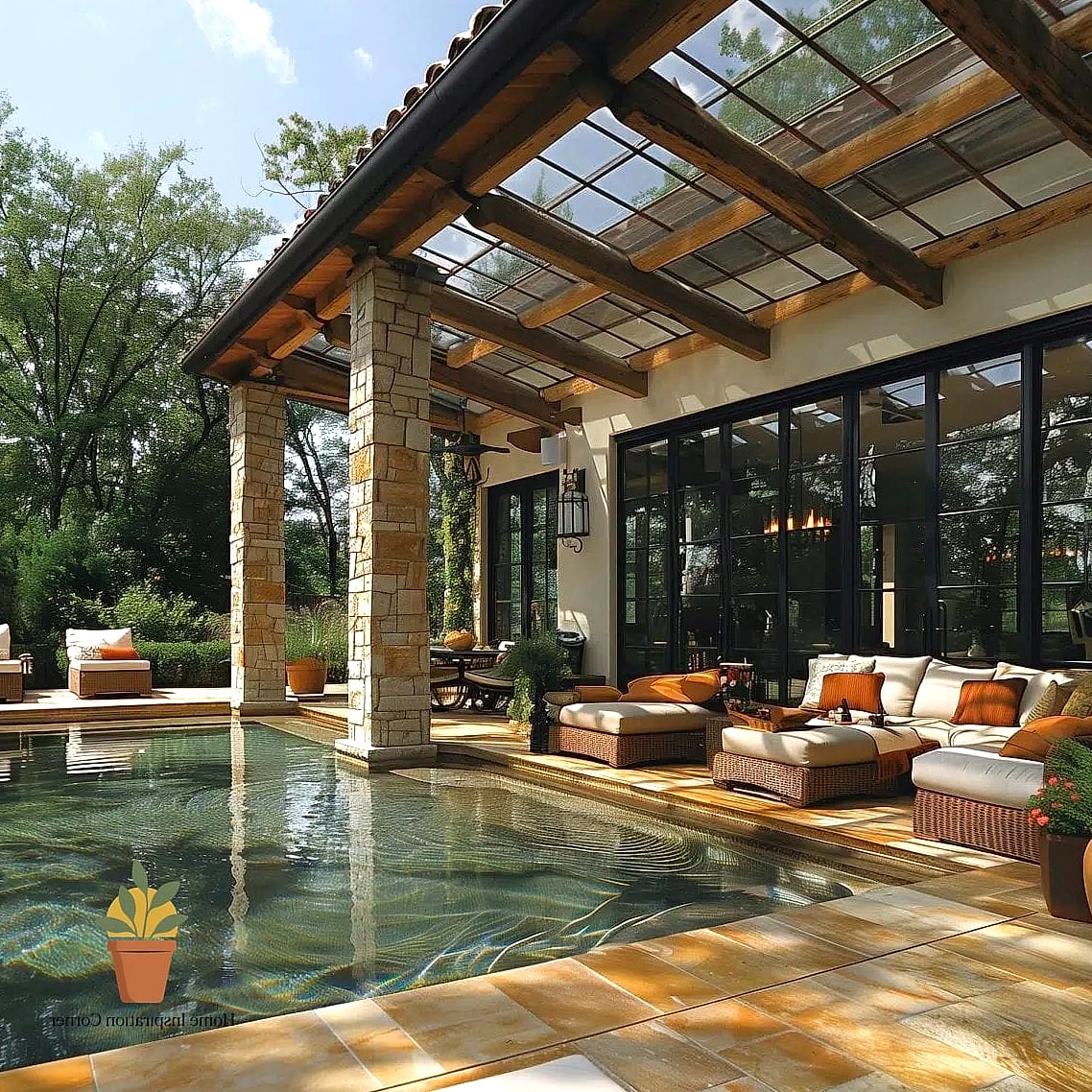
Tempered glass panels let in full natural light while still keeping rain and debris out, which makes for one of the brightest patio cover options available. It’s a great fit for homes that want an airy, greenhouse-adjacent feel without sacrificing protection. Tinted or frosted glass can cut down on glare and heat if full sun exposure is a concern. Keep in mind glass roofs do show water spots more than metal or wood.
Patio Cover Extending from a Second-Story Deck
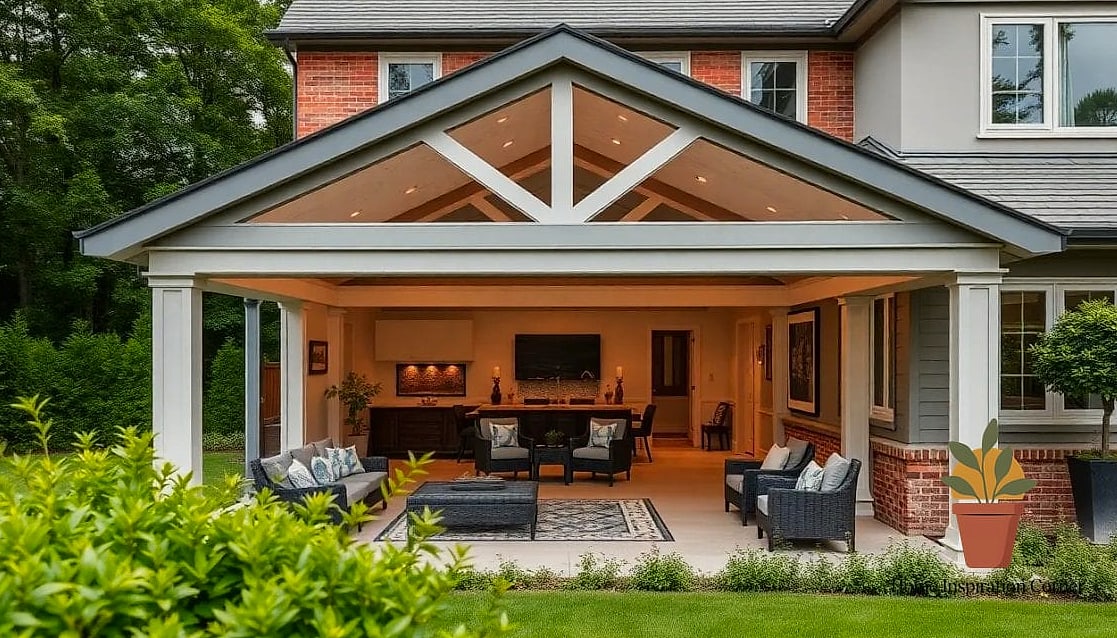
If your home has a second-floor deck or balcony, extending a cover down to shade the patio below creates a genuinely useful double-decker outdoor space. Upper deck stays open to the sky while the patio below gets full shade and rain coverage. This is a smart way to maximize a two-story home’s outdoor square footage. It does require careful waterproofing where the two structures meet.
Craftsman-Style Patio Cover with Tapered Columns
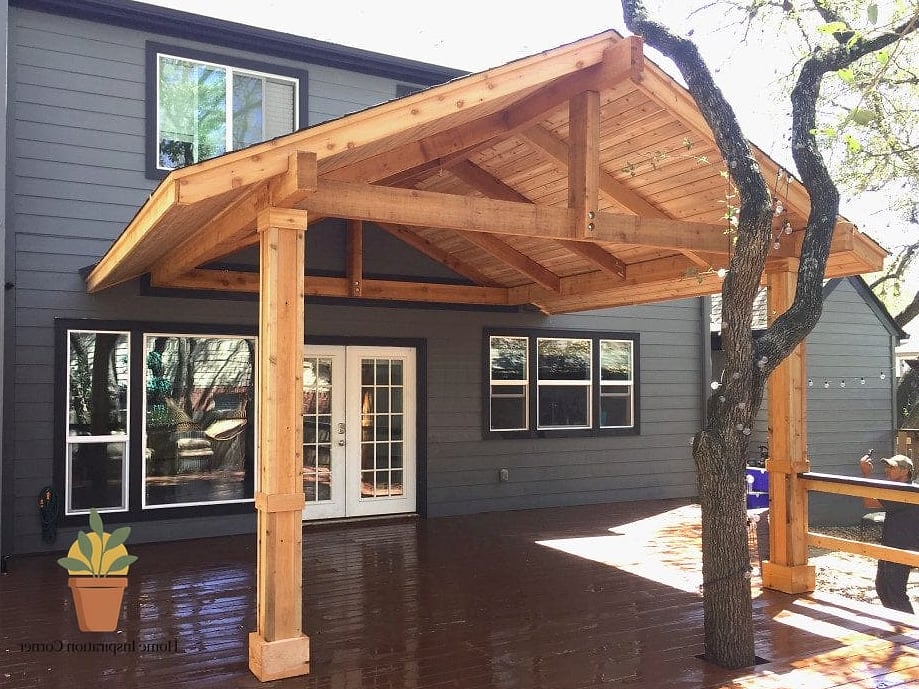
Tapered, chunky support columns are a signature craftsman detail that instantly dresses up a patio cover. Stone or brick bases paired with wood columns on top give it extra texture and visual weight. This style pairs naturally with covers that already have exposed rafter tails. It’s a great choice if your home has similar columns on the front porch you want to echo.
Patio Cover with Built-In Rain Gutters
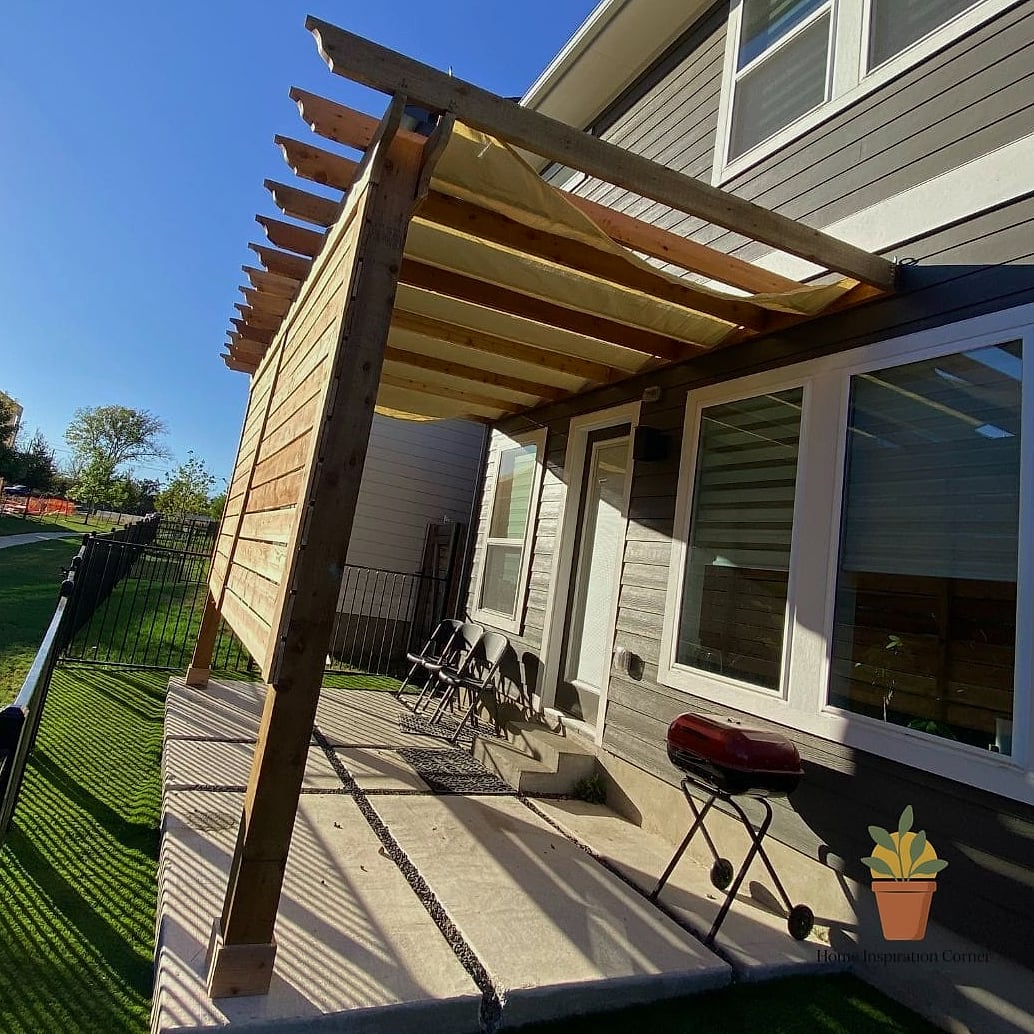
This is more of a functional upgrade than a style, but it’s worth its own mention because it solves a real problem. Gutters integrated into the patio cover’s edge direct rainwater away from your seating area and foundation instead of letting it pour off the sides. It keeps furniture dry and prevents pooling near your house. Honestly, this small addition saves a lot of headaches during rainy seasons.
Two-Tone Patio Cover Design
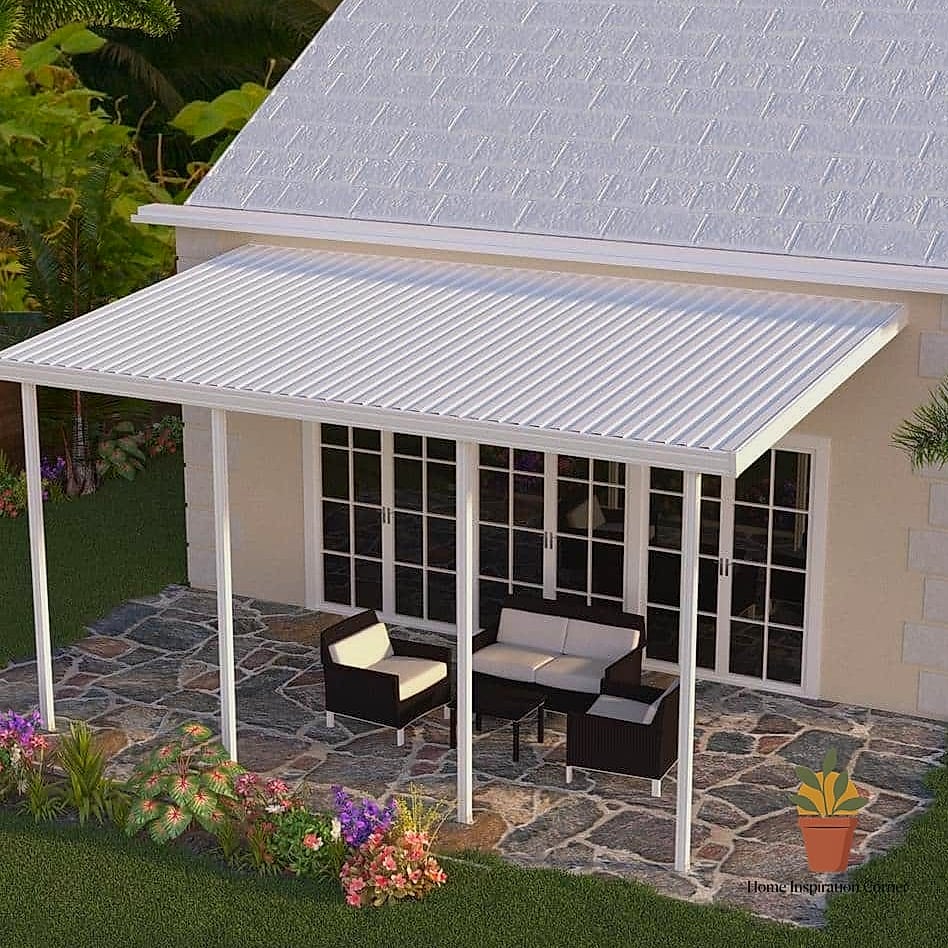
Pairing a dark roof with lighter colored support beams, or vice versa, adds visual interest without going overboard. It’s a subtle way to make the cover feel more custom than a single flat color throughout. This works particularly well with metal roofing paired with painted wood posts. Try matching one of the tones to your home’s trim or shutters for a pulled-together look.
Patio Cover with Hanging Planters and Greenery
Even a simple wood or metal patio cover feels more alive with a few hanging planters strung along the beams. Ferns, trailing pothos, or seasonal flowers add color without needing ground space. This is an easy weekend addition on top of an existing cover if you’re not ready for a full build. Just make sure your beams can handle the weight of wet soil over time.
Patio Cover Matching Your Home’s Roofline and Shingles
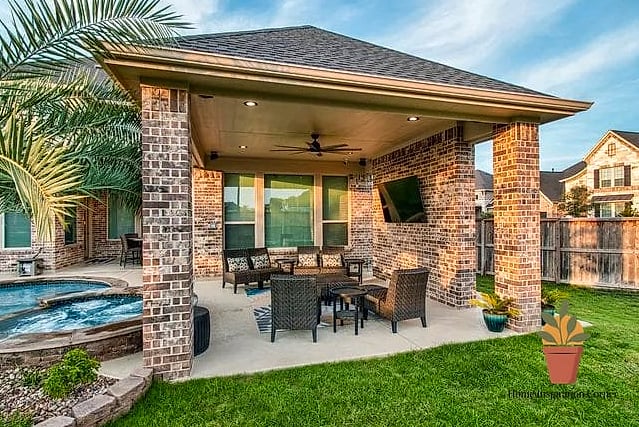
For the most seamless look, matching your patio cover’s shingles and pitch to your existing roof makes the whole thing look like it was part of the original build. This is often the top request from homeowners who want resale value in mind, since a mismatched addition can actually make a house look less put-together. It typically costs a bit more since you’re sourcing matching materials. But the payoff is a patio cover that genuinely looks like it belongs.
Picking the right patio cover really comes down to your home’s existing style, how much shade or sun you actually want, and how much you’re willing to invest upfront. Some of these, like string lights or hanging planters, you can tackle in an afternoon. Others, like a vaulted cover with skylights or a cantilevered design, are better left to a licensed contractor. Either way, an attached patio cover is one of those projects that keeps paying you back every time you step outside.