
14 Cement Patio Ideas Inspiration Boards You’ll Want to Copy

- Stamped Cement That Mimics Natural Stone
- Exposed Aggregate for Texture and Grip
- Stained Concrete in Warm Earth Tones
- Geometric Scored Patterns
- Two-Tone Border Patios
- Polished Concrete for a Modern Look
- Pebble Cement Pathways Connecting to the Patio
- Cement Tile-Look Patios with Bold Patterns
- Radiant Heated Concrete Patios
- Concrete Pavers Set in Gravel
- Cement Patios with Built-In Fire Pit Areas
- Minimalist Gray Slab with Statement Furniture
- Textured Cement with Inlaid Wood Accents
- Curved and Organic-Shaped Cement Patios
14 Cement Patio Ideas Inspiration Boards You’ll Want to Copy
If you’ve been scrolling through outdoor renovation photos lately, you’ve probably noticed cement patios are having a real moment. And honestly? It makes sense. Concrete gets a bad reputation for looking cold or industrial, but that’s only true if you’re picturing a plain gray slab from 1985. Today’s cement patio ideas run the gamble from warm and rustic to sleek and modern, and there’s a version out there for pretty much every backyard style and budget. I pulled together fourteen boards worth saving so you can start picturing what might work for your own space.
Stamped Cement That Mimics Natural Stone
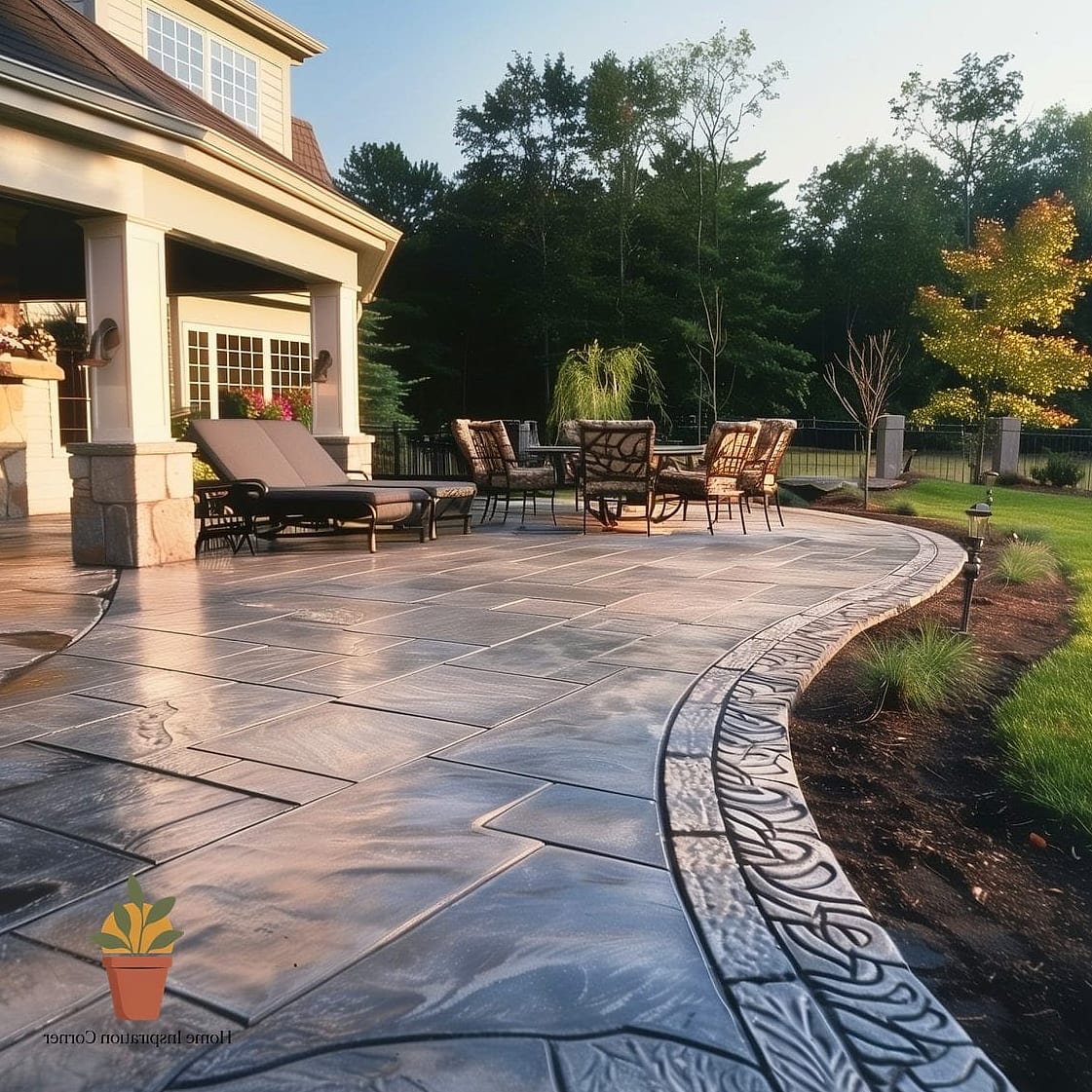
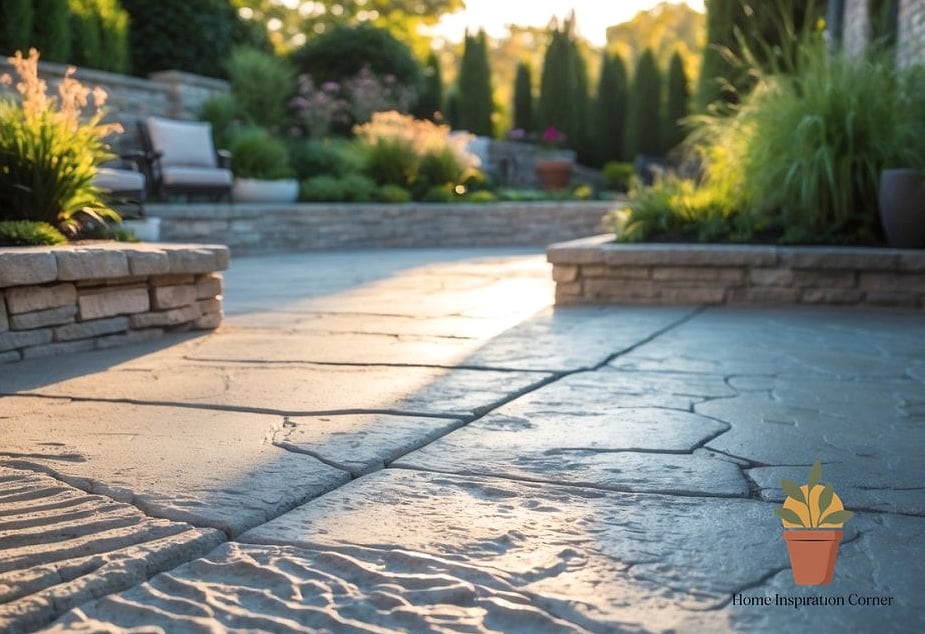
Stamped concrete has come a long way, and this is probably the idea I recommend most to homeowners who want the look of flagstone or slate without the price tag. Contractors press patterns and textures into the wet cement before it cures, so you end up with something that reads as natural stone from a few feet away. It works especially well for larger patios where real stone would get expensive fast. The upkeep is pretty minimal too since you’re just sealing it every couple of years instead of dealing with grout lines or shifting pavers.
Exposed Aggregate for Texture and Grip
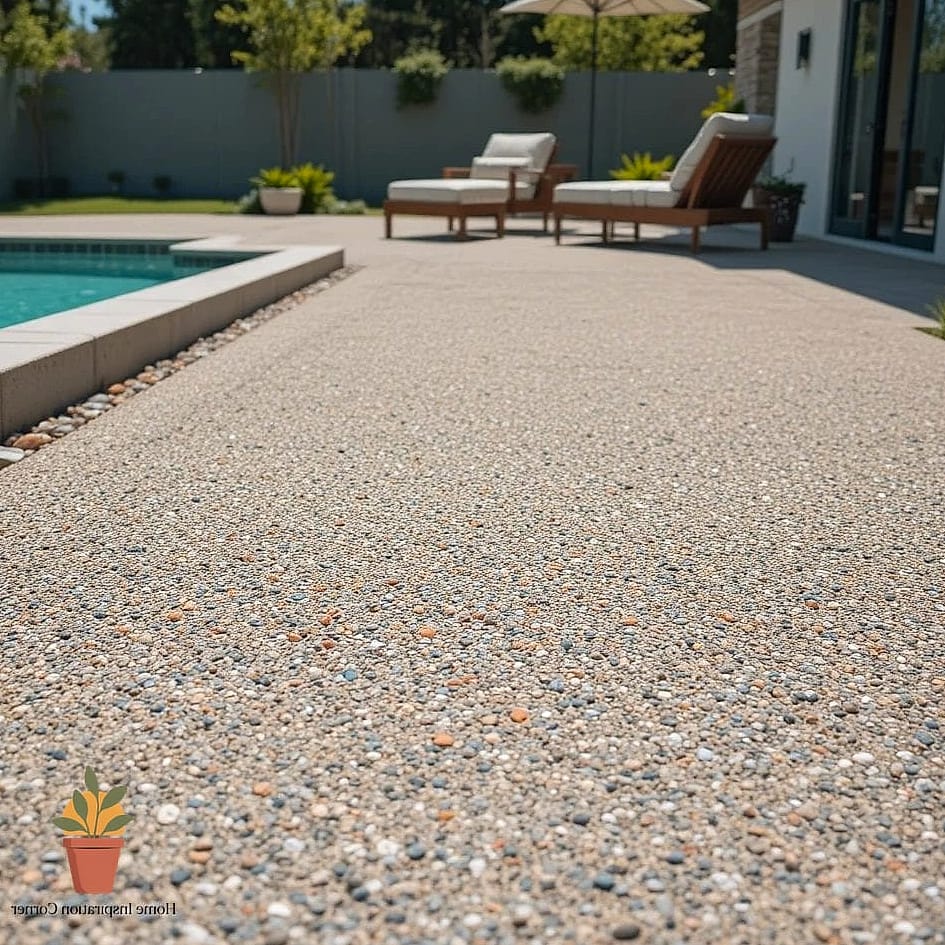
This finish involves washing away the top layer of cement paste so the pebbles and stones mixed into the concrete show through. It gives you a naturally textured surface that’s great around pools or anywhere that gets wet, since it’s much less slippery than smooth concrete. I love that you can customize the look by choosing different stone colors, from warm tans to cool grays. It’s a bit more involved to install than a basic pour, so budget for slightly higher labor costs.
Stained Concrete in Warm Earth Tones
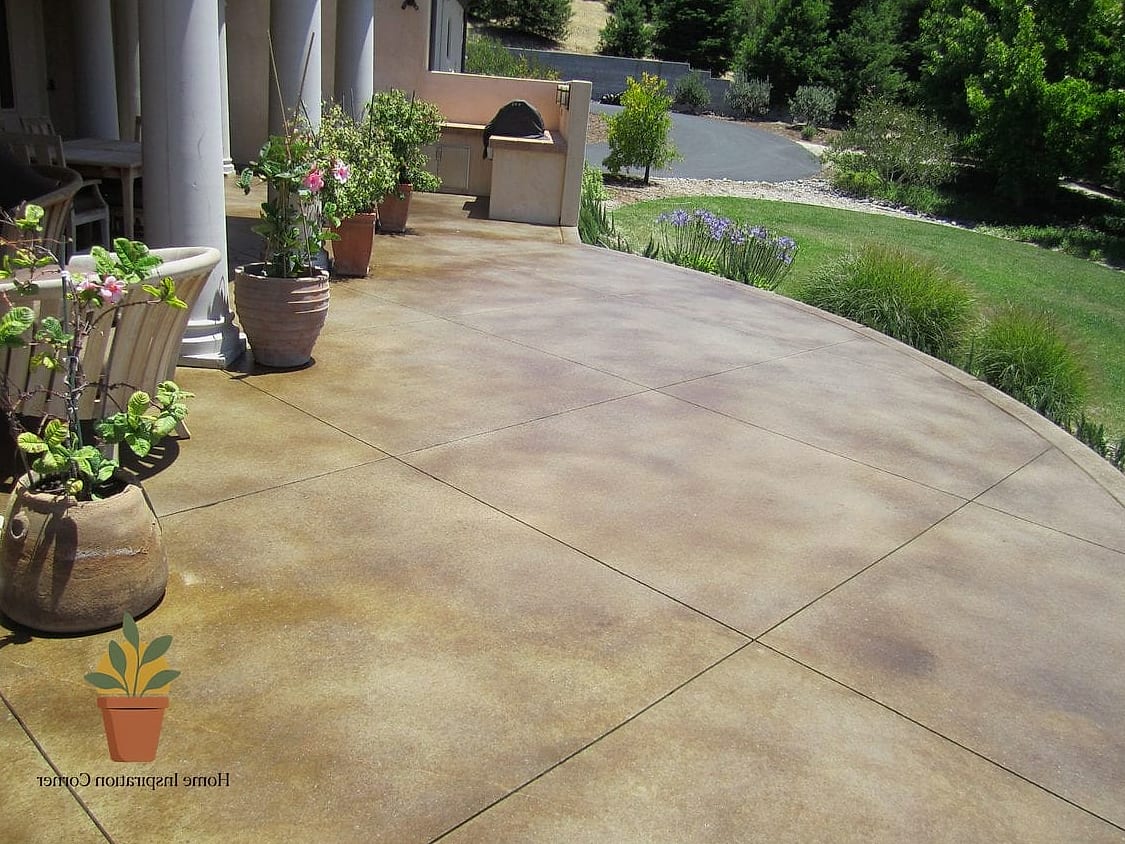
Acid staining or water-based stains can turn a plain slab into something that looks almost like leather or aged terracotta. This is a favorite for anyone going for a Mediterranean or Southwestern vibe in their backyard. The stain soaks into the concrete rather than sitting on top, so it won’t peel or chip the way paint eventually does. Combine it with a few potted olive trees or terra cotta planters and the whole space feels intentional rather than like an afterthought.
Geometric Scored Patterns
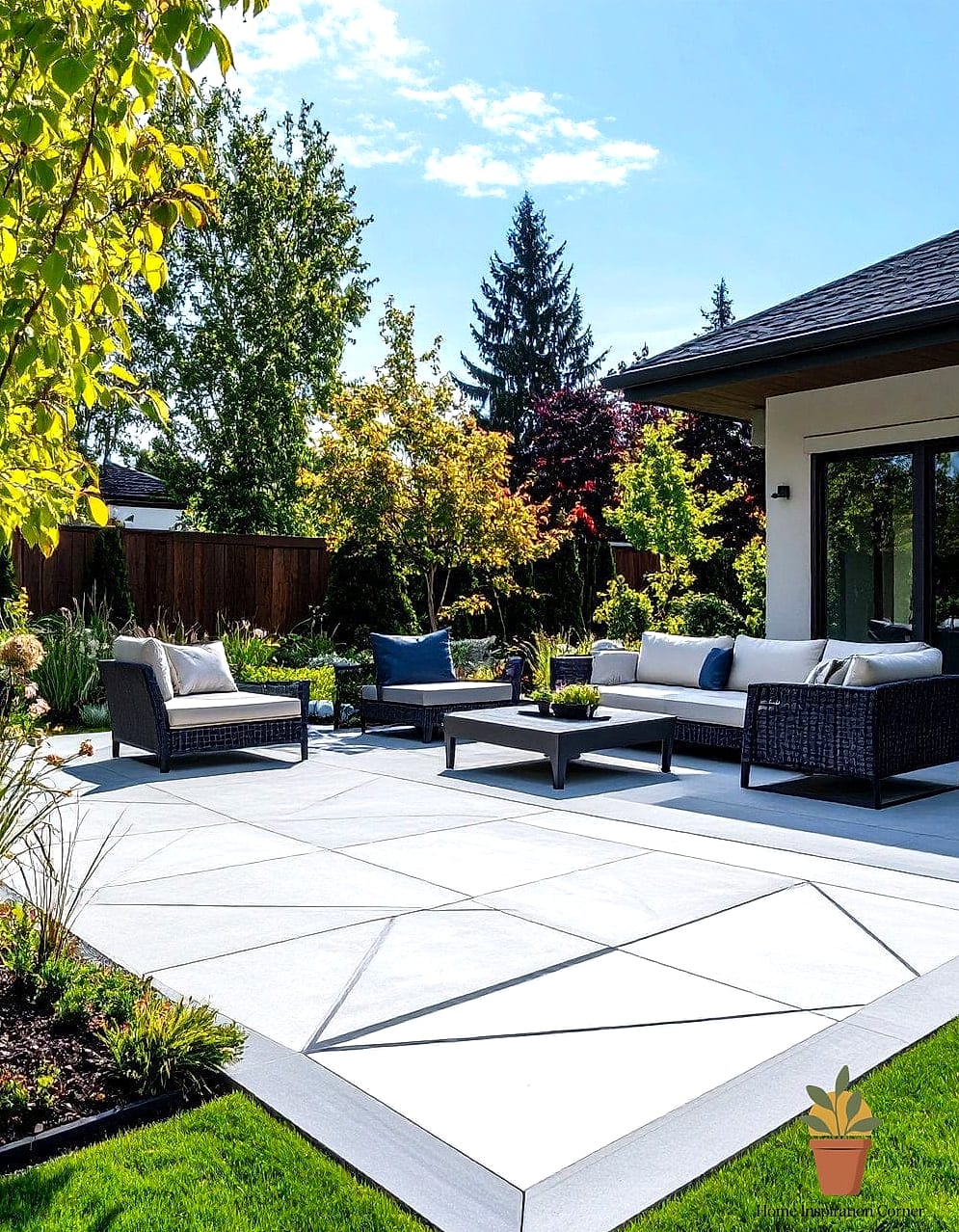
Scoring involves cutting shallow lines into the concrete surface, either before or after it cures, to create the look of tile or pavers. Squares, diamonds, and herringbone-inspired patterns all translate surprisingly well to cement. This is one of those upgrades that instantly makes a patio feel more custom without requiring a full renovation. It pairs nicely with a minimalist outdoor furniture set and works well in smaller courtyard-style spaces where a busy pattern might feel like too much.
Two-Tone Border Patios
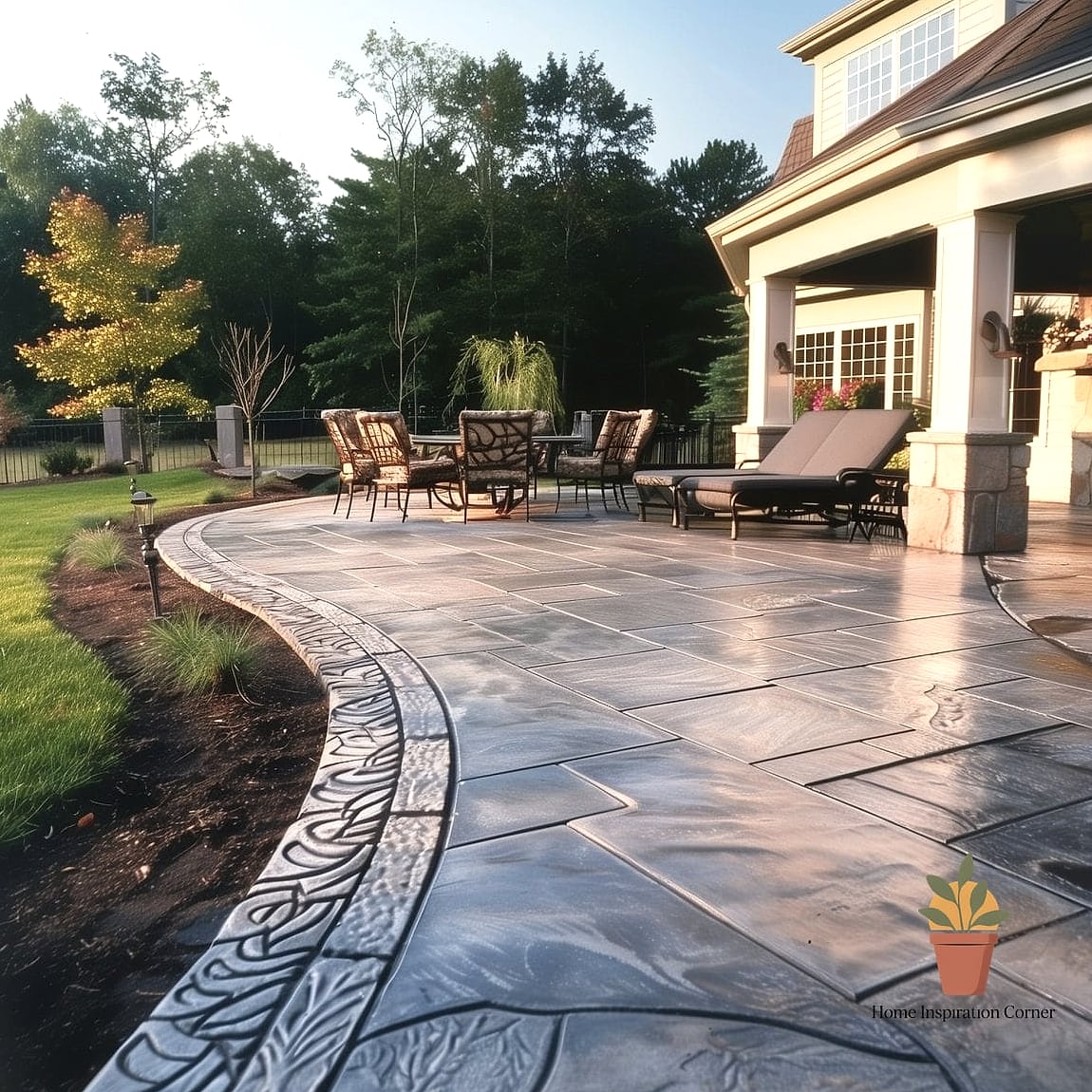
Adding a contrasting border around the perimeter of your patio is a simple trick that makes the whole space feel finished and designed on purpose. You might do a darker charcoal band around a lighter gray field, or vice versa. It’s a great option if you’re working with a modest budget since it only adds a small amount to the overall cost. Homeowners with rectangular patios especially like this one because the border helps define the space against surrounding grass or gravel.
Polished Concrete for a Modern Look
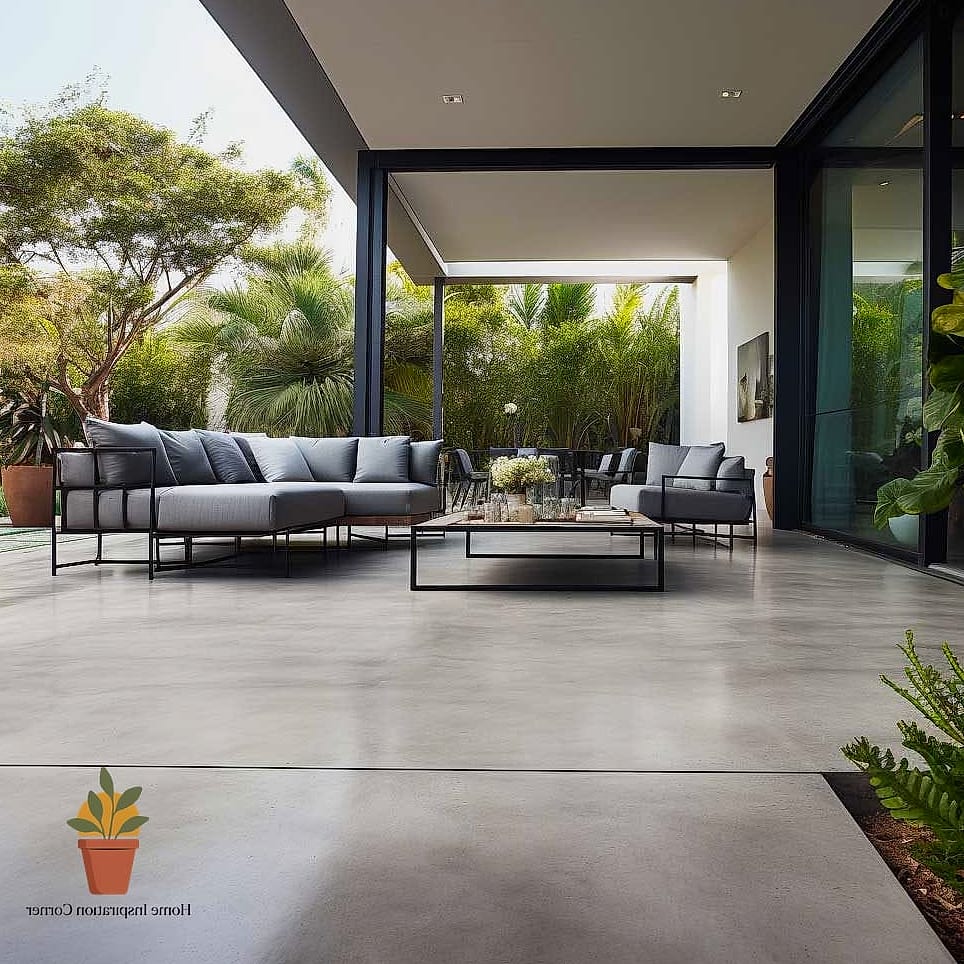
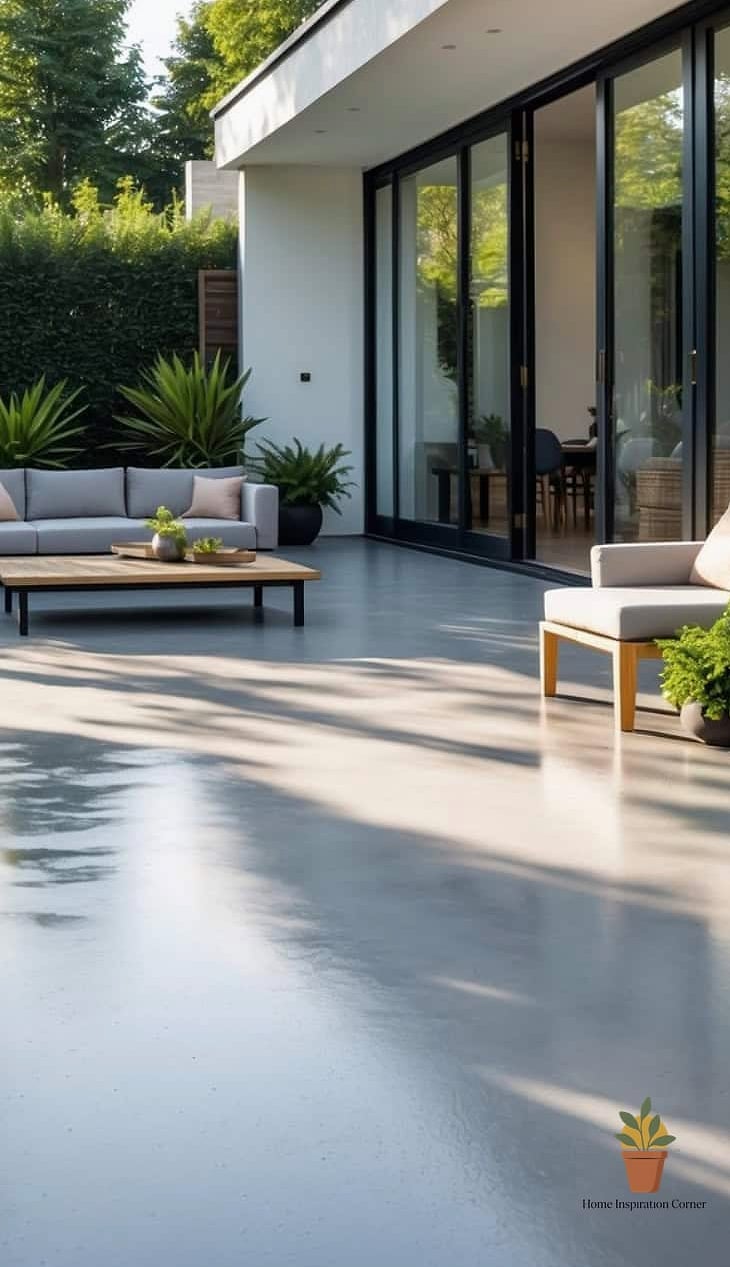
If your style leans more contemporary, polished concrete gives you that glossy, almost stone-like sheen that reflects light beautifully. It reads as sleek and architectural, which makes sense for homes with a lot of glass, black fixtures, or clean lines already. Keep in mind polished surfaces can get slick when wet, so this works best under a covered patio or in drier climates. Pair it with matte black outdoor furniture and some greenery for contrast.
Pebble Cement Pathways Connecting to the Patio
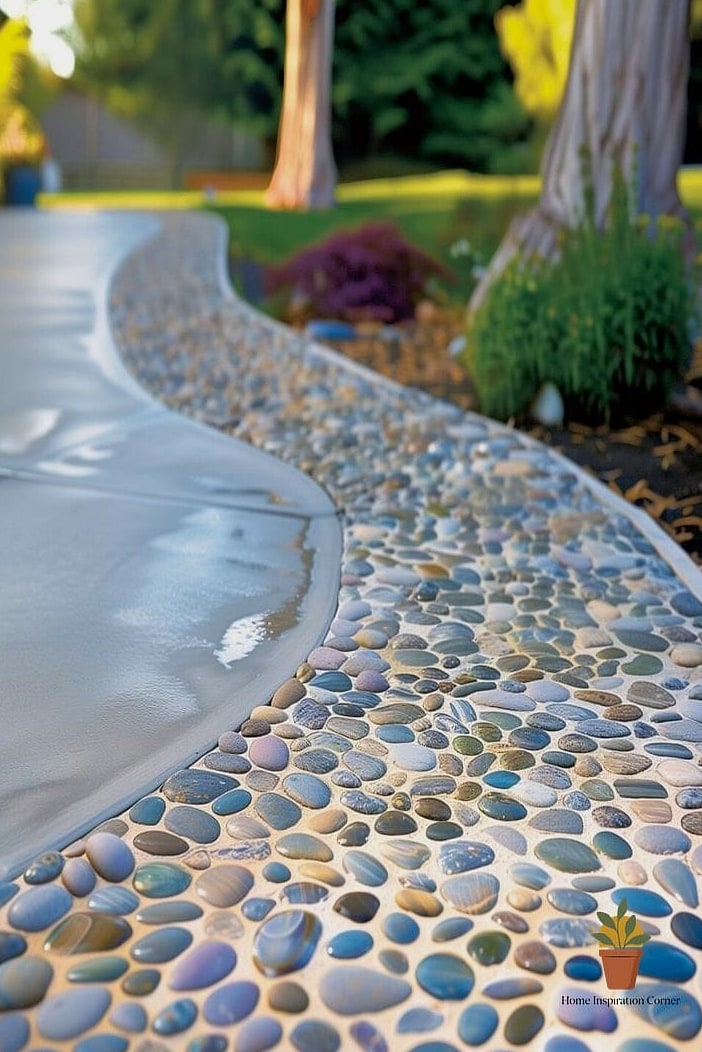
Rather than treating your patio as an isolated slab, this idea extends smaller cement pebble sections out into pathways that lead toward a garden, fire pit, or side gate. The exposed pebble texture underfoot feels intentional and a little bit spa-like. It’s a nice way to tie your whole backyard layout together instead of having the patio feel disconnected from everything else. DIYers can tackle small pathway sections themselves even if they hire out the main patio pour.
Cement Tile-Look Patios with Bold Patterns
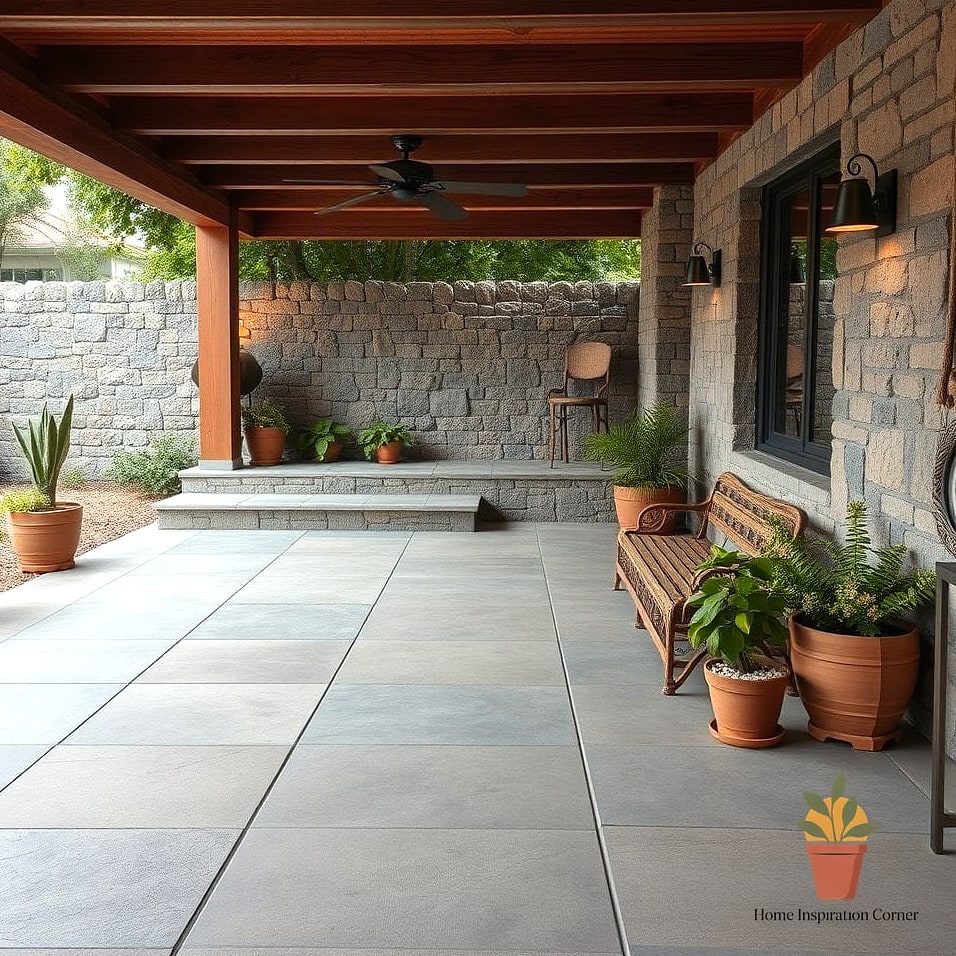
Some homeowners are skipping actual tile installation and instead using stamped or stenciled concrete to mimic the look of Moroccan or Spanish cement tiles. You get all that bold pattern and color without worrying about grout maintenance or tiles cracking over time. This works particularly well for covered patios since the pattern really pops when it’s not washed out by direct sun. It’s a fun way to add personality to an otherwise neutral backyard palette.
Radiant Heated Concrete Patios
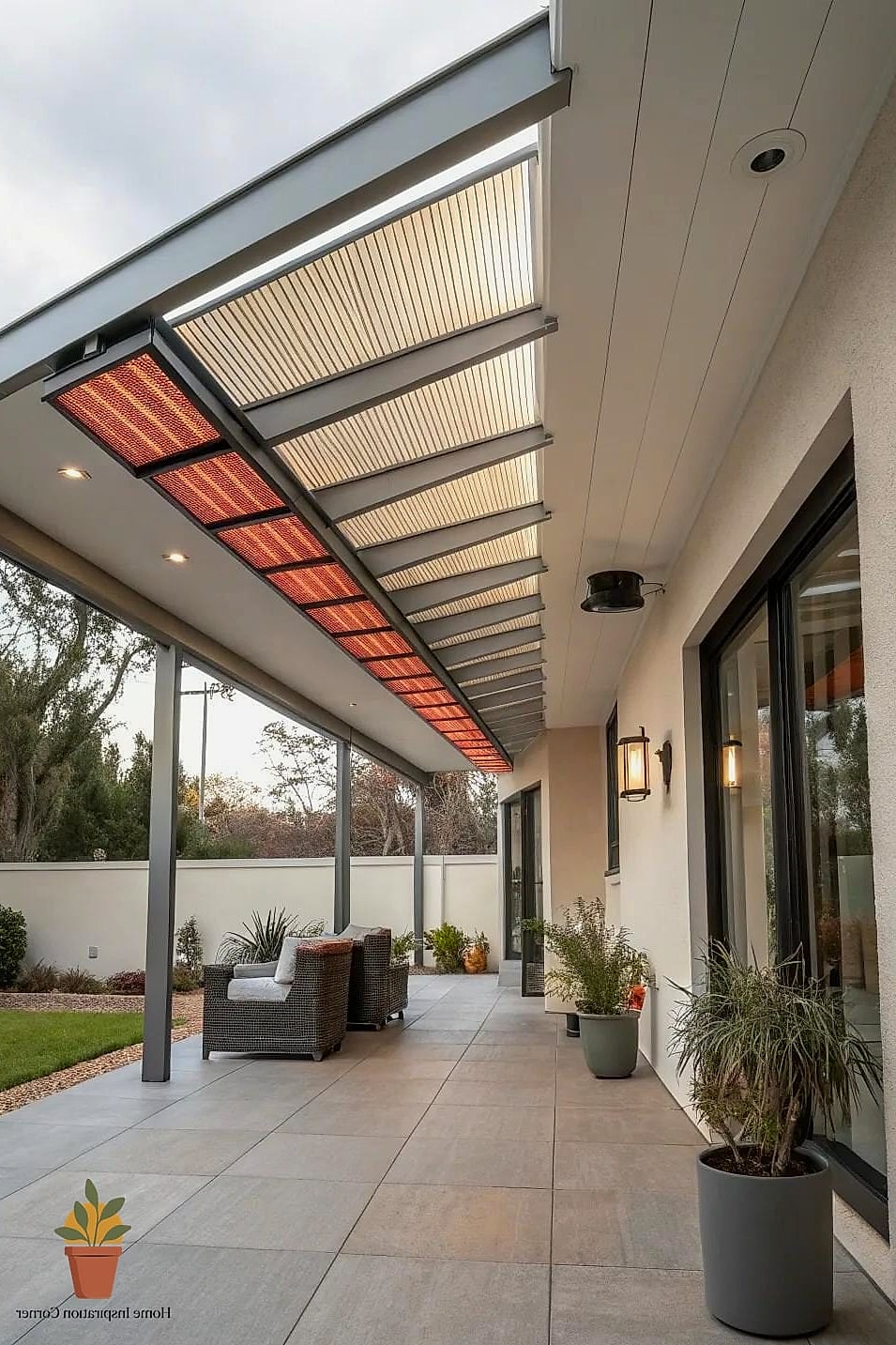
For folks in colder climates who want to use their patio year-round, embedding radiant heating elements into the cement before it’s poured is worth considering. It melts snow and ice automatically and takes the chill off cooler evenings, which extends your outdoor season significantly. This is more of a luxury upgrade and needs to be planned during the initial pour, so it’s not something you can easily retrofit later. Still, if you’re already doing a full patio installation, it’s worth asking your contractor about.
Concrete Pavers Set in Gravel
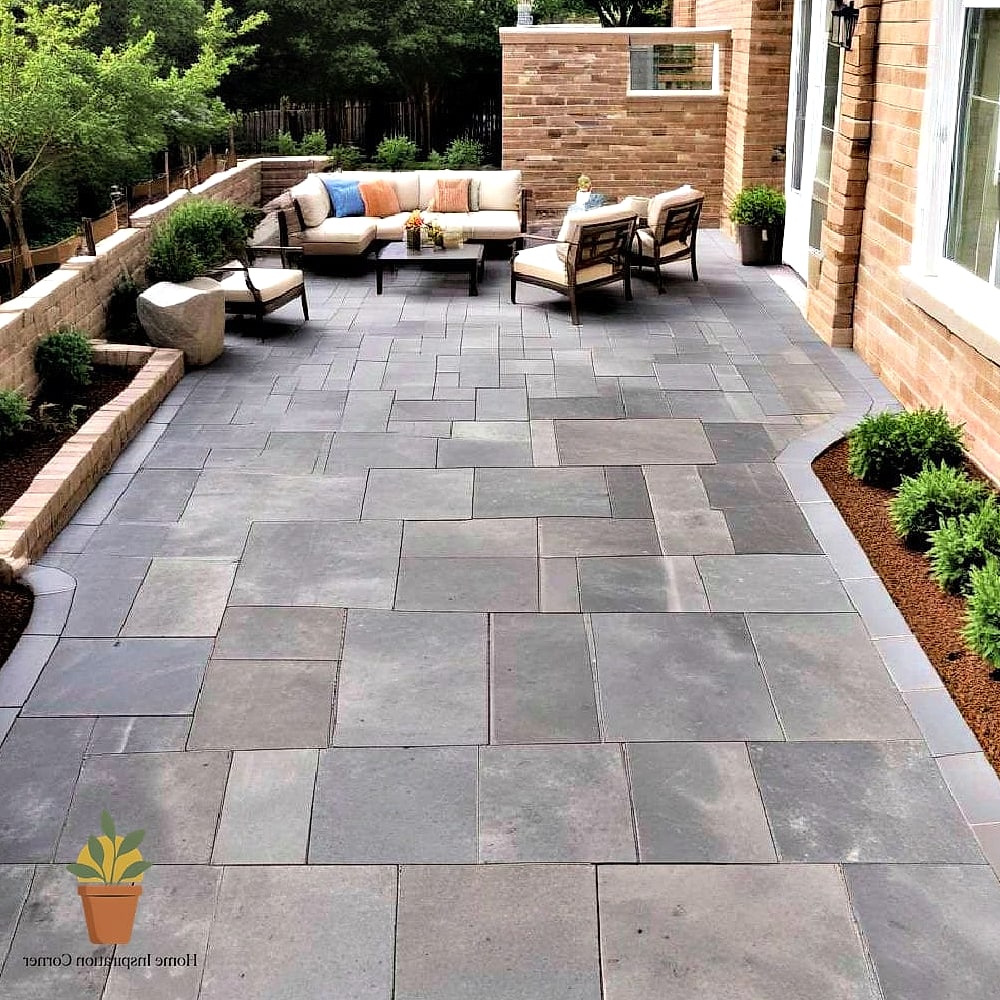
Rather than one continuous slab, this look uses large square or rectangular concrete pavers spaced out and set into a bed of pea gravel or crushed stone. It gives a more relaxed, garden-like feel and allows for natural drainage, which is a plus in areas that get heavy rain. Weeds can creep up between the gaps if you’re not using a proper landscape fabric underneath, so factor that into your maintenance routine. It’s a popular pick for cottage-style or naturalistic backyard designs.
Cement Patios with Built-In Fire Pit Areas
Designing your cement pour to include a slightly recessed or bordered circular area for a fire pit makes the whole patio feel purpose-built rather than like you just plopped furniture on top afterward. Some people go with a matching stamped or stained pattern in that circular zone to set it apart visually. This is a great gathering spot for cooler evenings and pairs naturally with built-in bench seating poured from the same concrete. Just make sure your contractor accounts for proper heat-resistant materials near the fire source.
Minimalist Gray Slab with Statement Furniture
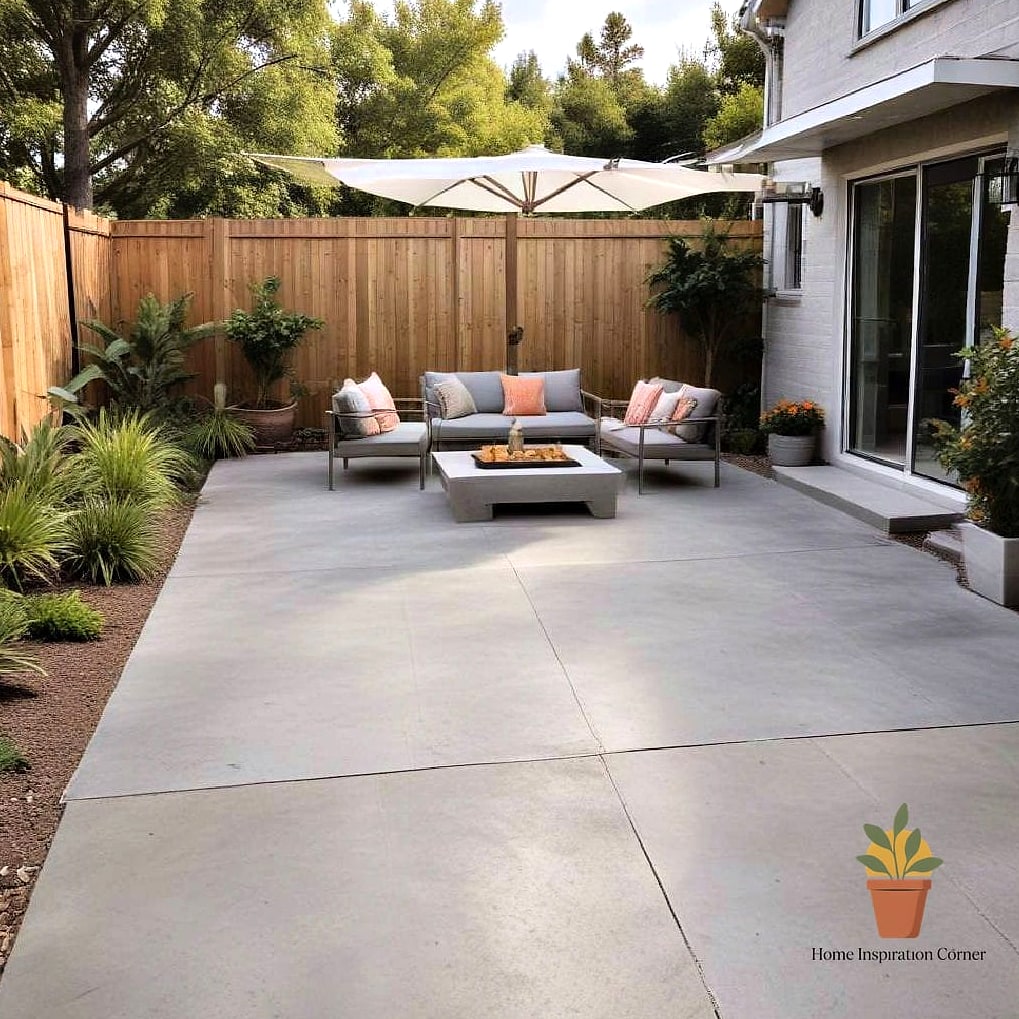
Sometimes the best move is keeping the cement itself totally simple and letting your furniture and decor do the talking. A clean, smooth gray slab acts like a blank canvas for bold outdoor rugs, colorful cushions, and statement lighting. This is a genuinely budget-friendly option since basic poured concrete is one of the more affordable patio materials out there. It’s also incredibly low maintenance, which makes it appealing for renters or anyone who doesn’t want to fuss with sealing and staining.
Textured Cement with Inlaid Wood Accents
Combining wood planks or composite decking strips directly into a cement pour creates a striking contrast between the cool, hard surface and warm wood tones. It’s often used to break up a large patio into visual sections or to mark a transition point between different seating areas. This look tends to skew more high-end since it requires precise planning during installation, but the payoff is a patio that feels custom-designed rather than store-bought. It photographs beautifully too, which is probably why it shows up so often on inspiration boards.
Curved and Organic-Shaped Cement Patios
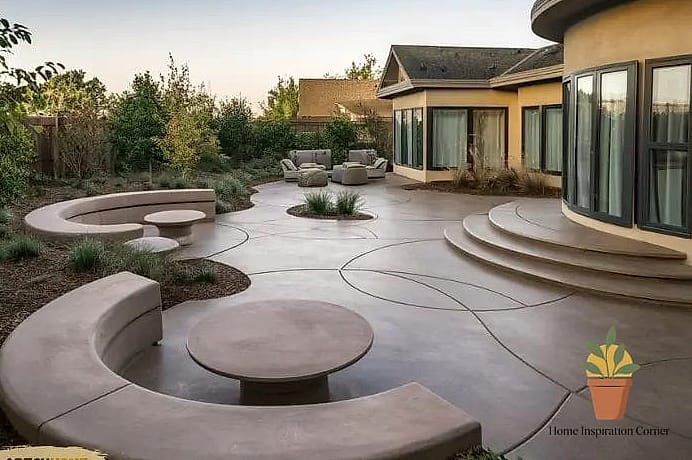
Not every patio needs to be a perfect rectangle. Curved edges and organic, flowing shapes are becoming more popular, especially for backyards with mature trees or landscaping that a straight-edged patio would awkwardly cut through. This approach works with your existing yard layout instead of fighting against it. It does require a bit more skill to form and pour correctly, so it’s worth hiring an experienced contractor rather than attempting it as a first-time DIY project.
There you have it, fourteen different directions you could take a cement patio project, from simple and budget-conscious to fully custom and high-end. The nice thing about concrete is how flexible it actually is once you get past the assumption that it only comes in one boring gray finish. Save a few of these boards, mix and match elements that catch your eye, and bring them to your contractor as a starting point for conversation.