17 Paver Patio Tips From Top Interior Designers
- Choose a Pattern That Matches Your Home’s Style
- Go Larger With Paver Size Than You Think You Need
- Mix Two Paver Sizes for a Custom Look
- Pick a Color That Complements Your House, Not Just the Patio
- Use Natural Stone for a High-End Feel
- Add a Border to Frame the Space
- Think About Scale Before You Commit to a Size
- Incorporate a Fire Feature Into the Layout
- Layer in Multiple Zones for Different Activities
- Use Permeable Pavers for Better Drainage
- Add Warm Lighting Along the Edges
- Bring in Greenery to Soften Hard Edges
- Match Your Furniture Style to the Paver Aesthetic
- Consider a Herringbone Pattern for Small Spaces
- Don’t Skip the Base Preparation
- Add Texture With a Mix of Materials
- Keep Maintenance in Mind From the Start
- End With a Focal Point
17 Paver Patio Tips From Top Interior Designers
A paver patio is one of those projects that pays you back every single season. It boosts curb appeal, gives you more livable square footage, and honestly makes your backyard feel like an actual extension of your home instead of an afterthought. But there’s a difference between just laying down some pavers and creating a patio that looks like it was designed on purpose. I’ve pulled together advice that interior designers actually use when they’re helping clients plan these spaces, so you can skip the trial and error.
Choose a Pattern That Matches Your Home’s Style
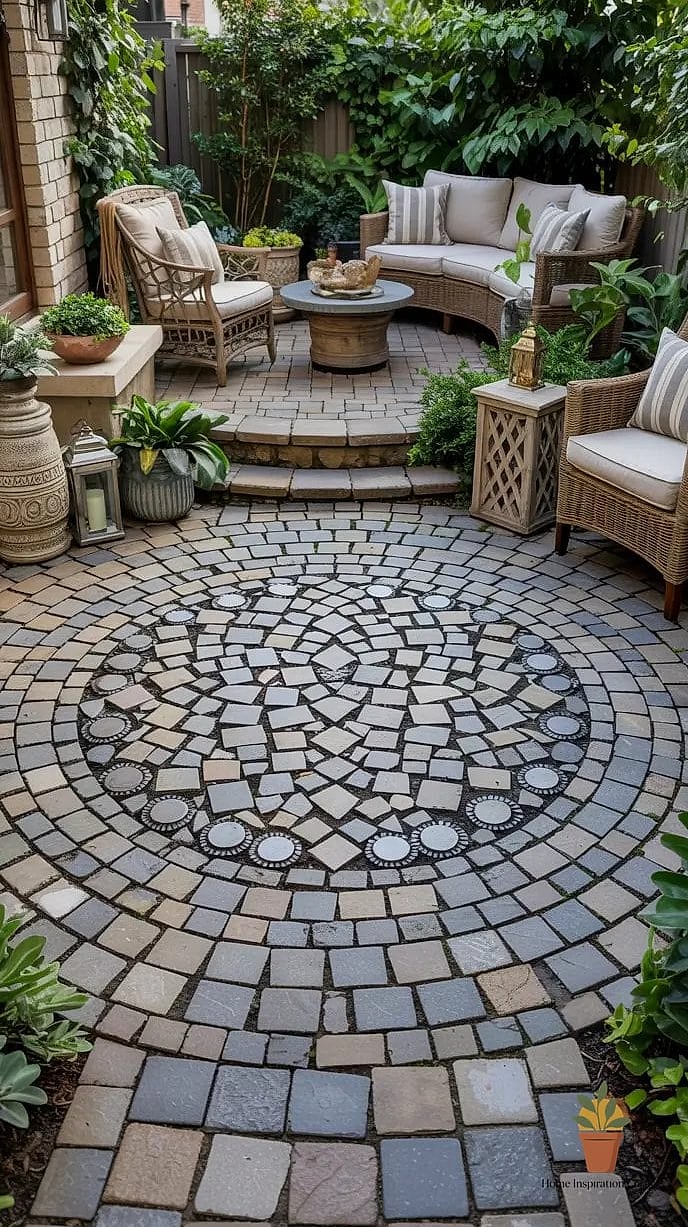
The layout pattern you pick sets the tone before anyone even sits down. Herringbone reads more formal and traditional, while a running bond pattern feels relaxed and modern. Basketweave splits the difference and works almost anywhere. Designers often match the pattern to the architecture of the house itself, so a craftsman bungalow might lean toward a simpler grid while a Mediterranean-style home can handle something more intricate.
Go Larger With Paver Size Than You Think You Need
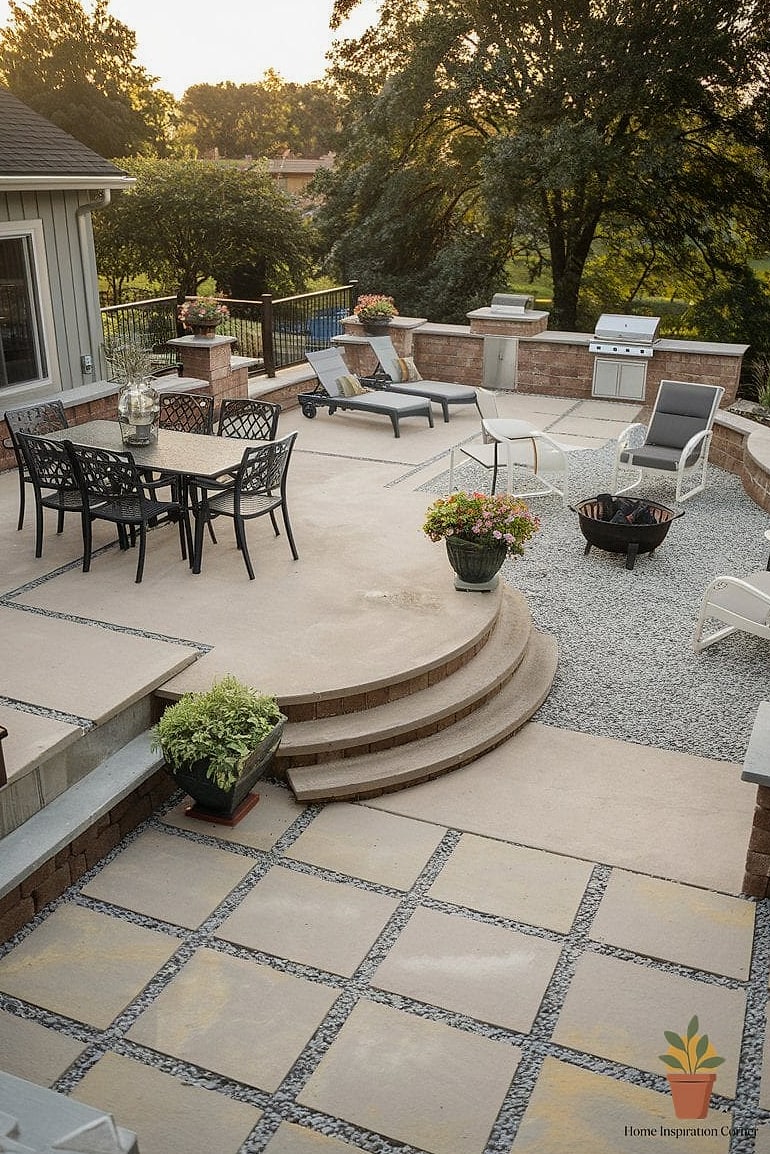
Smaller pavers create more grout lines, which means more visual noise and more weeds trying to sneak through. Bigger format pavers, especially anything in the 16 to 24 inch range, give a cleaner, more expensive-looking finish. They also mean fewer pieces to lay, which can actually save on labor if you’re hiring this out.
Mix Two Paver Sizes for a Custom Look
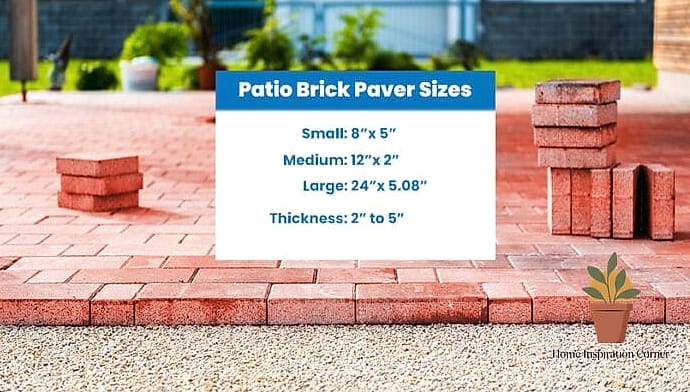
This is a trick a lot of designers use to avoid that builder-grade look. Combining two or three sizes of the same paver material creates a random, organic pattern that feels custom-built rather than off the shelf. It takes a little more planning upfront, but the payoff is a patio that looks like it cost way more than it did.
Pick a Color That Complements Your House, Not Just the Patio
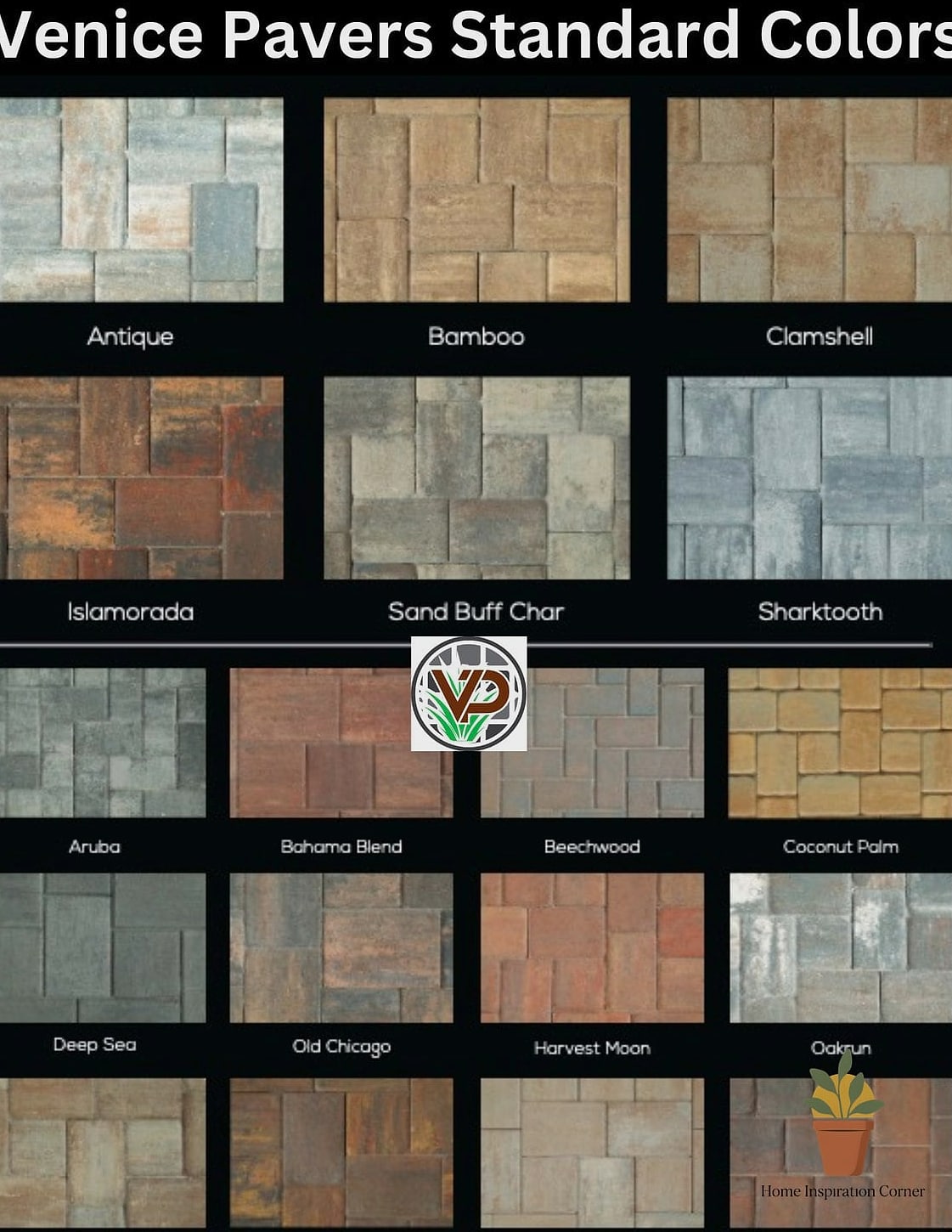
It’s easy to pick pavers in a vacuum, holding up samples and thinking only about how they look together. But the real test is holding that sample against your siding, brick, or trim. Warm gray pavers tend to work with most exteriors, while tan and buff tones pair beautifully with brick homes.
Use Natural Stone for a High-End Feel
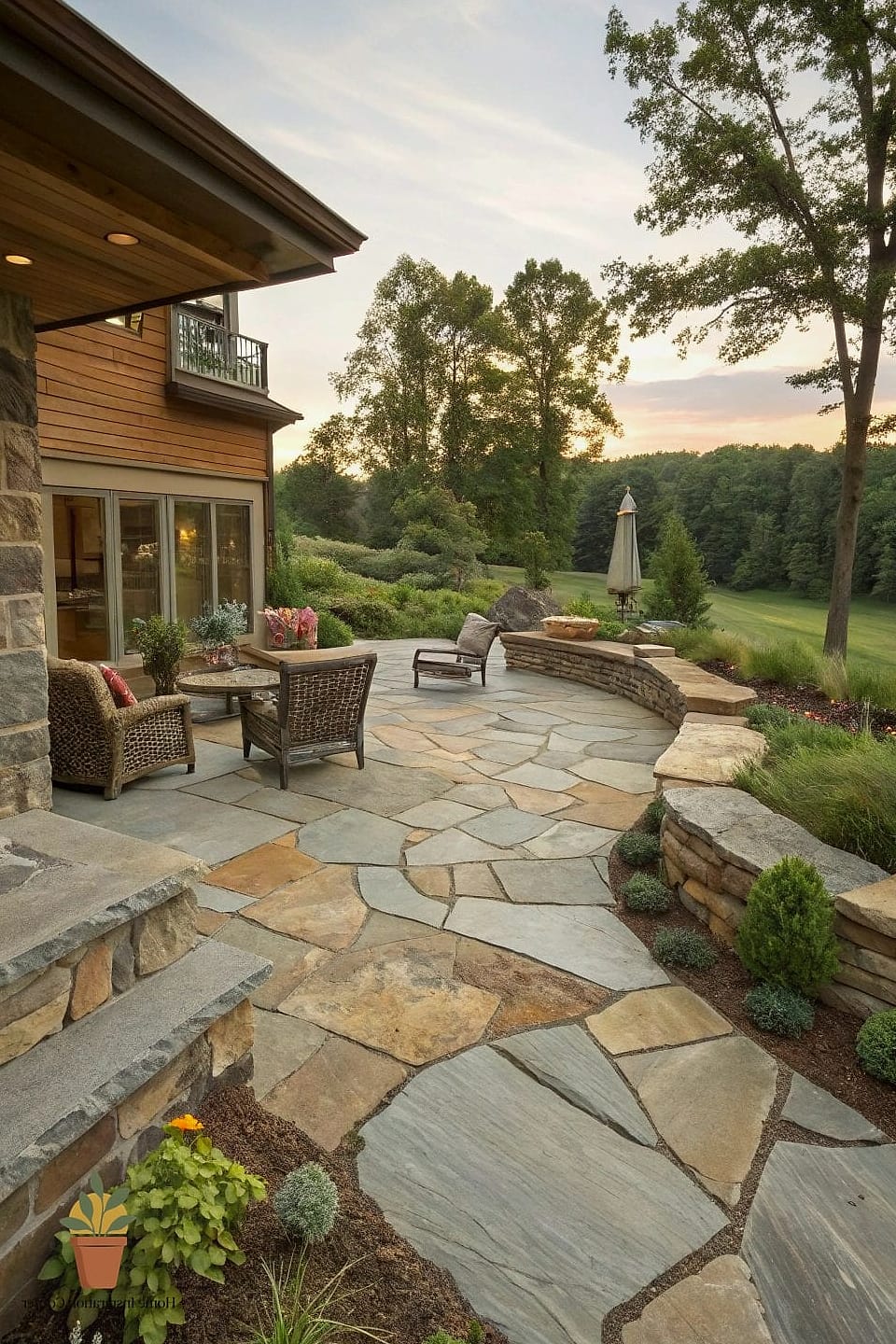
If budget allows, natural stone like travertine, bluestone, or flagstone brings a texture and depth that concrete pavers just can’t fully replicate. It’s pricier and the installation is less forgiving, but the character you get is hard to fake. For a more budget-friendly version, look for concrete pavers with a stone-textured finish.
Add a Border to Frame the Space
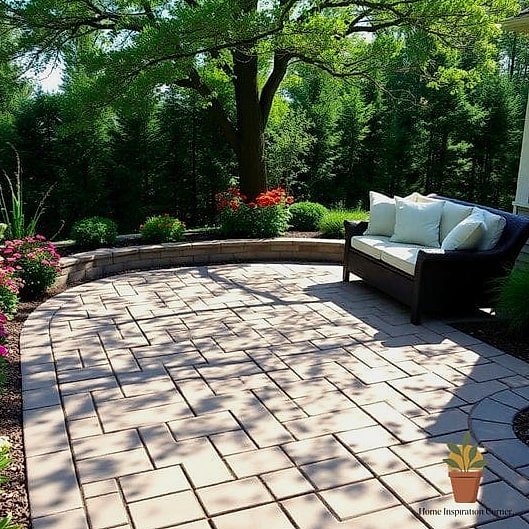
A contrasting border around the perimeter of your patio does a lot of visual work for very little effort. It defines the edges, makes the whole space feel intentional, and gives your eye a place to land. Designers often use a darker or contrasting paver color for this border, sometimes running it in a different pattern than the field.
Think About Scale Before You Commit to a Size
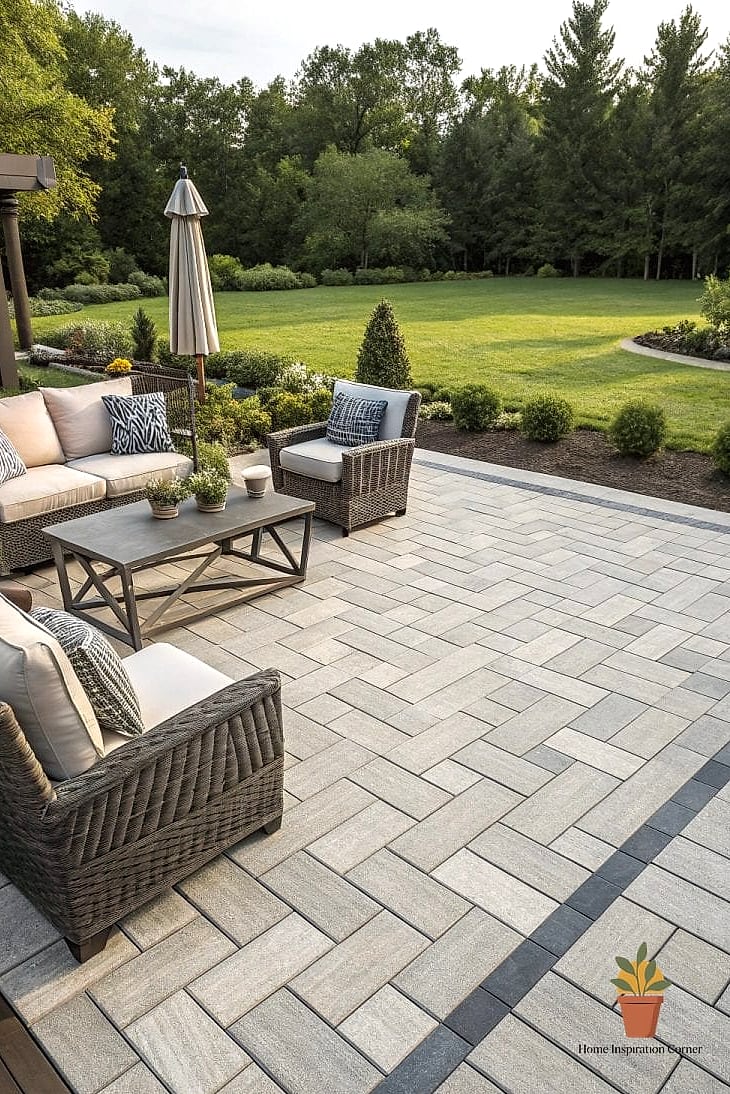
One of the most common regrets homeowners have is building a patio too small for how they actually want to use it. Walk through your ideal setup first: dining table, lounge chairs, maybe a fire pit area. Mark it out with stakes and string before ordering a single paver.
Incorporate a Fire Feature Into the Layout
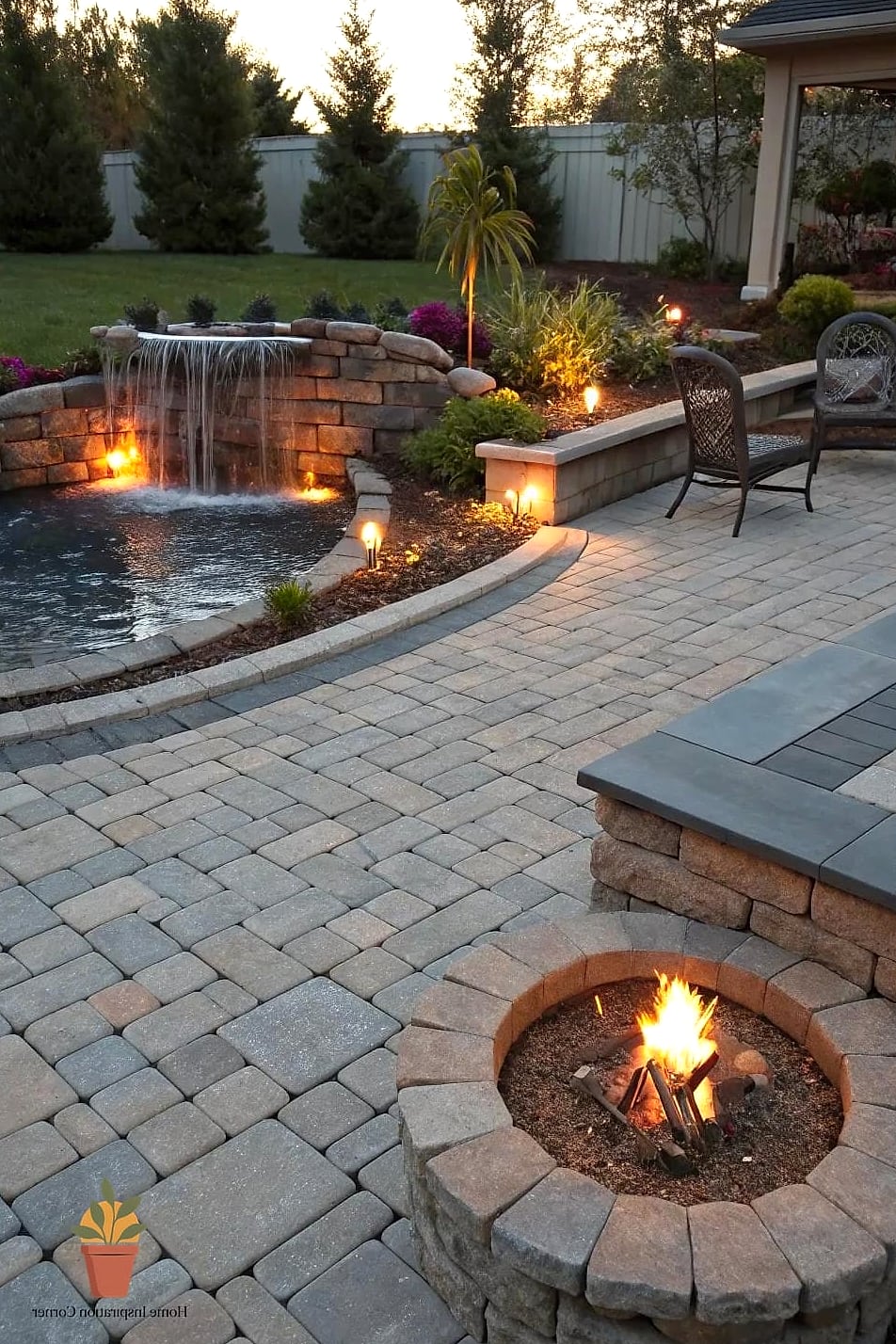
A built-in fire pit or fireplace instantly becomes the anchor of an outdoor room. Designers love working a circular paver pattern around a fire pit because it creates a natural gathering zone without needing extra furniture to define it. Just make sure you’re leaving enough clearance, typically several feet, between the fire feature and any seating.
Layer in Multiple Zones for Different Activities
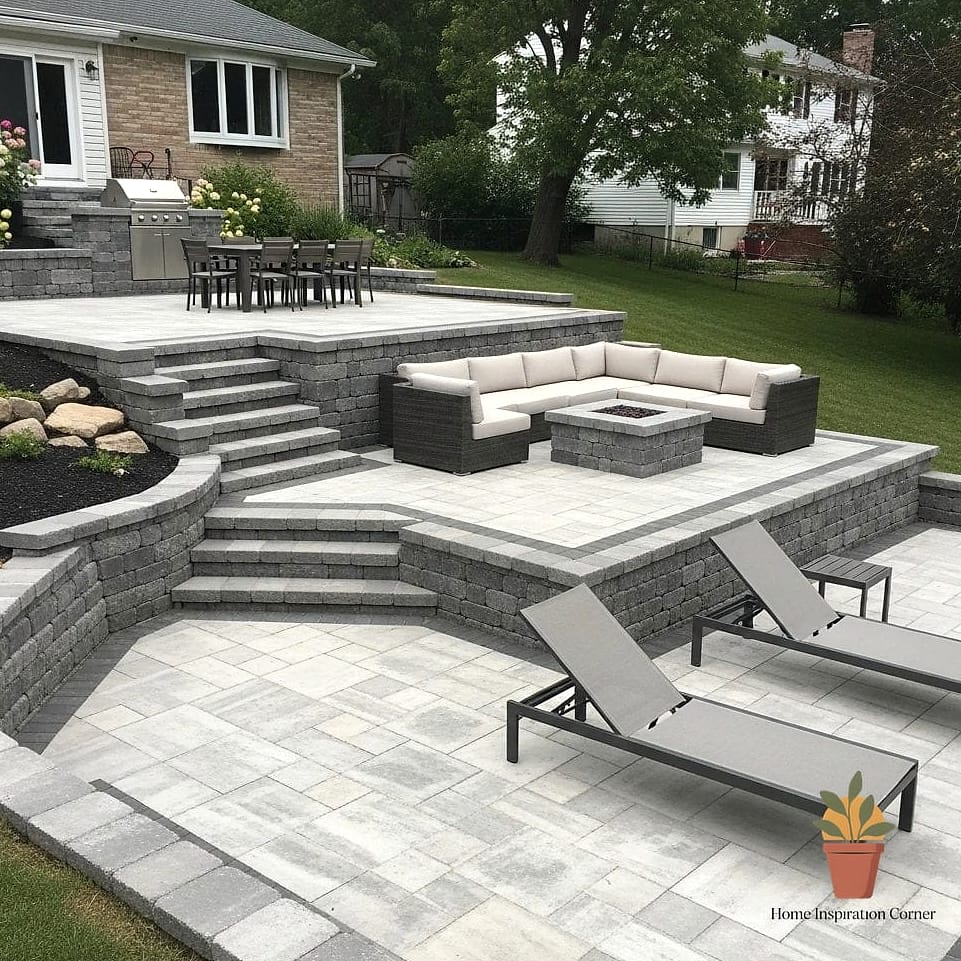
Instead of one big open slab, consider breaking your patio into distinct zones: a dining area, a lounge area, maybe a small prep station near the grill. You can define these zones with subtle pattern changes, a step down in elevation, or even a strip of gravel or greenery between sections.
Use Permeable Pavers for Better Drainage
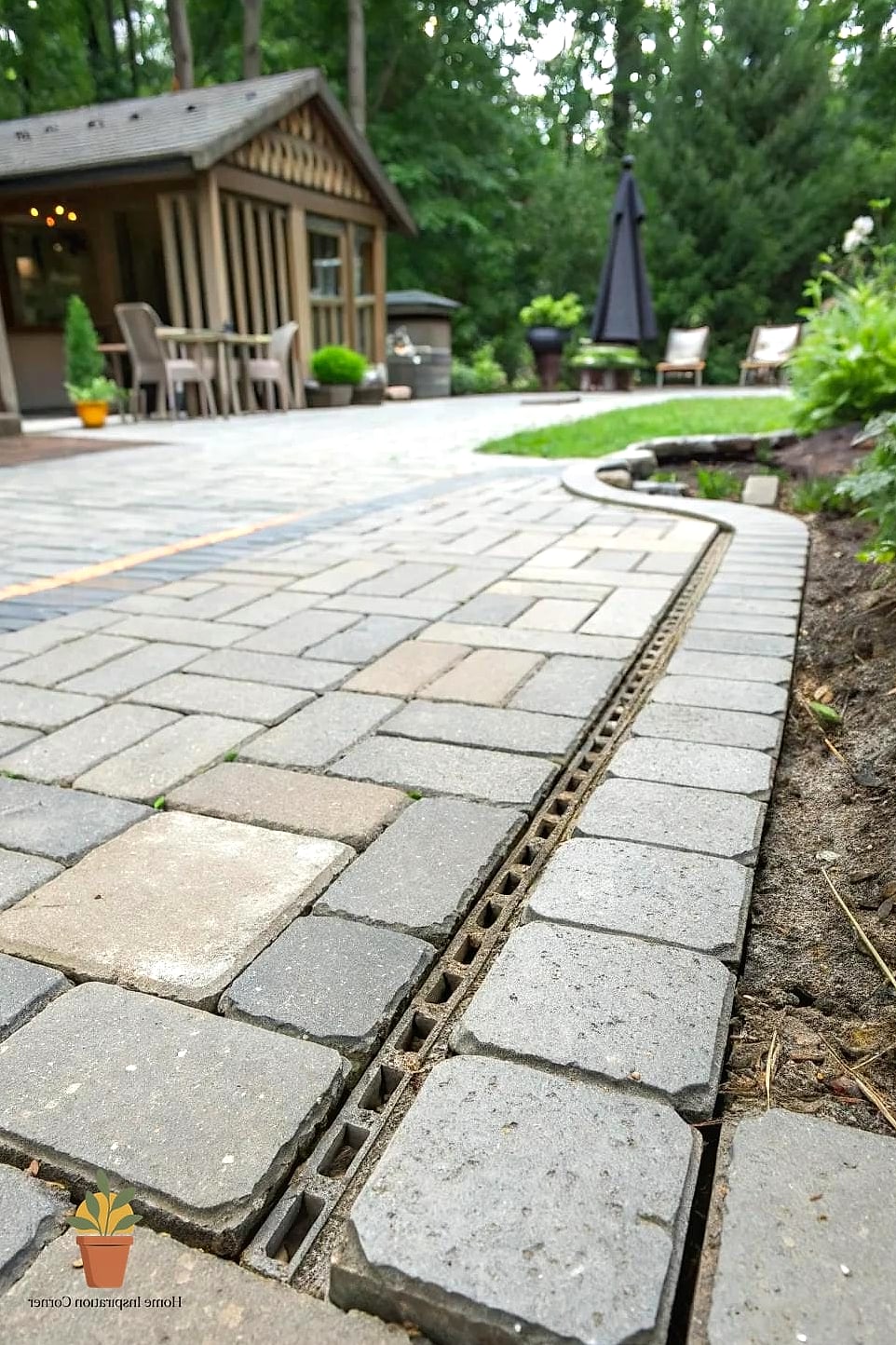
Permeable pavers let water filter through to the ground below instead of pooling on the surface, which is huge if your yard tends to get soggy after rain. They’re also increasingly popular in areas with stricter stormwater regulations. The look has come a long way too, so you’re not sacrificing style for function anymore.
Add Warm Lighting Along the Edges
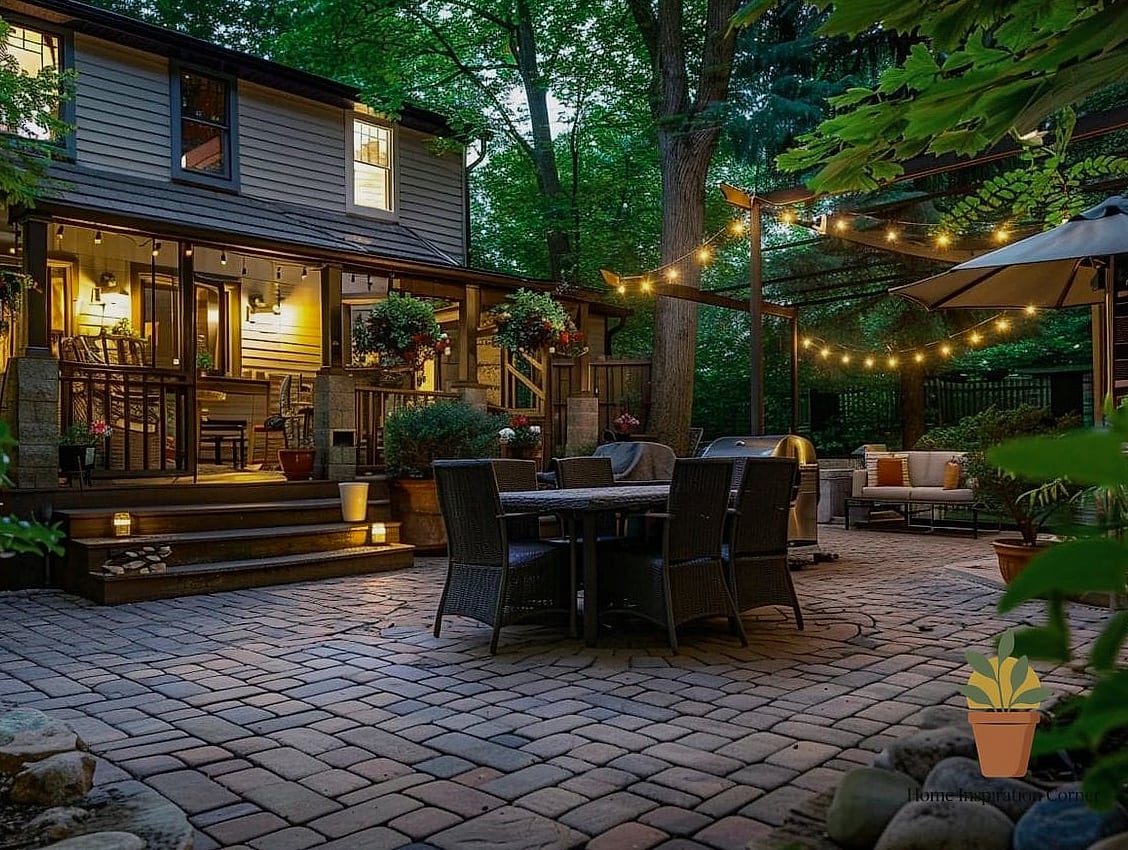
Layered lighting isn’t just an indoor design principle. Low-voltage path lights tucked along the border of your patio, or small solar lights embedded between pavers, extend how long you can actually enjoy the space after sunset. Warm white bulbs feel far more inviting than cool white or blue-toned LEDs here.
Bring in Greenery to Soften Hard Edges
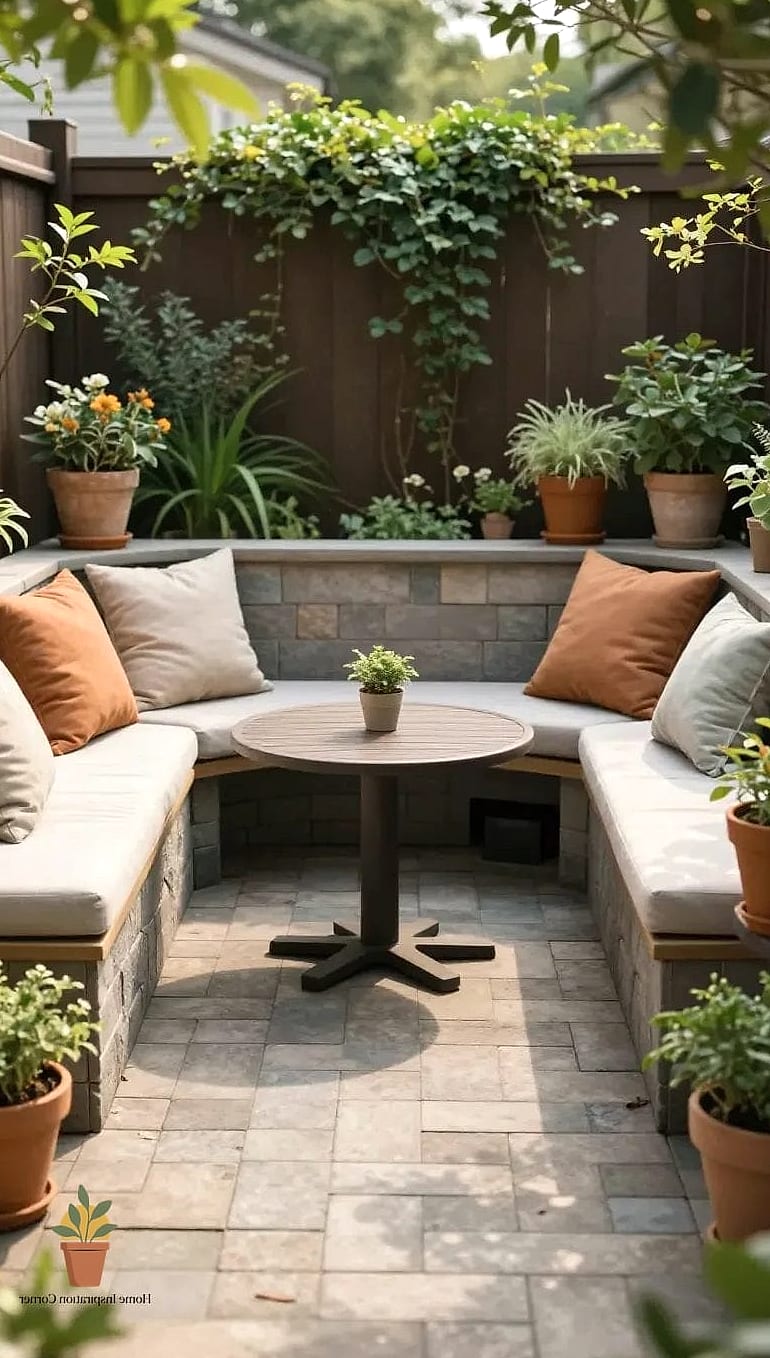
A patio made entirely of stone or concrete can feel a little stark on its own. Planting beds along the perimeter, or leaving small gaps for creeping thyme or moss between certain pavers, softens the whole look. Potted plants work great too if you want flexibility to rearrange things seasonally.
Match Your Furniture Style to the Paver Aesthetic
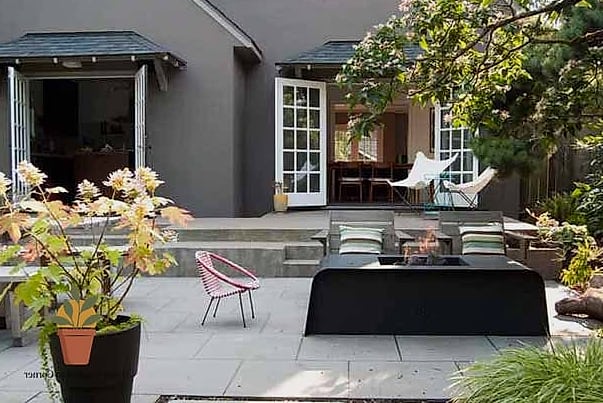
Sleek, large-format pavers in a neutral gray pair naturally with modern furniture in clean lines and dark metal frames. Rustic flagstone or brick pavers lean into more traditional or farmhouse-style pieces like teak or wrought iron. Getting this pairing right makes the whole outdoor room feel cohesive instead of thrown together.
Consider a Herringbone Pattern for Small Spaces
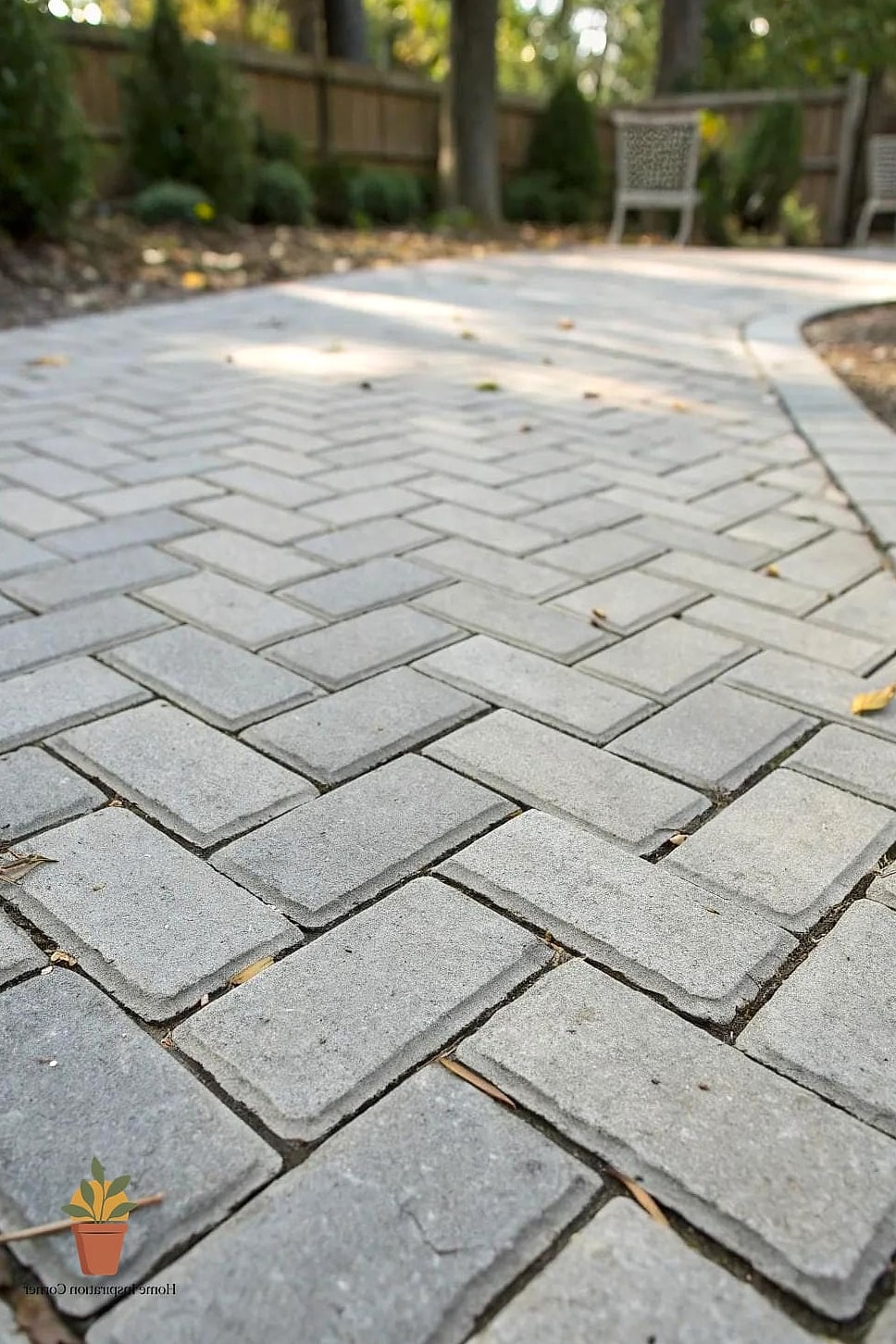
If you’re working with a compact patio, herringbone can actually make the area feel larger because the diagonal lines draw the eye outward. It’s a favorite among designers for tighter courtyards and side-yard patios where every foot of visual space matters.
Don’t Skip the Base Preparation
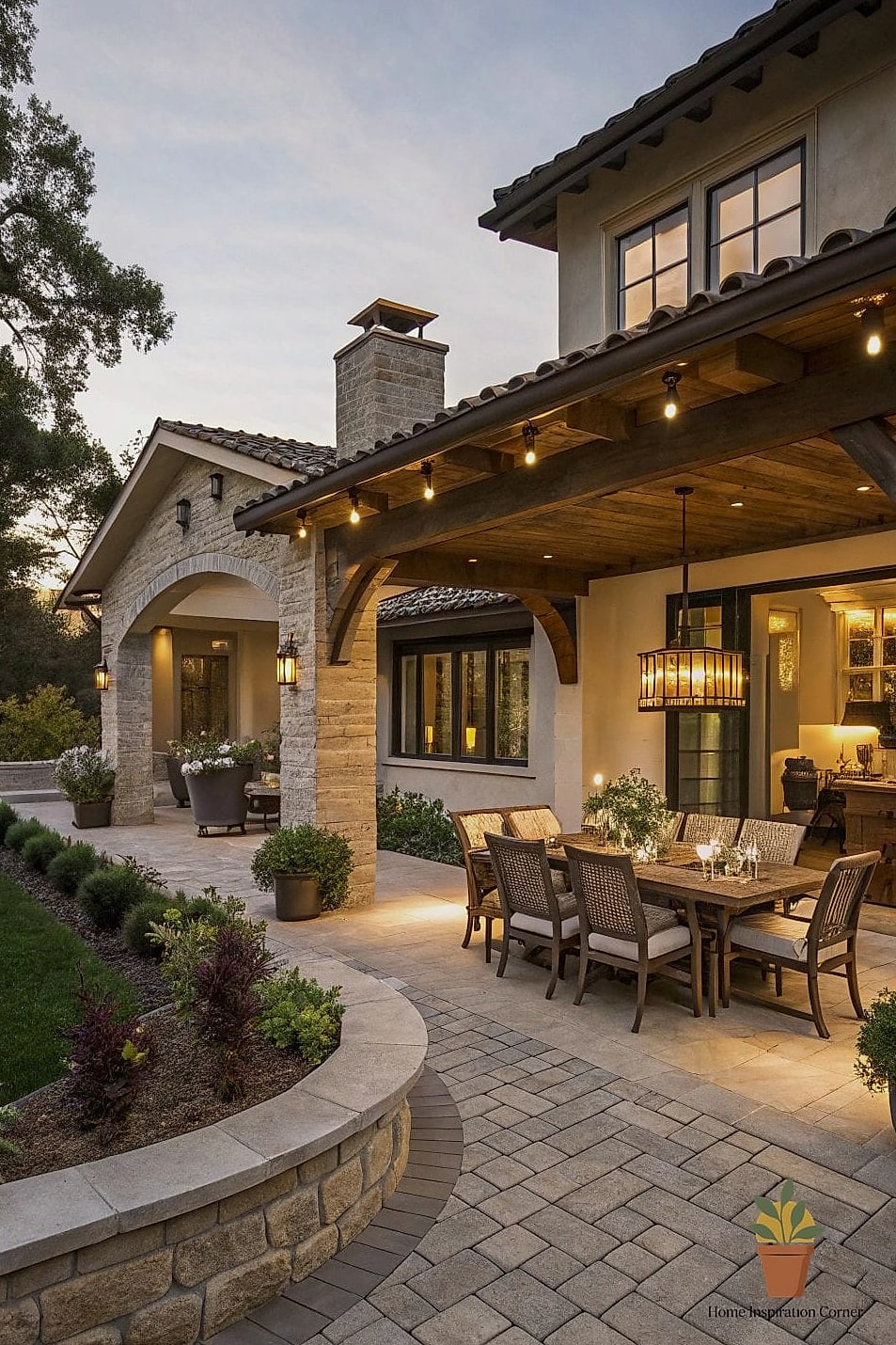
This isn’t the glamorous part, but it’s the part that determines whether your patio still looks great in ten years. A properly compacted gravel base, usually 4 to 6 inches depending on your soil and climate, prevents shifting, sinking, and that uneven look that creeps in over time. Skimping here is the number one reason DIY paver patios fail early.
Add Texture With a Mix of Materials
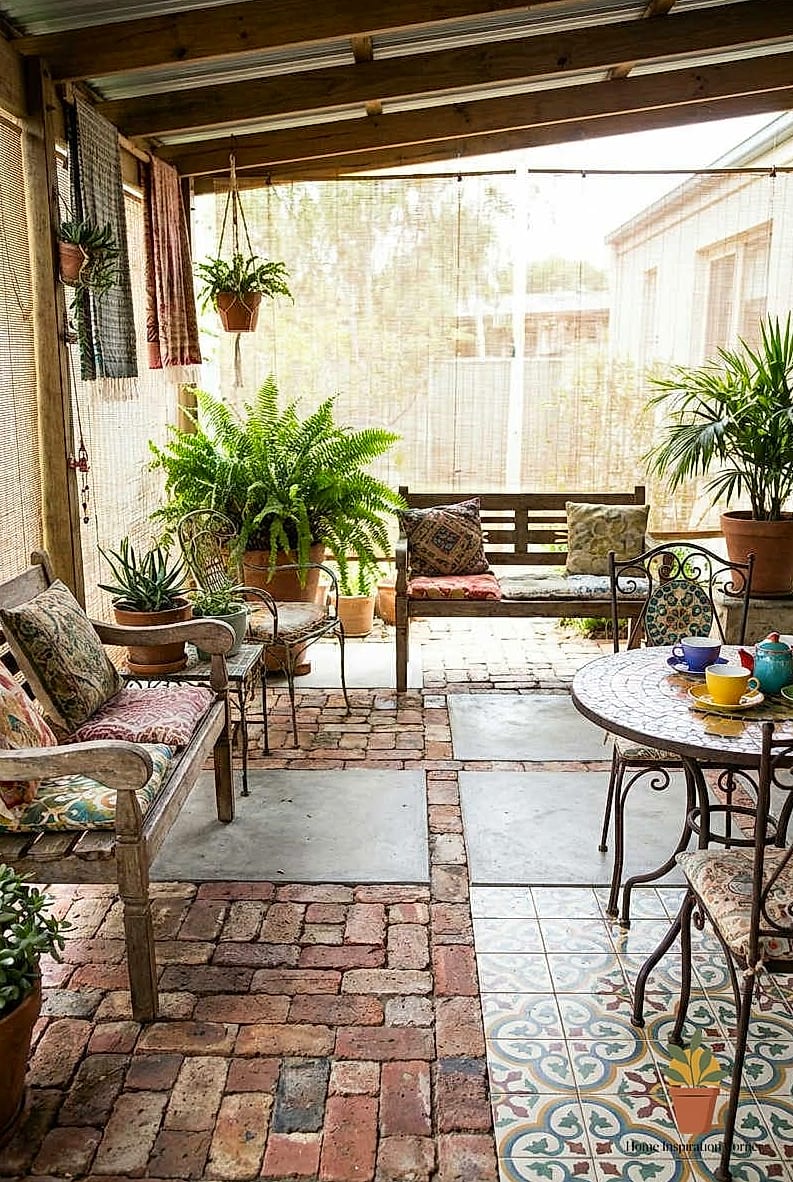
Combining pavers with another material, like a strip of wood decking, gravel, or even stamped concrete, adds visual interest and can help transition between different areas of your yard. This works especially well when connecting a patio to a deck or walkway so the change doesn’t feel abrupt.
Keep Maintenance in Mind From the Start
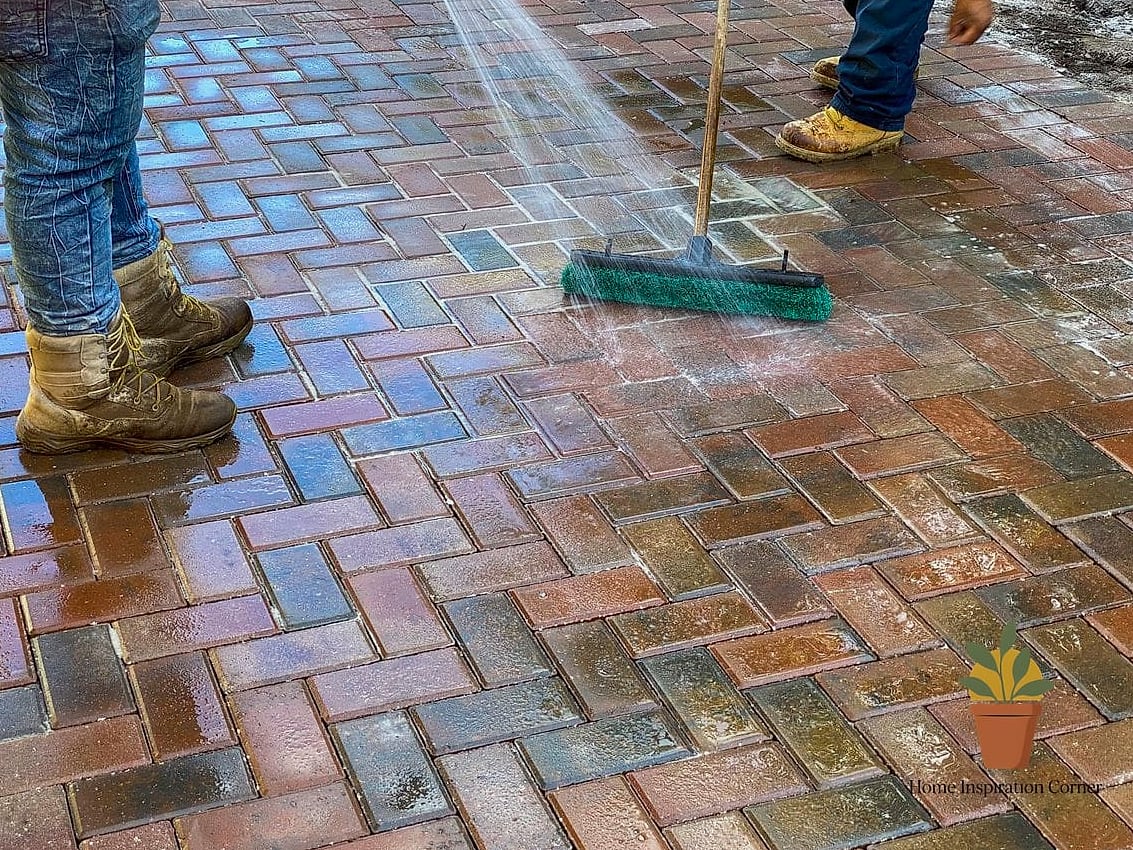
Different paver materials come with different upkeep needs. Concrete pavers are generally low maintenance and just need an occasional rinse and resealing every few years. Natural stone may need more frequent sealing to prevent staining, especially from wine, grease, or leaf tannins. Polymeric sand between joints also helps reduce weed growth and ant issues, so it’s worth the extra cost upfront.
End With a Focal Point
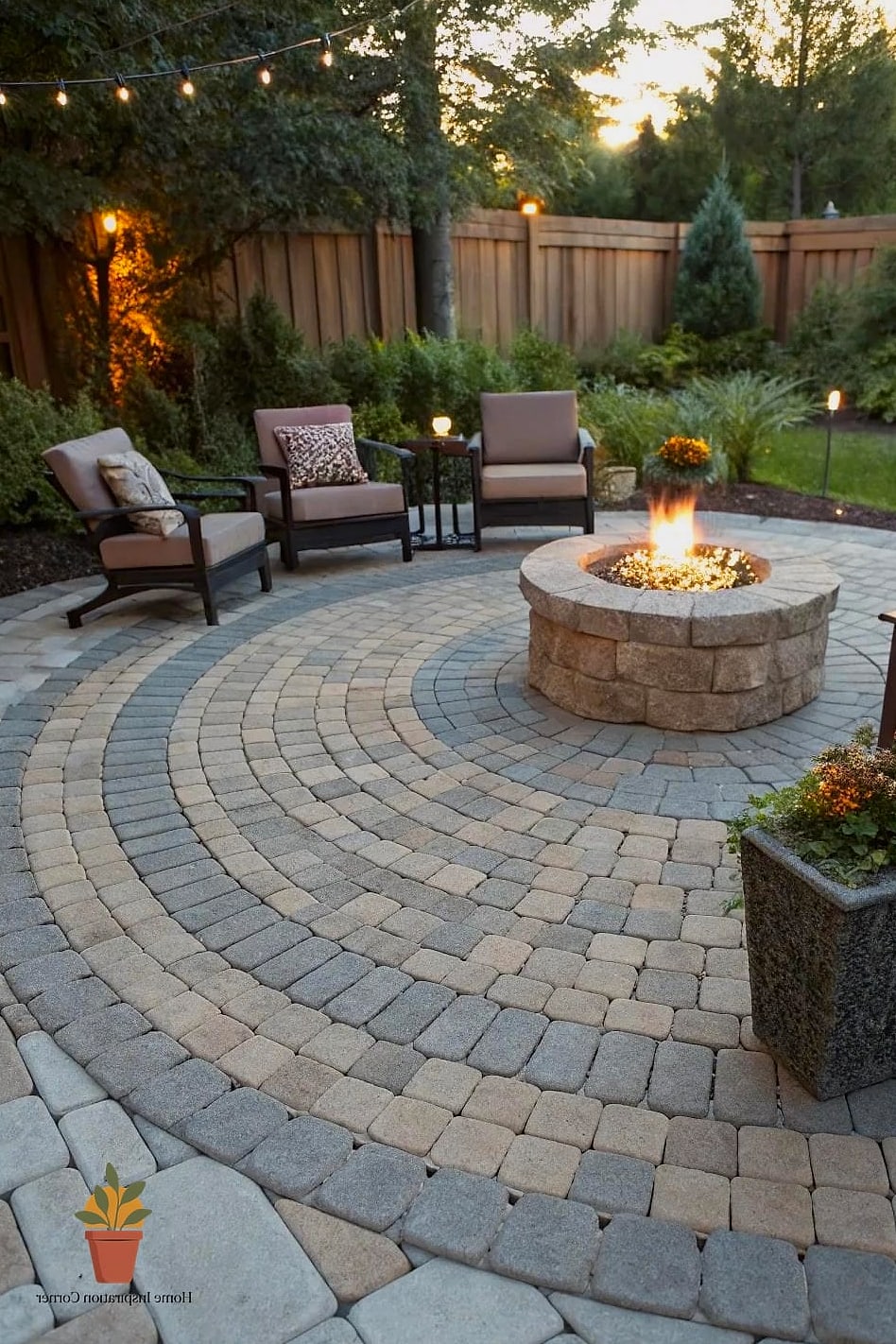
Every well-designed patio has something the eye is drawn to, whether that’s a fire pit, an outdoor kitchen, a striking piece of furniture, or even a large planter. Without a focal point, a patio can feel like it’s missing direction no matter how nice the individual elements are.
Building a paver patio is genuinely one of those projects where a little planning upfront saves you from expensive fixes later. Whether you’re going for something sleek and modern or warm and rustic, the principles designers rely on stay pretty consistent: think about scale, layer in texture and lighting, and don’t rush the base work. Keep these 17 paver patio tips from top interior designers in mind and you’ll end up with an outdoor space that feels just as considered as the inside of your home.