
13 Outdoor Spa Ideas to Steal From Interior Designers
- Sunken Hot Tub with Wood Decking
- Stone-Clad Spa Surround
- Privacy Screening with Slatted Wood Panels
- Layered Lighting for Evening Soaks
- Cedar Sauna as a Standalone Structure
- Cold Plunge Tub Tucked Into a Garden Nook
- Pergola Overhead for Shade and Structure
- Heated Stone Pathways to the Spa
- Outdoor Shower Paired with the Spa Zone
- Built-In Bench Seating Around the Perimeter
- Fire Feature for Contrast and Warmth
- Greenery Walls for a Private, Lush Feel
- Minimalist Concrete Spa Deck
13 Outdoor Spa Ideas to Steal From Interior Designers
There’s a reason outdoor spas have gone from luxury add-on to one of the most requested backyard upgrades I hear about. People spent years fixing up their living rooms and kitchens, and now the backyard is getting the same attention. A well-designed outdoor spa doesn’t need a massive budget or a professional crew—it needs good bones, the right materials, and a little bit of design intention. Here are 13 outdoor spa ideas that borrow directly from what interior designers do best.
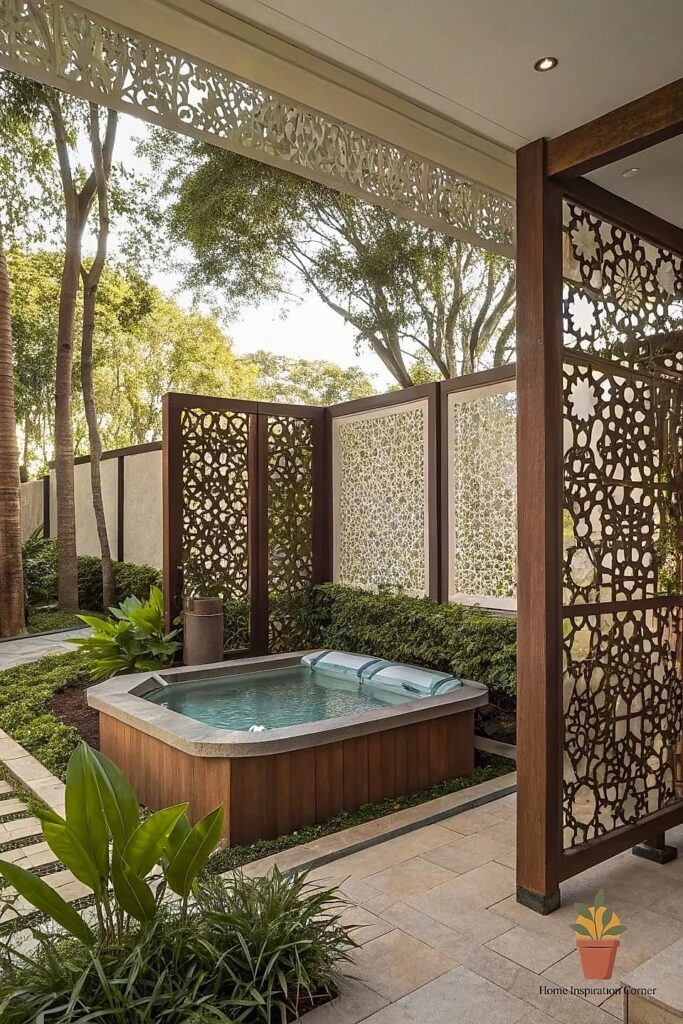
Sunken Hot Tub with Wood Decking
Instead of plopping a hot tub on top of a deck like an afterthought, designers are sinking them flush into the decking so the whole thing reads as one continuous surface. This works especially well with warm wood tones like cedar or ipe, which age gracefully and feel soft underfoot. It’s a bigger install than a standalone tub, since you’re building out a frame and cutting into the deck structure, so this one usually calls for a contractor rather than a solo DIY weekend. The payoff is a spa area that feels architectural instead of bolted-on. Budget-wise, this sits on the higher end, but it adds real resale value because it looks like a permanent feature rather than equipment.
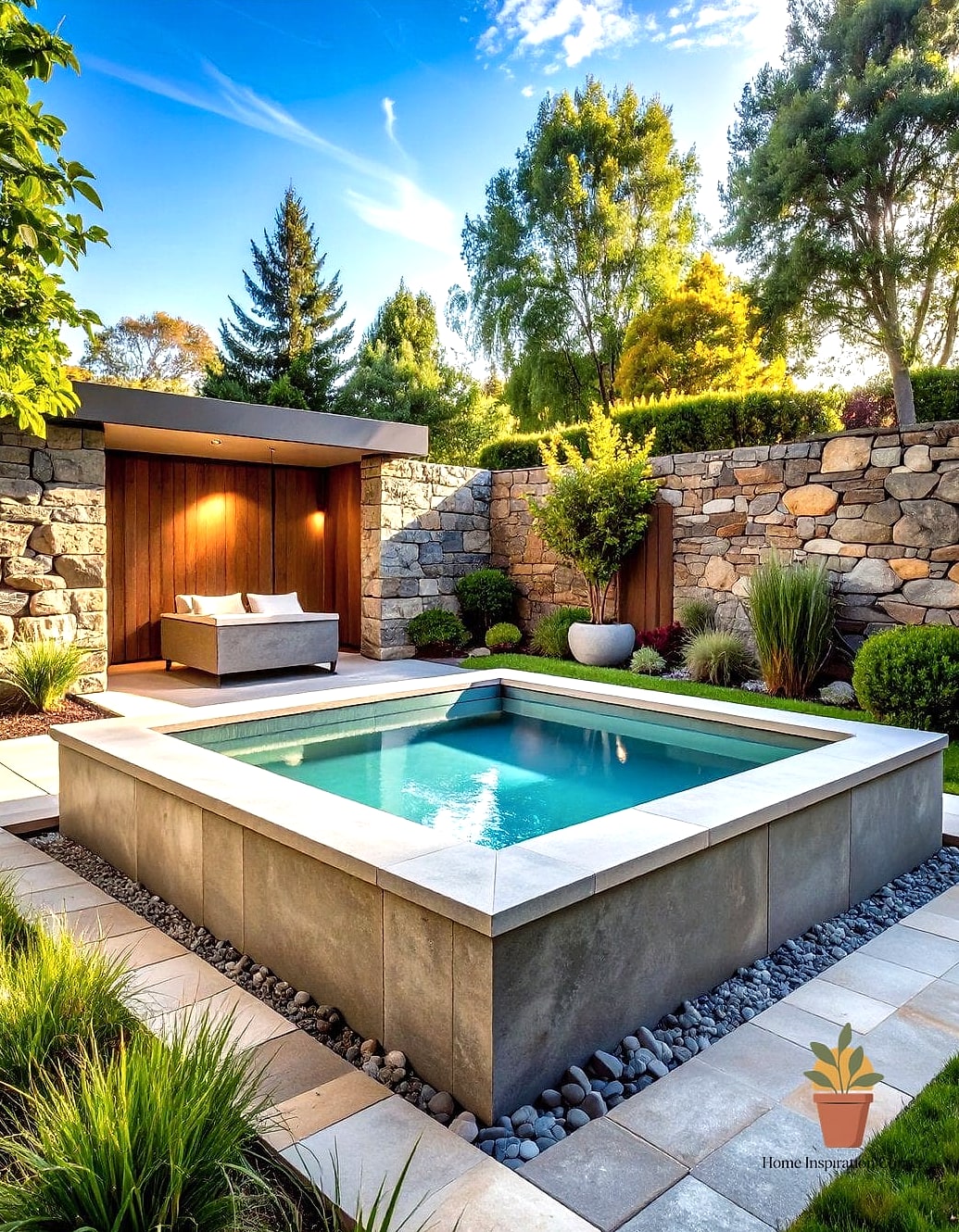
Stone-Clad Spa Surround
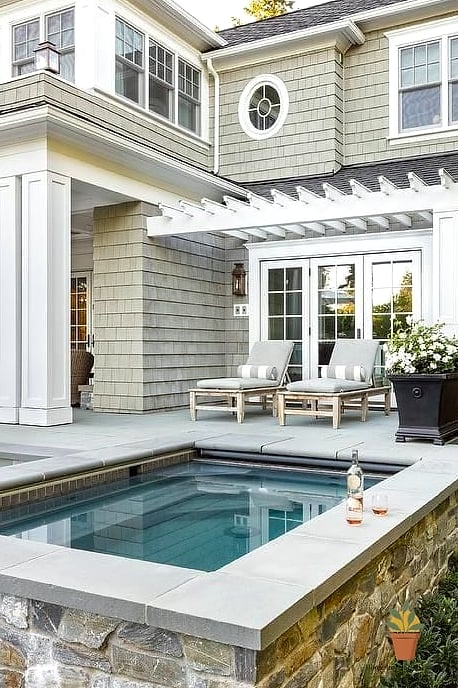
Natural stone cladding around a spa or hot tub gives it that grounded, high-end feel you see in boutique hotel courtyards. Think stacked ledgestone, travertine, or even a textured limestone veneer wrapped around the base. It hides equipment and plumbing while adding visual weight so the spa doesn’t look like it’s floating in the middle of the yard. Stone holds up well outdoors and needs very little maintenance beyond an occasional rinse. If the full stone budget isn’t in the cards, there are lightweight faux-stone panels that mimic the look for a fraction of the cost and are genuinely DIY-friendly for a weekend project.
Privacy Screening with Slatted Wood Panels
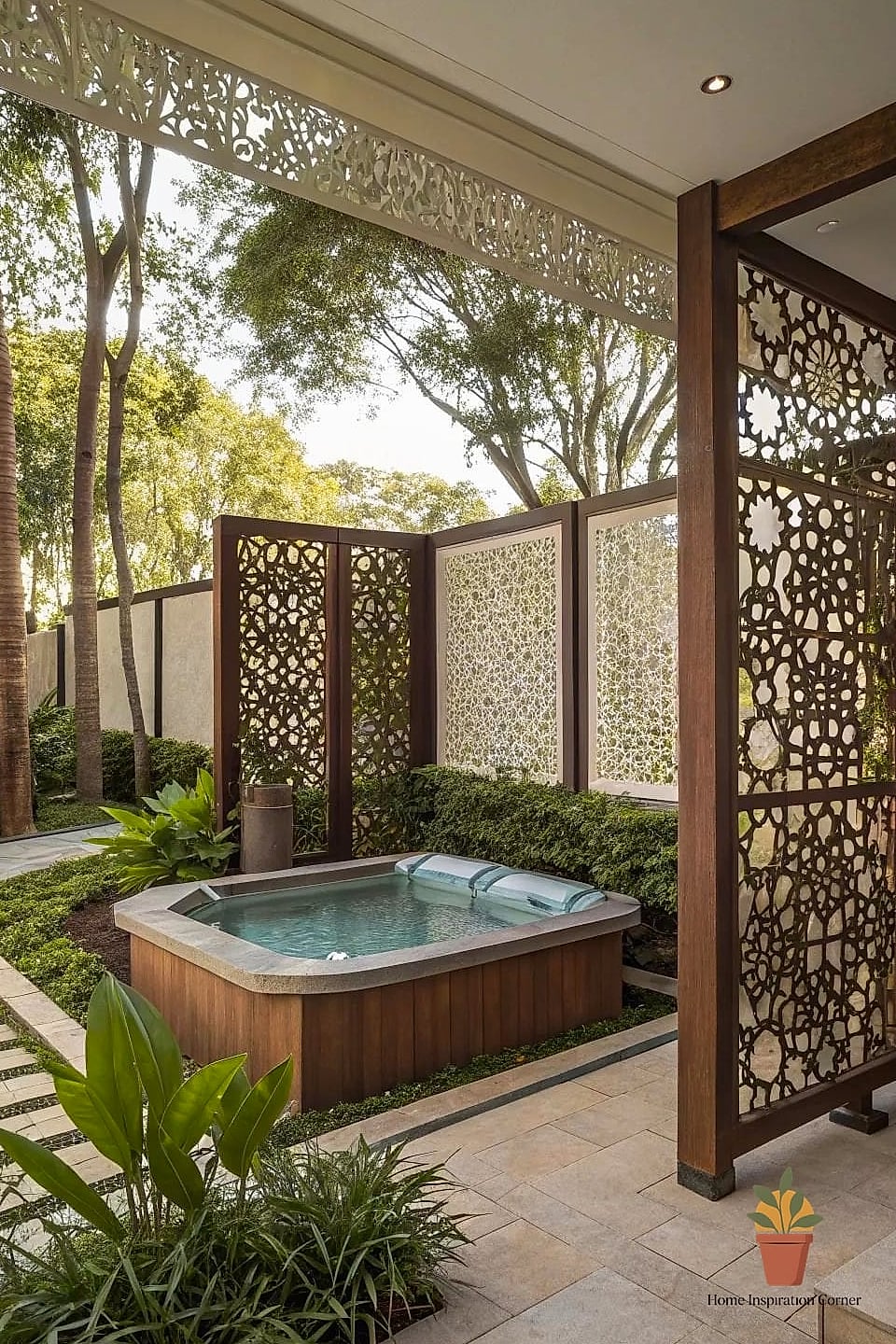
Privacy is the number one request I hear about outdoor spas, and slatted wood screening solves it without making the space feel closed in. Vertical wood slats spaced with small gaps let air and light through while blocking direct sightlines from neighbors. This look pairs beautifully with a neutral color palette and warm wood tones elsewhere in the yard. It’s also a fairly approachable DIY project if you’re comfortable with basic framing and a saw. For renters or anyone who doesn’t want a permanent structure, freestanding slatted screens on planters can do the same job without touching the property line.
Layered Lighting for Evening Soaks
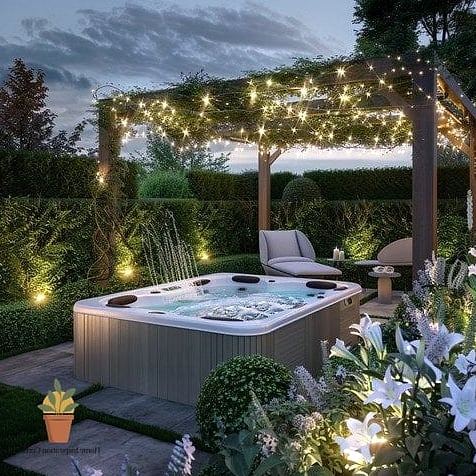
A spa that only looks good in daylight is missing half its potential. Layered lighting—string lights overhead, low path lighting along walkways, and small uplights on surrounding plants—creates that warm, spa-hotel ambiance after sunset. Designers rarely rely on one bright overhead fixture; they build depth with several softer light sources instead. Solar-powered path lights are a budget-friendly, renter-friendly option that require zero wiring, while low-voltage landscape lighting is the more polished, permanent route. Either way, dimmable warm-white bulbs beat cool white every time for a relaxing mood.
Cedar Sauna as a Standalone Structure
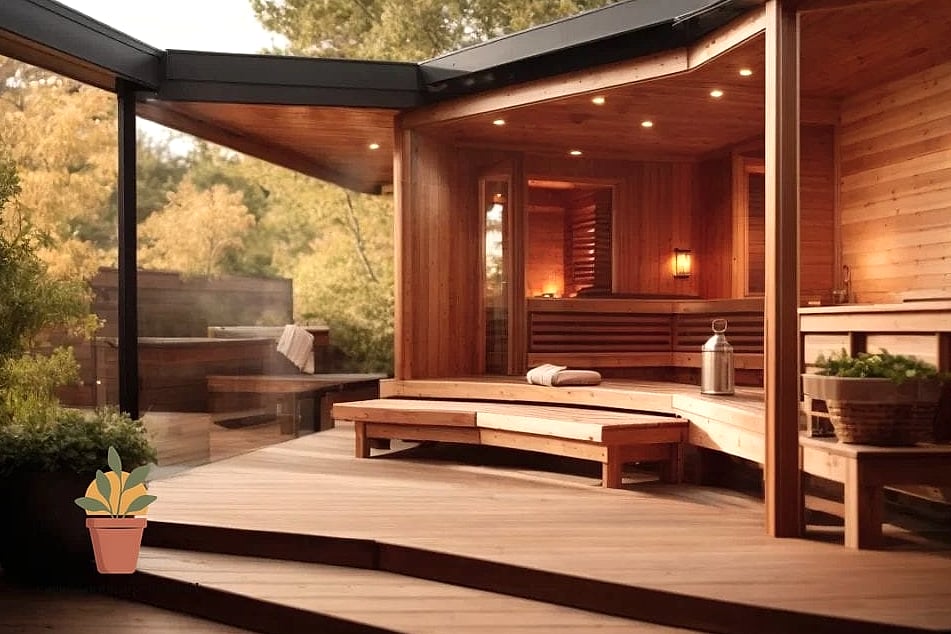
Freestanding cedar saunas have become a genuine design statement rather than just a wellness purchase. The natural wood exterior weathers into a soft silvery-gray if left untreated, or you can seal it to keep that fresh cedar color longer. Interior designers love pairing these with a simple gravel or paver pad and a few structural plantings around the base so it doesn’t look like a shed dropped in the yard. Prefab kits have made this far more accessible than it used to be, and plenty of homeowners assemble them without hiring anyone. Just budget time for the assembly—these aren’t a same-day project.
Cold Plunge Tub Tucked Into a Garden Nook
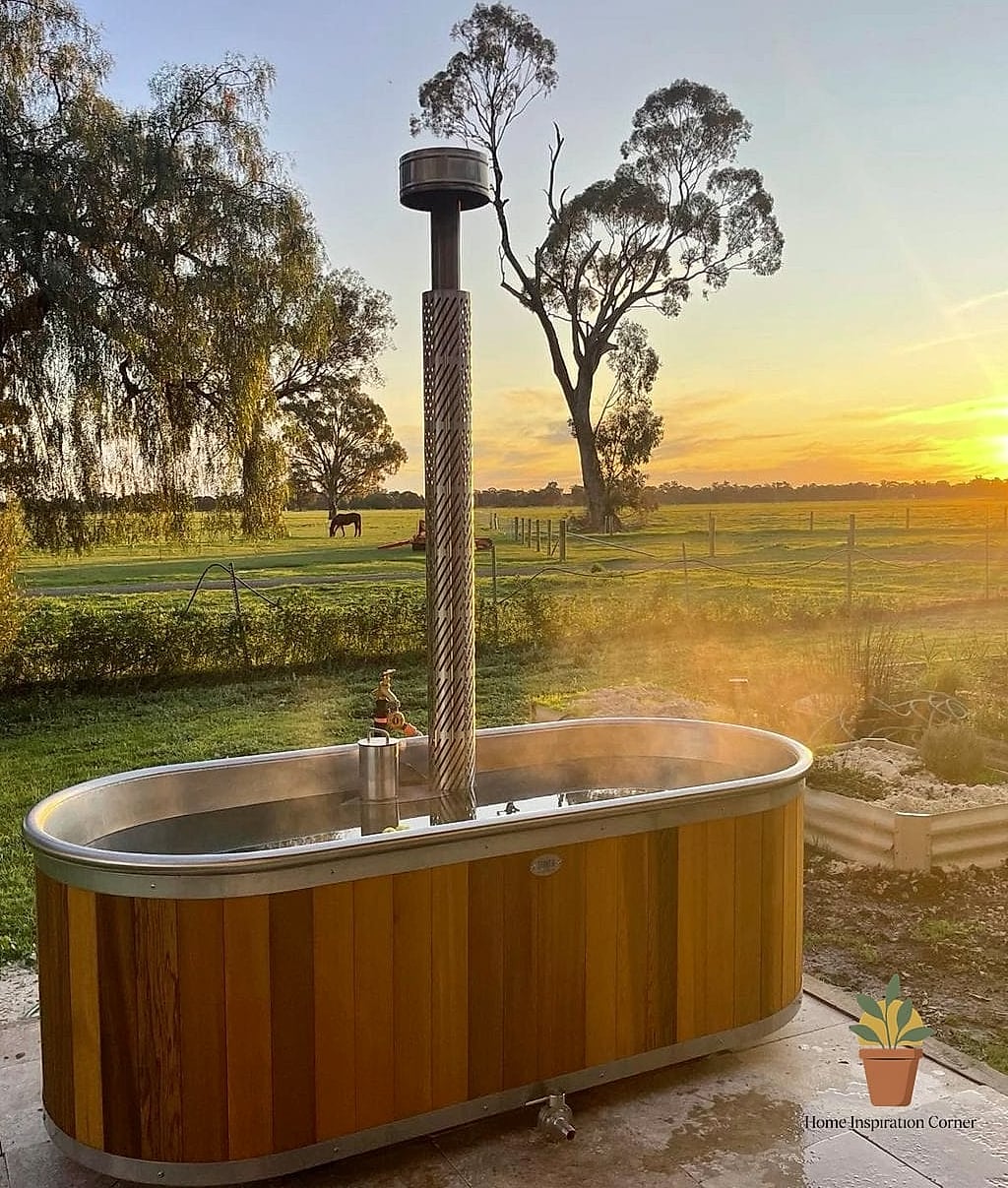
Cold plunges have had a moment, and designers are giving them a proper home instead of leaving them as a random barrel in the corner. Tucking one into a garden nook surrounded by tall grasses or evergreen shrubs gives it privacy and a sense of ritual. Galvanized steel tubs have an industrial-farmhouse look that pairs well with wood decking, while a built-in fiberglass version can be finished with tile or stone to match the rest of the spa area. Maintenance mostly comes down to water treatment and occasional cleaning, similar to a small pool. This is one of the more affordable additions on this list if you go with a standalone tub rather than a built-in.
Pergola Overhead for Shade and Structure
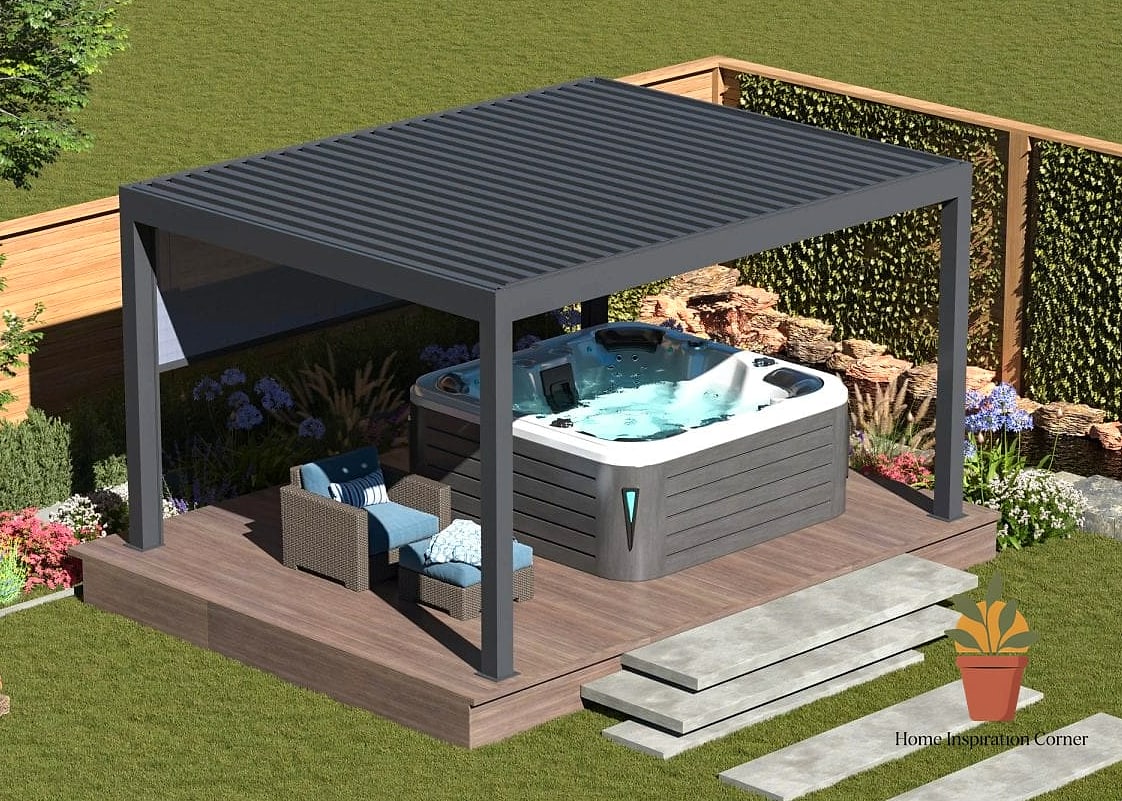
An open-air spa can feel exposed, and a pergola solves that instantly while adding architectural interest. Wood pergolas with simple crossbeams let dappled light through and give you something to hang string lights or trailing greenery from. Some designers add retractable canvas panels across the top for adjustable shade, which is a nice middle ground if you want flexibility. This is a moderately involved build, but there are freestanding pergola kits now that don’t require attaching to the house, which makes it more renter-friendly than it used to be. It also gives the whole spa area a sense of enclosure without full walls.
Heated Stone Pathways to the Spa
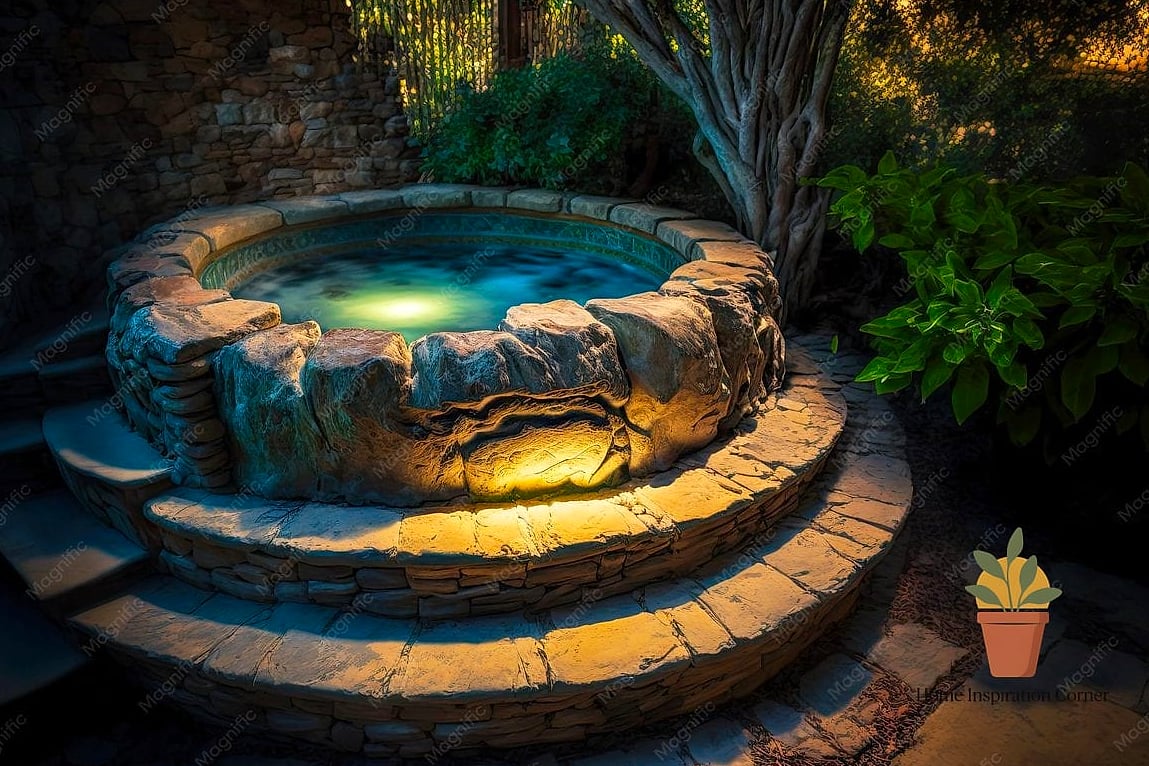
This is a small detail, but it’s the kind of thing that makes a space feel genuinely considered rather than thrown together. A short stone or paver pathway leading to the spa—ideally with in-ground lighting along the edges—turns a walk to the hot tub into part of the experience rather than an afterthought. Flagstone with moss or low groundcover growing between the joints has a soft, natural look that photographs beautifully. It’s a manageable DIY project over a weekend if you’re just doing a short run, though larger pathways with proper base prep are worth hiring out.
Outdoor Shower Paired with the Spa Zone
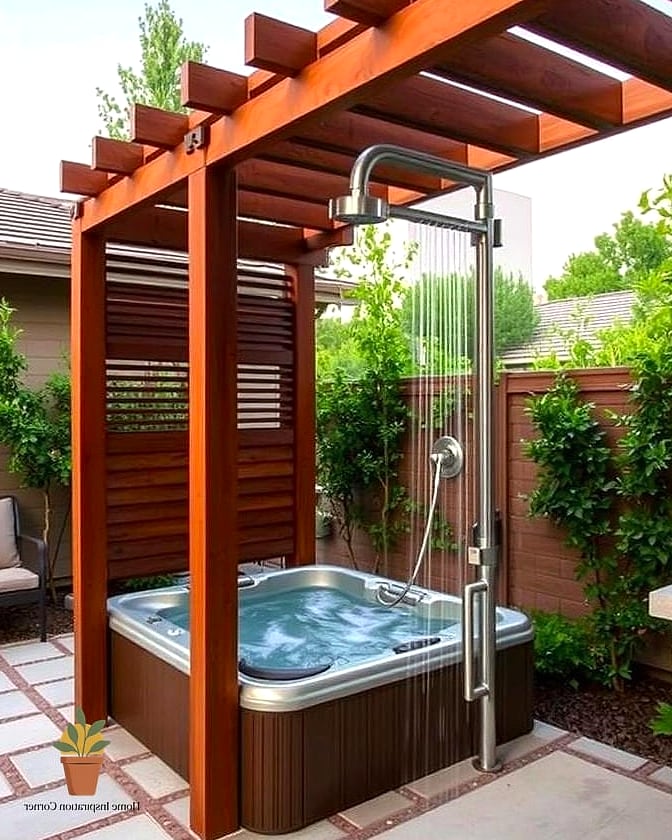
Designers often group an outdoor shower right next to the spa so there’s a natural rinse-off point before and after soaking. A simple black or brushed brass shower fixture mounted on a wood post keeps the material palette consistent with the rest of the space. Adding a small teak mat or slatted wood platform underneath keeps feet off wet ground and adds another layer of that spa-hotel texture. This is genuinely one of those upgrades that instantly makes a backyard feel more custom without requiring a full renovation. Plumbing is the main hurdle here, so this usually isn’t a pure DIY unless you’re comfortable running water lines outdoors.
Built-In Bench Seating Around the Perimeter
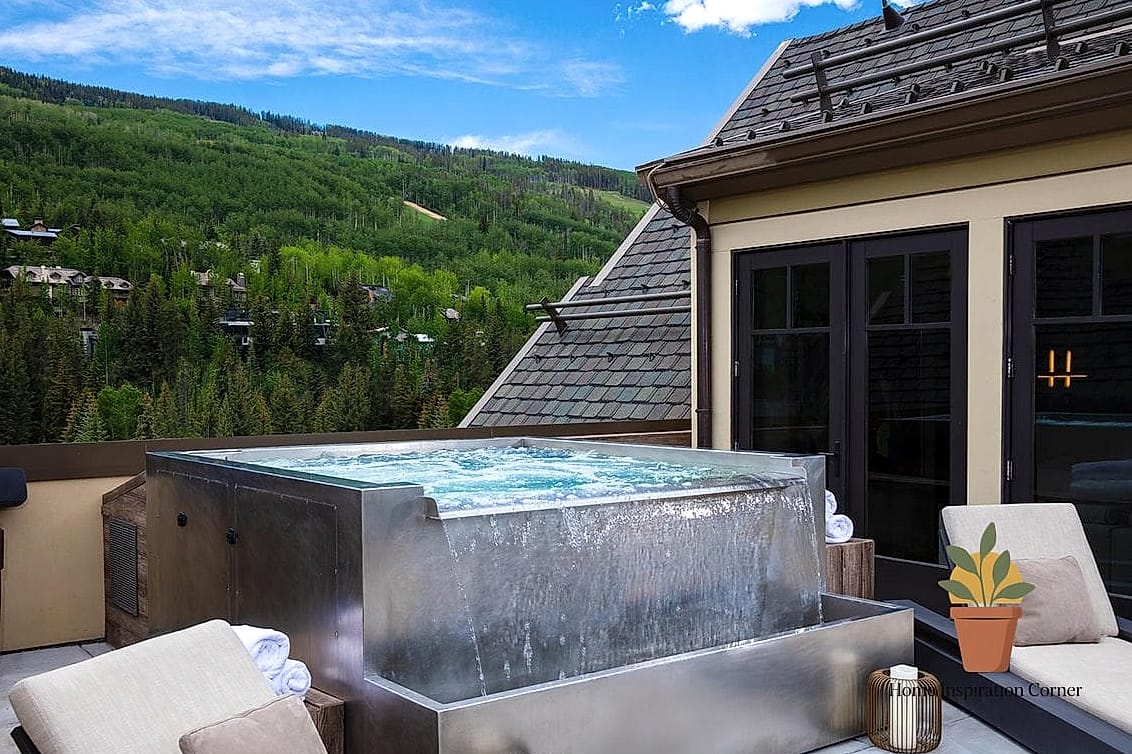
Instead of scattering patio chairs around the spa, built-in bench seating creates a cleaner, more intentional layout and doubles as hidden storage underneath for towels or pool supplies. Wood benches with weather-resistant cushions in a neutral color palette keep the look cohesive rather than mismatched. This is a solid intermediate DIY project if you’re handy with basic carpentry, and it’s far more budget-friendly than commissioning custom outdoor furniture. Storage bins or baskets tucked under the bench keep robes and towels dry and out of sight, which matters more than people expect once you’re actually using the space regularly.
Fire Feature for Contrast and Warmth
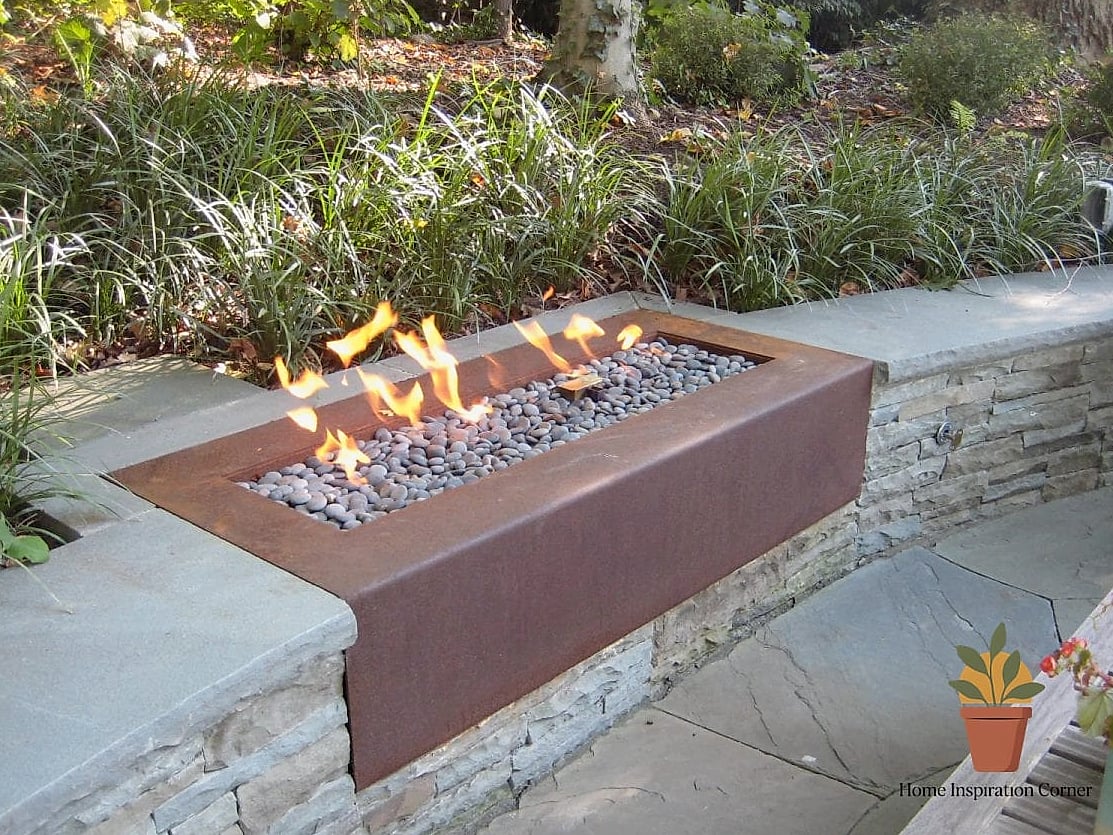
Pairing a fire feature near the spa gives you somewhere to sit and dry off, plus it extends how late into the year the space actually gets used. A simple gas fire bowl or a small built-in fire pit with a stone surround keeps the material story consistent with a stone-clad spa. Designers often place it a few feet back from the water feature so steam and flame aren’t fighting for the same visual space. Gas versions are lower maintenance since there’s no ash cleanup, while wood-burning pits have that classic crackle-and-smell appeal if you don’t mind the upkeep. Either way, it adds a second focal point that keeps the whole layout from feeling one-note.
Greenery Walls for a Private, Lush Feel
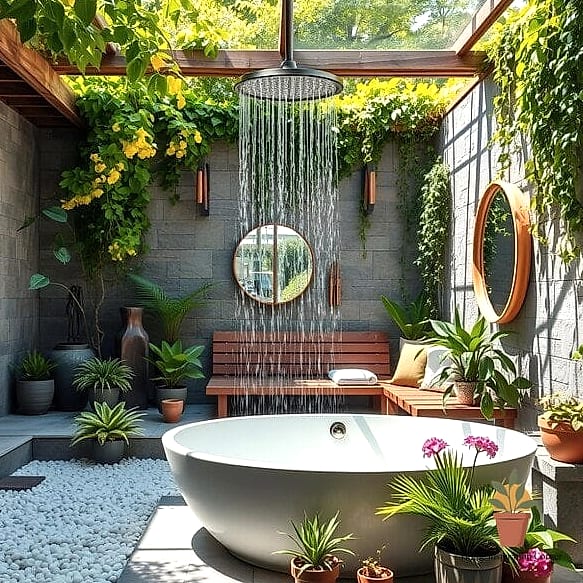
A living wall or dense planting along one side of the spa does double duty as privacy screening and as a design feature. Evergreen shrubs, ornamental grasses, or even a vertical planter system with trailing vines can soften hard surfaces like stone or concrete. This is one of the more budget-friendly ideas on the list if you start with smaller plants and let them fill in over a season or two. It’s also pet-friendly and low-risk compared to structural additions, since you can always relocate plants if the layout changes. Just factor in watering access, since greenery near a heat source dries out faster than you’d expect.
Minimalist Concrete Spa Deck
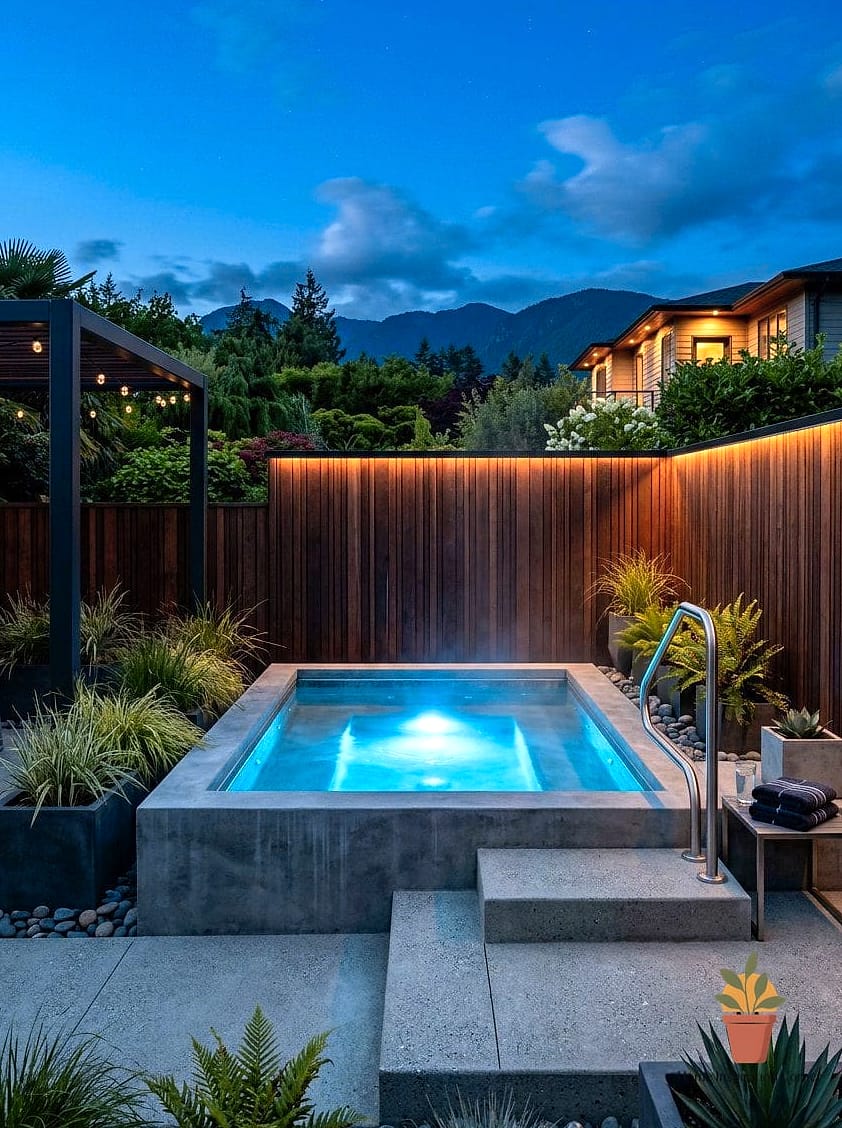
For a cleaner, more modern take, a poured concrete deck with a smooth or lightly textured finish gives the spa area a streamlined, almost architectural look. Designers often pair this with matte black fixtures and simple wood accents to keep it from feeling cold or industrial. Concrete is genuinely low-maintenance and holds up well to moisture, which matters a lot in a spa setting where water splashes are constant. It’s not the most DIY-friendly option on this list—proper pouring and finishing really benefits from experience—but it’s a durable, long-term choice that won’t need refinishing the way wood decking eventually does. Adding a few large planters or a single sculptural tree breaks up the minimalism without cluttering the look.
Building out a backyard spa doesn’t have to mean picking just one of these ideas—most of the best-looking spaces I’ve seen combine three or four, like stone cladding with layered lighting and a built-in bench. Start with whatever solves your biggest need, whether that’s privacy, seating, or just getting some shade over the tub, and let the rest come together over time.