
13 Clothesline Ideas Outdoor Ideas That Will Transform Your Space
- Classic T-Post Clothesline
- Retractable Wall-Mounted Line
- Rotary Umbrella Dryer
- Pergola-Integrated Drying Lines
- Pulley Line Across a Long Yard
- Folding A-Frame Dryer Rack
- Clothesline Hidden Behind a Privacy Screen
- Between Two Mature Trees
- Modern Minimalist Pole and Cable Line
- Balcony or Patio Railing Line
- Clothesline Built Into a Garden Shed Wall
- Zigzag Line for Small Yards
- Solar-Powered Drying Pergola with String Lights
13 Clothesline Ideas Outdoor Ideas That Will Transform Your Space
There’s something genuinely satisfying about sun-dried laundry. It smells better, it’s easier on your energy bill, and honestly, a well-placed clothesline can look pretty charming in a backyard. But not all clotheslines are created equal, and the right setup depends a lot on your space, your climate, and how much laundry you’re actually dealing with.
If you’ve been picturing a sagging rope between two trees, let’s expand that vision a little. Here are 13 outdoor clothesline ideas that actually work, look good, and fit real backyards.
Classic T-Post Clothesline
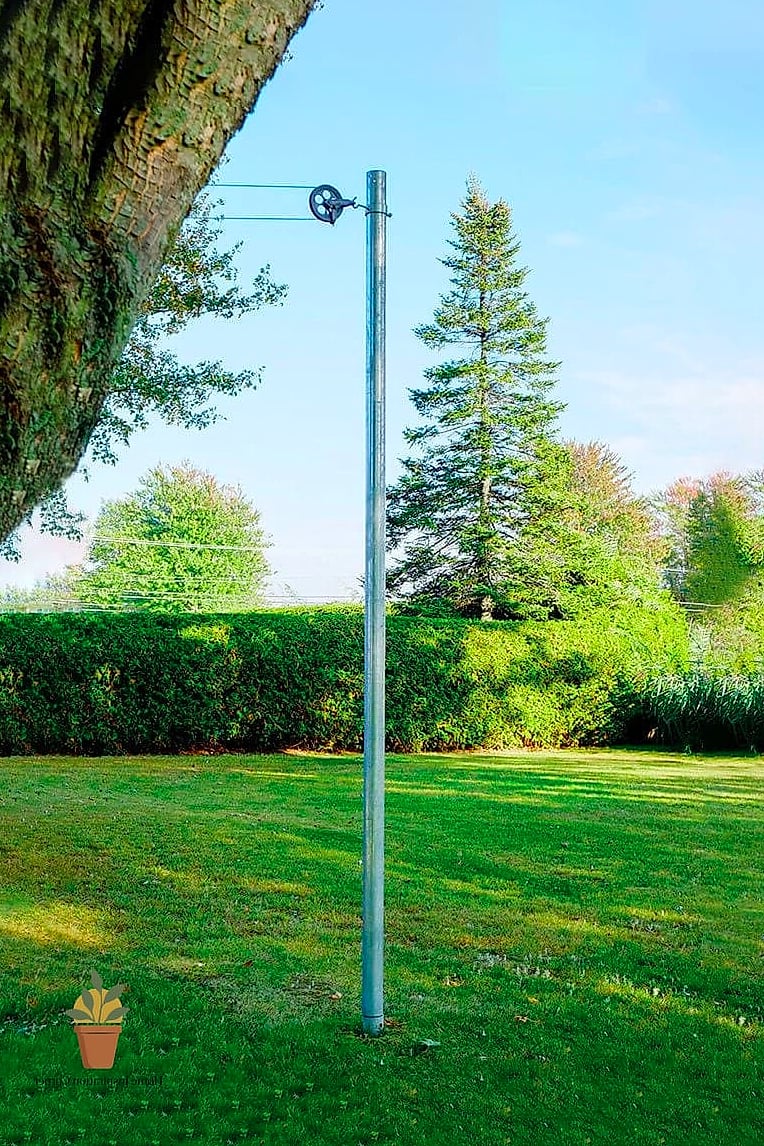
This is the setup most people picture first, and for good reason. Two sturdy T-shaped posts anchored in concrete, with several parallel lines strung between them, give you a lot of drying capacity in a small footprint.
It works best in a side yard or back corner where you have at least 15-20 feet of open space. Cedar or pressure-treated posts hold up well against weather, and galvanized steel wire resists sagging better than plastic-coated cord over time.
The upkeep is minimal. Just tighten the lines once or twice a season and check the posts for wobbling after storms. Budget-wise, this is one of the cheapest options on the list if you’re comfortable setting posts yourself.
Retractable Wall-Mounted Line
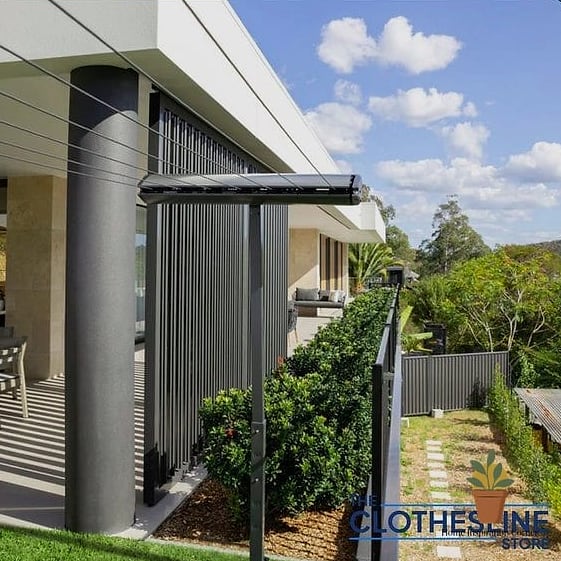
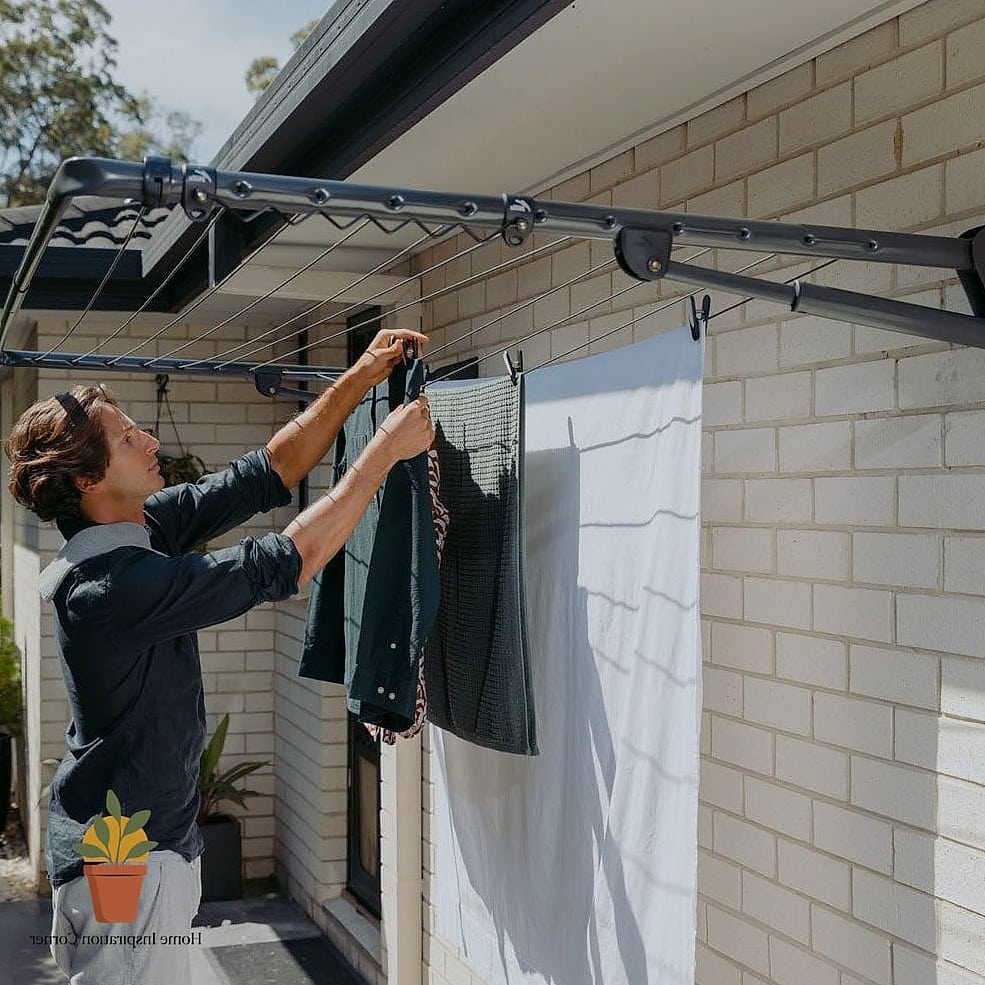
If yard space is tight, a retractable line mounted to your house or garage wall is a smart workaround. You pull the line out when you need it and reel it back into a compact housing when you’re done.
This is especially great for townhomes, small patios, or anyone renting who doesn’t want a permanent fixture eating up the whole yard. Most units come in white or black finishes that blend into siding without drawing attention.
Installation is genuinely DIY-friendly, usually just a few screws into studs or masonry anchors. The only real maintenance is occasionally checking that the line hasn’t frayed, since it gets more wear from constant retracting.
Rotary Umbrella Dryer
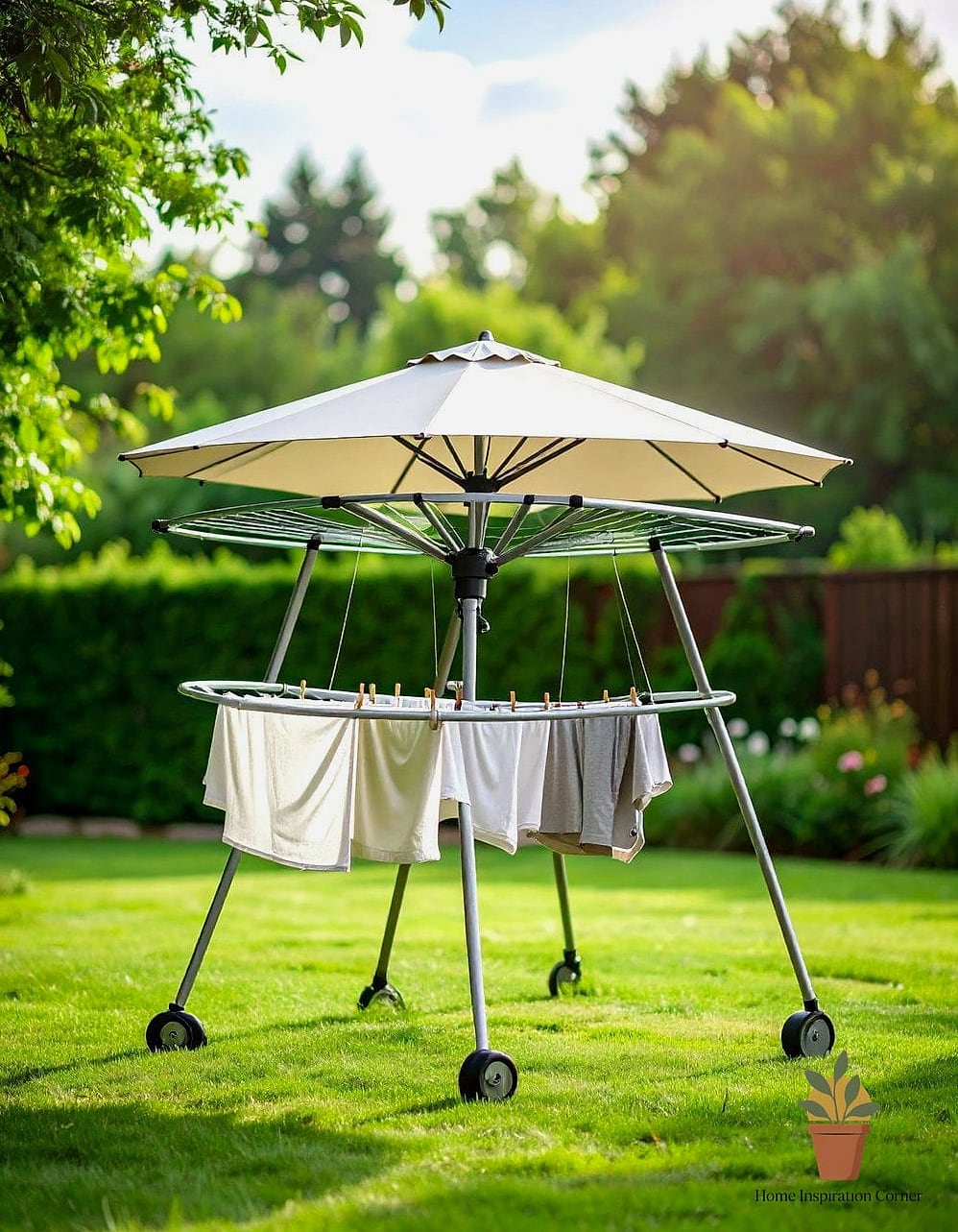
Picture a big umbrella-shaped frame that spins, with lines radiating out from a center pole. This style, sometimes called a rotary or umbrella clothesline, is popular because it packs a surprising amount of line length into one central spot.
It’s ideal for mid-size yards where you want drying capacity without a long horizontal run. Kids’ clothes, towels, and sheets all fit nicely around the radial lines, and the whole thing spins so you’re not walking in circles to hang everything.
Many models fold down or come out of their ground sleeve entirely, so you can pop the pole out and mow right over that spot. That makes it one of the more practical choices for families who still want a tidy lawn most of the week.
Pergola-Integrated Drying Lines
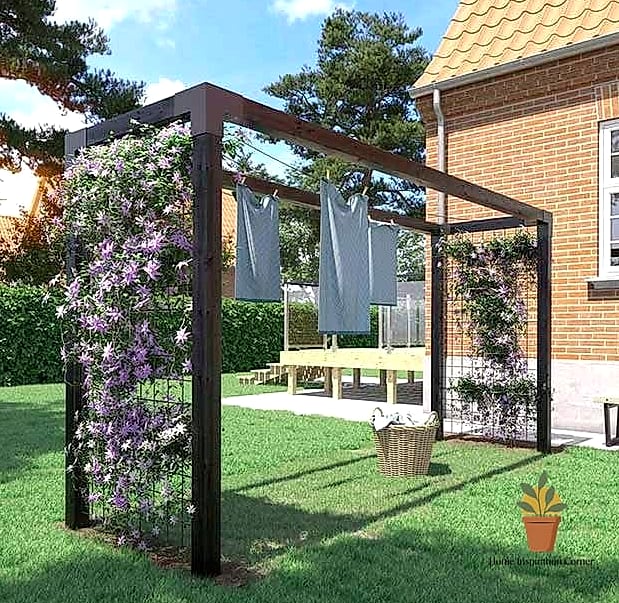
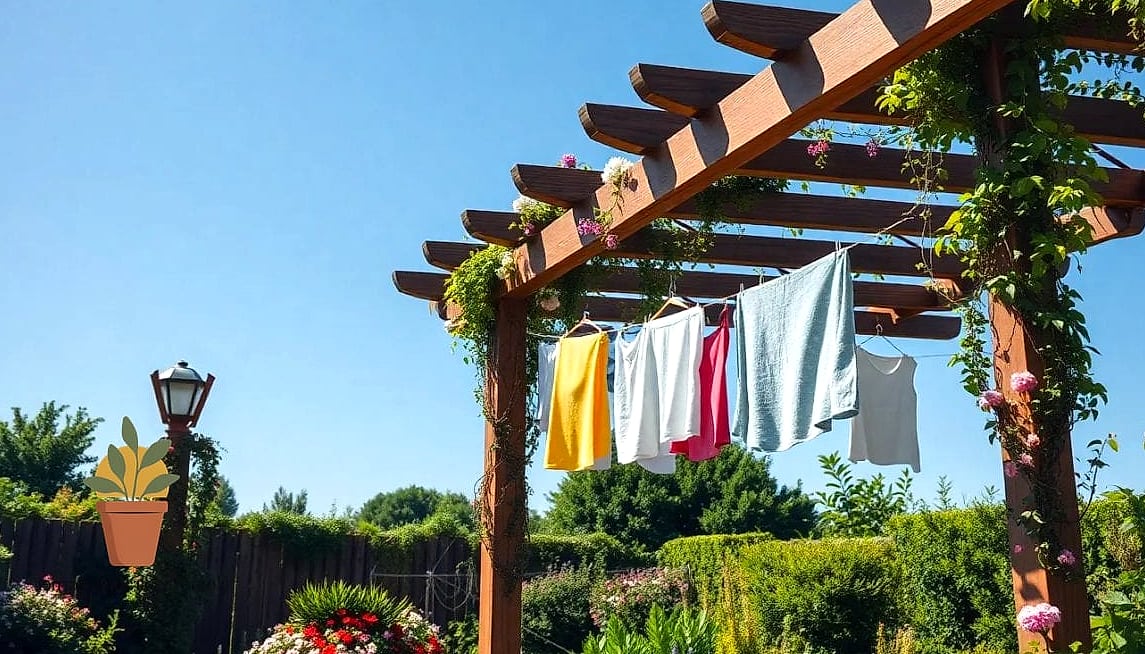
If you already have a pergola or you’re planning to build one, running clothesline hardware between the crossbeams is a genuinely elegant option. The lines disappear visually into the structure when they’re not in use.
This works particularly well over a patio or deck area, since the pergola itself is already providing some shade and structure. Pair it with climbing vines like wisteria or clematis, and you get a drying setup that looks more like a garden feature.
Eye hooks or pulley systems threaded through the beams let you raise and lower lines as needed. It’s a bit more work to install than a standalone setup, but it’s a nice option if you want your clothesline to feel less utilitarian and more like part of your outdoor living space.
Pulley Line Across a Long Yard
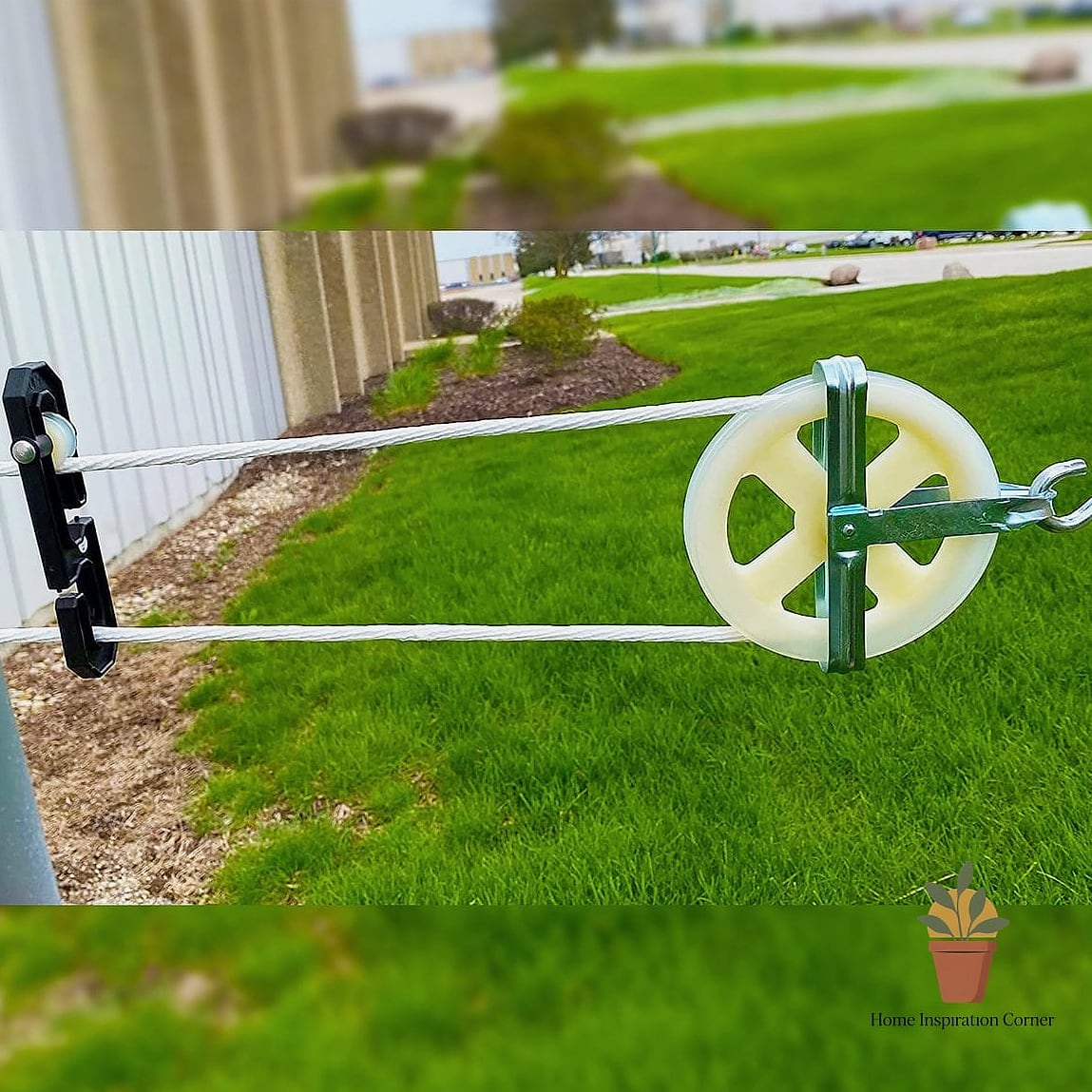
For bigger properties, a pulley clothesline lets you hang laundry from one fixed spot and send it out across the yard without walking the whole length every time. One pulley is mounted near your back door or porch, the other at the far end of the run.
This setup shines for anyone dealing with mobility issues, bad knees, or just a desire to hang a full load without a dozen trips back and forth. You load the line at your starting point, crank or pull it out, and reel it back in when it’s dry.
Marine-grade rope and rust-resistant pulleys are worth the extra few dollars here, since this hardware gets a lot of friction over time. It’s not the fastest install, but it’s one of the more functional upgrades if your yard has the length to support it.
Folding A-Frame Dryer Rack
Not every outdoor drying solution needs permanent posts. A folding A-frame rack, the kind with multiple wooden or metal rungs, can be carried outside on laundry day and tucked into a shed or garage the rest of the time.
This is a great renter-friendly idea, or a good option if you split your time between line-drying and a dryer depending on weather. Wood versions have a nice farmhouse look, while aluminum frames are lighter and rust-resistant.
Because there’s no installation at all, there’s really no maintenance beyond wiping it down occasionally. It’s also one of the more budget-friendly options if you’re just testing out whether line drying works for your routine.
Clothesline Hidden Behind a Privacy Screen
If the look of hanging laundry isn’t your favorite backyard view, building or buying a slatted privacy screen to tuck your clothesline behind solves that instantly. Horizontal wood slats, lattice panels, or even tall ornamental grasses can do the job.
This idea works well in smaller urban or suburban yards where the clothesline sits close to a patio or seating area. The screen gives you a defined “utility zone” without making the whole yard feel like a laundromat.
A simple cedar slat screen is fairly DIY-friendly over a weekend, and it doubles as wind protection, which actually helps clothes dry faster in breezy conditions. It’s a nice middle ground between function and curb appeal.
Between Two Mature Trees
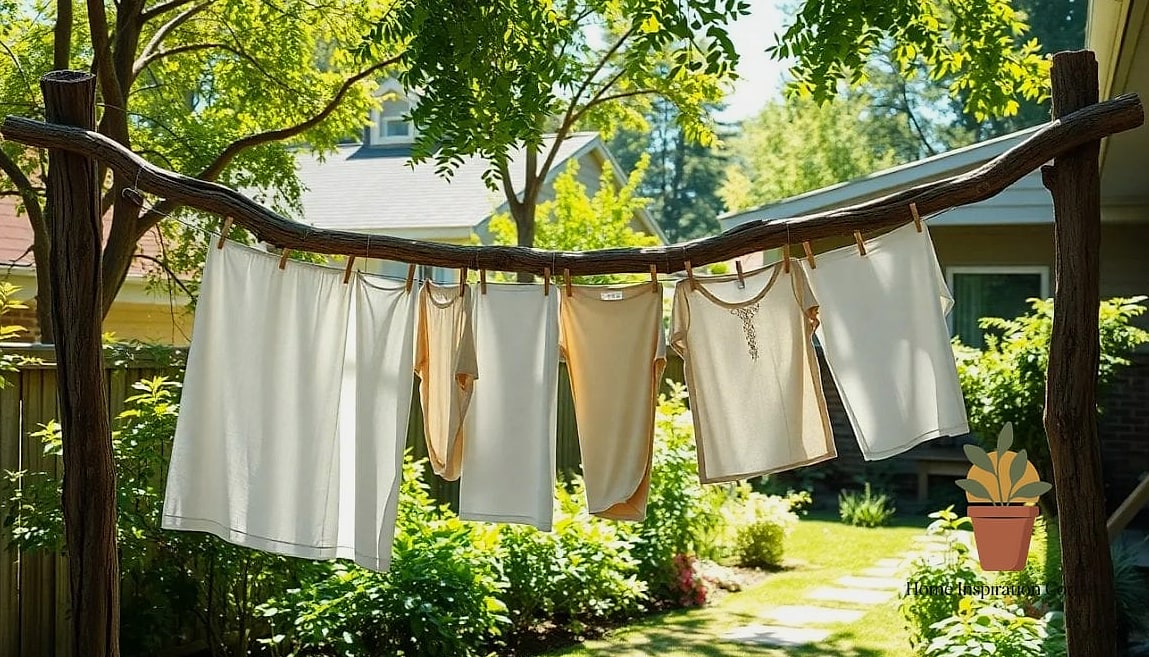
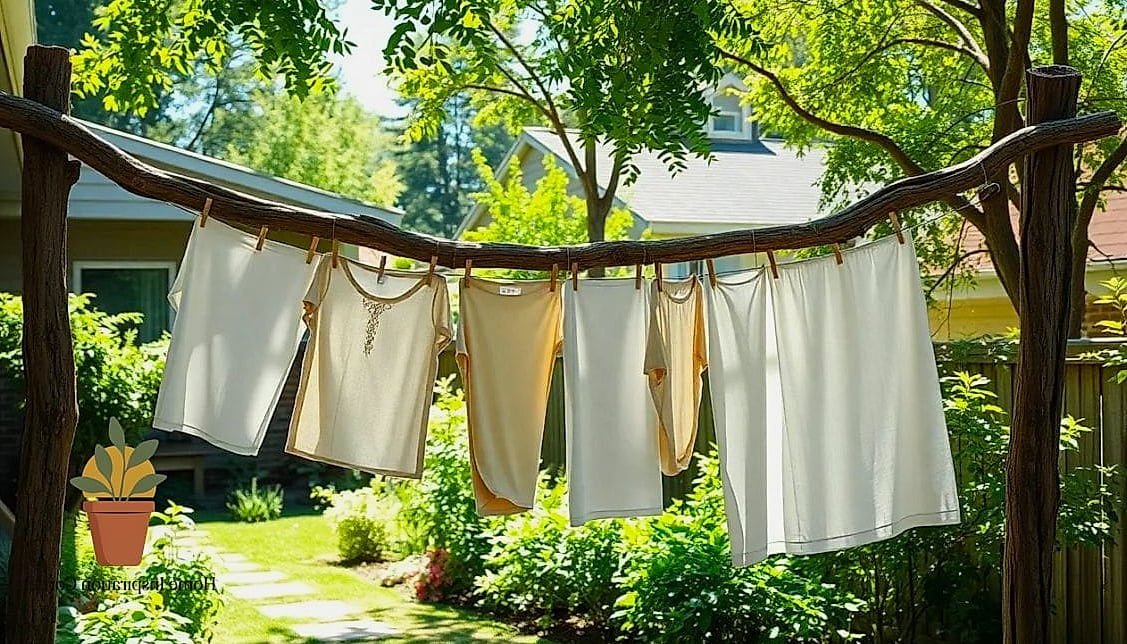
The original clothesline, really. If you’ve got two solidly rooted trees spaced right, stringing a line between them costs almost nothing and requires zero construction.
This works best with trees that are at least 6-8 inches in trunk diameter, since thinner trees can get damaged by tension over time. Using a wide nylon strap or tree-friendly line protector instead of bare wire helps avoid girdling the bark.
The tradeoff is that this setup isn’t adjustable in height or length, and shade from the canopy can slow drying time. But for a quick, nearly free solution, it’s hard to beat, especially for smaller loads.
Modern Minimalist Pole and Cable Line
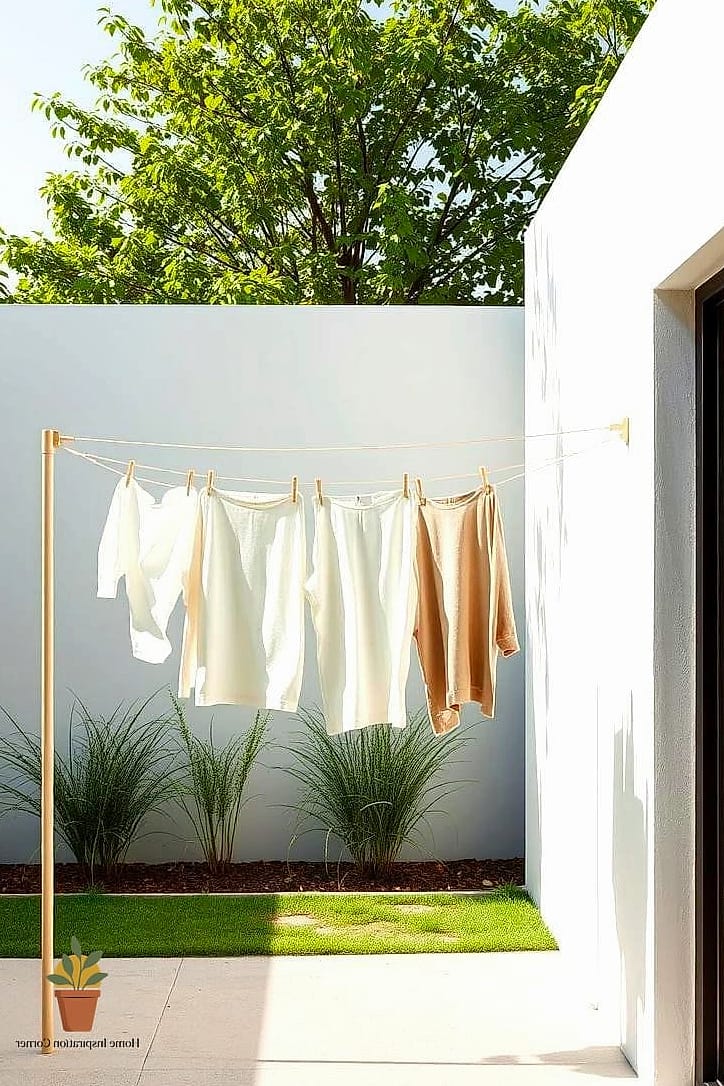
For a cleaner, more architectural look, powder-coated steel poles with thin stainless cable lines feel a lot more intentional than a traditional rope setup. Black or matte gray finishes read as modern rather than utilitarian.
This style suits contemporary homes, especially ones with black window frames, concrete patios, or minimalist landscaping. It’s the kind of clothesline that doesn’t look out of place even when it’s fully visible from your back windows.
Stainless cable resists rust and sagging far better than basic cord, so while the upfront cost is a bit higher, you’re not restringing it every year or two. It’s a nice splurge if you want function and aesthetics to actually match.
Balcony or Patio Railing Line
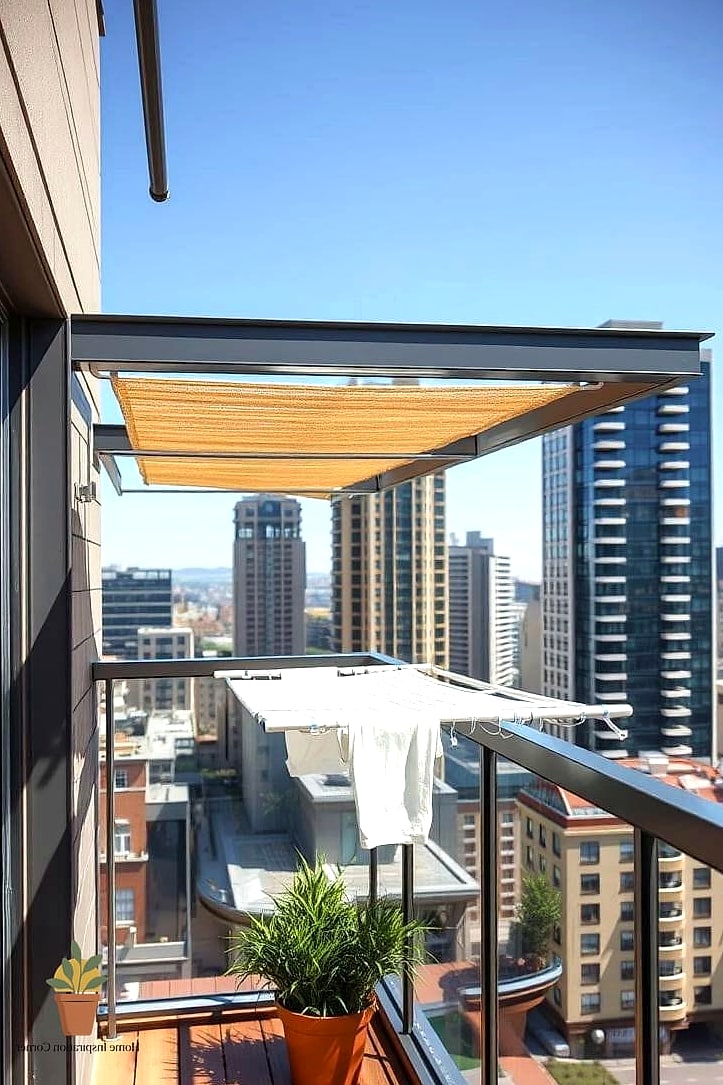
Apartment dwellers and condo owners aren’t left out here. Compact retractable or fixed lines that clip onto a balcony railing let you dry smaller loads without needing yard access at all.
This is ideal for delicates, swimsuits, or smaller items that don’t need a full line. Look for railing clips rated for outdoor use so they don’t crack or discolor in direct sun.
Check your HOA or building rules first, since some communities restrict visible laundry on balconies. If that’s the case, a foldable rack tucked to one side, rather than a horizontal line across the railing, tends to be less noticeable and less likely to draw complaints.
Clothesline Built Into a Garden Shed Wall
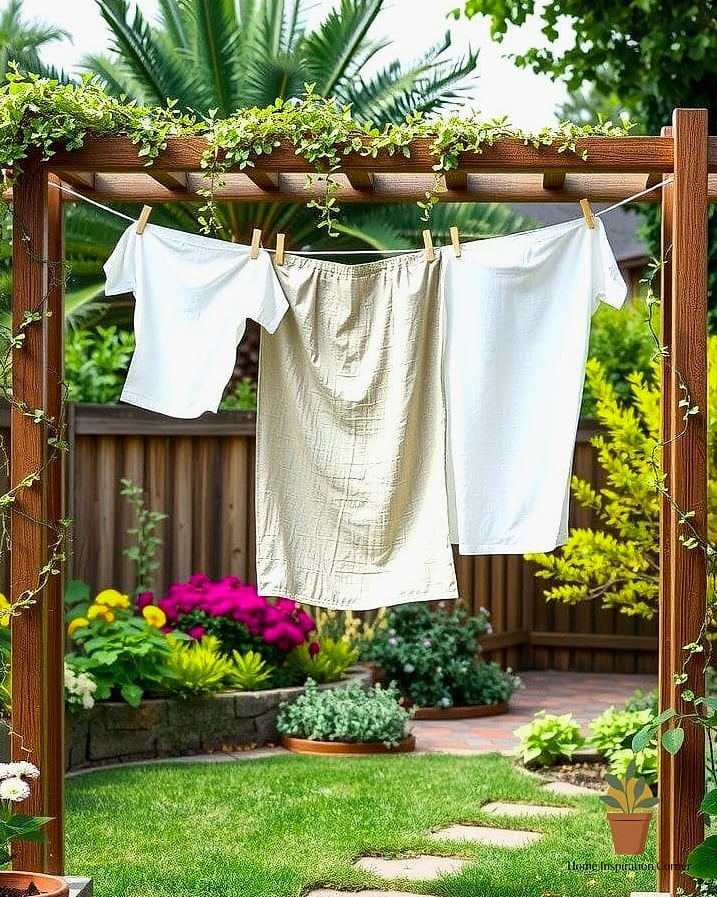
If you’ve got a shed, using its exterior wall as an anchor point for a retractable or fixed line is an easy way to add drying space without adding new structures. One end mounts to the shed, the other to a post or fence a few feet away.
This works particularly well for anyone who already stores laundry supplies, pins, or baskets in the shed, since everything stays in one zone. It also keeps the line out of the main lawn area, which is nice if you’ve got kids or pets running around.
Galvanized eye bolts anchored into the shed framing (not just the siding) will hold up much better under tension. It’s a low-cost add-on if the shed is already there and positioned with decent sun exposure.
Zigzag Line for Small Yards
When you don’t have a long straight run available, a zigzag configuration, where the line switches back and forth between multiple anchor points, packs a surprising amount of drying length into a compact area.
This is a smart pick for narrow side yards or small urban lots where a straight 20-foot line simply won’t fit. Using adjustable tensioners at each anchor point makes it easy to fine-tune sag and keep everything level.
It takes a little more planning to lay out than a single straight line, but once it’s set up, it functions just as well. It’s one of those ideas that proves you don’t need a huge yard to line-dry a full load.
Solar-Powered Drying Pergola with String Lights
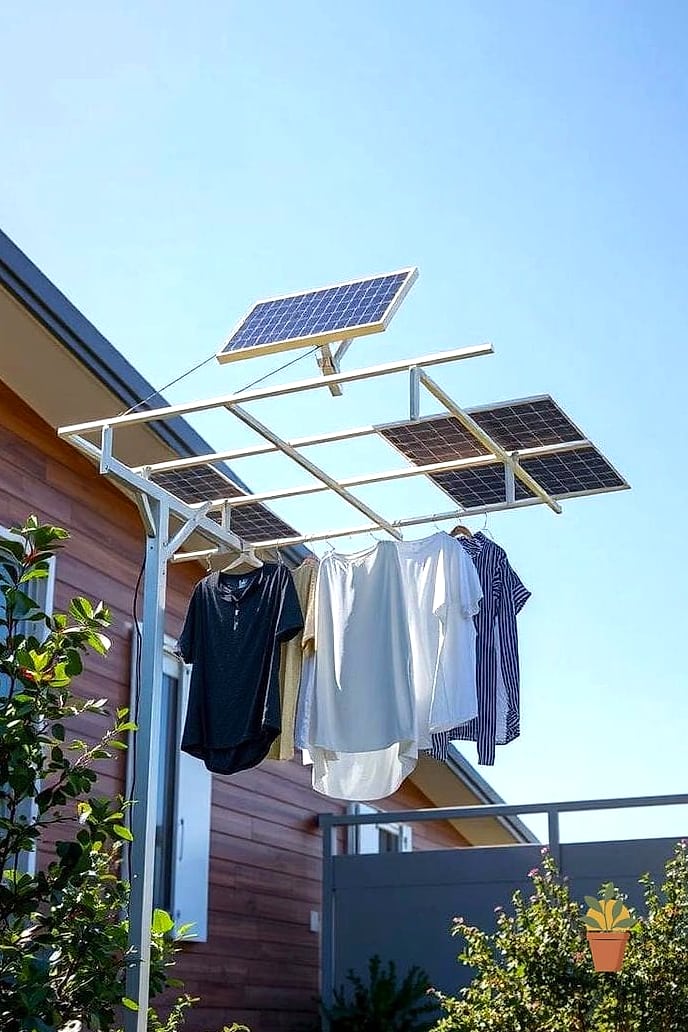
This one’s for anyone who wants their laundry area to double as an evening hangout spot. Combine a simple wooden frame or pergola-style structure with removable drying lines during the day, then swap in solar string lights for ambiance at night.
It works well over a patio or deck corner that gets good sun exposure but also sees use after dark. The lines can be strung on cup hooks so they’re easy to remove once laundry is dry, leaving just the lights and structure behind.
This is more of a weekend project than an afternoon one, but it’s a fun way to make a purely functional space feel a little more like an intentional part of your backyard design. Solar lights also mean no extra wiring or electrical costs to worry about.
Whatever your yard size or style, there’s a version of an outdoor clothesline that fits your space and your routine. Start with what matches your climate and daily laundry load, and don’t be afraid to mix ideas, like pairing a privacy screen with a pulley line, to get something that works specifically for you.