
23 Creative Dapur Outdoor Ideas You Haven’t Seen Before
- Open-Air Kitchen Under a Bamboo Pergola
- Concrete Countertop Island with Built-In Charcoal Grill
- Vertical Herb Wall Behind the Stove
- Reclaimed Teak Wood Cabinetry
- Sunken Cooking Pit with Surrounding Bench Seating
- Black Steel Frame with Glass Panel Walls
- Terracotta Tile Flooring with Herringbone Pattern
- Floating Wood Shelving for Open Storage
- Brick Oven Built Into a Stone Feature Wall
- Corrugated Metal Roof with Exposed Wood Beams
- Modular Kitchen Cart System Instead of Fixed Islands
- Rammed Earth Walls as a Backdrop
- Hanging Pot Rack Over the Cooking Station
- Two-Tone Cabinetry in Warm Wood and Matte Black
- Pebble Stone Flooring for a Spa-Like Feel
- Built-In Smoker Alongside a Traditional Grill
- Woven Rattan Ceiling Panels
- Freestanding Fireplace as a Kitchen Divider
- Mosaic Tile Backsplash in Deep Blue Tones
- Sliding Barn Doors for Weather Protection
- Dedicated Wet and Dry Cooking Zones
- Louvered Wood Screens for Privacy and Airflow
- Integrated Herb and Spice Drying Rack
23 Creative Dapur Outdoor Ideas You Haven’t Seen Before
An outdoor kitchen, or dapur outdoor as it’s known across Indonesia and Southeast Asia, isn’t just a trend anymore. It’s become one of the smartest ways to expand your living space without touching your home’s footprint. If you’ve been scrolling through the same recycled Pinterest boards full of generic grill islands, this list is going to feel different. These are 23 ideas that actually push the concept further, from clever material choices to layouts you probably haven’t considered yet.
Open-Air Kitchen Under a Bamboo Pergola
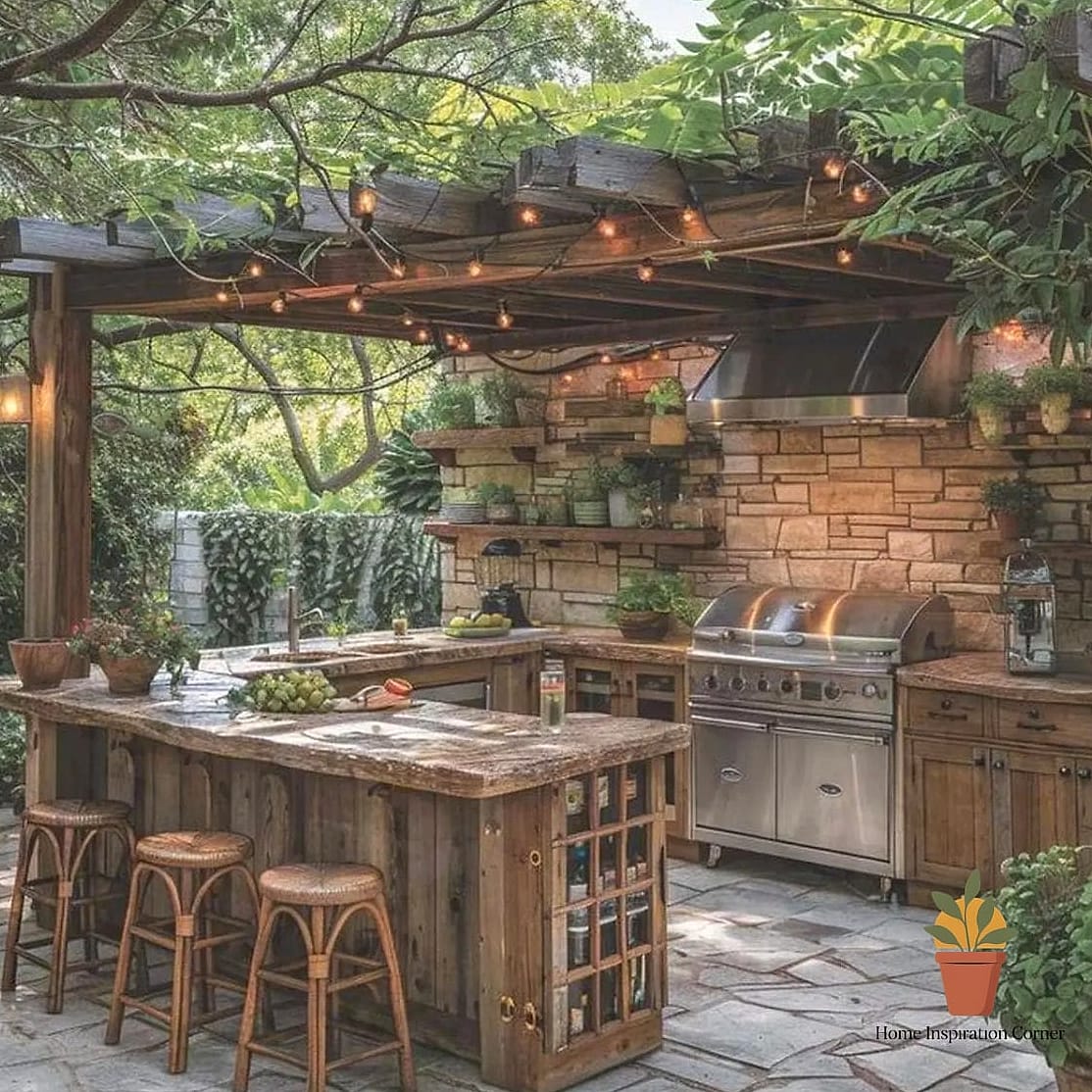
There’s something about cooking under filtered natural light that makes even a simple stir-fry feel like an occasion. A bamboo pergola gives you shade without fully closing off the space, which keeps smoke and heat from lingering. It works beautifully in tropical climates where you want airflow more than insulation.
Pair it with woven rattan pendant lights and you’ve got texture layered on texture without anything feeling overdone. Bamboo needs occasional treatment against pests and moisture, so budget for maintenance every couple of years. It’s a DIY-friendly option if you’re comfortable with basic carpentry.
Concrete Countertop Island with Built-In Charcoal Grill
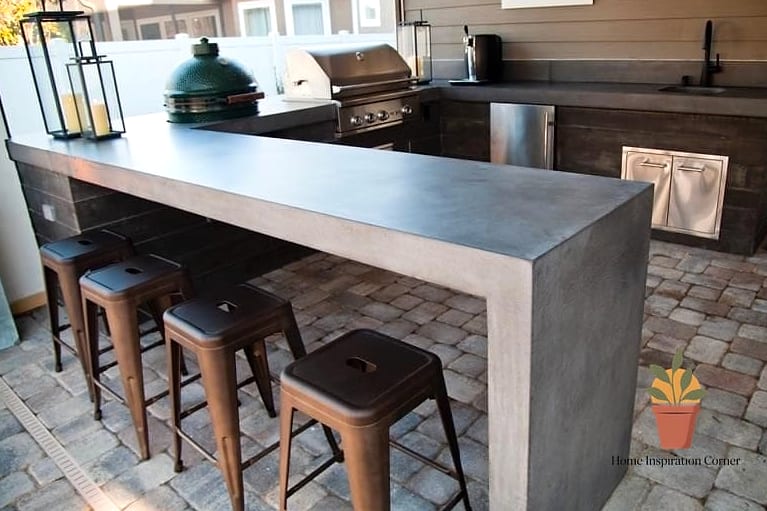
Poured concrete has this raw, architectural quality that plays really well against greenery. A custom-poured island lets you build in a charcoal grill exactly where you want it, rather than working around a pre-made unit.
Go with a matte sealed finish so it doesn’t scream “outdoor patio kit.” Concrete is durable and low-maintenance once sealed, though it does need resealing every year or two to prevent staining. This one’s better left to a contractor unless you’ve poured concrete before.
Vertical Herb Wall Behind the Stove
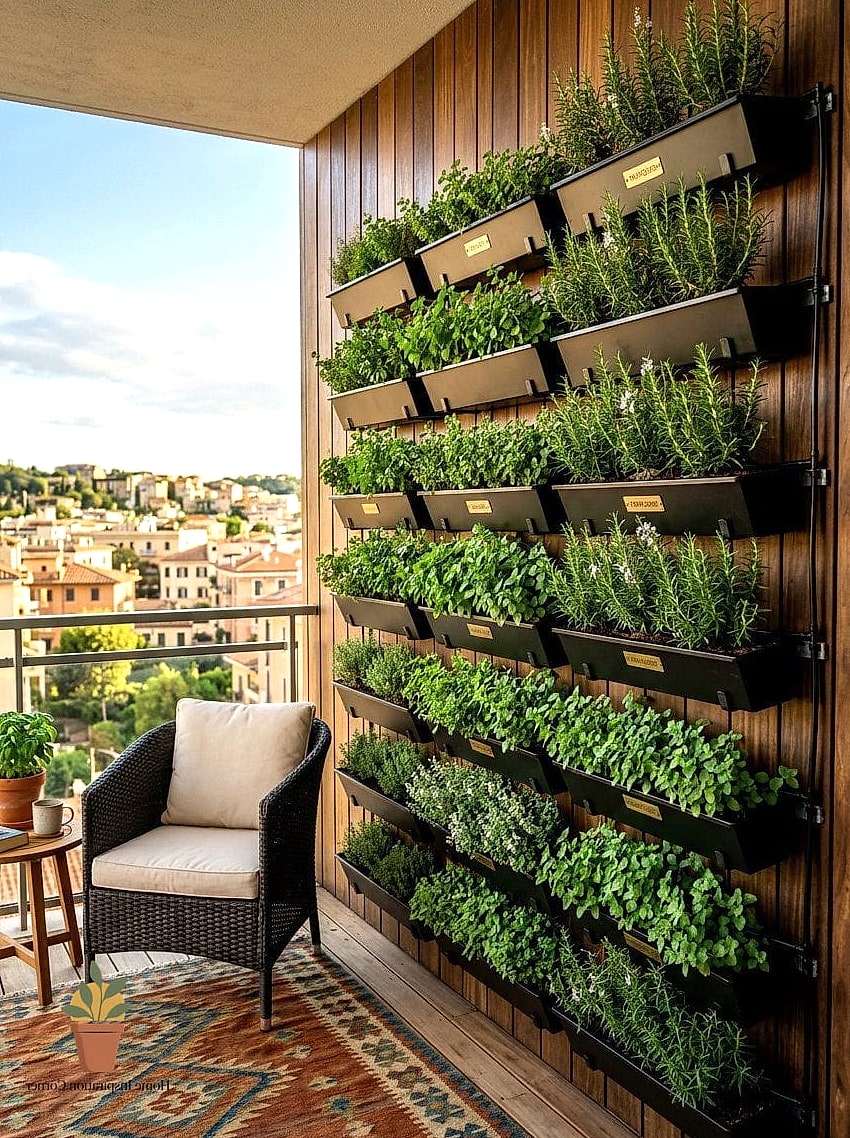
Instead of potted herbs cluttering your counter, mount a vertical planting wall right behind your cooking area. Reach over, snip some basil or lemongrass, and toss it straight into the pan.
This setup is genuinely practical for anyone who cooks a lot of Southeast Asian dishes where fresh herbs matter. Use galvanized steel planters for longevity, and make sure there’s a drip tray so water doesn’t pool near electrical outlets.
Reclaimed Teak Wood Cabinetry
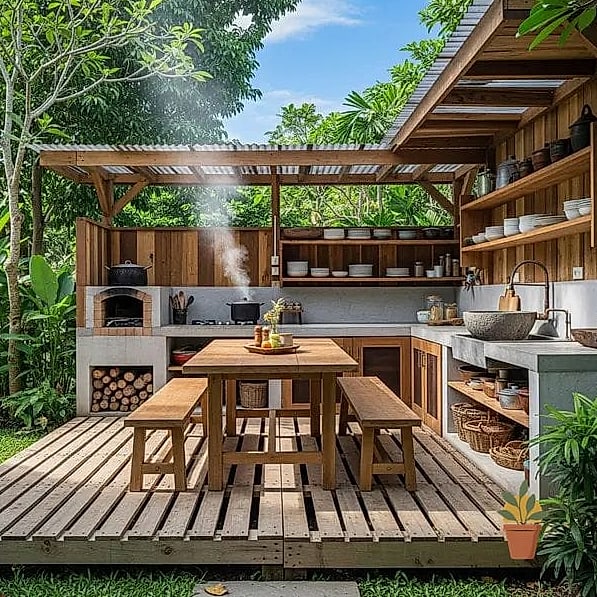
Reclaimed teak has a weathered, storied look that new wood just can’t fake. Using it for your outdoor cabinetry gives the whole dapur outdoor a sense of permanence, like it’s been there for years.
Teak naturally resists rot and insects, which makes it one of the better wood choices for humid, exposed environments. It’ll silver over time unless you oil it regularly, and honestly, a lot of homeowners love that patina.
Sunken Cooking Pit with Surrounding Bench Seating
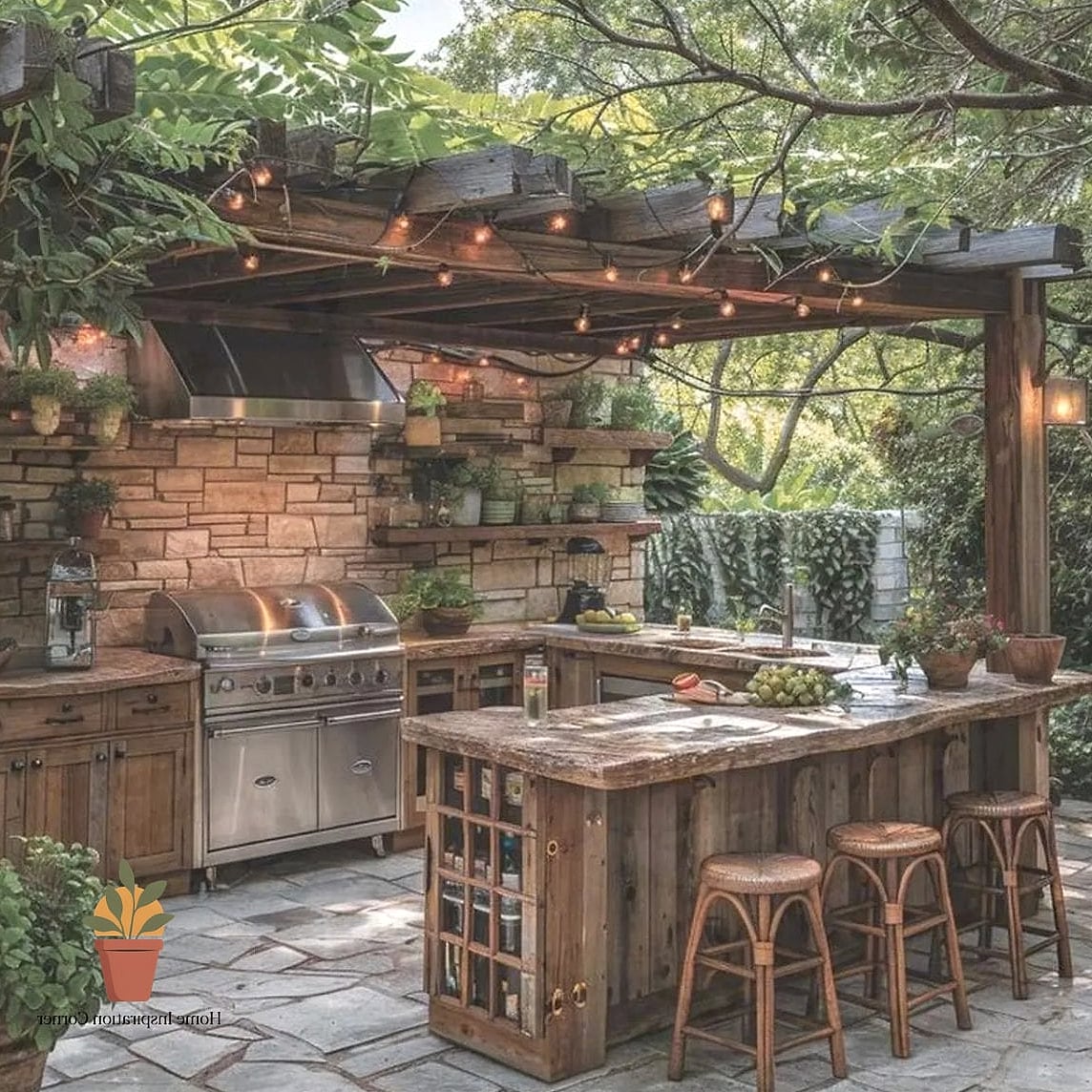
This is a layout you don’t see often outside of traditional kampung-style kitchens. A slightly sunken cooking area, lined with stone or brick, creates a natural gathering point with built-in bench seating around the perimeter.
It’s ideal for larger yards where you want the kitchen to double as a social hub. The sunken design also helps contain smoke and heat somewhat, though you’ll still want decent ventilation above.
Black Steel Frame with Glass Panel Walls
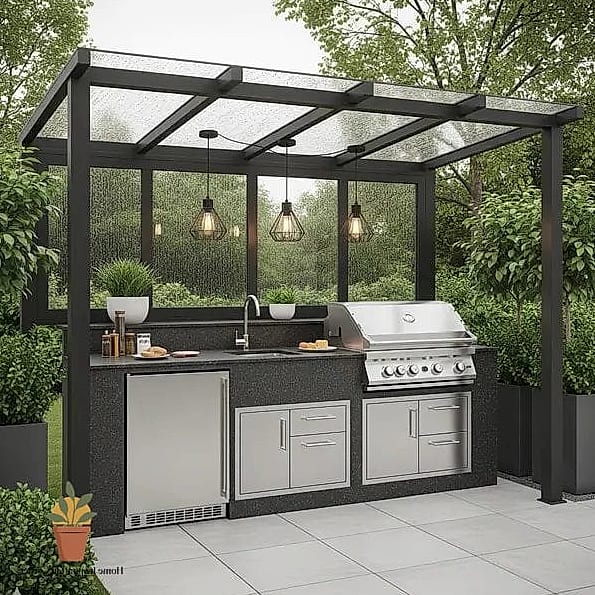
If you want weather protection without losing that open-air feeling, black steel framing with glass panels is a striking option. It reads modern and industrial, especially against a lush garden backdrop.
Glass panels can slide or fold open on warmer days and close up during rain, giving you flexibility most fully open dapur outdoor setups don’t have. Keep in mind glass requires regular cleaning to avoid water spots and smudges from cooking splatter.
Terracotta Tile Flooring with Herringbone Pattern
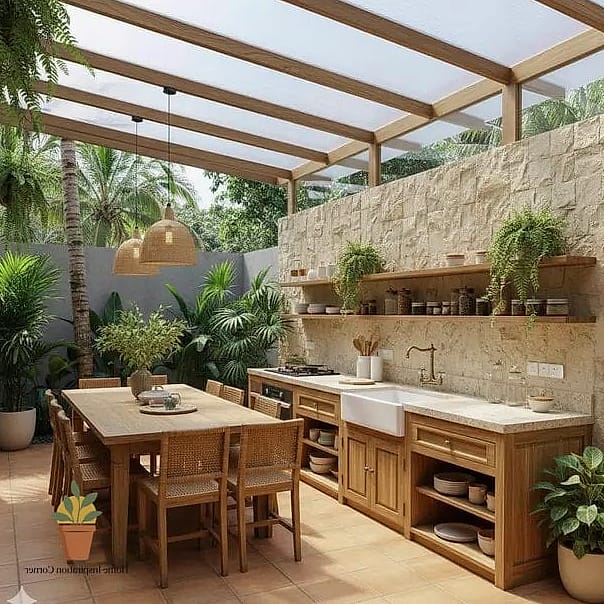
Terracotta tiles laid in a herringbone pattern bring warmth underfoot and a distinctly earthy, Mediterranean-meets-tropical vibe. The pattern itself adds visual movement that a straight grid layout just doesn’t offer.
Terracotta is porous, so sealing it properly is non-negotiable in an outdoor setting exposed to rain and spills. It’s a moderate DIY project if you’ve tiled before, otherwise it’s worth hiring a professional for the cuts around edges.
Floating Wood Shelving for Open Storage
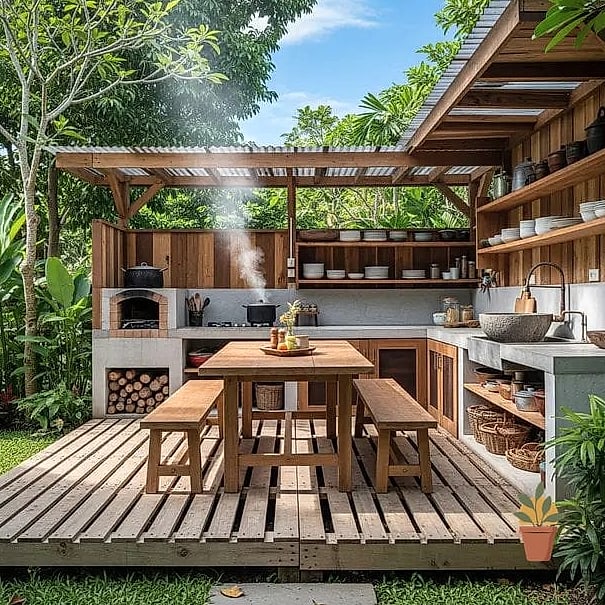
Skip the closed cabinets entirely in one section and go with floating wood shelves for your everyday cookware. It keeps things accessible and gives the space a lived-in, functional feel rather than a showroom look.
Store items you use constantly, like your wok or cutting boards, and rotate seasonal pieces indoors. Treated hardwood or teak holds up best against humidity here, and it’s genuinely one of the more budget-friendly upgrades on this list.
Brick Oven Built Into a Stone Feature Wall
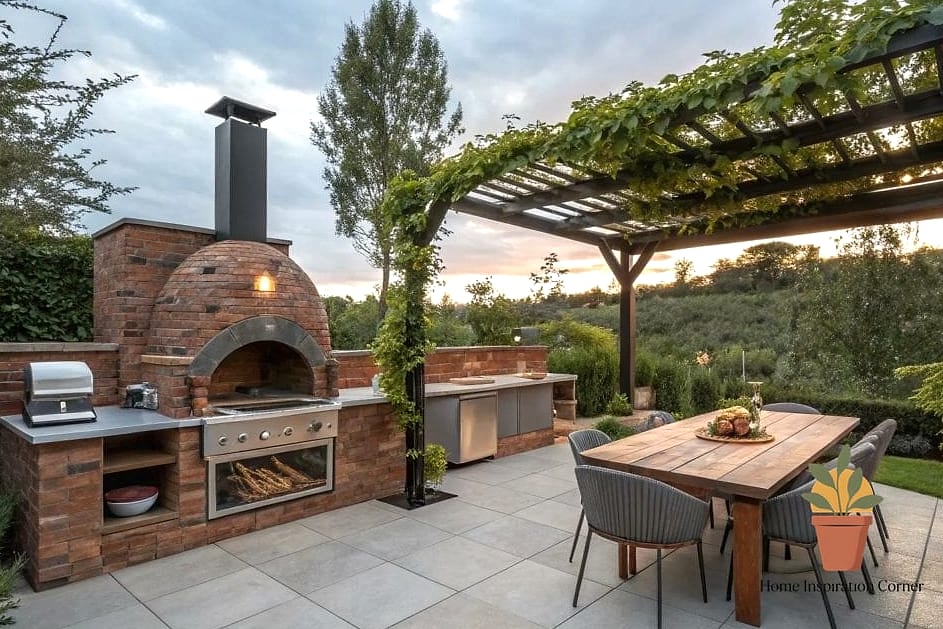
A wood-fired brick oven integrated into a stacked stone wall turns your dapur outdoor into a legitimate pizza-and-bread station. It’s a bigger investment, but it becomes the anchor piece everyone gathers around.
The stone wall also doubles as a heat buffer, protecting nearby seating from direct radiant heat. This is a project for an experienced mason since improper construction can crack under repeated heating cycles.
Corrugated Metal Roof with Exposed Wood Beams
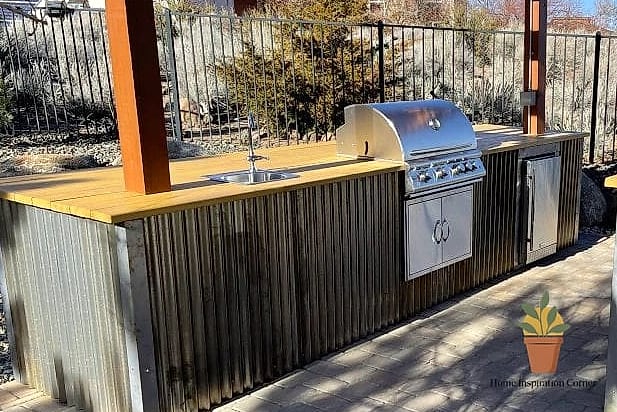
Corrugated metal roofing paired with exposed wood beams gives an industrial-farmhouse feel that’s both practical and visually interesting. The metal handles heavy rain well, which matters a lot if you’re in a monsoon-prone area.
Exposed beams add texture overhead and can support hanging plants or string lights. It’s a more affordable roofing option compared to tile, and installation is relatively straightforward for a contractor familiar with outdoor structures.
Modular Kitchen Cart System Instead of Fixed Islands
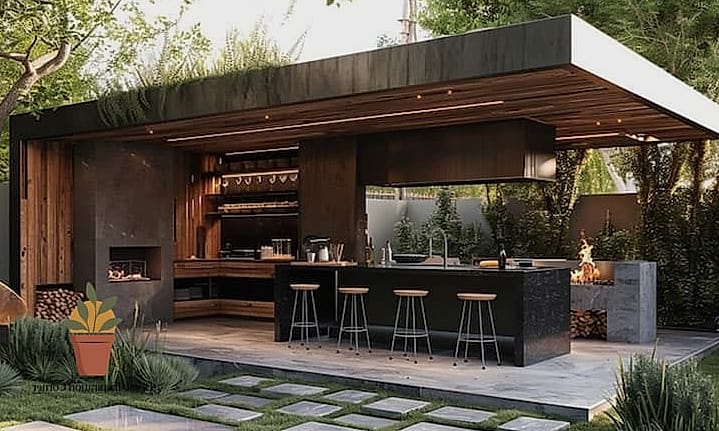
Not every yard has room for a permanent island, and that’s fine. A modular cart system with a butcher block top lets you reconfigure the layout depending on the occasion, then tuck everything against a wall when you’re done.
This is one of the most renter-friendly and budget-conscious ideas here. Look for carts with locking wheels and weatherproof finishes so they can handle being left outside semi-permanently.
Rammed Earth Walls as a Backdrop
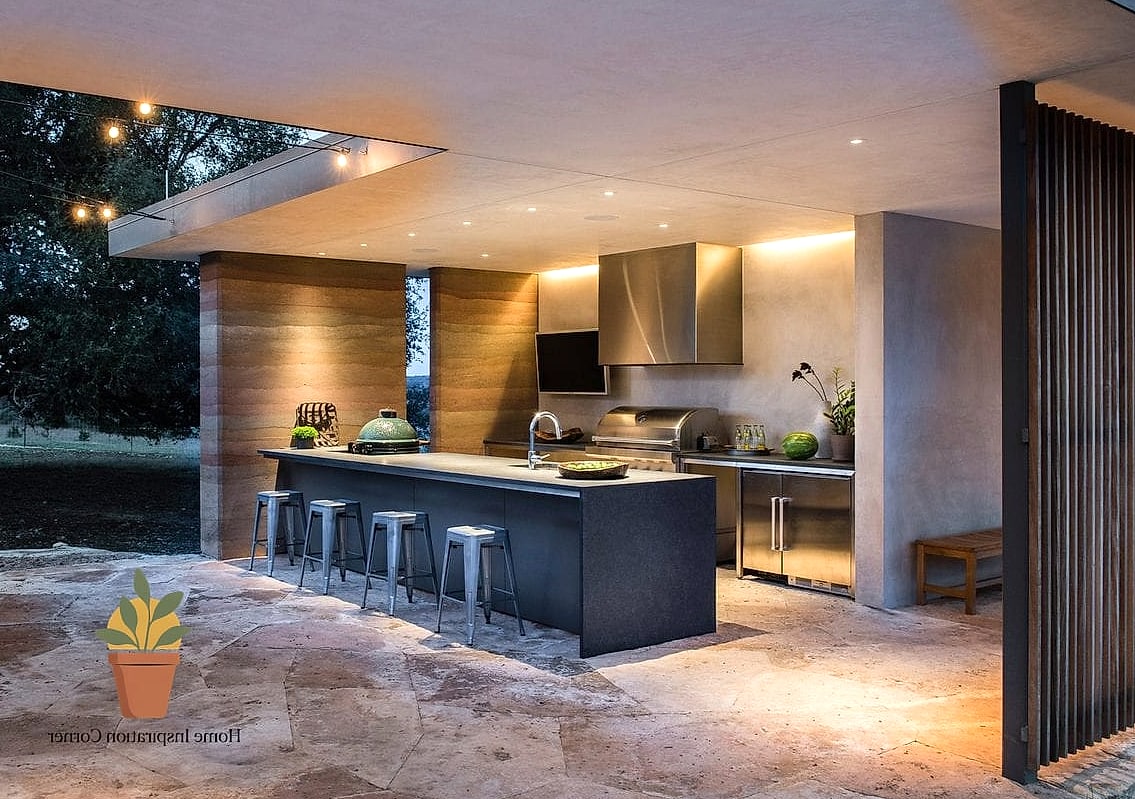
Rammed earth construction has this beautiful striated, sandstone-like appearance that no paint job can replicate. Using it as a backdrop wall for your outdoor kitchen creates natural temperature regulation, staying cooler during hot afternoons.
It’s a specialized building technique, so you’ll need a contractor with specific experience. The upfront cost is higher, but the visual payoff and thermal benefits make it worth considering for a statement dapur outdoor.
Hanging Pot Rack Over the Cooking Station
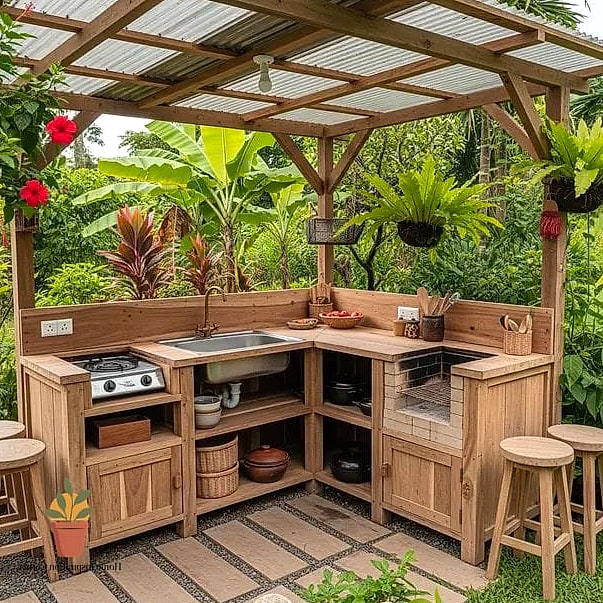
A hanging rack suspended above your cooktop keeps pots and pans within arm’s reach while freeing up cabinet space below. Wrought iron or blackened steel racks hold up well outdoors and add a bit of rustic charm.
This works especially well in smaller footprints where every inch of counter and cabinet space counts. Just make sure it’s mounted securely into a beam or bracket rated for the weight.
Two-Tone Cabinetry in Warm Wood and Matte Black
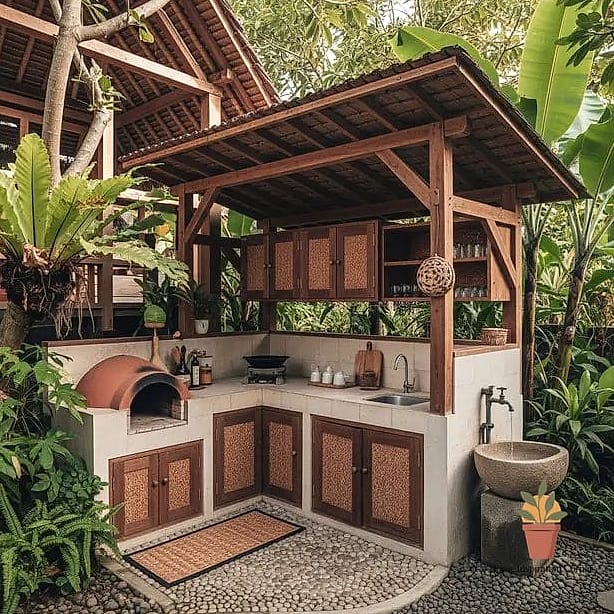
Mixing warm wood tones with matte black cabinet fronts creates contrast that feels intentional rather than mismatched. It’s a combination that reads current without leaning into any one fleeting trend.
Use the black sections for lower cabinets and wood for uppers or open shelving to balance visual weight. Matte finishes hide fingerprints and water spots better than glossy ones, which matters when you’re cooking outside.
Pebble Stone Flooring for a Spa-Like Feel
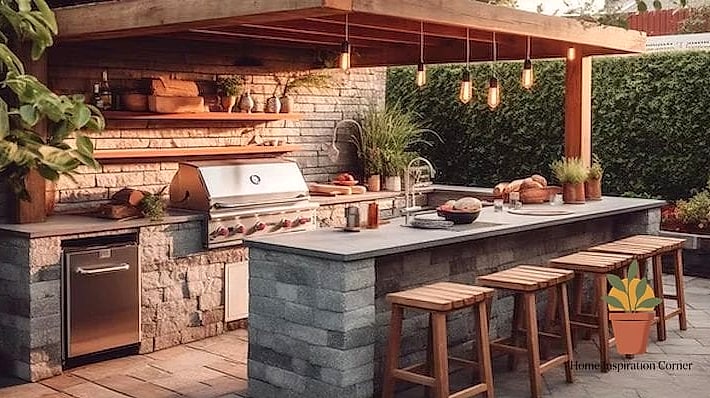
River pebble flooring, set in mortar, gives your dapur outdoor a tactile, almost spa-like quality underfoot. It’s unexpected in a cooking space, but it works particularly well in a zone that transitions into a lounge or garden path.
It’s naturally slip-resistant when wet, which is a genuine practical bonus near a cooking and cleanup area. Cleaning requires a bit more attention since debris can settle into the gaps between stones.
Built-In Smoker Alongside a Traditional Grill
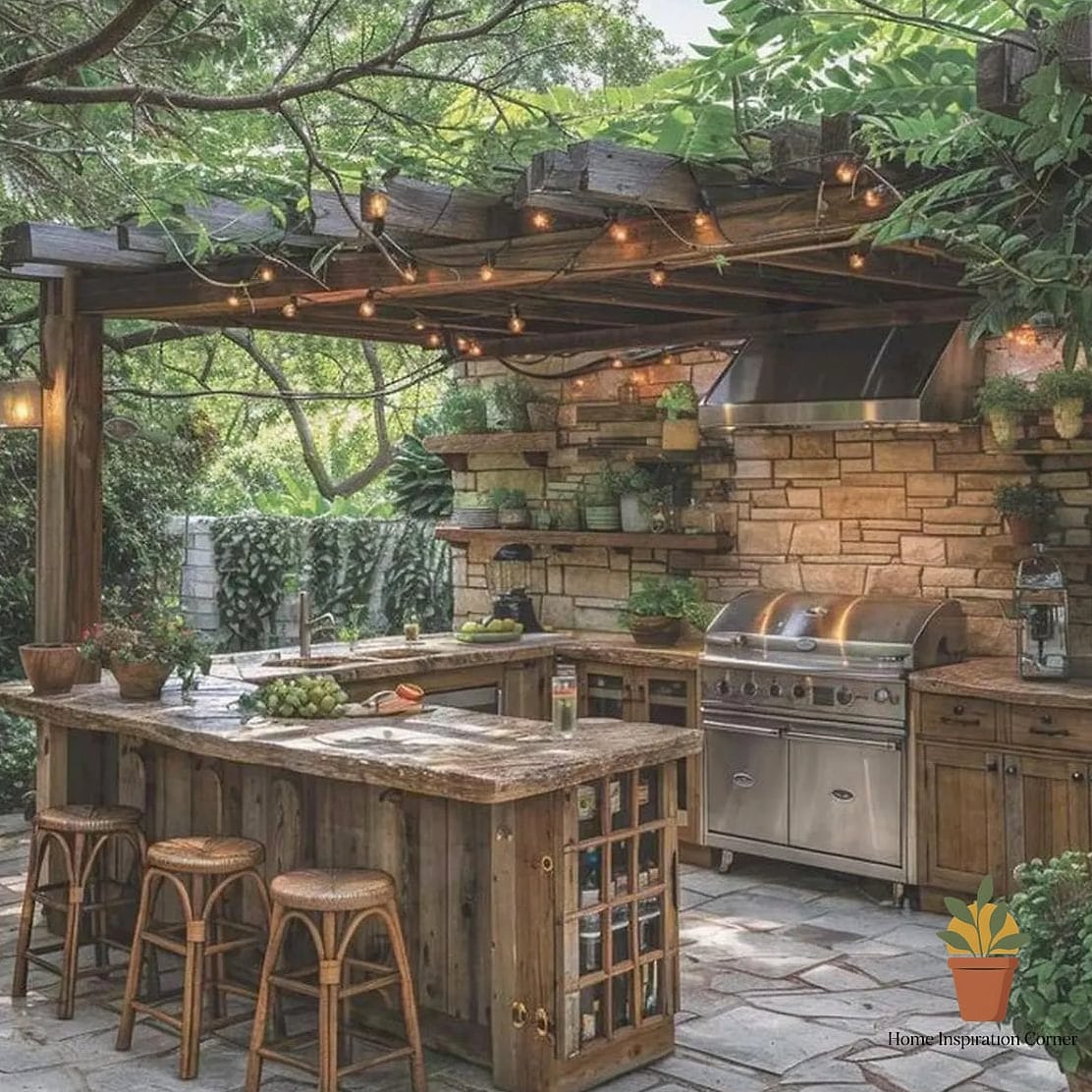
Pairing a built-in smoker with a standard grill gives you range you can’t get from a single appliance. It’s a setup that serious backyard cooks will appreciate, letting you slow-smoke ribs one weekend and quick-grill satay the next.
Position the smoker downwind of your seating area so smoke doesn’t constantly drift toward guests. This is a splurge-worthy addition, but for anyone who genuinely cooks outdoors often, it earns its keep.
Woven Rattan Ceiling Panels
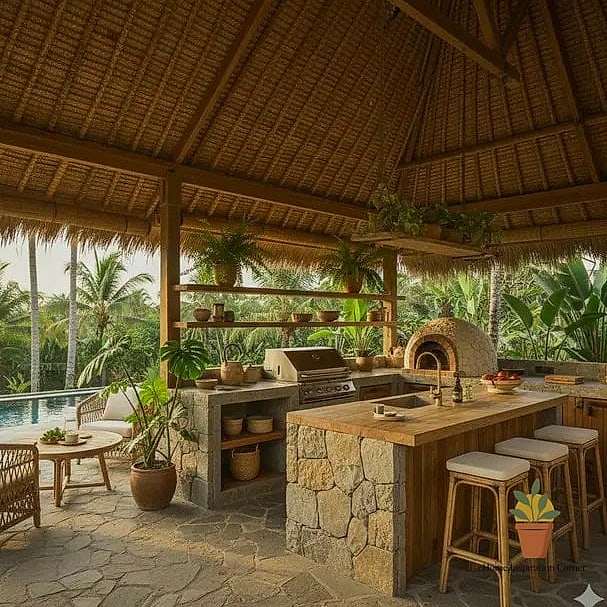
Instead of a flat plaster or wood ceiling, woven rattan panels add texture and softness overhead. They diffuse light beautifully, especially with a pendant fixture tucked behind the weave.
Rattan does best in covered, shaded areas where it’s protected from direct rain. It’s a relatively affordable way to add a handcrafted, artisanal touch that plain drywall just can’t match.
Freestanding Fireplace as a Kitchen Divider
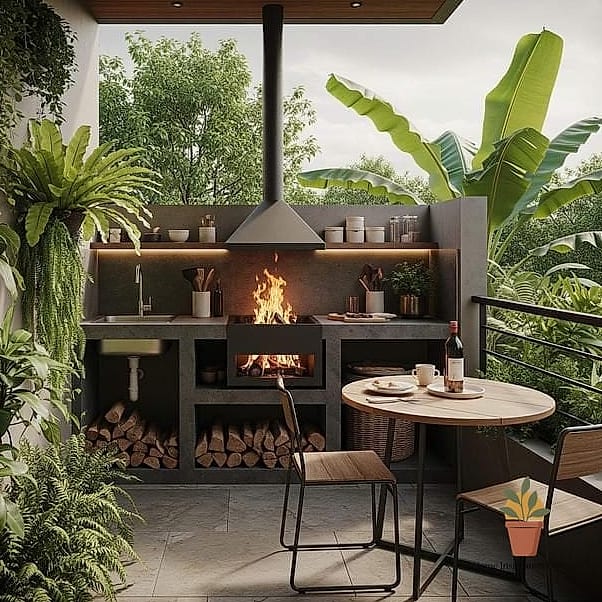
Using a freestanding fireplace to separate the cooking zone from a lounge area gives the space clear function without walls. It also means you can keep cooking well into cooler evenings, which honestly extends how much you’ll actually use the space.
Stone or brick-clad fireplaces hold heat longer, while steel options heat up and cool down faster. Either way, it becomes a natural focal point that pulls double duty as both divider and gathering spot.
Mosaic Tile Backsplash in Deep Blue Tones
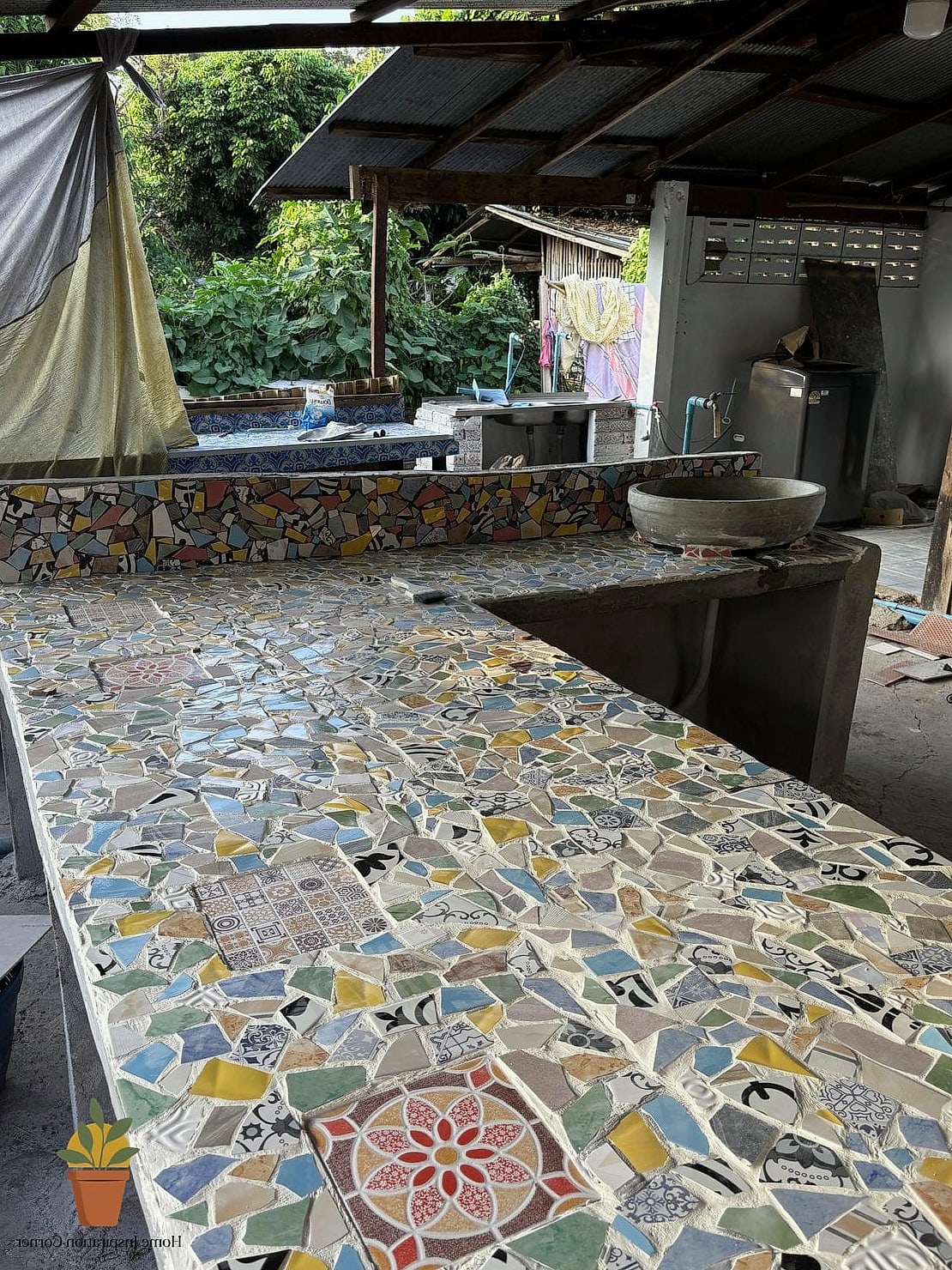
A deep blue mosaic backsplash brings a jolt of color against otherwise neutral wood and stone finishes. It’s a detail that photographs well and gives the space personality without overwhelming the palette.
Choose glazed porcelain or ceramic mosaics rated for exterior use so they don’t fade under direct sun exposure. Grout maintenance is the main upkeep here, and a sealed grout line will save you headaches down the road.
Sliding Barn Doors for Weather Protection
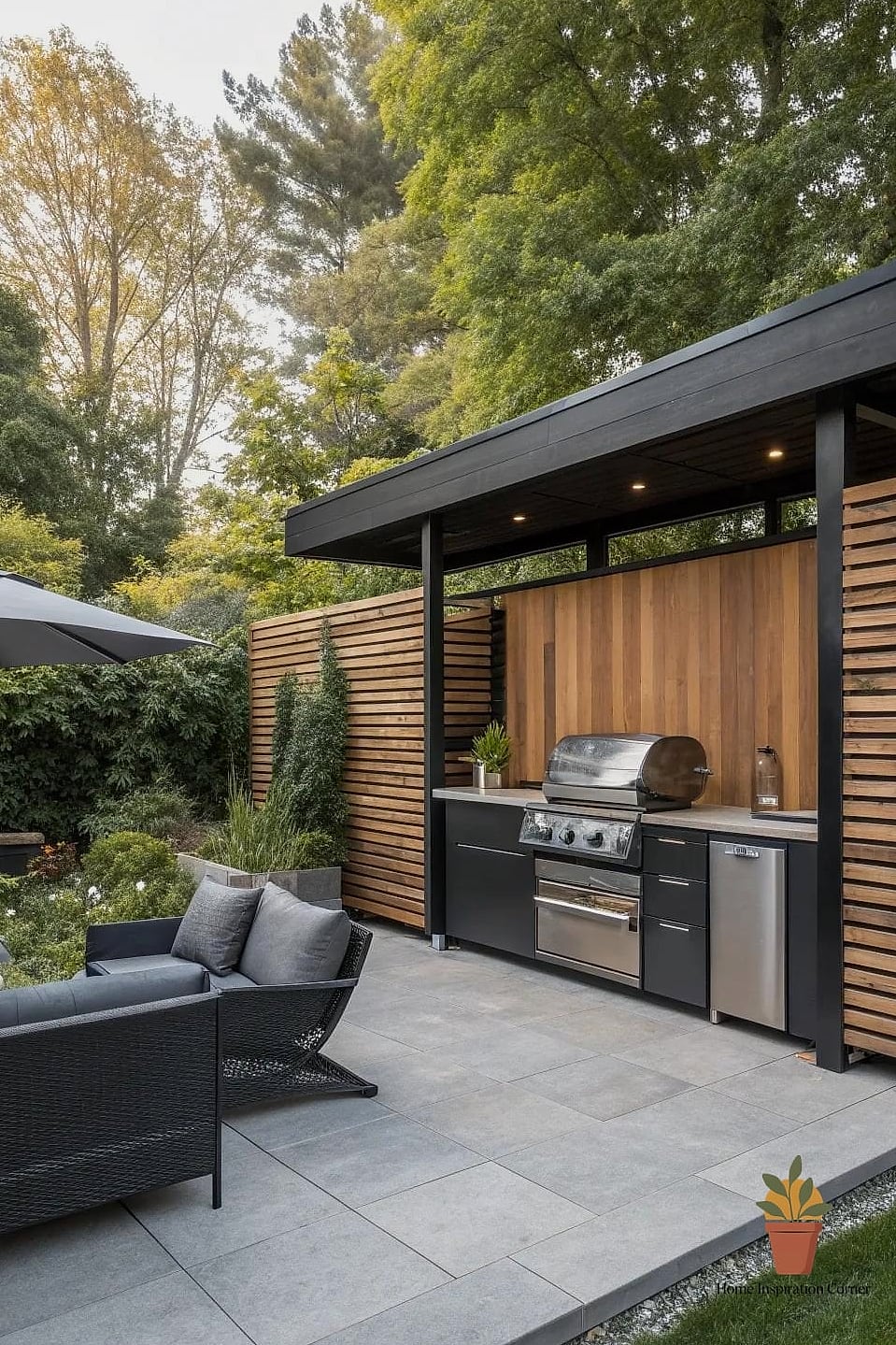
Sliding barn doors, either wood or metal-framed with glass inserts, let you fully close off your dapur outdoor during storms or hazy days. When open, they tuck neatly to the side without taking up floor space the way swinging doors would.
This is a practical solution if you live somewhere with unpredictable weather but still want that indoor-outdoor flow most of the year. Track hardware needs occasional lubrication to keep the doors gliding smoothly.
Dedicated Wet and Dry Cooking Zones
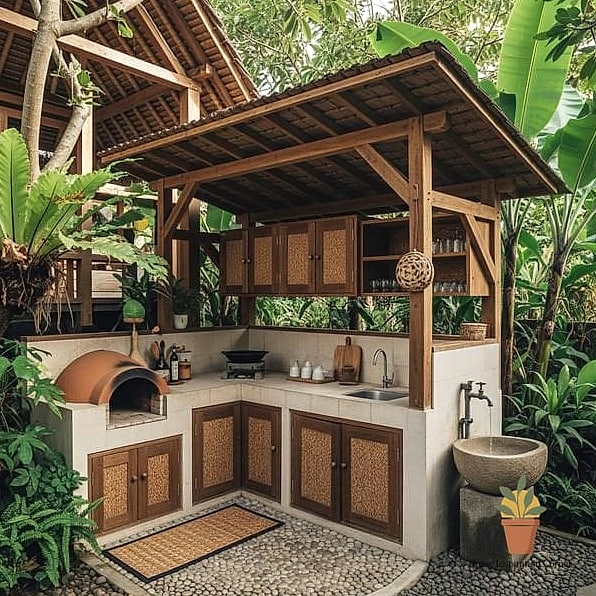
Borrowed from traditional Southeast Asian kitchen layouts, splitting the space into a wet zone for washing and prep and a dry zone for grilling or frying keeps grease and water separate. It’s a layout choice more than a style choice, but it genuinely changes how usable the kitchen feels day to day.
The wet zone benefits from tile or concrete flooring with a floor drain, while the dry zone can handle wood or more decorative finishes. It’s a smart, family-friendly setup for households that cook daily rather than just for weekend gatherings.
Louvered Wood Screens for Privacy and Airflow
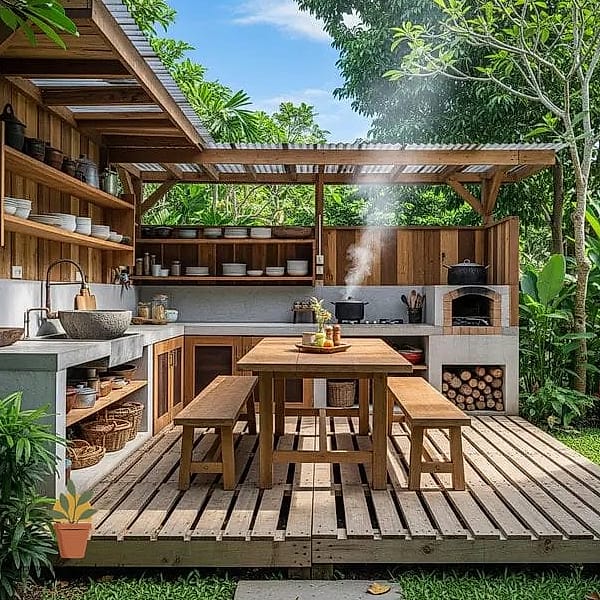
Louvered screens along one or two sides of the kitchen let air pass through while blocking direct sightlines from neighbors or the street. They strike a nice balance between openness and privacy that solid walls don’t offer.
Adjustable louvers give you even more control, letting you angle them based on sun position throughout the day. Cedar or treated teak are solid choices here since both resist warping in humid conditions.
Integrated Herb and Spice Drying Rack
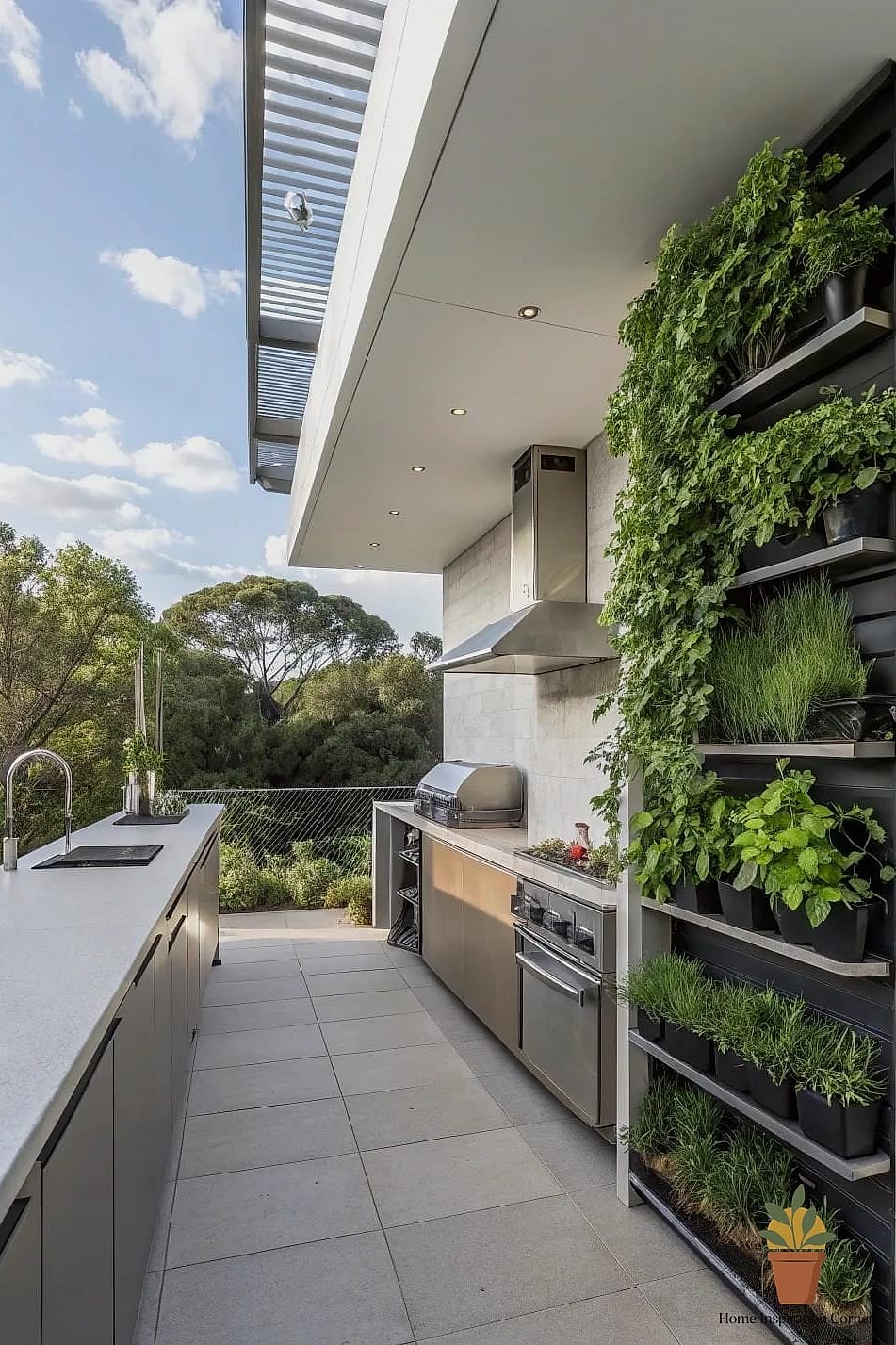
A small built-in rack near a sunny corner, designed specifically for air-drying chilies, herbs, or spices, is a detail that feels genuinely functional rather than decorative. It’s a nod to how outdoor kitchens have traditionally worked in this region, long before “outdoor kitchen” was a design category.
Use mesh trays or hanging bundles depending on what you’re drying, and position it somewhere with good airflow but out of direct rain. It’s a low-cost addition that adds real utility and a bit of old-world charm to a modern dapur outdoor.
Building a dapur outdoor doesn’t have to mean copying the same island-and-grill combo you’ve seen a hundred times. Mix a couple of these ideas, lean into materials that suit your climate, and let the space reflect how you actually cook and gather. The best outdoor kitchens are the ones that get used constantly, not just admired from a distance.