
21 Outdoor Tree Lighting Tips From Top Interior Designers
- Start With Uplighting for Drama
- Use Warm White Instead of Cool White
- Try Silhouette Lighting Against a Wall or Fence
- Wrap String Lights Around the Trunk, Not Just the Branches
- Layer Multiple Lighting Techniques on One Tree
- Choose Micro Lights for a Subtle, Natural Glow
- Highlight Multi-Trunk Trees From Multiple Angles
- Use Moonlighting for a Softer, Downward Effect
- Match Light Color Temperature Across Your Whole Yard
- Consider Color-Changing Lights for Special Occasions
- Light the Canopy From Below With Well Lights
- Use Net Lights for Full, Even Coverage on Shrubby Trees
- Add Lighting to Just One Statement Tree Instead of All of Them
- Use Spotlights to Frame a Tree From the Ground
- Incorporate Lighting Into Pathway Design Near Trees
- Choose Weatherproof, Rated Fixtures for Longevity
- Use Timers or Smart Plugs to Automate Your Lighting
- Highlight Bare Branches in Winter for Sculptural Interest
- Use Lower Wattage Fixtures for Small or Young Trees
- Combine Tree Lighting With Ground-Level Landscape Beds
- Hire a Landscape Lighting Designer for Large or Mature Trees
21 Outdoor Tree Lighting Tips From Top Interior Designers
Outdoor tree lighting is one of those details that quietly changes the entire feel of a yard. It’s not just for the holidays anymore, and honestly, once you see a well-lit tree glowing at dusk, it’s hard to go back to a plain dark yard. I’ve pulled together ideas from designers who treat trees like living architecture, and there’s a lot more to it than wrapping a strand of lights and calling it a day.
Whether you’ve got a single statement oak or a whole row of trees lining your driveway, these tips will help you light them in a way that actually looks intentional.
Start With Uplighting for Drama
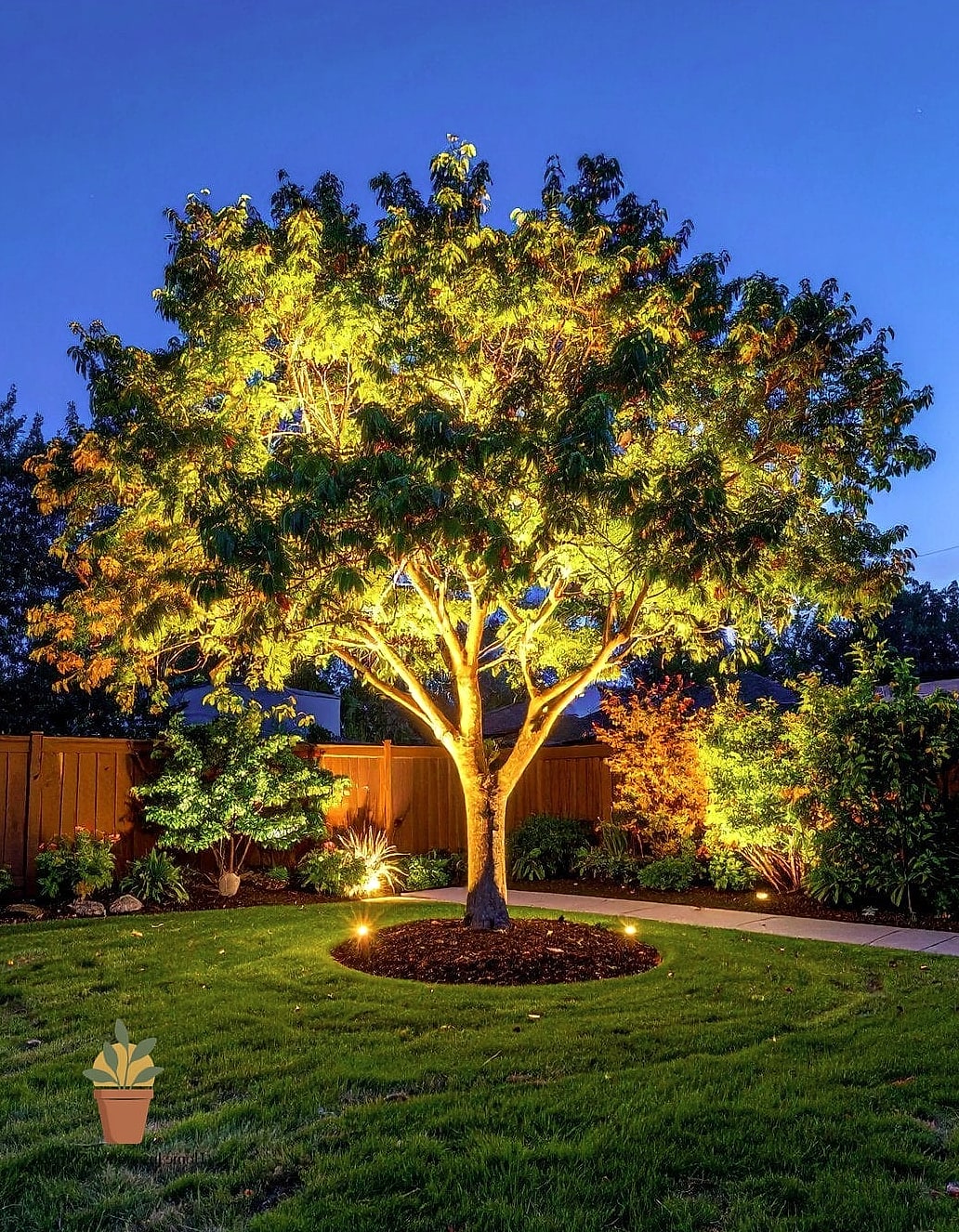
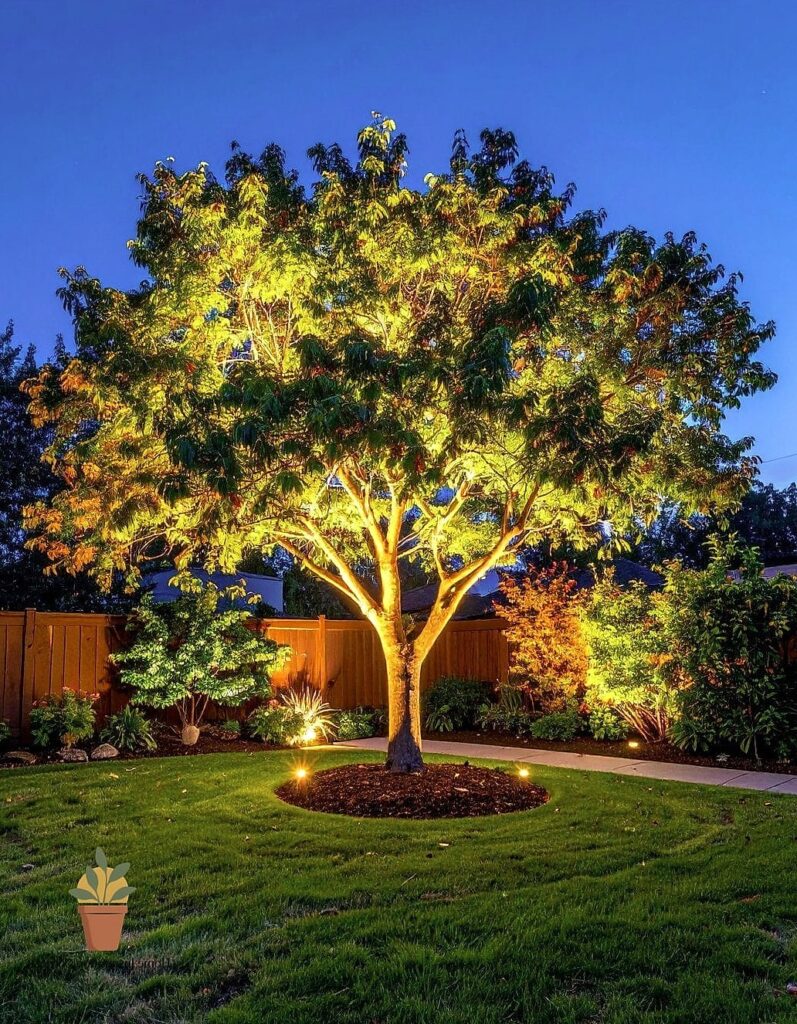
Uplighting is when you place fixtures at the base of a tree pointing upward into the canopy. Designers love this technique because it mimics moonlight filtering through branches, which reads as elegant rather than decorative.
It works especially well on trees with interesting bark texture or sculptural branch structure, since the light casts shadows that highlight those details. Budget-friendly solar spike lights work fine for smaller trees, while larger specimens usually need a low-voltage wired system for real punch.
Use Warm White Instead of Cool White
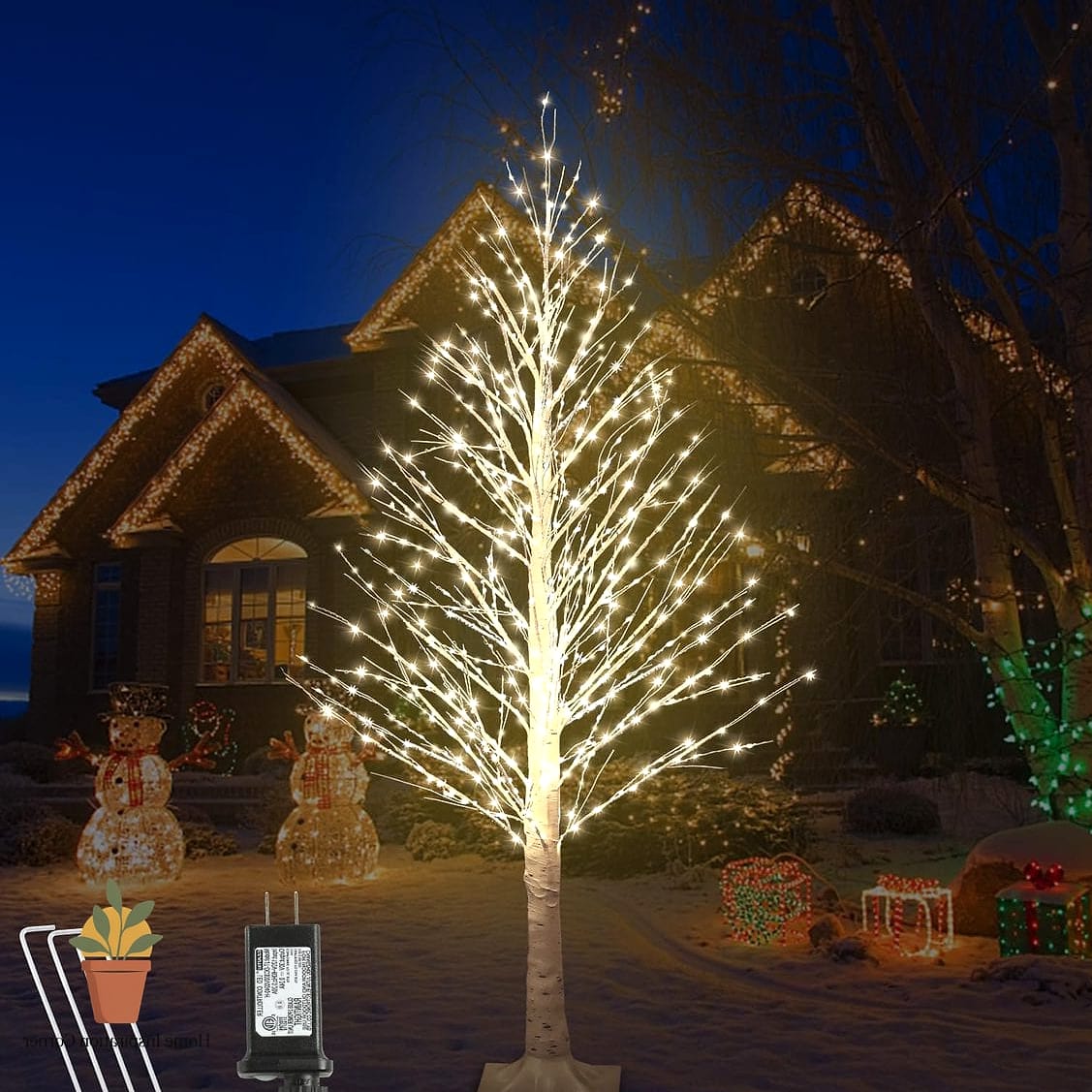
This one comes up constantly. Cool white light tends to look sterile and almost clinical against natural bark and leaves. Warm white, somewhere in the 2700K to 3000K range, mimics candlelight and blends into a landscape instead of fighting it.
Designers say this single swap is often the difference between a yard that looks staged and one that feels lived-in and inviting.
Try Silhouette Lighting Against a Wall or Fence
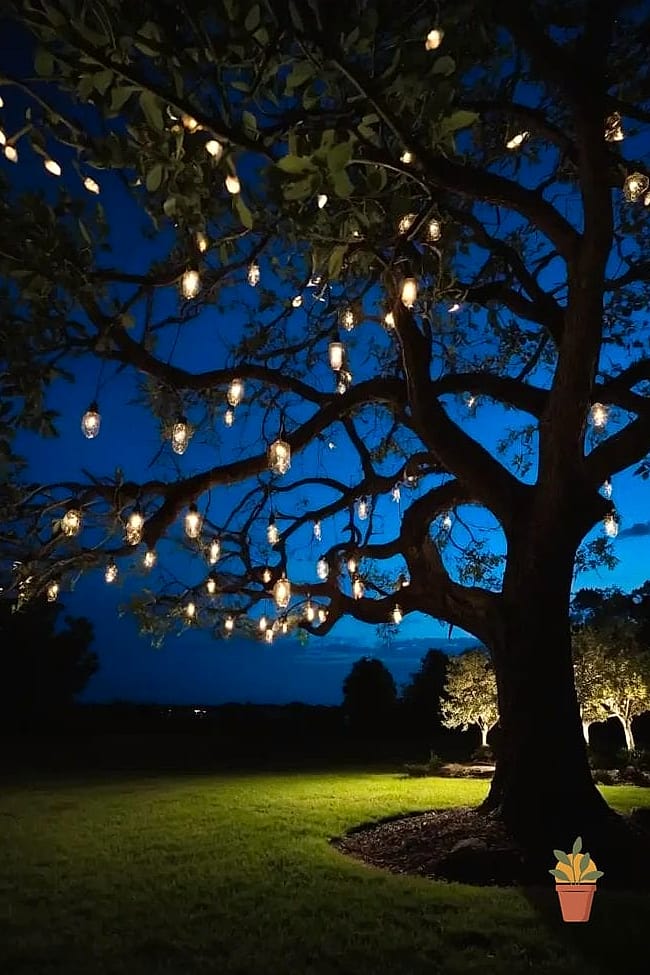
If your tree sits near a light-colored wall, fence, or the side of your house, place a fixture behind the trunk pointing toward that surface. The tree becomes a dramatic dark silhouette against a glowing backdrop.
This technique works particularly well for trees with distinct, twisting shapes, like Japanese maples or crepe myrtles. It’s a favorite for entryways because it creates visual interest without a ton of fixtures.
Wrap String Lights Around the Trunk, Not Just the Branches
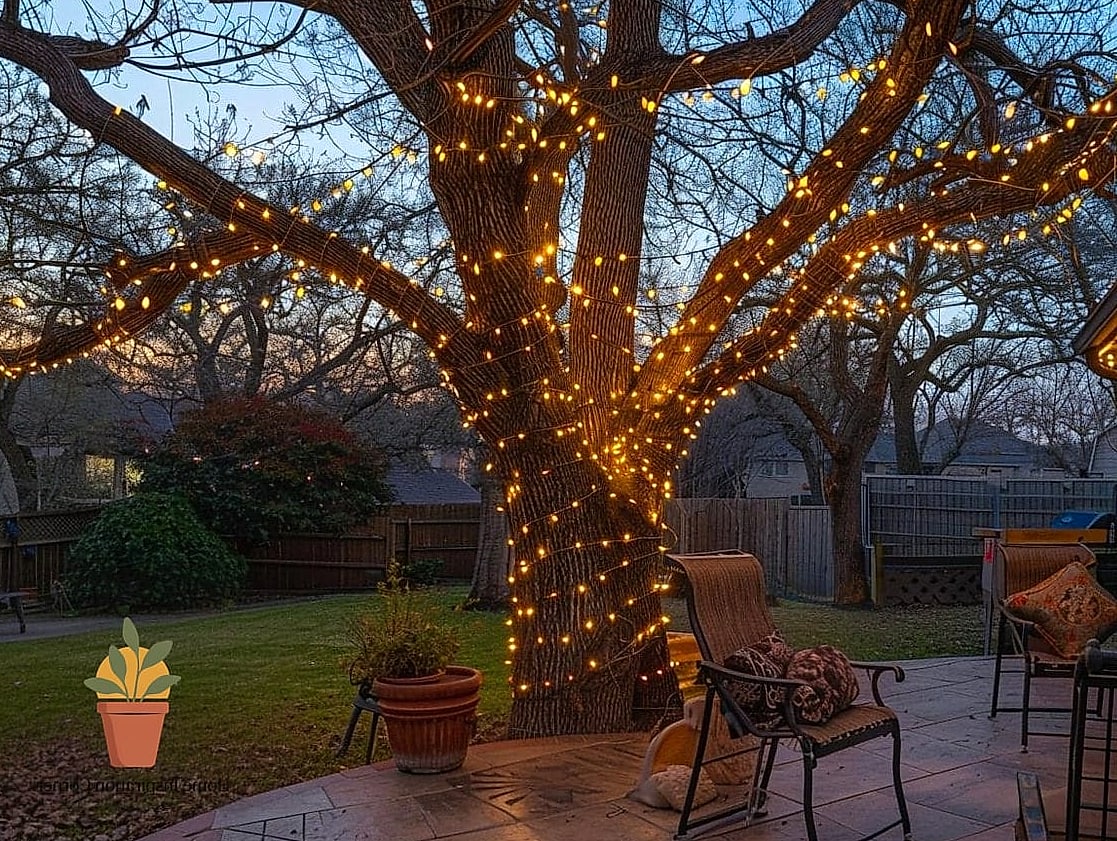
Most people default to wrapping lights only in the canopy, but wrapping the trunk itself adds a layer of warmth that’s easy to miss. Spiral the lights loosely up the trunk before moving into the branches for a fuller, more layered look.
Just don’t wrap too tightly. Trees grow, and lights left on too long or cinched too close can actually damage bark over time.
Layer Multiple Lighting Techniques on One Tree
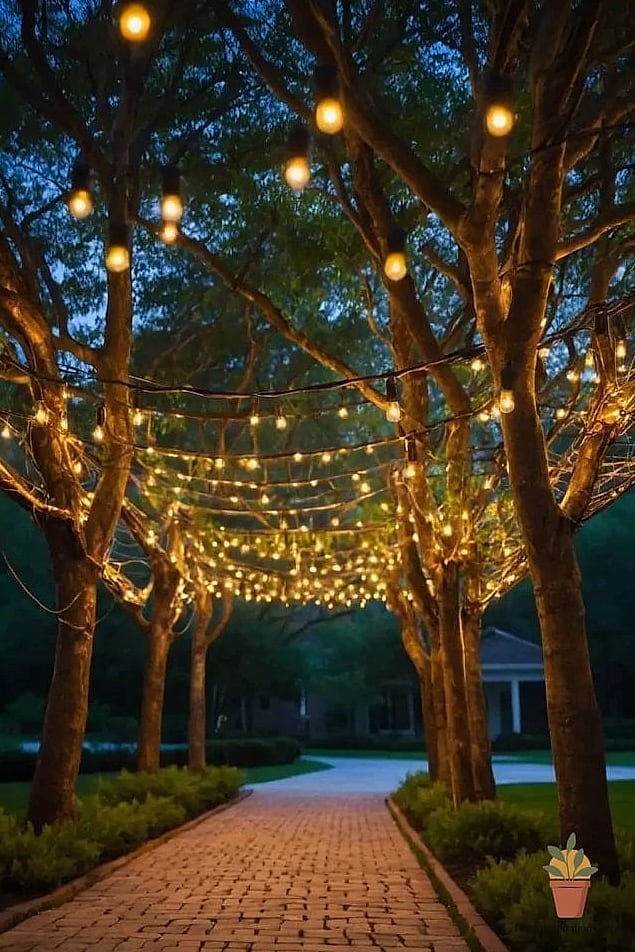
A single lighting method can look flat. Designers often combine uplighting at the base with string lights woven through the branches, creating depth that one technique alone can’t achieve.
This layered approach mimics how professional landscape lighting designers treat large properties, where multiple light sources at different heights create a more three-dimensional effect after dark.
Choose Micro Lights for a Subtle, Natural Glow
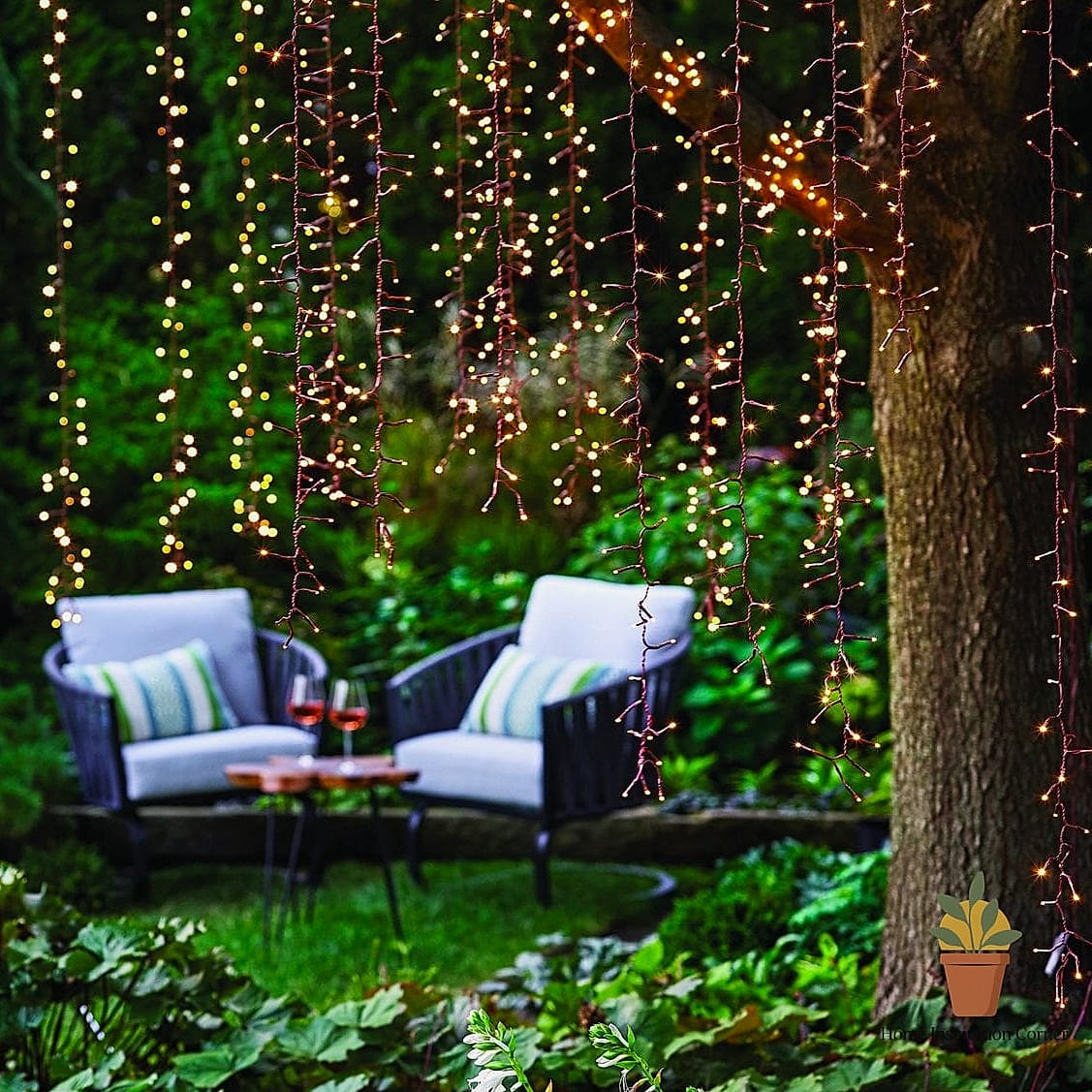
Not every tree needs to be a showstopper. For trees near a patio or dining area where you want ambiance without glare, micro LED lights (sometimes called fairy lights) scattered loosely through branches give off a soft twinkle instead of a bold statement.
These are especially popular for outdoor entertaining spaces since they don’t compete with conversation or create harsh shadows on faces.
Highlight Multi-Trunk Trees From Multiple Angles
Trees with multiple trunks or a clumping growth habit, like river birches, benefit from more than one uplight positioned at different points around the base. Lighting from just one angle can leave half the tree in shadow.
Spacing two or three small fixtures around the trunk cluster gives a fuller, more balanced glow that shows off the tree’s natural form.
Use Moonlighting for a Softer, Downward Effect
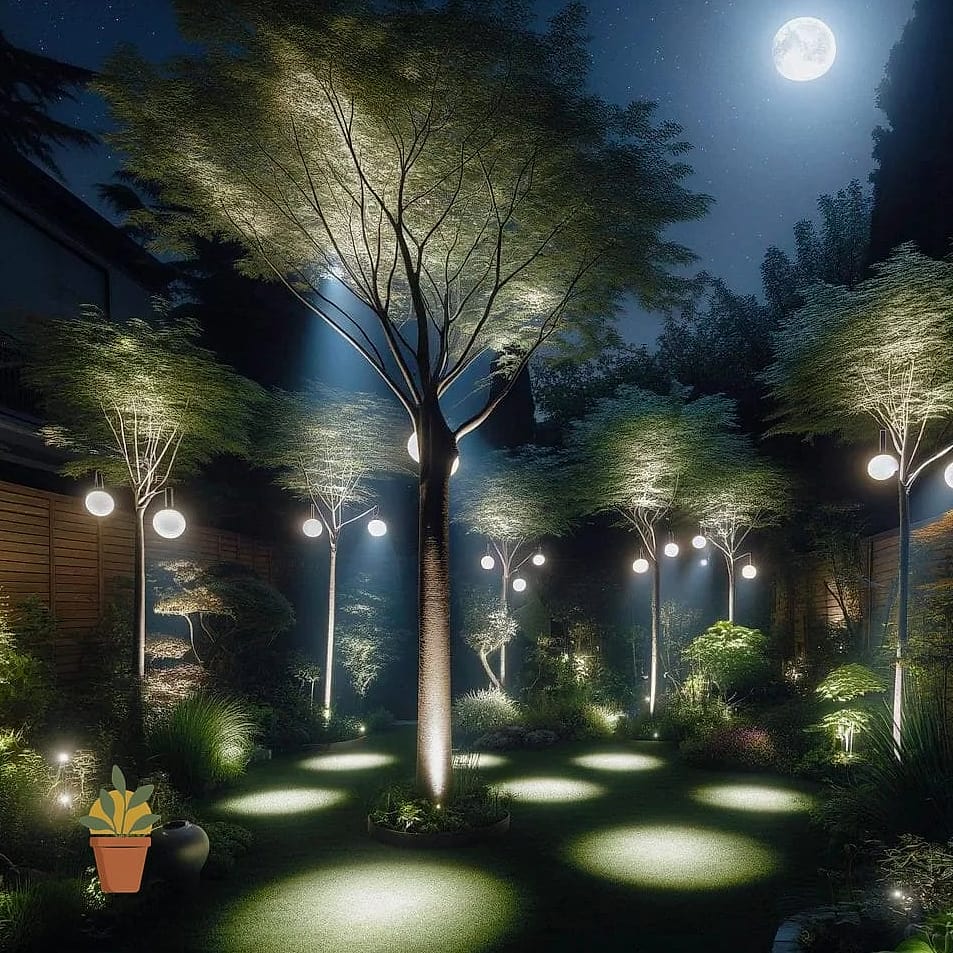
Moonlighting flips uplighting on its head. Fixtures are mounted high in the tree, pointing downward, casting dappled shadows on the ground below that mimic actual moonlight through leaves.
This technique takes more installation effort since fixtures need to be secured in the canopy, but designers say it’s worth it for the effect it creates on pathways and patios beneath the tree.
Match Light Color Temperature Across Your Whole Yard
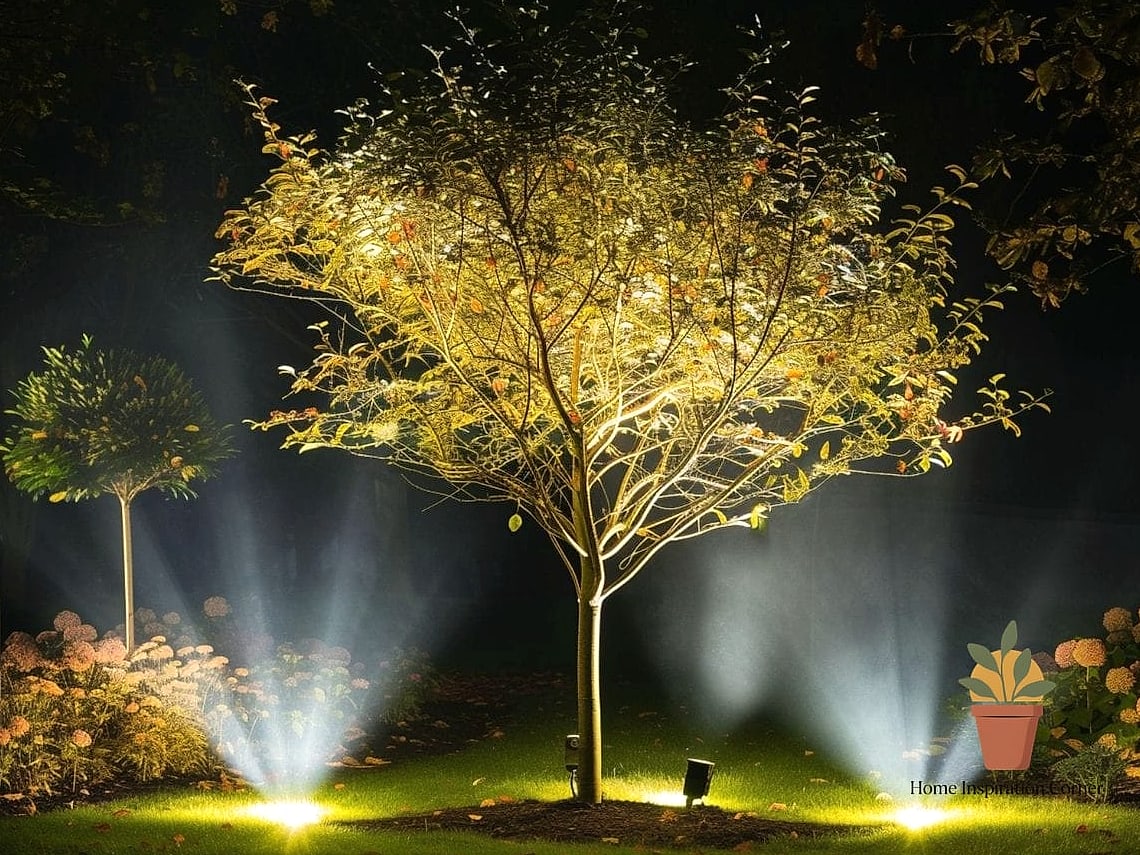
Nothing looks more disjointed than one tree glowing warm white while a nearby fixture puts off a cooler, bluish tone. Before buying new lights, check the color temperature on the packaging and try to keep everything consistent across your landscape lighting.
This is an easy detail to overlook, but it’s one of the fastest ways to make outdoor lighting look professionally done rather than pieced together.
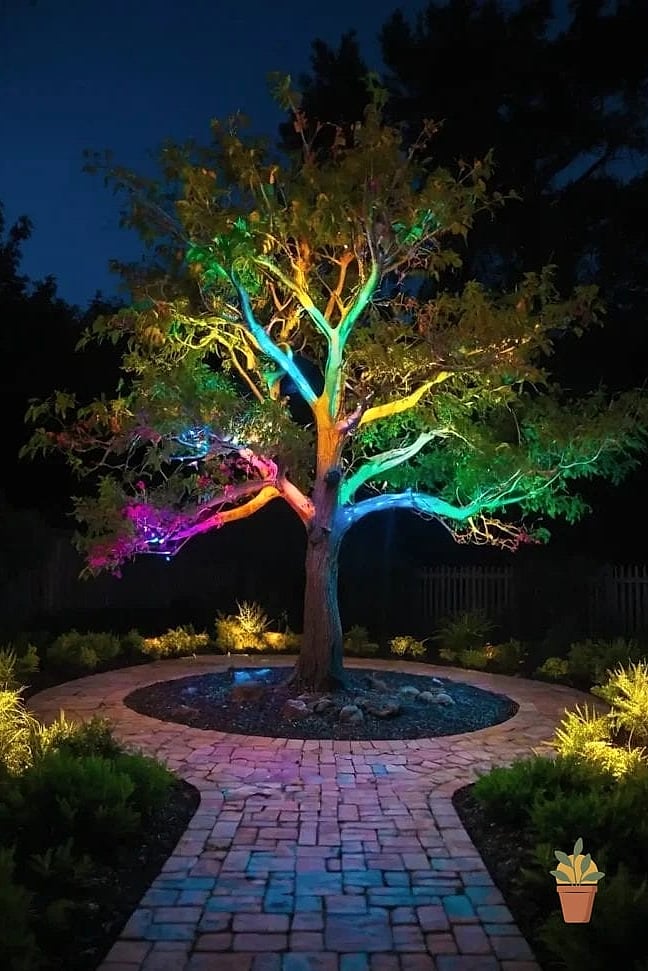
Consider Color-Changing Lights for Special Occasions
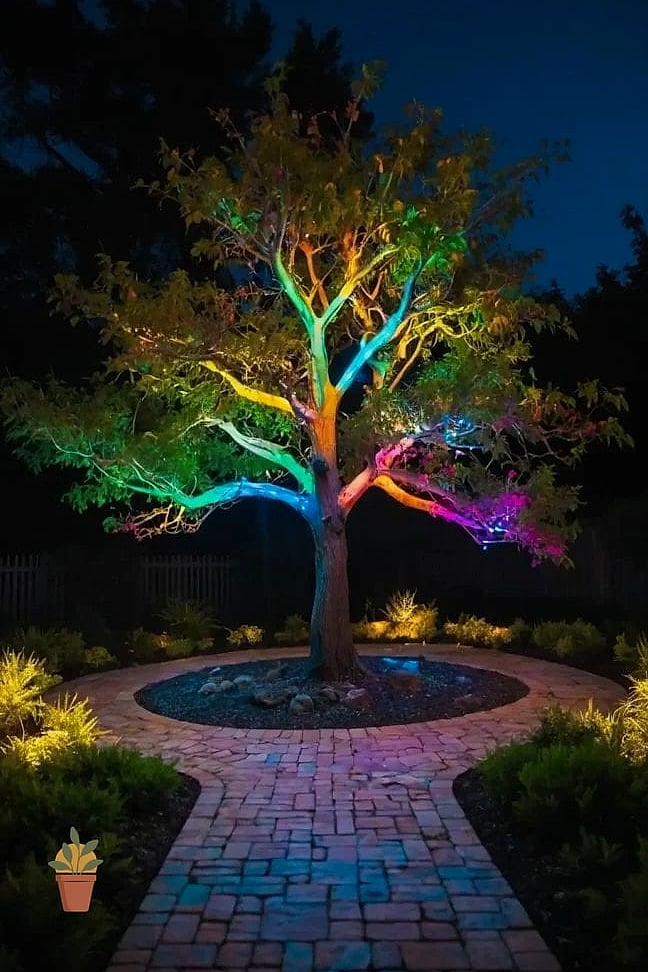
Smart LED lights that shift color are a fun option if you like changing your outdoor look for different seasons or events. Deep orange for fall, cool blue for winter evenings, or soft pink for a spring party.
Just use restraint here. Designers tend to recommend keeping color-changing lights for special occasions and switching back to warm white for everyday use, since constant color can feel more like a display than a design choice.
Light the Canopy From Below With Well Lights
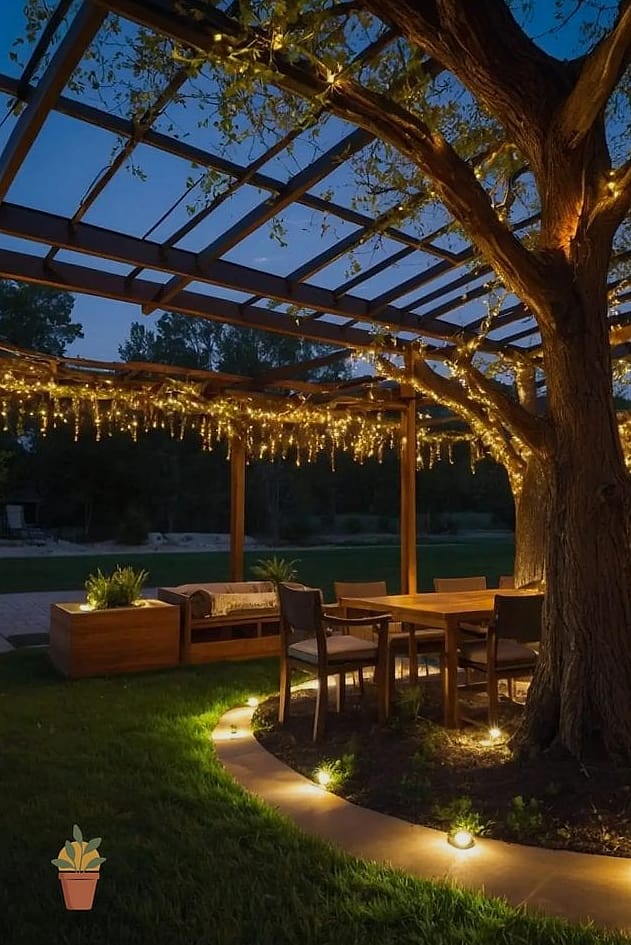
In-ground well lights are a great option for trees near a lawn or garden bed since the fixture sits flush with the ground, staying hidden during the day. At night, they throw light upward into the canopy without any visible hardware.
They’re a slightly bigger investment upfront but tend to hold up well outdoors and give a clean, seamless look since there’s no visible fixture cluttering the base of the tree.
Use Net Lights for Full, Even Coverage on Shrubby Trees
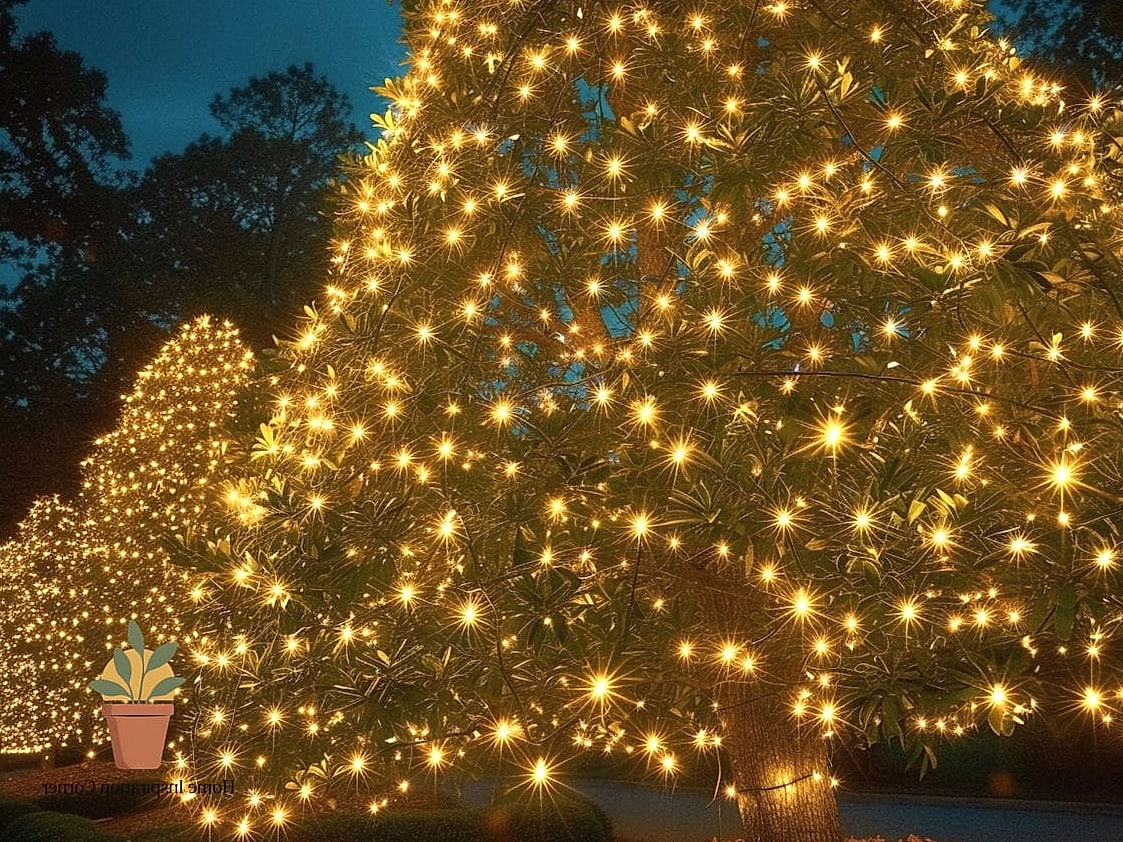
For smaller, bushier trees or large shrubs, net lights drape over the entire canopy at once instead of being wrapped branch by branch. This saves a ton of time and gives more even coverage than hand-wrapped strings.
It’s a particularly good option for anyone who dreads the yearly task of wrapping individual branches and would rather just toss a net over the top.
Add Lighting to Just One Statement Tree Instead of All of Them
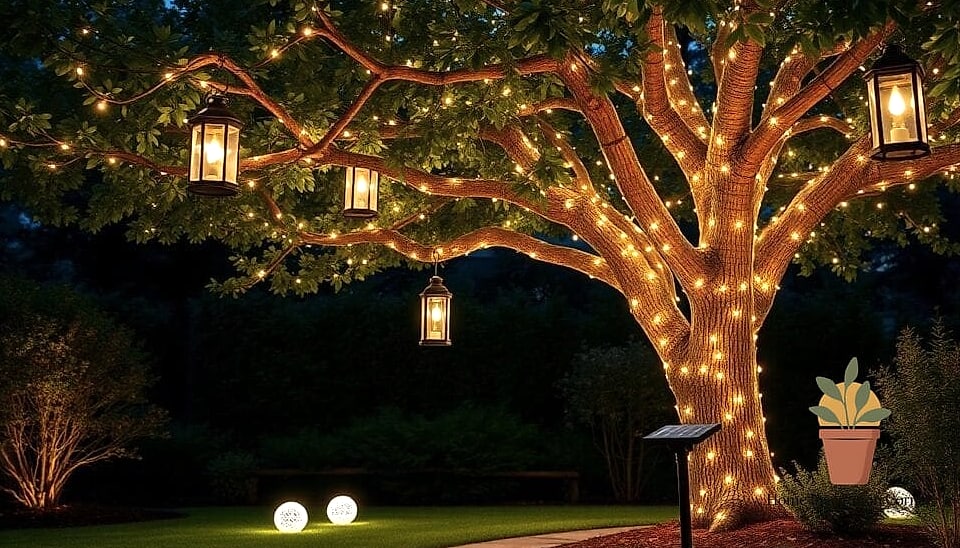
You don’t need to light every single tree in your yard. Designers often recommend picking one standout tree, maybe the one closest to your entry or visible from the street, and giving it real attention rather than spreading a few lights thin across several trees.
One well-lit tree with layered techniques almost always looks more polished than five trees with a single strand each.
Use Spotlights to Frame a Tree From the Ground
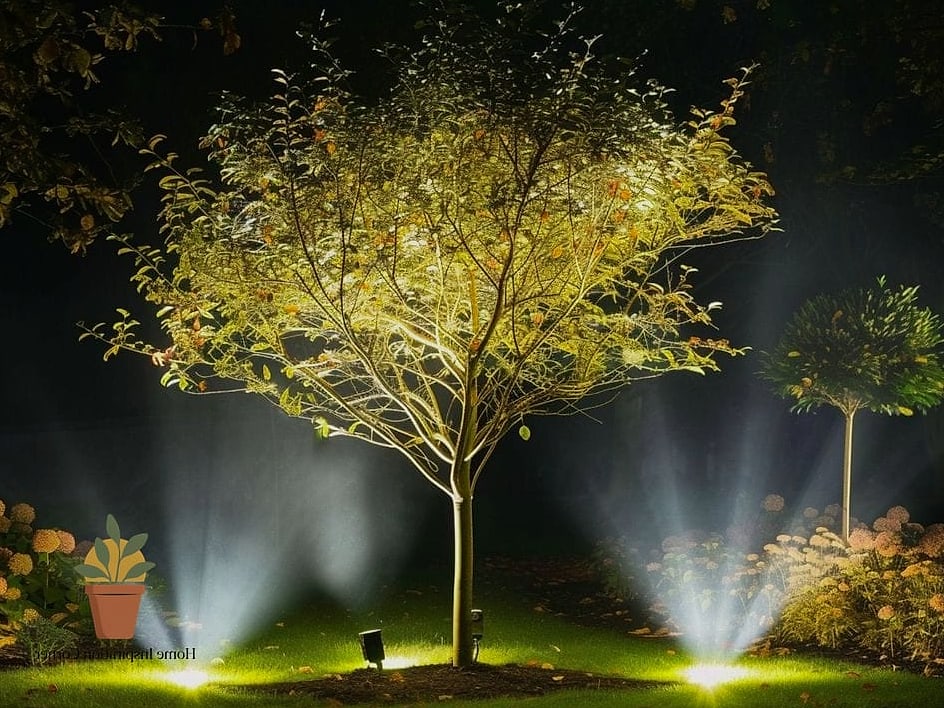
A simple, well-placed spotlight aimed at the trunk and lower canopy can make a tree feel like the focal point of your whole front yard. This works particularly well for trees positioned near a driveway or front walkway where you want guests to notice it as they approach.
Adjustable spotlights let you fine-tune the angle so the light hits the tree and not your neighbor’s window.
Incorporate Lighting Into Pathway Design Near Trees
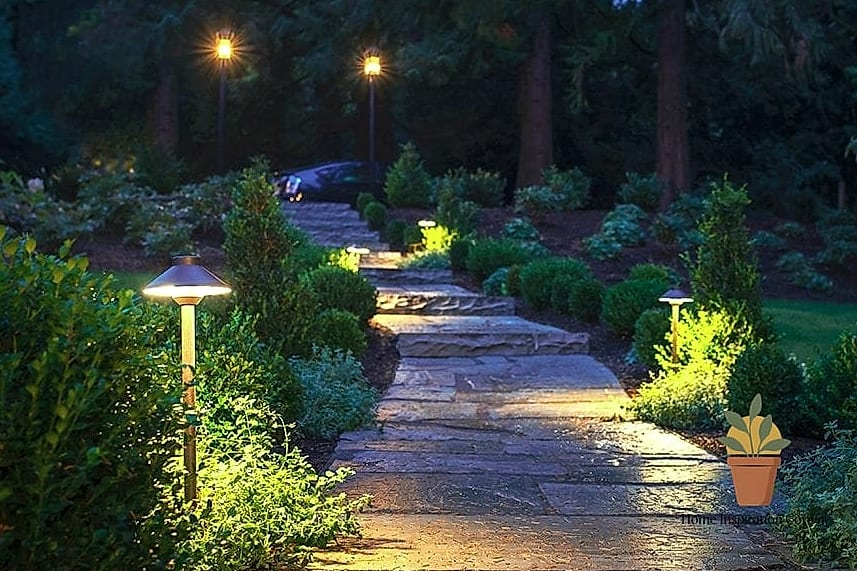
If a tree sits along a walkway, coordinate its lighting with path lights nearby so the transition from ground level to canopy feels intentional rather than random. Designers often stagger heights, low path lights, mid-level uplights, and higher canopy lighting, to guide the eye naturally upward.
This creates a sense of flow through the yard instead of isolated bright spots.
Choose Weatherproof, Rated Fixtures for Longevity
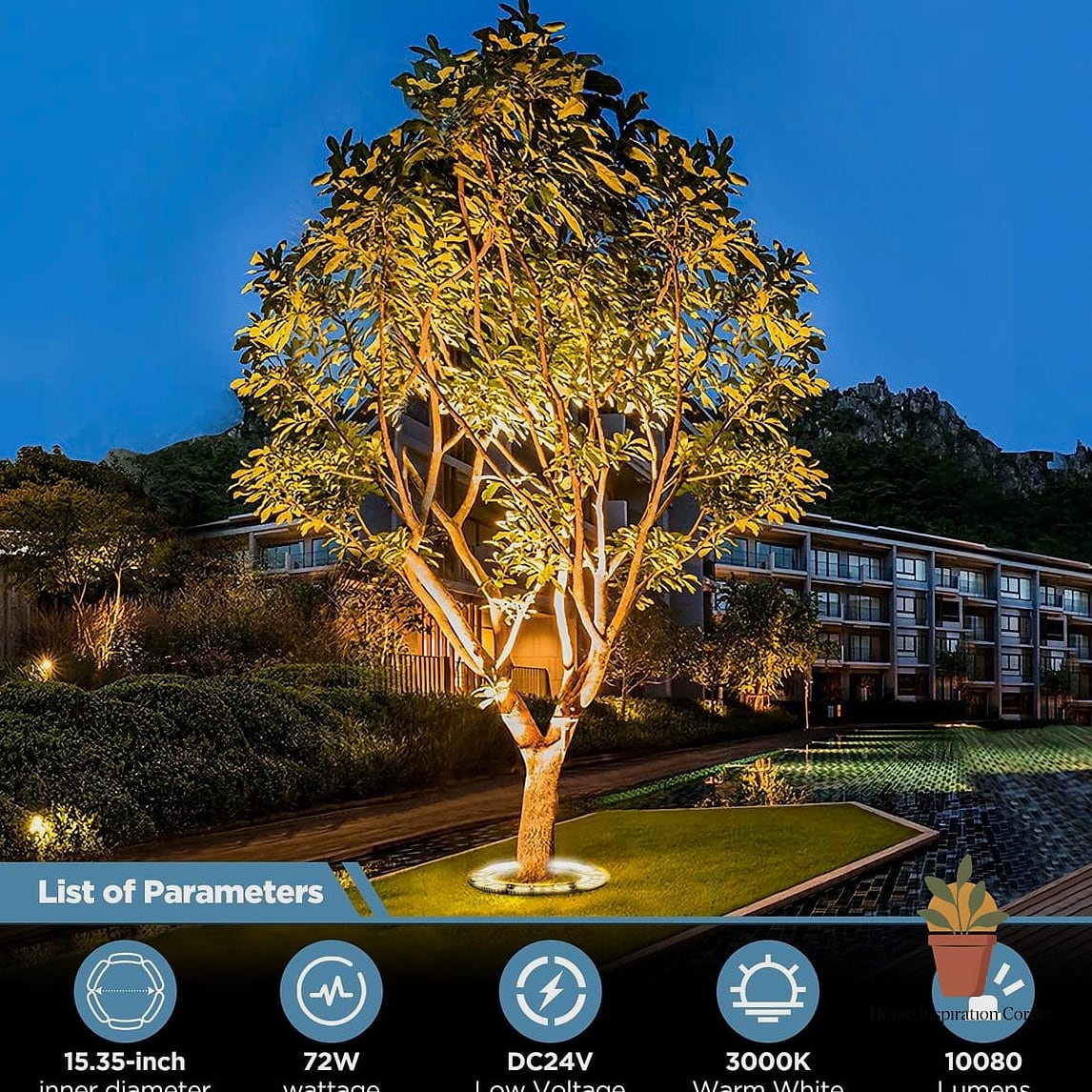
This might sound obvious, but it trips people up constantly. Any lighting you plan to leave up longer than a season needs to be rated for outdoor use and ideally wet-location rated if it’ll be exposed to rain or sprinklers directly.
Cheaper indoor string lights might survive one season outside, but they tend to degrade fast, and nobody wants to be replacing bulbs every few months.
Use Timers or Smart Plugs to Automate Your Lighting
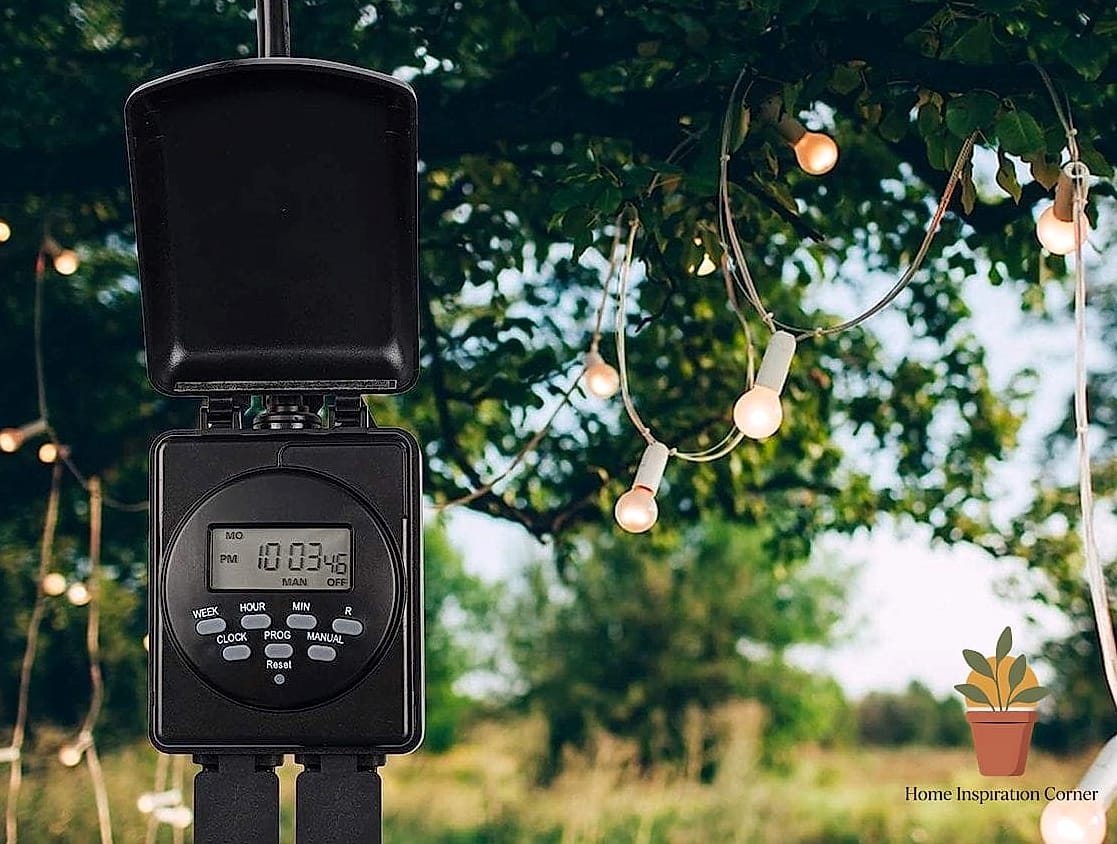
Manually flipping a switch every evening gets old fast. A simple outdoor timer or smart plug lets your tree lighting turn on at dusk and off at a set time, which also helps with energy use if you’re running lights nightly.
Many designers treat this as a non-negotiable step, since automated lighting means you actually get to enjoy the effect instead of forgetting to turn it on.
Highlight Bare Branches in Winter for Sculptural Interest
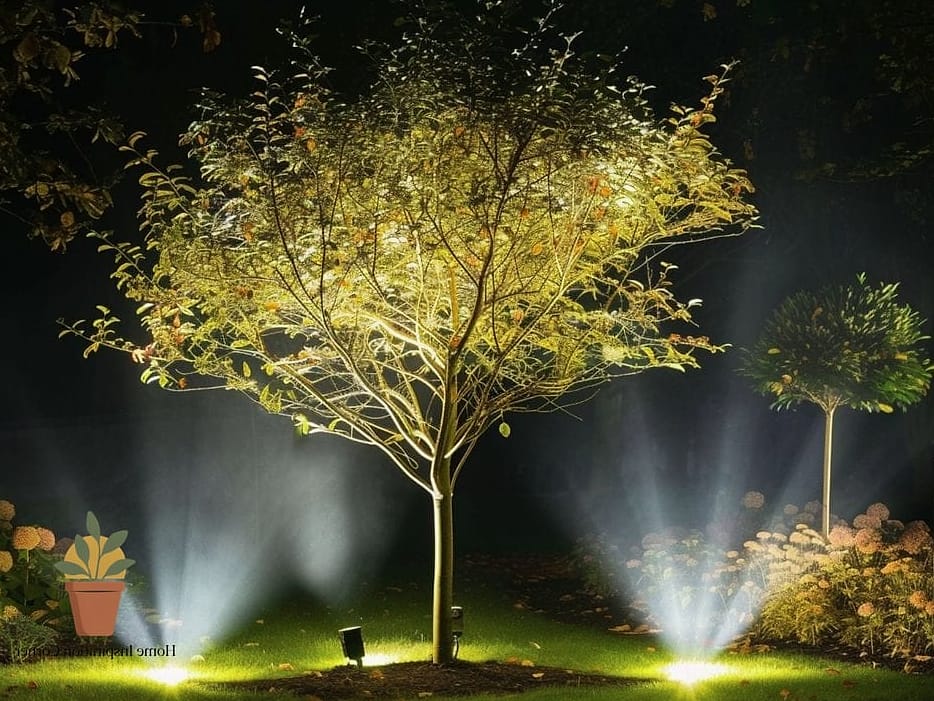
Deciduous trees without leaves can look stark and sad in winter, but they’re actually perfect candidates for uplighting since there’s no canopy blocking the light from reaching the branch structure. The bare limbs create dramatic, almost artistic shadows.
This is a favorite trick for trees near entryways during colder months when everything else in the landscape has gone dormant.
Use Lower Wattage Fixtures for Small or Young Trees
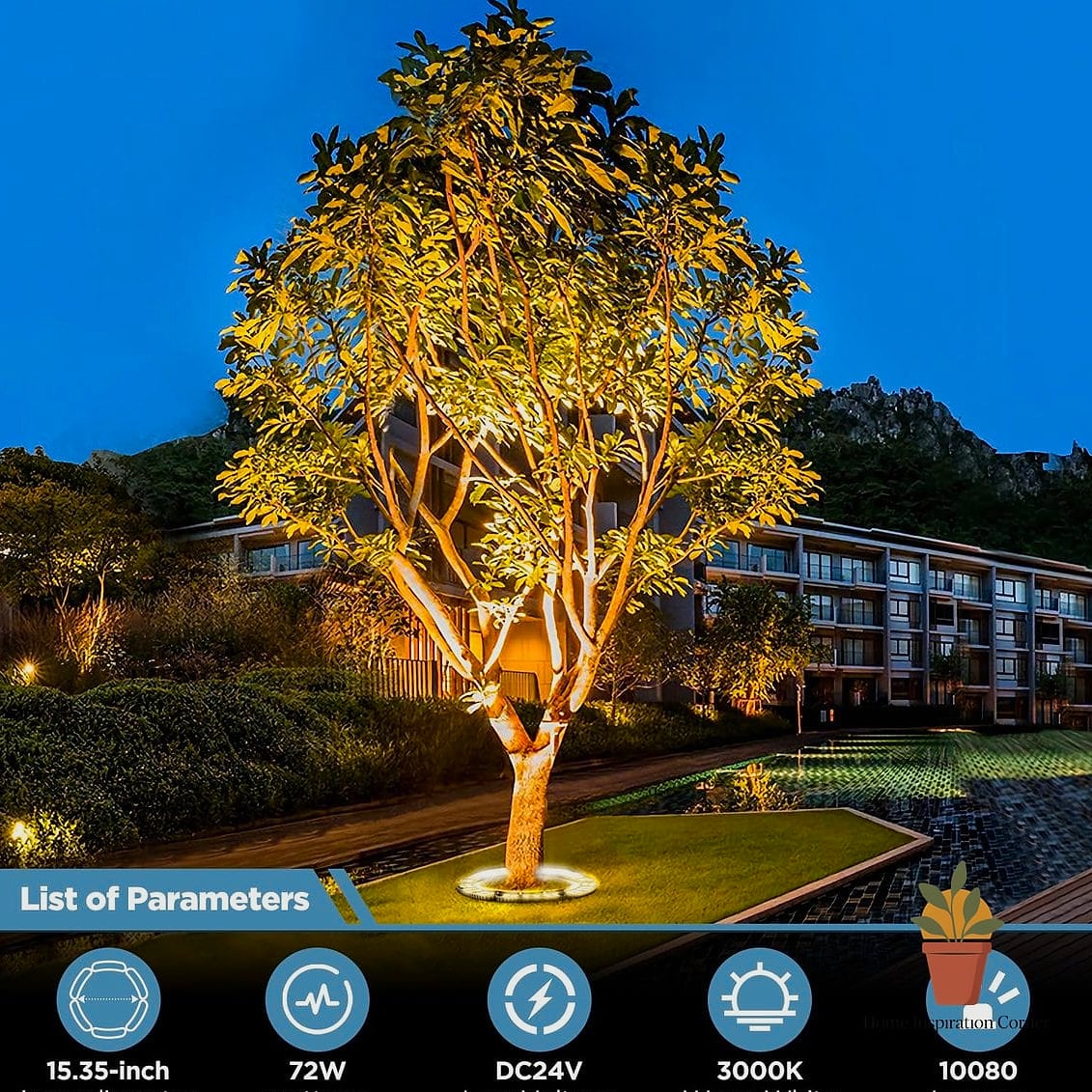
A newly planted or smaller tree doesn’t need the same wattage as a mature oak. Overpowering a small tree with bright fixtures can wash out its shape and look disproportionate to its size.
Designers usually scale wattage to the tree’s height and canopy spread, opting for lower-output fixtures on younger trees and saving the higher lumens for established, larger specimens.
Combine Tree Lighting With Ground-Level Landscape Beds
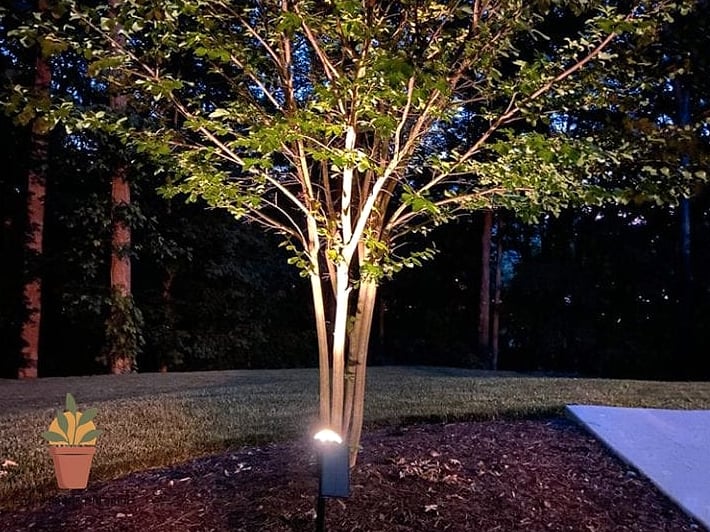
Lighting doesn’t have to stop at the trunk. Extending soft lighting into the garden bed surrounding a tree, whether through small path lights or accent fixtures tucked among plantings, helps the tree feel integrated into the yard rather than lit in isolation.
This layered ground-to-canopy approach is one of the more subtle tricks designers use to make outdoor lighting feel cohesive.
Hire a Landscape Lighting Designer for Large or Mature Trees
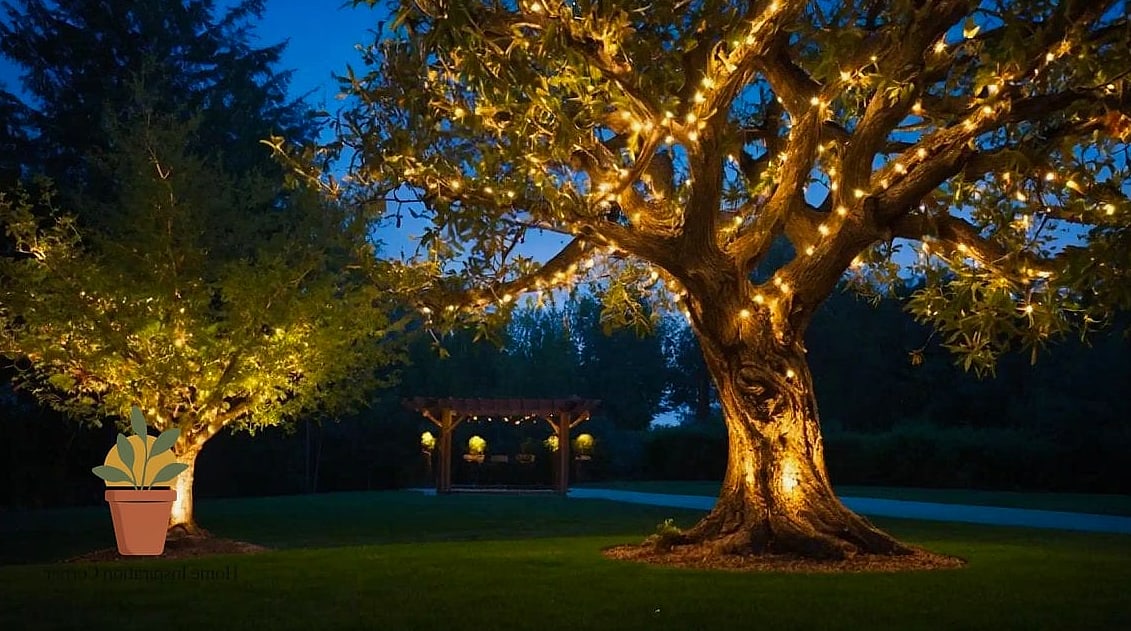
For sprawling, mature trees, especially ones with significant height or a complex branch structure, professional installation is often worth the investment. A landscape lighting designer can calculate proper fixture placement, wiring, and voltage in a way that’s tough to get right through trial and error.
DIY tree lighting works great for smaller projects, but larger trees with more complicated wiring needs sometimes call for an expert who can make sure everything is both safe and visually balanced.
Whichever combination of these ideas you choose, the goal is really the same: light that feels natural, not staged, and enhances your trees rather than overwhelming them. Start with one or two techniques on your favorite tree, live with it for a few weeks, and build from there. Outdoor lighting is one of those projects that rewards patience and small adjustments over time.